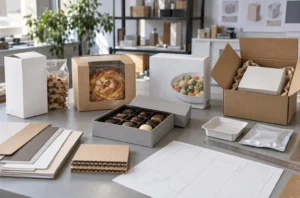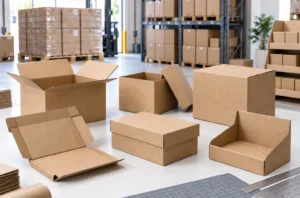
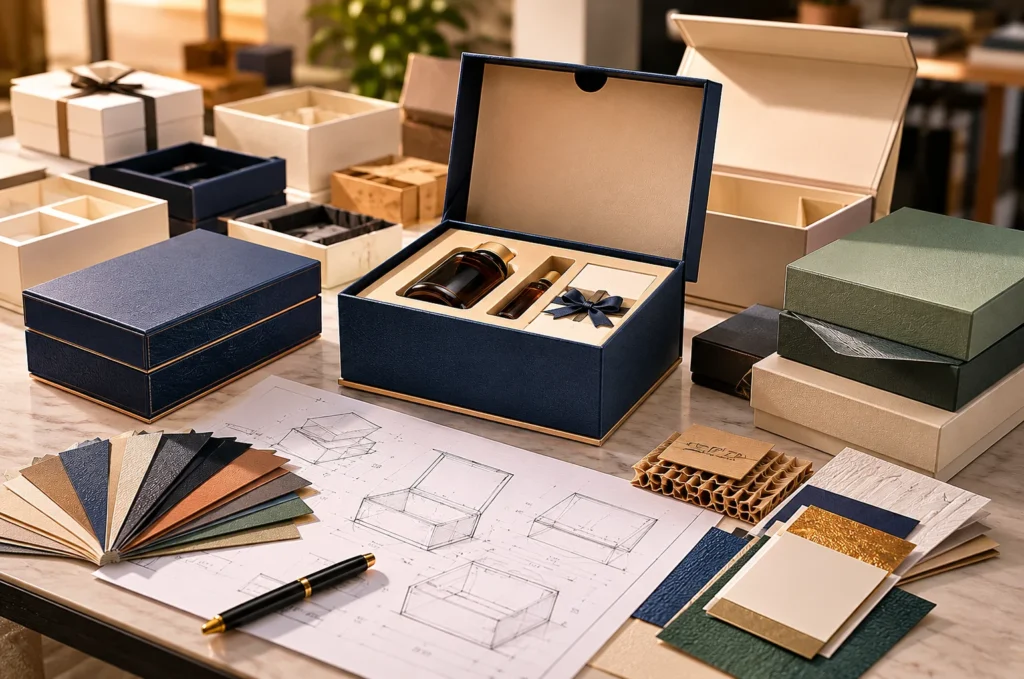

When I work on custom gift box projects, one of the most common situations I encounter is that packaging decisions are often made based on artwork files, 3D renderings, quotations, and production specifications. At first glance, everything may appear ready for manufacturing. The dimensions seem correct, the design looks attractive, the material has been selected, and the budget has been approved. However, I have learned that a packaging project can still contain hidden risks even when every document appears complete.
Gift boxes are physical products, not digital files. They need to be opened, closed, handled, packed, shipped, displayed, and experienced by real people. A box that looks premium on a screen may feel less impressive when produced. A structure that appears perfect in a drawing may become difficult to use in reality. A color that looks accurate in a digital proof may change once it is printed on the actual material. An insert that seems correct on a dieline may fail to hold the product securely. These issues are often impossible to fully evaluate until a physical sample exists.
This is why I believe gift box samples play such an important role before bulk production begins. A sample creates an opportunity to examine the packaging in its real form before significant time, materials, and production resources are committed. Instead of making assumptions based on artwork and specifications, the sample allows the packaging to be reviewed as an actual product. Size, structure, material strength, printing quality, finishing effects, insert performance, opening experience, and overall presentation can all be evaluated before the design is repeated across hundreds or thousands of units.
In my experience, the purpose of a gift box sample is not simply to confirm whether the packaging looks attractive. Its real value is helping identify problems while they are still manageable. A minor adjustment made during the sampling stage is usually straightforward and relatively inexpensive. The same adjustment discovered after paper materials have been purchased, printing plates have been prepared, production schedules have been arranged, or boxes have already entered manufacturing can become far more costly and disruptive. This is why I often view sampling as one of the most practical risk-control steps in custom gift box development rather than an optional extra expense.
In this guide, I will explain why gift box samples matter before bulk production, what types of problems they can help uncover, what should be checked during sample approval, and how a well-reviewed sample can help improve production accuracy, reduce packaging risks, and create a more reliable standard for the final order.
What is a Gift Box Sample?
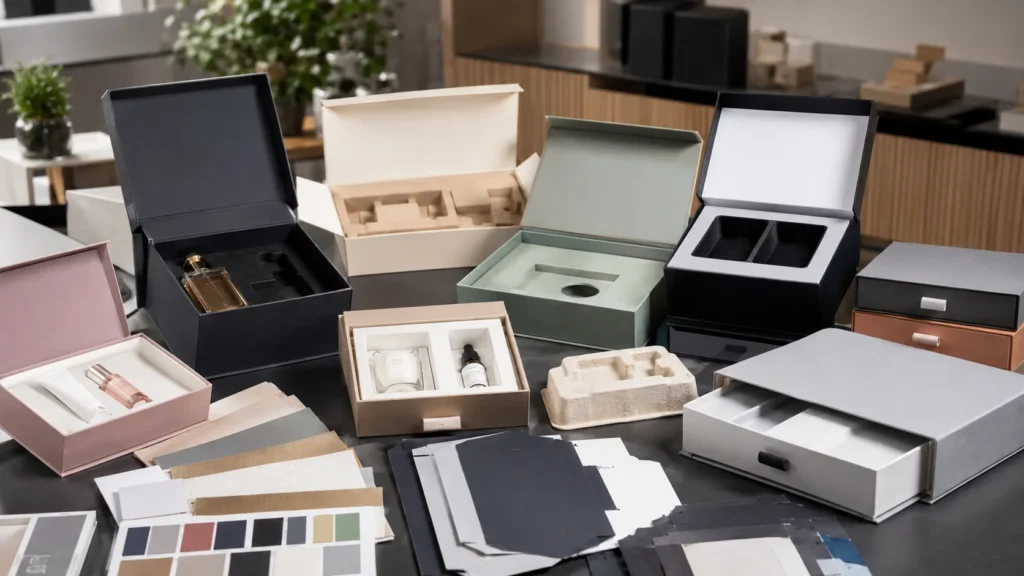
A gift box sample is a physical packaging reference made before bulk production to confirm whether a custom gift box can truly meet the expected design, structure, material, printing, finishing, product-fit, and presentation requirements. I see it as one of the most important checkpoints in a packaging project because it turns an idea on paper into a real object that can be reviewed, touched, opened, tested, and improved before a brand commits to mass production.
A Gift Box Sample Is the First Real Version of the Packaging
When I look at a custom gift box project, I do not treat the sample as a simple decorative mockup. I see it as the first real version of the packaging, even if it may still need minor adjustments before final approval. A design file can show the artwork direction, and a rendering can help visualize the final appearance, but neither of them can fully explain how the box behaves when it is actually made with paper, greyboard, glue, inserts, printing, and finishing processes.
This matters because gift boxes are physical products. They need to be held, opened, closed, displayed, packed, shipped, and used by real customers. A box that looks elegant on screen may feel too light in hand, open too loosely, close too tightly, or fail to support the product properly. When I review a sample, I am not only checking whether it looks attractive. I am checking whether the packaging idea has successfully become a workable production result.
A Gift Box Sample Helps Confirm the True Packaging Result
The most direct purpose of a gift box sample is to confirm the true packaging result before bulk production begins. In real packaging development, many details only become clear after the sample is produced. The actual box size, material thickness, paper texture, color performance, finishing effect, insert position, and opening experience can all feel different from what the buyer imagined during the design stage.
For example, a rigid gift box may look premium in a 3D rendering, but the physical sample may reveal that the lid fit is too loose or the greyboard is not thick enough for the product weight. A drawer gift box may appear clean and elegant in artwork, but the sample may show that the drawer does not slide smoothly. A magnetic gift box may seem impressive in photos, but when opened by hand, the magnetic closure may feel weak or misaligned. These are the kinds of issues that a physical sample can expose before they become expensive problems in bulk production.
A Gift Box Sample Connects Design Expectations With Production Reality
One thing I often notice in custom packaging projects is that design expectations and production reality are not always the same. A designer may focus on visual balance, color, logo placement, and brand feeling, while a factory needs to consider material tolerance, folding behavior, glue position, wrapping accuracy, die-cutting limits, finishing pressure, and assembly stability. A gift box sample creates a bridge between these two sides.
This is especially important for premium gift packaging, where small details can change the perceived value of the product. The distance between the logo and the box edge, the depth of embossing, the shine of foil stamping, the smoothness of lamination, the tightness of the lid, and the cleanliness of the corners may all affect how the customer judges the brand. A sample allows these details to be reviewed in a real form instead of being discussed only through drawings and written specifications.
A Gift Box Sample Allows Buyers to Review Size Structure and Product Fit
I always pay close attention to size, structure, and product fit when reviewing a gift box sample because these details affect both appearance and function. A box can look beautiful from the outside, but if the product fits too tightly, customers may struggle to remove it. If the product fits too loosely, it may move during shipping and create a poor unboxing experience. If the insert is not accurate, the product may sit unevenly or fail to feel secure.
The structure also needs to match how the box will be used. A lid and base box should open smoothly without feeling unstable. A drawer box should slide naturally without getting stuck. A magnetic box should close with enough strength to feel secure but not so tightly that it becomes uncomfortable to open. A folding gift box should hold its shape after assembly. These details are difficult to judge from digital artwork, but they become very clear once the sample is in hand.
A Gift Box Sample Helps Evaluate Materials and Thickness
Material selection is another reason I believe sampling is so valuable. Paper type, board thickness, greyboard hardness, paper texture, and surface coating all influence how a gift box feels and performs. A buyer may choose a material based on a quotation or a paper name, but the real impression can only be confirmed when the material is used on the actual box structure.
A thinner board may reduce cost, but it may also make the box feel weak or less suitable for premium products. A thicker board may improve structure and presentation, but it can also affect folding, wrapping, weight, and cost. Textured paper may create a high-end feeling, but it may influence printing clarity or foil stamping results. FSC-certified paper may support sustainability goals, but it still needs to match the required strength, color, and finishing effect. A sample helps the buyer see whether the chosen material truly fits the brand positioning and product needs.
A Gift Box Sample Shows the Real Printing and Finishing Effect
Printing and finishing are often the details that make custom gift boxes feel distinctive, but they are also areas where digital previews can be misleading. Colors on a screen are not the same as colors printed on paper. A Pantone color may look different depending on the paper surface, ink coverage, lamination, and lighting conditions. Large ink areas, gradients, fine lines, and small logo details may also behave differently once printed.
Surface finishing needs the same level of attention. Foil stamping may look too bright, too dull, too thin, or slightly misaligned. Embossing may feel too shallow or too strong. Debossing may affect the paper surface in unexpected ways. Soft-touch lamination may create a premium hand feel, but it may also show fingerprints more easily. Spot UV may add contrast, but only if the position and gloss level are well controlled. A physical sample helps the buyer judge these effects realistically instead of relying only on visual imagination.
A Gift Box Sample Helps Check Inserts and the Unboxing Experience
For many gift boxes, the insert is not just an accessory inside the box. It plays a major role in product protection, presentation, and customer experience. I always consider the insert together with the outer box because the two parts need to work as one complete packaging system. A beautiful outer box will not feel successful if the product inside moves, tilts, scratches, or looks poorly arranged.
A physical sample helps confirm whether paper inserts, cardboard dividers, molded pulp inserts, EVA inserts, or custom trays can hold the product properly. It also helps evaluate whether the product is easy to place into the box during packing and easy for the customer to remove during unboxing. For gift sets, cosmetics, candles, jewelry, perfume, skincare products, or small premium items, this kind of testing is especially important because the inside presentation often influences the first impression as much as the outside design.
A Gift Box Sample Is Different From a Digital Proof or Rendering
I see digital proofs and renderings as useful tools, but I do not see them as replacements for physical samples. A digital proof is helpful for checking artwork layout, text content, logo placement, dieline position, and general visual direction. A rendering can help the buyer imagine how the box may look in a marketing context. However, neither one can fully show weight, touch, rigidity, movement, opening resistance, closure strength, insert support, surface texture, or real production tolerance.
This difference is important because customers do not experience packaging as a flat image. They experience it by touching the surface, opening the box, removing the product, feeling the structure, and judging whether the packaging matches the value of the item inside. A physical sample gives the buyer a more honest view of that experience. It shows not only what the packaging looks like, but also how it behaves.
A Gift Box Sample Becomes a Reference Standard for Bulk Production
Once a gift box sample is approved, it becomes more than a sample. It becomes a reference standard for bulk production. I consider this one of the most important functions of sampling because it gives both the buyer and the manufacturer a shared physical benchmark. The approved sample can guide decisions on dimensions, structure, material, color, finishing, insert fit, assembly quality, and overall presentation.
This is especially useful when several people are involved in the same project. Many buyers also compare different suppliers before approving a packaging project.A brand owner may focus on presentation, a product manager may focus on function, a designer may focus on visual details, a purchasing team may focus on cost and delivery, and a factory team may focus on production control. Without a physical standard, each person may understand the requirement slightly differently. With an approved sample, the project has a clearer reference point, which helps reduce confusion before bulk production begins.
A Gift Box Sample Helps Buyers Make Better Production Decisions
In my view, the real value of a gift box sample is not only that it shows whether the packaging looks good. It helps buyers make better production decisions before time and money are committed to a larger order. If the sample shows that the board is too thin, the structure can be adjusted. If the color is not close enough to the brand standard, the printing requirement can be corrected. If the insert does not hold the product securely, the inner structure can be redesigned. If the finishing effect does not match the desired brand image, the process can be changed before mass production.
This is why I believe a gift box sample should be reviewed carefully, not approved too quickly. It gives the buyer a chance to improve the packaging while changes are still manageable. Once bulk production starts, corrections become slower, more expensive, and more disruptive. A good sample review helps make the final order more stable, more predictable, and more aligned with the brand’s expectations.
Why Gift Box Samples Matter Before Bulk Production
Gift box samples matter before bulk production because they give buyers one of the last practical opportunities to confirm the real packaging result before the project becomes expensive, time-sensitive, and difficult to change. I see the sample stage as a critical checkpoint between design approval and mass manufacturing. At this stage, the buyer can still review the structure, size, material, printing, finishing, inserts, opening experience, packing method, and overall presentation in a physical form. Once bulk production begins, however, many decisions become locked into materials, tooling, printing, finishing, labor, assembly, and delivery schedules. This is why I believe a gift box sample should never be treated as a simple preview. It is a risk-control tool that helps prevent production mistakes, protect the brand image, and create a more reliable standard for the final order.
Bulk Production Has Less Room for Change Than the Design Stage
When a gift box project is still in the design stage, changes usually feel simple. The buyer can adjust the artwork, change the logo position, revise the box size, select another material, or ask for a different finishing effect. At this point, most decisions still exist as drawings, digital files, quotations, and conversations. The cost of correction is relatively manageable because production has not yet committed real materials, machines, tools, and labor to the project.
The situation changes once bulk production begins. Paper, greyboard, specialty paper, magnets, ribbon, inserts, cartons, and other materials may already be purchased according to the approved specification. Printing plates, cutting dies, foil stamping blocks, embossing tools, and production schedules may already be arranged. Workers may already be following a confirmed production method. If the buyer discovers a problem at this stage, the issue is no longer just a design adjustment. It may require reprinting, remaking tools, replacing materials, stopping production, delaying shipment, or accepting a result that does not fully match the original expectation. This is the main reason I consider sample checking so important before moving into bulk production.
A Sample Helps Detect Problems While They Are Still Manageable
In my experience, the best time to find a packaging problem is when only one or a few samples have been made, not after thousands of boxes are already in production. A sample gives the buyer a controlled opportunity to examine the packaging carefully and decide whether the design is truly ready for mass production. If the box size needs adjustment, if the board feels too thin, if the lid is too tight, if the insert does not support the product well, or if the finishing effect does not match the brand image, these issues can still be corrected before they become large-scale losses.
This early review matters because packaging problems often become more expensive as the project moves forward. A small size error may affect the die line, insert layout, product fit, carton packing, and shipping protection. A color issue may affect every printed sheet. A foil stamping position error may affect every front panel. A weak structure may appear across the entire order. By identifying these problems in the sample stage, buyers can reduce the risk of rework, wasted materials, delayed launches, rejected goods, and customer complaints.
A Sample Confirms Whether the Structure Works in Real Use
The structure of a gift box is not only about how the box looks. It is also about how the box performs when it is opened, closed, handled, displayed, packed, and shipped. I always pay close attention to structure during sample review because many structural problems are difficult to judge from a dieline or rendering. A box may look correct in a flat drawing, but the real sample may reveal that the lid fit is too tight, the drawer does not slide smoothly, the folding structure does not lock properly, or the magnetic closure does not feel secure enough.
This is especially important for rigid gift boxes, drawer boxes, magnetic closure boxes, lid and base boxes, folding gift boxes, and gift set packaging. Each structure has its own production tolerance and user experience. A drawer box needs enough clearance to slide smoothly without feeling loose. A magnetic box needs accurate magnet placement and enough closing strength. A lid and base box needs a balanced fit so the lid feels premium rather than stiff or unstable. A folding gift box needs clean creasing and reliable locking. A sample allows these structural details to be tested before the same design is repeated in bulk production.
A Sample Reveals Whether the Size Matches the Product Properly
Size is one of the most practical reasons gift box samples matter. In a custom gift box project, the box is not only made to look good; it also needs to fit the product correctly. I have learned that product dimensions on paper are helpful, but they do not always show how the product will sit inside the box. The real product may have a curved shape, fragile surface, uneven weight, cap, lid, handle, bottle shoulder, candle jar rim, or accessory part that affects how it fits inside the packaging.
This is why I prefer testing a sample with the actual product whenever possible. When the real product is placed inside the sample, the buyer can see whether the product is too tight, too loose, too difficult to remove, or not properly supported. The buyer can also check whether the internal space looks balanced, whether the insert holds the item in the right position, and whether the box still feels refined after the product is placed inside. For premium products, this matters because packaging should not only contain the product. It should present the product in a way that feels intentional, secure, and valuable.
A Sample Helps Confirm Material Strength Before It Affects the Whole Order
Material selection is often discussed during quotation, but the real quality of a material is easier to judge after it becomes a finished box. Paper name, board thickness, greyboard grade, surface texture, and coating type can all sound acceptable in a specification sheet, but the final impression depends on how these materials work with the actual structure. A material that looks suitable in theory may feel weak, soft, too light, too rough, or unsuitable once the box is assembled.
I consider this especially important for gift packaging because customers often judge product value through touch and structure. A premium gift box should usually feel stable, clean, and well-supported. If the greyboard is too thin, the box may lack strength. If the paperboard is too soft, the folding box may lose shape. If the surface paper is not suitable for the chosen finish, the printing or foil stamping may not appear as expected. A sample helps the buyer confirm whether the selected material supports both the brand image and the practical use of the packaging before bulk production begins.
A Sample Shows the Real Printed Color Instead of a Screen Color
Printing color is one of the most common areas where expectations and production reality can differ. I often remind buyers that a color on a screen is not the same as a color printed on paper. Screen brightness, monitor settings, paper surface, ink absorption, printing method, lamination, lighting, and even large ink coverage can change how the final color appears. This is why a physical sample is so useful when brand color consistency matters.
A sample allows the buyer to review whether the logo color, background color, product series color, Pantone reference, CMYK printing effect, fine text, lines, gradients, and artwork alignment are acceptable in the actual printed result. This is especially important for brands that have multiple products in the same range or plan to place repeat orders later. If the color is wrong in bulk production, the packaging may look inconsistent with the brand’s existing products. A sample helps reduce that risk by making the color discussion more practical and less dependent on digital assumptions.
A Sample Helps Control Finishing Effects Before They Are Repeated in Bulk
Surface finishing can make a gift box feel more premium, but it can also create problems if it is not tested properly. Foil stamping, embossing, debossing, spot UV, matte lamination, gloss lamination, soft-touch lamination, textured paper, and special coatings all need to be checked in physical form. I do not like judging these finishes only from digital mockups because the real effect depends on pressure, alignment, paper surface, shine, texture, and production tolerance.
For example, foil stamping may appear too strong, too dull, too thin, or slightly misplaced. Embossing may not have enough depth to create a clear tactile feeling. Debossing may affect the surrounding paper surface. Spot UV may not create enough contrast if the base surface is not suitable. Soft-touch lamination may feel elegant, but it may also show fingerprints or handling marks more easily. A sample gives the buyer a chance to decide whether the finishing effect truly supports the brand style before the same process is applied to the full order.
A Sample Tests Whether the Insert Protects and Presents the Product Well
For many gift boxes, the insert determines whether the packaging feels organized, secure, and premium after the box is opened. I always look at the insert as part of the full packaging system, not as a separate accessory. The outer box creates the first impression, but the insert controls how the product is held, displayed, protected, and removed. If the insert is poorly designed, even a beautiful outer box can feel unfinished.
A sample helps reveal whether the insert fits the product shape, supports the product weight, prevents movement, avoids surface scratching, and creates a clean presentation. This is especially important for gift sets, cosmetics, candles, skincare products, perfume, jewelry, electronics accessories, and other products that need both protection and display value. A sample can also show whether the insert is easy for workers to assemble during packing and whether customers can remove the product without frustration. These small details can strongly affect both production efficiency and customer experience.
A Sample Helps Check the Closure and Opening Feeling
Gift packaging is part of the customer experience, so I always think the opening and closing feeling deserves careful attention. A gift box may look excellent in a photo, but if it is hard to open, does not close properly, or feels unstable in hand, the customer’s impression may change quickly. This is why sample testing should include repeated opening and closing, not just visual approval.
A lid that is too tight may make the box feel inconvenient. A lid that is too loose may make the box feel cheap. A drawer that sticks may weaken the premium feeling. A magnetic closure that is not strong enough may make the box feel unreliable. A folding closure that does not lock well may affect both retail display and transportation. These are experience-based details that cannot be fully understood from artwork. The sample allows the buyer to feel whether the packaging experience matches the value of the product inside.
A Sample Helps Identify Surface Defects and Craftsmanship Standards
Craftsmanship is one of the areas where a physical sample provides strong value. In premium gift packaging, small defects can be very visible. Uneven corners, glue marks, paper bubbles, rough edges, loose wrapping, scratches, stains, dirty surfaces, inaccurate folds, and poor alignment can all reduce the perceived quality of the box. These details may not appear in a design file, but they become very clear when the sample is inspected closely.
When I review a gift box sample, I usually do not only look at the front panel. I check the corners, inner edges, bottom area, opening area, hinge area, insert position, and surface under different angles of light. These areas often reveal how carefully the box has been made. If the sample shows quality problems, the buyer has a chance to clarify the acceptable standard before bulk production. Without this step, the final order may include defects that could have been prevented earlier.
A Sample Helps Evaluate Whether the Packaging Can Survive Shipping
A gift box needs to look good when it leaves the factory, but it also needs to arrive in good condition. This is especially important for export orders, retail distribution, warehouse storage, and e-commerce fulfillment. I believe shipping protection should be considered before bulk production, because damaged packaging can hurt the customer experience even if the product itself remains usable.
A sample can help the buyer review whether the box structure is strong enough, whether the insert prevents movement, whether the surface is easily scratched, whether the corners are vulnerable, and whether additional protective packing may be needed. For heavier products, fragile items, gift sets, or boxes with delicate finishes, the shipping method can affect the packaging result. Sometimes small improvements in outer cartons, stacking methods, inner wrapping, or insert design can reduce the risk of crushed corners, pressure marks, surface rubbing, and deformation during transport.
A Sample Reduces Communication Gaps Between Buyer and Manufacturer
Another reason samples matter is that they reduce misunderstanding. In a packaging project, the buyer, designer, purchasing team, manufacturer, production staff, and quality inspectors may all look at the same specification from different angles. A written description can be interpreted differently. A digital file can be understood differently. Even a quotation can leave room for assumptions about material strength, finishing quality, color tolerance, and packing method.
A physical sample gives everyone a shared reference. When the sample is approved, the project becomes easier to control because both sides can discuss real details instead of abstract descriptions. If the buyer says the lid should be slightly looser, the color should be closer to the brand standard, or the insert should hold the product more firmly, these comments can be based on a real object. This makes communication more precise and helps reduce errors before bulk production begins.
A Sample Becomes the Standard for Production Accuracy
Once a sample is approved, it becomes a practical benchmark for bulk production. I see this as one of the most important functions of sample approval. The approved sample can guide material selection, color control, structure tolerance, finishing placement, insert fit, assembly quality, and packing expectations. It gives the manufacturer a real reference to follow and gives the buyer a standard to compare against when reviewing production results.
This is important because bulk production is about consistency. One good box is not enough. The final order needs to remain stable across hundreds, thousands, or tens of thousands of boxes. Without an approved sample, consistency becomes harder to define. With an approved sample, the buyer and manufacturer have a clearer target. This does not remove every production risk, but it makes quality control more practical and measurable.
A Sample Protects the Brand Before the Packaging Reaches the Market
In the end, the reason gift box samples matter is not only technical. It is also about protecting the brand. Customers may not know why a box feels premium or why another box feels cheap, but they can sense the difference immediately. They notice whether the box feels strong, whether the color looks refined, whether the logo is clean, whether the product sits properly, whether the opening experience feels smooth, and whether the packaging arrives in good condition.
I believe a gift box sample helps brands protect that first impression before the product reaches customers. If a sample reveals weak material, poor fit, unstable closure, color deviation, surface defects, or insufficient protection, the buyer still has time to improve the packaging. If these issues are ignored and repeated in bulk production, they can affect product launches, retail presentation, customer reviews, and long-term brand trust. This is why I see sampling as one of the most valuable steps in custom gift box production.
What Problems Can a Gift Box Sample Help Find?
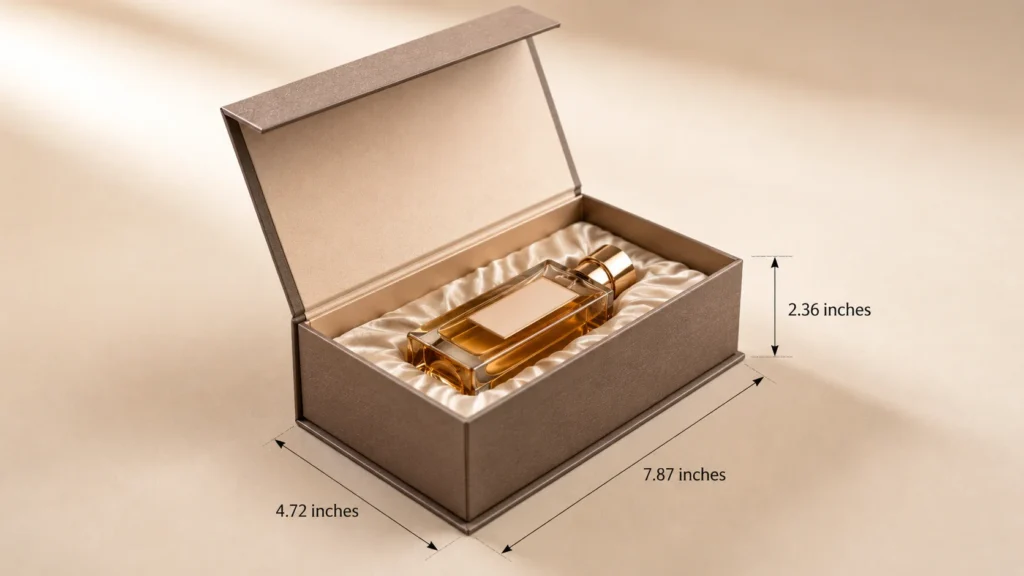
A gift box sample can help reveal many hidden production problems before they become expensive issues in bulk production. I see this stage as a practical inspection process, not just a visual approval step. A design file may show the box shape, artwork, logo position, and general style, but it cannot fully show how the box fits the product, how the lid opens, how the drawer slides, how the magnetic closure feels, how strong the board is, how secure the insert is, how premium the finishing looks, or how well the packaging performs during handling and transport. This is why I believe a physical sample is so valuable. It allows buyers to discover real packaging risks with their eyes, hands, and actual product before the full order is produced.
A Sample Can Reveal Whether the Box Size Is Truly Suitable
The first problem a gift box sample can help find is whether the box size is truly suitable for the product. In custom packaging, size is not only a matter of length, width, and height. It also affects product placement, insert design, lid fit, packing efficiency, shipping protection, and the final unboxing experience. A box may look correct in a dieline, but once the real product is placed inside, the buyer may discover that the internal space is too tight, too loose, too deep, too shallow, or visually unbalanced.
When I review a sample, I prefer to test the box with the actual product instead of only checking the dimensions on paper. This helps me see whether the product can be placed inside smoothly, whether the product sits at the right height, whether there is unnecessary empty space, and whether the customer can remove the product without effort. If the product is too tight, it may create friction, pressure marks, or an uncomfortable unboxing experience. If the product is too loose, it may move during shipping and make the packaging feel less refined. This kind of problem is difficult to judge from artwork alone because artwork does not show the real relationship between the product and the box interior.
A Sample Can Show Whether the Lid Fits Smoothly and Securely
The lid fit is one of the details I always check carefully because it immediately affects how the gift box feels in the customer’s hands. A lid that is too tight can make the box difficult to open, while a lid that is too loose can make the packaging feel unstable or inexpensive. For premium gift boxes, this small detail can influence the entire perception of quality before the customer even sees the product inside.
A physical sample helps reveal whether the lid and base have the right tolerance after greyboard thickness, paper wrapping, glue, surface paper, and assembly are all included. A lid may look perfectly aligned in a drawing, but the actual sample may show resistance, looseness, uneven gaps, or a poor opening rhythm. I usually open and close the lid several times to feel whether the movement is smooth, whether the lid stays in position, and whether the box creates the right balance between security and comfort. This is especially important for rigid gift boxes, lid and base boxes, and premium packaging where the opening experience is part of the brand impression.
A Sample Can Reveal Whether a Drawer Box Slides Correctly
Drawer gift boxes look simple from the outside, but their performance depends on precise control of space, friction, material thickness, and wrapping accuracy. A drawer that slides too tightly may feel frustrating, while a drawer that slides too loosely may feel unstable or even fall out too easily. This is why I believe drawer boxes should always be tested with a physical sample before bulk production.
When I review a drawer box sample, I pay attention to how the inner tray moves inside the outer sleeve. I check whether the drawer slides smoothly, whether the tray stays level, whether there is rubbing on the paper surface, whether the movement feels premium, and whether the drawer can be opened repeatedly without deformation. Small differences in paper thickness or wrapping layers can change the sliding experience. These details are almost impossible to judge from a digital rendering, but they become obvious when the box is tested by hand.
A Sample Can Test Whether the Magnetic Closure Feels Reliable
Magnetic closure boxes are often used for premium gift packaging because they create a clean and refined opening experience. However, the magnetic closure needs to feel reliable in real use. If the magnets are too weak, the flap may not close properly. If the magnets are misaligned, the box may close unevenly. If the board is too soft or the wrapped paper is too thick, the magnetic effect may feel less direct than expected.
When I test a magnetic gift box sample, I focus on the feeling of closing and opening the box. The closure should feel confident, smooth, and stable, but it should not feel forced or awkward. I also check whether the flap sits flat, whether the magnet position is accurate, and whether the closure remains stable when the box is gently moved or handled. This matters because customers often connect the magnetic closing feeling with the perceived value of the product. A weak or unstable closure can make the whole package feel less premium, even if the artwork and material look good.
A Sample Can Show Whether the Board Thickness Supports the Product Weight
Board thickness is one of the most practical details a sample can reveal. A specification may show a certain paperboard or greyboard thickness, but the real question is whether that thickness supports the product properly after the box is made. A material that seems acceptable in a quotation may feel too soft, too light, or too weak when used in the actual structure.
When I check a sample, I look at how the box feels when the product is placed inside, when the box is lifted, when the lid is opened, and when light pressure is applied to the surface or edges. A rigid gift box should feel stable and not easily deform. A folding carton gift box should hold its shape after assembly. A gift set box should support multiple products without bending or creating pressure points. If the sample already feels weak during normal handling, it may not perform well during retail display, warehouse movement, or shipping. This is why board thickness should be judged through both specification and physical experience.
A Sample Can Reveal Whether the Insert Holds the Product Correctly
The insert is often where many hidden packaging problems appear. A buyer may focus on the outer box first, but the insert determines whether the product is protected, displayed, and removed properly. If the insert is too loose, the product may move during transport. If the insert is too tight, the product may be difficult to remove or may suffer pressure marks. If the insert is too shallow, the product may not look secure. If the insert is too deep, the product may lose visual impact when the box is opened.
When I review an insert sample, I check how the product sits inside the box, whether the insert supports the product at the right points, whether the product surface is protected, and whether the customer can remove the item without damaging the packaging. Paperboard inserts, molded pulp inserts, EVA inserts, cardboard dividers, and custom trays all behave differently. A physical sample helps show whether the insert material and structure match the product weight, shape, surface finish, and intended presentation. For gift sets, this step is even more important because each item needs to look organized and intentional instead of randomly placed inside the box.
A Sample Can Show Whether the Surface Finishing Looks Premium Enough
Surface finishing is one of the biggest reasons gift boxes feel premium, but it can also be one of the biggest sources of disappointment if it is not checked properly. Foil stamping, embossing, debossing, spot UV, matte lamination, gloss lamination, soft-touch lamination, textured paper, and special coatings all look different in physical form compared with digital mockups. A screen can show where the finish should be placed, but it cannot show the real shine, depth, texture, pressure, and touch.
When I review a sample, I look at whether the finishing effect supports the brand style instead of simply adding decoration. Foil stamping should look clean and aligned, not broken, dull, or misplaced. Embossing should have enough depth to feel intentional without damaging the paper surface. Spot UV should create visible contrast without looking messy. Soft-touch lamination should feel smooth and premium, but it should also be checked for fingerprints, scratches, and handling marks. These details can change how customers judge the product value, so I believe they should always be confirmed with a physical sample before bulk production.
A Sample Can Reveal Color Deviation and Printing Accuracy Problems
Color is one of the most common areas where buyers can be surprised during packaging production. Colors on a screen are created by light, while printed colors are affected by paper, ink, printing method, coating, lamination, and lighting. This means that a digital proof can confirm the layout direction, but it cannot fully guarantee the final printed color on the actual material.
When I check a gift box sample, I look at whether the brand color feels correct, whether the Pantone or CMYK result is acceptable, whether large ink areas are even, whether small text remains clear, whether fine lines are sharp, and whether the logo position looks balanced on the finished box. For brands with multiple SKUs, color consistency is especially important because one slightly different shade can make the product line look less coordinated. A sample helps reveal these issues early, when color adjustment is still possible before the same print result is repeated in bulk.
A Sample Can Find Craftsmanship Problems That Artwork Cannot Show
Artwork can show design intent, but it cannot show workmanship. A gift box sample can reveal problems such as rough corners, uneven wrapping, glue marks, paper bubbles, loose edges, scratches, stains, visible seams, inaccurate folding lines, dirty surfaces, or poor alignment. These details may seem small, but they strongly affect the perceived quality of gift packaging, especially when the product is positioned as premium or gift-worthy.
When I inspect a sample, I do not only look at the most beautiful angle of the box. I also check the corners, edges, bottom surface, inner panels, opening areas, hinge areas, and areas around the insert. These are the places where production quality is often most visible. If a sample shows obvious craftsmanship problems, it gives the buyer a chance to clarify the acceptable quality standard before bulk production begins. Without this step, the same workmanship issue may appear across the whole order and become much harder to correct.
A Sample Can Reveal Whether the Packaging Can Handle Normal Use
A gift box is not only displayed in a photo. It is touched, opened, closed, packed, stacked, moved, and sometimes reused by customers. A sample can help reveal whether the packaging can handle normal use without losing shape, showing surface damage, or creating a poor experience. This kind of practical testing is especially important for gift boxes that need to be used in retail, gifting, e-commerce, or promotional campaigns.
When I test a sample, I like to handle it in a realistic way. I open and close it several times, place the product inside, remove the product, check the edges, and observe whether the structure remains stable. If the box easily deforms, scratches, loosens, or feels unstable during simple handling, it may not be suitable for larger production. A sample helps buyers see whether the packaging is strong enough for real customer interaction, not just attractive enough for approval photos.
A Sample Can Show Whether the Packaging Can Survive Transport
Transport risk is another important problem a gift box sample can help reveal. A box may look beautiful at the factory, but it still needs to survive packing, stacking, warehouse handling, loading, shipping, and delivery. If the box corners are weak, the surface is easy to scratch, the insert does not hold the product securely, or the outer carton protection is insufficient, the final packaging may arrive damaged even if the production quality was acceptable.
I believe this is especially important for export orders, retail distribution, and e-commerce fulfillment. During sample review, the buyer should consider whether the box needs stronger material, better internal support, protective wrapping, stronger outer cartons, or a different packing method. A sample cannot replace every formal drop test or shipping test, but it can reveal early warning signs. If the sample already feels fragile during normal handling, it is worth improving the packaging before thousands of boxes are produced and shipped.
A Sample Can Reveal Whether the Packaging Matches the Brand Positioning
Sometimes the issue found in a sample is not a technical defect, but a mismatch between packaging and brand positioning. A box may be the correct size, the printing may be acceptable, and the structure may function properly, but the overall feeling may still not match the product value. It may feel too basic for a luxury product, too heavy for an e-commerce product, too delicate for transport, too complicated for packing, or too plain for retail display.
When I review a sample, I always ask whether the packaging feels appropriate for the product, the target customer, the sales channel, and the price point. A premium skincare gift set may need a more refined insert and stronger structure. A candle gift box may need better support and surface protection. A jewelry box may need a more delicate opening experience. An e-commerce gift box may need more practical shipping protection. A sample helps buyers judge whether the packaging does more than meet the specification. It helps them decide whether the packaging actually supports the brand experience they want to create.
A Sample Can Help Buyers Avoid Approving Packaging Too Early
One problem I often see is that buyers approve a packaging design too early because the artwork looks attractive or the quotation seems acceptable. However, packaging approval should not be based only on appearance. A gift box sample gives buyers a chance to slow down and review the packaging as a real product before bulk production begins.
I believe this is one of the most valuable functions of a sample. It encourages buyers to ask practical questions before the order becomes difficult to change. Does the box fit the product properly? Does the structure feel reliable? Does the material match the brand level? Does the finishing look premium in real light? Does the insert protect the product? Can the packaging survive handling and transport? If these questions are answered during sample review, the buyer can move into bulk production with much more confidence and fewer hidden risks.
What Should You Check in a Custom Gift Box Sample?
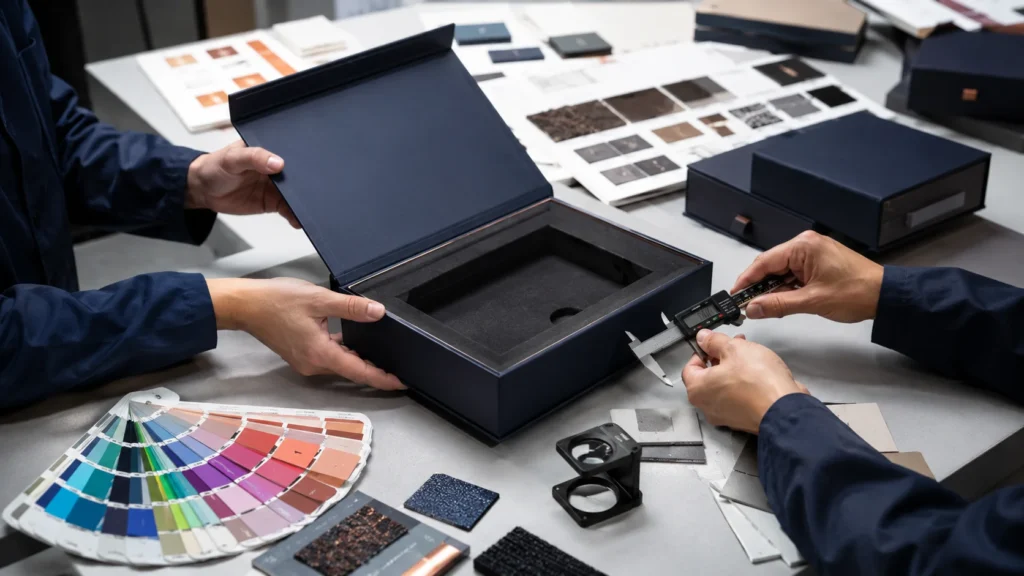
When I review a custom gift box sample, I never treat it as a simple approval photo or a beautiful presentation piece. I see it as a physical checkpoint that tells me whether the packaging is truly ready for bulk production. A good sample review should confirm not only how the box looks, but also how it fits the product, how it opens and closes, how the material feels, how the finishing performs, how the insert supports the product, and whether the overall craftsmanship can protect the brand image after mass production. In my view, the purpose of sample checking is to answer one practical question: if this exact standard is repeated across the whole order, will the final packaging be safe, consistent, attractive, and suitable for real customer use?
Check Whether the Box Size Matches the Real Product
The first thing I check in a custom gift box sample is whether the box size actually matches the real product, not only the dimensions written on a specification sheet. In packaging development, length, width, and height are only the starting point. The real fit also depends on the product shape, product weight, surface material, cap height, bottle shoulder, jar rim, accessory parts, protective spacing, insert thickness, and the way the product needs to be removed by the customer.
I always prefer to place the actual product inside the sample because this immediately reveals whether the box feels too tight, too loose, too deep, or visually unbalanced. If the product sits too low, the unboxing presentation may feel weak. If the product sits too high, the lid may press against it. If the internal space is too tight, the product may be difficult to remove or may suffer surface pressure. If the space is too loose, the product may move during shipping and make the packaging feel careless. For gift sets, I also check whether all products sit at a consistent height and whether the layout feels organized when the customer opens the box.
Check Whether the Product Fit Supports Protection and Presentation
Product fit is not only about whether the item can be placed inside the box. I also check whether the product is protected and presented in a way that matches the brand value. A custom gift box should hold the product securely, but it should not make the customer struggle to take the product out. This balance is especially important for candles, perfume bottles, skincare jars, jewelry pieces, cosmetic sets, electronics accessories, and other products where both protection and presentation influence the buying experience.
When I review the fit, I usually look at the product from the customer’s perspective. I ask myself whether the product looks centered, whether it feels stable, whether it can be removed naturally, and whether the packaging makes the product feel more valuable. A product that shakes inside the box may create concern about quality. A product that is too difficult to remove may make the packaging feel inconvenient. A good sample should show that the product is protected during movement and displayed beautifully when the box is opened.
Check the Overall Box Structure and Stability
After checking the product fit, I look at the overall structure of the gift box. A box can look attractive in artwork, but the real structure needs to remain stable when it is lifted, opened, closed, packed, stacked, and handled. I check whether the box shape is straight, whether the panels are aligned, whether the base feels balanced, and whether the structure supports the product weight without bending or twisting.
This is especially important for rigid boxes, lid and base boxes, drawer boxes, magnetic closure boxes, folding gift boxes, and gift set packaging. Each structure has its own risk points. A rigid box needs clean wrapping and strong board support. A folding box needs accurate creasing and a reliable locking structure. A drawer box needs controlled clearance. A magnetic box needs accurate alignment. If the structure feels unstable in the sample stage, I would not assume it will improve automatically in bulk production. Instead, I would treat it as a warning sign that the structure or material may need adjustment.
Check the Paper Material and Surface Feeling
Paper material affects the first impression of a custom gift box before the customer even opens it. When I review a sample, I touch the paper surface and observe how it looks under natural light and indoor light. I check whether the surface feels refined, whether the color appears clean, whether the texture matches the brand style, and whether the material looks suitable for the intended product category.
Different materials create different impressions. Coated paper can support clean printing and sharp colors. Kraft paper may create a natural or sustainable feeling. Specialty paper can add texture and depth. FSC-certified paper can support a brand’s responsible sourcing message, but it still needs to meet the required appearance and strength. I do not judge material only by its name. I judge whether it works with the box structure, printing method, finishing process, product value, and target customer expectation.
Check the Greyboard Hardness and Structural Support
For rigid gift boxes, greyboard hardness is one of the most important details to check. A box may use an attractive wrapping paper, but if the greyboard inside feels too soft or too thin, the final packaging may not feel premium enough. I usually press the sides lightly, hold the box with the product inside, and check whether the corners, lid, base, and panels remain stable under normal handling.
Greyboard quality affects not only strength but also shape control. If the board is too weak, the box may deform during stacking or shipping. If the board is too thick for the structure, it may increase cost, weight, and assembly difficulty. A good sample helps me judge whether the greyboard thickness creates the right balance between strength, appearance, cost, and practical use. For heavier products or gift sets, this check becomes even more important because the packaging must support more weight without losing its shape.
Check the Opening and Closing Experience
The opening and closing experience is one of the easiest details to underestimate, but I see it as a key part of gift packaging quality. A gift box is not only seen; it is handled. The customer will open it, feel the resistance, notice the movement, and judge whether the packaging feels intentional. This is why I open and close the sample several times instead of approving it after one quick look.
A lid should not be so tight that it feels frustrating, and it should not be so loose that it feels cheap. A magnetic flap should close evenly and securely. A drawer should slide smoothly without sticking or slipping too quickly. A folding closure should lock properly and stay in shape. These small actions can strongly influence the unboxing experience. If the box feels awkward in the sample stage, the same awkward feeling may appear across the final order and affect how customers perceive the product.
Check Magnetic Strength and Closure Alignment
If the gift box uses a magnetic closure, I check the strength and alignment very carefully. A magnetic closure should feel secure enough for normal handling, but it should still open smoothly. If the magnets are too weak, the flap may lift or fail to close properly. If the magnets are too strong, the opening experience may feel forced. If the magnets are not aligned accurately, the front flap may sit unevenly or create an unbalanced appearance.
I also check whether the magnetic closure works after the product is placed inside the box. Sometimes the added product weight or insert position can affect how the box closes. The flap should sit flat, the edges should align, and the closing movement should feel clean. For premium gift boxes, this detail matters because the closing sound and feel can create a strong impression of quality. A weak magnetic closure can make an expensive-looking box feel unreliable.
Check Drawer Smoothness and Sleeve Tolerance
For drawer gift boxes, I always test the sliding experience carefully because this structure depends heavily on tolerance control. The inner tray should slide smoothly inside the sleeve, but it should not feel loose or unstable. If the drawer is too tight, it may rub against the sleeve, damage the paper surface, or make the customer pull too hard. If it is too loose, it may slide out unexpectedly and make the packaging feel less controlled.
Drawer smoothness can be affected by many small details, including paper thickness, board thickness, wrapping accuracy, glue position, tray size, sleeve size, and surface friction. These details are almost impossible to judge from a flat dieline. A physical sample allows me to test the movement repeatedly and decide whether the drawer experience matches the product positioning. For luxury gifts, cosmetics, candles, and jewelry, this smooth movement can make the packaging feel much more refined.
Check Insert Matching and Internal Support
The insert should be checked with the same care as the outer box because it controls how the product is protected and displayed. When I review a sample, I check whether the insert fits the box correctly, whether it holds the product securely, whether it supports the product at the right points, and whether the product remains stable during gentle movement. A poor insert can make the product look unstable even when the outer box looks excellent.
I also check whether the insert is practical for packing and unboxing. If the insert is too tight, workers may need more time to place the product, and customers may find it difficult to remove the item. If it is too loose, the product may move during shipping. If it is too shallow or poorly shaped, the product may tilt or look less valuable. Paper inserts, molded pulp inserts, EVA inserts, cardboard dividers, and custom trays all behave differently, so the sample is the best time to confirm whether the chosen insert really suits the product.
Check Pantone Color Accuracy and Brand Color Consistency
Color should always be checked in physical form because digital screens cannot fully represent printed results. When a brand has a specific Pantone color or strict brand color requirement, I compare the sample against the approved reference under suitable lighting. Paper type, ink absorption, surface coating, lamination, printing method, and lighting conditions can all change how the final color appears.
I pay special attention to brand colors, background colors, product series colors, and any large printed areas. If the gift box belongs to a multi-SKU product line, even a small color deviation can make the packaging look inconsistent on shelves or in product photography. A sample gives the buyer a chance to correct color direction before bulk production, when reprinting would be much more expensive and time-consuming.
Check Printing Clarity and Artwork Position
Printing clarity is another detail I check closely. A good sample should show whether the logo is sharp, whether small text is readable, whether fine lines are clean, whether gradients are smooth, and whether large ink coverage looks even. I also check whether the artwork is centered correctly and whether the important design elements are positioned safely away from folding lines, edges, corners, and glue areas.
This matters because a gift box can lose its professional feeling if the printing is slightly blurry, uneven, or poorly aligned. Small text may become difficult to read after printing. Fine lines may break. Large ink areas may show unevenness. Artwork near edges may look too close or may be affected by wrapping. These details may not seem serious in a digital proof, but they can become very visible on the physical sample.
Check Foil Stamping Position and Cleanliness
Foil stamping is often used on logos, brand names, borders, patterns, or premium design details, so I check it carefully during sample review. The foil should be positioned accurately, transferred cleanly, and balanced with the overall artwork. If the foil is misaligned, broken, too thin, too dull, or too reflective, it can weaken the appearance of the box instead of improving it.
I usually look at the foil under different angles of light because the effect can change depending on reflection. I also check the edges of the foil area to see whether they are clean and whether there are missing parts or extra marks. Since foil stamping is highly visible on gift packaging, it should not be approved casually. A sample helps confirm whether the foil effect supports the brand’s desired level of refinement.
Check Embossing and Debossing Depth
Embossing and debossing are tactile finishes, so they need to be checked by touch as well as sight. When I review these effects, I check whether the depth feels intentional, whether the pressure is even, and whether the surrounding paper remains clean. If the embossing is too shallow, the effect may disappear under normal viewing conditions. If it is too deep, it may damage the paper surface or distort nearby printed elements.
These details are especially important for minimalist or luxury gift boxes where texture is part of the brand language. A raised logo, pressed pattern, or subtle texture can make the packaging feel more refined, but only when the effect is controlled well. A physical sample allows buyers to feel whether the embossing or debossing creates the right impression before approving the process for bulk production.
Check Lamination Feel and Practical Surface Performance
Lamination should be checked not only for appearance but also for touch and practical performance. Matte lamination can create a calm and premium feeling. Gloss lamination can make colors more vivid. Soft-touch lamination can feel smooth and elegant. However, each finish also has practical considerations. Some surfaces may show fingerprints more easily. Some may scratch during handling. Some may change the printed color slightly after application.
When I review lamination, I touch the surface, tilt the box under light, and check whether the finish matches the product positioning. I also consider how the surface will perform during packing, transport, retail display, and customer handling. A finish that looks beautiful in a sample photo may not be suitable if it becomes marked too easily. This is why I believe surface performance should be checked before approval, not after bulk production.
Check Glue Control and Assembly Cleanliness
Glue control is a small detail that can affect the whole impression of a gift box. When I inspect a sample, I check whether there are visible glue marks, uneven glue areas, open edges, loose seams, or sticky surfaces. These problems may indicate that the assembly method needs improvement or that the material and structure are not working well together.
Clean assembly is especially important for premium packaging because customers often notice small defects even if they cannot identify the technical cause. A box with visible glue marks or loose edges may feel poorly made. A sample gives buyers the chance to define the acceptable workmanship standard before production begins. If glue control is not checked at the sample stage, the same issue may appear repeatedly in bulk production.
Check Corners Edges and Edge Wrapping
Corners and edges are some of the most visible areas on a gift box, so I always inspect them carefully. For rigid boxes, edge wrapping should be clean, tight, and smooth. The corners should not look bulky, rough, dirty, open, or uneven. For folding boxes, edges and creases should be clean, without cracking, whitening, or tearing after assembly.
Poor edge wrapping can make a box look unfinished even when the front design is attractive. Rough corners can also become more noticeable after shipping or handling. When I check a sample, I look at the box from different angles and inspect both the outside and inside edges. These details help me judge whether the craftsmanship is suitable for the brand level and whether the box can maintain a refined appearance in real use.
Check Folding Lines Creases and Assembly Practicality
For folding gift boxes, crease quality and assembly practicality are essential. I check whether the folding lines are accurate, whether the paper cracks when folded, whether the structure forms cleanly, and whether the locking areas work smoothly. A folding box should not only look good after assembly; it should also be practical for production workers to fold and pack efficiently.
If the crease is too shallow, the box may not fold properly. If it is too deep, the paper may weaken or crack. If the locking structure is difficult to use, it may slow down packing or create inconsistent box shapes during bulk production. A physical sample helps reveal whether the folding design is realistic for both manufacturing and customer use.
Check Surface Scratches Marks and Cleanliness
Surface cleanliness is another important part of sample inspection. I check whether the box has scratches, fingerprints, pressure marks, dust, stains, bubbles, color rub-off, or uneven coating. These issues are especially noticeable on dark colors, soft-touch lamination, gloss surfaces, metallic foil, and large solid-color areas.
I usually inspect the surface under different light angles because some marks are not obvious at first glance. If the chosen material or finish is highly sensitive to scratches or fingerprints, the buyer may need to consider improved packing protection, alternative finishing, or stricter handling requirements. A gift box should not only look beautiful when freshly made; it should remain presentable after normal handling and delivery.
Check Overall Craftsmanship From Every Angle
Overall craftsmanship should be reviewed from every angle, not only from the best-looking side. I check the front, back, bottom, inside, corners, edges, opening areas, insert area, and any place where materials meet. This gives me a more realistic understanding of the sample quality and whether the same standard can be repeated in bulk production.
A good custom gift box should feel consistent. The outside should look refined, the inside should be clean, the structure should feel stable, the surface should be well finished, and the product should sit properly. If one part feels much weaker than the rest, it may affect the overall packaging experience. This is why I believe sample inspection should be patient and detailed rather than rushed.
Approve the Sample Only When Appearance and Function Both Work
The final point I always emphasize is that a custom gift box sample should be approved only when appearance and function both work. A beautiful sample is not enough if the product does not fit, the insert is unstable, the lid is uncomfortable, the material feels weak, or the surface is too easy to damage. At the same time, a functional box still needs to support the brand visually and emotionally.
In my view, the approved sample should become a reliable production reference. It should show the expected size, structure, material, printing color, finishing effect, insert fit, assembly quality, and overall presentation. If the sample can meet these expectations, it gives the buyer and manufacturer a clearer standard for bulk production. If it cannot, it is better to revise the sample before the project moves forward, because correcting one sample is always easier than correcting a full production order.
Digital Proof vs Physical Sample
A digital proof and a physical sample are both important in custom gift box development, but they should not be used to answer the same question. When I review a digital proof, I am mainly asking whether the visual design is arranged correctly. When I review a physical sample, I am asking whether the box can actually become a reliable production standard. This difference matters because a gift box is not only a flat design with artwork, logo, color, and text. It is a physical packaging product with material thickness, structure, touch, movement, insert support, finishing effects, and shipping performance. A digital proof can reduce artwork mistakes, but a physical sample reduces production risk.
A Digital Proof Is Useful for Reviewing Visual Accuracy
When I receive a digital proof, I treat it as a visual confirmation tool. It helps me check whether the artwork is placed correctly on the dieline, whether the logo is facing the right direction, whether the text is readable, whether the front panel looks balanced, and whether the side panels connect logically with the overall design. This stage is very useful because many avoidable mistakes can be found before any physical material is used.
I also use the digital proof to check whether important design elements are too close to the edges, folding lines, glue areas, or wrapping areas. In custom gift box production, a logo that looks safe in the center of a flat artwork file may appear too close to the edge after the box is wrapped or folded. Product information, barcode areas, certification marks, and brand messages also need to be checked before sampling. In this sense, I see the digital proof as an important first filter, but not as the final approval for production.
A Digital Proof Helps Align Designers Buyers and Suppliers
Another value of a digital proof is that it helps different people involved in the project align their understanding before a sample is made. In many packaging projects, the designer focuses on the visual concept, the buyer focuses on product presentation and budget, and the supplier focuses on production feasibility. A digital proof gives everyone a common visual document to review before the project moves into physical development.
However, I always remind buyers that this alignment is still based on a screen. A digital proof can show where the logo should be placed, where the artwork should appear, and how the design is intended to wrap around the box. It cannot fully prove whether the real material, structure, insert, or finishing will work as expected. This is why I see digital proofing as a communication step, not a complete production approval step.
A Digital Proof Can Confirm Layout but Not Real Box Behavior
A digital proof is excellent for checking layout, but it cannot show how the finished box behaves. A gift box may look balanced in flat artwork, yet the real box may feel too tight, too loose, too heavy, too light, or unstable when handled. The digital file does not show how the lid opens, how the drawer slides, how the magnetic closure feels, how the folding lines behave, or how the structure supports the product weight.
This is where many buyers misunderstand the role of digital proofing. They may think that if the artwork looks correct, the box is ready for bulk production. In reality, packaging approval should not stop at visual layout. The final box needs to be touched, opened, closed, packed, and tested with the real product. A physical sample answers these practical questions in a way that digital artwork cannot.
A Digital Proof Can Show Color Direction but Not Final Color Reality
Color is one of the areas where digital proofing can create false confidence. A digital proof can show the intended color direction, but it cannot guarantee the final printed color. Screen colors are affected by monitor brightness, display settings, and file viewing conditions. Printed colors are affected by paper type, ink absorption, printing method, coating, lamination, lighting, and the size of the printed area.
When I work with brand packaging, I never treat the screen color as the final color standard. A deep brand color may look rich on screen but appear flatter on uncoated paper. A soft pastel color may look clean in a digital proof but become warmer or duller after printing. A black background may look smooth on screen but reveal unevenness in large ink coverage. For brands that care about Pantone accuracy, shelf consistency, or multi-SKU packaging, the physical sample is the more realistic reference for color judgment.
A Digital Proof Cannot Show Paper Texture and Surface Character
Paper texture is one of the clearest reasons a physical sample is needed. A digital proof can show the design printed on a flat surface, but it cannot show whether the paper feels smooth, textured, natural, coated, soft, rough, premium, or too ordinary for the product. In gift packaging, this physical feeling is important because customers often judge packaging quality through touch before they even read the product details.
When I review a physical sample, I touch the surface and observe how the material behaves under different lighting. A textured paper may create a more refined or natural feeling, but it may also affect printing clarity. A coated paper may support sharper colors, but it may not create the same tactile depth as specialty paper. A kraft paper may support a sustainable brand image, but it may not suit every luxury product. These judgments cannot be made confidently from a digital proof because paper is not only seen; it is experienced by hand.
A Digital Proof Cannot Confirm Board Thickness and Box Strength
Board thickness and box strength are practical details that cannot be confirmed through a digital proof. A specification may mention paperboard or greyboard thickness, but the buyer still needs to know how the finished box feels after wrapping, folding, gluing, and assembly. A box may look premium in a digital rendering but feel weak if the board is too thin or the structure is not well supported.
When I check a physical sample, I lift the box, press the side panels lightly, open and close it, and place the product inside. These actions help me judge whether the structure feels stable and whether the material can support the product weight. This is especially important for rigid gift boxes, magnetic boxes, drawer boxes, candle gift boxes, cosmetic gift sets, jewelry boxes, and other packaging that needs both protection and presentation. The digital proof can show the shape, but the sample shows whether the shape has enough strength.
A Physical Sample Reveals the True Opening Experience
The opening experience is one of the biggest differences between digital proof and physical sample. A digital proof can show where the lid, drawer, flap, or magnetic closure should be, but it cannot show how the customer will feel when opening the box. Gift packaging is part of the product experience, so the way the box opens can influence the customer’s perception of quality.
When I test a physical sample, I open and close it several times. I check whether the lid is too tight, whether the drawer slides smoothly, whether the magnetic closure feels secure, and whether the folding structure locks properly. A box that looks elegant on screen may feel awkward in real use if the lid is difficult to remove or the drawer gets stuck. These problems are usually discovered only when the sample is handled physically.
A Physical Sample Shows Whether the Product Really Fits
Product fit is another area where a physical sample provides much more value than a digital proof. A digital proof can show the intended position of the product or insert, but it cannot confirm how the real product sits inside the box. Product fit depends on shape, height, weight, surface finish, tolerance, insert thickness, and the way the customer removes the item.
When I review a sample, I prefer to place the actual product inside the box. This immediately shows whether the internal space is comfortable, whether the product moves during handling, whether the insert holds the product securely, and whether the product can be removed without difficulty. For gift sets, I also check whether the products sit at the same visual level and whether the layout feels organized. A beautiful digital layout may still fail if the physical product does not fit naturally.
A Physical Sample Confirms Insert Support and Internal Protection
A digital proof can show the general insert design, but it cannot fully prove whether the insert will protect the product. Inserts need to hold the product securely, prevent movement, avoid surface damage, support the unboxing presentation, and remain practical for packing. These details depend on material, tolerance, product shape, and assembly method.
When I review a physical sample, I check whether the insert is too tight, too loose, too shallow, or too difficult to use. I also check whether the product can move when the box is handled and whether the customer can remove the item smoothly. A paper insert, molded pulp insert, EVA insert, cardboard divider, or custom tray may all look acceptable in a drawing, but their real performance can only be judged when the product is placed inside the physical sample.
A Digital Proof Cannot Show Foil Pressure and Metallic Reflection
Foil stamping is often used to create a premium effect, but a digital proof cannot fully show how the foil will look on the finished box. The final result depends on foil material, stamping pressure, tool accuracy, temperature, paper surface, and alignment. A digital proof can show where the foil should be placed, but it cannot show whether the foil edge will be clean, whether the pressure will be suitable, or whether the metallic reflection will match the brand style.
When I review a physical sample, I check the foil from different angles because metallic effects change under light. I look at whether the foil is aligned with the artwork, whether the edges are sharp, whether there are broken areas, and whether the shine feels premium or too strong. Since foil stamping is often placed on logos and brand names, even a small issue can affect the perceived quality of the whole box.
A Digital Proof Cannot Show Embossing and Debossing Depth
Embossing and debossing are tactile processes, so they cannot be properly evaluated through a digital file. A proof can mark where the effect should appear, but it cannot show real depth, edge definition, pressure balance, or hand feel. These details are important because embossing and debossing often create a quiet premium effect rather than a purely visual decoration.
When I check a physical sample, I feel the raised or pressed area with my fingers and observe how it looks under light. If the embossing is too shallow, it may not be noticeable enough. If it is too deep, it may damage the paper or make the design look heavy. If the pressure is uneven, the finish may feel poorly controlled. A physical sample gives the buyer a real basis for deciding whether the tactile effect supports the brand image.
A Digital Proof Cannot Show Lamination Touch and Handling Sensitivity
Lamination can change the entire surface feeling of a gift box, but it cannot be judged accurately from a digital proof. Matte lamination, gloss lamination, soft-touch lamination, and special coatings all create different visual and tactile experiences. A digital proof may show the design, but it cannot show whether the surface feels smooth, soft, slippery, plastic-like, refined, or sensitive to marks.
When I review a sample, I touch the surface and check how it reacts to normal handling. Soft-touch lamination may feel premium, but it can show fingerprints or scratches more easily. Gloss lamination may make colors brighter, but it can reflect light strongly. Matte lamination may look elegant, but it may reduce color intensity. These differences matter because gift boxes are handled during packing, shipping, retail display, and customer unboxing. A physical sample helps buyers decide whether the surface finish is practical as well as attractive.
A Digital Proof Cannot Predict Shipping Performance
Shipping performance is completely outside the ability of a digital proof. A box may look perfect in artwork, but that does not mean it can survive stacking, warehouse movement, international shipping, retail handling, or e-commerce fulfillment. Transport performance depends on board strength, box structure, insert support, surface durability, outer carton packing, and the weight and fragility of the product.
When I review a physical sample, I think about the full journey of the packaging. I check whether the corners feel vulnerable, whether the surface marks easily, whether the product moves inside the box, and whether extra packing protection may be needed. A physical sample does not replace formal shipping tests, but it helps reveal obvious risks before bulk production begins. If the sample feels fragile during normal handling, it is usually worth improving the structure or packing method before producing the full order.
Can I Approve Only the Digital Artwork Instead of Making a Sample?
Many buyers ask whether they can approve only the digital artwork instead of making a physical sample. I understand this question because digital approval is faster, easier, and cheaper at the beginning. If the project is a repeat order with the same structure, same material, same artwork, same finishing, and a previously approved production standard, digital approval may be acceptable for small updates.
However, for a new custom gift box project, I would be careful about relying only on digital artwork. If the project includes a new supplier, new product size, new structure, custom insert, special finishing, strict color standard, premium material, large quantity, or export shipping, a physical sample is much safer. Without a sample, the buyer is approving the idea of the box, not the real box. The artwork may be correct, but the final packaging may still have problems with fit, material, closure, finishing, touch, or protection.
Digital Proof and Physical Sample Should Be Used in the Right Order
In my view, digital proof and physical sample should work together in the right order. The digital proof should come first because it helps confirm artwork layout, logo position, text placement, panel direction, and general visual arrangement. Once the digital proof is clear, the physical sample should be used to confirm material, structure, product fit, insert support, finishing effect, opening experience, surface touch, and practical performance.
This process helps reduce both design risk and production risk. If a buyer skips digital proofing, the sample may be made with avoidable artwork mistakes. If a buyer skips physical sampling, the artwork may look correct but the real box may not perform well. When both steps are used properly, the buyer has a much stronger basis for approving the packaging before bulk production begins.
How Samples Help Reduce Bulk Production Risks
A gift box sample helps reduce bulk production risks because it turns an uncertain packaging idea into a confirmed production reference. In my view, the real value of an approved sample is not only that it shows whether the box looks good. More importantly, it gives both the buyer and the factory a shared standard for material, color, structure, size tolerance, finishing position, insert fit, assembly quality, and packing method. Once this standard is confirmed, bulk production becomes easier to control because every major detail can be compared against something physical, not only against emails, artwork files, quotations, or verbal descriptions.
An Approved Sample Becomes the Benchmark for Mass Production
When a gift box sample is approved, I see it as the benchmark for the full production order. It is no longer just a trial box or a presentation sample. It becomes the reference that tells the factory what the buyer has accepted and what the bulk order should follow. This is important because custom gift box production involves many separate steps, and each step can affect the final result if there is no clear standard.
Before sample approval, many details are still flexible and sometimes abstract. The buyer may describe the box as premium, sturdy, smooth, clean, elegant, or close to the brand color, but these words can be understood differently by different people. Once a physical sample is approved, those expectations become much clearer. The factory can compare the bulk production against the sample, and the buyer can use the same sample to judge whether the final goods are close to what was confirmed. This makes the sample a practical production tool, not just a visual preview.
Samples Reduce the Risk of Material Changes During Production
Material is one of the most common areas where bulk production risk appears. A quotation may list the paper type, greyboard thickness, paperboard weight, surface paper, or FSC-certified material, but the buyer still needs to understand how those materials feel in the finished box. Once a sample is approved, it gives the factory a physical reference for the expected material strength, surface texture, box rigidity, paper touch, and overall structure.
I consider this especially important because a small material change can affect the entire packaging experience. If the bulk production material is slightly softer than the sample, the box may feel less premium. If the greyboard is not firm enough, the structure may deform more easily. If the paper surface is different, the printing color or foil stamping effect may also change. With an approved sample, the factory has a clearer reference to control material consistency, and the buyer has a stronger basis for identifying whether the bulk order has moved away from the confirmed standard.
Samples Help Control Color Before It Becomes a Full Batch Problem
Color is another risk that samples help reduce. In bulk production, once printing starts, color variation can affect every printed sheet. If the buyer only approves a digital proof, the final printed result may still be different because paper type, ink absorption, lamination, lighting, and printing method all influence the final color. An approved physical sample gives the production team a real printed reference to follow.
When I think about gift packaging, I see color as part of brand consistency. A slightly different logo color, background tone, or product series color may not seem serious during production, but it can become very noticeable when the packaging is displayed with other products or repeat orders. If the approved sample shows the expected color direction, the factory can use it as a comparison during printing and quality inspection. This does not mean every box will be visually identical under every lighting condition, but it gives both sides a much clearer color standard than a screen image alone.
Samples Help Keep Box Structure and Size Tolerance Under Control
The approved sample also helps reduce risk by defining how the box structure should feel and function. In custom gift box production, structure is not only about dimensions. It includes lid fit, drawer clearance, magnetic closure alignment, folding accuracy, internal space, insert position, and the way the product sits inside the box. A small tolerance change can create a very different user experience.
For example, if a lid becomes slightly tighter than the approved sample, customers may feel the box is difficult to open. If a drawer becomes slightly looser, the packaging may feel unstable. If the inner space changes, the insert may no longer hold the product correctly. When I review bulk production, I would not only compare measurements. I would compare the feeling of the box against the approved sample. This is why a sample is useful. It defines the correct structure in a way that numbers alone may not fully explain.
Samples Help Control Finishing Position and Surface Effects
Surface finishing often creates the premium character of a gift box, but it also increases production risk. Foil stamping, embossing, debossing, spot UV, matte lamination, gloss lamination, soft-touch coating, textured paper, and special coatings all require accurate control. If the position, pressure, depth, shine, or texture changes during bulk production, the final packaging may look different from what the buyer approved.
An approved sample gives the factory a clear finishing reference. It shows where the foil should sit, how deep the embossing should feel, how much contrast spot UV should create, and what the lamination touch should be like. I see this as especially important when the finishing is applied to logos, brand names, decorative borders, or high-visibility design elements. These details often define whether a gift box feels premium or ordinary, so they should not be left to interpretation during mass production.
Samples Help Prevent Insert Fit Problems in Bulk Orders
For gift boxes with inserts, sample approval is one of the most practical ways to reduce product protection risk. The insert controls how the product is held, displayed, and protected during handling and shipping. If the insert fit changes during bulk production, the product may move, tilt, scratch, become difficult to remove, or look poorly arranged when the box is opened.
When I approve an insert sample, I look at how the product sits inside the box, whether the product is held securely, whether it can be removed smoothly, and whether the inside presentation feels organized. After approval, this physical sample becomes the reference for the bulk insert. This is especially important for gift sets, cosmetics, candles, perfume, jewelry, skincare products, and fragile items. A small insert tolerance problem can affect thousands of boxes, so it is much safer to define the correct fit before bulk production begins.
Samples Make Assembly Quality Easier to Control
Gift box assembly involves many details that are difficult to control only through written specifications. Paper wrapping, folding, gluing, magnet placement, drawer assembly, ribbon placement, insert assembly, and final box forming all affect the finished quality. An approved sample gives the factory a clearer reference for what clean assembly should look like.
I usually pay attention to corners, edges, glue areas, inner panels, opening points, alignment, and overall box shape. These details may seem small, but they are often what make a gift box feel carefully made. If the sample has clean corners, smooth wrapping, neat glue control, and stable structure, the production team can use it as the expected workmanship level. Without this reference, assembly quality can become too subjective, especially when many workers are involved in a larger order.
Samples Help the Factory Plan a Safer Packing Method
Packing method is often discussed at the end of a project, but I believe it should be considered as part of production risk control. A gift box can be made correctly but still arrive damaged if the packing method does not protect the structure, surface, corners, or finishing details. Once the sample is approved, the factory can better evaluate how the boxes should be packed for storage, handling, export shipping, retail distribution, or e-commerce fulfillment.
A sample helps reveal whether the surface is easy to scratch, whether foil stamping needs separation protection, whether corners need stronger carton support, whether the boxes should be stacked in a certain direction, and whether the outer carton size should be adjusted. For boxes with soft-touch lamination, dark printing, delicate foil, or rigid corners, packing protection can be just as important as production quality. I see sample approval as the point where the factory can start planning how to protect the confirmed standard during shipment.
Samples Reduce the Risk of Miscommunication Between Teams
One of the biggest risks in bulk production is miscommunication. A custom gift box project may involve a buyer, product manager, designer, purchasing team, factory salesperson, engineer, printing team, finishing team, assembly workers, and quality inspectors. Each person may focus on a different part of the box. Without a physical sample, small differences in understanding can easily appear.
An approved sample helps everyone speak about the same real object. When I say the drawer should slide smoothly, the sample shows what smooth means. When I say the paper should feel premium, the sample shows the expected hand feel. When I say the foil position should be accurate, the sample shows the approved position. This reduces vague communication and makes production instructions more practical. In my experience, the more customized the box is, the more valuable this shared reference becomes.
Samples Give Quality Inspectors a Clearer Acceptance Standard
Quality inspection becomes more accurate when inspectors have an approved sample to compare against. Without a sample, inspectors may rely only on general production standards, technical documents, or personal judgment. With a sample, they can compare material, color, structure, size, finishing, insert fit, assembly quality, surface condition, and packing method against the physical reference that the buyer approved.
I see this as one of the strongest ways samples reduce risk because quality control needs a clear target. If the bulk order differs from the sample, the factory can identify whether the difference is acceptable or whether it needs correction. This makes inspection less subjective and more connected to the buyer’s actual expectations. It also helps avoid disputes after production, because both sides can refer back to the same confirmed sample.
Samples Help Reduce Rework Cost and Production Delays
A sample helps reduce bulk production risk because it allows problems to be corrected before they become expensive. If the material feels too thin, the sample can be revised. If the printed color is not close enough, printing can be adjusted. If the lid is too tight, the structure can be refined. If the insert does not hold the product well, the insert design can be improved. These changes are usually more manageable during the sample stage.
Once bulk production begins, the same corrections become much harder. Reprinting, remaking dies, changing materials, stopping assembly, repacking finished goods, or delaying shipment can create serious cost and timing pressure. For brands preparing product launches, retail deliveries, seasonal gift sets, or export orders, delays can be especially damaging. This is why I see sampling as a way to protect both quality and schedule before the larger order begins.
Samples Help Protect Brand Consistency Across Repeat Orders
An approved sample is also useful beyond the first bulk order. If a brand plans to reorder the same gift box later, the original approved sample can become a reference for future production. This helps maintain consistency across batches, especially when the packaging belongs to a long-term product line or a multi-SKU collection.
I believe this is important for mature brands because packaging inconsistency can weaken brand recognition over time. If one batch looks slightly different in color, material, finishing, or structure, customers may not know the technical reason, but they may sense that the packaging is less controlled. Keeping an approved sample as a reference helps future orders stay closer to the original standard and makes repeat production easier to manage.
Samples Help Protect the Final Customer Experience
The final customer does not see the sampling process, but they experience the result of it. They feel the box surface, open the lid, see the product inside, notice the printing, touch the finishing, and judge whether the packaging matches the product value. If the packaging feels weak, opens poorly, has color inconsistency, shows surface defects, or fails to protect the product, the customer may question the brand’s quality.
This is why I connect sample approval directly with customer experience. A well-reviewed sample helps reduce the chance that weak packaging reaches the market. It gives the buyer the opportunity to correct problems before they become part of the customer’s first impression. For gift boxes, this matters even more because the packaging is often part of the emotional value of the product. A good sample standard helps protect that experience before the order is produced in quantity.
Sample Approval Creates a Shared Standard Between Buyer and Factory
The most important lesson I want buyers to take from this section is that sample approval is not only a visual decision. It creates a shared production standard between the buyer and the factory. Once the sample is confirmed, it should guide material control, color matching, structural tolerance, finishing position, insert fit, assembly quality, packing method, and final inspection.
In my view, this shared standard is what makes sampling so valuable before bulk production. It turns expectations into something measurable and repeatable. It gives the buyer more confidence, gives the factory a clearer target, and gives the quality team a better way to inspect the final order. A sample cannot remove every production risk, but it greatly reduces uncertainty by giving everyone the same physical reference before mass production begins.
When Should Brands Request a Gift Box Sample?
A brand should request a gift box sample whenever the packaging decision involves uncertainty that cannot be safely confirmed through artwork, quotations, photos, or digital proofs alone. I usually look at sampling from a risk perspective. If the project is new, the structure has not been tested, the supplier is unfamiliar, the product is premium, the finishing is complex, the insert needs to hold the product accurately, the order will be exported, or the bulk quantity is large, a physical sample becomes much more than a preview. It becomes a practical way to confirm whether the packaging can protect the product, support the brand image, and become a reliable production standard before the full order begins.
When the Brand Is Starting a New Packaging Project
When a brand is starting a new packaging project, I always consider a sample very important because almost every detail is still unproven. At this stage, the buyer may have a design direction, a product size, a target price, and a preferred box style, but the real packaging result has not yet been tested. The box size, paper material, board thickness, printing color, surface finishing, insert structure, opening experience, and packing method all need to work together as one complete packaging system.
I have found that new packaging projects often look clear during the planning stage, but hidden issues appear once the sample is made. The product may sit too low inside the box, the material may not feel as premium as expected, the printed color may look different on the selected paper, or the structure may not open as smoothly as the buyer imagined. A sample gives the brand a chance to catch these issues early, before they become repeated in bulk production.
When the Box Structure Is New or Unfamiliar
A sample is especially necessary when the brand is using a new or unfamiliar box structure. A box structure may look simple in a reference image, but its real performance depends on tolerance, board thickness, paper wrapping, folding lines, glue position, product weight, and how the customer handles the packaging. I would not approve a new structure only from a dieline because a dieline shows the engineering direction, not the real user experience.
For drawer boxes, I would want to feel whether the drawer slides smoothly without sticking or becoming too loose. For magnetic gift boxes, I would check whether the closure feels secure and whether the flap aligns properly. For lid and base boxes, I would test whether the lid opens with the right amount of resistance. For folding gift boxes, I would check whether the creases form cleanly and whether the locking structure is reliable. A sample helps confirm whether the structure is not only attractive, but also stable, practical, and ready for mass production.
When Working With a New Supplier
When a brand is working with a new supplier, I see the sample as a practical test of both production ability and communication quality. A supplier may show good product photos, attractive pricing, and previous case examples, but the buyer still needs to understand how that supplier interprets details in a real project. A sample can reveal how they handle material selection, size accuracy, printing color, finishing alignment, insert fit, edge wrapping, glue control, and revision feedback.
In my view, the first sample from a new supplier is not only about checking the box itself. It also shows whether the supplier understands the buyer’s expectations, whether they notice production risks, whether they ask useful questions, and whether they can improve details after comments. If the sampling process is careful and responsive, the buyer can move into bulk production with more confidence. If the sampling process is careless or unclear, it may be a warning sign that larger production could bring more communication and quality risks.
When the Gift Box Has Premium Brand Positioning
Premium gift boxes should usually be sampled before production because small details carry more weight. When a product is positioned as luxury, high-end, gift-ready, or retail-focused, the customer expects the packaging to feel refined from the first touch. The paper texture, box weight, greyboard hardness, corner wrapping, logo finishing, lid fit, insert layout, and opening experience all contribute to the perceived value of the product.
I pay special attention to this because premium packaging is often judged emotionally before it is judged technically. Customers may not know the exact board thickness or printing method, but they can feel whether the box is stable, clean, smooth, and well made. A sample helps the brand confirm whether the packaging truly supports the product’s price point and brand image. If the box feels ordinary, weak, rough, or poorly finished at the sample stage, it is better to revise it before the same impression reaches customers.
When the Packaging Uses Special Finishes
A brand should request a sample when the gift box includes special finishes because these effects are difficult to judge accurately from digital artwork. Foil stamping, embossing, debossing, spot UV, matte lamination, gloss lamination, soft-touch lamination, metallic ink, textured paper, and special coatings all depend on the actual paper surface, pressure, alignment, temperature, ink coverage, and production control.
I often see special finishes as high-value but high-risk details. Foil stamping may look elegant in a mockup but appear too bright, too dull, broken, or slightly misaligned in real production. Embossing may look strong in a digital file but feel too shallow on the physical box. Soft-touch lamination may feel premium but may also show fingerprints or scratches more easily. A sample allows the brand to judge the real finishing effect before applying it across the full order.
When the Box Requires a Custom Insert
If the gift box needs a custom insert, I strongly recommend making a sample with the actual product inside. The insert is not just an internal accessory. It controls product protection, product position, visual presentation, packing efficiency, and the unboxing experience. If the insert does not fit properly, even a beautiful outer box can fail.
When I review a custom insert sample, I check whether the product sits securely, whether it moves during handling, whether the surface is protected, whether the customer can remove it easily, and whether the inside presentation looks intentional. This is especially important for cosmetics, candles, perfume, jewelry, skincare products, electronics accessories, and fragile gift items. A sample helps confirm whether the insert supports the product correctly before the insert design is repeated in bulk.
When Preparing Gift Set Packaging
Gift set packaging almost always benefits from sampling because it contains more variables than single-product packaging. A gift set may include several products with different sizes, shapes, weights, heights, and surface materials. The box structure, insert layout, spacing, product hierarchy, opening direction, and visual balance all need to work together. If one product sits too high, another sits too low, or the spacing feels crowded, the whole set may lose its premium feeling.
When I review a gift set sample, I look at the full presentation after the box is opened. I check whether the main product is visually emphasized, whether smaller items are arranged logically, whether the insert holds every item securely, and whether the layout feels clean enough for gifting. Gift sets are often used for seasonal campaigns, beauty launches, candle collections, corporate gifts, and retail promotions, so the sample helps the brand refine both protection and presentation before production.
When the Order Will Be Exported Internationally
A sample becomes more important when the order will be exported internationally because the packaging needs to survive a longer and less predictable journey. Export orders may go through factory packing, warehouse storage, carton stacking, container loading, sea or air freight, customs handling, local distribution, retail storage, or e-commerce fulfillment. During this process, gift boxes may face pressure, vibration, rubbing, humidity changes, and repeated handling.
When I review a sample for export use, I think beyond how the box looks on a table. I consider whether the corners are strong enough, whether the surface is easy to scratch, whether the insert prevents product movement, whether the product weight creates pressure marks, and whether the outer carton packing needs improvement. A gift box should not only look good when it leaves the factory. It should still look acceptable when it reaches the retailer, warehouse, or final customer.
When the Bulk Order Quantity Is Large
The larger the bulk order, the more important sample approval becomes. If a mistake appears in a small trial order, the loss may be limited. If the same mistake appears across thousands or tens of thousands of gift boxes, the cost of correction can become serious. This is why I see sampling as a cost-control step for larger production orders.
Before a large order begins, the sample helps confirm the standard that will be repeated. It allows the buyer to review material, color, size, structure, finishing, insert fit, assembly quality, and packing method before the factory commits to bulk production. Once the sample is approved, it also gives the factory and quality team a reference to follow. For larger orders, I would rather spend time confirming the sample than discover a problem after production has already scaled up.
When the Packaging Is Connected to a Product Launch
I also recommend requesting a sample when the gift box is connected to a product launch, limited edition, seasonal campaign, holiday promotion, retail display, or influencer marketing project. These projects often have fixed dates, and packaging problems can affect the entire sales plan. If the box needs revision after bulk production starts, the delay may influence product photography, shipping schedules, retailer delivery, or launch timing.
A sample gives the brand more control before the timeline becomes tight. It helps confirm whether the packaging supports the launch story, whether the finishing looks suitable for marketing, whether the product presentation is strong enough, and whether the box can be produced consistently. For launch projects, packaging is not only a container. It is part of the product experience and often part of the customer’s first impression.
When Material Artwork or Finishing Changes in a Repeat Order
A repeat order does not always require a new sample, but I would recommend sampling again if any important detail changes. If the brand changes the paper material, board thickness, artwork, Pantone color, lamination, foil stamping, embossing, insert, box size, packing method, or supplier, the risk level increases. Packaging details are connected, so one change can affect several other results.
For example, changing from coated paper to textured paper may affect color clarity and foil transfer. Changing lamination may affect the printed tone and surface touch. Adjusting artwork may affect wrapping alignment or logo position. Changing insert material may affect product support and packing efficiency. If the repeat order is not truly identical to the previous one, I would treat it as a revised project and consider making a new sample.
When a New Sample May Not Be Required
A new sample may not always be required when the brand is placing a repeat order with the same structure, same material, same artwork, same printing method, same finishing, same insert, and same packing method. If the project has already been approved before and no key details have changed, the previously approved sample can usually serve as the quality reference.
However, I would still keep the previous approved sample available for comparison. Even repeat orders can show small differences because paper batches, ink conditions, lamination results, production handling, or assembly teams may vary. The approved sample helps the buyer and factory check whether the repeat order remains close to the original standard. In my view, the previous sample is not only a memory of the last order. It is a practical quality benchmark for future production.
When the Cost of a Mistake Is Higher Than the Cost of Sampling
The simplest way I decide whether a sample is necessary is to compare the cost of making a sample with the cost of a possible mistake. If the wrong size, weak material, poor color, unstable closure, failed insert, surface defect, or shipping damage would create serious cost, delay, or brand damage, then sampling is usually the safer decision.
I do not see sampling as an unnecessary expense when the project has real risk. I see it as a practical investment in production confidence. It helps the buyer confirm whether the packaging idea works in real life, whether the supplier understands the requirements, whether the product is properly protected, and whether the final box can become a reliable standard for bulk production. When the risk is meaningful, a sample can save far more than it costs.
Common Mistakes Brands Make With Gift Box Samples
Many brands understand that making a gift box sample is important, but they still make mistakes during sample review because they treat the sample as a visual confirmation rather than a production decision. In my experience, the real value of a sample is not only to show whether the box looks close to the design. It is to help the buyer discover whether the packaging can actually fit the product, protect it, open smoothly, survive handling, match brand color expectations, and become a reliable standard for bulk production. When brands overlook these deeper details, the sample may be approved too early, and problems that could have been corrected at a low cost may later appear across the full production order.
Only Judging the Box by Its Outside Appearance
One of the most common mistakes I see is when buyers judge a gift box sample mainly by its outside appearance. They look at the front panel, the logo, the general color, and the overall style, and if the box looks attractive, they feel confident enough to approve it. I understand this reaction because the outside design is usually the first thing people notice, especially when the packaging is meant for gifting, retail display, or product photography. However, appearance alone does not prove that the box is ready for bulk production.
When I review a sample, I try to look beyond the most beautiful angle. I check how the box feels in hand, whether the structure is stable, whether the lid opens naturally, whether the product fits inside, whether the insert supports the product, and whether the inside of the box looks as carefully finished as the outside. A gift box is not experienced as a flat image. Customers touch it, open it, remove the product, and notice the details. If the buyer only approves the outside appearance, they may miss problems that affect the real unboxing experience.
Forgetting to Test the Actual Product Inside the Sample
Another mistake I often notice is approving a gift box sample without testing the real product inside it. This usually happens when the buyer assumes that the product dimensions provided earlier are enough. Measurements are necessary, but they do not always reflect the full reality of the product. A bottle may have a curved shoulder, a candle jar may have a slightly raised rim, a skincare jar may have a heavier base, or a gift set may include accessories that change how the products sit together.
I prefer to test the sample with the actual product whenever possible because this shows whether the fit is truly suitable. The product may sit too low, making the presentation look weak. It may sit too high, causing the lid to press against it. It may move inside the box during handling, or it may be difficult for the customer to remove. These are not small issues. They affect protection, packing efficiency, and customer perception. If the product is not tested during sample review, the buyer may only discover the problem after bulk production has already started.
Treating the Insert as Less Important Than the Outer Box
Many buyers spend most of their attention on the outer box and give much less attention to the insert. I think this is one of the most dangerous mistakes in gift packaging because the insert often controls how the customer experiences the product after opening the box. A beautiful outer box can create a strong first impression, but if the product inside is loose, tilted, difficult to remove, or poorly arranged, the entire packaging experience feels weaker.
When I review an insert, I look at both protection and presentation. The insert should hold the product securely during handling and shipping, but it should also make the product look organized and valuable when the box is opened. I check whether the product moves, whether the insert creates pressure marks, whether the material feels appropriate, and whether the customer can remove the item naturally. For cosmetics, candles, perfume, jewelry, skincare products, and gift sets, the insert is not a secondary detail. It is one of the main reasons the packaging feels professional.
Not Checking Whether the Closure Feels Reliable
Closure performance is another detail that can be overlooked during sample approval. Buyers may look at a closed box and feel satisfied because the overall shape looks correct, but they may not test how the box actually opens and closes. This is important because the closure affects both protection and customer experience. A box that does not close securely may feel unreliable, while a box that is too difficult to open may feel inconvenient.
When I test a sample, I open and close it several times. For a magnetic gift box, I check whether the magnets are aligned and whether the closing force feels strong enough without being awkward. For a lid and base box, I check whether the lid fit feels controlled instead of too tight or too loose. For a drawer box, I check whether the sliding movement feels smooth and stable. For a folding gift box, I check whether the locking structure holds properly. These details may not appear in photos, but they strongly affect the way customers judge quality.
Ignoring Color Differences Under Real Lighting
Color approval is a common source of misunderstanding in packaging production. I often see buyers compare a sample against a digital proof on a screen or look at the sample under one type of lighting and assume the color is acceptable. However, printed color can change depending on paper type, ink absorption, lamination, coating, surface texture, and lighting environment. A color that looks close in the factory may look different in daylight, retail lighting, or product photography.
When I review color, I try to check the sample under more than one lighting condition. If the brand has a Pantone reference, previous packaging, or approved color standard, I compare the sample against that physical reference. This is especially important for brands with multiple SKUs or repeat orders because color inconsistency can make a product line look less professional. If the buyer ignores color variation at the sample stage, the same deviation may appear across the entire bulk order.
Overlooking Corners Edges and Wrapped Areas
Corners, edges, and wrapped areas are often where the true craftsmanship of a gift box becomes visible. Many buyers focus on the front panel because it carries the logo and main artwork, but the customer will still notice rough corners, loose edges, uneven seams, visible glue, paper bubbles, or dirty inner surfaces. These details can make a premium gift box feel careless even when the design itself is attractive.
When I inspect a sample, I always look at the box from multiple angles. I check the outside corners, inside corners, edge wrapping, bottom panel, opening areas, and places where materials meet. If the wrapping is uneven or the corners are rough in the sample, it may indicate that the production method needs adjustment or that the workmanship standard is not clearly defined. These details should be discussed before bulk production because they can easily repeat across the whole order.
Skipping Surface Durability and Handling Checks
Some samples look beautiful when they are freshly made, but the surface may not perform well after normal handling. This is another mistake buyers can overlook. Soft-touch lamination, dark color printing, gloss surfaces, metallic foil, and large solid-color areas may show fingerprints, scratches, rubbing marks, dust, or pressure marks more easily than expected. If these risks are not noticed during sample review, the final packaging may arrive looking less clean than intended.
When I review a sample, I handle it in a realistic way rather than keeping it untouched. I open it, close it, hold it, place the product inside, and look at the surface under different angles of light. I want to understand whether the selected finish is practical for packing, shipping, retail display, and customer use. A surface that looks premium but marks too easily may still be risky unless the packing method is adjusted or a more suitable finish is chosen.
Forgetting to Think About Shipping Protection
Another common mistake is approving the sample based only on how it looks at the desk or in a photo. Gift boxes often need to travel through production packing, warehouse storage, carton stacking, international shipping, retail distribution, or e-commerce fulfillment. During this journey, the box may face pressure, rubbing, movement, and repeated handling. A box that looks perfect in the sample room may still arrive with crushed corners, scratched surfaces, pressure marks, or product movement.
When I evaluate a gift box sample, I think about the full journey from factory to customer. I consider whether the insert prevents the product from moving, whether the surface needs protective wrapping, whether the outer carton needs better strength, and whether the box corners are vulnerable to pressure. A sample is not a complete shipping test by itself, but it can reveal obvious risks. If the packaging feels fragile during normal handling, it should be improved before bulk production.
Approving the Sample Too Quickly Because of Deadline Pressure
I understand that many packaging projects are time-sensitive. Product launches, holiday campaigns, retail delivery schedules, and shipment deadlines can all push brands to approve samples quickly. However, approving a sample too quickly can create bigger problems later. A rushed approval may save a few days at the beginning but cause weeks of delay if the bulk production result needs rework.
When I review a sample, I try to slow down enough to check the details that matter. I look at size, product fit, material, color, finishing, insert, closure, surface condition, corners, assembly quality, and packing risk. If a problem is found during the sample stage, it can usually be corrected with much less cost and pressure. If the same problem is found after bulk production begins, the consequences are much harder to manage. This is why I believe careful sample review is often faster in the long run than rushed approval.
Failing to Record the Final Approved Version
A mistake that can create serious confusion is failing to record which sample version is finally approved. Packaging development often goes through several rounds of changes. The first sample may adjust the structure, the second may change the material, the third may correct the color, and the fourth may refine the insert or finishing. If the final approved version is not clearly recorded, different teams may follow different standards during bulk production.
I believe every final approved sample should be clearly identified and documented. The buyer and supplier should know which version is approved, what material was used, what color standard was accepted, what finishing process was confirmed, what insert design was finalized, and what packing requirement should be followed. This record helps prevent misunderstandings during production and also becomes valuable for future repeat orders. Without a clear approved version, even a good sample process can lead to confusion later.
Not Comparing the Sample With the Original Business Goal
Sometimes a sample is technically acceptable but still does not fully support the original business goal. This is a mistake buyers may miss if they focus only on production details. A gift box may have the correct size, acceptable color, clean printing, and stable structure, but it may still feel too basic for a premium product, too delicate for e-commerce shipping, too expensive for the target budget, or too complicated for efficient packing.
When I review a sample, I always connect the packaging back to its purpose. Is this box meant for luxury retail display, e-commerce fulfillment, influencer gifting, seasonal promotion, or wholesale distribution? Does it need to feel premium, practical, protective, sustainable, lightweight, or highly decorative? The sample should not only match the design file. It should match the commercial role of the packaging. If the sample does not support the actual sales channel and customer expectation, it may need further adjustment even if the technical details look acceptable.
Assuming the Sample Will Automatically Match Bulk Production
Another mistake is assuming that once the sample looks good, bulk production will automatically match it without clear control. A sample is valuable because it creates a standard, but that standard still needs to be communicated, documented, and used during production inspection. If the approved sample is not treated as a reference, the bulk order may still vary in material, color, finishing, assembly, or packing.
I see sample approval as the beginning of production control, not the end of development. After the sample is approved, it should guide material purchasing, printing, finishing, assembly, quality inspection, and packing. The buyer should make sure the factory understands that the sample is the benchmark. This helps reduce the risk that the bulk order slowly drifts away from the approved result.
Treating Sample Approval as a Visual Decision Only
The biggest mistake behind many of these problems is treating sample approval as a visual decision only. A gift box sample should not be approved only because the artwork looks close, the logo is in place, or the color appears acceptable at first glance. It should be approved because the box is ready to become a bulk production standard.
In my view, a proper sample review should answer whether the box can fit the product, protect the item, present the brand, open smoothly, close securely, survive handling, and remain consistent in production. If the answer is yes, the sample can move the project forward with more confidence. If the answer is uncertain, it is better to revise the sample before production begins. This mindset helps brands avoid preventable mistakes and protect the final packaging result before it reaches customers.
As I have discussed throughout this guide, a gift box sample is not just a visual preview before bulk production. It is a practical checkpoint that helps confirm whether the packaging can truly work in real use. Artwork files, digital proofs, quotations, and mockups can help define the direction of a custom gift box project, but they cannot fully show how the final box will feel, open, close, support the product, protect the item, present the brand, or perform during handling and shipping. This is why I believe sample approval should be treated as a serious production decision rather than a small optional step.
From my experience, many packaging problems become expensive only because they are found too late. If the box size is not suitable, the material feels too weak, the lid is too tight, the drawer does not slide smoothly, the magnetic closure feels unstable, the insert does not hold the product securely, the printed color is not close enough, or the finishing effect does not match the brand image, these issues are much easier to correct during the sampling stage. Once bulk production begins, the same changes may affect materials, printing, tooling, assembly, packing, delivery time, and overall project cost.
A well-reviewed gift box sample gives both the buyer and the manufacturer a shared physical standard. It helps control material, structure, color, finishing, insert fit, opening experience, craftsmanship, and packing method before the order moves into mass production. More importantly, it helps reduce uncertainty. Instead of relying only on assumptions, both sides can compare the final production result with a confirmed reference. This makes the project more stable, more predictable, and easier to manage.
I also believe that sample approval protects more than the production process. It protects the brand experience. Customers may not understand the technical details behind paperboard thickness, foil stamping pressure, insert tolerance, or color matching, but they can quickly feel whether the packaging is refined, stable, clean, and trustworthy. A gift box often creates the first physical impression of a product, so finding problems before bulk production is one of the most practical ways to protect product value and customer trust.
If you are planning a custom gift box project and want a more reliable path from design confirmation to bulk production, BorhenPack can help you review structure, materials, printing, finishing, inserts, sampling, and production details with a practical manufacturing perspective. As a paper box packaging supplier, we focus on helping brands turn packaging ideas into stable, production-ready paper box solutions. If you are looking for a long-term paper box packaging supply partner, BorhenPack can work with you to develop custom packaging that is easier to approve, easier to produce, and easier to repeat with consistent quality.