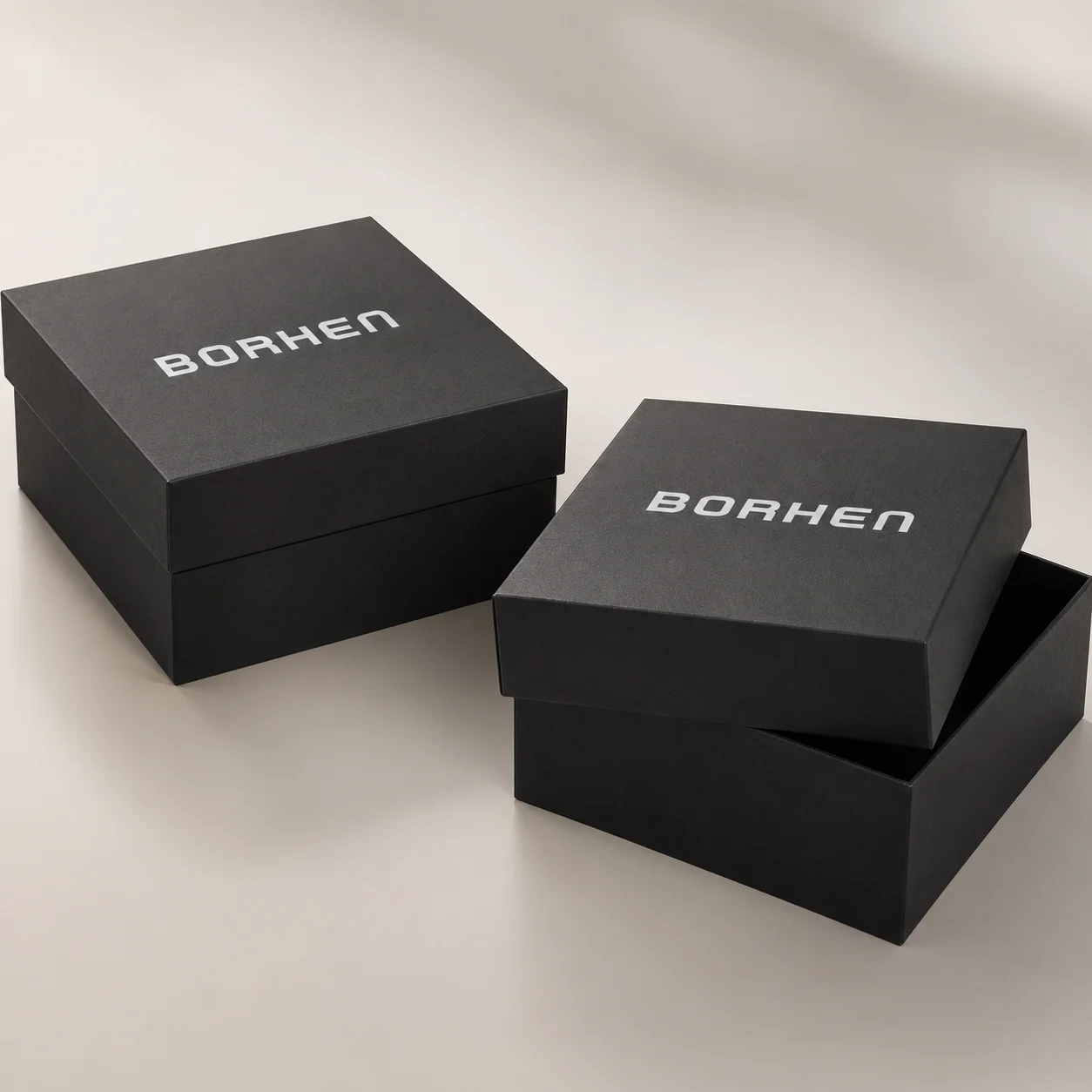
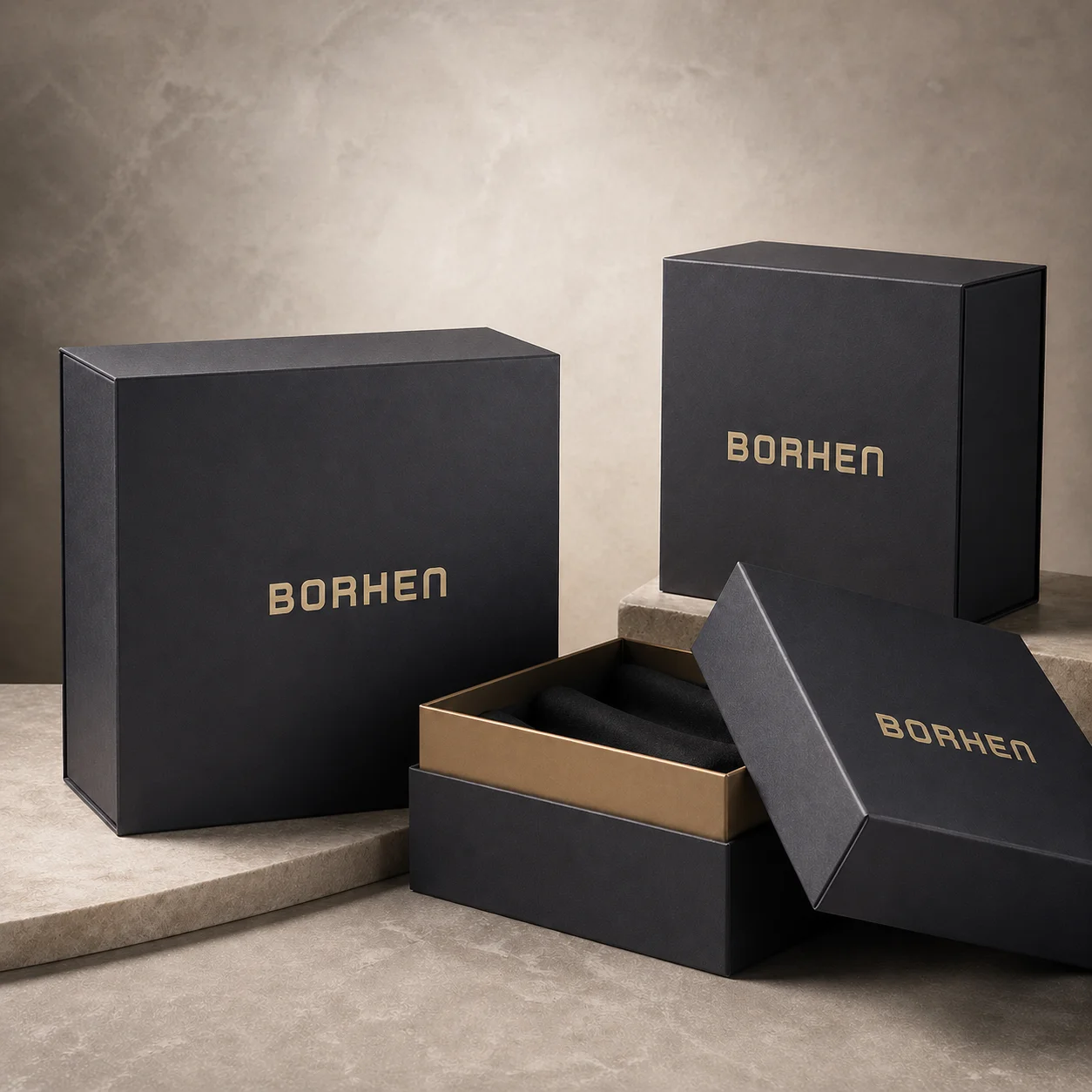
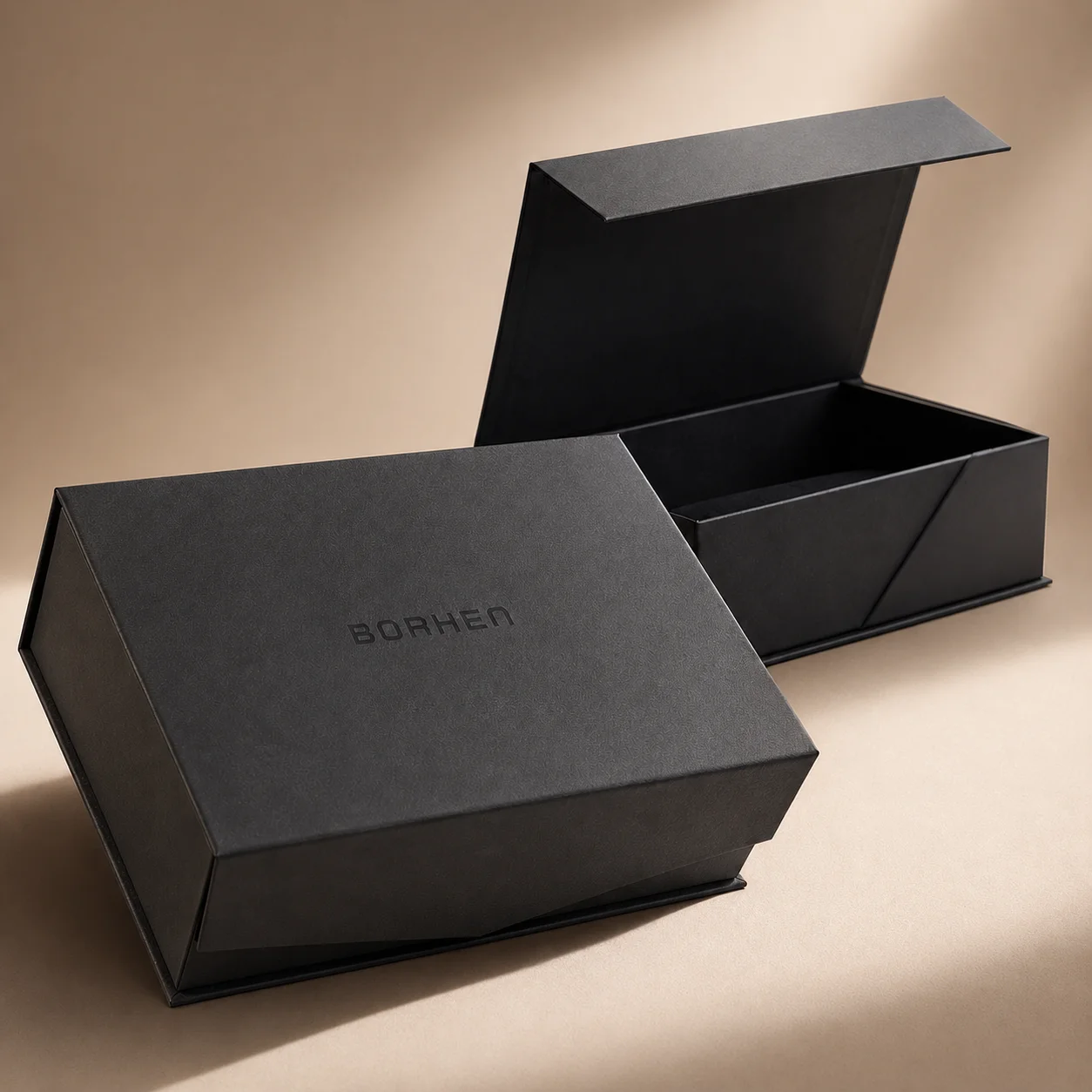
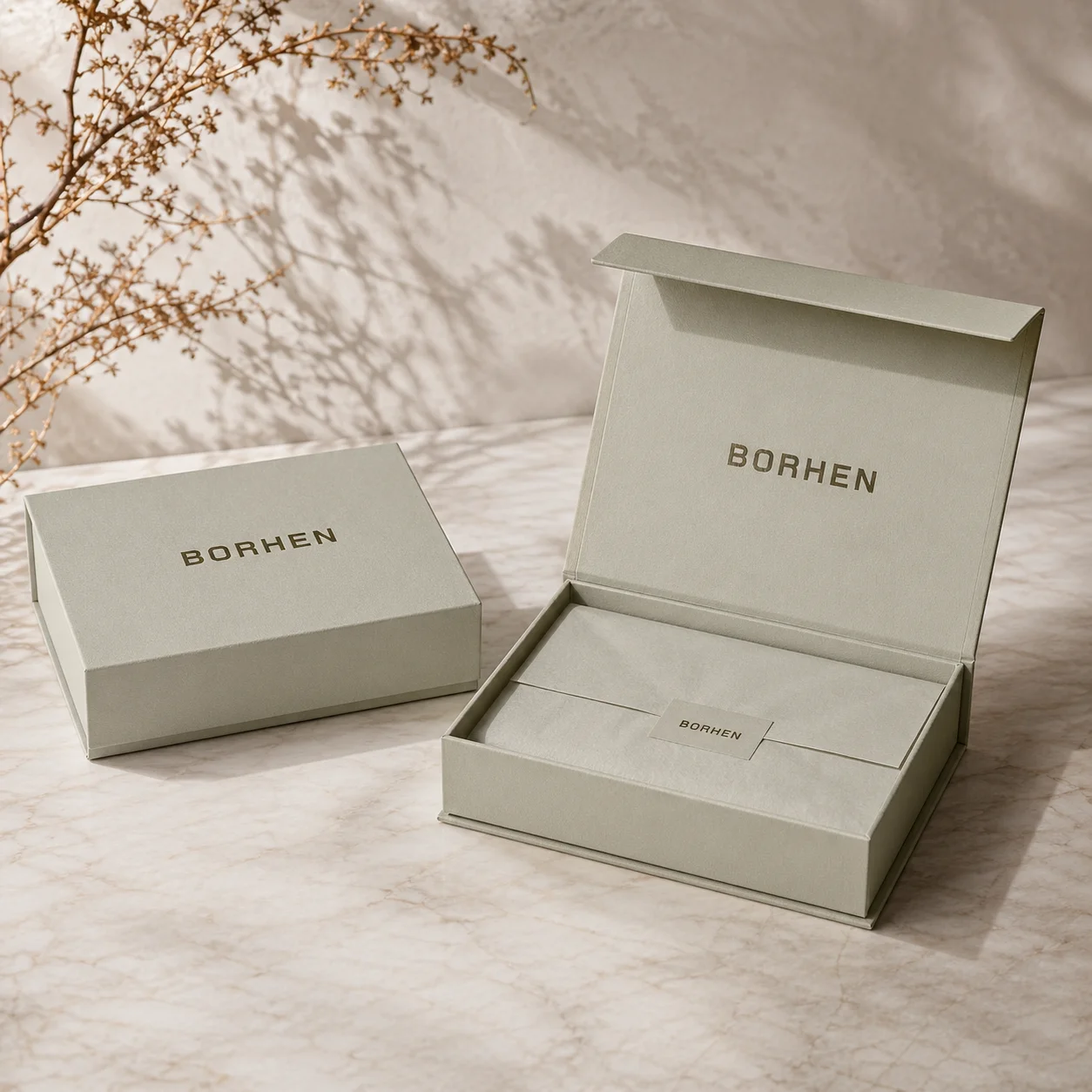
Your Trusted Custom Rigid Boxes Manufacturer in China

You get custom rigid boxes built for premium presentation, reliable structure, refined finishing, and stable repeat production — so your packaging projects move from sample approval to bulk orders without delays, rework, or supply-chain surprises.

Custom Rigid Boxes for Premium Packaging and Stable Production

At BorhenPack, we know a custom rigid box is not just a stronger paper box. It is often the packaging format a brand chooses when the product needs to feel more premium, more protected, and more valuable from the first touch. The thickness of the board, the smoothness of the wrapping paper, the way the lid opens, the accuracy of the finishing, and how the product sits inside the box all influence whether the final packaging feels refined, trustworthy, and ready for the market. That is why we approach custom rigid box manufacturing from both a brand presentation and production execution perspective.
 
We work with brands, procurement teams, importers, distributors, and growing e-commerce businesses that need rigid boxes that look premium but also perform reliably in real business conditions. Some customers need magnetic closure rigid boxes for cosmetics, fragrance, jewelry, or luxury gift sets. Others need drawer rigid boxes, two piece rigid boxes, shoulder neck boxes, book style boxes, or rigid boxes with inserts for product launches, retail display, e-commerce packaging, or long-term supply programs. In every case, the packaging needs to balance appearance, structure, cost, production feasibility, shipping protection, and repeat order consistency.
 
As your custom rigid box manufacturing partner in China, we help turn packaging ideas into solutions that can be sampled, produced, shipped, and reordered with greater confidence. We support decisions around rigid box structure, chipboard thickness, wrapping paper, inserts, printing, foil stamping, embossing, debossing, spot UV, and other finishing details, so the approved sample can become a practical standard for bulk production. Whether you are upgrading your brand packaging, developing a new premium product line, or sourcing a reliable long-term rigid box supplier, our goal is to help your packaging look refined, fit the product properly, work in production, and remain consistent across repeat orders.

Magnetic Closure Rigid Boxes

Drawer Rigid Boxes

Two Piece Rigid Boxes

Shoulder Neck Rigid Boxes

Book Style Rigid Boxes

Flip Top Rigid Boxes

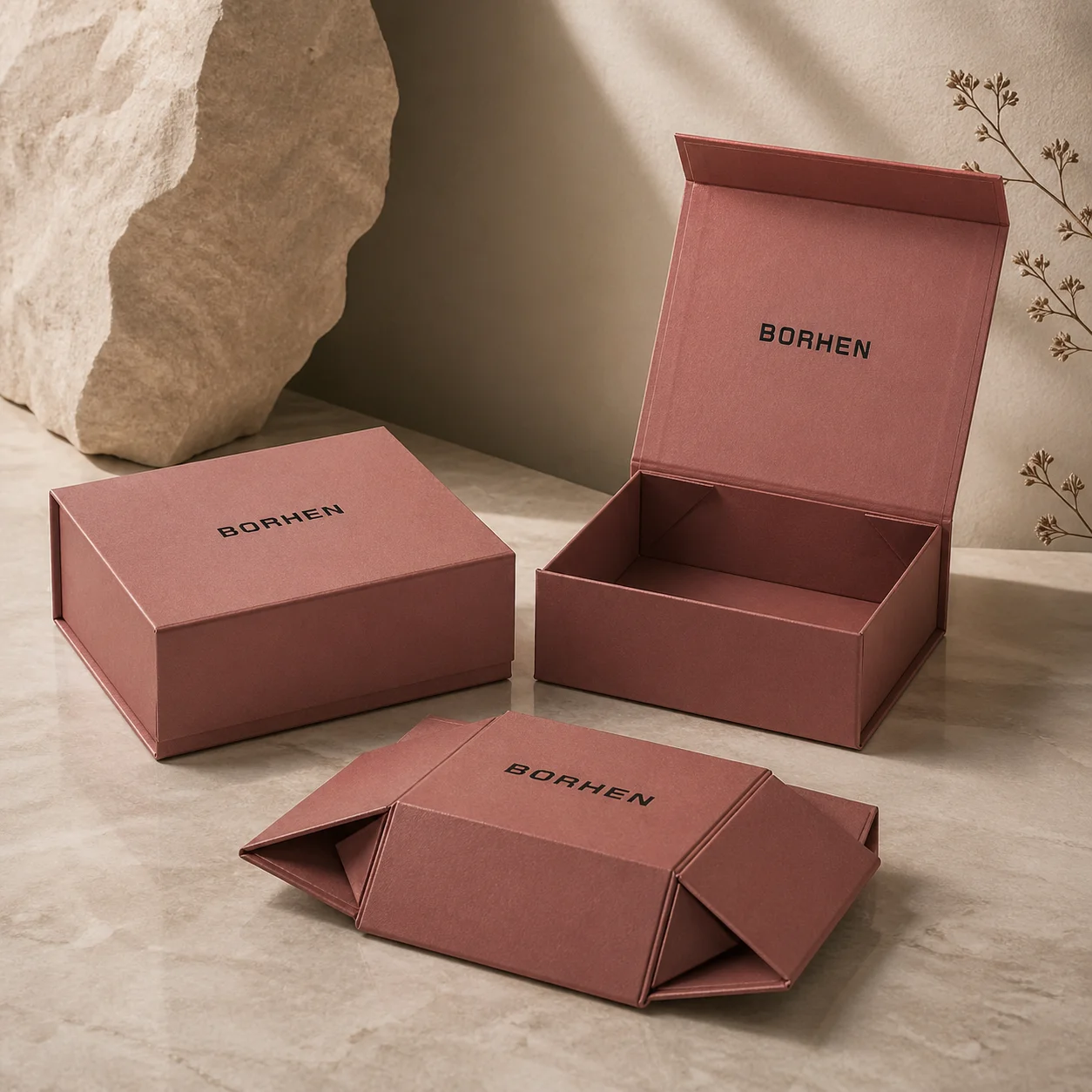
Collapsible Rigid Boxes

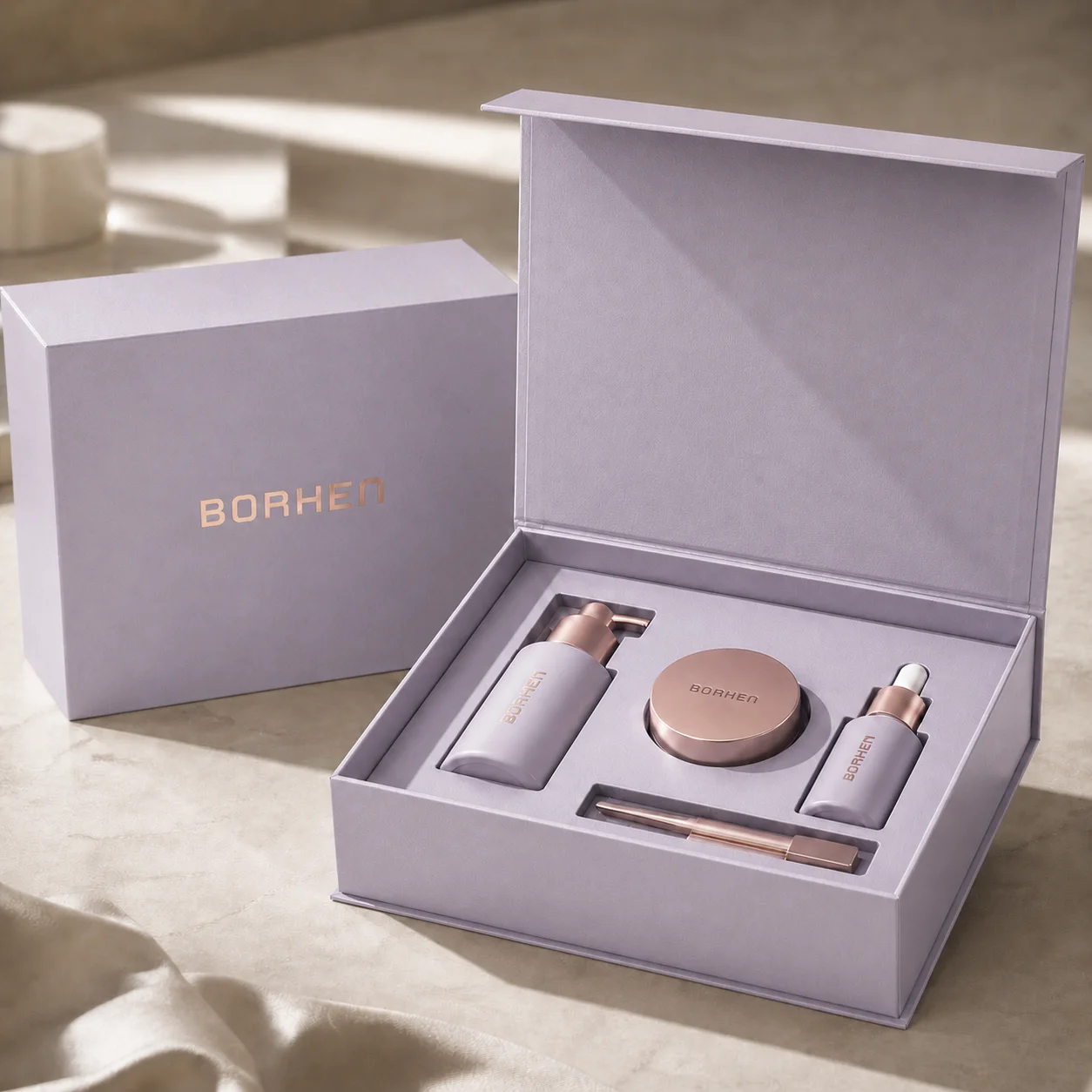
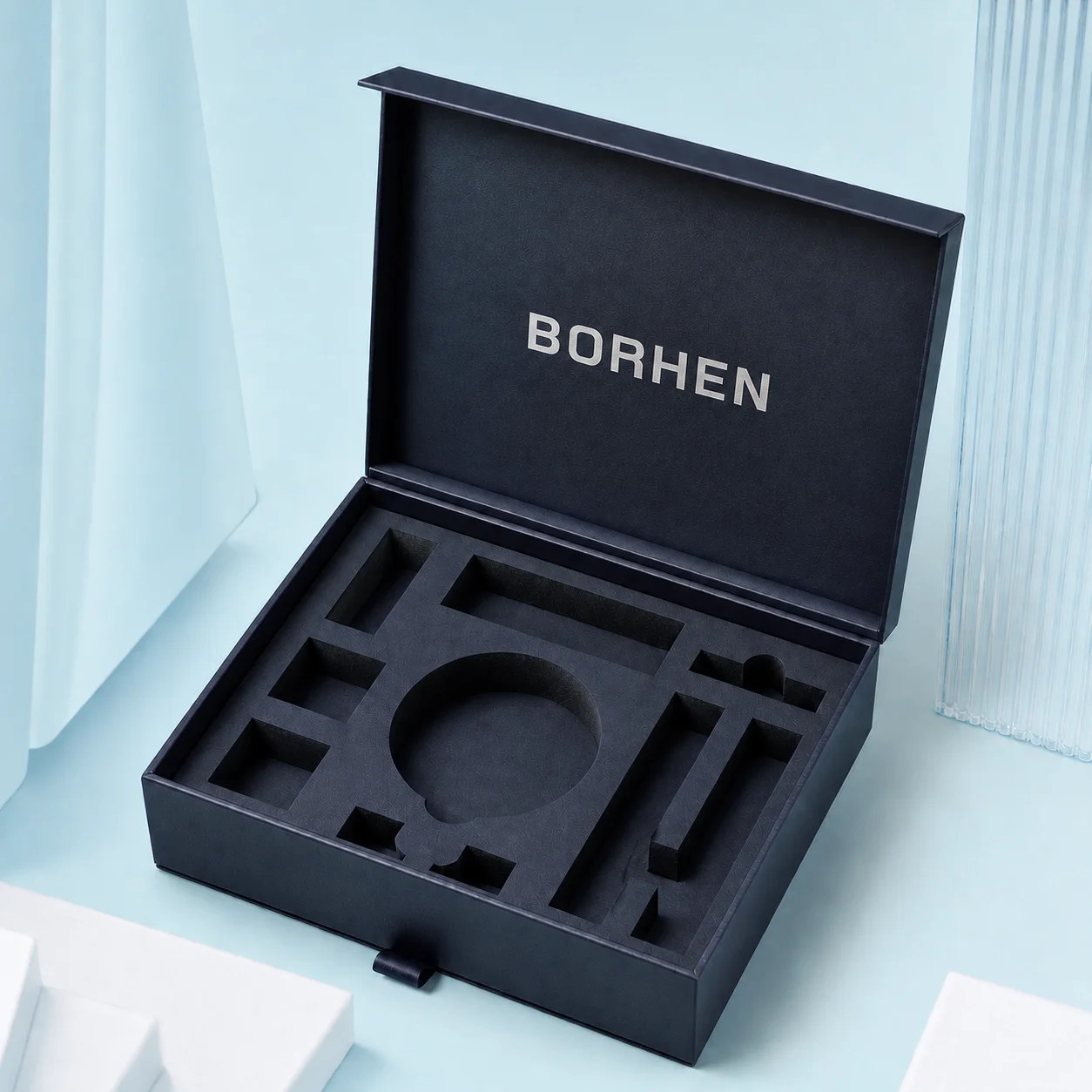
Rigid Boxes with Inserts

Build Custom Rigid Boxes That Strengthen Product Value — Not Just Packaging Appearance

At BorhenPack, we believe custom rigid boxes are more than premium-looking packaging. They influence how your product is perceived, how safely it is protected, how smoothly it is presented, and how consistently your packaging can be produced again for future orders. The thickness of the chipboard, the quality of the wrapping paper, the accuracy of the finishing, the opening feel of the lid, and the way the product sits inside the insert all affect whether a rigid box feels refined, reliable, and ready for real market use.
 
We work with brands, procurement teams, importers, distributors, and growing e-commerce businesses that need rigid boxes to perform beyond the first sample. Some brands need magnetic closure rigid boxes that create a premium opening experience. Others need drawer rigid boxes, two piece rigid boxes, shoulder neck boxes, book style boxes, or rigid boxes with inserts that support product protection, retail presentation, e-commerce delivery, and long-term repeat orders. For us, a successful rigid box is not only about how it looks in a photo. It must also work in production, packing, shipping, and future reorders.
 
As your custom rigid box manufacturing partner in China, we help turn packaging ideas into structures that can be sampled, produced, shipped, and reordered with greater confidence. We review rigid box structure, material selection, chipboard thickness, insert fit, artwork placement, foil stamping, embossing, debossing, spot UV, and other finishing details before production decisions are finalized. Our goal is to help your custom rigid boxes protect your products, strengthen your brand presentation, reduce production risks, and remain consistent across bulk production and repeat orders.

Premium Product Value

Rigid boxes help products feel more valuable through stronger chipboard, refined wrapping paper, accurate finishing, and a more structured opening experience.

Product Fit and Protection

Custom inserts, correct box dimensions, and suitable board strength help keep products stable during packing, shipping, retail display, and customer unboxing.

Production Feasibility

Magnetic closures, drawer structures, shoulder neck boxes, foil stamping, embossing, and inserts should be reviewed before sampling and bulk production to reduce production risks.

Repeat Order Consistency

For brands and procurement teams, the approved sample should become a stable production standard, helping future orders stay consistent in structure, material, color, and finishing.
Our Most Requested Custom Rigid Box Options
1️⃣ Magnetic Closure Rigid Boxes
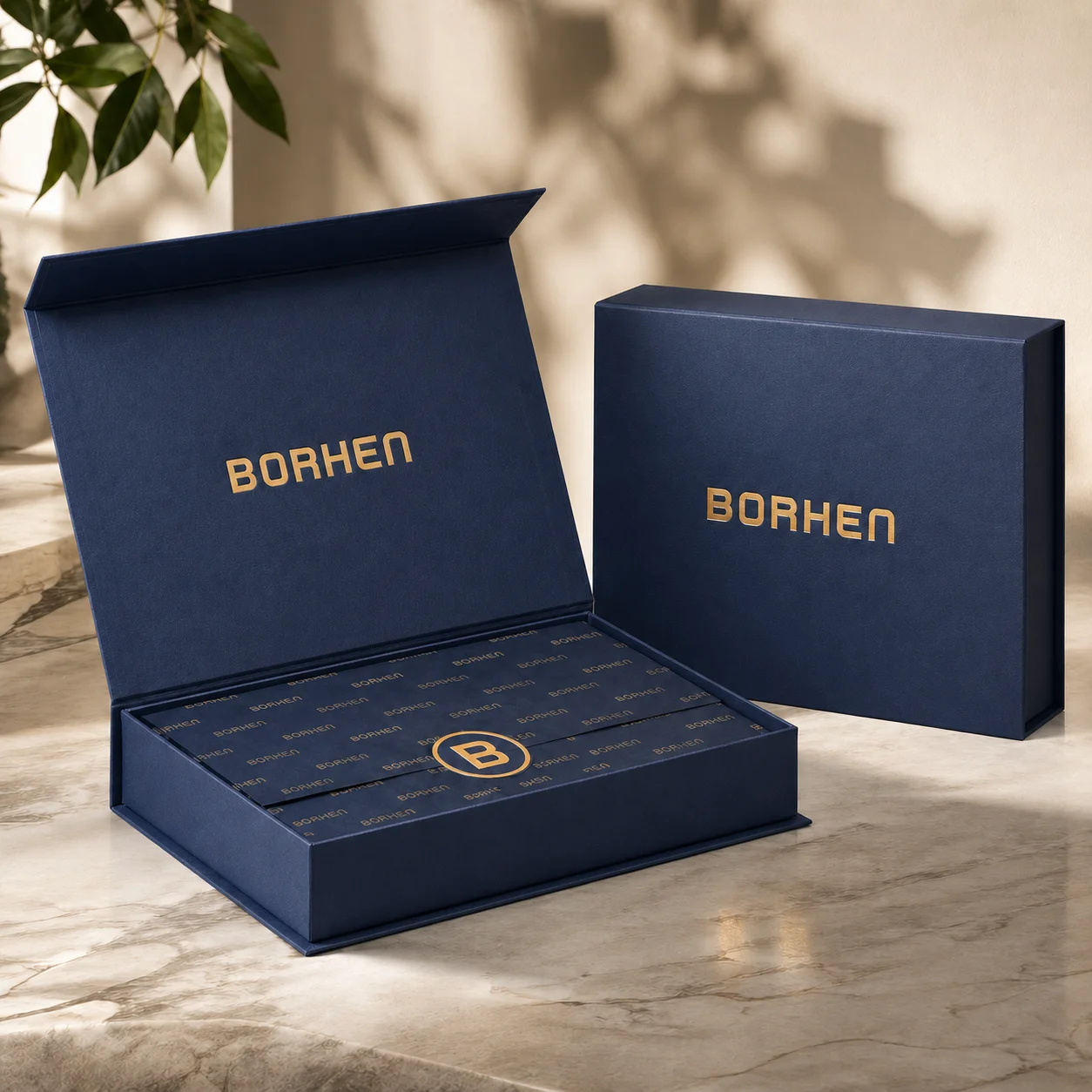
Magnetic closure rigid boxes are often chosen by brands that want a refined opening experience and a stronger premium impression. They are commonly used for cosmetics, fragrance, jewelry, electronics accessories, gift sets, and luxury retail packaging. The value of this structure is not only in the magnetic closure itself, but also in how the board thickness, magnet position, wrapping paper, finishing, and insert design work together to create a smooth and consistent customer experience.
2️⃣ Drawer Rigid Boxes
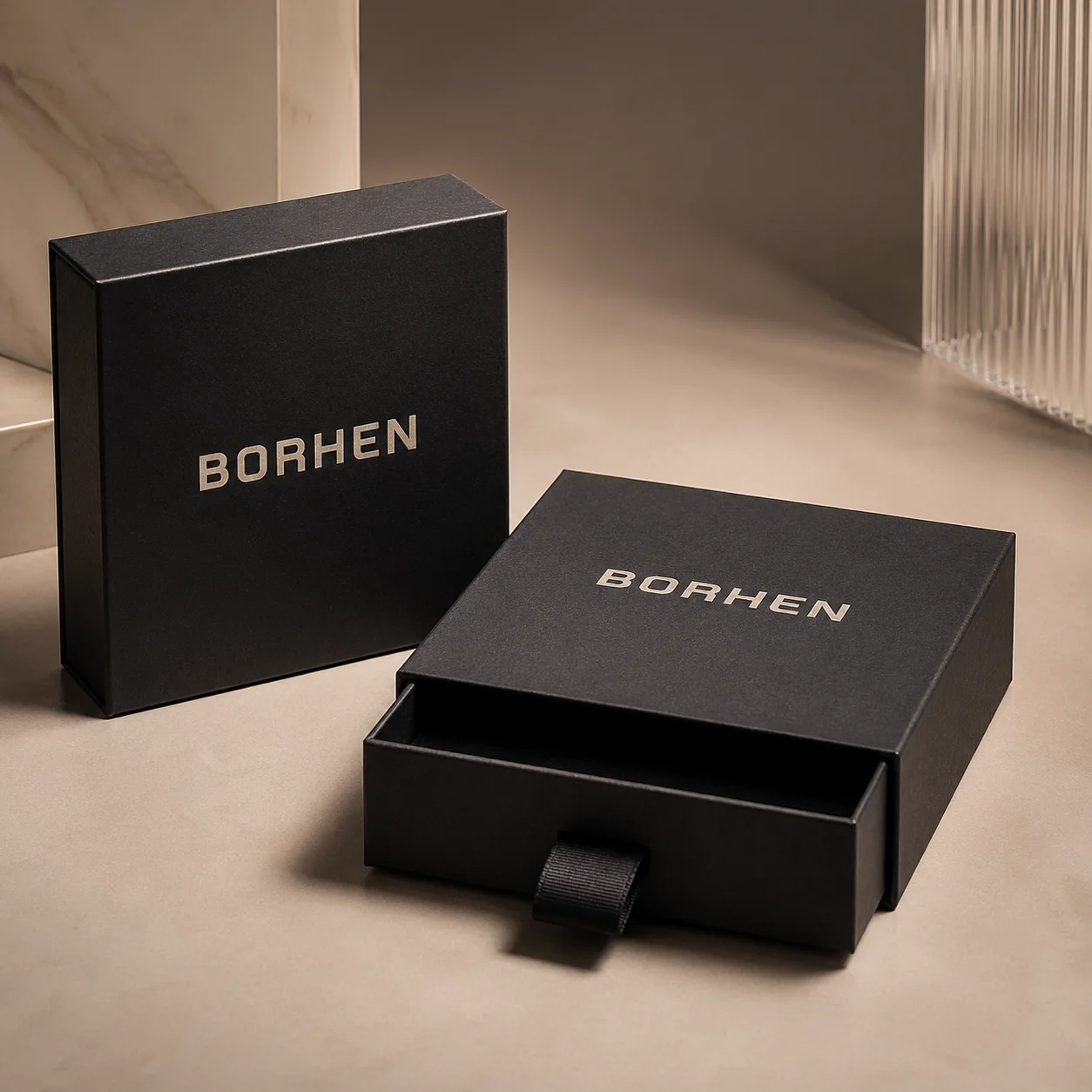
Drawer rigid boxes are suitable for products that need a layered reveal and a more controlled presentation. They work well for accessories, beauty products, electronics, jewelry, premium samples, and gift sets. During production, the relationship between the inner tray and outer sleeve must be carefully controlled, because a drawer box should slide smoothly without feeling too tight, too loose, or unstable during repeated handling.
3️⃣ Two Piece Rigid Boxes
Two piece rigid boxes, also known as lid-and-base rigid boxes, offer a classic and reliable structure for premium product packaging. They are widely used for apparel, cosmetics, accessories, luxury gifts, retail products, and brand presentation sets. This structure is often preferred by procurement teams because it is clean, flexible, and suitable for repeat production across different product lines.
4️⃣ Rigid Boxes with Inserts
Rigid boxes with inserts are designed for projects where product fit, protection, and presentation are all important. Inserts can help hold bottles, jars, jewelry, electronics accessories, gift sets, or multi-piece products in the correct position. Depending on the product and brand positioning, we can help review paperboard inserts, EVA foam inserts, molded pulp inserts, fabric-covered inserts, or custom compartments to balance protection, appearance, cost, and production feasibility.
Practical Customization, MOQ, and Scalability for Rigid Box Projects
At BorhenPack, we design custom rigid box projects to be realistic from the beginning and scalable as your business grows. Rigid boxes usually involve more material, more structural detail, and more production steps than standard folding cartons. Chipboard thickness, wrapping paper, box size, opening structure, insert material, printing method, finishing process, and assembly requirements can all influence MOQ, unit cost, sampling time, and bulk production stability.
 
Many custom rigid box projects can start around 1000 pieces, depending on the structure, size, materials, and finishing requirements. More complex magnetic closure boxes, drawer rigid boxes, shoulder neck structures, specialty papers, foil stamping, embossing, debossing, spot UV, soft-touch lamination, or custom inserts may require higher quantities to support stable production and cost efficiency. We communicate these requirements clearly during project planning, so you can understand what is practical before moving into sampling or bulk production.
 
Every rigid box project can include structure review, material guidance, dieline coordination, artwork checking, finishing recommendations, sample development, bulk production control, and repeat order support. Our goal is to help you create custom rigid boxes that look premium, fit the product properly, protect the item during shipping, and remain consistent when your packaging needs scale from a launch order to long-term repeat production.

More Than Just a Custom Rigid Boxes Manufacturer

At BorhenPack, we don’t treat custom rigid boxes as a one-time packaging order. We see them as part of a longer packaging program that may support product launches, premium retail presentation, e-commerce delivery, distributor supply, and repeat orders across different markets. Once a rigid box moves beyond the first sample, details such as structural reliability, chipboard stability, wrapping paper quality, finishing accuracy, insert fit, and dependable lead times become just as important as the visual design.
 
That is why we focus on how custom rigid boxes actually perform in production, shipping, and repeat ordering — not only how they look in a prototype photo. From magnetic closure rigid boxes and drawer rigid boxes to two piece boxes, shoulder neck boxes, book style boxes, and rigid boxes with inserts, we help review the structure, materials, finishes, and packing method before bulk production begins, so your packaging can move forward with fewer delays, fewer misunderstandings, and better long-term consistency.

✅ Structure Planning Before Sampling

We help review the product size, weight, opening method, insert needs, and packing requirements before the rigid box structure is finalized. A premium rigid box should not only look refined; it should fit the product properly, open smoothly, protect the item, and remain practical for assembly, shipping, and repeat production.

✅ Material and Finish Guidance

Rigid box quality depends heavily on the right combination of chipboard, wrapping paper, printing method, lamination, and finishing process. We help guide decisions around board thickness, specialty paper, foil stamping, embossing, debossing, spot UV, soft-touch lamination, and other details based on your brand effect, budget, MOQ, and production feasibility.

✅ Sample-to-Bulk Consistency

For brands and procurement teams, the approved sample should become a stable production standard. We pay close attention to structure tolerance, material consistency, color matching, insert alignment, edge wrapping, glue control, and finishing accuracy, helping your custom rigid boxes stay consistent from sample approval to bulk production and future repeat orders.

✅ Export-Ready Manufacturing for Global Supply

Our custom rigid boxes are developed with international shipping and global supply needs in mind. From inner packing and outer carton strength to stacking efficiency, transit protection, and export coordination, we focus on packaging that can travel safely through global supply chains while maintaining a premium presentation when it reaches your customers.

Custom Rigid Boxes Built for Real Brand Operations — Not Just Sample Approval

When you work with BorhenPack, you are not only choosing a custom rigid boxes manufacturer. You are partnering with a team that understands how rigid box packaging performs after the sample is approved — during packing, storage, shipping, retail presentation, e-commerce delivery, distribution, and repeat production. A rigid box may look premium in a prototype, but its real value depends on whether the structure, materials, finishing, inserts, and packing method can remain reliable in daily business operations.
 
We support brands, procurement teams, importers, distributors, and growing e-commerce businesses that need custom rigid boxes to balance premium appearance with real operational performance. Some clients need magnetic closure rigid boxes that create a stronger unboxing experience. Others need drawer rigid boxes, two piece rigid boxes, shoulder neck boxes, book style boxes, collapsible rigid boxes, or rigid boxes with inserts that can protect the product, support retail display, improve packing efficiency, and remain consistent across repeat orders.
🧱 Built for Product Fit and Protection
We approach every rigid box project by first understanding the product itself — its size, weight, shape, fragility, display direction, and shipping environment. This allows us to review box dimensions, chipboard strength, opening structure, insert design, and packing method based on real usage conditions. If there is a way to improve product fit, reduce internal movement, strengthen protection, or simplify packing, we explain it clearly before sampling and bulk production.
 
📦 Built for Premium Brand Presentation
Rigid boxes are often chosen because they help products feel more valuable. But premium presentation depends on more than a thick box. The wrapping paper, edge alignment, opening feel, insert layout, printing accuracy, and finishing details all influence how customers experience the packaging. We help review these details so your rigid boxes can support a refined brand image while still remaining practical for production.
 
⚙️ Built for Production Stability
Rigid box manufacturing involves multiple production steps, including board cutting, paper wrapping, gluing, magnet placement, insert assembly, printing, finishing, and final inspection. Small differences in structure, material, or process control can affect the final result. Our workflow focuses on confirming key details early, reducing avoidable changes, and helping the approved sample become a practical production standard.
 
🌿Built for Repeat Orders
For mature brands, procurement teams, and distributors, repeat order consistency is often just as important as the first production run. We pay attention to material stability, color matching, structural tolerance, finishing alignment, insert fit, and packing standards so future orders remain aligned with the approved sample. This helps protect brand consistency and reduces the risk of unexpected packaging variation over time.
 
🧱 Built for Export Supply
Custom rigid boxes are often used for international retail, e-commerce, and distribution programs. That means the packaging must not only look refined, but also travel safely through global supply chains. We consider inner packing, outer carton strength, stacking efficiency, shipping protection, and export coordination, helping your rigid boxes arrive in good condition and support long-term supply needs from China.

Materials, Finishes, Structures, and Inserts for Custom Rigid Boxes

A successful custom rigid box depends on how materials, structure, finishing, and inserts work together. Choosing a thicker board, a specialty paper, a magnetic closure, or a premium finishing process may improve presentation, but each choice can also affect MOQ, cost, sampling time, production stability, and repeat order consistency. At BorhenPack, we help customers review these options from both a brand effect and manufacturing feasibility perspective.

Rigid Box Materials

A successful custom rigid box depends on how materials, structure, finishing, and inserts work together. Choosing a thicker board, a specialty paper, a magnetic closure, or a premium finishing process may improve presentation, but each choice can also affect MOQ, cost, sampling time, production stability, and repeat order consistency. At BorhenPack, we help customers review these options from both a brand effect and manufacturing feasibility perspective.
Greyboard Chipboard

Greyboard /Chipboard

Coated Paper

Coated Paper

Textured Paper

Textured Paper

Specialty Paper

Specialty Paper

Kraft Paper

Kraft Paper

FSC-Certified Paper Options

FSC-Certified Paper Options

Recycled Paper Options

Recycled Paper Options

Printing and Finishing Options

Finishing details can strongly influence how premium a rigid box feels. Foil stamping, embossing, debossing, spot UV, matte lamination, gloss lamination, soft-touch lamination, and textured effects can all add visual depth and tactile value. However, finishing should be planned carefully because it affects artwork preparation, tooling, production time, alignment accuracy, and cost. We help review which finishing options match your brand effect while remaining realistic for bulk production.
Matte Lamination

Matte Lamination

Gloss Lamination

Gloss Lamination

Soft-Touch Lamination

Soft-Touch Lamination

Foil Stamping

Foil Stamping

Embossing

Embossing

Debossing

Debossing

Spot UV

Spot UV

Texture Effects

Texture Effects

Rigid Box Structures

Different rigid box structures create different opening experiences, protection levels, packing methods, and production requirements. Magnetic closure boxes create a refined opening feel, drawer rigid boxes create a layered reveal, two piece boxes provide a classic lid-and-base format, and collapsible rigid boxes help reduce storage and shipping volume. We help customers choose a structure based on product fit, brand presentation, assembly needs, shipping conditions, and repeat order plans.

Magnetic Closure Rigid Boxes

Magnetic Closure Rigid Boxes

Drawer Rigid Boxes

Drawer Rigid Boxes

Two Piece Lid and Base Boxes

Two Piece Lid and Base Boxes

Shoulder Neck Rigid Boxes

Shoulder Neck Rigid Boxes

Book Style Rigid Boxes

Book Style Rigid Boxes

Flip Top Rigid Boxes

Flip Top Rigid Boxes

Collapsible Rigid Boxes

Collapsible Rigid Boxes

Rigid Boxes with Inserts

Rigid Boxes with Inserts

Custom Inserts and Internal Support

The inside of a rigid box is just as important as the outside. Inserts help keep products in position, reduce movement during shipping, improve product presentation, and create a more organized unboxing experience. The right insert material depends on the product’s weight, fragility, shape, sustainability requirements, and desired presentation effect. We can help review paperboard inserts, EVA foam inserts, molded pulp inserts, fabric-covered inserts, cardboard dividers, and custom compartments.

Paperboard Inserts

Paperboard Inserts

EVA Foam Inserts

EVA Foam Inserts

Molded Pulp Inserts

Molded Pulp Inserts

Fabric-Covered Inserts

Fabric-Covered Inserts

Cardboard Dividers

Cardboard Dividers

Custom Compartments

Custom Compartments

Choosing Options Based on Real Project Needs

We do not recommend materials, finishes, structures, or inserts only because they look premium. We review how each choice affects the full packaging project, including product fit, brand positioning, target market, MOQ, budget, sampling, production feasibility, shipping protection, and long-term repeat orders. This helps your custom rigid boxes look refined, work in production, and remain consistent as your packaging program grows.

Who We Work With And Why They Choose BorhenPack

We work with buyers who need custom rigid boxes that do more than look premium in a sample. Our customers usually manage product launches, multi-SKU packaging programs, retail presentation, e-commerce delivery, distributor supply, or repeat orders across different markets. They need a rigid box manufacturer in China that can support structure planning, material selection, finishing control, sample approval, bulk production, and long-term supply consistency.

For Product Managers and Procurement Teams

You need packaging that can move from sample approval to bulk production without unnecessary delays, rework, or quality surprises. For mature brands, details such as chipboard thickness, color consistency, finishing alignment, insert fit, and repeat order stability matter as much as the first sample.
We help turn packaging requirements into production-ready specifications, with clearer decisions around structure, materials, artwork, finishing, MOQ, sampling, and quality control.
 
Why it works: fewer unclear details, fewer sample-to-bulk surprises, and more predictable rigid box production across future orders.

For Importers and Distributors

You manage supply across multiple customers, SKUs, markets, or sales channels. Packaging inconsistency can create downstream complaints, delivery issues, and extra coordination work. You need rigid boxes that can be produced with stable specifications and shipped reliably for international supply.
We help support repeatable rigid box structures, controlled materials, export-ready packing, and scalable production for long-term packaging programs.
 
Why it works: more consistent specifications, smoother reorder management, and stronger support for multi-market packaging supply.

For Premium Brand Teams

You need rigid packaging that strengthens product value, protects the product, and creates a refined customer experience. Whether you are developing packaging for cosmetics, fragrance, jewelry, apparel accessories, electronics accessories, or premium gift sets, the box must feel aligned with your brand position.
We help you review rigid box structure, wrapping paper, insert layout, opening experience, and finishing details so the final packaging feels premium while still remaining practical for production and repeat orders.
 
Why it works: your packaging becomes more than a visual design — it becomes a stable brand asset that can support product launches, retail display, and long-term brand presentation.

For Growing E-commerce and DTC Brands

You need packaging that improves product presentation while still working for real fulfillment and shipping conditions. A premium rigid box should create a better unboxing experience, but it also needs to protect the product, fit efficiently into shipping cartons, and remain realistic for scaling.
We help review magnetic closure rigid boxes, drawer rigid boxes, two piece rigid boxes, collapsible rigid boxes, and rigid boxes with inserts based on product fit, shipping protection, MOQ, and future growth plans.
 
Why it works: your packaging can support launch testing, brand upgrading, customer experience, and later repeat production without redesigning everything from the beginning.

For Packaging Designers and Agencies

You may already have a strong packaging concept, but the challenge is turning that design into a rigid box that can actually be produced consistently. Special structures, foil stamping, embossing, debossing, spot UV, inserts, and specialty papers all need to be checked from a manufacturing perspective.
We help review dielines, artwork placement, finishing layers, material choices, insert structure, and production feasibility before sampling and bulk production.
 
Why it works: design ideas become more production-ready, reducing communication gaps between creative concept, sample development, and final manufacturing.

How We Develop Custom Rigid Boxes

At BorhenPack, we follow a clear development process to help your custom rigid boxes move from project idea to approved sample, bulk production, inspection, and export delivery with fewer misunderstandings and better production consistency.

① Project Requirement Review

We review your product, box style, size, quantity, target market, delivery needs, and reference packaging to understand the real project requirements before quoting.

② Structure and Material Recommendation

We help recommend suitable rigid box structures, chipboard thickness, wrapping paper, insert options, and material directions based on your product and packaging goals.

③ Dieline and Artwork Review

We check dielines, artwork placement, bleed, color requirements, logo position, and finishing layers before sampling to reduce file-related production issues.

④ Sample Development

We create samples so you can confirm the real box size, structure, opening feel, material texture, insert fit, and finishing effect before bulk production.

⑤ Sample Approval and Production Standard Confirmation

Once the sample is approved, we confirm the key details as the production standard, including structure, materials, color, finishing, inserts, and packing method.

⑥ Bulk Production

We manage printing, material preparation, board cutting, wrapping, gluing, finishing, insert assembly, and final box forming based on the approved standard.

⑦ Quality Inspection

We inspect box structure, surface wrapping, edge alignment, color consistency, finishing accuracy, insert fit, closure performance, and packing condition before shipment.

⑧ Export Packing and Shipping Coordination

We arrange suitable inner packing, outer cartons, stacking methods, and shipping coordination to help your rigid boxes travel safely through international supply chains.

FAQs Custom Rigid Boxes

For your convenience, we’ve gathered the most commonly asked questions about our Rigid Boxes. However, should you have any further queries, please don’t hesitate to reach out to us.
1. What types of custom rigid boxes can you manufacture?
We manufacture a wide range of custom rigid boxes, including magnetic closure rigid boxes, drawer rigid boxes, two piece rigid boxes, shoulder neck boxes, book style boxes, flip top boxes, collapsible rigid boxes, and rigid boxes with inserts. These structures are commonly used for cosmetics, fragrance, jewelry, apparel accessories, electronics accessories, premium gift sets, retail packaging, and brand presentation projects.
If you already have a reference box, product sample, artwork, or dieline, we can review it from a production perspective and help turn the idea into a more practical rigid box solution.
Yes. We often help customers choose the right rigid box structure before sampling. We review your product size, weight, shape, fragility, opening experience, insert needs, shipping method, budget, target market, and brand positioning before giving a recommendation.
For some projects, a magnetic closure rigid box may be suitable for a premium opening experience. For others, a drawer rigid box, two piece rigid box, shoulder neck box, collapsible rigid box, or rigid box with inserts may be more practical for product fit, packing efficiency, shipping protection, and repeat production.
Most custom rigid box projects usually start from 1,000 pieces or above, depending on the box size, structure, materials, printing, finishing, and insert requirements. More complex projects, such as magnetic closure boxes, drawer rigid boxes, specialty paper boxes, foil stamping, embossing, debossing, spot UV, soft-touch lamination, or custom inserts, may require a higher quantity for stable production and cost efficiency.
We will explain the MOQ clearly before sampling, so you can understand what is realistic for your project and choose a starting quantity that supports both production quality and future scalability.
Yes. Many brands start with around 1,000 pieces for a new product launch, packaging upgrade, market test, or first repeatable packaging project. When we plan the rigid box structure, materials, finishing, and inserts, we also consider whether the packaging can scale smoothly later.
Our goal is to help you avoid redesigning the packaging when your order volume grows. If the structure, materials, artwork, and production standard are planned properly from the beginning, your rigid boxes can move more smoothly from the first production run to larger bulk orders and future repeat production.
Sampling time depends on the rigid box structure, material selection, printing method, finishing process, and insert complexity. For many custom rigid box projects, sampling usually takes around 2–3 weeks after key details are confirmed. Bulk production usually takes around 20–30 days after sample approval, depending on quantity and production complexity.
If you have a product launch date, retail schedule, seasonal campaign, or distributor delivery deadline, we recommend sharing it early. This helps us review the timeline more realistically and reduce last-minute changes during sampling or production.
Yes. We can support Pantone color references, CMYK printing, foil stamping, embossing, debossing, spot UV, matte lamination, gloss lamination, soft-touch lamination, and other finishing options for custom rigid boxes. Before bulk production, we review artwork, dielines, color requirements, logo position, and finishing layers carefully.
For rigid box projects, we usually recommend confirming color, material texture, and finishing effects through sampling. Once the sample is approved, it becomes an important production reference for controlling color consistency, finishing alignment, and overall packaging appearance.
Yes. Inserts are often important for custom rigid boxes because they affect product fit, protection, and presentation. We can help review paperboard inserts, EVA foam inserts, molded pulp inserts, fabric-covered inserts, cardboard dividers, and custom compartments based on your product size, weight, shape, fragility, and brand positioning.
A good insert should not only make the product look organized when the box is opened. It should also help reduce movement during packing, shipping, storage, and customer handling. We review the insert together with the outer rigid box structure so both parts work properly as one packaging system.
Yes. We can support FSC-certified paper options, recyclable paper materials, kraft paper, recycled paper options, plastic-free insert directions, and other responsible material choices for custom rigid boxes. If sustainability is important for your brand or target market, we can help review practical options based on your product, structure, budget, and production needs.
We also help customers balance sustainability with strength, printing effect, MOQ, cost, and production stability. Some materials may look eco-friendly in concept, but they still need to perform well in wrapping, finishing, shipping, and repeat production.
Yes, custom rigid boxes can be suitable for international shipping, but they need to be planned properly. We review the rigid box structure, chipboard thickness, insert stability, inner packing, outer carton strength, stacking method, and transit protection based on your product and delivery route.
For brands, importers, distributors, and procurement teams shipping to the United States, Europe, Australia, the Middle East, or other markets, our goal is to help reduce packaging damage, protect the premium surface, and keep the final presentation in good condition when the boxes arrive.
We treat the approved sample as the production standard. Before bulk production, we confirm key details such as box structure, size, chipboard thickness, wrapping paper, color reference, insert layout, finishing position, packing method, and quality expectations.
During production, we pay attention to material consistency, color matching, edge wrapping, glue control, magnet placement, drawer sliding feel, finishing alignment, insert fit, and final packing. This helps your custom rigid boxes stay more consistent from sample approval to bulk production and future repeat orders.

Borhen Pack in Numbers

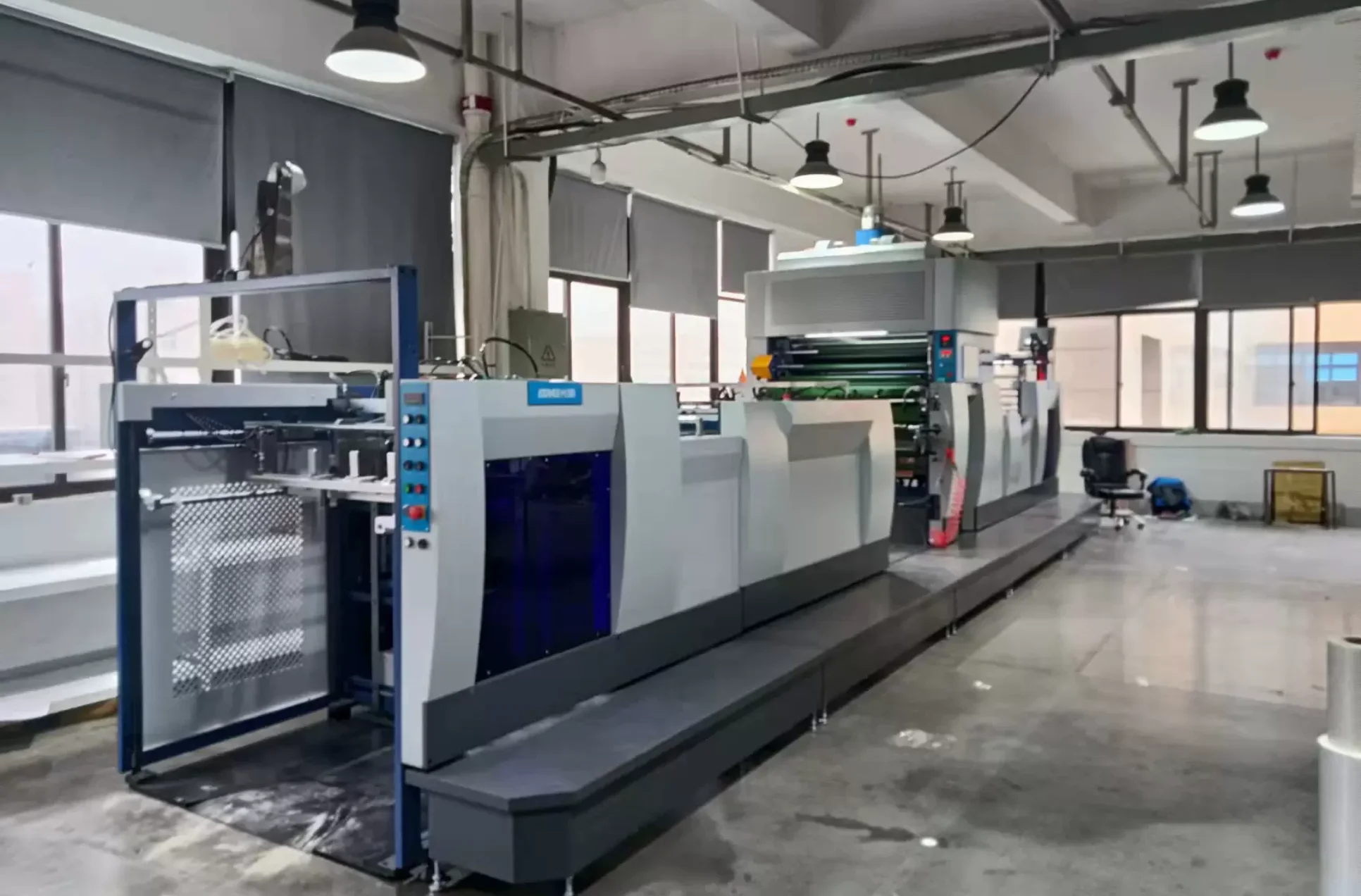
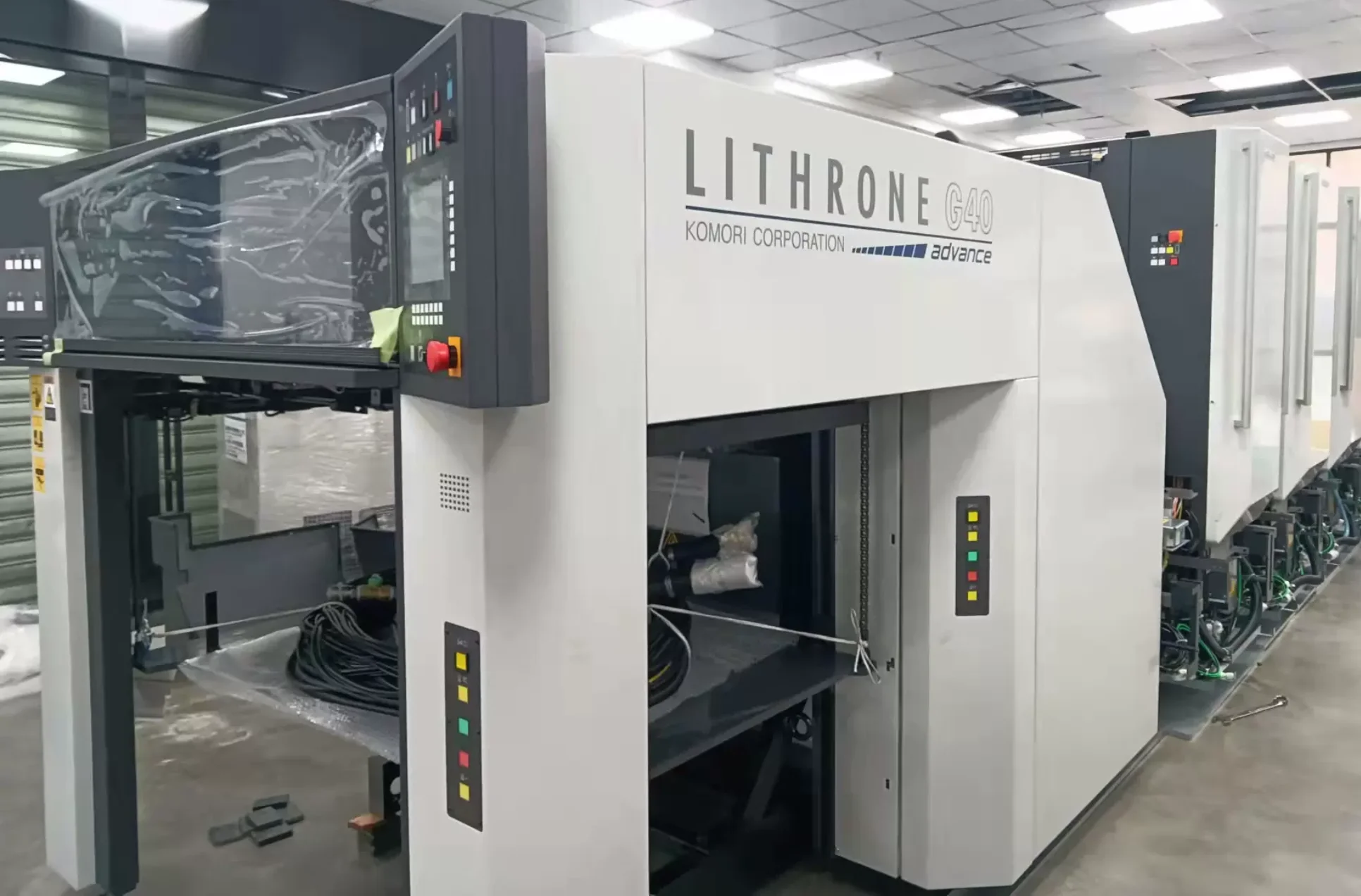
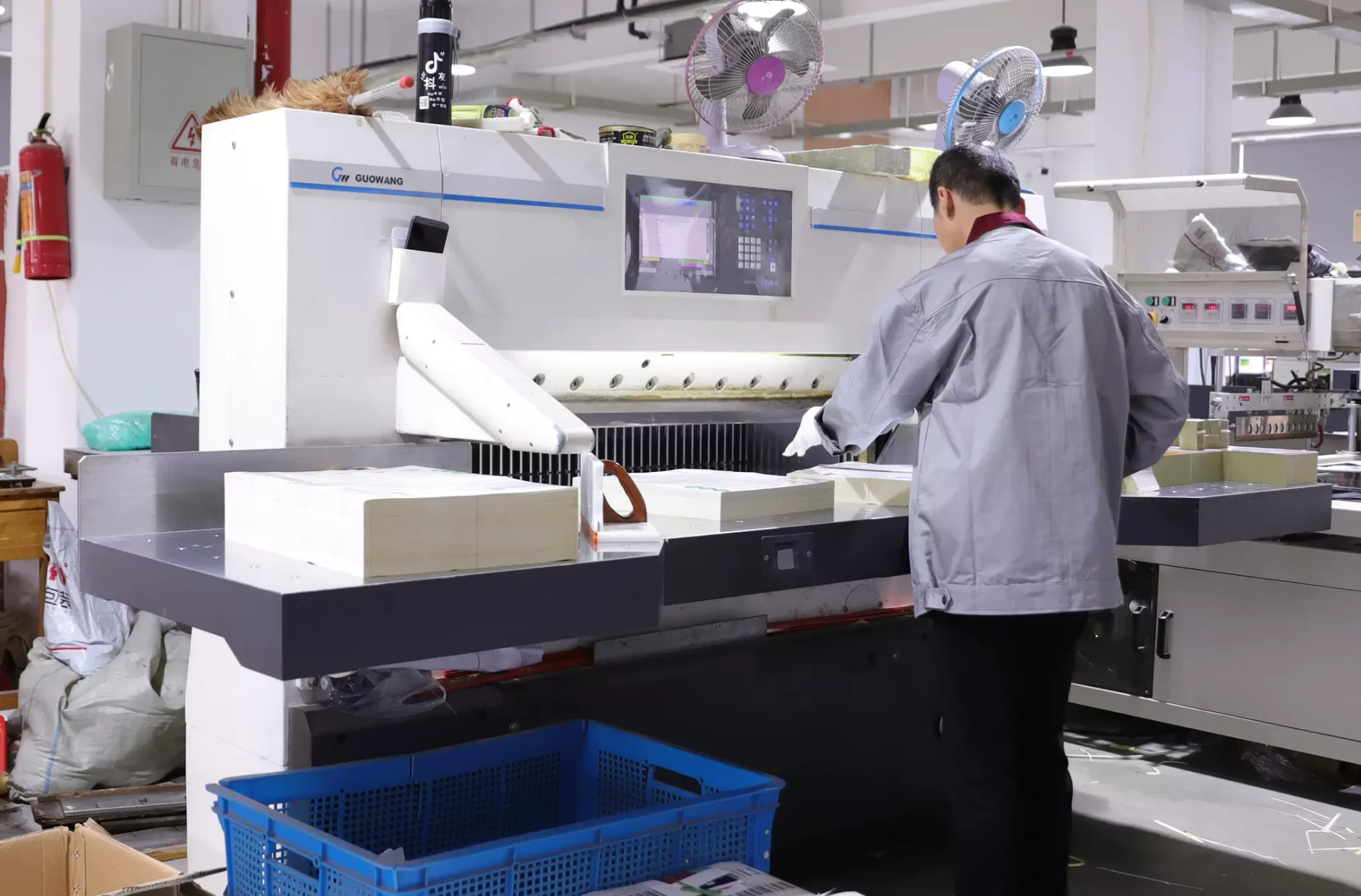
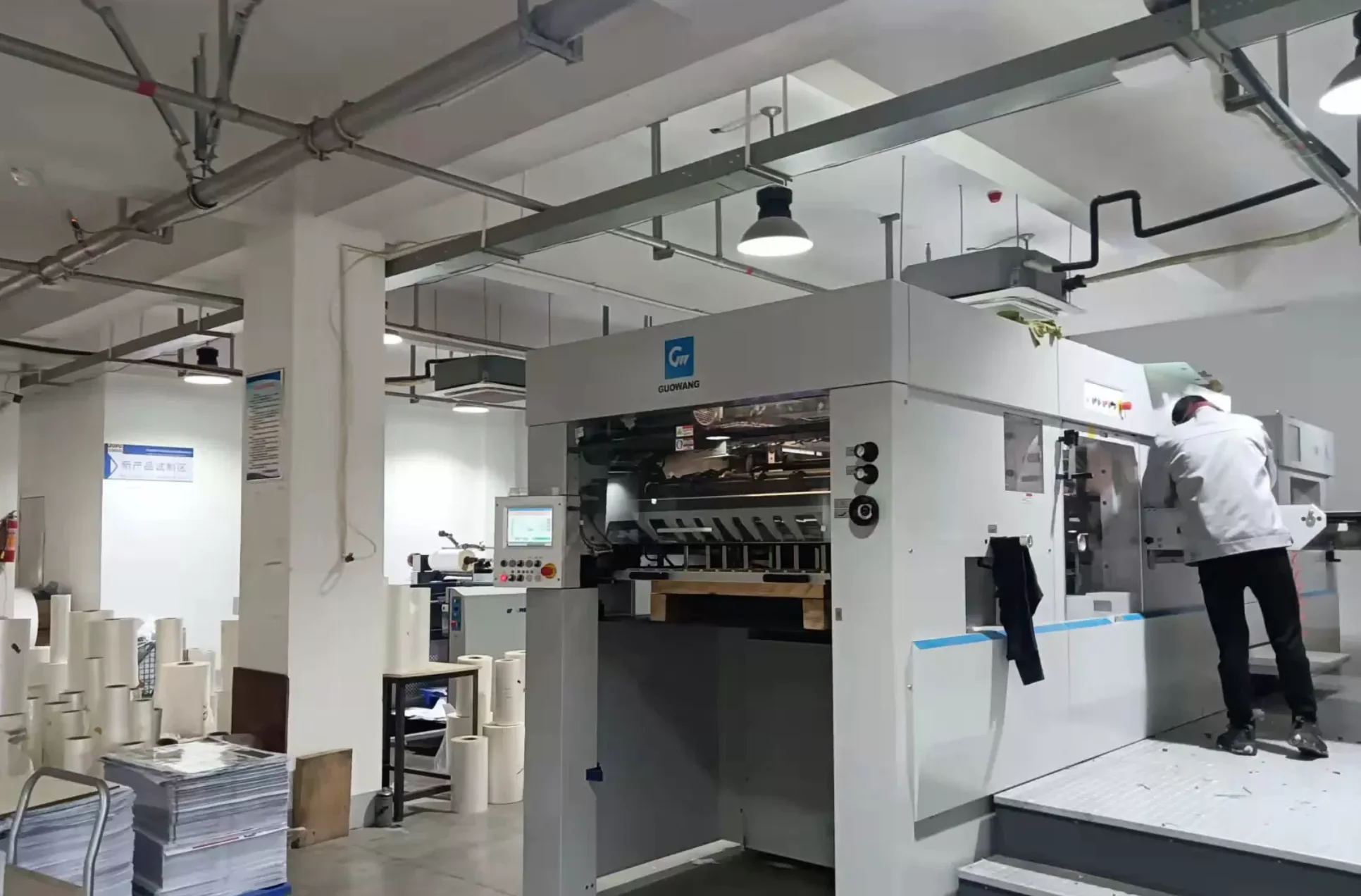
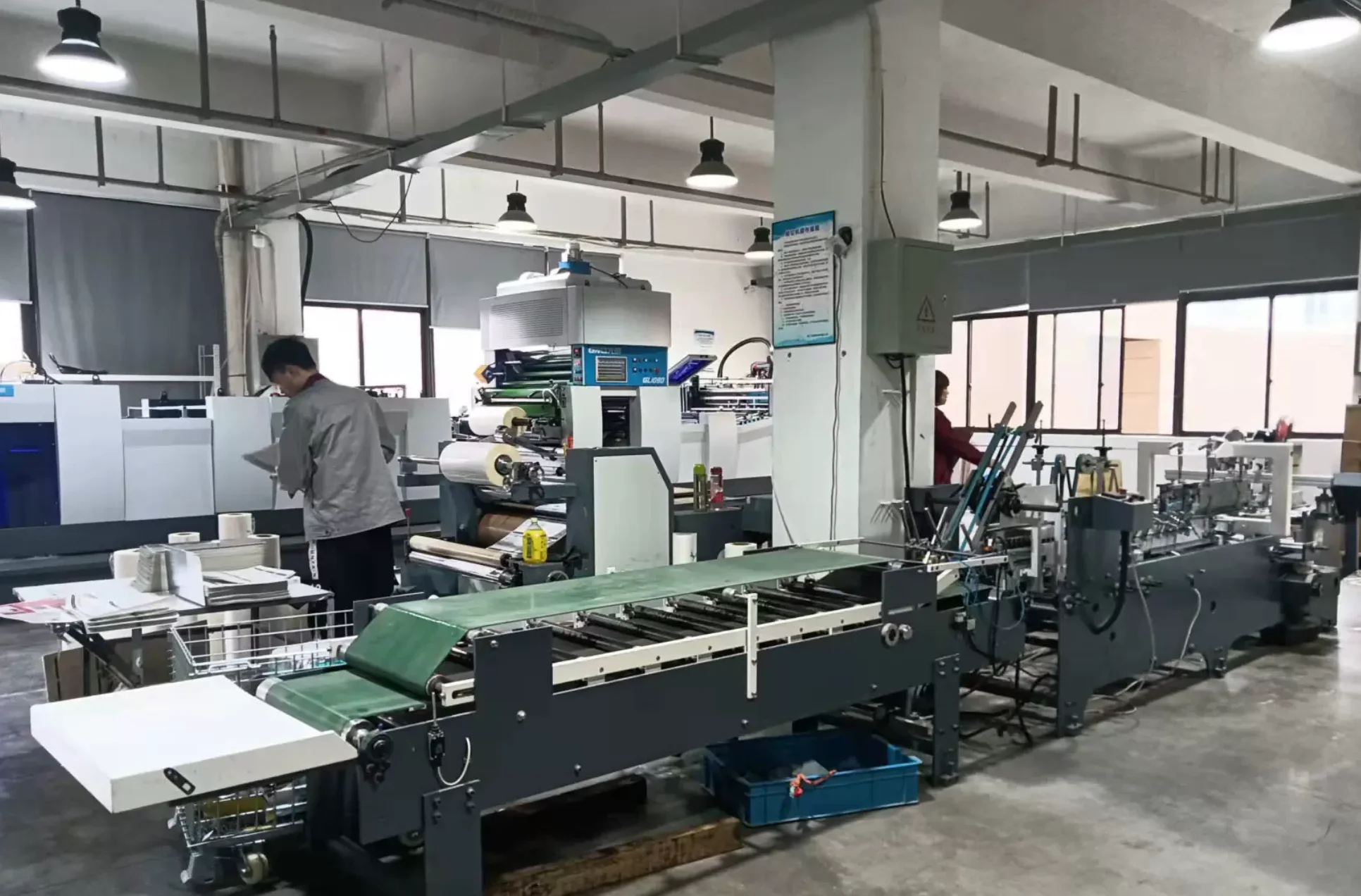
25,000㎡ Production Facility

Supports stable capacity planning and multi-line production

100+ Advanced Machines

Ensures precision and efficiency across different packaging types

400+ Skilled Workers

Maintains consistent execution across large-volume orders

Dedicated QC System

Controls quality from sampling to mass production

Multi-Line Production Setup

Reduces delays and improves delivery reliability

Repeat Order Control System

Ensures consistency across multiple production cycles

Material & Color Standards

Helps maintain uniform output across batches

Structured Workflow Process

Minimizes errors and improves production efficiency

So your production stays stable — even as your order volume grows.

Your Ultimate Guide to Custom Rigid Boxes

If you are developing custom rigid boxes for your products, you are not only choosing a premium packaging style. You are making decisions that affect product value, protection, customer experience, production cost, shipping stability, and long-term repeat order consistency.
 
At Borhen Pack, we work with brands, procurement teams, importers, distributors, e-commerce businesses, and packaging designers who need rigid boxes that look refined, work in production, and remain reliable across future orders. This guide helps you understand how to choose the right rigid box structure, materials, finishes, inserts, and manufacturing partner before moving into sampling and bulk production.

Table of Contents

What Are Custom Rigid Boxes?

Custom rigid boxes are premium paper-based packaging structures designed for products that need stronger presentation, better protection, and a more refined customer experience. When I look at custom rigid boxes from a B2B packaging perspective, I do not see them as simple containers. I see them as part of a brand’s product value, supply chain, retail presentation, customer experience, and long-term packaging system. A well-developed rigid box should not only look premium in a sample. It should also fit the product properly, protect it during handling and shipping, work in real production, and remain consistent when the same packaging is reordered again.
 
Understanding Custom Rigid Boxes from a Real Business Perspective
When I explain custom rigid boxes to brand owners, product managers, importers, distributors, or procurement teams, I usually start with the business reason behind the packaging rather than the technical definition. A custom rigid box is often chosen when a product needs to feel more valuable than it would inside a standard folding carton or a basic paperboard box. The packaging is expected to create a stronger first impression, support a more premium brand position, and give the customer a more controlled opening experience.
In most projects I work with, a rigid box is built around a thick chipboard or greyboard structure. This board gives the box its firmness, weight, and shape. The outside is then wrapped with printed paper, specialty paper, textured paper, kraft paper, or other paper-based materials. After that, the box may include printing, lamination, foil stamping, embossing, debossing, spot UV, soft-touch effects, or custom inserts. These different elements come together to create rigid box packaging that feels more substantial and more intentional than ordinary paper packaging.
From my point of view, the real value of custom rigid boxes is not only their premium appearance. Their value comes from how well they connect product protection, brand presentation, manufacturing feasibility, shipping needs, and repeat order consistency. For serious B2B buyers, this matters because packaging problems rarely stay inside the packaging department. They can affect launch schedules, customer complaints, distributor confidence, shipping costs, and brand perception.
 
How Custom Rigid Boxes Are Different from Standard Paper Boxes
When I compare rigid boxes with standard folding cartons, the difference is not only thickness. A folding carton is usually made from thinner paperboard and is commonly designed to be shipped flat, folded, filled, and sealed during packing. This makes folding cartons very useful for many retail products, especially when cost efficiency, lightweight structure, and high-volume production are important.
Custom rigid boxes are different because they use a stronger board structure that normally keeps its shape more permanently. This gives the box a firm hand-feel and a more premium appearance. When a customer picks up a rigid paper box, opens the lid, pulls out a drawer, or sees the product placed inside a custom insert, the experience feels more deliberate. The packaging becomes part of the product’s perceived value.
This is why rigid boxes are commonly used for cosmetics, fragrance, jewelry, electronics accessories, apparel accessories, premium gift sets, luxury retail packaging, limited-edition products, and high-value product launches. These products often need packaging that does more than hold the item. They need packaging that communicates quality before the customer even touches the product itself.
 
The Structural Foundation: Chipboard and Greyboard
The foundation of most rigid boxes is chipboard or greyboard. I often describe this board as the skeleton of the packaging because it controls the box’s strength, shape, and stability. The board thickness must be chosen carefully. If the board is too thin, the box may feel weak, deform during handling, or fail to support the product properly. If the board is unnecessarily thick, it may increase cost, weight, storage volume, and production difficulty without improving the customer experience enough to justify it.
This is why I never treat board thickness as a random choice. I look at the product size, product weight, fragility, opening structure, shipping route, and brand position before recommending a direction. A small jewelry box does not need the same board strength as a large gift set box. A fragrance box holding a glass bottle may need stronger structure and better internal support than a box for a lightweight textile accessory. A rigid box used for luxury retail display may have different requirements from a rigid box used mainly for e-commerce delivery.
For B2B buyers, this structural decision is important because it affects both quality and cost. A strong board can improve the customer’s perception of value, but it also affects material usage, production handling, carton packing, and international freight. A reliable custom rigid box manufacturer should help customers find the right balance instead of simply recommending the thickest or most expensive option.
 
The Surface Layer: Wrapping Paper and Brand Feeling
After the rigid board structure is formed, the surface paper becomes one of the most important parts of the box. This is the layer customers actually see and touch. It can be smooth, textured, coated, uncoated, colored, printed, laminated, kraft-style, metallic, or made from specialty paper. The surface paper strongly affects how premium the packaging feels.
In my experience, many customers first focus on box shape, but the surface paper often decides whether the finished packaging feels refined. A rigid box with poor wrapping paper, uneven edges, visible glue marks, bubbles, wrinkles, or weak color consistency can lose its premium feeling very quickly. Even if the structure is strong, the customer may still feel that the packaging is not high quality.
This is why I always consider wrapping paper together with the brand’s positioning. A cosmetics brand may want a smooth coated paper with sharp color reproduction. A fragrance brand may prefer specialty paper with a more tactile luxury feel. A jewelry brand may choose textured paper or soft-touch finishing to create a more delicate impression. A brand focused on sustainability may prefer kraft paper, FSC-certified paper options, or recyclable paper-based materials. The right surface material should support both the visual identity and the production reality.
 
Printing and Finishing: Turning a Rigid Box into Brand Packaging
A rigid box becomes truly custom when the brand details are applied correctly. Printing and finishing turn a plain rigid paper box into a branded packaging experience. This may include CMYK printing, Pantone color matching, foil stamping, embossing, debossing, spot UV, matte lamination, gloss lamination, soft-touch lamination, or textured effects.
I usually remind customers that finishing should not be chosen only because it looks attractive in a sample image. Each finishing process has production requirements. Foil stamping needs correct tooling and accurate positioning. Embossing and debossing require proper pressure, suitable paper, and enough space around the design. Spot UV needs clean artwork separation and careful alignment. Soft-touch lamination can create a premium feel, but it must be checked for handling, surface marks, and suitability for the project.
For B2B buyers, these details matter because finishing affects cost, sampling time, production risk, and repeat order consistency. A simple logo with well-executed foil stamping may look more premium than a design overloaded with multiple effects. In my view, good rigid box packaging is not about using every available finishing option. It is about choosing the right details that match the brand effect, product level, budget, MOQ, and production feasibility.
 
The Inside of the Box: Inserts, Fit, and Product Protection
The outside of a rigid box creates the first impression, but the inside often determines whether the packaging truly works. I pay close attention to inserts because many packaging failures happen when the product is not held properly inside the box. A strong outer structure does not automatically protect the product if the item moves during shipping, tilts during display, or looks poorly arranged when opened.
Custom inserts can be made from paperboard, EVA foam, molded pulp, fabric-covered materials, cardboard dividers, or specially designed compartments. Each option has a different purpose. Paperboard inserts can create a clean paper-based solution and may be suitable for many cosmetics, accessories, and gift sets. EVA foam can provide stronger cushioning for fragile or high-value items. Molded pulp can support more eco-conscious packaging directions. Fabric-covered inserts can improve presentation for jewelry, watches, and luxury sets. Dividers and compartments can help organize multi-piece products in a more structured way.
I always prefer to design the insert together with the outer box. The insert should not be treated as an accessory added after the box is already decided. The product size, shape, weight, fragility, display angle, and shipping method should all influence the insert design. When the outer rigid box and insert work together, the packaging feels more complete, the product stays more secure, and the opening experience becomes more polished.
 
Common Products That Use Custom Rigid Boxes
Custom rigid boxes are used in many industries, but they are especially common in product categories where presentation and protection both matter. I often see them used for cosmetics, skincare, fragrance, jewelry, watches, electronics accessories, apparel accessories, candles, premium gifts, limited-edition sets, and luxury retail packaging. These products need packaging that can create a strong first impression while also supporting product safety and brand value.
For cosmetics and skincare, rigid boxes can help a product line look more premium and organized, especially when there are multiple bottles, jars, or tubes in one set. For fragrance, rigid boxes can help protect glass bottles while creating a luxury gift-ready presentation. For jewelry and watches, the surface material, insert design, and opening experience are especially important because the product itself is small but high in perceived value. For electronics accessories, rigid boxes can help organize cables, devices, components, or instruction materials in a clean structure. For apparel accessories, such as belts, scarves, wallets, or small fashion items, rigid boxes can make the product feel more giftable and more suitable for premium retail.
In all of these cases, the rigid box is doing more than carrying the product. It is shaping how the product is understood. Before the customer sees the item clearly, the box has already started communicating the product’s quality level.
 
What Makes a Rigid Box Truly Custom
I do not consider a rigid box truly custom just because a logo has been printed on it. A truly custom rigid box is developed around the product, the brand, the sales channel, the shipping method, and the long-term order plan. The structure, size, material, printing, finishing, insert, and packing method should all be considered together.
For example, a magnetic closure rigid box may be the right choice when the brand wants a smooth and premium opening experience. A drawer rigid box may be better when the product should be revealed gradually. A two piece rigid box may be practical when the brand needs a classic lid-and-base structure that can work across different product sizes. A shoulder neck box can create a more refined layered presentation. A collapsible rigid box may help reduce storage and shipping volume while still keeping a premium appearance. A rigid box with inserts may be necessary when the product needs to stay fixed in a specific position.
These choices should not be based only on visual preference. I usually look at how the product will be packed, how it will be shipped, whether workers can assemble it efficiently, whether the structure is realistic for the order quantity, and whether the same packaging can be repeated later. This is where custom packaging becomes a business decision rather than just a design decision.
 
Why Custom Rigid Boxes Matter for B2B Procurement
For B2B buyers, custom rigid boxes must perform beyond the first impression. A sample can look beautiful, but the real test begins when the packaging enters bulk production, warehouse storage, international shipping, retail display, e-commerce delivery, and repeat orders. This is why I always encourage procurement teams to think about the full packaging journey from the beginning.
A product manager may care about how well the box supports the product launch. An importer may care about whether the packaging can survive long-distance transport. A distributor may care about whether the specifications remain consistent across multiple markets. A brand owner may care about whether the packaging strengthens brand identity across different product lines. A sourcing manager may care about whether the supplier can control quality, timeline, cost, and communication.
Custom rigid boxes affect all of these areas. They influence product protection, perceived value, packing efficiency, shipping risk, customer experience, and repeat order management. When the packaging is not planned carefully, problems can appear later as color variation, poor insert fit, damaged corners, finishing misalignment, unstable closure, delayed production, or inconsistent reorders. For serious B2B buyers, these are not minor issues. They can create operational costs and weaken customer confidence.
 
Why Sampling Is Critical for Custom Rigid Boxes
Sampling is especially important for custom rigid boxes because many details cannot be fully judged from a digital file. A design rendering can show the visual direction, but it cannot fully show the board strength, lid opening feel, drawer sliding fit, paper texture, foil stamping effect, insert tightness, or actual product placement.
When I review a rigid box sample, I look at the size, structure, surface wrapping, edge quality, color, finishing position, insert layout, opening experience, and packing method. I also think about whether the sample can become a realistic standard for mass production. Sometimes a sample looks excellent but is too complex or expensive to repeat efficiently. Sometimes a structure looks attractive but may create assembly difficulties in bulk production. Sometimes a finishing effect looks good on one sample but may be difficult to control across thousands of boxes.
This is why I see the approved sample as more than a preview. It should become the production reference. Once the customer approves the sample, the structure, materials, color, finishing, insert, and packing details should be documented clearly so the bulk order can follow the same standard. This helps reduce sample-to-bulk differences and makes future reorders more predictable.
 
Why Repeat Order Consistency Matters
Many customers focus heavily on the first order, but I often pay just as much attention to the second and third orders. For mature brands, importers, distributors, and procurement teams, packaging consistency over time is one of the biggest signs of a reliable manufacturer. If the first order looks premium but the next order has different paper texture, slightly different color, weaker structure, or inconsistent finishing, the brand experience becomes unstable.
Repeat order consistency depends on many small details. The chipboard thickness should remain aligned. The wrapping paper should match the approved reference as closely as possible. The color standard should be clear. The foil stamping, embossing, or spot UV position should remain controlled. The insert should fit the product the same way. The packing method should protect the boxes during transport. These details may not sound exciting, but they are extremely important for B2B packaging programs.
In my view, a good custom rigid box manufacturer should not only ask how the box should look today. It should also consider whether the same box can be produced again with stable quality. This is what turns rigid box packaging from a one-time order into a long-term packaging asset.
 
The Role of a Custom Rigid Box Manufacturer
A reliable custom rigid box manufacturer should add value before production begins. I believe the manufacturer should help customers review whether the structure fits the product, whether the material supports the brand effect, whether the finishing process is realistic, whether the insert can protect the item, whether the MOQ makes sense, and whether the packaging can be produced consistently in bulk.
This is especially important for international buyers sourcing from China. Distance can create communication gaps if details are not clarified early. A good manufacturer should help reduce these gaps through clear specifications, sample confirmation, production planning, quality control, and export packing. The goal is not only to make the box. The goal is to help the customer avoid unnecessary risk.
At Borhen Pack, I see custom rigid box manufacturing as a process of connecting brand expectation with production reality. I want the final packaging to look refined, but I also want it to be practical for manufacturing, suitable for shipping, realistic for the order quantity, and stable for future repeat orders. That balance is what makes a rigid box project successful.
 
Why Custom Rigid Boxes Should Be Planned as a Packaging System
I always encourage B2B buyers to think of custom rigid boxes as part of a packaging system rather than a single box. A rigid box may need to work with an insert, an outer shipping carton, a paper bag, a sleeve, a label, a card, or other printed materials. It may need to support different product sizes or future product extensions. It may need to stay consistent across retail channels, e-commerce orders, distributor programs, or seasonal launches.
When the rigid box is planned as part of a system, the decisions become more strategic. The structure can be designed for future SKU expansion. The material can be chosen for both appearance and supply stability. The color can be standardized for repeat orders. The insert can be adjusted for related products. The packing method can be prepared for international shipping. This helps brands avoid rebuilding the packaging direction every time a new order or new product appears.
From my experience, this long-term thinking is what separates a simple packaging purchase from a scalable packaging program. A custom rigid box should not only solve today’s presentation need. It should also support how the brand grows, how the product is shipped, how customers experience the packaging, and how future orders are managed.
 
Final Thoughts on Custom Rigid Boxes
When I define custom rigid boxes, I see them as premium paper packaging solutions that bring together structure, surface material, finishing, inserts, product protection, brand experience, and production control. They are used when a product needs packaging that feels more stable, more refined, and more valuable than standard paper packaging. But their real business value goes beyond appearance.
For B2B buyers, custom rigid boxes should help products look better, travel safer, present more clearly, and remain consistent across repeat orders. They should support product launches, retail display, e-commerce delivery, distributor supply, and long-term brand growth. This is why choosing the right structure, material, insert, finish, and manufacturing partner matters so much.
A good rigid box is not simply a beautiful box. It is a packaging solution that connects brand value with real production performance. When planned carefully, custom rigid boxes can become a reliable part of a brand’s packaging system and supply chain, not just a premium container for one product.

Why Brands Choose Rigid Boxes for Premium Packaging

Brands choose rigid boxes for premium packaging because they want packaging to do more than complete a product. They want it to explain product value before the customer reads a description, touches the product, or compares it with another option. In the packaging projects I work on, rigid boxes are usually selected when a brand needs stronger perceived value, a more controlled unboxing experience, better product protection, a more refined retail presence, and a packaging system that can stay consistent across repeat orders. I do not see rigid boxes as a simple upgrade from normal paper boxes. I see them as a strategic packaging format that connects brand positioning, customer experience, production quality, and long-term supply stability.
 
Rigid Boxes Help Customers Feel the Product Value Immediately
When I evaluate premium packaging, I always think about the first few seconds of customer perception. Before a customer opens the box, they are already making judgments. They notice whether the box feels firm in the hand, whether the surface paper looks refined, whether the lid opens smoothly, whether the logo finish feels clean, and whether the product is presented with care. These details are often felt faster than they are consciously analyzed. A customer may not know the exact board thickness or finishing method, but they can sense whether the packaging feels cheap, ordinary, or premium.
This is one of the main reasons brands choose premium rigid boxes. A product placed inside a standard paperboard box may still be high quality, but the packaging may not fully support that value. A rigid box gives the product a stronger physical presence. The thicker structure, stable shape, and more refined surface make the product feel more complete and more valuable. For cosmetics, fragrance, jewelry, electronics accessories, apparel accessories, premium gifts, and luxury retail products, this perceived value can directly influence how customers understand the product before they even use it. In my view, rigid box packaging gives the product a stronger introduction.
 
Rigid Boxes Create a Stronger Premium Packaging Experience
A premium packaging experience is not created by one material or one decorative effect. I often explain to customers that a luxury rigid box is the result of many details working together. The chipboard gives the structure strength. The wrapping paper creates the surface feeling. The printing communicates the brand identity. The finishing adds visual and tactile detail. The insert controls how the product is displayed. The opening method shapes the customer’s first interaction with the product. When all of these details are planned together, the packaging feels intentional rather than simply expensive.
This is why rigid boxes can create a stronger experience than many ordinary paper packaging formats. A magnetic closure rigid box can create a calm and smooth opening moment. A drawer rigid box can reveal the product gradually and create anticipation. A two piece rigid box can feel classic and reliable. A shoulder neck rigid box can add depth and refinement. A book style rigid box can create a storytelling effect for presentation kits or limited editions. Each structure creates a different feeling, and that feeling becomes part of the customer’s understanding of the product. I see this as one of the most important advantages of custom premium boxes: they allow the brand to design not only the appearance of the package, but also the way the customer experiences it.
 
Rigid Boxes Support Higher-End Brand Positioning
Brands often choose rigid boxes when they want to move a product into a higher-value market position. I see this frequently when a company is launching a premium line, upgrading an existing product, entering retail channels, creating a gift set, or preparing a limited-edition collection. In these situations, the packaging must support the price point and the product story. If the product is positioned as premium but the packaging feels thin, loose, or generic, the customer may feel a mismatch between the brand promise and the physical experience.
Rigid boxes help reduce that gap because they give the product a more solid and refined presentation. The box feels less disposable and more considered. The surface can be matched to the brand style. The finishing can highlight the logo or key visual details. The insert can hold the product neatly and make the opening moment feel organized. For categories like fragrance, jewelry, cosmetics, watches, electronics accessories, luxury gifts, and apparel accessories, this matters because customers often connect packaging quality with product quality. I do not believe every product needs luxury rigid box packaging, but when the product relies on trust, emotion, gifting value, or premium retail display, rigid boxes often support the positioning much better than ordinary packaging.
 
Rigid Boxes Make Retail Presentation More Convincing
In a retail environment, packaging must communicate quickly. A customer may only glance at a product for a few seconds before deciding whether to pick it up, compare it, or ignore it. This is why I see rigid boxes as especially useful for premium retail presentation. They hold their shape well, stand more firmly, and create a more polished physical presence than lightweight paperboard packaging. When a product is placed on a shelf, in a boutique display, or inside a premium retail counter, the structure of the box helps signal that the product belongs in a higher-value category.
For retail buyers and distributors, this matters because packaging consistency affects how products are presented across stores and markets. If the box structure is weak or the surface finish varies from batch to batch, the retail display may feel inconsistent. A well-developed rigid box can help protect the visual standard of the product line. It can also make gift-ready products feel more complete when customers purchase them in-store. From my perspective, premium rigid boxes are valuable in retail because they create both visual order and physical confidence.
 
Rigid Boxes Improve the Unboxing Moment for E-Commerce and Direct Sales
For e-commerce and direct-to-consumer brands, packaging often becomes the first physical contact between the customer and the brand. A customer may discover the product through a website, marketplace, advertisement, or social media post, but they do not truly touch the brand until the package arrives. This makes the unboxing moment very important. If the packaging feels aligned with what the customer expected online, the brand trust becomes stronger. If the packaging feels weaker than expected, the customer may feel disappointed before using the product.
Rigid boxes are useful because they create a more controlled opening experience. The lid can lift slowly. The drawer can slide out smoothly. The magnetic flap can close with a satisfying feel. The product can sit neatly inside an insert rather than moving loosely inside the box. These details make the customer feel that the brand has prepared the product carefully. I see this especially often with skincare sets, fragrance packaging, jewelry, electronics accessories, and premium gift boxes. The product itself may be the main purchase, but the rigid box helps turn delivery into a brand experience.
 
Rigid Boxes Protect the Brand Image as Well as the Product
When I talk about protection, I do not only think about preventing the product from breaking. I also think about protecting the customer’s impression of the brand. A premium product that arrives in a damaged, crushed, poorly wrapped, or poorly fitted box can lose value immediately. Even if the product inside is not damaged, the customer may feel that the brand is less professional. For premium products, packaging condition is part of the product experience.
Rigid boxes can help protect both the product and the brand image when they are developed properly. The stronger chipboard structure helps the box resist pressure better than many lightweight paperboard formats. The insert can reduce product movement during packing, storage, and shipping. The outer carton and inner packing can help protect the box surface during international transport. This is especially important for brands, importers, distributors, and procurement teams shipping to different markets. A rigid box should not only look good in the factory sample room. It should arrive in good condition after real handling, stacking, and transportation.
 
Rigid Boxes Are Useful When Products Need Better Internal Presentation
One reason I often recommend rigid boxes for premium products is that they allow more controlled internal presentation. The inside of the box can be designed as carefully as the outside. This is important for products that need to be displayed in a certain direction, held at a certain angle, or arranged as part of a set. Without a good internal structure, even a beautiful outer box can feel unfinished when opened.
Custom inserts make this possible. A fragrance bottle can be held upright. A jewelry piece can be centered and protected. Electronics accessories can be separated into clean compartments. A cosmetics set can be arranged in a way that shows each item clearly. A gift set can feel complete rather than crowded. In my experience, the insert is often where the customer understands whether the packaging was truly designed for the product. A rigid box with a well-planned insert feels more professional because the product is not simply placed inside the box. It is presented.
 
Rigid Boxes Help Brands Build Packaging Consistency Across Product Lines
For brands with multiple SKUs, rigid boxes can help create a more consistent packaging family. I often see brands begin with one product, then expand into different sizes, gift sets, seasonal editions, or market-specific versions. If the rigid box system is planned carefully, the brand can maintain a consistent look across different products while still adjusting the structure, size, or insert for each item.
This kind of consistency is valuable for both marketing and procurement. From a brand perspective, similar materials, colors, finishing styles, and opening structures help customers recognize the product family more easily. From a procurement perspective, stable specifications make repeat orders and supplier management easier. A brand may use the same wrapping paper across several box sizes, the same foil stamping method across different product lines, or the same insert design logic for related sets. This helps the packaging feel unified rather than fragmented. In my view, rigid boxes are often chosen not only for one product, but for the way they can support a broader premium packaging system.
 
Rigid Boxes Can Support Long-Term Repeat Orders
For serious B2B buyers, the first production run is only part of the story. Repeat order consistency is often just as important. A brand may approve a beautiful sample, but if the second or third order looks different, the packaging program becomes difficult to manage. Differences in paper texture, color tone, board strength, foil stamping position, or insert fit can weaken brand consistency and create unnecessary communication problems.
This is why rigid boxes should be developed with long-term repeat orders in mind. The approved sample should become a production standard, not just a visual reference. The chipboard thickness, wrapping paper, color reference, finishing method, insert layout, and packing method should be recorded clearly. When these details are controlled, the same packaging can be reproduced more reliably across future orders. In my view, this is one of the strongest business reasons to choose the right custom rigid box manufacturer. Premium packaging should not only look good once. It should remain stable as the brand grows.
 
Rigid Boxes Are Chosen When Packaging Needs to Carry More Brand Emotion
Some packaging only needs to be functional. It protects the product, carries the label, and moves through the supply chain efficiently. Rigid boxes are often chosen when the packaging needs to carry more emotion. This is common in fragrance, jewelry, premium cosmetics, watches, luxury gifts, and limited-edition products. In these categories, customers often expect the packaging to feel meaningful. They may buy the product as a gift, keep the box after opening, or associate the packaging with the quality of the product.
This emotional value is difficult to create with structure alone. It comes from the total experience. The surface paper, color, logo finish, insert, opening movement, and product layout all contribute to the feeling. When the customer opens the box and the product is presented neatly, the packaging can make the purchase feel more special. I believe this is why rigid boxes are so common in premium packaging. They help the brand create a physical moment that feels more valuable and more memorable.
 
Rigid Boxes Make Sense When the Packaging May Be Kept or Reused
One detail I often consider is whether the customer may keep the package after purchase. Many ordinary boxes are opened and discarded quickly. Rigid boxes, however, are often kept because they feel durable, attractive, and useful. A customer may use the box to store jewelry, documents, accessories, cosmetics, or personal items. This means the packaging may continue to exist in the customer’s space long after the product is purchased.
For brands, this can be valuable. A kept rigid box continues to remind the customer of the brand. It becomes part of the customer’s physical environment. This is especially relevant for gift sets, jewelry, fragrance, watches, premium retail packaging, and limited editions. I do not think every brand needs packaging that customers keep, but when the product has emotional or gift value, a well-designed rigid box can extend the life of the brand experience.
 
Rigid Boxes Are Not the Best Choice for Every Product
Although I often talk about the value of rigid boxes, I do not recommend them for every project. This is important because good packaging advice should be practical, not just promotional. If a product is very price-sensitive, very lightweight, or sold in a channel where packaging cost must be tightly controlled, a folding carton may be more suitable. If the main purpose is shipping protection, corrugated packaging may be a better choice. If the product only needs a simple retail display box, a rigid box may create unnecessary cost.
The right question is not whether rigid boxes are always better. The right question is whether the product needs the value that rigid boxes provide. If the product needs premium presentation, better unboxing, stronger perceived value, gift-ready appeal, retail presence, or long-term brand consistency, then rigid box packaging can be a strong choice. If those needs are not present, another packaging format may be more practical. I believe this kind of honest structure selection helps brands avoid over-design and unnecessary cost.
 
Premium Rigid Boxes Require More Than a Premium Design
A beautiful design file does not automatically become a successful rigid box. This is something I often remind customers about. A design may look excellent on screen, but the real packaging must be produced with physical materials, machines, tooling, glue, board, paper, finishing processes, and manual assembly steps. If the structure is too complicated, the material is difficult to source, or the finishing is hard to align, the final production may not match the original expectation.
This is why premium rigid boxes require close attention to production feasibility. Foil stamping needs correct positioning and tooling. Embossing depends on paper type and pressure. Drawer boxes need careful fit between the inner tray and outer sleeve. Magnetic closures require accurate magnet placement. Shoulder neck boxes require clean alignment. Inserts must match the product and the box dimensions. Color standards need to be confirmed before production. A good rigid box is not only designed well. It is designed in a way that can be made consistently.
 
The Best Rigid Box Projects Balance Beauty, Cost, and Production Reality
In my experience, the best rigid box projects are not always the most complex or expensive ones. They are the projects where every decision has a reason. The structure supports the product. The material supports the brand image. The finishing highlights the right details. The insert protects and presents the product properly. The MOQ and cost make sense for the business stage. The production process can be controlled. The packaging can be repeated for future orders.
This balance is very important for B2B buyers. A box that looks beautiful but is too expensive to reorder may not be practical. A box that protects the product but feels too plain may not support premium positioning. A box with too many decorative effects may increase production risk without improving customer experience enough. I always try to help customers focus on what matters most for the product, the market, and the long-term packaging plan. Premium packaging should be impressive, but it should also be realistic.
 
Rigid Boxes Are Chosen When Packaging Becomes a Business Asset
When I step back and look at why brands choose rigid boxes, I see one clear reason: the packaging has become part of the business strategy. It is no longer just something used to cover the product. It helps shape customer perception, supports the product’s price point, improves retail presentation, strengthens unboxing experience, protects the product image, and creates a more consistent brand system over time.
This is why premium rigid boxes, luxury rigid box packaging, premium packaging boxes, and custom premium boxes are valuable when they are planned properly. They help connect brand value with real production performance. They make the product easier to trust, easier to present, safer to ship, and more consistent to reorder. In my view, brands choose rigid boxes when they want packaging that feels intentional, supports growth, and becomes part of the product’s long-term value rather than a temporary outer shell.

Common Types of Custom Rigid Boxes

Custom rigid boxes can be developed in several different structures, and each structure creates a different packaging experience. When I help a brand, importer, distributor, product manager, or procurement team choose a rigid box type, I never look only at which style appears more attractive in a product photo. I look at the full packaging journey: how the product will sit inside the box, how the customer will open it, how the structure will behave during packing and shipping, how difficult the box will be to produce, and whether the same structure can be repeated consistently in future orders. This is why understanding the common types of custom rigid boxes is so important for B2B buyers. The right structure can improve product value, customer experience, and production stability, while the wrong structure can create unnecessary cost, assembly difficulty, shipping risk, or repeat order inconsistency.
 
Magnetic Closure Rigid Boxes
Magnetic closure rigid boxes are one of the most popular choices for premium rigid packaging because they create a smooth and controlled opening experience. When I recommend magnetic closure rigid boxes, it is usually because the brand wants the packaging to feel refined, secure, and gift-ready from the first touch. The magnetic closure gives the box a sense of precision. When the lid opens and closes cleanly, the customer feels that the packaging has been carefully engineered rather than simply decorated.
I often see magnetic closure rigid boxes used for cosmetics, fragrance, jewelry, electronics accessories, wellness products, premium gift sets, limited editions, and luxury retail packaging. This structure works especially well when the brand wants to create a stronger unboxing experience without making the packaging difficult for the customer to use. A magnetic box can feel modern, elegant, and easy to open, which makes it suitable for products that rely heavily on first impression and perceived value.
From a production perspective, I pay close attention to the magnet position, board thickness, hinge strength, wrapping paper, insert height, and closing tolerance. A magnetic closure box may look simple from the outside, but the final experience depends on small technical details. If the magnets are too weak, the lid may not close securely. If they are too strong, the customer may feel resistance when opening the box. If the hinge area is not controlled well, the lid may not sit naturally. This is why I always view magnetic closure rigid boxes as a structure that needs both visual planning and production control.
 
Drawer Rigid Boxes
Drawer rigid boxes are designed with an inner tray that slides in and out of an outer sleeve. I like this structure when a brand wants the customer to discover the product gradually. Unlike a lid-and-base box, which reveals the product immediately after the lid is removed, a drawer rigid box creates a slower and more deliberate opening moment. This makes the packaging feel more interactive and can help the product appear more premium.
I often recommend drawer rigid boxes for jewelry, beauty products, cosmetics sets, accessories, electronics, stationery, sample kits, gift sets, and premium retail products. The structure is especially useful when the product needs to be displayed inside a tray or insert. A drawer box can make the product reveal feel more organized because the customer pulls the product into view instead of simply opening a cover.
The most important technical detail in drawer rigid boxes is the fit between the inner tray and the outer sleeve. I always check this carefully because the sliding experience can strongly affect the customer’s impression. If the drawer is too tight, the box feels frustrating to open. If it is too loose, the packaging feels unstable and less premium. The thickness of the wrapping paper, the structure of the inner tray, the product weight, the insert design, and even the humidity during production can influence the final sliding feel. For this reason, drawer rigid boxes should be tested carefully during sampling before moving into bulk production.
 
Two Piece Rigid Boxes
Two piece rigid boxes, also known as lid-and-base rigid boxes, are one of the most classic rigid box structures. I often recommend this style when a brand wants packaging that feels premium but still clean, familiar, and practical. The structure is easy for customers to understand because it has a separate lid and base. This simplicity makes it useful across many product categories and many brand styles.
Two piece rigid boxes are commonly used for apparel accessories, cosmetics, candles, jewelry, watches, beauty products, gift sets, and luxury retail packaging. They can be designed to feel minimal and elegant with simple paper and a small logo, or they can feel more luxurious with specialty paper, foil stamping, embossing, debossing, or custom inserts. This flexibility is one reason I see two piece boxes as a strong option for brands that want a stable packaging format across multiple product lines.
The key to a good two piece rigid box is the fit between the lid and the base. If the lid is too tight, the customer may struggle to open it. If it is too loose, the box may feel cheap or poorly made. I also pay attention to the lid height, base depth, board thickness, paper wrapping, and product insert. A two piece rigid box may seem simple, but when it is made well, it can communicate quiet confidence and long-term brand stability. For procurement teams and distributors, this structure is also practical because it can be repeated across different sizes and future orders with relatively clear production control.
 
Shoulder Neck Rigid Boxes
Shoulder neck rigid boxes create a more layered and refined packaging structure. This type of box usually includes an inner shoulder section that sits between the lid and the base. When the customer removes the lid, the inner shoulder becomes visible and creates a more premium sense of depth. I often recommend shoulder neck rigid boxes when a brand wants something more elevated than a standard two piece box while still keeping a classic premium packaging format.
This structure is commonly used for fragrance, jewelry, watches, cosmetics, luxury gift sets, collectible products, limited editions, and high-end retail packaging. It works especially well when the brand wants the box to feel more architectural and carefully built. The visible inner shoulder can create contrast through color, material, or texture. For example, a brand may use a darker outer paper and a lighter inner shoulder, or a textured surface outside with a smoother interior. These details can make the opening experience feel more deliberate.
From a manufacturing perspective, shoulder neck rigid boxes require careful control. The shoulder height, lid fit, base depth, wrapping paper thickness, visible edge alignment, and glue control all affect the final result. If the shoulder is too high or uneven, the lid may not sit properly. If the wrapping is not clean, the visible inner structure may look rough. I usually treat this structure as a premium choice that needs accurate sampling and clear production standards because small differences can become very visible in the finished box.
 
Book Style Rigid Boxes
Book style rigid boxes open like a book, usually with a hinged lid connected to the base. I like this structure when the packaging needs to tell a story or guide the customer through a more thoughtful product presentation. The opening movement is familiar, but when the structure, material, insert, and printing are handled well, the box can feel highly premium and memorable.
I often see book style rigid boxes used for presentation kits, product launch boxes, limited-edition packaging, cosmetics sets, electronics accessories, educational kits, promotional collections, and luxury gift packaging. This structure is useful when the inside layout matters. The product can sit inside the base, while the inside lid can be used for brand storytelling, printed information, instructions, visual design, or a welcome message. This gives the brand more space to communicate without needing extra loose printed materials.
The hinge area is the most important part of a book style rigid box. I always review whether the hinge can open and close smoothly without cracking, tearing, or losing shape. The wrapping paper must be flexible enough, the glue must be controlled properly, and the opening angle should match how the customer will interact with the product. If the product is heavy, the base and insert must also be strong enough to hold the product without causing the box to feel unbalanced. A well-made book style rigid box should open naturally, present the product clearly, and feel durable enough for repeated handling.
 
Flip Top Rigid Boxes
Flip top rigid boxes are designed with an attached lid that opens upward. I usually see this structure as a practical option for brands that want a premium opening experience but do not want a separate loose lid. The lid stays connected to the base, which makes the box feel organized and convenient. This structure can work well when the customer may open and close the packaging more than once.
Flip top rigid boxes are often used for cosmetics, wellness products, electronics accessories, jewelry, stationery, small gift sets, subscription-style premium packaging, and retail products. They can feel clean and modern, especially when paired with a simple insert and subtle finishing. Some flip top boxes use magnets for closure, while others use ribbon pulls, paperboard locks, or structural closure methods. The right choice depends on the product value, customer experience, and production budget.
When I review a flip top rigid box, I pay attention to the hinge strength, lid weight, opening angle, closure method, board thickness, and edge alignment. If the lid is too heavy or the hinge is too weak, the box may not feel stable. If the opening angle is not planned properly, the product may not be displayed clearly when the box is opened. If magnets are used, the closure should feel secure but not difficult to open. A good flip top rigid box should feel easy to use while still preserving a premium impression.
 
Collapsible Rigid Boxes
Collapsible rigid boxes are designed to provide the appearance of premium rigid packaging while reducing storage and shipping volume. I often recommend collapsible rigid boxes when a brand wants the premium feel of a rigid box but also needs better logistics efficiency. Unlike fully assembled rigid boxes, collapsible rigid boxes can be folded flat before use, which can help reduce warehouse space and transportation volume.
This structure is often used for larger gift boxes, apparel packaging, seasonal packaging, promotional kits, retail packaging, premium product sets, and projects where shipping volume is a major concern. For international buyers, this can be especially useful because shipping fully assembled rigid boxes can take up a lot of space. A collapsible structure can make the packaging more efficient before final assembly.
However, collapsible rigid boxes need careful engineering. The folding points, magnetic panels, adhesive areas, corner strength, and assembly process all affect whether the finished box feels stable. If the structure is not designed properly, the box may look premium when photographed but feel weak after assembly. I also consider whether the customer’s packing team can assemble the box efficiently. If assembly is too complex, the savings in shipping volume may be reduced by extra labor time. In my view, collapsible rigid boxes are valuable when the project needs both premium presentation and logistics efficiency, but the structure must be tested carefully during sampling.
 
Rigid Boxes with Inserts
Rigid boxes with inserts are essential when product fit, protection, and presentation all matter. I often tell customers that the insert should not be treated as a small accessory inside the box. In many projects, the insert is what makes the packaging truly work. The outer rigid box may look strong and premium, but if the product moves inside, tilts during shipping, or looks poorly positioned when opened, the packaging experience will feel incomplete.
Rigid boxes with inserts are commonly used for fragrance bottles, cosmetics sets, jewelry, watches, electronics accessories, glass products, candles, gift sets, and multi-piece retail packaging. The insert can be made from paperboard, EVA foam, molded pulp, fabric-covered materials, cardboard dividers, or custom compartments. Each insert material creates a different balance between protection, appearance, sustainability, cost, and production feasibility.
When I develop rigid boxes with inserts, I always look at the product first. I consider the product size, weight, fragility, surface material, display direction, and shipping method. A glass bottle needs a different insert from a lightweight accessory. A jewelry set needs a different presentation from an electronics kit. A cosmetics set with several pieces needs careful layout so the box feels organized rather than crowded. The insert and the outer rigid box should be designed together because they need to function as one packaging system.
 
How I Choose Between Different Rigid Box Structures
When I help customers choose between different custom rigid box structures, I always begin with the product and the business goal. I do not choose a structure only because it looks impressive. I ask how the product will be packed, how it will be shipped, how the customer will open it, how often it may be reordered, and what level of premium feeling the brand needs. These answers usually guide the structure more accurately than visual preference alone.
A magnetic closure rigid box may be ideal for premium presentation, but it may not always be the most cost-efficient choice. A drawer rigid box may create a beautiful reveal, but it requires accurate sliding control. A two piece rigid box may look simple, but it can be one of the most stable choices for repeat production. A shoulder neck box may create a high-end feeling, but it requires clean alignment. A collapsible rigid box may save shipping space, but it needs careful assembly design. A rigid box with inserts may improve protection and presentation, but the insert material and structure must be chosen carefully.
In my experience, the best rigid box structure is not always the most complex one. It is the one that fits the product, brand, market, budget, MOQ, shipping method, and long-term supply plan most accurately. For B2B buyers, this matters because the goal is not only to approve a beautiful sample. The goal is to build packaging that can be produced consistently, shipped safely, and reordered with confidence.
 
Why Structure Selection Affects Cost, MOQ, and Production Stability
Many customers first think of box structure as a design decision, but I see it as a production and cost decision as well. Different rigid box structures require different materials, tooling, labor steps, wrapping methods, finishing control, assembly time, and packing methods. A magnetic closure rigid box may require magnets and careful hinge control. A drawer rigid box requires accurate tray and sleeve fitting. A shoulder neck box requires additional inner structure. A collapsible rigid box requires foldable construction and assembly planning. A rigid box with inserts requires extra material and fitting work.
These differences can affect MOQ, sample cost, unit price, production lead time, and repeat order stability. This is why I prefer to discuss structure before moving too far into design. If the structure is selected only after the artwork is completed, the customer may discover later that the design is too expensive, too complex, or difficult to produce consistently. When the structure is reviewed early, the packaging project becomes more predictable. This helps brands, importers, distributors, and procurement teams avoid unnecessary redesign, delays, and production surprises.
 
How Rigid Box Structures Support Different Sales Channels
Different sales channels often need different packaging structures. For retail display, the box needs to look polished and consistent when placed on a shelf or counter. For e-commerce, the box needs to create a strong opening experience but also fit safely into outer shipping cartons. For distributor supply, the structure should be easy to reorder and stable across batches. For gift packaging, the opening experience and product arrangement become especially important.
This is why I do not use the same structure recommendation for every customer. A fragrance brand selling through retail may benefit from a shoulder neck box or magnetic closure box. A jewelry brand may need a rigid box with a fabric-covered insert. An electronics accessory brand may need a drawer box with compartments. An apparel brand may prefer a two piece or collapsible rigid box because of size and storage considerations. A promotional campaign may need a book style rigid box because storytelling and presentation are important. Structure selection should always match the product’s real sales environment.
 
Choosing the Right Custom Rigid Box Type for Long-Term Use
A custom rigid box should not only solve the first packaging requirement. It should also support future production and repeat orders. I always encourage B2B buyers to think about whether the chosen structure can be produced consistently, whether the material can be sourced again, whether the finishing can be controlled in future batches, and whether the box can support future product extensions.
If a brand plans to build a packaging family, the structure becomes even more important. The same magnetic closure style may be adapted across different product sizes. A two piece rigid box format may be used across several SKUs with consistent surface paper and finishing. A drawer structure may become part of a premium product line. A rigid box with inserts may be adjusted for different product combinations. When the structure is selected with long-term use in mind, the packaging becomes easier to manage and more consistent across markets.
For me, this is the real value of understanding common types of custom rigid boxes. Magnetic closure rigid boxes, drawer rigid boxes, two piece rigid boxes, shoulder neck rigid boxes, book style rigid boxes, flip top rigid boxes, collapsible rigid boxes, and rigid boxes with inserts are not just style names. They are different ways of solving product presentation, protection, production, shipping, and brand consistency needs. When the right structure is chosen carefully, custom rigid boxes can become a reliable part of a brand’s long-term packaging system.

How to Choose the Right Rigid Box Structure

Choosing the right rigid box structure is one of the most important decisions in a custom packaging project because the structure affects almost everything that happens later. It affects how the product is displayed, how safely it is protected, how the customer opens the package, how efficiently the product can be packed, how much space the packaging takes during shipping and storage, how realistic the MOQ and cost will be, and how consistently the box can be reproduced in future orders. When I work with brands, importers, distributors, product managers, and procurement teams, I usually find that the challenge is not whether they want premium packaging. The real challenge is choosing a rigid packaging structure that matches the product, the market, the budget, the production process, and the long-term supply plan. A good rigid box design should not only look impressive in a sample. It should also work smoothly in real production, shipping, and repeat ordering.
 
Start with the Product, Not the Box Style
When I help a customer choose a rigid box structure, I always begin with the product itself. This may sound simple, but it is one of the most important steps in the whole packaging project. Many customers first show me a reference image and say they want something similar. I understand why they do that, because reference images are useful for showing visual direction. But I never make a structure recommendation based only on a picture. I need to understand what the product is, how large it is, how heavy it is, how fragile it is, how it should be displayed, and how it will move through packing, shipping, and final customer use.
A rigid box structure that works beautifully for a lightweight skincare set may not work for a heavy fragrance bottle. A drawer rigid box that looks elegant for jewelry may not be practical for a large electronics kit if the sliding tray becomes too heavy. A two piece rigid box may look simple, but it may be the most stable and repeatable choice for a product line with multiple sizes. A magnetic closure rigid box may feel premium, but it must still match the product weight, insert height, and closing tolerance. This is why I always treat the product as the starting point. The box should be built around the product, not the other way around.
 
Study the Product Size, Shape, and Display Direction
Product size is not only about measuring length, width, and height. I also look at how the product should sit inside the box. Some products need to lie flat. Some need to stand upright. Some need to be displayed at an angle. Some need enough space around them to feel premium, while others need a tighter fit to reduce movement during shipping. A rigid box that is too large may look empty or wasteful when opened. A box that is too small may make the product difficult to place, remove, or protect.
Product shape also matters. A square product, a round bottle, a long accessory, and an irregular gift set all create different structure requirements. A round fragrance bottle may need a shaped insert to hold it stable. A long necklace may need a flat presentation layout. A small electronics accessory may need compartments for the product, cable, manual, and small parts. A cosmetics set may need several cutouts with enough spacing so the layout does not feel crowded. When I review rigid box design, I always imagine the customer opening the box and seeing the product for the first time. If the product placement feels natural, organized, and intentional, the structure is moving in the right direction.
 
Consider Product Weight and Structural Support
Weight is one of the details that can quickly expose whether a rigid box structure is suitable. A premium rigid box may look strong, but if the board thickness, base support, insert design, or packing method is not matched to the product weight, problems can appear during handling and shipping. Heavy products can deform weak bases, loosen corners, damage inserts, or make the box feel unstable when opened. This is why I always ask about product weight early in the project.
For heavier products, I usually pay closer attention to chipboard thickness, base depth, insert strength, and how the product weight is distributed inside the box. A fragrance bottle, candle jar, glass container, or multi-piece gift set may need stronger support than a lightweight apparel accessory. If the product is heavy and placed too high inside the box, the opening experience may feel unbalanced. If the insert is too weak, it may collapse or loosen during transit. A good rigid packaging structure should not only hold the product in a sample. It should support the product through packing, carton loading, shipping, storage, and customer handling.
 
Evaluate Product Fragility and Surface Sensitivity
Fragility is not only about whether the product can break. I also look at whether the product surface can be scratched, dented, stained, or affected by friction. Glass bottles, ceramic items, delicate electronics, polished metal accessories, jewelry, watches, luxury cosmetic containers, and coated products all need more careful packaging consideration. Even if the outer rigid box is strong, the product can still be damaged if it moves inside the box or touches another component during transport.
For fragile products, I often recommend reviewing the outer rigid box and internal insert together. The insert may need to hold the product tightly, cushion pressure points, prevent rotation, or separate multiple pieces. A paperboard insert may be suitable for some cosmetics or gift sets. EVA foam may be better for products that need stronger cushioning. Molded pulp may support more eco-conscious packaging goals while still offering shaped protection. Fabric-covered inserts may be useful for jewelry or watches where presentation and surface protection both matter. In my view, fragility should be addressed through the full packaging system, not only through the thickness of the rigid box.
 
Define the Opening Experience Before Choosing the Structure
One of the reasons brands choose rigid boxes is that the opening experience can become part of the product value. I always ask what kind of feeling the brand wants to create when the customer opens the box. Should it feel smooth and modern? Should it feel classic and elegant? Should the product be revealed slowly? Should the inside structure feel layered and luxurious? Should the box be easy to open and close many times? These questions help me decide whether a magnetic closure box, drawer box, two piece box, shoulder neck box, book style box, or flip top box is more suitable.
A magnetic closure rigid box can create a clean and refined opening experience, especially for cosmetics, fragrance, electronics accessories, and gift sets. A drawer rigid box can create a slower reveal, which works well for jewelry, accessories, and products where the customer experience benefits from anticipation. A two piece rigid box gives a more classic and familiar opening style. A shoulder neck rigid box adds depth and a premium layered feeling. A book style rigid box can support brand storytelling because the inside cover can carry messages, visuals, or instructions. The structure should match the emotional experience the brand wants to create, but it should also remain practical for production and daily use.
 
Decide Whether the Box Needs Inserts or Internal Support
I always take inserts seriously because the inside of the box is often where the real packaging performance happens. A beautiful rigid box can still fail if the product moves inside, looks poorly positioned, or feels loose when opened. Inserts help connect product protection with brand presentation. They hold the product in place, improve the opening layout, reduce movement during shipping, and make the packaging feel more complete.
When choosing a rigid box structure, I review whether the product needs a simple tray, shaped insert, divider, compartment, or multi-layer arrangement. A fragrance bottle may need a cutout that holds the base securely. A jewelry set may need a soft insert that protects delicate surfaces. An electronics kit may need separate compartments for accessories. A cosmetics set may need a layout that presents several items without making the box feel crowded. The insert affects the internal box size, outer dimensions, material usage, production cost, MOQ, and packing method. That is why I prefer to discuss the insert early, not after the outer box has already been finalized.
 
Match the Structure to the Packing Process
A rigid box structure should be beautiful for the customer, but it also needs to be practical for the people who pack the product. This is something I pay close attention to because many packaging concepts look excellent in a sample but create problems in real packing operations. If the box takes too long to assemble, if the product is difficult to place into the insert, if the lid fit is too tight, or if the final packing method is too complicated, the packaging can slow down fulfillment and increase labor cost.
For larger B2B orders, packing efficiency becomes even more important. A two piece rigid box may be easy to pack because the lid and base are simple to handle. A drawer rigid box may require careful product placement so the tray slides properly. A magnetic closure box may be convenient for customer use but may require more space in storage if shipped fully assembled. A collapsible rigid box may reduce shipping volume but requires assembly before use. When I review structure options, I think about the customer’s real workflow. Good packaging should make the product feel premium without creating unnecessary operational friction.
 
Consider Shipping Conditions from the Beginning
Shipping conditions should never be treated as an afterthought. A rigid box may look perfect when it leaves the factory, but it still needs to survive carton packing, warehouse handling, sea freight, air freight, customs inspection, distribution, retail handling, or last-mile delivery. During this journey, the packaging may face stacking pressure, vibration, friction, humidity changes, and repeated movement. If the structure is chosen only for appearance, it may not perform well in real transportation.
When I evaluate shipping needs, I think about the rigid box, the insert, the inner protection, and the outer carton together. Fully assembled rigid boxes may offer a premium experience but take more space during shipping. Collapsible rigid boxes may reduce volume, but they need to stay stable after assembly. A fragile product may need stronger internal support. A premium surface may need protection from rubbing and pressure marks. If the boxes are shipped internationally, carton strength, stacking method, and packing layout become very important. A strong rigid packaging structure should protect both the product and the premium appearance of the box during transit.
 
Review Warehouse Space and Storage Efficiency
Warehouse space can have a real impact on packaging decisions, especially for importers, distributors, e-commerce brands, and seasonal campaign buyers. Fully assembled rigid boxes often take up more space than folding cartons or flat-packed packaging. If the box is large or the order quantity is high, storage volume can affect inventory planning, shipping cost, and warehouse operations. This is why I always consider storage when choosing a rigid box structure.
A collapsible rigid box may be a strong option when the customer wants premium packaging but needs better space efficiency. It can be shipped and stored flat before assembly, which may reduce freight volume and warehouse pressure. However, I do not recommend collapsible rigid boxes only because they save space. The assembled box still needs to feel stable, premium, and suitable for the product. If the assembly process is too difficult, the customer may save shipping volume but lose time during packing. In my view, storage efficiency is valuable only when it supports the overall packaging workflow.
 
Balance Premium Appearance with Budget and MOQ Reality
Every rigid box structure has a cost logic behind it. Some structures require more chipboard, more wrapping work, more manual assembly, magnets, special tooling, additional inserts, or more complex finishing. These details can improve presentation, but they can also increase unit cost, sample cost, production time, and MOQ requirements. This is why I always discuss budget and MOQ reality before the design becomes too fixed.
Most custom rigid box projects usually start from 1,000 pieces or above, and more complex structures may require higher quantities for stable production and cost efficiency. Magnetic closure boxes, drawer boxes, shoulder neck boxes, book style boxes, collapsible rigid boxes, and rigid boxes with custom inserts can all be excellent choices, but the structure should match the customer’s business stage and order plan. A simple two piece rigid box with high-quality wrapping paper and clean foil stamping may create a strong premium effect without unnecessary complexity. A drawer rigid box or magnetic closure box may be worth the added cost if the opening experience is central to the brand. The best structure is not always the most expensive one. It is the one that gives the right value for the product and the business.
 
Think About Future Repeat Orders Before Finalizing the Structure
I always encourage customers to think beyond the first order. A rigid box is often part of a long-term packaging program, especially for mature brands, importers, distributors, and procurement teams. If the product sells well, the packaging will need to be reordered. If the brand expands into more SKUs, the same structure may need to be adapted into different sizes. If the packaging is used across several markets, consistency becomes even more important.
A structure that is difficult to reproduce can create problems later. The material may be hard to source again. The finishing may be difficult to align consistently. The insert may require too much manual adjustment. The box may be too complex for stable repeat production. When I review a rigid box structure, I think about whether it can be repeated with consistent board thickness, wrapping paper, color, finishing position, insert fit, and packing method. A beautiful first sample is important, but a stable second and third order are often more important for serious B2B buyers.
 
Match the Structure to the Sales Channel
Different sales channels require different packaging priorities. A product sold through luxury retail may need strong shelf presence, refined materials, and a polished opening experience. A product sold through e-commerce may need a memorable unboxing experience while still fitting safely into outer shipping cartons. A product sold through distributors may need a structure that is stable, easy to reorder, and suitable for multiple markets. A gift product may need packaging that feels complete and presentable without additional wrapping.
This is why I always ask how the product will be sold. A fragrance brand entering premium retail may benefit from a shoulder neck rigid box or magnetic closure rigid box. A jewelry brand may need a compact rigid box with a soft insert. An electronics accessory brand may need a drawer box or book style box with compartments. An apparel accessory brand may prefer a two piece rigid box or collapsible rigid box depending on size, storage, and shipping needs. Once the sales channel is clear, the rigid box structure becomes easier to evaluate because the packaging can be designed around the actual customer journey.
 
Use Reference Images as Direction, Not as Final Decisions
Reference images are helpful, but they can also create misunderstandings if they are treated as final production solutions. I often receive reference images from customers, and I use them to understand the desired style, structure, and feeling. But I also review whether that reference actually fits the customer’s product, target market, budget, MOQ, shipping needs, and production reality. A box that works for one product may not work for another.
A reference image may show a beautiful drawer rigid box, but the customer’s product may be too heavy for that structure. It may show a magnetic closure box, but the customer may need a more space-efficient solution. It may show a luxury paper finish, but the material may not be realistic for repeat production or the target cost. This is why I prefer to adapt reference ideas rather than copy them directly. A good custom box structure should be developed around the real project, not only around visual inspiration.
 
Confirm the Structure Through Sampling
Sampling is essential for custom rigid boxes because many important details cannot be judged from drawings or digital renderings. A sample shows whether the lid opens smoothly, whether the drawer slides properly, whether the magnetic closure feels right, whether the insert holds the product securely, whether the board feels strong enough, and whether the overall packaging experience matches the brand’s expectation.
When I review a sample, I do not only ask whether the box looks good. I ask whether it can become a practical production standard. If the structure is too difficult to assemble, if the insert does not hold the product well, if the wrapping paper creates visible problems, if the finishing is hard to align, or if the box feels unstable, it is better to adjust before bulk production begins. For custom rigid boxes, the approved sample should become the reference for structure, material, color, finishing, insert fit, and packing method. This helps reduce sample-to-bulk differences and supports more consistent repeat orders.
 
Final Thoughts on Choosing the Right Rigid Box Structure
Choosing the right rigid box structure requires more than selecting a premium-looking design. It requires understanding the product, the customer experience, the packing process, the shipping route, the storage condition, the MOQ, the budget, and the long-term repeat order plan. A magnetic closure rigid box, drawer rigid box, two piece rigid box, shoulder neck box, book style box, flip top box, collapsible rigid box, or rigid box with inserts can all be the right choice in different situations. The key is knowing why one structure fits the project better than another.
In my view, this is where Borhen Pack’s project judgment creates real value. I do not see our role as simply producing whatever box is requested. I see our role as helping customers review whether the rigid packaging structure makes sense for the product and the business. The right structure should improve product value, protect the item, support the brand experience, work in production, survive shipping, and remain consistent when reordered. When these factors are considered early, custom rigid boxes become more than attractive packaging. They become a practical and reliable part of a brand’s packaging system.

Rigid Box Materials: Chipboard, Wrapping Paper, and Inserts

Rigid box materials are the foundation of a successful custom rigid box project. When I evaluate a rigid box, I do not only look at whether the surface looks beautiful or whether the box feels thick in the hand. I look at how each material affects structure, presentation, production stability, shipping performance, MOQ, cost, and repeat order consistency. Chipboard or greyboard gives the box its strength. Wrapping paper creates the surface texture, color expression, and first visual impression. Specialty paper can elevate the packaging, but it also affects sourcing, cost, and production control. FSC-certified paper options can support more responsible packaging goals, but they still need to work in real manufacturing conditions. Inserts decide how the product sits inside the box, how well it is protected, and how professional the package feels when opened. From my perspective, material selection is not a small technical step. It is one of the most important decisions that determines whether a custom rigid box can become a stable, premium, and scalable packaging solution.
 
Why Rigid Box Materials Should Be Chosen Before Finalizing the Design
When I work on a custom rigid box project, I prefer to discuss materials before the design becomes too fixed. Many packaging problems begin when customers finalize the appearance first and think about materials later. A box may look excellent in a rendering, but the real result depends on whether the selected chipboard, wrapping paper, insert material, glue, printing surface, and finishing process can actually support that design. If the material direction is not confirmed early, the sample may need several rounds of adjustment, and the project can become slower, more expensive, and harder to control.
I see material selection as the bridge between creative packaging ideas and real production. The customer may want a luxury surface, a strong structure, an eco-conscious paper direction, a special insert, or a refined logo finish. All of these ideas are possible, but they need to be checked against product weight, box structure, order quantity, MOQ, production process, shipping method, and future repeat orders. A rigid box is not made from one material alone. It is a combination of structural board, surface paper, internal support, and finishing details. If these materials work together, the box can feel premium and stable. If they do not work together, even a beautiful design can become difficult to produce consistently.
 
Chipboard and Greyboard Give Rigid Boxes Their Structural Strength
Chipboard and greyboard are usually the core materials inside custom rigid boxes. Customers may not see them directly because they are covered by wrapping paper, but they can feel them immediately when they hold the box. I often describe chipboard and greyboard as the structural skeleton of rigid box packaging. They decide whether the box feels solid, whether it keeps its shape, whether the lid fits properly, and whether the structure can support the product during packing, shipping, and customer handling.
When I review chipboard rigid boxes or greyboard rigid boxes, I do not simply ask whether the board is “thick enough.” I look at what the box needs to do. A small jewelry box may need a clean and refined feel, but it may not require very heavy board. A large gift set box may need stronger board to prevent deformation. A fragrance box holding a glass bottle may need stable support because the product has weight and fragility. A drawer rigid box needs board that can maintain the correct relationship between the inner tray and outer sleeve. A magnetic closure box needs enough structure to support the lid, hinge, and closing feel. This is why board selection should always be connected to product function and not only to visual appearance.
 
Board Thickness Affects Premium Feel, Cost, and Shipping Efficiency
Board thickness plays a direct role in how premium a rigid box feels. A thicker board often gives the packaging a stronger and more valuable hand-feel. When a customer picks up the box, the weight and firmness can immediately suggest quality. This is one reason many brands choose rigid boxes for premium packaging. However, I always remind customers that thicker board is not automatically better. If the board is too thick for the product, it may increase cost, make the box heavier, reduce packing efficiency, and raise shipping volume without creating enough additional value.
The right board thickness depends on the product and the structure. A two piece rigid box needs the lid and base to stay stable and fit smoothly. A shoulder neck rigid box needs the inner shoulder to align cleanly with the lid and base. A collapsible rigid box needs the board to support folding and assembly without losing stability. If the board is too thin, the box may feel weak or deform. If the board is too thick, the wrapping may become more difficult, and the structure may feel heavy or overbuilt. In my view, board thickness should be chosen with a balance of premium presentation, structural need, production feasibility, cost, and international shipping efficiency.
 
Greyboard Quality Influences Shape Accuracy and Repeat Production
When customers think about rigid box quality, they often focus on the outside surface. I understand that, because the wrapping paper and finishing are what people see first. But as a manufacturer, I pay close attention to greyboard quality because it affects shape accuracy and repeat production. If the board density, thickness, or flatness is unstable, the box may have small but visible differences in lid fit, edge alignment, drawer sliding feel, or overall firmness. These differences can become more noticeable when the project moves from one sample to a large production batch.
For repeat orders, board consistency becomes even more important. A brand may approve the first sample and expect the next production run to feel the same. If the board material changes or if the thickness is not controlled, the customer may notice that the box feels different even when the design has not changed. This is why I believe greyboard direction should be part of the approved production standard. For mature brands, importers, distributors, and procurement teams, stable board quality helps reduce packaging variation and makes future reorders easier to manage.
 
Wrapping Paper Creates the Visible Identity of the Rigid Box
Wrapping paper is the material that customers actually see and touch. It creates the visible identity of the box and strongly affects the feeling of the final packaging. A rigid box may have strong chipboard inside, but if the wrapping paper looks cheap, wrinkles easily, shows bubbles, has poor color performance, or does not match the brand style, the whole box may lose its premium effect. This is why I treat wrapping paper as both a visual and functional material.
Different wrapping papers create different impressions. Smooth coated paper can support clean printing and sharper color reproduction. Textured paper can create a more tactile and luxurious feeling. Kraft paper can support a natural, simple, or eco-conscious style. Specialty paper can create a more distinctive surface for premium products. Recycled paper or FSC-certified paper options can support sustainability goals when they are suitable for production. When I help customers choose wrapping paper, I think about the product category, brand position, target market, printing effect, finishing requirements, and long-term availability. The wrapping paper should look right, feel right, and remain realistic for production.
 
Wrapping Paper Affects Color, Texture, and Brand Perception
Color performance is one of the biggest reasons wrapping paper matters. A brand color may look correct on a digital screen, but it can appear different after printing on coated paper, textured paper, kraft paper, recycled paper, or specialty paper. I often explain to customers that color is not only a printing issue. It is also a material issue. The surface absorbency, base color, texture, and coating of the paper can all influence how the final color appears.
This matters especially for brands that rely on consistent packaging identity. A cosmetics brand may need clean and accurate color across multiple SKUs. A fragrance brand may need a deep, elegant paper tone that feels luxurious. A jewelry brand may need soft color expression that matches a delicate product experience. If the wrapping paper changes in a future order, the color may shift even if the artwork stays the same. For this reason, I usually recommend confirming material and color together during sampling. A good sample should not only show the design. It should confirm whether the selected wrapping paper can produce the brand feeling the customer expects.
 
Specialty Paper Can Elevate Rigid Packaging, but It Needs Practical Review
Specialty paper can give rigid box packaging a stronger premium identity. I often see customers interested in specialty paper because it can create a unique texture, deeper color, metallic effect, natural surface, soft touch, or luxury visual style. For fragrance packaging, jewelry packaging, cosmetic gift sets, watches, and limited-edition products, specialty paper can make the box feel more distinctive even with a simple structure.
At the same time, I always review specialty paper carefully before recommending it. Some specialty papers have higher material MOQ. Some are harder to source repeatedly. Some may be more sensitive to scratches, fingerprints, pressure marks, or glue stains. Some may not work well with foil stamping, embossing, debossing, spot UV, or lamination. A paper that looks beautiful in a sample book may behave differently when wrapped around a box structure. This is why I do not treat specialty paper as an automatic upgrade. I ask whether it supports the product positioning, whether it fits the budget, whether it can be produced consistently, and whether future repeat orders can use the same or very similar material.
 
FSC-Certified Paper Options Support Responsible Packaging Goals
Many brands now care about responsible material choices, especially when selling into Europe, North America, Australia, and other markets where sustainability expectations are stronger. FSC-certified paper options, recycled paper, kraft paper, recyclable materials, and plastic-free insert directions can all support a more responsible packaging story. I see this as an important part of modern packaging development, but I also believe sustainable material choices should be practical, not only symbolic.
When I review FSC-certified paper options for rigid boxes, I think about how the paper performs in real production. It needs to wrap cleanly around chipboard or greyboard. It needs to support the desired printing result. It needs to work with finishing processes if the design includes foil stamping, embossing, debossing, spot UV, or lamination. It also needs to provide enough stability for bulk production and repeat orders. Some eco-conscious materials may have natural color variation or texture variation, which can be acceptable for some brands but unsuitable for others with strict color standards. In my view, responsible packaging works best when environmental goals, premium presentation, production feasibility, cost, and repeat consistency are considered together.
 
Insert Materials Decide How the Product Is Held and Presented
In rigid boxes with inserts, the insert material is just as important as the outer box material. I often tell customers that an insert is not just something placed inside the box. It is the part that decides whether the product stays secure, whether the layout looks professional, and whether the customer sees the product in the intended way when the box is opened. A beautiful rigid box can feel incomplete if the product moves inside or appears poorly positioned.
Different insert materials serve different purposes. Paperboard inserts can create a clean and more paper-based structure, which is useful for cosmetics, lightweight accessories, and gift sets. EVA foam can provide stronger cushioning and is often used for fragile or high-value products. Molded pulp can support eco-conscious packaging goals while still offering shaped support. Fabric-covered inserts can improve the presentation of jewelry, watches, and premium accessories. Cardboard dividers and custom compartments can organize multiple products in one box. When I choose an insert direction, I consider product size, weight, fragility, surface sensitivity, display angle, brand positioning, sustainability goals, shipping conditions, and budget.
 
Inserts Should Be Designed Together with the Outer Box
One mistake I often see is treating the insert as a separate detail after the outer box has already been designed. In reality, the insert and the rigid box structure should be developed together. The insert affects the internal height, product position, lid clearance, box depth, product protection, and unboxing experience. If the insert is added too late, the box may need to be resized, the structure may feel crowded, or the product may not sit at the right height.
For example, a fragrance bottle may need enough space for the cap and bottle height, while still sitting firmly in the insert. A jewelry set may need a softer surface and a display angle that makes the product look delicate. A cosmetics set may need multiple cutouts arranged clearly so the box does not feel messy. An electronics kit may need compartments for accessories, cables, manuals, or small parts. If the insert and outer box are planned together, the final packaging feels intentional. If they are planned separately, the box may look premium from the outside but fail inside.
 
Material Choices Affect MOQ and Production Cost
Material choices can influence MOQ and cost more than many customers expect. Standard chipboard, common greyboard, regular coated paper, and simple paperboard inserts are usually easier to source and more practical for stable production. Specialty paper, custom-dyed paper, unusual textures, special insert materials, premium surface treatments, and strict color matching may require higher material minimums, longer sourcing time, or higher unit cost.
For most custom rigid box projects, the MOQ usually starts from 1,000 pieces or above. More complex material requirements can increase the practical starting quantity. If a customer wants a very specific specialty paper, a custom surface color, a unique insert material, or multiple finishing effects, the material and production requirements may become more demanding. I prefer to explain these factors early so customers understand what is realistic before sampling begins. This helps avoid situations where a design looks attractive but becomes difficult to produce at the expected cost or quantity.
 
Materials Influence Production Stability and Quality Control
Production stability depends on how materials behave during manufacturing. A rigid box project may involve chipboard, wrapping paper, glue, ink, lamination film, foil, insert material, magnets, ribbons, and outer carton materials. Each material needs to work properly with the others. If one material behaves unpredictably, the final box may have issues with wrapping, color, closure, fit, surface smoothness, or finishing accuracy.
For example, wrapping paper thickness can affect the fit of a lid-and-base box. Textured paper can affect the clarity of foil stamping. Board thickness can affect magnetic closure performance. Insert material can affect product position and lid clearance. Glue behavior can affect edge wrapping and surface flatness. Lamination can affect surface touch and color tone. These details are technical, but they directly influence the final premium feeling. I always prefer to test and confirm materials during the sample stage so bulk production has a clearer standard to follow.
 
Material Consistency Is Essential for Repeat Orders
For mature brands, procurement teams, importers, and distributors, material consistency becomes very important after the first order. A customer may approve a sample, but future orders need to match it as closely as possible. If the wrapping paper texture changes, if the chipboard feels weaker, if the color tone shifts, or if the insert material behaves differently, the packaging may no longer feel consistent. This can affect brand image and create unnecessary communication between buyer and supplier.
This is why I look at materials from a long-term sourcing perspective. I ask whether the selected paper can be sourced again, whether the board quality is stable, whether the insert material is repeatable, and whether the finishing result can be controlled across production cycles. If a material has natural variation or unstable availability, the customer should understand that early. A reliable rigid box project should not depend on a material that is difficult to repeat unless the customer fully accepts that risk. For long-term packaging programs, repeatable materials are often more valuable than unusual materials.
 
Materials Should Match the Product Category and Market Position
The right material direction depends on what the product is and where it sits in the market. A minimalist skincare brand may need a clean coated paper with precise color control and a simple foil logo. A luxury fragrance brand may need thicker board, textured specialty paper, and a more refined insert. A jewelry brand may need a delicate surface and a soft internal presentation. An electronics accessory brand may need clean structure, protective inserts, and practical material stability. A sustainable lifestyle brand may prefer kraft paper, FSC-certified paper options, or paper-based inserts, but those materials still need to support the desired print and structure.
I always try to connect material decisions to a real purpose. If a paper adds beauty but creates sourcing risk, I explain that. If a thicker board improves the premium feeling but increases freight cost, I explain that too. If a paper-based insert can achieve the protection needed, it may be more practical than a more expensive material. If a fragile product needs EVA foam or molded pulp for safety, the insert should not be chosen only by appearance. In my view, good material selection is not about choosing the most premium option in isolation. It is about choosing materials that support the product, the brand, and the business plan together.
 
Final Thoughts on Rigid Box Materials
Rigid box materials shape the entire packaging result. Chipboard and greyboard create the structural foundation. Wrapping paper builds the surface identity and color expression. Specialty paper can create stronger premium value when it is practical to source and produce. FSC-certified paper options can support responsible packaging goals when they also work in manufacturing. Inserts connect product protection with product presentation and often decide whether the packaging truly feels complete.
In my experience, material selection is where many successful rigid box projects are won or lost. If materials are chosen only for appearance, the packaging may look good in one sample but create problems in cost, MOQ, shipping, or repeat orders. If materials are chosen with product fit, brand positioning, production feasibility, quality control, shipping conditions, and long-term consistency in mind, the packaging becomes much more reliable. For B2B buyers, rigid box materials are not just components. They are the foundation of a packaging solution that must perform in the real world.

How Finishing Options Affect Rigid Box Quality

Finishing options have a much bigger influence on rigid box quality than many customers first realize. When I review a custom rigid box project, I do not see foil stamping, embossing, debossing, spot UV, matte lamination, gloss lamination, or soft-touch lamination as decorative details added at the end. I see them as part of the full packaging decision, because finishing affects how the box looks, how it feels in the customer’s hands, how the logo is presented, how the material performs, how long sampling takes, how much the project costs, and how stable the final result can be during bulk production. A beautiful rigid box is not created by adding every possible finish. It is created by choosing the right finishing options for the brand effect, product level, material surface, MOQ, budget, production feasibility, and long-term repeat order plan.
 
Why Finishing Options Matter in Premium Rigid Box Packaging
When I look at premium rigid box packaging, I usually think of finishing as the layer that gives the box its final personality. The chipboard or greyboard creates the structure, the wrapping paper creates the visible surface, and the finishing details create the visual and tactile highlights that customers remember. A simple rigid box can feel much more refined when the logo is foil stamped cleanly, when the surface feels soft and smooth, when a subtle embossed detail adds depth, or when a spot UV pattern catches light in a controlled way.
However, I also know that finishing is one of the easiest areas to overuse. Many customers want foil stamping, embossing, debossing, spot UV, soft-touch lamination, and specialty paper all in one project because each effect looks attractive on its own. But when too many finishes are used together without a clear purpose, the box can become visually crowded, expensive, difficult to sample, and harder to control in mass production. In my experience, the best rigid box finishing is not the most complicated finishing. It is the finishing that makes the product feel more valuable while still keeping the packaging realistic to produce and repeat.
 
Finishing Should Support the Brand, Not Distract from It
Before I recommend any finishing option, I first ask what the brand wants the customer to feel. Some brands need a bold luxury impression, so foil stamping may be useful. Some brands want a quiet and refined surface, so debossing or soft-touch lamination may be more suitable. Some brands want a modern visual contrast, so spot UV on a matte background may work well. Some brands want a natural or eco-conscious feeling, so a textured or kraft-style paper with minimal finishing may feel more authentic.
This is why I do not believe finishing should be selected only because it looks premium in a sample photo. The finish must match the product category, market position, brand tone, and customer expectation. A fragrance brand may need a different finishing direction from an electronics accessory brand. A jewelry brand may need a different surface feeling from a skincare brand. A limited-edition gift set may allow stronger decoration, while a long-term retail product may need a more controlled and repeatable finish. When the finishing supports the brand message clearly, the box feels intentional. When the finishing is only added for decoration, it can weaken the overall packaging instead of improving it.
 
Foil Stamping Rigid Boxes for Logo and Luxury Visual Impact
Foil stamping is one of the most popular finishing choices for premium rigid boxes because it creates immediate visual focus. When I work on foil stamping rigid boxes, I usually see it used for logos, brand names, small icons, border lines, decorative patterns, or limited-edition marks. A clean foil logo on a rigid box can make the packaging feel more premium without requiring a very complicated design. This is why foil stamping is widely used for cosmetics, fragrance, jewelry, watches, premium gift sets, and luxury retail packaging.
The effect of foil stamping depends on much more than the foil color. Gold foil, silver foil, rose gold foil, black foil, holographic foil, and custom metallic tones all create different brand feelings. Gold may feel classic and luxurious. Silver may feel clean and modern. Rose gold may feel warmer and more feminine. Black foil can feel subtle and premium on the right surface. But the final result also depends on the wrapping paper texture, logo size, stamping pressure, tool quality, and position on the box. If the paper is too textured, the foil may not transfer evenly. If the logo line is too thin, the foil may break. If the stamping area is too close to the box edge, alignment becomes harder to control.
For this reason, I always review foil stamping before sampling. I look at whether the logo is large enough, whether the line thickness is suitable, whether the foil color matches the paper, and whether the stamping position is realistic for production. Foil stamping can make rigid boxes look premium, but only when the design and material are suitable for the process.
 
Embossed Rigid Boxes for Texture, Depth, and Craft Feeling
Embossing creates a raised effect on the box surface, and I like it when a brand wants the customer to feel the packaging, not just see it. Embossed rigid boxes can make a logo, pattern, symbol, or texture feel more physical. This tactile effect is valuable because premium packaging is often judged by touch as much as by appearance. When a customer runs their fingers across a raised logo or subtle embossed pattern, the packaging feels more crafted and deliberate.
Embossing is often used on luxury rigid boxes, cosmetic packaging, fragrance boxes, jewelry boxes, high-end gift boxes, and limited-edition packaging. It can be very elegant when used with restraint. A blind embossed logo on textured paper can feel quiet and sophisticated. A raised pattern on a premium paper surface can make the box feel more dimensional. But embossing also depends heavily on paper type, board support, mold quality, pressure, and artwork shape. A smooth paper may show embossing clearly, while a rough paper may weaken the detail. A large embossed area may create an impressive effect, but it may also cause surface distortion if the pressure is not controlled well.
I usually recommend embossing when the design has enough space and the brand wants a physical sense of detail. I do not recommend it just to make the box look more expensive. If the embossing does not support the brand identity or if the material does not hold the effect well, it may add cost without adding real value.
 
Debossed Rigid Boxes for Subtle and Understated Premium Packaging
Debossing creates a pressed-in effect, and I often see it as a more understated finishing choice. Debossed rigid boxes can feel refined because the effect does not depend on shine or strong color. Instead, it creates depth through pressure, shadow, and surface change. For brands that want quiet luxury, minimalist packaging, or a more mature visual tone, debossing can be a very strong option.
I often recommend debossing for skincare brands, jewelry packaging, fragrance boxes, apparel accessories, premium stationery packaging, and luxury gift packaging. A debossed logo on soft-touch paper can create a calm and modern feeling. A debossed pattern on specialty paper can add texture without making the design visually noisy. A blind debossed mark can also work well when the brand wants a premium effect that feels more subtle than foil stamping.
However, debossing needs careful review because the effect can be too weak if the design is too small, too thin, or placed on an unsuitable paper. The pressure must be controlled so the wrapping paper is not damaged. The board and surface material need to support the pressed effect properly. I always review debossing together with paper choice because the same debossed design can look very different on coated paper, textured paper, soft-touch paper, and specialty paper.
 
Spot UV Packaging for Controlled Gloss and Modern Contrast
Spot UV packaging creates a glossy highlight on selected areas of the box surface. I like spot UV when a brand wants a modern contrast between matte and shine. It can highlight a logo, product name, pattern, or graphic detail without making the whole box reflective. When used well, spot UV can add depth and movement because the highlighted area catches light differently from the rest of the surface.
Spot UV is often used for cosmetics packaging, skincare boxes, electronics accessories, lifestyle products, premium retail packaging, and modern gift boxes. It works especially well when placed over matte lamination or a darker printed surface, because the contrast becomes more visible. However, spot UV requires precise artwork preparation and process control. The UV layer needs to align accurately with the printed design. If the alignment shifts, even slightly, the final box can look careless. If the design is too fine, the glossy effect may not appear clean. If the surface material does not create enough contrast, the effect may be too weak.
When I review spot UV packaging, I always ask whether the glossy highlight has a clear purpose. It should guide attention to an important design detail, not simply add shine everywhere. I also make sure the spot UV layer is separated clearly in the artwork file before sampling. This helps reduce misunderstandings and improves the chance that the physical sample matches the intended design.
 
Matte Lamination for a Clean, Calm, and Premium Surface
Matte lamination is often used when a brand wants a clean and controlled surface. It reduces reflection and gives the rigid box a softer visual feeling. I often recommend matte lamination for skincare, cosmetics, jewelry, electronics accessories, lifestyle products, and premium gift packaging when the brand wants the box to feel modern, refined, and not overly shiny.
Matte lamination can make colors feel more stable and less aggressive. It can also create a good base for foil stamping or spot UV because the contrast between matte surface and special finish becomes stronger. However, matte surfaces need practical review. Dark matte colors can show fingerprints, rubbing marks, dust, or scratches more easily than expected. If the rigid boxes will be shipped internationally, handled frequently, or displayed in retail, surface durability should be considered before final approval.
I usually advise customers to check matte lamination in a physical sample, especially when the box uses dark colors such as black, navy, deep green, or burgundy. These colors can look beautiful, but they may also show marks more clearly. A matte surface can be very premium, but it should match the handling environment and shipping conditions.
 
Gloss Lamination for Brighter Color and Stronger Retail Impact
Gloss lamination creates a shiny and reflective surface. I consider it when a brand wants stronger color saturation, brighter visuals, and a more eye-catching retail appearance. Gloss can make printed colors look vivid and energetic, which can be useful for certain cosmetics, promotional gift sets, electronics packaging, children’s products, retail boxes, and product lines that need strong shelf visibility.
At the same time, gloss lamination does not fit every premium rigid box. Some luxury products need a quieter and more understated surface, where matte or soft-touch lamination may feel more refined. Gloss can sometimes make packaging feel more commercial or less subtle, depending on the design. That does not mean gloss is low quality. It means gloss has a specific personality. It is strong, bright, and noticeable. If that matches the brand, it can work very well. If the brand wants calm luxury, it may not be the best choice.
When I review gloss lamination, I think about the product category, target customer, retail environment, and brand tone. A high-energy retail product may benefit from gloss. A premium fragrance box may not. The finish should not be chosen because it is common. It should be chosen because it supports how the brand wants to be seen.
 
Soft-Touch Lamination Boxes for a More Refined Hand-Feel
Soft-touch lamination boxes are popular for premium packaging because they create a smooth, velvety, and refined surface. I like soft-touch lamination when the brand wants the customer to feel quality immediately through touch. When a customer holds a soft-touch rigid box, the surface can create a sense of calm luxury and careful design. This is why soft-touch lamination is often used for fragrance boxes, skincare packaging, jewelry boxes, high-end gift boxes, and premium product launch packaging.
However, soft-touch lamination also needs careful consideration. Some soft-touch surfaces can show fingerprints, scratches, rubbing marks, or handling pressure more easily than customers expect, especially on darker colors. The finish may also interact differently with foil stamping, spot UV, or other surface effects. A soft-touch surface that feels beautiful in the sample room must still perform during packing, shipping, storage, and customer delivery.
When I recommend soft-touch lamination, I usually suggest testing it with the actual paper color and finishing combination. A black soft-touch rigid box with foil stamping can look very premium, but it needs proper handling and packing protection. A lighter soft-touch surface may be more forgiving. In my view, soft-touch lamination is one of the most attractive finishes for premium rigid boxes, but it should be selected with real handling conditions in mind.
 
Combining Multiple Finishing Options Without Losing Control
Many customers ask whether they can combine several finishing options on the same rigid box. In many cases, the answer is yes. A box can use soft-touch lamination with foil stamping. It can use matte lamination with spot UV. It can use textured paper with debossing. It can use foil stamping and embossing together if the design and material support it. But I always ask whether the combination has a clear purpose.
More finishing does not always create better packaging. If too many effects compete with each other, the box may lose its elegance. It may also become more expensive, take longer to sample, require more tooling, and become harder to control in bulk production. I often find that one strong finishing effect and one supporting effect are enough. For example, a soft-touch surface with a small foil logo can feel luxurious. A textured paper with blind debossing can feel refined. A matte surface with spot UV can feel modern. A clean paper with simple foil stamping can feel timeless. The best combination is the one that strengthens the brand without making the packaging look over-designed.
 
Why Artwork Layers Must Be Confirmed Before Sampling
Finishing options depend heavily on correct artwork preparation. This is one of the most important details in rigid box projects, and it is also one of the most common causes of delay. Foil stamping, embossing, debossing, spot UV, and other special finishes usually need separate artwork layers. If the design file only shows the final visual effect but does not clearly separate the finishing areas, the sample may not match the customer’s expectation.
When I review artwork for finishing, I check the logo position, line thickness, bleed, safety margin, finish area, edge distance, and relationship between print and finishing layers. If a foil logo is too close to the box edge, it may be difficult to align. If an embossing area is too small, the effect may not be visible. If a spot UV layer does not match the printed design, the final result may look inaccurate. If the design uses multiple finishes, each layer must be clearly defined. I prefer to solve these file issues before sampling because once physical tooling begins, changes can cost both time and money.
 
How Finishing Options Affect Sampling Time
Finishing options often increase sampling time because many of them require tools, molds, plates, or extra process testing. Foil stamping may need a stamping plate. Embossing and debossing may need custom molds. Spot UV requires separate artwork layers and surface testing. Soft-touch lamination, specialty lamination, or certain textured effects may require material confirmation before the sample can be made accurately.
I do not see this extra time as unnecessary. For premium rigid boxes, sampling is where the customer confirms whether the finishing actually works on the selected material and structure. A digital rendering cannot show the real foil shine, embossing depth, debossed shadow, spot UV contrast, or soft-touch feeling. Only the physical sample can show how these effects behave together. This is why I encourage customers with launch deadlines to make finishing decisions early. If finishing is changed too late, it can delay sampling, bulk production, and delivery planning.
 
How Finishing Options Affect Cost and MOQ
Finishing options affect cost because each process adds preparation, tooling, machine setup, labor, and quality control. A simple printed rigid box is usually more straightforward to produce than a box with foil stamping, embossing, debossing, spot UV, and soft-touch lamination. This does not mean premium finishes should be avoided. It means they should be selected with a clear understanding of their value and cost impact.
For most custom rigid box projects, MOQ usually starts from 1,000 pieces or above, and more complex finishing combinations may require higher quantities for stable production and cost efficiency. A foil stamped logo may be worth the cost if it strongly supports brand value. Embossing may be worthwhile if tactile detail is important to the customer experience. Spot UV may be useful if visual contrast is part of the design. But if multiple effects add cost without improving the customer’s perception, simplifying the finish may be a smarter decision. I always prefer finishing choices that create visible or tactile value for the customer, not just complexity on the quotation.
 
How Finishing Affects Bulk Production Stability
Bulk production is the real test of finishing quality. A sample can be made carefully in a small quantity, but bulk production requires the same effect to be repeated across hundreds or thousands of boxes. This is where process control becomes important. Foil stamping must remain aligned. Embossing and debossing pressure must be consistent. Spot UV must match the artwork position. Lamination must remain smooth. Surface quality must remain stable across the production batch.
For B2B buyers, finishing stability affects brand consistency. If the first batch has a clean foil logo and the next batch has a slightly different position or pressure, the packaging may feel inconsistent. If soft-touch lamination changes between orders, the hand-feel may not match the approved sample. If spot UV alignment shifts, the design may look less professional. This is why I always treat the approved sample as the production standard. The finishing should not only look good once. It should be controlled well enough to support repeat orders.
 
Finishing Must Match the Wrapping Paper
One of the most important lessons I have learned is that finishing cannot be separated from wrapping paper. The same foil stamping effect may look clean on smooth coated paper but broken on rough textured paper. The same embossing design may look sharp on one paper but too soft on another. The same spot UV layer may create strong contrast on matte lamination but appear weak on a different surface. This is why material and finishing should be reviewed together.
When customers ask for a specific finishing effect, I always consider whether the selected paper can support it. If the brand wants a textured specialty paper, I check whether foil stamping or debossing can still appear clean. If the brand wants soft-touch lamination, I review whether spot UV or foil will adhere properly and look clear. If the brand wants kraft paper, I explain how the natural surface may affect printing and finishing. A finishing option is only successful when it works with the material underneath.
 
Finishing Must Match the Rigid Box Structure
Finishing also needs to match the box structure. A large foil area may work on a flat lid but become difficult near curved edges, folds, hinges, or corners. Embossing may need enough support underneath the surface. Spot UV alignment may be harder when the design crosses structural areas. A magnetic closure box may have visible front panels where finishing needs to align perfectly. A drawer box may have sleeve surfaces that need consistent positioning. A book style box may have hinge areas where wrapping and finishing should be planned carefully.
This is why I review finishing together with the dieline and structure. The box surface is not a flat poster. It becomes a physical object with edges, folds, lids, trays, bases, shoulders, hinges, and inserts. A finishing design that works well on a flat artwork file may need adjustment when applied to a real rigid box. Good finishing design respects the structure of the box.
 
Finishing Should Not Hide Weak Structure or Poor Material Choices
Sometimes customers want to add premium finishing because they want the box to feel more high-end. I understand that instinct, but I always remind them that finishing cannot fix deeper packaging problems. If the chipboard is too weak, foil stamping will not make the structure feel strong. If the wrapping paper is poor, embossing will not make the surface feel refined. If the insert does not hold the product, spot UV will not improve the unboxing experience. If the box fit is unstable, soft-touch lamination will not make the packaging practical.
Finishing should enhance a good rigid box, not cover a weak one. I prefer to build from the foundation first. The structure should fit the product. The material should match the brand and production needs. The insert should support protection and presentation. The artwork should be prepared correctly. Then finishing can be used to highlight the most important brand details. When this order is followed, the finish adds value. When finishing is used to compensate for poor structure or material, the packaging often becomes expensive without becoming truly better.
 
Choosing Finishes for Long-Term Repeat Orders
For long-term packaging programs, finishing repeatability is just as important as the first sample effect. A brand may approve a beautiful foil stamped logo, but if the foil color, pressure, or position cannot be repeated consistently in future orders, the packaging system becomes unstable. The same is true for embossing depth, debossed effect, spot UV alignment, matte surface, gloss finish, and soft-touch hand-feel.
When I choose finishing options for repeat orders, I think about whether the materials will be available again, whether the tooling can be reused or reproduced accurately, whether the process is stable at the expected order quantity, and whether the customer’s brand standards require very strict consistency. A more complex finish may be suitable for a limited edition, but a simpler and more stable finish may be better for a long-term product line. In my view, repeat order consistency should always be part of finishing selection, especially for mature brands, importers, distributors, and procurement teams.
 
Final Thoughts on Finishing Options for Rigid Boxes
Finishing options can strongly improve rigid box quality when they are chosen with purpose. Foil stamping can create a premium logo effect. Embossing can add tactile depth. Debossing can create quiet luxury. Spot UV can add modern contrast. Matte lamination can create a clean and controlled surface. Gloss lamination can strengthen color and brightness. Soft-touch lamination can improve hand-feel and make the packaging feel more refined. Each option has value when it matches the brand, material, structure, product, and production plan.
In my view, the best finishing strategy is not to use more effects, but to use the right effects. Finishing should make the rigid box feel more intentional, not more complicated. It should support the product’s value, improve the customer experience, fit the budget, respect MOQ realities, and remain stable from sample approval to bulk production and future repeat orders. When finishing is selected this way, it becomes more than decoration. It becomes a controlled part of premium rigid box quality.

How to Design Rigid Boxes for Product Fit and Protection

Designing rigid boxes for product fit and protection is one of the most practical decisions in a premium packaging project. When I review a custom rigid box, I never judge it only by the outside appearance, because a box can look beautiful in photos and still fail in real use if the product does not sit correctly inside. For B2B buyers, especially brands, importers, distributors, procurement teams, and product managers, a rigid box must do more than create a premium first impression. It needs to hold the product securely, reduce movement during shipping, protect fragile or sensitive surfaces, support efficient packing, and present the product clearly when the customer opens the box. This is especially important for cosmetics, fragrance bottles, glass containers, electronics accessories, jewelry, watches, candles, gift sets, and multi-piece product kits, where both protection and presentation directly affect the customer’s trust in the brand.
 
Product Fit Should Be Planned from the Inside Out
When I design or review rigid boxes for product fit, I always start from the product instead of the outer box. Many customers first think about the exterior size, the color, the paper texture, or the logo finish, but the real packaging performance begins inside the box. I need to understand the product’s exact dimensions, weight, shape, fragile areas, surface sensitivity, display direction, and the way the customer should remove it after opening. These details decide whether the box should use a simple insert, a shaped tray, a deeper base, a stronger board, a drawer structure, a two piece structure, or a more protective internal layout.
A product should never feel as if it was forced into a box that was designed separately. It should feel like the box was built around it. If the internal space is too large, the product may move during shipping and make the packaging feel less reliable. If the space is too tight, workers may struggle during packing, and customers may find it difficult to remove the product. If the product sits too low, the unboxing presentation can feel weak. If it sits too high, the lid may press against it or create transport risk. For me, good product fit means the product feels secure, visible, easy to access, and intentionally presented.
 
Box Size Should Consider More Than Product Dimensions
One common mistake I see is measuring only the product’s length, width, and height, then building the rigid box directly around those numbers. In real packaging, that is rarely enough. A rigid box also needs space for material thickness, wrapping tolerance, insert structure, product clearance, lid movement, protective space, and sometimes additional printed materials such as instruction cards, thank-you cards, or product booklets. If these details are not considered early, the box may look correct in a drawing but feel wrong in the sample.
For example, a fragrance bottle may need clearance around the cap, shoulder, and base because the shape is not always a simple rectangle. A cosmetic jar may need space for fingers to remove it from the insert. An electronics accessory kit may need different areas for the main product, charging cable, manual, and small components. A jewelry set may require a softer surface and a display angle that keeps the product centered. I always think about how the product will be packed, opened, removed, and experienced. The right rigid box size should not only fit the product physically. It should also support smooth packing, safe shipping, and comfortable unboxing.
 
Product Weight Affects Board Strength and Box Structure
Product weight has a direct effect on rigid box structure. A lightweight product may not require very thick chipboard or heavy internal support, while a heavier product needs more careful structural planning. When I work with products such as fragrance bottles, candle jars, glass containers, electronics devices, watches, or multi-piece gift sets, I pay close attention to how the weight is distributed inside the box. If the weight is concentrated in one area, the base, insert, or outer carton may need extra support.
The chipboard or greyboard should be strong enough to hold the product without deformation, but it should not be unnecessarily thick if the product does not require it. A heavy product inside a weak base can cause bending, corner pressure, or loose structure during handling. A drawer rigid box with a heavy product may slide poorly if the inner tray is not strong enough. A magnetic closure box may feel unbalanced if the product weight and lid structure are not planned together. A two piece rigid box may need a deeper base or stronger insert to hold the product securely. In my view, product weight should influence board thickness, insert strength, box depth, closure method, and outer carton packing at the same time.
 
Fragile Products Need Internal Protection, Not Just a Strong Outer Box
For fragile products, I always remind customers that a strong outer rigid box is only one part of protection. Many product damages happen inside the box because the product moves, tilts, rubs, or receives pressure during transport. A rigid box may be made with thick board, but if a glass bottle moves inside it during shipping, the product can still be damaged. This is why protective rigid packaging must be designed from the inside outward.
Fragrance bottles, cosmetic glass jars, ceramic products, watches, jewelry, electronics components, and delicate gift items often need internal fixing. The insert should hold the product in the correct position and reduce movement during vibration, stacking, and handling. It should support the product from the right areas without creating pressure points. It should also protect surface finishes, labels, caps, coatings, or delicate details. For fragile products, I usually review the outer rigid box, insert material, lid clearance, inner packing, and outer carton together. Protection works best when every layer supports the same goal.
 
Product Surface Sensitivity Should Be Treated as a Protection Issue
Not every product is fragile because it can break. Some products are sensitive because their surfaces can scratch, dent, rub, stain, or show fingerprints easily. I see this often with polished metal accessories, jewelry, watches, luxury cosmetic containers, coated bottles, electronics accessories, and high-end gift items. These products may survive transport physically, but if the surface arrives scratched or marked, the customer experience is still damaged.
When I review product fit for surface-sensitive products, I look at how the product touches the insert and whether different items may rub against each other. A hard insert may protect the shape but scratch the surface if it is not covered or shaped properly. A fabric-covered insert may improve presentation and reduce surface friction for jewelry or watches. A paperboard insert may work well for many cosmetics, but it needs clean edges and suitable contact points. EVA foam may provide cushioning, but the exposed surface may need to match the brand’s visual expectations. In premium packaging, surface protection is part of product protection and brand protection at the same time.
 
Inserts Should Be Designed as Part of the Packaging Structure
I never treat inserts as an afterthought. In many rigid boxes with inserts, the insert is the most important part of the product fit. It controls product position, display angle, internal stability, removal experience, and shipping protection. If the insert is designed after the outer box is already finalized, the product may sit too high, the lid may not close smoothly, or the internal layout may look crowded. This is why I prefer to design the insert and outer box together from the beginning.
Custom box inserts can be made from paperboard, EVA foam, molded pulp, fabric-covered materials, cardboard dividers, or custom compartments. Each option has a different role. Paperboard inserts can create a clean and more paper-based structure for cosmetics, skincare, and gift sets. EVA foam can provide stronger cushioning for fragile or high-value products. Molded pulp can support more eco-conscious packaging goals while offering shaped protection. Fabric-covered inserts can improve the presentation of jewelry, watches, and premium accessories. Cardboard dividers can separate multiple products in one set. The right insert depends on product weight, fragility, surface sensitivity, brand positioning, sustainability goals, cost, MOQ, and shipping route.
 
Insert Layout Should Guide the Customer’s First Impression
The insert is not only a protective component. It also controls the first visual moment when the box is opened. When the customer removes the lid, opens the magnetic flap, slides out a drawer, or opens a book style rigid box, the internal layout tells them how to understand the product. If the layout feels organized and balanced, the product feels more premium. If the layout feels crowded, uneven, or random, the packaging can weaken the product value even if the outer box looks refined.
For cosmetics sets, I usually think about which item should be seen first and whether the bottles, jars, tubes, or accessories are arranged with visual order. For fragrance packaging, I check whether the bottle stands upright and whether the cap has enough space. For jewelry, I care about centering, surface softness, and removal comfort. For electronics accessories, I review whether each component has a clear place and whether the customer can understand the kit immediately. For gift sets, I think about hierarchy, because the main product should usually feel like the focus while supporting items feel naturally arranged around it. A good insert layout protects the product and tells a clear visual story.
 
The Product Should Not Move During Shipping
Internal movement is one of the biggest signs that a rigid box has not been designed correctly for protection. If the product moves when the box is shaken, the packaging may feel unreliable, and the risk of damage increases. Bottles can hit the side wall. Jewelry can shift out of place. Electronics accessories can scratch each other. Cosmetics containers can rub against the insert. Gift set items can arrive messy instead of neatly presented. This can damage both the product and the customer’s impression of the brand.
When I design protective rigid packaging, I think about the real shipping journey. The box may go through warehouse handling, carton stacking, sea freight, air freight, customs inspection, distributor handling, retail delivery, or last-mile transport. During this journey, the product may experience vibration, pressure, tilting, and repeated movement. The insert should hold the product securely enough to reduce movement but not so tightly that the product becomes difficult to remove. The outer box should support the insert, and the shipping carton should protect the rigid box itself. Product stability should be tested in realistic conditions, not only judged by how the box looks in a sample photo.
 
Lid Clearance Must Be Checked Before Sampling Approval
Lid clearance is a small detail that can create big problems if ignored. A product may fit well in length and width, but if the height is wrong, the lid may press against the product, the insert, or the finishing area. This can damage fragile items, create pressure marks, affect the closure feel, or make the box look slightly open. For magnetic closure boxes, book style boxes, flip top boxes, and two piece rigid boxes, lid clearance is especially important because the closing experience is part of the customer’s perception of quality.
I usually review how high the product sits in the insert, how much space remains between the product and lid, and whether any movement could cause contact during shipping. A fragrance bottle cap should not touch the lid. A cosmetic jar should not press against the inside cover. A jewelry piece should not be squeezed into the insert. An electronics accessory should not push against the lid during transport. At the same time, the product should not sit too low, because that can make the presentation feel weak or hidden. Good lid clearance balances protection, presentation, and usability.
 
Product Removal Should Feel Easy and Natural
A rigid box can hold the product securely, but the customer still needs to remove the product comfortably. I pay close attention to this because packaging that is too tight can create frustration. A customer should not need to shake the box, pull too hard, or damage the insert to remove the product. At the same time, the product should not be so loose that it moves during shipping. This balance is especially important for premium packaging because the removal experience is part of the brand experience.
For some products, I may suggest finger notches, pull ribbons, raised insert platforms, or slightly adjusted cutout shapes to make removal easier. A bottle may need enough space for fingers around the neck or base. A jewelry item may need a soft display area that allows easy pickup. An electronics accessory may need compartments that let the customer remove each component without confusion. The goal is to make the product feel secure before opening and easy to access after opening. In my view, product fit is successful only when it works for both shipping protection and customer handling.
 
Multi-Piece Sets Need an Internal Packaging System
Multi-piece sets are more complex than single-product packaging because each item has its own size, shape, weight, and display need. I see this often in cosmetics sets, fragrance gift sets, electronics kits, jewelry sets, promotional kits, and retail bundles. If the layout is not carefully planned, the inside of the box can feel messy, crowded, or unstable. The customer may not immediately understand which item is the main product or how the set is organized.
When I design or review multi-piece rigid boxes, I think about product hierarchy. The main product should usually have the strongest position. Supporting items should be arranged in a way that feels logical and balanced. Spacing should look intentional. Removal should be easy. Products should not touch each other during shipping unless the material and surface can tolerate it. The insert should prevent movement and keep the set presentable even after transport. A strong internal packaging system can make a multi-piece set feel like a complete premium offer instead of a collection of items placed together.
 
Packing Efficiency Matters for Bulk Production
Product fit also affects packing efficiency, which matters a lot for B2B buyers. A box may look perfect when one sample is assembled carefully, but in bulk production, hundreds or thousands of products need to be packed consistently. If the product is difficult to place into the insert, if workers need to adjust each item manually, if the lid does not close smoothly, or if the insert position changes during packing, the process can become slower and less predictable.
I always think about whether the packaging guides the packing team naturally. The product should fit into the insert without confusion. The insert should stay in place. The lid should close smoothly after packing. The final box should feel stable without repeated adjustment. Good product fit can reduce packing errors, improve efficiency, and help maintain consistent presentation across the full order. This is especially important for brands, importers, distributors, and procurement teams that care about repeat production and delivery schedules.
 
Shipping Protection Should Include the Rigid Box Surface
In premium packaging, protecting the product is not enough. The rigid box itself is part of the product presentation, so its surface, corners, edges, wrapping paper, lamination, foil stamping, embossing, or soft-touch finish also need protection during transport. If the product arrives safely but the box surface is scratched, dented, rubbed, or crushed, the customer may still feel disappointed.
This is why I consider inner packing and outer carton design as part of the rigid box protection system. Depending on the surface material and finish, the boxes may need tissue paper, protective wrapping, polybags, dividers, corner protection, or careful carton arrangement. Soft-touch lamination and dark matte surfaces may show marks more easily. Foil stamped areas may need protection from rubbing. Textured paper may need careful handling to avoid pressure marks. The outer carton must also be strong enough for stacking and international shipping. I always think about how the box will arrive, not only how it leaves the factory.
 
Unboxing Presentation Should Work Together with Protection
Protection and presentation should not be treated as opposite goals. A good rigid box should protect the product while also creating a clean and premium unboxing experience. If the insert is too bulky, the packaging may feel heavy or unattractive. If the insert is too soft or loose, the product may not be protected. If the product is buried too deep, the opening experience may feel weak. If it is too exposed, it may become vulnerable during transport.
Different insert materials create different balances. EVA foam can provide strong cushioning but may need a surface treatment or covering if the brand wants a more premium look. Paperboard inserts can look clean and recyclable but need proper structure for strength. Molded pulp can support responsible packaging goals but should be reviewed for surface texture and product fit. Fabric-covered inserts can feel luxurious but may increase cost and require careful handling. I always review protection and presentation together because the customer experiences them at the same time.
 
Sampling Is Essential for Confirming Product Fit
No drawing or digital rendering can fully confirm product fit. A physical sample is essential because it shows how the product actually sits inside the box, how the insert holds it, whether the lid closes properly, whether the product can be removed easily, and whether the whole packaging experience feels right. This is why I see sampling as a serious checkpoint, not just a preview.
When I review a sample, I look at product position, insert tightness, lid clearance, removal comfort, surface protection, box stability, and packing method. I also consider whether the sample can be repeated in bulk production. If the insert is too tight, it may slow packing. If it is too loose, the product may move during shipping. If the product sits too low, the presentation may feel weak. If the box is oversized, shipping volume may increase. These are the details that should be adjusted before bulk production begins. The approved sample should become the standard for product fit, insert layout, and packaging protection.
 
Product Fit Must Stay Consistent Across Repeat Orders
For mature brands and procurement teams, product fit must remain consistent across repeat orders. A customer may approve a sample, but if future production changes the internal dimensions, insert material, board thickness, or product placement, the same packaging may feel different. This can affect both protection and brand presentation. Repeat order consistency is especially important for brands that manage multiple SKUs, distributors, or long-term packaging programs.
I always believe that the approved product fit should be documented clearly. The box size, insert material, cutout dimensions, product position, lid clearance, wrapping tolerance, and packing method should be treated as production standards. If a material needs to change in a future order, the fit should be reviewed again. If the product changes slightly, the insert may need adjustment. Stable product fit helps reduce customer complaints, protect brand consistency, and make future orders easier to manage.
 
How I Review Product Fit and Protection at Borhen Pack
At Borhen Pack, I review product fit and protection as part of the full packaging development process. I do not only ask which rigid box structure the customer prefers. I look at product dimensions, weight, fragility, surface sensitivity, insert needs, shipping route, packing method, customer opening experience, and long-term repeat order plan. This helps me understand whether the rigid box structure, insert layout, material direction, and outer packing method are suitable before sampling and mass production.
If I see a potential issue, I prefer to discuss it early. The box may need a stronger board. The insert may need a different material. The product may need more clearance. The lid may need height adjustment. The outer carton may need stronger protection. The internal layout may need to be improved for better presentation. I see this as part of our value as a custom rigid box manufacturer. We are not only producing a box. We are helping customers reduce packaging risk before it becomes a production problem.
 
Final Thoughts on Designing Rigid Boxes for Product Fit and Protection
Designing rigid boxes for product fit and protection means thinking beyond the outside appearance. It requires understanding the product, the insert, the internal layout, the box structure, the shipping route, the packing workflow, and the customer’s unboxing experience. A rigid box should fit the product properly, hold it securely, protect it during transport, present it clearly, and remain practical for repeat production.
In my view, the best protective rigid packaging is developed as a complete system. The outer box supports structure and presentation. The insert controls fit and protection. The dimensions provide clearance and usability. The packing method protects the box and product during shipping. The approved sample becomes the reference for future orders. When these details are planned carefully, rigid boxes with inserts can help products arrive safely, look more valuable, and support a stronger long-term packaging program for brands, importers, distributors, and procurement teams.

What Factors Influence Custom Rigid Box Cost and MOQ?

Custom rigid box cost and MOQ are influenced by the complete packaging system, not by a single factor such as box size or logo printing. When I review a custom rigid box project, I look at the box structure, dimensions, chipboard or greyboard thickness, wrapping paper, printing method, finishing process, insert material, assembly difficulty, order quantity, material sourcing, quality requirements, and repeat order expectations. These details work together, which is why rigid box production cost is usually higher than ordinary folding cartons or simple paperboard boxes. At Borhen Pack, most custom rigid box projects usually start from 1,000 pieces or above, depending on structure, materials, finishing, inserts, and production requirements. I prefer to explain these factors clearly from the beginning because a realistic understanding of cost and MOQ helps B2B buyers choose packaging that looks premium, works in production, and remains scalable for future orders.
 
Why Custom Rigid Box Cost Should Be Understood as a Full Packaging System
When customers ask about custom rigid box cost, I usually explain that a rigid box is not priced like a simple printed carton. A standard folding carton is often produced from thinner paperboard, printed, die-cut, creased, folded, and shipped flat. A rigid box usually requires a thicker board structure, surface wrapping, forming, gluing, finishing, insert matching, assembly, inspection, and protective packing. This difference in process is one of the main reasons rigid box production cost is higher.
I also remind customers that the value of a rigid box comes from details that are not always visible at first glance. The lid needs to fit the base properly. The drawer needs to slide smoothly. The magnetic closure needs to close naturally. The wrapping paper needs to sit cleanly around edges and corners. The insert needs to hold the product without making removal difficult. The finishing needs to align with the artwork. All of these details require material control, skilled labor, sampling, and quality inspection. In my view, the cost of a rigid box reflects not only the material used, but also the precision required to make the box feel premium and consistent.
 
Why Rigid Box MOQ Usually Starts from 1,000 Pieces or Above
Most custom rigid box projects usually start from 1,000 pieces or above because rigid box production requires a practical quantity to support material preparation, process setup, sampling, printing, finishing, assembly, and quality control. I understand that some customers want very small quantities for early testing, but rigid boxes are not always suitable for very low-volume trial orders because the setup cost becomes too high when divided across only a few units.
At Borhen Pack, I see MOQ as part of production stability, not just a sales rule. A 1,000-piece starting point helps make material purchasing more realistic, improves production planning, and allows the unit cost to become more reasonable. If the project uses standard materials and a relatively simple structure, the MOQ may be easier to manage. If the box uses specialty paper, complex finishing, custom inserts, magnetic closures, drawer structures, or highly customized details, the practical MOQ may be higher. I prefer to explain this early so customers can understand whether the packaging direction fits their budget, launch plan, and long-term order expectations.
 
Box Structure Is One of the Biggest Cost Drivers
The structure of the rigid box has a major influence on cost and MOQ because different structures require different materials, tooling, labor steps, and quality control points. A simple two piece rigid box is usually easier to produce than a magnetic closure rigid box, drawer rigid box, shoulder neck box, book style box, flip top box, collapsible rigid box, or rigid box with inserts. The more complex the structure becomes, the more production details need to be controlled.
For example, magnetic closure rigid boxes require magnets, accurate magnet placement, hinge control, and closing tolerance. Drawer rigid boxes require precise fitting between the inner tray and outer sleeve, because the sliding experience must feel smooth and stable. Shoulder neck rigid boxes require an additional inner shoulder structure, and the visible edge alignment must be clean. Book style rigid boxes need a strong hinge area. Collapsible rigid boxes require foldable engineering and assembly testing. Rigid boxes with inserts require internal layout review and product fit testing. This is why I always discuss structure before quoting too quickly. A box structure is not only a visual choice. It directly affects rigid box production cost, MOQ, sampling time, and repeat order stability.
 
Box Size Affects Material Usage, Labor, Storage, and Freight
Box size is one of the most obvious factors affecting custom rigid box cost, but its impact goes beyond material usage. A larger box needs more chipboard, more wrapping paper, more glue, more finishing area, and often a larger insert. It may also require more careful handling during wrapping and forming because larger surfaces are harder to keep smooth and clean. If the box is large and shallow, it may need extra attention to avoid warping. If it is large and deep, it may need stronger board or a more stable structure.
I also look at how box size affects shipping and storage. Fully assembled rigid boxes take up more carton space than flat folding cartons. A larger rigid box can increase outer carton size, warehouse space, and international freight cost. However, making the box too small just to reduce cost can create other problems. The product may feel crowded, the insert may not work properly, or the unboxing experience may feel weak. The right size should balance product fit, visual presentation, material efficiency, carton packing, and shipping practicality. In my experience, the most cost-effective rigid box is not always the smallest one. It is the one that uses space intelligently.
 
Chipboard Thickness Influences Structure, Premium Feel, and Price
Chipboard or greyboard thickness affects the strength, weight, hand-feel, and cost of a rigid box. A thicker board usually makes the packaging feel stronger and more premium, but it also increases material cost, box weight, production difficulty, and sometimes shipping cost. A thinner board may help control cost, but if it is not suitable for the product or structure, the box can feel weak or lose shape during handling.
When I choose board thickness, I do not simply choose the thickest option. I look at the product weight, product size, box structure, shipping route, and brand positioning. A small jewelry box may need a refined feel but not a very heavy board. A large fragrance gift set may need stronger support because the product is heavier and more fragile. A drawer rigid box needs board that can maintain accurate sliding fit. A magnetic closure rigid box needs enough structural support around the lid and hinge. A two piece rigid box needs the lid and base to keep their shape consistently. In my view, board thickness should support quality without creating unnecessary cost or freight pressure.
 
Wrapping Paper Changes Both Appearance and Cost
Wrapping paper is the visible surface of a rigid box, so it strongly affects the customer’s first impression. It also affects cost, MOQ, printing result, finishing performance, and repeat order consistency. Standard coated paper or common wrapping paper is usually easier to source and more practical for stable production. Textured paper, specialty paper, custom-colored paper, kraft paper, recycled paper, or FSC-certified paper options can create a stronger brand effect, but they may also increase material cost or require a higher material MOQ.
I usually help customers choose wrapping paper by looking at brand positioning and production practicality together. A cosmetics brand may need smooth coated paper for cleaner color printing. A fragrance brand may prefer textured paper because tactile feeling is part of the luxury experience. A jewelry brand may choose soft or specialty paper to create a more delicate impression. A sustainability-focused brand may prefer kraft paper, recycled paper, or FSC-certified paper options. These choices can all be valuable, but they need to match the printing method, finishing process, cost target, and reorder plan. A paper that looks beautiful but is difficult to source again may not be the best choice for a long-term packaging program.
 
Printing Requirements Can Change Production Cost and Color Control
Printing method is another factor that affects rigid box production cost. A simple logo print is very different from full-color artwork, large background printing, gradient effects, detailed patterns, or strict Pantone color matching. The more complex the printing requirement, the more preparation, testing, and control may be needed. This becomes especially important when the brand has strict color standards across multiple product lines or repeat orders.
I always remind customers that printing results depend heavily on the chosen wrapping paper. The same color can appear different on coated paper, uncoated paper, kraft paper, recycled paper, textured paper, or specialty paper. A brand color that looks perfect on screen may shift when printed on actual material. If the customer needs precise color control, I usually recommend confirming color during sampling. Color matching is not only about ink. It is about paper surface, printing method, finishing layer, and approved sample standard. For premium rigid boxes, stable color performance can be just as important as structure quality.
 
Surface Finishing Adds Value but Also Adds Setup and Control Requirements
Surface finishing can make a custom rigid box feel more premium, but it also affects cost, sampling time, tooling, MOQ, and production stability. Foil stamping, embossing, debossing, spot UV, matte lamination, gloss lamination, soft-touch lamination, and textured effects all require different levels of preparation and process control. These finishing options can strengthen the brand image, but they should be chosen carefully.
For example, foil stamping can make a logo look more luxurious, but it usually requires a stamping plate, suitable paper, and accurate positioning. Embossing and debossing add tactile depth, but they require molds and enough surface area to show the effect clearly. Spot UV creates local gloss and contrast, but it needs a separate artwork layer and accurate alignment. Soft-touch lamination can improve hand-feel, but it may require more careful surface protection during packing and shipping. When too many finishes are combined, the box may become expensive and harder to control in bulk production. I prefer to help customers choose finishing options that support the brand clearly instead of adding processes only because they look impressive in isolation.
 
Insert Materials Affect Protection, Presentation, and Unit Cost
Insert materials can have a significant impact on custom rigid box cost because they add another layer of design, material, cutting, fitting, and assembly. Rigid boxes with inserts are often needed for fragrance, cosmetics, jewelry, watches, electronics accessories, glass products, and gift sets. The insert helps hold the product securely, improve presentation, and reduce movement during shipping. However, different insert materials have very different cost and production implications.
Paperboard inserts are often practical for clean, paper-based packaging and can work well for many cosmetics, gift sets, and lightweight products. EVA foam can provide stronger cushioning for fragile or higher-value items, but it may increase cost and may not match every sustainability direction. Molded pulp inserts can support eco-conscious packaging goals, but they may require mold review and product testing. Fabric-covered inserts can make jewelry, watches, or premium gift sets feel more refined, but they usually add material and labor cost. Custom compartments or multi-layer inserts can improve presentation, but they also increase design complexity. In my view, insert cost should always be judged by the value it creates for product fit, protection, and unboxing presentation.
 
Manual Assembly Complexity Is Often Hidden in the Cost
Custom rigid boxes often involve more manual work than customers expect. Board forming, wrapping, corner finishing, gluing, magnet placement, ribbon installation, insert assembly, surface checking, and final packing may all require skilled labor. The more complex the structure is, the more time and control are usually needed. This manual work is one reason rigid box production cost is different from simpler paper packaging.
A simple two piece rigid box may be easier to assemble than a book style rigid box with magnets, ribbons, and a custom insert. A drawer rigid box needs careful fitting so the tray does not slide too tightly or too loosely. A shoulder neck box needs clean alignment because the inner shoulder is visible when opened. A collapsible rigid box needs folding points and assembly steps to work properly. Labor cost is not only about the time required. It is also about consistency. If the structure is difficult to assemble, the risk of variation increases. For B2B buyers, this can affect both price and quality stability.
 
Order Quantity Directly Affects Unit Price
Order quantity has a strong influence on unit cost because many production expenses are fixed or semi-fixed. Tooling, machine setup, printing preparation, finishing plates, sample development, material sourcing, and production scheduling all require effort before mass production begins. When the order quantity is higher, these costs can be spread across more boxes, which usually lowers the unit price.
This is why a 1,000-piece rigid box order usually has a higher unit cost than a 3,000-piece or 5,000-piece order with the same structure, material, and finishing. For brands that expect repeat orders, I usually recommend thinking about both the first order and future scale. A packaging structure that works at 1,000 pieces should ideally also work when the customer grows to larger quantities. If the structure, material, and finishing are planned well from the beginning, the customer can scale later without redesigning everything. This is one reason MOQ and cost should be discussed as part of the long-term packaging plan.
 
Special Materials Can Raise MOQ, Cost, and Lead Time
Special materials can make rigid boxes more distinctive, but they can also raise MOQ, cost, and sourcing time. Specialty paper, custom-colored paper, unique textures, special foil colors, fabric inserts, molded pulp inserts, custom magnets, ribbons, and unusual accessories may require higher material minimums or longer preparation time. They may also create more risk for future repeat orders if the material supply is unstable.
I do not avoid special materials when they support the brand. A luxury fragrance box may benefit from textured specialty paper. A jewelry box may need fabric-covered inserts. A sustainable product line may need FSC-certified paper or molded pulp inserts. But I always explain the practical side. If a material is rare, custom-made, or difficult to source consistently, the customer should understand how it affects MOQ, cost, lead time, and repeat order stability. A special material should strengthen the packaging strategy, not create hidden problems later.
 
Sampling Cost Reflects Development, Testing, and Risk Control
Sampling cost is sometimes misunderstood because customers may think of a sample as just one box. In reality, a custom rigid box sample may involve structure development, material preparation, artwork setup, printing, finishing tooling, insert fitting, and manual assembly. If the project includes foil stamping, embossing, debossing, spot UV, soft-touch lamination, specialty paper, or custom inserts, the sampling process becomes more detailed.
I see sampling as a necessary risk-control step. A physical sample allows the customer to check the real structure, board strength, surface material, color, finishing effect, insert fit, opening experience, and overall presentation before bulk production. It is much better to identify issues during sampling than after thousands of boxes have been produced. For serious B2B buyers, the sample is not just a preview. It is the production standard that helps control the bulk order and future reorders.
 
Production Lead Time Is Connected to Complexity and Cost
Production lead time is closely connected to the complexity of the rigid box. A simple rigid box using common materials may be faster to produce than a magnetic closure box with specialty paper, foil stamping, embossing, and custom inserts. Material sourcing, artwork confirmation, sample approval, tooling preparation, printing, wrapping, assembly, inspection, and packing all take time. If any of these steps are changed late, both timeline and cost can be affected.
When a customer has a fixed launch date, retail schedule, seasonal campaign, or distributor delivery deadline, I always recommend discussing the timeline early. Rushing a complex rigid box project can increase the risk of mistakes, rework, or quality problems. Clear timeline planning helps the customer understand which choices are realistic and which choices may create pressure. In my view, lead time is part of cost planning because delays and last-minute changes often create hidden costs.
 
MOQ Helps Support Stable Quality Control
MOQ is not only about production efficiency. It also supports quality control. When a production quantity is too low, material preparation becomes less efficient, setup cost becomes harder to spread, and some finishing or special material options become less practical. A realistic MOQ helps the factory manage material batches, printing setup, finishing processes, assembly workflow, and inspection standards more consistently.
At Borhen Pack, most custom rigid box projects usually start from 1,000 pieces or above because this quantity better supports stable production planning. If the structure is simple and the materials are standard, this starting point may work well. If the structure is complex, the paper is special, or the insert requires more work, a higher quantity may be more realistic. I prefer to be clear about this because the right MOQ helps customers avoid unrealistic pricing expectations and choose packaging that can be produced properly.
 
Cost Control Should Focus on Practical Value
Cost control does not mean making the rigid box look cheaper. It means using the budget where it creates the most value. A clean two piece rigid box with quality wrapping paper and a precise foil stamped logo may feel more premium than a complicated structure with too many effects. A well-designed paperboard insert may be more practical than EVA foam if the product does not need heavy cushioning. A standard paper with excellent color control may be better for repeat orders than a rare specialty paper that is difficult to source again.
When I help customers control cost, I look at the product and the business goal first. If the product is fragile, protection should receive enough budget. If the product depends on premium perception, material and finishing may deserve more attention. If the order will repeat regularly, material availability and production consistency matter more than unusual decoration. If the project has a tight timeline, a simpler structure may reduce risk. Good cost control is not about removing quality. It is about choosing the right details and avoiding unnecessary complexity.
 
How I Help Customers Understand Cost and MOQ at Borhen Pack
At Borhen Pack, I prefer to explain custom rigid box cost and MOQ before the project moves too far into design or sampling. I review the product, box structure, size, chipboard thickness, wrapping paper, printing method, finishing process, insert requirements, order quantity, timeline, and shipping needs. This helps me identify which parts of the project will influence the price most strongly and whether the expected MOQ is realistic.
If I see that a structure may be too complex for the target budget, I explain it. If a specialty paper may increase MOQ or sourcing time, I explain that too. If a simpler structure can create a similar premium effect with better production stability, I will suggest it. My goal is not to push the most expensive option. My goal is to help customers build custom rigid boxes that look premium, protect the product, fit the budget, support MOQ reality, and remain practical for repeat orders.
 
Final Thoughts on Custom Rigid Box Cost and MOQ
Custom rigid box cost and MOQ are shaped by the entire packaging project. Structure, size, chipboard thickness, wrapping paper, printing, finishing, inserts, manual assembly, order quantity, special materials, sampling, and production lead time all influence the final price and production requirements. This is why rigid box MOQ is usually higher than simpler paper packaging, and why most custom rigid box projects usually start from 1,000 pieces or above.
In my view, understanding cost and MOQ early helps B2B buyers make better decisions. It reduces unrealistic expectations, avoids mismatched projects, and makes the development process smoother. A custom rigid box should not only look premium in a sample. It should be realistic to produce, stable in bulk production, cost-effective at the right quantity, and consistent for future repeat orders. When cost and MOQ are planned clearly from the beginning, rigid box packaging becomes much easier to manage as part of a long-term brand and supply program.

How to Prepare Artwork and Specifications for Rigid Box Manufacturing

Preparing artwork and specifications for rigid box manufacturing is one of the most important steps between a packaging idea and a stable production result. In my experience, many problems in custom rigid box projects do not begin on the production line. They begin earlier, when the rigid box dieline is not accurate, the artwork is not prepared for the real structure, the logo is placed too close to an edge, the bleed is missing, the safety margin is too tight, the color reference is unclear, or special finishing layers are not separated properly. For a custom rigid box, artwork is not only a design file. It is a production communication tool. The more clearly the file and specifications are prepared, the easier it becomes to quote accurately, sample efficiently, control bulk production, and keep future repeat orders consistent.
 
Artwork Preparation Is the Point Where Design Becomes a Real Product
When I receive custom rigid box artwork from a brand, designer, product manager, or procurement team, I do not only ask whether the design looks attractive. I ask whether the design can be produced accurately on a real rigid box. This is an important difference because a rigid box is not a flat printed sheet. It has structure, thickness, edges, corners, lids, bases, trays, hinges, inserts, wrapping areas, glue areas, and finishing positions. A design that looks perfectly balanced on a screen may behave very differently after the paper is wrapped around greyboard or chipboard.
This is why I see packaging artwork preparation as a bridge between creative intention and manufacturing reality. The designer may think in terms of brand identity, visual balance, typography, color, and style. The factory has to think in terms of dieline accuracy, board thickness, wrapping tolerance, cutting margin, folding position, finishing feasibility, insert fit, assembly method, and final packing. If the artwork does not connect these two worlds clearly, the sample may not match the design expectation, and the bulk order may require unnecessary correction. In my view, good packaging artwork does not only show what the rigid box should look like. It also helps explain how the rigid box should be made.
 
The Rigid Box Dieline Must Be Built Around the Real Structure
The rigid box dieline is the foundation of production. It tells the manufacturer where each visible panel is, where the paper wraps, where the cut lines and folding areas are, where the logo should sit, where the finishing should happen, and how the structure connects as a three-dimensional box. When I review a rigid box dieline, I always check whether the dieline matches the actual structure. A magnetic closure rigid box, drawer rigid box, two piece rigid box, shoulder neck rigid box, book style rigid box, flip top rigid box, collapsible rigid box, and rigid box with inserts all have different production logic.
If the dieline is wrong, even a beautiful design can become difficult to produce. A drawer sleeve may not align with the inner tray. A lid may become too tight or too loose. A magnetic closure flap may not close naturally. A shoulder neck structure may expose uneven edges. A book style hinge may not open smoothly. A collapsible structure may not fold cleanly after assembly. These are not small design details. They affect how the box functions. This is why packaging dieline review should happen before artwork is treated as final. I prefer to confirm structure, dimensions, board thickness, wrapping direction, and insert layout first, then apply the artwork onto a dieline that truly reflects the real rigid box.
 
Dielines Need to Consider Board Thickness and Wrapping Tolerance
One detail that makes rigid box dielines more demanding than ordinary carton dielines is thickness. A rigid box uses chipboard or greyboard, and the surface paper wraps around that board. This means the final size is affected by board thickness, wrapping paper thickness, glue, folding tolerance, and assembly pressure. If the dieline ignores these physical details, the box may not fit correctly even when the printed artwork looks accurate.
For example, a two piece rigid box needs the lid and base to fit smoothly. If the lid allowance does not consider board thickness and wrapping paper, the lid may become too tight. A drawer rigid box needs tolerance between the inner tray and outer sleeve, otherwise the drawer may slide poorly. A shoulder neck rigid box needs the inner shoulder, lid, and base to align cleanly. A magnetic closure box needs the hinge, flap, and magnet position to work together. In my view, a rigid box dieline is not just a graphic template. It is a structural document, and it must be prepared with real material behavior in mind.
 
Logo Placement Should Avoid Edges, Folds, Hinges, and Closure Areas
Logo placement can look simple on a flat layout, but on a real rigid box it needs careful review. I always check whether the logo is too close to an edge, corner, fold line, hinge, drawer opening, shoulder edge, magnet area, or wrapped transition. These areas may create alignment risk because rigid boxes go through cutting, wrapping, gluing, forming, and sometimes manual assembly. Even a small position shift can make the final packaging look less refined.
This becomes more important when the logo uses foil stamping, embossing, debossing, or spot UV. A foil stamped logo near an edge is harder to align consistently. An embossed logo across a fold may lose sharpness. A debossed mark near a hinge may not show evenly. A spot UV area near a drawer opening may shift slightly and look inaccurate. When I review custom rigid box artwork, I usually prefer to move important branding elements into safer production zones. A logo should not only look centered in the design file. It should still look clean, stable, and premium after the box is physically produced.
 
Bleed Should Be Prepared for Cutting, Wrapping, and Edge Coverage
Bleed is the extra artwork area that extends beyond the final cutting or wrapping edge. For rigid boxes, bleed is especially important because the printed or colored paper often needs to wrap around edges, corners, sides, and sometimes inner surfaces. If the bleed is not enough, the finished box may show unwanted white lines, exposed paper edges, broken background color, or uneven pattern transitions.
I pay special attention to bleed when the design uses full-color backgrounds, edge-to-edge printing, repeated patterns, dark colors, or large graphic areas. A dark-colored lid, for example, needs enough bleed so the color covers the wrapped side cleanly. A drawer sleeve with a continuous pattern needs artwork extension so the visual flow does not break at the edges. A book style box needs careful bleed around the hinge area because that area bends and wraps differently. In my view, bleed is not only a technical printing requirement. It is part of making the final rigid box look complete and professionally finished.
 
Safety Margin Protects Important Design Elements from Production Tolerance
Safety margin is the protected space between important design elements and risky production areas. I use it to keep logos, product names, small text, icons, QR codes, certification marks, and finishing areas away from edges, folds, cuts, corners, and wrapped transitions. This matters because rigid box manufacturing includes normal production tolerance. Even when production is well controlled, there may be tiny shifts during printing, cutting, wrapping, or assembly.
If important details are placed too close to an edge, the final box can look uncomfortable or poorly planned. A product name may appear too close to a lid corner. A small logo may look slightly off after wrapping. A QR code may become difficult to scan if it is near a curve or edge. A foil stamping area may become harder to control if it sits too close to a structural boundary. I always see safety margin as a way to protect the premium appearance of the box. It gives the artwork enough space to survive real production without losing visual quality.
 
Pantone and CMYK Color Requirements Should Be Defined Clearly
Color is one of the most common sources of misunderstanding in packaging production. A color can look right on a screen but appear different on actual wrapping paper. It can also change after matte lamination, gloss lamination, soft-touch lamination, spot UV, or other surface treatments. When I review custom rigid box artwork, I always want to know whether the customer requires Pantone color matching, CMYK printing, or matching to an existing physical sample.
Pantone is often useful when the brand has a strict logo color, background color, or packaging system that must remain consistent across multiple SKUs or repeat orders. CMYK is usually suitable for full-color artwork, image-based graphics, gradients, and complex printed visuals. But even when Pantone or CMYK is specified, the result still depends on the paper surface. A deep navy may look different on coated paper than on textured paper. A beige tone may shift on recycled paper. A bright color may appear softer under matte lamination. That is why I usually review color together with material and finishing, rather than treating color as a separate file instruction.
 
Physical Color References Are Often More Reliable Than Screen Colors
When a brand has strict color expectations, I prefer to work with physical references whenever possible. Screens vary from device to device, and digital colors are affected by brightness, display settings, and file format. A brand team may approve a color on a monitor, but the printed result on rigid box wrapping paper may feel different. This is especially true when the paper is textured, kraft-based, recycled, uncoated, or specialty paper.
A physical reference can be a previous packaging sample, a Pantone guide, a printed color swatch, or an approved sample from the sampling stage. Once the sample is approved, it becomes one of the most useful production references for future bulk orders and reorders. In my view, color control is not about promising that every material will reproduce color exactly the same way. It is about confirming a realistic reference and managing future production as closely as possible to that approved standard.
 
Foil Stamping Artwork Must Be Separated from Printing Artwork
Foil stamping is a separate production process, so the artwork should include a separate foil layer. When I review foil stamping artwork, I want to see exactly which area should be stamped, what foil color is expected, and how the foil area relates to the printed design. If the foil stamping instruction is only written in words or mixed into the main artwork, the sample can easily be misunderstood.
I also review whether the foil design is realistic. Very thin lines may not transfer cleanly. Small text may become unclear. Large solid foil areas may need careful pressure control. A logo placed too close to a folded edge or corner may be difficult to align. Textured paper may cause foil to appear broken or uneven. This is why I prefer to identify these risks before making tooling. A foil stamped rigid box can look very premium, but the result depends on proper artwork separation, suitable paper, realistic logo size, clean line weight, and safe positioning.
 
Embossing and Debossing Require Clear Effect Areas and Enough Space
Embossing and debossing are physical effects, not just visual effects. Embossing raises part of the design from the surface, while debossing presses it into the surface. Both require clear artwork layers, proper tooling, suitable paper, and enough space for the effect to show clearly. If the artwork is too small, too detailed, or too close to a structural edge, the effect may be weak or inconsistent.
When I review embossing and debossing instructions, I consider the wrapping paper, board support, pressure area, logo size, and final surface appearance. A blind debossed logo on soft-touch paper can create a quiet premium feeling. An embossed pattern on smooth paper can add strong tactile value. But a detailed mark on rough textured paper may lose clarity. A large embossed area may create pressure marks or surface distortion if the paper and board do not support it well. This is why I always connect embossing and debossing with material selection and sampling. The artwork shows the idea, but the sample proves whether the effect works physically.
 
Spot UV Layers Need Accurate Alignment with the Printed Design
Spot UV can create a glossy highlight on selected areas of the box surface. It is often used to highlight a logo, pattern, product name, or decorative area. But spot UV requires a separate layer and accurate alignment. If the UV layer shifts even slightly, the final result may look less professional, especially when the glossy area is supposed to match printed graphics exactly.
When I review spot UV artwork, I check whether the UV area is clearly separated, whether the design is large enough to show the effect, whether the surface material creates enough contrast, and whether the spot UV area is placed away from risky structural transitions. Spot UV works especially well over matte lamination when the brand wants contrast between a calm surface and a local glossy effect. But if the material does not create enough contrast, the result may be too subtle. In my view, spot UV should always have a clear purpose. It should guide attention, not simply add shine.
 
Material Specifications Should Be Included with the Artwork
Artwork alone cannot tell the manufacturer everything needed for rigid box production. A complete project should include material specifications. I usually want to confirm chipboard or greyboard thickness, wrapping paper type, paper color, printing method, lamination, finishing process, insert material, magnets, ribbons, handles, and any special accessories. These details affect cost, MOQ, lead time, sampling accuracy, and repeat order consistency.
If the customer wants specialty paper, FSC-certified paper options, kraft paper, recycled paper, soft-touch lamination, foil stamping, or molded pulp inserts, these should be written clearly before sampling. If materials are not specified, the sample may use a material that looks acceptable but does not match the customer’s long-term expectation. For B2B buyers, this can create problems later when the same packaging needs to be reordered. In my view, material specifications are part of the artwork package because they define how the design becomes a physical product.
 
Dimensions Should Include External Size, Internal Size, and Product Clearance
Rigid box dimensions must be prepared carefully because both external and internal measurements matter. The external size affects presentation, carton packing, warehouse space, shelf display, and shipping volume. The internal size affects product fit, insert layout, lid clearance, and product removal. If only the outer dimensions are discussed, the product may not fit properly inside. If only the product dimensions are considered, the final box may become inefficient or difficult to pack.
I review dimensions together with product measurements, board thickness, wrapping paper thickness, insert thickness, product clearance, and lid movement. A fragrance bottle may need extra clearance around the cap and base. A cosmetics set may need several products to sit at consistent heights. An electronics kit may need compartments for accessories and printed materials. A jewelry product may need shallow but precise positioning. Accurate dimensions help the manufacturer quote more accurately, develop a better sample, avoid product fit problems, and control shipping volume more effectively.
 
Insert Specifications Should Be Prepared with the Actual Product
If a rigid box includes an insert, the insert specification should be prepared together with the product, not guessed from the outside box size. I need to understand the product’s dimensions, weight, fragility, surface sensitivity, display direction, and removal method. I also need to know whether the insert is mainly for presentation, protection, or both. Rigid boxes with inserts require careful coordination because the insert affects internal space, lid clearance, product height, and shipping stability.
A paperboard insert, EVA foam insert, molded pulp insert, fabric-covered insert, and cardboard divider all behave differently. Paperboard can feel clean and more paper-based. EVA foam can cushion fragile products. Molded pulp can support responsible material goals. Fabric-covered inserts can create a more refined presentation for jewelry or watches. If the insert is too tight, packing and product removal become difficult. If it is too loose, the product may move during shipping. If the product sits too low, the opening experience may feel weak. If it sits too high, the lid may press against the product. This is why I always treat insert specifications as a central part of the rigid box manufacturing file.
 
Finishing Specifications Should Explain Position, Effect, and Production Intent
Finishing specifications need more detail than simply saying “foil stamping” or “embossing.” They should explain where the finish appears, what effect is expected, what color or depth is required, and how it relates to the structure and artwork. For a custom rigid box, finishing may appear on the lid, side panel, drawer sleeve, inside cover, base, insert surface, or closure area. Each position has different production conditions.
Foil stamping on a flat lid is easier to control than foil stamping near a hinge or corner. Embossing on a large flat panel is different from embossing near an edge. Spot UV on a matte laminated surface is different from spot UV on textured paper. Soft-touch lamination combined with foil stamping may require surface testing. If these details are clearly specified, the sample can reflect the intended result more accurately. If they are vague, the factory has to interpret the design, and interpretation can create misunderstanding. I always prefer clear finishing specifications because premium packaging depends on controlled details.
 
Packing Method Should Be Confirmed Before Bulk Production Ends
Packing method is often discussed too late, but I believe it should be part of the specification from the beginning. Premium rigid boxes need protection during transport because the box itself is part of the product experience. If the box surface is scratched, the corners are dented, the foil logo is rubbed, or the soft-touch lamination is marked, the customer may feel disappointed even if the product inside is safe.
When I review packing requirements, I consider whether each box needs tissue paper, protective wrapping, polybag protection, dividers, inner cartons, corner protection, or stronger outer cartons. I also think about carton weight, stacking direction, carton quantity, shipping route, and whether the boxes are shipped assembled or flat. For international buyers, export packing is especially important because the boxes may move through factories, warehouses, containers, customs, distribution centers, and retail channels. A complete specification should define how the box is protected after production, not only how it is made.
 
A Complete Specification Helps Control Sample-to-Bulk Consistency
The approved sample should become the production standard, but this only works when the key details are documented clearly. The structure, dimensions, board thickness, wrapping paper, printing method, color reference, finishing layers, insert layout, product fit, and packing method should all be confirmed before mass production. Without this documentation, too much depends on memory or interpretation.
This matters even more for repeat orders. If the original material is not recorded, a later order may use a slightly different paper. If the color reference is unclear, the next batch may shift. If the foil stamping position is not documented, alignment may vary. If insert tolerances are not confirmed, the product may sit differently. For mature brands, procurement teams, importers, and distributors, these small differences can weaken brand consistency. In my view, a complete specification is one of the strongest tools for reducing sample-to-bulk variation and supporting long-term packaging stability.
 
Artwork Review Helps Reduce Delays, Rework, and Misunderstanding
Artwork review is not only a technical check. It is a risk-control step. When I review artwork before sampling, I look for anything that may create problems later. I check whether the dieline matches the structure, whether important elements are placed safely, whether bleed and safety margin are enough, whether Pantone or CMYK instructions are clear, whether finishing layers are separated, whether material specifications are complete, whether insert details match the product, and whether packing requirements have been considered.
This early review can prevent repeated corrections and reduce communication back-and-forth. It can also help the customer understand which parts of the design may need adjustment before the physical sample is made. For design agencies, brand teams, product managers, and procurement teams, this is valuable because it turns a creative file into a manufacturing-ready file. I believe a good artwork review saves time not because it makes the project simpler, but because it makes the project clearer.
 
How I Support Artwork Review and Dieline Coordination at Borhen Pack
At Borhen Pack, I see artwork review and dieline coordination as part of the value we provide as a custom rigid box manufacturer. I do not simply receive a file and move it into production without checking whether it makes sense. I review the rigid box dieline, structure, dimensions, logo placement, bleed, safety margin, color direction, finishing layers, material specifications, insert layout, product fit, and packing method before the project moves forward.
If I see a potential problem, I prefer to explain it early. The logo may need to move away from an edge. The bleed may need to extend further. The foil stamping layer may need to be separated. The spot UV file may need clearer alignment. The insert may need more clearance. The box size may need adjustment based on the product. The packing method may need stronger protection for international shipping. This kind of coordination helps reduce file-related delays, sample revisions, production misunderstandings, and repeat order inconsistency. For me, artwork review is not just checking files. It is helping the customer turn packaging ideas into production-ready rigid boxes.
 
Final Thoughts on Preparing Artwork and Specifications
Preparing artwork and specifications for rigid box manufacturing is about creating a clear path from design to production. The rigid box dieline must match the real structure. Logo placement should avoid risky edges, folds, hinges, and closure areas. Bleed should be prepared for wrapping and edge coverage. Safety margins should protect important design elements. Pantone and CMYK requirements should be defined clearly. Foil stamping, embossing, debossing, and spot UV need separate artwork layers. Materials, dimensions, inserts, finishing details, and packing methods should all be documented as part of the final production specification.
In my view, careful artwork and specification preparation is one of the best ways to protect a custom rigid box project. It helps the manufacturer quote accurately, sample efficiently, produce consistently, and support future repeat orders with fewer surprises. For B2B buyers, this step is not only about avoiding technical mistakes. It is about protecting brand standards, reducing production risk, and making sure the approved sample can become a reliable reference for bulk production and long-term packaging supply.

How to Choose a Reliable Custom Rigid Box Manufacturer in China

Choosing a reliable custom rigid box manufacturer in China is not simply about finding a factory that can make a good-looking box. From my experience, serious B2B buyers are usually trying to answer a deeper question: can this supplier help me reduce packaging risk, control quality, protect my brand image, and support repeat orders over time? A custom rigid box may look simple when it is finished, but behind that finished packaging are many decisions about structure, chipboard strength, wrapping paper, color control, finishing accuracy, insert fit, sampling, quality inspection, export packing, communication, and production capacity. If a manufacturer cannot manage these details clearly, the project may still face delays, inconsistent quality, sample-to-bulk differences, damaged packaging, or problems during future reorders. That is why I believe a reliable rigid box manufacturer in China should not only produce boxes. It should help customers make better packaging decisions before sampling, during production, and across long-term cooperation.
 
Start with Whether the Manufacturer Understands Your Product and Business Goal
When I judge whether a custom rigid box manufacturer is reliable, I first look at how they understand the project before giving a quotation. A professional supplier should not only ask for box size, logo file, and quantity. They should want to understand what product goes inside the box, how heavy it is, whether it is fragile, how it should be displayed, where it will be sold, how it will be shipped, and whether the packaging will be reordered in the future. These details affect the rigid box structure, board thickness, wrapping paper, insert material, finishing process, and export packing method.
If a manufacturer gives a quick price based only on a reference photo, I would be careful. A reference image can show the visual style, but it cannot explain the real packaging requirements. The same-looking box may use different greyboard thickness, different wrapping paper, different insert materials, different finishing processes, and different packing standards. A low quotation may look attractive at first, but if the supplier has not understood the product and the project clearly, the price may change later or the final packaging may not match expectations. In my view, a reliable rigid box supplier in China should begin with project clarification, not just a fast quote.
 
A Reliable Manufacturer Should Help You Choose the Right Rigid Box Structure
Many customers know they want premium rigid packaging, but they may not know which rigid box structure is right for their product. They may be choosing between magnetic closure rigid boxes, drawer rigid boxes, two piece rigid boxes, shoulder neck rigid boxes, book style rigid boxes, flip top rigid boxes, collapsible rigid boxes, or rigid boxes with inserts. A reliable custom rigid box manufacturer should be able to explain the difference between these structures from a real production and business perspective.
When I help customers choose a structure, I look at product size, product weight, fragility, opening experience, insert needs, packing efficiency, shipping route, warehouse space, budget, MOQ, and repeat order plans. A magnetic closure rigid box can create a premium unboxing experience, but it may not always be the most cost-efficient or space-efficient choice. A drawer rigid box can create a beautiful product reveal, but it needs accurate tray and sleeve fitting. A two piece rigid box may look simple, but it can be very stable and repeatable for long-term production. A collapsible rigid box can help reduce shipping volume, but it must still feel strong after assembly. A good rigid box manufacturer should not simply agree with every structure the customer suggests. It should help the customer understand which structure actually fits the product and business goal.
 
Structure Advice Should Be Based on Real Use, Not Only Appearance
I believe structure advice should always consider how the box will be used in real conditions. A rigid box does not exist only for a product photo. It will be opened by customers, packed by workers, stored in warehouses, shipped in cartons, handled by distributors, displayed in retail, and sometimes reordered many times. If the structure is chosen only because it looks attractive, hidden problems may appear later.
For example, a large magnetic closure box may look premium, but if the product is heavy and the hinge area is weak, the box may not feel stable. A drawer box may create a refined opening experience, but if the sleeve is too tight, customers may struggle to open it. A shoulder neck rigid box may look luxurious, but if the inner shoulder alignment is not controlled, the premium feeling will be weakened. A collapsible rigid box may save freight space, but if the assembly process is too complicated, the customer may spend more time and labor during packing. This is why I value manufacturers who can explain structure trade-offs clearly. Good structure advice helps prevent problems before the design becomes too fixed.
 
Material Judgment Is a Key Sign of Professional Manufacturing
A reliable custom rigid box manufacturer in China should understand materials deeply. Custom rigid boxes are usually made from chipboard or greyboard, wrapping paper, printing surfaces, lamination, finishing materials, inserts, magnets, ribbons, glue, and outer packing materials. These materials affect not only how the packaging looks, but also how it feels, protects, ships, costs, and repeats.
When I review a manufacturer, I look at whether they can explain how board thickness affects structure and price, how wrapping paper affects color and texture, how specialty paper affects MOQ and sourcing stability, and how insert materials affect product protection and presentation. If a customer wants FSC-certified paper options, recycled paper, kraft paper, EVA foam, molded pulp, paperboard inserts, or fabric-covered inserts, the supplier should be able to explain which options are practical for the product and market. Material selection should never be treated as a simple catalog choice. It should be connected to structure, cost, MOQ, production feasibility, shipping protection, and repeat order consistency.
 
A Good Manufacturer Should Warn You About Material Risks Early
One thing I appreciate in a reliable supplier is the ability to warn customers about material risks before sampling. Some materials look beautiful but are difficult to source consistently. Some specialty papers may have higher material MOQ. Some textured papers may not work well with fine foil stamping. Some dark soft-touch surfaces may show fingerprints or rubbing marks more easily. Some recycled or kraft papers may affect color accuracy. Some insert materials may protect the product well but may not match the brand’s sustainability direction or premium presentation.
A manufacturer who explains these issues early is protecting the customer’s project. A supplier who only says “yes, we can do it” may sound flexible, but that does not always mean they are reliable. In real packaging production, every material choice has a consequence. I believe a strong rigid box manufacturer should help customers understand those consequences clearly so they can choose materials that are attractive, practical, repeatable, and suitable for the product.
 
Finishing Knowledge Separates Premium Packaging Suppliers from Basic Box Suppliers
Finishing is one of the areas where the difference between a basic supplier and a professional premium packaging manufacturer becomes obvious. Many customers want foil stamping, embossing, debossing, spot UV, matte lamination, gloss lamination, soft-touch lamination, or special texture effects because these processes can make rigid boxes feel more premium. But finishing also affects artwork preparation, tooling, sampling time, production cost, surface durability, and bulk production stability.
A reliable manufacturer should not only list finishing options. It should help judge whether the finishing is suitable for the selected material and structure. Foil stamping may look beautiful on smooth paper but become uneven on heavily textured paper. Embossing may need enough design area and suitable pressure. Debossing may look refined on soft-touch paper but weak on some surfaces. Spot UV needs a separate artwork layer and accurate alignment. Soft-touch lamination can feel premium, but dark colors may need careful handling and packing protection. A good manufacturer should help customers choose finishing options that match the brand effect, not simply add more processes to make the box look expensive.
 
Premium Finishing Should Be Controlled from Artwork to Bulk Production
Premium finishing requires control from the first artwork file to the final inspection. If the foil stamping layer is not separated clearly, the sample may not match the design. If the logo is too close to the edge, alignment may become difficult. If the embossing area is too detailed, the effect may not appear cleanly. If spot UV is not aligned properly, the packaging may look careless. These are not small details for premium rigid boxes, because customers judge quality through these visible and tactile details.
When I choose a manufacturer, I want to see whether they review finishing files before sampling. I want to know whether they understand safe logo placement, line thickness, separate finishing layers, material compatibility, and process tolerance. A supplier who can explain these points is more likely to control finishing in mass production. A supplier who only says “send us the artwork” without checking feasibility may create problems later. In my view, finishing knowledge is one of the clearest signs of whether a manufacturer truly understands premium rigid box packaging.
 
A Clear Sampling Process Is Essential
Sampling is one of the most important steps in custom rigid box manufacturing. The sample is where the structure, material, color, finishing, insert fit, lid clearance, closure feeling, and unboxing presentation become real. A reliable manufacturer should have a clear sampling process, because the approved sample should become the production standard for bulk orders.
When I review a sampling process, I look at whether the manufacturer confirms the dieline, artwork, material direction, finishing layers, insert layout, and product fit before making the sample. I also want to know whether they explain what the sample can confirm and what details still need tolerance control during mass production. For example, a sample can confirm the general paper feel, box structure, color direction, foil effect, and insert fit. But bulk production still needs process control to keep these details consistent across thousands of boxes. A good supplier should help customers understand this clearly instead of treating the sample as a casual preview.
 
The Sample Should Become a Production Standard, Not Just a Nice Display
I always tell customers that a rigid box sample should not be seen only as a beautiful display item. It should become a standard. Once the sample is approved, the structure, dimensions, board thickness, wrapping paper, printing color, finishing effect, insert layout, product position, and packing method should be recorded clearly. Without this standard, the bulk order may depend too much on memory or interpretation.
This matters especially for brands, importers, distributors, and procurement teams that need repeat orders. If the approved sample is not documented properly, the second order may use a slightly different paper, a slightly different color, or a slightly different insert fit. These differences may seem small, but they can weaken brand consistency. A reliable custom rigid box manufacturer should know how to turn sample approval into production control. That is one of the most important differences between sample-making ability and real manufacturing ability.
 
Sample-to-Bulk Consistency Shows the Manufacturer’s Real Capability
For B2B buyers, one good sample is not enough. The real question is whether the bulk production can match the approved sample. Sample-to-bulk consistency is one of the strongest signs of a reliable rigid box manufacturer in China. A supplier may produce a beautiful sample, but if the mass production has color shifts, loose lids, poor wrapping, uneven foil stamping, weak magnets, drawer friction problems, insert movement, or surface damage, the project has not truly succeeded.
A reliable manufacturer should control structure, material, color, finishing, wrapping, glue, insert fit, closure function, and packing during bulk production. They should understand that a rigid box is both a structure and a brand presentation tool. The customer expects the bulk order to match the approved standard as closely as possible. In my view, sample-to-bulk consistency is where manufacturing discipline becomes visible. It shows whether the supplier can move beyond making one impressive sample and manage repeatable production quality.
 
Quality Inspection Should Cover More Than Appearance
Quality inspection for custom rigid boxes should be more detailed than checking whether the box looks clean from a distance. A rigid box needs to function properly and protect the product. When I think about quality inspection, I look at structure strength, box shape, lid fit, drawer sliding movement, magnetic closure, shoulder alignment, wrapping quality, edge control, glue marks, printing color, finishing accuracy, insert fit, product placement, surface protection, and export carton packing.
For example, a magnetic closure box should close smoothly and consistently. A drawer rigid box should not be too tight or too loose. A two piece rigid box should have a comfortable lid-and-base fit. A shoulder neck box should show clean internal alignment. A foil stamped logo should not break, shift, or look uneven. A soft-touch surface should not have obvious rubbing marks. An insert should hold the product securely but still allow easy removal. A reliable manufacturer should inspect the box from the customer’s point of view, not only from the factory’s production checklist.
 
Quality Control Should Begin Before Final Inspection
Final inspection is important, but quality control should begin earlier. If a problem is only found after all boxes are produced, the cost of correction is much higher. A reliable manufacturer should control quality during material preparation, printing, finishing, wrapping, assembly, insert fitting, and packing. This helps reduce defects before they become large-scale problems.
For example, material checking can prevent wrong paper or board from entering production. Printing checks can catch color issues early. Finishing checks can identify foil alignment or embossing pressure problems before the full batch is completed. Assembly checks can control lid fit, drawer movement, magnet placement, and edge wrapping. Packing checks can prevent surface damage during transportation. In my view, quality control is not one final step. It is a process that should run through the entire rigid box manufacturing workflow.
 
Export Packing Experience Matters for International Buyers
For overseas customers, export packing experience is extremely important. A rigid box may look perfect when it leaves the production area, but it still needs to survive warehouse handling, carton loading, sea freight, air freight, customs inspection, distributor storage, retail delivery, or e-commerce fulfillment. If the packing method is not suitable, the box surface, corners, finishing, or inserts may be damaged during transit.
A reliable rigid box supplier in China should understand how to pack premium boxes for international shipping. They should consider tissue wrapping, polybag protection, dividers, inner cartons, outer carton strength, carton weight, stacking direction, and whether the boxes are shipped fully assembled or flat-packed. If the boxes use dark matte paper, soft-touch lamination, foil stamping, textured paper, or delicate surfaces, the packing method should protect those finishes from rubbing and pressure marks. In premium packaging, the box itself is part of the product experience. It must arrive looking professional, not only leave the factory looking good.
 
Shipping Protection Should Be Discussed Before Production Is Finished
I prefer to discuss shipping protection before production is completed, not after everything is already packed. The packing method may affect carton size, freight volume, surface protection, and delivery risk. A fully assembled rigid box may need more carton space but may be easier for the customer to use immediately. A collapsible rigid box may reduce shipping volume but needs proper assembly instructions and packing. Boxes with delicate finishes may need individual protection. Heavy products may need stronger cartons and careful stacking.
If the manufacturer does not discuss these details, the customer may only discover shipping-related problems when the goods arrive. That is too late. A reliable manufacturer should understand that export packing is part of the packaging solution. It protects the product, the rigid box, and the customer’s brand image. For international buyers, this is a major part of supplier reliability.
 
Clear Communication Is a Practical Form of Quality Control
Communication is often underestimated, but I see it as part of quality control. Custom rigid box projects involve many decisions, including structure, dimensions, materials, printing, finishing, inserts, MOQ, sampling, lead time, QC, packing, and shipping. If communication is unclear, the risk of misunderstanding increases. This is especially true when buyers are sourcing from China and cannot be physically present at every step.
A reliable manufacturer should communicate clearly, directly, and practically. If a structure increases cost, they should explain why. If a specialty paper may raise MOQ, they should say so before sampling. If a finishing effect may not work well on the selected material, they should point it out early. If the timeline is too tight, they should give a realistic assessment instead of making an easy promise. In my view, good communication is not only about fast replies. It is about helping the customer understand the project and make better decisions.
 
The Best Supplier Does Not Say Yes to Everything
I do not believe the best supplier is the one who says yes to every request. In custom rigid box manufacturing, saying yes too quickly can create problems. A customer may request a structure that is not suitable for the product. They may want a finishing effect that does not work well on the selected paper. They may want a low MOQ with a highly customized material. They may want a tight deadline with a complex sample. A reliable manufacturer should be honest about risks instead of accepting everything without explanation.
I respect suppliers who can say, “This is possible, but it may increase cost,” or “This material looks good, but it may not be stable for repeat orders,” or “This structure can work, but we need to test the insert fit first.” This kind of communication protects the customer. It helps avoid decisions that look good at the beginning but become difficult later. For me, professional honesty is a major part of reliability.
 
Stable Production Capacity Supports Real Business Needs
Production capacity matters because B2B packaging projects often have launch dates, retail schedules, distributor deadlines, and repeat order requirements. A reliable premium packaging manufacturer in China should have enough space, equipment, workers, production lines, quality control procedures, and workflow management to support real orders, not only samples. Capacity helps reduce delay risk, especially when projects involve multiple SKUs or larger quantities.
However, I do not judge a factory only by size. A large factory without a clear workflow can still create problems. I also look at whether the manufacturer has a structured process for requirement review, artwork checking, sampling, material preparation, production, inspection, packing, and shipment. Stable production is not only about machines. It is about coordination. In my view, the best manufacturer combines capacity with process discipline.
 
Workflow Stability Helps Reduce Mistakes
A structured workflow is one of the most important signs of a reliable manufacturer. Custom rigid box projects involve many handoff points. The sales team collects requirements. The engineering team reviews structure. The design or prepress team checks artwork. The purchasing team prepares materials. The sampling team develops the sample. The production team handles printing, finishing, wrapping, and assembly. The QC team checks the final result. The packing team prepares export cartons. If this workflow is not clear, details can be lost between steps.
A stable workflow helps reduce mistakes because each stage has a clear purpose. Artwork review reduces file problems. Sampling confirms real structure and material. Production planning controls timing. In-process inspection catches problems early. Final inspection confirms the approved standard. Export packing protects the shipment. For B2B buyers, this workflow stability creates confidence because the project feels managed rather than improvised.
 
Repeat Order Management Is Essential for Long-Term Buyers
Repeat order management is one of the biggest differences between a one-time supplier and a long-term packaging partner. A mature brand may reorder the same rigid boxes several times a year. An importer may need consistent packaging across different shipments. A distributor may need the same packaging standard across multiple markets. If every repeat order feels like starting from zero, the supplier is not supporting the buyer properly.
A reliable manufacturer should keep production records, approved samples, material references, color standards, finishing details, insert layouts, and packing methods. If a material changes, the supplier should communicate early. If the customer expands into new SKUs, the supplier should help adjust the structure while maintaining brand consistency. If the customer reorders after several months, the manufacturer should know how to return to the approved standard. In my view, repeat order control is one of the strongest signs of a reliable rigid box manufacturer in China.
 
Be Careful with Prices That Look Too Low
Price is important, but I would be careful when one supplier’s price is much lower than others. In rigid box manufacturing, a lower price may come from real efficiency, but it may also come from differences in specification. The board may be thinner. The wrapping paper may be lower grade. The insert may be simplified. The finishing may be less controlled. The carton packing may be weaker. The inspection process may be less strict. If the buyer compares only the final price without comparing specifications, they may not be comparing the same product.
A reliable quotation should be based on clear structure, size, board thickness, paper type, printing method, finishing, insert material, packing method, and quantity. If these details are unclear, the price is not meaningful enough. I prefer to compare value rather than only comparing numbers. A low price can become expensive later if it causes rework, delays, product damage, customer complaints, or inconsistent repeat orders. In premium rigid packaging, the right supplier should help customers control cost without removing the details that protect quality.
 
A Reliable Manufacturer Helps You Reduce Packaging Risk
For me, the real value of a custom rigid box manufacturer in China is risk reduction. A good manufacturer helps customers avoid structure mistakes, material mismatches, artwork problems, color misunderstanding, finishing issues, insert fit errors, shipping damage, and repeat order inconsistency. They do this by asking the right questions early, reviewing details carefully, and explaining possible risks before production begins.
This is especially important for international buyers because distance makes misunderstanding more expensive. If the dieline is wrong, the sample may be delayed. If the material is unclear, the bulk order may not match expectations. If the insert is not tested with the real product, protection may fail. If export packing is weak, the boxes may arrive damaged. A reliable manufacturer should help customers reduce these risks step by step. In my view, this is what makes a supplier valuable beyond the price on a quotation.
 
Why Borhen Pack Fits Long-Term Custom Rigid Box Projects
At Borhen Pack, I see our role as more than producing rigid boxes. I see our role as helping customers develop packaging that works in real business conditions. That means I focus on product fit, structure selection, material direction, artwork review, dieline coordination, sample confirmation, insert layout, finishing feasibility, production control, quality inspection, export packing, and repeat order consistency. For brands, importers, distributors, product managers, and procurement teams, this kind of support can make sourcing from China clearer and more predictable.
Our positioning is especially suitable for customers who care about premium packaging, stable quality, production feasibility, long-term supply, and repeat order reliability. I do not believe a custom rigid box should only look refined in one sample. It should also protect the product, support the brand image, ship safely, and remain consistent when reordered. That is the type of packaging cooperation serious B2B buyers usually need.
 
Final Thoughts on Choosing a Reliable Custom Rigid Box Manufacturer in China
Choosing a reliable custom rigid box manufacturer in China should not be based only on low price, attractive product photos, or quick promises. It should be based on whether the manufacturer can understand your product, recommend the right rigid box structure, judge materials and finishing properly, manage sampling clearly, control sample-to-bulk consistency, inspect quality carefully, support export packing, communicate honestly, maintain stable capacity, and manage repeat orders over time.
In my view, a reliable rigid box manufacturer in China should act as a packaging partner, not only a box supplier. The right partner helps reduce uncertainty, protect brand presentation, prevent production mistakes, and support packaging that can grow with the business. When the manufacturer has structure knowledge, material judgment, finishing experience, clear workflow, quality control, export packing experience, and repeat order discipline, custom rigid boxes become more than premium packaging. They become a stable part of the customer’s product presentation, customer experience, and global supply chain.

Ready to Start Your Custom Packaging Project?

🔒 Borhen Pack takes your privacy seriously. All information is strictly confidential and used only for technical and commercial communication.
Tell us about your product and volume.
We help brands source structured, bulk-ready packaging with clear quotes and timelines.

Request a Quote for
Your Packaging Project

Tell us about your product and estimated volume.
We typically support projects with MOQ 1,000+ units and ongoing production needs.

🔒Your information is kept strictly confidential and used only for project evaluation and communication.