
| Rank | Name | Country |
| 1 | BorhenPack | 🇨🇳 China |
| 2 | Tycoon Packaging | 🇺🇸 United States |
| 3 | Arka Packaging | 🇺🇸 United States |
| 4 | Packagingblue | 🇺🇸 United States |
| 5 | Hongyigd Box | 🇨🇳 China |
| 6 | Stocksmetic | 🇮🇹 Italia |
| 7 | Refine Packaging | 🇺🇸 United States |
| 8 | PackamorPackaging | 🇺🇸 United States |
| 9 | Smurfitwestrock | 🇺🇸 United States |
| 10 | IMH packaging | 🇺🇸 United States |
| 11 | Customboxmakers | 🇺🇸 United States |
| 12 | JYX packaging | 🇨🇳 China |
When I think about perfume packaging, I think about so much more than paper and glue. For a fragrance brand, the box is the first tangible signal of what’s inside: the promise of scent, the weight of expectation, and the emotional moment before the bottle is even lifted. Over the past decade I’ve watched perfume packaging evolve from simple cartons into carefully engineered experiences that blend protection, logistics performance, brand storytelling, and tactile delight. In 2026 and 2027, this evolution only accelerates, shaped by consumer expectations, channel complexity, sustainability demands, and the need for repeatable quality at scale.
In this context, choosing the right perfume box manufacturer isn’t a cosmetic procurement decision. It’s a strategic investment that touches every part of a fragrance business. The manufacturers included in this list are those I believe are most relevant for brands and teams who care deeply about brand positioning, structural engineering, material quality, production consistency, and global logistics readiness. These are companies that understand what’s at stake when a perfume box fails to protect a glass bottle, when a finish shifts between batches, or when packaging costs erode margins on rapidly scaling SKUs.
BorhenPack
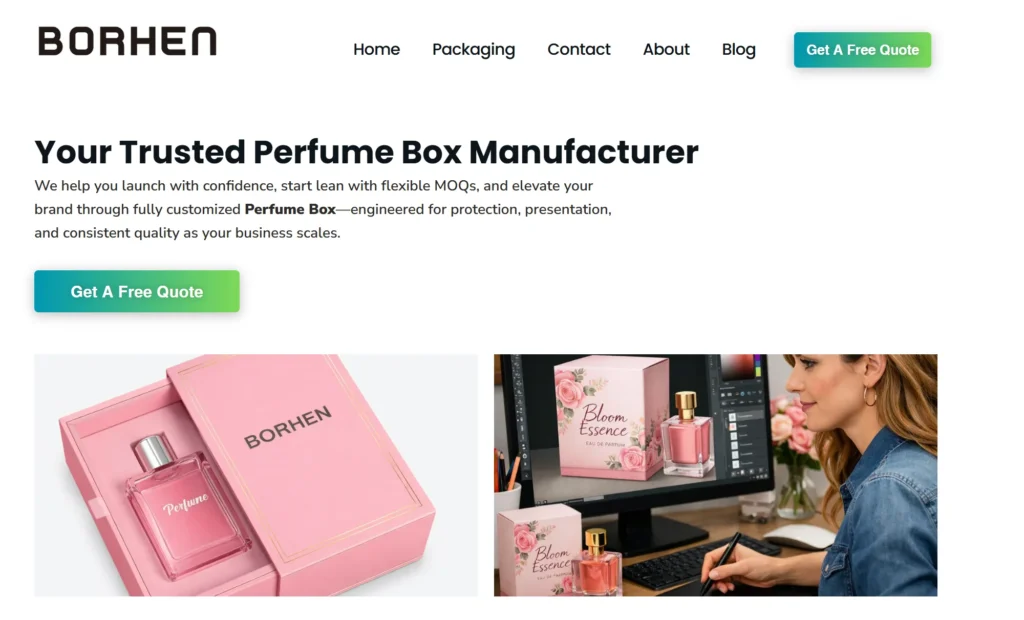
When I describe Borhen Pack, I never call us “just a box factory.” From my perspective, we are a perfume packaging manufacturer built around one core belief: fragrance packaging is part of the product, not a layer added at the end. A perfume box is often the first physical contact a customer has with a brand, and that moment shapes trust, perceived value, and memory before the fragrance is even tested. That is why everything we do starts from real-world usage, production feasibility, and long-term consistency, not from decorative concepts alone.
Why I Approach Perfume Boxes as a System, Not a Single Product
In my experience, the biggest mistake brands make is treating the perfume box as an isolated item. I see perfume packaging as a system that includes structure, inserts, materials, finishes, shipping behavior, and reordering stability. At Borhen Pack, we work with perfume brand founders, product leads, DTC teams, and sourcing managers who need packaging that performs reliably across e-commerce, retail shelves, gifting scenarios, and international distribution. Every box we manufacture is designed to protect fragile glass bottles, communicate brand positioning clearly, and remain consistent across future orders without unexpected changes.
How I Translate Brand Positioning Into Physical Packaging
One thing I’ve learned over the years is that brand positioning only becomes real when customers can touch it. Weight, rigidity, opening resistance, surface texture, and insert fit all quietly communicate whether a fragrance feels premium, credible, or forgettable. When I work on a custom perfume box program, I focus on how the box should feel in the customer’s hands and how the bottle should behave inside it. That is why we guide brands through structure selection, insert engineering, material choice, and finishing decisions in a way that aligns with their price point and audience expectations, rather than pushing one-size-fits-all solutions.
Why Structure Always Comes Before Decoration in Our Process
From my perspective, structure is the foundation of everything. A beautiful finish cannot fix a box that shifts during shipping or feels unstable when opened. At Borhen Pack, we start by understanding the bottle’s dimensions, weight distribution, and balance, then design the box around those realities. Whether the project calls for rigid boxes, drawer-style designs, magnetic closures, folding cartons, two-piece boxes, or gift sets, the structure is always tested against real handling and transport scenarios. This approach prevents costly redesigns later and ensures the packaging performs as well as it looks.
How I Think About Inserts as the Real Protection Layer
I often tell clients that the insert matters more than the outer box when it comes to breakage prevention. A perfume box can look solid, but if the insert allows movement, damage becomes inevitable over time. That’s why we treat inserts as a critical engineering component rather than an accessory. Depending on the bottle and shipping requirements, we help brands choose between EVA foam, molded paper pulp, cardboard structures, or eco-friendly alternatives, always balancing protection, cost, and sustainability. The goal is simple: the bottle should not move, tilt, or absorb shock directly, even during long international transit.
Why Perfume Brand Founders Choose to Work With Me and My Team
Founders usually come to us when they need clarity. Many are launching their first fragrance or upgrading from stock packaging and feel overwhelmed by choices and risks. I work closely with them to simplify decisions, explain trade-offs honestly, and build packaging that supports growth rather than locking them into fragile or expensive designs. Our flexible MOQs allow founders to start at realistic volumes, test the market, and scale without changing suppliers or redesigning everything from scratch. For founders, that flexibility reduces financial pressure and protects early momentum.
Why Product Owners and Sourcing Teams Trust Borhen Pack
Product leads and sourcing managers care deeply about consistency, predictability, and reordering stability. From my experience, this is where many packaging projects fail. At Borhen Pack, we control specifications tightly, confirm materials and finishes during sampling, and document structures so repeat orders match the original production. We design with reorders in mind from the very beginning, because packaging is rarely a one-time decision. This discipline helps teams avoid color drift, insert fit issues, and quality variation as volumes increase or markets expand.
How I Design Packaging to Be Export-Ready From Day One
International shipping exposes every weakness in packaging. I’ve seen boxes that perform perfectly in local delivery fail completely once exported. That’s why we design perfume boxes with global logistics in mind, including structural strength, insert stability, outer carton efficiency, and volume optimization. Whether a brand ships to the US, Europe, the UK, the Middle East, or through cross-border e-commerce, our packaging is built to survive long transit routes and repeated handling without compromising presentation.
Why Low MOQ Does Not Mean Low Standards at Borhen Pack
One misconception I often encounter is that low MOQ equals compromised quality. I strongly disagree. We support small and mid-sized runs because real brands grow in stages. Even at lower volumes, we maintain the same focus on structure, fit, and finish consistency. As brands scale to higher quantities, we help them upgrade materials, printing, and finishes without changing the core structure. This continuity protects brand identity and simplifies operations over time.
How Our End-to-End Process Reduces Risk and Guesswork
From consultation and engineering to sampling, production, quality control, and global logistics, I see our role as reducing uncertainty at every stage. We flag risks early, test assumptions through samples, and keep timelines realistic. Many of our clients tell me they feel like we act as an extension of their internal team, not just a supplier. That is intentional. Packaging mistakes are expensive, and clear communication is often the most effective form of cost control.
Why I Believe Packaging Should Grow With the Brand
The most successful perfume brands I’ve worked with don’t redesign packaging every year. They refine it. At Borhen Pack, we focus on building packaging systems that can evolve through material upgrades, finish changes, and volume scaling while maintaining the same core structure and identity. This approach protects brand recognition, reduces redesign costs, and creates a sense of continuity that customers subconsciously trust.
What Working With Borhen Pack Ultimately Delivers
When brands work with me and my team, they are not just ordering custom perfume boxes. They are building packaging that protects delicate glass bottles, supports pricing logic, ships reliably, and feels intentional every time it is opened. My goal is always the same: to help fragrance brands launch smoothly, scale confidently, and maintain consistency as their business grows. That is how I define Borhen Pack’s role as a perfume packaging manufacturer, and that is why founders and product leaders choose to work with us long term.
Tycoon Packaging
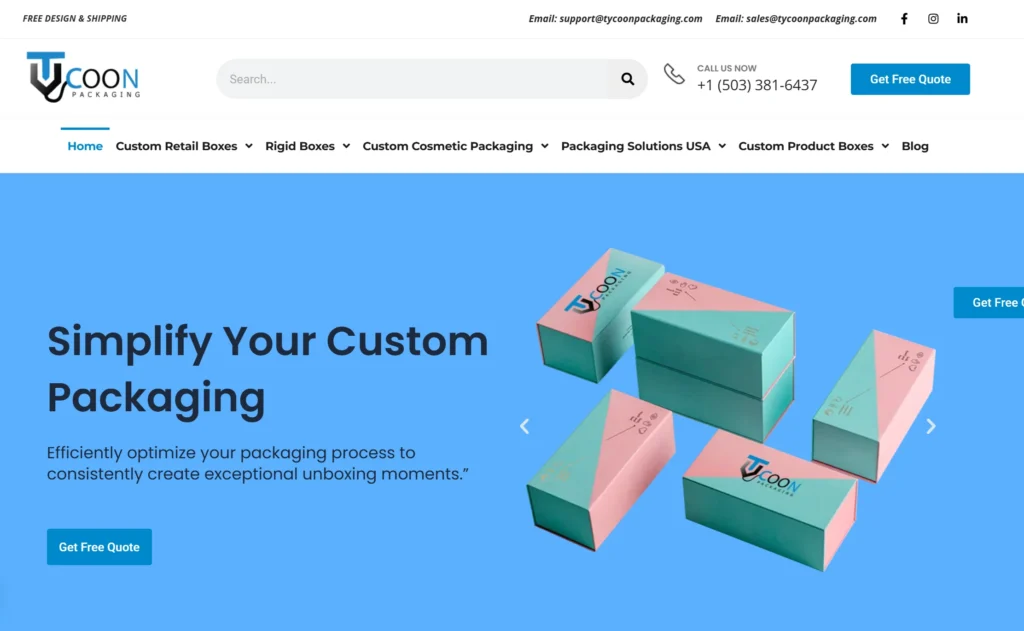
When I first came across Tycoon Packaging, what stood out to me wasn’t flashy marketing language or exaggerated claims. It was the way the company positioned itself as a problem-solver for brands that are serious about packaging but don’t want unnecessary friction in the process. Tycoon Packaging presents itself as a full-service perfume packaging manufacturer that works closely with brand owners, product managers, and sourcing teams to turn packaging ideas into manufacturable, scalable solutions.
From what I’ve observed, Tycoon Packaging focuses heavily on custom perfume boxes that balance visual impact with structural reliability. Their perfume packaging range includes rigid boxes, magnetic closure boxes, custom inserts, and premium paperboard constructions designed specifically for fragrance bottles. This tells me they understand a key reality of perfume packaging: the box is not just branding, it is protection, presentation, and perceived value combined into one experience.
The company places clear emphasis on customization, print accuracy, and material quality. Rather than pushing one-size-fits-all solutions, Tycoon Packaging appears to work around the specific needs of different perfume brands, whether the goal is mass-market consistency or boutique-level luxury.
How Tycoon Packaging Approaches Custom Perfume Boxes
What I appreciate about Tycoon Packaging’s approach is that it feels process-driven rather than transactional. From my perspective, they operate like a manufacturer that expects long-term collaboration, not just a single order. Their workflow is built around helping brands understand what is actually achievable in production, instead of simply saying yes to everything and creating problems later.
They highlight support for structural customization, including tailored box dimensions, internal inserts that secure glass perfume bottles, and finishing options that elevate shelf presence. Print techniques such as foil stamping, embossing, debossing, spot UV, and high-definition offset printing are presented as tools to support branding rather than gimmicks.
What this signals to me is that Tycoon Packaging understands the reality of perfume packaging: minor inconsistencies in color, alignment, or finish can undermine the entire brand image. Their emphasis on consistency and repeatability suggests a manufacturer that knows perfume brands often reorder the same packaging across multiple production cycles.
Why I Believe Perfume Brand Founders Choose to Work with Tycoon Packaging
If I put myself in the position of a perfume brand founder, the reason to choose Tycoon Packaging becomes fairly clear. Early-stage and growing fragrance brands usually sit in a difficult middle ground. They want packaging that looks premium, but they also need flexibility in quantities, timelines, and cost control.
Tycoon Packaging appears to position itself exactly in that gap. Their messaging suggests support for both small and mid-scale production runs, which is critical for founders launching new scents or testing seasonal collections. Instead of forcing brands into overly large commitments, they seem to focus on helping brands grow step by step with packaging that evolves alongside the product line.
From a founder’s point of view, working with a manufacturer that understands branding pressure, launch deadlines, and cash-flow sensitivity is often more valuable than working with the cheapest supplier on the market.
Why Product and Packaging Managers Trust Tycoon Packaging as a Manufacturer
When I look at Tycoon Packaging through the lens of a product or packaging manager, the value proposition shifts slightly. At this level, decisions are less emotional and more operational. Consistency, communication, and execution matter more than anything else.
Tycoon Packaging emphasizes its ability to manage specifications, maintain print accuracy, and deliver packaging that matches approved samples. This is exactly what a product manager wants to hear. No surprises, no unexplained deviations, and no last-minute compromises that affect product launches.
Their positioning suggests an understanding of internal approval workflows, where packaging needs to pass through design teams, marketing teams, and procurement before it ever reaches production. A manufacturer that can align with those internal processes becomes an extension of the brand team rather than an external risk.
A Perfume Packaging Manufacturer That Prioritizes Communication and Transparency
One thing I consistently look for when evaluating perfume packaging manufacturers is how they talk about communication. Tycoon Packaging places strong emphasis on customer support, guidance, and transparency throughout the packaging journey. That matters more than many brands realize.
Perfume packaging projects often fail not because of design issues, but because of misunderstandings between the brand and the factory. Tycoon Packaging’s messaging suggests a structured, guided process where expectations are clarified early and managed carefully through sampling and production.
For brand owners and sourcing teams alike, this level of clarity reduces stress, shortens decision cycles, and builds confidence over time.
How Tycoon Packaging Fits Into the 2026–2027 Perfume Packaging Landscape
Looking ahead to 2026 and 2027, perfume packaging trends are clearly moving toward premium simplicity, sustainability considerations, and brand storytelling through materials and finishes. Tycoon Packaging positions itself as a manufacturer that is already aligned with these expectations rather than reacting to them late.
Their focus on material options, customization depth, and scalable production suggests they are preparing for brands that want long-term packaging partners rather than short-term vendors. From my perspective, that is exactly the type of manufacturer perfume brands will continue to seek as competition increases and packaging becomes an even stronger differentiator.
Final Thoughts on Tycoon Packaging as a Perfume Packaging Manufacturer
If I were evaluating Tycoon Packaging purely as a perfume packaging manufacturer, I would describe them as a practical, brand-aware production partner rather than a volume-driven factory. They appear to understand the emotional and commercial weight perfume packaging carries, and they structure their services around supporting that reality.
For perfume brand founders and product managers who value consistency, customization, and communication, Tycoon Packaging presents itself as a manufacturer worth serious consideration in the evolving global perfume packaging market.
Arka Packaging
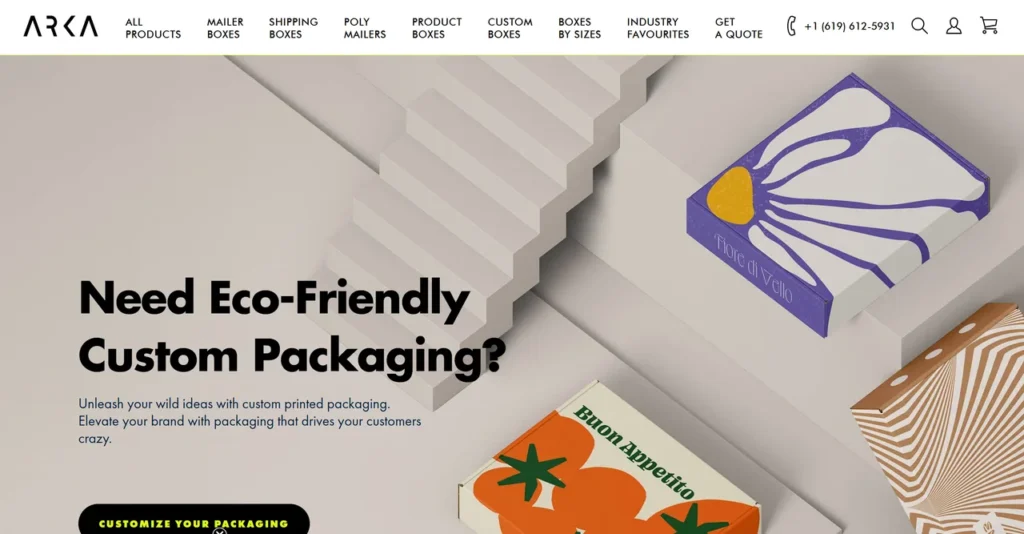
When I look at Arka Packaging as a perfume packaging manufacturer, what immediately stands out to me is how strongly the company aligns itself with modern brand realities rather than traditional factory thinking. Arka doesn’t position itself as just a box supplier. It presents itself as a packaging platform designed for brands that care deeply about speed, sustainability, and control over their visual identity.
From what I can see, Arka Packaging has built its business around accessibility. The messaging consistently speaks to startups, ecommerce brands, and growing DTC companies that want premium custom packaging without being forced into overwhelming minimums or complex procurement processes. This alone tells me Arka understands how perfume brands actually operate today, especially those launching new fragrances or limited collections.
How Arka Packaging Approaches Custom Perfume Boxes
When I dive into Arka’s custom perfume box offering, I see a system that prioritizes simplicity without sacrificing quality. Arka’s process is structured to remove friction from the packaging journey. Instead of long back-and-forth emails or unclear specifications, they emphasize instant proofing, online design tools, and fast approval cycles.
From a perfume brand perspective, this matters a lot. Packaging timelines are often tied directly to product launches, influencer campaigns, and retail onboarding. Arka’s stated turnaround times for folding cartons and perfume boxes show that they are built for speed while still maintaining visual consistency and structural integrity.
What also stands out to me is their focus on full print coverage and customization. Arka doesn’t treat perfume packaging as generic folding cartons. Their positioning highlights brand storytelling through color accuracy, clean presentation, and premium finishes that elevate the unboxing experience without unnecessary complexity.
A Strong Emphasis on Sustainability in Perfume Packaging
One of the reasons I believe Arka Packaging resonates so strongly with modern perfume brands is its clear commitment to sustainability. This isn’t presented as a marketing afterthought. It is woven directly into their identity as a manufacturer.
Arka emphasizes FSC-certified materials, responsible sourcing, and eco-friendly production processes. For perfume brand founders who are building brands with long-term values, this matters deeply. Packaging is often one of the most visible representations of a brand’s environmental stance, and Arka positions itself as a partner that helps brands make responsible choices without compromising design quality.
From my point of view, this is particularly relevant for fragrance brands targeting younger, sustainability-conscious consumers who expect transparency and accountability from the brands they support.
Why Perfume Brand Founders Choose to Work with Arka Packaging
If I step into the mindset of a perfume brand founder, the appeal of Arka Packaging becomes very clear. Founders are often balancing limited budgets, tight launch schedules, and high expectations for visual impact. Arka’s low minimum order quantities allow founders to order only what they need, test the market, and refine packaging over time.
I also notice that Arka places strong emphasis on self-service tools combined with real customer support. This hybrid approach gives founders control over design while still providing reassurance when guidance is needed. That balance is crucial for entrepreneurs who want independence but don’t want to feel unsupported.
The availability of samples and prototypes further reduces risk. For a founder, being able to physically evaluate a perfume box before committing to a larger order can make the difference between confidence and hesitation.
Why Product and Packaging Managers Trust Arka Packaging
From the perspective of a product or packaging manager, Arka Packaging offers something equally valuable: predictability. Clear production timelines, transparent proofing stages, and defined turnaround expectations reduce uncertainty, which is often the biggest pain point in packaging projects.
I can see how Arka’s structured workflow supports internal approval processes. Product managers often need to present packaging options to marketing teams, leadership, or retail partners. Having reliable proofs, consistent quality, and repeatable results makes that process smoother and more defensible.
The fact that Arka highlights domestic production and localized fulfillment also plays a role in trust. For teams managing logistics and inventory, shorter shipping distances and clearer delivery windows reduce operational risk.
A Perfume Packaging Manufacturer Designed for Scalability
What I find particularly compelling about Arka Packaging is how well it positions itself for brands at different stages of growth. The same systems that support a small startup launching its first fragrance can also support a growing brand expanding into new SKUs or markets.
Arka’s ability to scale quantities, maintain print consistency, and support repeat orders makes it suitable for long-term partnerships rather than one-off projects. This is important because perfume packaging is rarely static. Brands evolve, designs refresh, and packaging needs change over time.
From my perspective, Arka Packaging presents itself as a manufacturer that grows alongside its clients rather than outgrowing them or forcing them to move elsewhere as their needs change.
Packagingblue
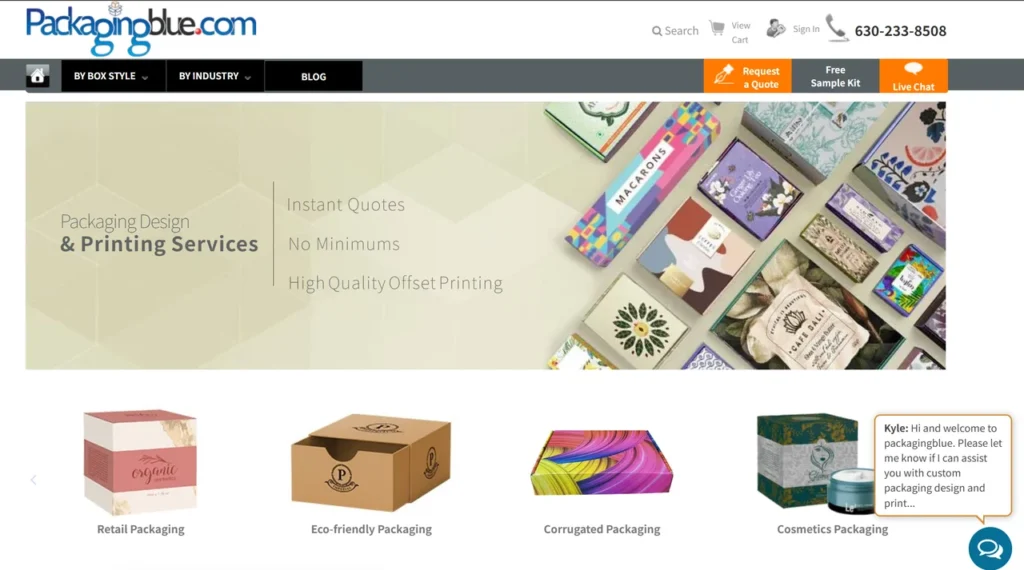
When I evaluate Packagingblue Packaging as a perfume packaging manufacturer, what immediately stands out to me is how clearly the company defines its promise. Packagingblue positions itself as a solution for brands that need dependable, high-quality custom packaging without hidden costs or unnecessary complexity. The tone is practical and reassuring, which tells me they understand the pressures faced by perfume brands that must balance aesthetics, budgets, and timelines.
From what I can see, Packagingblue focuses on delivering consistent quality through high-grade offset printing while keeping pricing competitive. Their emphasis on eco-friendly production methods, recycled paper stocks, and soy-based inks shows that sustainability is not treated as a trend but as part of their manufacturing foundation. This matters a great deal in today’s fragrance market, where packaging choices reflect brand values just as much as product quality.
How Packagingblue Approaches Custom Perfume Packaging
When I look deeper into Packagingblue’s perfume packaging capabilities, I see a manufacturer that prioritizes clarity and control throughout the production process. Their approach removes many of the traditional barriers that often frustrate brand owners and product teams, such as setup costs, die charges, or plate fees. By eliminating these obstacles, Packagingblue makes custom perfume packaging more accessible, especially for brands that want flexibility without sacrificing professional results.
Their use of high-quality offset printing signals a focus on color accuracy and sharp detail, which is critical for perfume packaging where branding elements must remain consistent across multiple runs. From my perspective, this suggests a manufacturer that understands how small visual deviations can impact shelf presence and consumer perception in the fragrance category.
Specialized Finishing Techniques That Elevate Perfume Boxes
What I find particularly compelling about Packagingblue Packaging is how they communicate their specialized finishing capabilities. Techniques such as foil stamping, embossing, spot UV, and die cutting are not presented as decorative add-ons, but as tools to enhance brand identity and tactile experience.
Foil stamping allows perfume brands to introduce metallic or solid color accents that immediately signal luxury. Embossing adds depth and dimension, giving logos and design elements a physical presence that consumers can feel. Spot UV creates contrast and focus, drawing attention to key branding elements through light and texture. Die cutting, whether traditional or laser-based, enables intricate shapes and structural creativity that help perfume boxes stand out in crowded retail environments.
From my point of view, the availability of these techniques under one roof simplifies decision-making for brands and reduces the risk of miscommunication between design and production.
Why Perfume Brand Founders Choose to Work with Packagingblue
If I place myself in the role of a perfume brand founder, the appeal of Packagingblue becomes very clear. Founders are often navigating limited budgets while trying to present their fragrance as premium and credible. Packagingblue’s transparent pricing model, combined with perks such as free graphic design services, free shipping, and free lamination, removes much of the financial uncertainty that can stall packaging decisions.
I also notice that Packagingblue emphasizes accessibility and support. Live chat, phone assistance, and dedicated account management suggest a company that values direct communication. For founders launching new scents or seasonal collections, having immediate access to guidance can make the packaging process feel manageable rather than overwhelming.
Why Product and Packaging Managers Trust Packagingblue Packaging
From a product or packaging manager’s perspective, trust is built on consistency and responsiveness. Packagingblue’s commitment to 24/7 customer support and clearly defined services signals operational reliability. Product managers are often responsible for meeting launch deadlines and maintaining brand standards, and unpredictable packaging suppliers can quickly become a liability.
I see Packagingblue as a manufacturer that reduces that risk by offering structured services, dependable timelines, and clear points of contact. Their ability to handle custom dimensions, high-quality printing, and specialized finishes within a transparent framework allows internal teams to plan with confidence and defend their packaging choices to stakeholders.
A Perfume Packaging Manufacturer That Balances Quality and Scale
What stands out to me most about Packagingblue Packaging is how well it balances quality with scalability. The company presents itself as capable of supporting both smaller brands and larger, more established fragrance businesses through volume discounts and flexible production options. This makes Packagingblue suitable not just for one-time projects, but for long-term packaging partnerships.
As perfume brands grow, their packaging needs often become more complex, requiring repeat orders, refined finishes, and consistent branding across product lines. From what I can tell, Packagingblue has structured its services to support that evolution rather than limit it.
Hongyi Box
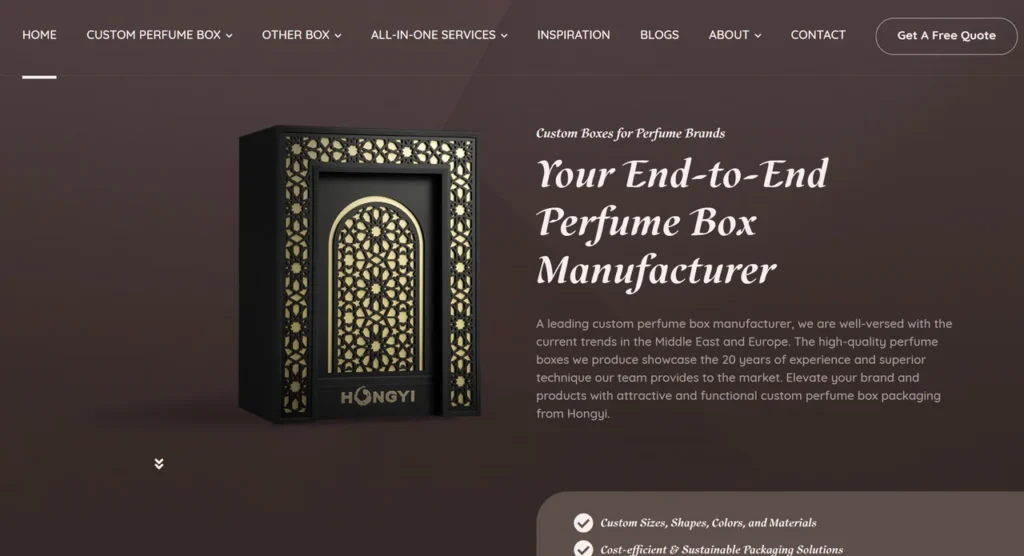
When I look at Hongyi Box as a perfume packaging manufacturer, the first thing that stands out to me is its long-term specialization. Hongyi is not a general packaging factory that happens to make perfume boxes. It is a manufacturer that has deliberately focused its resources, craftsmanship, and production strategy on perfume packaging for more than two decades.
Founded in 2000 and based in Dongguan, China, Hongyi operates a large-scale manufacturing facility with hundreds of skilled craftsmen and advanced machinery. From my perspective, this scale matters because perfume packaging demands precision, consistency, and repeatability. Hongyi’s long history working specifically with fragrance brands, especially in the Middle East and European markets, suggests a deep understanding of luxury expectations, regional preferences, and premium presentation standards.
A Manufacturer Built for Luxury and International Markets
What I find particularly compelling about Hongyi Box is its strong alignment with international perfume markets. Hongyi openly positions itself as being well-versed in Middle Eastern and European fragrance trends, which tells me they are accustomed to producing packaging that emphasizes elegance, durability, and strong visual identity.
Luxury perfume packaging is not just about appearance. It must protect fragile bottles, handle long-distance shipping, and still arrive looking pristine. Hongyi’s experience with rigid boxes, wooden boxes, cardboard structures, and even specialized plastic perfume boxes reflects a manufacturer that understands both aesthetics and logistics. From what I can see, this is a company built to serve brands that sell globally, not just locally.
Material Expertise That Supports Brand Positioning
When I examine Hongyi’s material options, I see a manufacturer that treats materials as a strategic branding choice rather than a cost decision alone. Hongyi offers cardboard, rigid board, wood, and specialized plastic packaging, all sourced with sustainability in mind. The use of biodegradable and recyclable raw materials, combined with eco-friendly printing processes, aligns well with modern brand values.
From my point of view, this flexibility allows perfume brands to match packaging materials with their positioning. A niche artisanal fragrance might lean toward wooden or textured rigid boxes, while a contemporary luxury brand might prefer precision-cut cardboard with refined finishes. Hongyi’s ability to support all of these directions under one roof reduces complexity for brand teams.
How Hongyi Manages the Custom Perfume Box Process
What I appreciate most about Hongyi’s approach is how clearly the production process is defined. From consultation to design, sampling, and delivery, Hongyi presents itself as a service-oriented manufacturer rather than just a producer. I see this as a key reason why many brands choose to work with them.
Sampling within a week, consistent communication, and controlled delivery timelines suggest a workflow designed to reduce uncertainty. For perfume brands launching new products, uncertainty is often the biggest risk. Hongyi’s promise to respond quickly, maintain design consistency, and manage projects end-to-end makes the packaging process feel structured and predictable.
Why Perfume Brand Founders Choose to Work with Hongyi Box
If I put myself in the position of a perfume brand founder, Hongyi’s appeal becomes very clear. Founders often want packaging that signals credibility and quality from the first customer touchpoint. Hongyi’s 20 years of experience, international client base, and certifications such as FSC, BSCI, ISO9001, and ISO14001 provide immediate reassurance.
The ability to handle both medium and large production volumes also matters. With a minimum order quantity starting at 3000 pieces, Hongyi positions itself for brands that are ready to scale and take packaging seriously as part of their growth strategy. For founders looking to move beyond test batches and establish long-term brand consistency, Hongyi feels like a natural next step.
Why Product and Packaging Managers Trust Hongyi as a Long-Term Partner
From a product manager’s perspective, Hongyi Box offers operational confidence. Product managers are responsible for ensuring that packaging meets design intent, quality standards, and delivery schedules. Hongyi’s emphasis on strict quality control, advanced manufacturing tools, and dedicated project management directly addresses those concerns.
I also notice that Hongyi highlights its ability to handle OEM and ODM projects. This is especially valuable for product teams that want collaborative input on structure, decoration, and market-aligned design adjustments. Hongyi’s willingness to adapt designs based on trends suggests a manufacturer that thinks beyond execution and actively contributes to product success.
Craftsmanship and Decoration That Elevate Perfume Packaging
What truly differentiates Hongyi in my view is its focus on craftsmanship and decoration. Logo customization, decorative add-ons, inserts, foams, and advanced printing techniques are all positioned as ways to enhance both protection and presentation. Perfume packaging often needs to feel as luxurious as the fragrance itself, and Hongyi’s emphasis on detail supports that expectation.
Safe packaging is clearly a priority as well. Custom inserts and protective structures reduce damage risk during shipping, which is especially important for glass perfume bottles destined for international markets. This balance between beauty and function is something I consistently see in high-performing fragrance brands.
Sustainability as a Manufacturing Standard, Not a Trend
When I review Hongyi’s sustainability practices, I see a manufacturer that has embedded environmental responsibility into its operations. The use of recyclable materials, eco-friendly UV inks, and controlled production environments demonstrates an awareness of long-term environmental impact.
For perfume brands that are increasingly scrutinized for their sustainability commitments, partnering with a manufacturer that already follows responsible practices simplifies compliance and strengthens brand messaging. From my perspective, this makes Hongyi especially attractive to brands operating in regulated or sustainability-conscious markets.
Stocksmetic
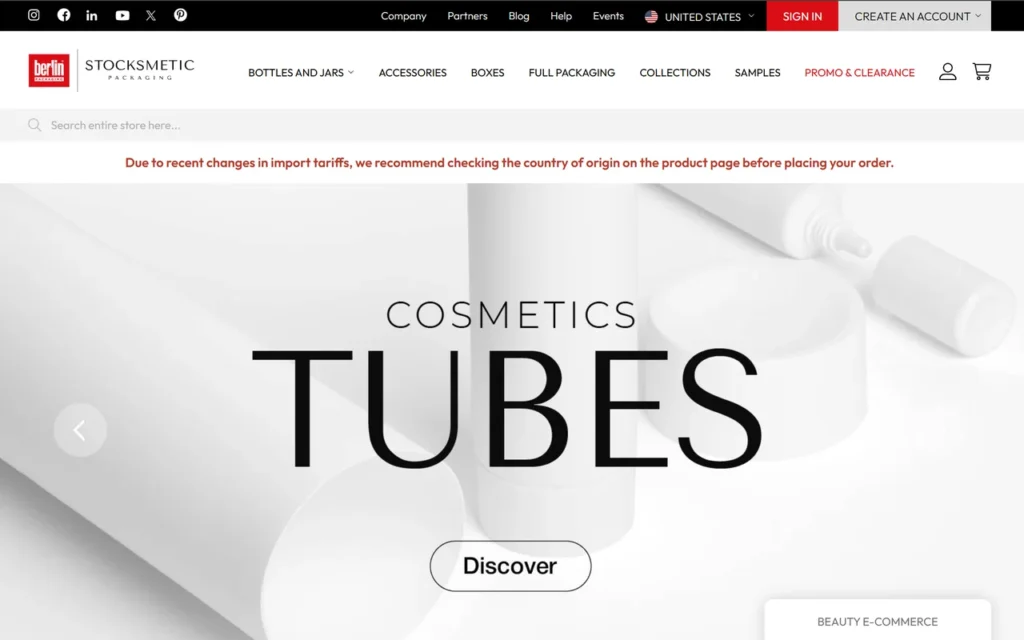
When I look at Stocksmetic Packaging as a perfume packaging manufacturer, what immediately stands out to me is how strongly the company is built around flexibility. Stocksmetic was clearly created for brands that want professional, refined perfume packaging without being locked into large production volumes or long lead times. This positioning alone makes it very different from traditional manufacturers that mainly serve large-scale orders.
Born from professionals with decades of experience in the cosmetic sector, Stocksmetic Packaging operates as an exclusive distributor of Berlin Packaging and focuses primarily on the B2B market. From my perspective, this background explains why their offering feels structured, reliable, and highly aligned with the real needs of fragrance, skincare, pharmaceutical, and makeup brands.
A Manufacturer That Makes Small Quantities Viable for Perfume Brands
What I find especially compelling about Stocksmetic Packaging is its commitment to minimal quantities and continuous stock availability. Many perfume brand founders struggle to find packaging partners willing to support small or medium production runs. Stocksmetic solves this problem by keeping guaranteed stock available and offering shipment in just a few days.
From my point of view, this is a major advantage for emerging fragrance brands, limited editions, seasonal launches, or market testing. The ability to order packaging in smaller quantities without sacrificing quality allows brands to move faster, reduce inventory risk, and adapt their product strategy in real time.
How Stocksmetic Approaches Custom Perfume Packaging
When I explore how Stocksmetic structures the customization process, I see a workflow that prioritizes clarity and control. Brands start by selecting bottles or jars in different sizes and materials, then match them with closures and accessories in a variety of finishes. This modular approach gives brands creative freedom while keeping the process efficient.
What really differentiates Stocksmetic for me is the screen-printing service. Instead of relying solely on labels, brands can apply their graphics directly onto glass bottles or jars. This results in a cleaner, more premium aesthetic that is particularly appealing in the perfume category, where visual refinement plays a crucial role in perceived value.
The final step, completing the packaging with a custom box, allows brands to bring the entire presentation together. From bottle to closure to outer packaging, Stocksmetic offers a cohesive solution rather than disconnected components.
Perfume Packaging That Balances Design and Practicality
From what I can see, Stocksmetic’s perfume packaging range is carefully designed to balance elegance and functionality. Their collection of glass perfume bottles covers standard fragrance sizes from 10 ml to 100 ml, alongside roll-on bottles and sampling formats. This tells me they understand how perfume brands build product lines, often combining full-size bottles with travel sizes and testers.
The materials and forms are clearly chosen to preserve the integrity of the fragrance while maintaining a refined visual identity. In my view, this combination of practicality and aesthetics is exactly what modern perfume brands need to compete in a crowded market.
Why Perfume Brand Founders Choose to Work with Stocksmetic Packaging
If I imagine myself as a perfume brand founder, Stocksmetic’s appeal becomes very clear. Founders often need to move quickly, test ideas, and iterate designs without committing to massive upfront investments. Stocksmetic’s low minimum quantities, sample sets, and fast shipping timelines directly support this way of working.
I also notice that Stocksmetic emphasizes professional consulting. This is important because not every founder has deep packaging expertise. Having access to guidance on bottle selection, printing techniques, and accessories reduces decision fatigue and increases confidence throughout the development process.
For founders who want their brand to look established and premium from day one, without overextending resources, Stocksmetic feels like a highly practical partner.
Why Product and Packaging Managers Trust Stocksmetic
From a product manager’s perspective, reliability and consistency are key. Stocksmetic’s promise of continuous stock availability and guaranteed lead times addresses one of the biggest operational risks in packaging procurement. When packaging delays occur, entire product launches can be pushed back.
I see Stocksmetic as a manufacturer that reduces this risk by combining stocked components with customizable options. This hybrid model allows product managers to plan more accurately, control timelines, and maintain brand consistency across different production runs.
The strong volume of customer reviews and international feedback also suggests a company that has earned trust through execution rather than marketing alone.
A Perfume Packaging Manufacturer Aligned with Modern Market Trends
What I find particularly interesting about Stocksmetic Packaging is how closely it aligns with current market trends. The focus on sustainable cosmetics packaging, screen-printable glass, and adaptable design reflects a clear understanding of where the fragrance industry is heading.
Their educational content and inspiration sections further reinforce this positioning. By sharing insights and design ideas, Stocksmetic positions itself not just as a supplier, but as a knowledgeable partner invested in brand success.
Refine Packaging
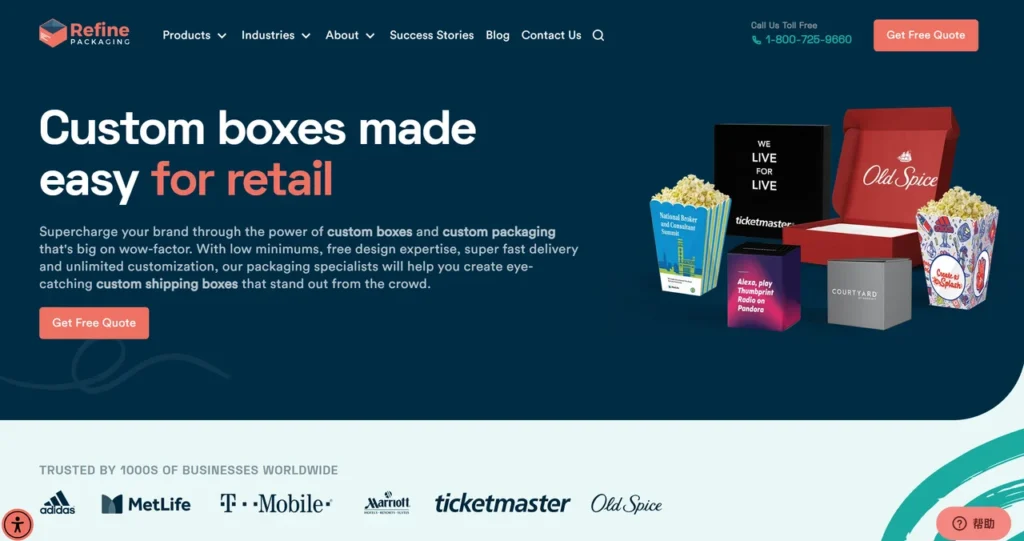
When I evaluate Refine Packaging as a perfume packaging manufacturer, what stands out to me first is the way they frame packaging as a marketing asset, not just a protective box. Their messaging is centered on wow-factor, brand storytelling, and visual impact, which is exactly how many modern fragrance brands think about packaging today. Refine Packaging positions itself as a partner for both small startups and well-known enterprise brands, with a strong emphasis on fast delivery, low minimum order quantities, and near-limitless customization.
From what I can see, they’re targeting teams that want custom packaging without the long, traditional sourcing cycle. They make the process feel approachable, guided, and quick, while still promising high-quality offset printing and competitive pricing.
A Custom Packaging Process That Feels Structured and Low-Friction
What I find particularly important about Refine Packaging is how clearly they outline the order journey. In my experience, perfume packaging projects often get delayed not because the box is difficult to produce, but because the process becomes unclear across quoting, dielines, proofing, revisions, and approvals. Refine Packaging tries to remove that uncertainty by formalizing each stage and setting expectations around response times, mockups, and production milestones.
They emphasize fast quote turnaround, and they make it clear that the production phase only begins after the brand approves the final mockups. From my perspective, this protects both sides. The brand gets confidence that the output will match what was approved, and the manufacturer reduces the risk of misunderstandings that lead to costly rework.
Low Minimum Quantities That Work for Perfume Launches and Limited Editions
When I think about why perfume brand founders are drawn to Refine Packaging, I keep coming back to their low minimum order quantity starting from 100 boxes. In fragrance, brands often launch in small batches, test retail performance, or release seasonal drops. Having the ability to create branded perfume boxes at a low MOQ makes packaging experimentation more realistic and reduces inventory pressure.
This is especially useful when a brand is still refining its identity. A founder can update artwork, adjust box dimensions, or test different finishes without committing to thousands of units too early. From my point of view, this is a major reason a startup perfume brand would shortlist them among other perfume packaging manufacturers.
High-Quality Offset Printing for Brands That Need Consistency
Refine Packaging repeatedly highlights high-quality offset printing, and that matters more in perfume packaging than many people realize. Perfume boxes usually rely on precise typography, refined gradients, accurate brand colors, and premium finishes that must look consistent across every unit. If the color shifts or the print looks dull, the packaging can instantly feel “cheap,” even if the fragrance itself is premium.
From my perspective, their emphasis on full-color printing, artwork guidance, and proofing workflows suggests they’re trying to solve a real brand pain point: maintaining a polished and consistent look across repeat orders. That is exactly what product leads and packaging managers care about when they’re protecting brand standards.
Dielines, Mockups, and Proofing That Help Product Teams Move Faster
What I personally like about Refine Packaging’s approach is how strongly they emphasize dielines and 2D and 3D mockups. For product managers, proofs aren’t a “nice to have.” They are a critical tool for internal alignment. When I imagine a packaging lead presenting options to marketing, leadership, or retail partners, a clean 3D rendering makes decisions easier, reduces back-and-forth, and speeds up approvals.
Refine Packaging frames this proofing stage as a way to ensure the brand isn’t left guessing about the final outcome. They also mention sample orders when needed, which gives teams the chance to validate feel, structure, and unboxing experience before scaling.
Why Perfume Brand Founders Choose Refine Packaging
If I put myself in the shoes of a perfume brand founder, I can see why Refine Packaging feels attractive. They offer fast turnaround, free design support, and guidance from packaging specialists, which reduces the workload on a small team that might not have an in-house packaging designer. The tone feels collaborative rather than transactional, which helps founders feel supported through a process that can otherwise be intimidating.
I also notice how they position packaging as a “conversation starter.” That language resonates with founders because fragrance is an emotional category. Packaging often becomes the first physical expression of the brand’s story, and founders want a manufacturer that understands that emotional layer, not just the technical specs.
Why Product Managers and Packaging Leads Choose Refine Packaging
From a product manager’s perspective, what matters most is execution reliability. Refine Packaging leans heavily into response speed, structured workflow, and continuous communication during production. If a company truly responds to quote requests within a short window and provides clear mockups and dielines quickly, it becomes easier for product teams to hit launch timelines.
Their emphasis on competitive pricing and bulk discounts also matters for product owners managing margin targets. The ability to scale from low MOQ testing to larger-volume orders while keeping costs optimized makes Refine Packaging relevant not just for startups, but for growth-stage fragrance brands as well.
A Perfume Packaging Manufacturer That Supports Creative Ambition
When I step back and summarize Refine Packaging’s positioning, I see a manufacturer that is trying to make bold, branded packaging accessible. They talk like a team of artists, marketers, and packaging engineers, and that kind of language speaks directly to brands that care about design and differentiation. Their promise of unlimited customization, paired with structured production steps, creates a balance between creativity and control.
For perfume brands that want to create packaging that looks premium, feels intentional, and arrives quickly enough to support real marketing calendars, Refine Packaging positions itself as a strong option in the perfume packaging manufacturers landscape.
Packamor Packaging
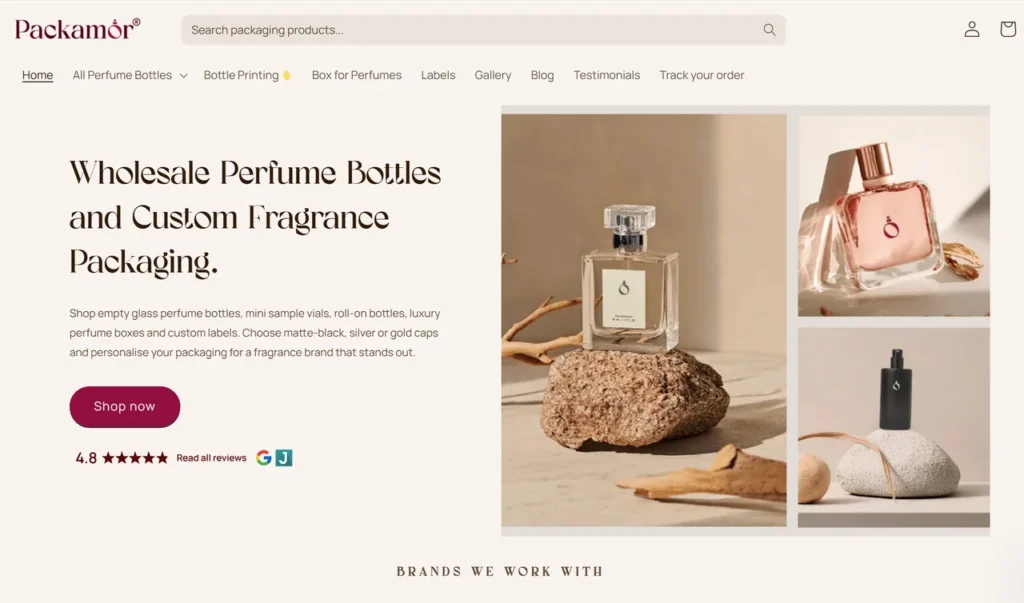
When I look at Packamor Packaging as a perfume packaging manufacturer, I immediately see a company built for people who want to launch quickly and keep the entire packaging system consistent. Packamor isn’t only focused on boxes. They combine wholesale perfume bottles, caps, pumps, roll-on bottles, sample vials, custom labels, and matching perfume boxes, so a fragrance brand can build a complete packaging lineup without juggling multiple suppliers. For many small and growing perfume brands, that “one place to source everything” is the difference between a smooth launch and a stressful one.
What Packamor communicates clearly is that they’re designed for real-world brand needs: small order flexibility, inventory availability, fast shipping, and packaging that looks premium without forcing a huge commitment upfront.
A Packaging Model That Fits How Small Fragrance Brands Actually Grow
If I imagine myself as a founder building a fragrance brand from scratch, Packamor’s setup makes practical sense. They support both discovery-driven selling and full-size retail, which is exactly how modern perfume brands grow. I can source 2 ml tester vials for sampling, then scale into 15 ml, 30 ml, and 50 ml bottles as the brand gains traction. At the same time, I can keep the look cohesive by choosing matching caps in matte-black, gold, or silver, and pairing bottles with boxes that are sized specifically for those formats.
That’s a big deal because fragrance packaging rarely works well when the box and bottle are sourced separately. Fit, protection, and visual balance matter, and Packamor is clearly trying to engineer the experience as a complete system, not as random parts.
Low Minimums That Make Launches and Reorders Less Risky
One of the strongest reasons I believe perfume brand founders choose Packamor is the low minimum order quantities. Their bottle listings show minimums as low as 70 units in some cases, and their custom perfume boxes often start around 100 units. For a small brand, that reduces the fear of over-ordering packaging before sales are proven.
From my perspective, this also makes reorders more manageable. A founder doesn’t need to guess six months of demand. They can order in smaller waves, refine the brand presentation, and keep cash flow healthier. That flexibility is often more valuable than a slightly cheaper unit price at a huge MOQ.
Packaging That Prioritizes Protection Without Losing the Premium Feel
Perfume packaging has to do two jobs at the same time: it has to look luxurious, and it has to protect glass. What I notice about Packamor is how often they highlight structural protection features for their boxes. They describe inner holders designed to prevent lateral movement, bottom buffers to stabilize the bottle, and sturdy paperboard materials such as 350 gsm paper. That tells me they’re thinking about shipping realities, not just shelf aesthetics.
If I’m a product owner responsible for customer experience, this matters because nothing destroys a brand faster than broken bottles, leaking atomizers, or dented boxes arriving at a customer’s door. Packamor’s message is essentially: your packaging should be beautiful, but it should also survive shipping like a professional product.
Customization That Works for Both “Starter” Branding and Luxury Upgrades
When I evaluate Packamor’s customization options, I see a pathway for brands at different maturity levels. A new founder might start with unprinted boxes or simple label customization. Then, as the brand grows, they can scale into full-color printed boxes, metallic foiling, frosting, sprayed gradients, and screen printing directly on glass.
What I personally like about this structure is that it matches how branding evolves. Most founders don’t begin with perfect packaging. They begin with a direction, then refine. Packamor seems built to support that journey, letting brands upgrade the look step by step without completely rebuilding the supply chain every time.
Discovery Sets and Sampling That Support Modern Perfume Marketing
If I’m honest, I think Packamor’s biggest advantage for many brands is how well they support sampling. They offer tester bottles, mini vials, roll-ons, and discovery-box packaging that holds multiple 2 ml testers. Sampling is central to modern fragrance marketing because customers often want to try before committing to a full-size bottle, especially online.
From a founder’s point of view, discovery sets are not only a marketing tool. They are also a revenue product, a gifting format, and a retention strategy. Packamor’s packaging range makes it easier to create that full funnel: sampler first, then full-size purchase later, all under one consistent brand look.
Proofing, Design Help, and “Hand-Holding” for Non-Experts
What I see throughout their content is that Packamor expects many of their customers to be new to packaging. They address common confusion around dielines, printing terms, and color systems, and they position their team as guides who help brands avoid mistakes. They also mention free digital proofing and design consultations, which is important because packaging errors can be expensive.
If I’m a perfume brand founder without a packaging background, what I really want is a supplier who reduces uncertainty. Packamor tries to do that by offering mockups, guidance, and a clear process before mass production begins.
Why Perfume Brand Founders Choose Packamor Packaging
If I put myself into the mindset of a founder, I can see the appeal immediately. Packamor makes it easier to launch a fragrance line fast because I can buy bottles, caps, boxes, and testers in one place, with low minimums that don’t force me into large inventory risk. I also get packaging that looks professional and feels cohesive, which helps the brand feel “real” from day one. When customers receive a sturdy box, a heavy glass bottle, and clean branding details, they trust the product more—even before they smell it.
Why Product Managers and Packaging Leads Choose Packamor Packaging
From a product manager’s angle, Packamor is appealing because it reduces coordination complexity. Instead of managing separate suppliers for bottles, closures, labels, and cartons, I can consolidate and keep the packaging system aligned. That saves time, reduces mismatched specs, and improves the chance that packaging arrives ready to assemble without last-minute fit issues.
I also think the focus on protection features, inventory availability, and consistent components is exactly what a product lead wants. When launches rely on timing, packaging needs to be repeatable and dependable, not just “pretty.”
Packamor as a Perfume Packaging Manufacturer in the Competitive Landscape
When I summarize Packamor in one sentence, I see them as a packaging ecosystem built for small and growing fragrance brands that want speed, flexibility, and a cohesive look across bottles, boxes, and sampling formats. They are not positioning themselves as a traditional high-MOQ factory that only serves large enterprises. Instead, they are building a brand-friendly supply model where a perfume founder can start small, look premium, and scale with confidence.
Smurfit Westrock
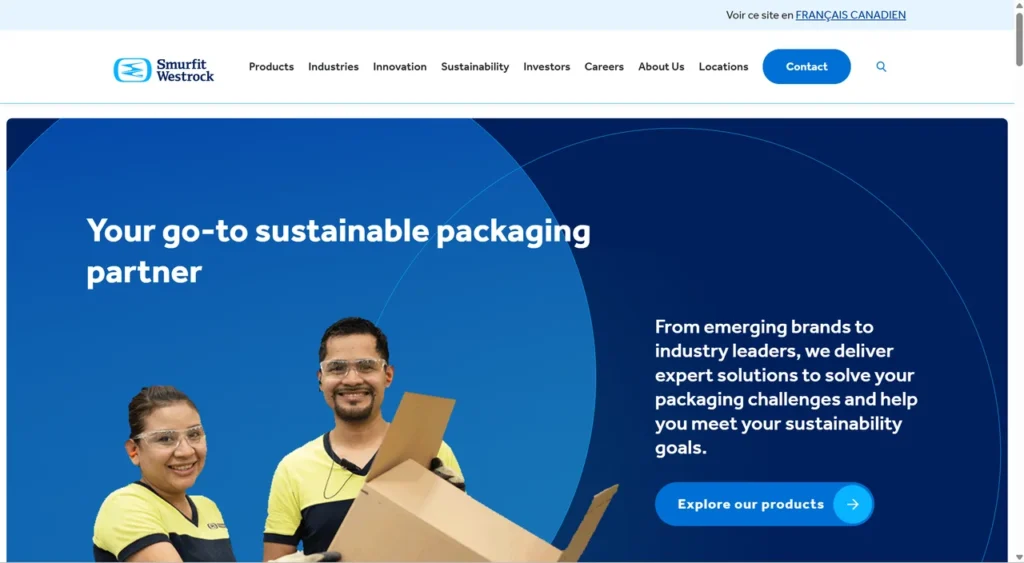
When I look at Smurfit Westrock as a perfume packaging manufacturer, I don’t see a typical “box supplier.” I see a global packaging system that operates at a level of scale and discipline most fragrance brands simply can’t replicate internally. Smurfit Westrock positions circular economy thinking as the foundation of its business, and that immediately tells me their fragrance packaging isn’t built only to look premium—it’s built to be repeatable, measurable, and compatible with modern sustainability targets across markets.
What stands out to me right away is their breadth. They are not focused on one packaging style or one category. They describe a portfolio that spans corrugated packaging, consumer packaging, Bag-in-Box® systems, and point-of-sale displays, supported by hundreds of converting operations and dozens of paper mills globally. That level of infrastructure matters for perfume brands that need consistent quality at scale, and it also matters for product teams who need supply continuity across regions.
A Manufacturer Designed for Brands That Need Global Consistency and Supply Stability
If I’m a perfume brand founder who is scaling fast, or a product lead managing launches across different markets, my biggest fear is inconsistency: inconsistent print, inconsistent materials, inconsistent lead times, and inconsistent sustainability claims. Smurfit Westrock is built to reduce those risks through sheer operational depth. They describe operations in 40 countries, with 500+ packaging converting operations and 59 paper mills, which signals to me that they can support multi-region programs without constantly “reinventing the process” every time a brand expands.
For founders, that stability translates into confidence. For product managers, it translates into fewer surprises. When packaging becomes predictable, the rest of the business—production planning, retail onboarding, ecommerce fulfillment, and seasonal drops—becomes easier to manage.
Circular Economy Packaging That Aligns With How Luxury Brands Are Being Judged Today
What I personally find most significant is how directly Smurfit Westrock ties packaging to the circular economy. They emphasize renewable, recyclable, and recycled inputs, and they speak about paper fiber as a renewable raw material that supports sustainability goals. In modern fragrance, sustainability is no longer a “nice-to-have.” It’s part of brand trust, retail acceptance, and sometimes even compliance.
If I’m a founder building a premium fragrance brand, I want packaging that feels luxury while still allowing me to credibly communicate environmental responsibility. Smurfit Westrock’s language suggests they are built to support those claims at a corporate level, which is a huge advantage when sustainability questions come from retail partners, investors, or consumers.
Luxury Perfume Packaging That Focuses on Shelf Appeal, Unboxing, and Brand Identity
When I read how Smurfit Westrock describes their perfume packaging, I can tell they understand that perfume packaging is not “secondary.” They frame it as part of the luxury experience itself. Their fragrance solutions are paper-based, but they emphasize refined structures, custom formats, and premium decorative effects—exactly the details that make a perfume box feel like a gift rather than a container.
They highlight premium shelf appeal through custom shapes and refined structures, and that matters because fragrance is often bought emotionally. The packaging needs to trigger desire instantly. They also lean into decorative technologies like embossing, metallic inks, cold foil, and UV gloss coatings, which tells me they can deliver tactile and visual richness without compromising the structural reliability of paperboard.
What I also like is that they explicitly connect packaging design to both in-store and direct-to-consumer unboxing. That signals real understanding of how fragrance brands sell today: retail needs strong shelf presence, while ecommerce needs protective engineering plus a memorable “first opening” moment.
Product Protection Built Into Paperboard Structures That Still Feel Premium
If I’m being honest, perfume packaging lives or dies by protection. Bottles are fragile, pumps can leak, and luxury cartons can be damaged easily if they aren’t engineered correctly. Smurfit Westrock positions their fragrance packaging as sturdy paperboard-based structures that deliver strength and protection. From a product manager’s standpoint, that’s critical, because returns and damage claims quickly erode margins and reputation.
At the same time, protection alone isn’t enough in perfume. It has to feel premium. Their emphasis on refined structures and decorative finishes suggests they aim to deliver both: a box that survives logistics while still looking and feeling expensive in the customer’s hands.
Innovation Capacity That Helps Brands Test Faster and Improve Packaging Performance
What makes Smurfit Westrock feel fundamentally different to me is their innovation scale. They mention a large network of innovation and experience centers, a substantial design workforce, and a massive volume of packaging analysis that drives efficiency. Even without diving into technical detail, that messaging tells me they operate like an industrial design partner, not just a manufacturer.
For a fragrance brand, this becomes valuable when packaging needs to evolve. Maybe the brand wants to reduce material weight, improve recyclability, enhance shelf differentiation, or optimize for ecommerce shipping. A manufacturer that can test, model, and refine packaging systematically helps teams make better decisions faster, instead of relying on guesswork.
Why Perfume Brand Founders Choose Smurfit Westrock
If I put myself in the founder’s seat, I see three reasons Smurfit Westrock is attractive. First, they give me the credibility and structure to sell luxury while still aligning with sustainability expectations. Second, they give me the ability to scale without losing consistency, because they’re built for global supply and standardized execution. Third, they help me treat packaging as part of brand equity, not just a cost line, because their fragrance packaging is positioned around identity, premium finishing, and unboxing impact.
For founders who are moving from boutique to global, Smurfit Westrock feels like the kind of partner that makes growth safer.
Why Product Managers and Packaging Leads Choose Smurfit Westrock
From a product or packaging lead perspective, Smurfit Westrock’s value is operational reliability paired with design capability. I see a company that can support structured procurement processes, multi-market rollouts, and long-term programs, with the scale to manage ongoing demand. Their approach to sustainability also helps product teams meet internal ESG requirements without relying on vague claims.
I also think their innovation model matters to product owners because packaging is rarely “final.” Regulations shift, retail standards evolve, ecommerce constraints change, and brands refresh identity. A partner that can continuously improve packaging performance—while keeping quality stable—reduces workload and improves time-to-market for future launches.
Smurfit Westrock as a Perfume Packaging Manufacturer.
When I summarize Smurfit Westrock in the context of perfume packaging manufacturers, I see a paper-based packaging leader that brings enterprise-grade sustainability, global scalability, and premium finishing options into one ecosystem. They are best suited for fragrance brands that take packaging seriously as a strategic lever—especially brands that need consistency across regions, want measurable sustainability alignment, and expect luxury-level shelf and unboxing performance.
For any perfume brand founder or product manager who wants a partner capable of delivering both brand elevation and supply chain confidence, Smurfit Westrock stands out as a serious contender.
IMH Packaging
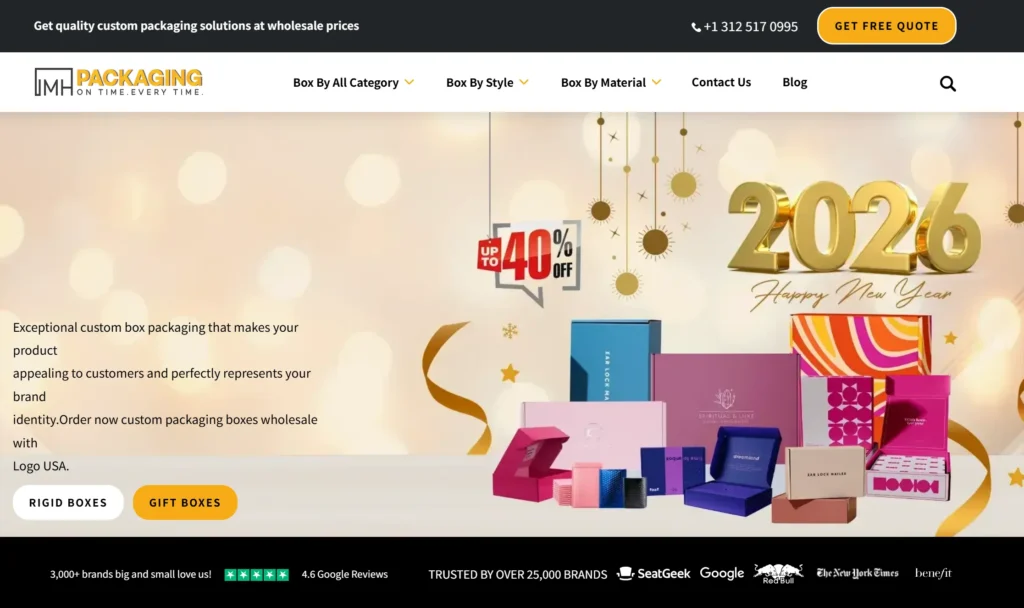
When I read IMH Packaging’s positioning, I immediately see a company trying to remove friction from custom packaging for brands that need speed, flexibility, and a “done-with-you” experience. They present themselves as an all-in-one partner for custom packaging boxes with logo wholesale in the USA, with a strong emphasis on support services like free design help, free delivery, 24/7 customer support, and a process that moves quickly from quote to proof to production.
What feels especially relevant for perfume brands is that IMH doesn’t talk only about generic cartons. They explicitly highlight custom perfume boxes as a featured category and then go deep into variations like rigid perfume boxes, two-piece boxes, drawer boxes, magnetic closure boxes, window boxes, display boxes, and boxes with inserts. From my perspective, that range matters because perfume packaging isn’t one-size-fits-all—different SKUs, bottle shapes, and price tiers often need different structures.
The Core Promise: Branded Packaging That Makes Products Feel More Premium
If I’m building a fragrance brand, I know my product can smell incredible and still lose the sale if the packaging looks generic or flimsy. IMH leans heavily into the idea that packaging is branding, and that’s a message I agree with. They talk about boxes that represent brand identity through logo placement, colors, taglines, box shapes, material selection, printing, and add-ons. That kind of customization is exactly what helps a perfume brand shift from “indie” to “professional,” especially when customers are comparing multiple fragrances side by side on a shelf or scrolling fast online.
IMH also repeatedly references the unboxing experience, which is not just a marketing phrase in fragrance—it’s part of the product. Perfume is emotional, and the packaging is the first physical touchpoint. When the box opens smoothly, holds the bottle firmly, and looks intentional inside and out, it elevates perceived value before the customer even sprays the scent.
A Manufacturing and Service Model Built Around Convenience
What I find most practical about IMH’s approach is the way they frame the ordering journey. They describe a straightforward flow where I choose a box style, provide or request artwork support, review a digital proof, then move to production and delivery. That structure is important for founders who don’t have time to manage packaging as a full-time job, and it’s equally important for product managers who need a predictable workflow to hit launch timelines.
They also emphasize “no die & plate charges,” “fast turnaround,” and “competitive pricing.” Those points are designed to reduce the upfront fear that custom packaging will be expensive, slow, and complicated. For early-stage fragrance brands or brands testing multiple packaging directions, that reassurance is often what makes the first custom order possible.
Why IMH Works Well for Perfume Brands: Structure, Protection, and Presentation
When I look specifically at their perfume packaging content, the focus is very clear: protection plus presentation. They repeatedly talk about preventing spills, breakage, and damage during handling, and they highlight sturdier formats like rigid boxes and inserts. For perfume, that’s not optional. Glass bottles, crimp pumps, and decorative caps are easy to damage, and even small dents on cartons can ruin the luxury impression.
IMH positions rigid packaging as a solution for heavier products and rough handling, and they also emphasize inserts as a way to lock the bottle in place and keep the unboxing clean and premium. If I’m launching a fragrance line with multiple bottle shapes, inserts become the “quiet hero” that makes shipping safer and retail display more consistent.
The Perfume Box Range: From Entry-Level to Luxury Gift Presentation
If I’m a perfume brand founder, I want options that match my price ladder. IMH offers a broad range that can support that. Card stock perfume boxes feel like a strong fit for everyday retail units where I want good print and shelf impact without overbuilding cost. Two-piece boxes and rigid luxury boxes speak more to gifting, limited editions, and premium positioning where the unboxing ritual matters. Drawer boxes add a boutique feel and can work beautifully for “signature scent” launches, while magnetic closures reinforce luxury without needing overly complex structures.
What I personally like is that they don’t lock the brand into one style. As I grow, I can start with a simpler carton, then move into rigid or specialty formats for seasonal drops, subscription boxes, discovery sets, or influencer PR kits.
Brand Owners Choose IMH Because It Feels Like a Shortcut to “Ready-to-Sell”
If I’m the founder of a fragrance brand, my daily life is chaotic: formulation, compliance, labeling, photography, ecommerce, customer service, and marketing are all happening at once. IMH is trying to win founders by being easy. They present themselves as a team that can guide decisions, design packaging, and deliver quickly, while keeping the process approachable through responsive support and proofing.
I also notice they mention being trusted by thousands of brands and highlight strong review ratings. While every brand should still validate fit through sampling and proofing, social proof matters because founders often want reassurance that a supplier can execute without drama.
Product Managers Choose IMH Because It Supports Speed, Control, and Repeatability
If I’m a product owner or packaging lead, I care about timelines and risk control. IMH’s messaging around quick quoting, digital proofs, no hidden charges, and a structured approval process aligns with how product teams like to work. Proofing is critical because perfume packaging is detail-sensitive. A small shift in color, a misaligned logo, or a structural mismatch can cause an expensive reprint or a delayed launch.
I also see them positioning their team as packaging specialists who recommend materials and sizes. That matters because product managers often need a supplier who can translate requirements into a manufacturable solution, especially when the internal team is not packaging-native.
Sustainability and Eco-Friendly Positioning as a Brand Requirement
IMH repeatedly mentions eco-friendly materials and recyclability. For perfume brands, this can be an important part of positioning, especially for brands selling in markets where customers expect lower-waste packaging. The strongest packaging strategy is usually a balance—premium look and protection without unnecessary material. IMH’s messaging suggests they are at least aware of this expectation, and that can help founders and product teams tell a more modern story.
How I Would Work With IMH as a Perfume Brand
If I were working with IMH for a fragrance launch, I would treat them as a partner for both design execution and production. I would start by selecting the structure that matches my product tier, then use their proofing process to lock in brand consistency. For hero SKUs or gifting, I would prioritize rigid boxes, magnetic closures, or two-piece boxes, and I would add inserts to protect the bottle and keep presentation tight. For discovery sets or smaller units, I would go lighter with card stock or drawer styles depending on the desired unboxing feel.
Because IMH emphasizes fast turnaround and support, I would also use them for iterative launches—starting with a smaller custom run to validate market response, then scaling once the design and demand are confirmed.
Final Take: IMH Packaging as a Practical Perfume Packaging Manufacturer for Brands That Want Speed and Customization
When I summarize IMH Packaging as a perfume packaging manufacturer, I see a US-positioned custom packaging partner built around convenience, customization, and service-heavy support. They appear well-suited for perfume brand founders who want a packaging supplier that can help them look established quickly, and for product managers who need a structured process with proofs, clear steps, and dependable delivery. If my goal is to create branded perfume boxes that feel premium, protect glass bottles, and can evolve as my line expands, IMH is positioned as a flexible partner that tries to make custom packaging feel straightforward rather than intimidating.
Customboxmakers
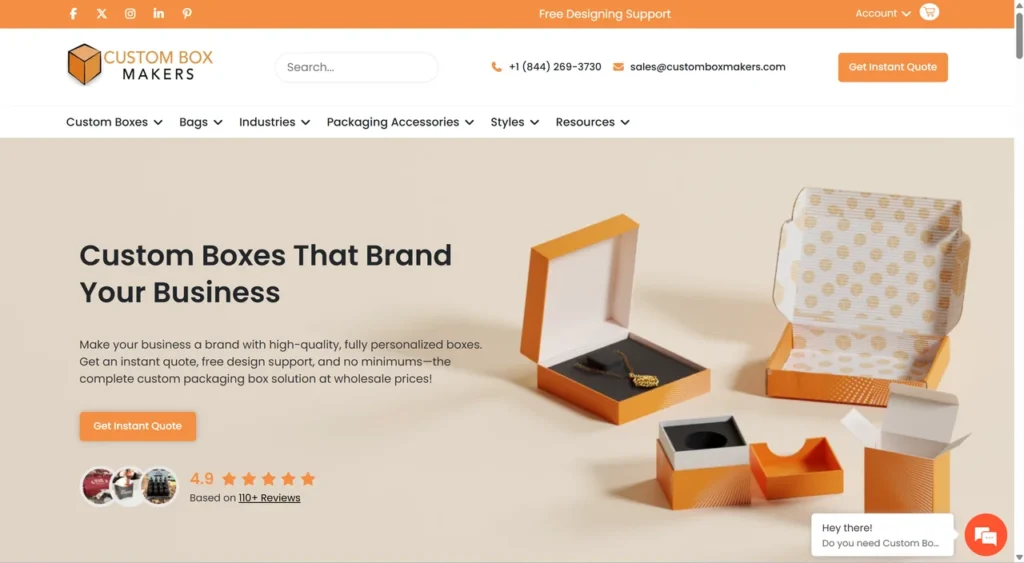
When I evaluate a perfume packaging manufacturer, I’m not just looking for someone who can “make a box.” I’m looking for a partner who understands that fragrance packaging is a branded experience, a protection system, and a production workflow all at once. From what I see in Custom Box Makers’ positioning, they are built around removing the usual friction that stops perfume brands from moving fast: unclear pricing, rigid minimums, slow design cycles, and inconsistent quality control. Their promise of instant quotes, free design support, wholesale pricing, and no minimum order quantity reads to me like an operational model designed for both early-stage founders and established product teams that need speed without losing control.
What Makes Me Confident in Their Credibility and Scale
I pay attention to signals that suggest a manufacturer can handle real-world volume and real-world expectations. Custom Box Makers repeatedly anchors its credibility in measurable proof points, including a 4.9 rating based on 110+ reviews and the claim of serving 2600+ brands. Even when I take any marketing number with healthy skepticism, the combination of review volume, the consistency of customer feedback themes, and their repeated emphasis on responsiveness and on-time delivery points to a company that has built repeatable internal processes rather than relying on one-off hero efforts. For perfume, that matters because packaging is rarely a single order—it becomes a long-running system that must stay stable across reorders and seasonal runs.
Why “No MOQ” Changes the Game for Perfume Brands Like Mine
No minimum order quantity is not just a nice-to-have; it changes how I manage risk. In fragrance, packaging decisions often happen while the formula, labeling compliance, and final bottle supply chain are still in motion. If I’m launching a new scent, testing a limited edition, or running influencer seeding, I might need a small batch that looks premium without committing to thousands of units. A no-MOQ promise means I can validate a design in the market, gather feedback, and then scale with confidence instead of paying tuition through dead inventory. It also makes it easier for a product lead to approve packaging experimentation because the financial downside is capped.
How I Use Their Box Capabilities Specifically for Perfume Packaging
When I map their product range to perfume needs, I immediately see a practical path: rigid boxes for a luxury unboxing experience, folding cartons for retail-friendly efficiency, and mailer boxes for e-commerce shipping protection. Perfume is fragile, but it’s also emotional, and the box structure influences both. If I’m selling a prestige scent, I want the weight and presence of a rigid box that feels like a gift. If I’m shipping direct-to-consumer, I care about how the packaging survives carrier handling and still looks pristine at arrival. If I’m planning for retail shelves, I want a carton structure that stacks, faces forward cleanly, and supports consistent color reproduction across print runs.
Why Their Emphasis on Consultation and Design Support Matters More Than People Think
Free design support isn’t valuable because it’s “free.” It’s valuable because it shortens the back-and-forth that usually kills timelines. In my experience, most packaging delays come from unclear dielines, misaligned expectations on finish, or a lack of practical manufacturing constraints built into the design. When a supplier positions consultation as a core part of the workflow, it suggests they’re willing to translate brand intent into production reality. For perfume packaging, that translation is crucial because small design choices—edge finishing, closure style, insert fit, and print contrast—are what separate “nice” from “luxury.”
The Customization Depth I Actually Need for Perfume Boxes
Perfume packaging succeeds when the outside communicates the scent’s identity and the inside protects the bottle while still feeling intentional. Custom Box Makers’ messaging highlights broad customization across size, shape, colors, artwork, and printing sides, and it also suggests premium finishing options for perfume boxes like spot UV, embossing, matte lamination, gloss lamination, soft-touch lamination, and hot stamp foiling. What I take from this is that they aren’t treating perfume as a generic carton job. They’re speaking the language of tactile branding, which is where fragrance packaging lives. If I’m building a clean minimal scent, I might choose soft-touch with subtle foil. If I’m building a loud, high-energy launch, I might use bold color fields with spot UV contrast to create shelf pop and camera-ready reflections.
How I Judge Their Quality Control Based on the Way They Describe Production
I don’t trust any manufacturer who skips over the “boring” parts of production, because those are the parts that protect my brand. Custom Box Makers mentions double-checking designs before printing and verifying measurements during production. That language matters because fit and tolerance issues are the fastest way to ruin perfume packaging. A box that’s one or two millimeters off can cause insert rattle, crushed corners, or a bottle that shifts in transit. The fact that they talk about measurement checks suggests they’ve dealt with these problems before and have built inspection steps into the workflow instead of treating quality as luck.
Why Sampling Options Make Me Feel Safe Before I Commit
Sampling is where perfume packaging becomes real, and I’m glad they treat it as a formal step rather than an afterthought. From what I see, they offer different sample approaches, including plain samples to validate structure and materials, production samples to evaluate final packaging quality, and even random samples of previous approved projects. For me, this is essential because digital proofs cannot fully predict how a finish will feel, how a color will shift under different lighting, or how sturdy a structure will be when held in one hand. Sampling lets me confirm the unboxing sequence, the insert grip, the closure resistance, and the overall impression before I lock the design and scale the order.
The Timeline and Logistics I Expect as a Product Owner
Lead time is a strategic decision in perfume launches, not just an operations detail. Custom Box Makers states a production timing of 8 to 12 business days, with the option to request rush support. That range fits how I plan launches: I can schedule photography, influencer mailers, and retail deliveries around a predictable packaging window. Their mention of fast turnaround time and free shipping also signals that logistics is part of their standard offer, which reduces the number of vendors I have to coordinate. When I’m managing multiple moving parts—bottle, pump, fill, labeling, compliance, outer packaging—every simplified handoff reduces risk.
How Their “Branding Performance” Framing Aligns With What Perfume Buyers Really Do
I like that they frame packaging as a branding performance tool rather than simply a container. In fragrance, the box often appears before the scent does—on a shelf, in a product photo, in an unboxing video, or in a gift moment. Custom packaging improves visibility through printed branding elements, increases perceived value through precise fit and protection, and creates a memorable unboxing experience through thoughtful interior and exterior design. That matches how I see the category: a perfume box is a silent salesperson. It tells the customer what kind of brand I am before they spray a single mist.
Why Sustainability Claims Matter, and How I Would Use Them Responsibly
I notice their repeated emphasis on eco-friendly packaging, recyclable materials, and biodegradable options, and I also see that they position sustainability as a core commitment rather than a trend. For a perfume brand, sustainability messaging needs to be handled carefully, because customers are increasingly sensitive to vague “green” claims. What I would do is use their eco-friendly material options to make my packaging legitimately lighter, easier to recycle, and less wasteful, while keeping the premium feel through smart structural design and finishing choices. If I can deliver a high-end unboxing experience without unnecessary plastic or overbuilt inserts, I improve both brand trust and long-term customer loyalty.
Why I Believe Founders Choose Them When Building a New Fragrance Brand
If I’m a perfume founder, my priorities are speed, flexibility, and confidence that the packaging will support the brand story. A manufacturer that offers no MOQ, free design guidance, structured sampling, and a clear order process lowers my barrier to launching something beautiful without gambling the company’s cash flow. The reviews also emphasize fast responses and reliable delivery, which matters because founders don’t have time to chase vendors. In practical terms, I can move from concept to proof to production without building a packaging department inside my brand.
Why I Believe Product Leads Choose Them When Scaling and Standardizing Packaging
If I’m a product owner or product lead, I care about repeatability and process stability. I need consistent print outcomes, consistent structure tolerances, and a supplier who understands that packaging is part of the product system, not an isolated purchase. The way Custom Box Makers describes quality checks, production workflow, and consultation suggests an organization trying to standardize outcomes. That’s what product teams need, because scaling a fragrance line is mostly about reducing variability while still leaving room for creative expression across collections.
How I Would Start Working With Them Without Losing Control of My Brand
If I were initiating a partnership, I would begin with a clear target: one hero perfume box style, one insert strategy, and one finish direction that matches my brand positioning. I would use their sample pathway to validate materials and fit, then confirm color and finishing through a production sample before full manufacturing. I would align the production window with my launch calendar, and I would treat the first run as a baseline standard for all future reorders. That way, I get the benefit of their speed and flexibility while keeping my brand identity consistent and my packaging performance predictable.
JYX Packaging
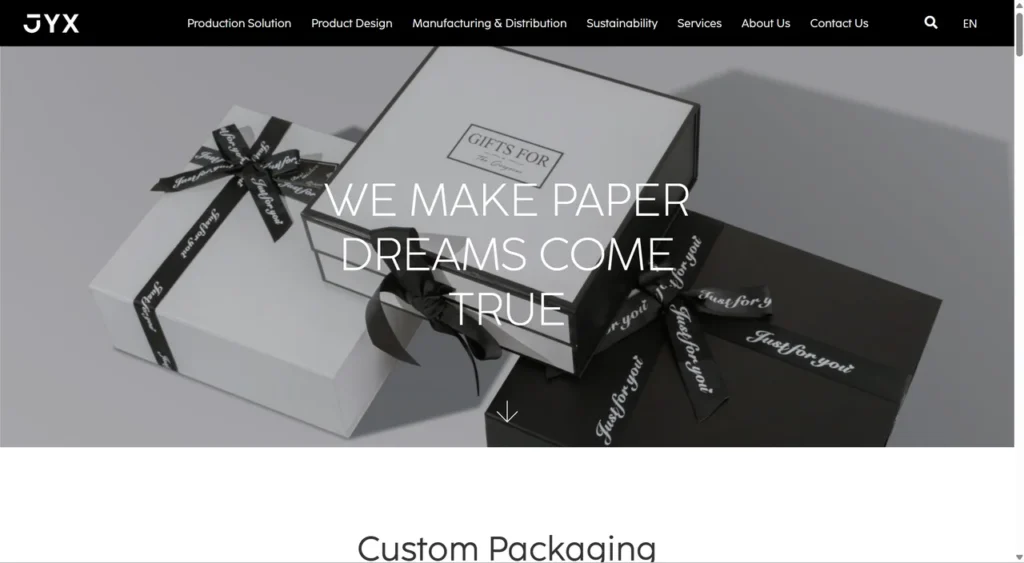
When I look at JYX Packaging, I don’t see a vendor that simply “makes boxes.” I see a full-service luxury packaging manufacturer built to take a fragrance concept and translate it into something physical, premium, and scalable. Their language is centered on paper-based luxury packaging, engineering-led structures, craft-driven finishes, and a complete manufacturing chain that covers plate making, printing, craftsmanship, production, inspection, distribution, and delivery. For me, that signals a team that understands perfume packaging as a system, not a one-off order, and that matters because fragrance brands win through consistency, tactile detail, and repeatable quality across every batch.
What I Notice First: Their “Paper Dreams” Philosophy and What It Means in Real Projects
I pay attention to how a manufacturer positions its materials, because perfume packaging must feel luxurious without becoming wasteful or fragile. JYX frames paper as versatile and eco-friendly, and they build their capability stack around turning paper into a high-end brand experience through structure, material selection, finishes, and inlays. In practice, I interpret this as a manufacturer that can help me achieve weight, stiffness, clean edges, and “hand feel” through engineering choices rather than relying on excessive materials. That’s exactly what I want in perfume packaging, because the box must communicate quality before the customer even sees the bottle.
Why Their Structure and Engineering Capability Matters for Perfume
Perfume boxes are deceptively complex. A millimeter of error can lead to bottle movement, crushed corners, or inserts that don’t hold the product securely. What makes me take JYX seriously is their repeated emphasis on structure and engineering, plus their mention of 3D visualization and white sampling as standard tools. If I’m launching a perfume line, I need the manufacturer to think like an engineer: how the box opens, where the stress points sit, how the insert locks the bottle, and how the packaging survives temperature swings and shipping vibration. Their process language suggests they design packaging to function under real conditions, not only to look good in a mockup.
How I Use White Samples to Control Risk Before Mass Production
I’m a big believer that perfume packaging should be tested in real hands before it’s produced at scale, because digital proofs don’t reveal the truth about rigidity, closure feel, or insert tension. JYX specifically highlights a white sampling service to evaluate packaging design early. That tells me they expect professional clients who want validation before committing. If I were working with them, I would use white samples to confirm structure, fit, and unboxing flow, then move to printed prototypes only when the physical fundamentals are proven. This is how I protect my launch timeline and avoid expensive revisions after tooling and printing.
What Their Factory Footprint Tells Me About Capacity and Reliability
I evaluate manufacturing partners by whether they can deliver both craftsmanship and throughput. JYX presents meaningful scale signals, including 1,200 employees worldwide, large monthly production capacity across rigid and folding boxes, extensive machinery coverage for printing and finishes, and 18 years of experience. More importantly, they describe continuous investment in the latest printing technology and advanced production techniques. In perfume, reliability comes from process maturity and equipment capability, because luxury finishes are unforgiving and color consistency becomes a brand-defining detail on shelf and in photography.
Why Two Production Bases Can Help Perfume Brands Move Faster
When a manufacturer has multiple production bases, I care about whether it reduces risk rather than adding complexity. JYX describes production in Dongguan, China and Karawang/Jakarta region in Indonesia, with each base positioned for logistical advantages, raw material access, and scalable output. I read this as optionality: flexibility for lead times, potentially improved shipping routes for certain markets, and resilience if one facility hits a capacity crunch. For a perfume brand that runs seasonal launches or gift sets, that redundancy and planning capability can be a competitive advantage, especially when marketing calendars don’t wait for packaging delays.
How Their Equipment and Testing Language Maps to Luxury Packaging Expectations
What makes JYX’s description feel “manufacturing-real” to me is that they don’t only talk about printing and finishes; they also talk about testing and stability. I see mentions of high-performance multi-color presses, precision die-cutting upgrades, and specialized machines for tubes and bags, plus testing equipment like high-temperature simulation and tensile strength measurement, and transportation testing. For perfume packaging, these are not decorative extras. They connect directly to whether a premium box stays premium after shipping, whether paper tubes remain structurally consistent, and whether a carton holds its shape in humid or hot climates.
Why Their Finishing and Craft Focus Fits Perfume Branding
Perfume packaging lives and dies by detail. I want crisp edges, controlled gloss levels, consistent foiling, and clean registration between ink layers and finishes. JYX positions “finishes and craft options” as a pillar, and they frame these details as ways to enhance value and elevate the product experience. That aligns with how perfume customers behave: they judge the scent by the ritual—opening, touch, sound, and visual cues. If the finish feels cheap or inconsistent, it drags down the perceived value of the fragrance, even if the juice is excellent.
The Role of Inlays and Accessories in Protecting the Bottle and Upgrading the Unboxing
I care deeply about inlays because they do two jobs at the same time: protection and storytelling. JYX calls out inlays and accessories specifically, and they also mention innovations such as paper-based and wood-free solutions, plus molded pulp-style inlays. If I’m building luxury fragrance packaging, I want inserts that hold the bottle perfectly, reduce rattle, and feel intentional rather than like cheap foam. A well-designed paper or molded pulp inlay can signal sustainability, precision, and premium restraint, which is increasingly important for modern fragrance brands that want luxury without guilt.
Why Their Global Offices Matter for Communication and Development Speed
One of the biggest reasons packaging projects fail is communication. JYX highlights global offices across Germany, America, China, and Indonesia, plus international design and engineering teams that translate briefs into market-ready concepts aligned with European trade expectations. I interpret that as a company trying to reduce friction across time zones and standards. For a perfume brand founder or product lead, faster and clearer communication is a hidden form of cost savings because it prevents rework, misinterpretations, and late-stage surprises that derail launches.
How Their Sustainability Positioning Helps Me Build a Brand Story That Feels Modern
Sustainability is no longer a marketing decoration in fragrance; it’s part of how customers decide whether a brand deserves loyalty. JYX explicitly states FSC certification and frames sustainability as built into solution design, material selection, production, equipment use, and transportation management. I like that they also mention staying cost-neutral where possible, because sustainable packaging only scales when it is commercially realistic. If I were working with them, I would lean into paper-first luxury, responsibly sourced materials, and engineered reduction of unnecessary components, then communicate those choices with precision rather than vague “eco-friendly” claims.
Why I Think Perfume Founders Choose JYX When They Need Luxury Without Guesswork
If I’m a perfume founder, I’m balancing brand ambition with cash flow reality, and I can’t afford packaging mistakes. JYX’s promise of end-to-end support—concept, prototyping, production, and delivery—reduces the number of handoffs where errors occur. Their emphasis on engineering, white samples, and 3D visualization gives me a way to make decisions with evidence rather than hope. Their scale and factory investment signals tell me they can deliver a consistent outcome, not just a beautiful first sample that can’t be replicated reliably.
Why Product Leads Choose JYX When They Need Scale, Consistency, and Technical Complexity
If I’m a product owner or product lead, I care about repeatability, specification control, and on-time delivery across multiple SKUs. JYX describes strict quality control across every stage, advanced machinery, and teams of engineers and R&D specialists supporting technically complex packaging. That’s exactly what I need when I’m managing a fragrance portfolio with different box formats—rigid gift sets, folding cartons for retail, cylinders for special editions, and paper bags for premium point-of-sale. A partner that can support complexity while keeping standards consistent makes my roadmap easier to execute.
How I Would Start a Project with JYX to Keep Both Speed and Control
If I were starting with JYX, I would begin with one hero perfume box format and lock down the structural fundamentals through white sampling before I ever debate finishes. Once the structure is proven, I would move into material selection and finishing tests with a clear goal: consistent tactile identity across the line. Then I would build a repeatable spec sheet that covers tolerances, color targets, finish definitions, and insert requirements, so reorders remain stable. This is how I would use JYX’s full-service model to move fast while protecting my brand from the hidden risks that usually show up after mass production begins.