
| Rank | Name | Country |
| 1 | BorhenPack | China 🇨🇳 |
| 2 | Paper Mart | United States 🇺🇸 |
| 3 | Allurepack | United States 🇺🇸 |
| 4 | Packagingblue | United States 🇺🇸 |
| 5 | Annaigee | China 🇨🇳 |
| 6 | TO BE PACKING | Italy 🇮🇹 |
| 7 | PWinnerpak | China 🇨🇳 |
| 8 | JPB | United States 🇺🇸 |
| 9 | Store Supply Warehouse | United States 🇺🇸 |
| 10 | Numaco | United States 🇺🇸 |
| 11 | Agresti | Italy 🇮🇹 |
| 12 | JML | China 🇨🇳 |
When I started researching jewelry box manufacturers in the United States for 2026, I quickly realized that this topic is no longer just about packaging supply. Jewelry boxes have become a strategic layer of brand value, supply-chain resilience, and long-term positioning—especially in a market where customers judge quality long before they touch the jewelry itself. In today’s environment, a jewelry box is no longer a secondary accessory. It is a silent salesperson, a brand signal, and often the first physical proof of whether a brand truly understands its own positioning.
Over the past few years, I have watched the North American jewelry market change in very concrete ways. Premium and mid-to-high-end jewelry brands are demanding more consistency, faster response times, and clearer accountability from their packaging partners. At the same time, packaging decisions are increasingly influenced by sustainability standards, domestic logistics reliability, and the need to support omnichannel presentation—from retail counters to e-commerce unboxing videos. These pressures have pushed U.S.-based jewelry box manufacturers into a new phase, where operational maturity matters just as much as aesthetics.
BorhenPack
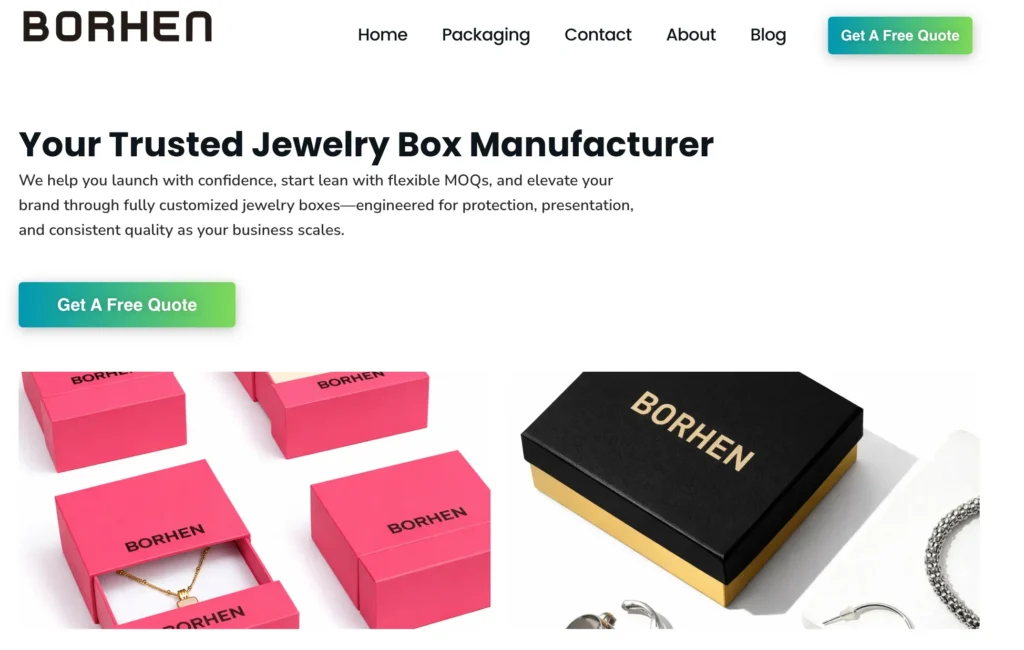
When I describe BorhenPack, I never start by talking about machines, materials, or price lists. I start with one simple belief: packaging is one of the earliest and most powerful brand signals a startup jewelry brand controls. BorhenPack exists to help founders turn product quality into visible, tangible brand value through jewelry packaging that feels intentional, consistent, and credible from the very first customer touchpoint.
Why I Built BorhenPack With Startup Brands in Mind
I designed BorhenPack by closely observing how startup jewelry brands actually operate, not how factories wish they operated. Founders move fast, test markets, adjust positioning, and often work without large internal teams. That reality demands a packaging partner that is flexible without being chaotic, structured without being rigid, and brand-aware without being expensive for the sake of appearance. BorhenPack is built to fit that exact space.
A Manufacturing Approach Focused on Control and Predictability
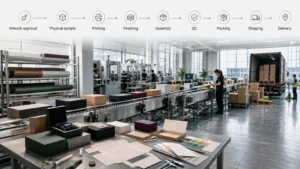
At BorhenPack, I prioritize control over guesswork. Every jewelry box project is treated as a system where structure, materials, inserts, surface finish, and logo execution must work together. I don’t believe in fragmented outsourcing or vague production promises. My approach is to keep manufacturing decisions disciplined, repeatable, and aligned with what was approved, so founders receive exactly what they expect, not a close approximation.
Packaging Designed to Elevate Perceived Jewelry Value
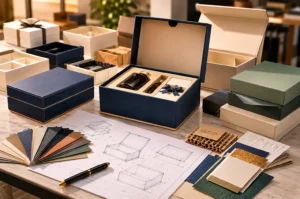
I approach jewelry packaging as a psychological experience rather than a physical container. The way a box opens, the firmness of the structure, the softness of the insert, and the precision of the logo all contribute to how valuable the jewelry feels in the customer’s hands. At BorhenPack, I design packaging to quietly reinforce trust, care, and craftsmanship, because those qualities directly influence whether a customer believes in the brand behind the product.
Customization That Serves the Brand, Not the Ego
I intentionally avoid unlimited customization without direction. Instead, BorhenPack offers guided customization that aligns packaging choices with jewelry type, target customer, price point, and brand tone. This helps startup founders create packaging that looks confident and premium without becoming overly complex or risky. The goal is not to impress factories or designers, but to communicate clarity and professionalism to customers.
Communication as a Core Part of the Manufacturing Process
From my experience, most packaging delays come from slow or unclear communication, not production itself. That’s why I treat responsiveness as part of the manufacturing workflow at BorhenPack. I focus on fast replies, clear confirmations, visual references, and realistic timelines, so founders always know where their project stands. This reduces stress, prevents misalignment, and keeps launches on schedule.
Quality Control Focused on Brand-Critical Details
At BorhenPack, quality control is not a checkbox exercise. I focus on the details that directly affect brand perception, such as color consistency, logo placement accuracy, surface finish quality, insert fit, and overall structural integrity. These are the elements customers notice immediately, especially in online photos, unboxing videos, and reviews. My priority is ensuring packaging supports brand credibility every time it appears.
Why Startup Brand Owners Choose to Work With BorhenPack
When I think like a startup founder, I understand why BorhenPack feels like a safe and strategic choice. I offer enough structure to deliver consistent quality, enough flexibility to support early-stage experimentation, and enough brand awareness to avoid generic outcomes. Founders don’t feel pushed into oversized commitments, and they don’t feel treated like small orders that don’t matter.
Packaging That Supports Marketing and Storytelling
I design BorhenPack packaging with real-world marketing use in mind. Jewelry boxes today live far beyond the shipping carton; they appear on websites, social media, influencer content, and customer-generated posts. I consider how packaging photographs, how it reads on camera, and how it contributes to a cohesive brand image. This ensures packaging strengthens marketing instead of becoming a visual weak point.
Built to Scale Without Forcing a Supplier Reset
One of my core goals with BorhenPack is to eliminate the need for founders to change suppliers as they grow. I structure packaging programs that work for small initial runs but remain consistent as volumes increase. This protects brand continuity and saves founders from the disruption of re-sourcing, redesigning, and re-approving packaging every time the business scales.
My Professional Perspective on BorhenPack’s Role in a Brand’s Growth
I see BorhenPack as a long-term manufacturing partner rather than a transactional vendor. My role is to help startup jewelry brands make packaging decisions that feel confident today and still make sense a year from now. By combining disciplined manufacturing, brand-focused thinking, and startup-friendly processes, BorhenPack supports founders who take their brand seriously from the beginning.
Why BorhenPack Is the Right Jewelry Box Manufacturer for Startup Brands
In my view, startup brands don’t need the cheapest boxes, and they don’t need unnecessary luxury theater. They need packaging that works—visually, operationally, and psychologically. BorhenPack exists to deliver exactly that. If you see packaging as part of your brand foundation rather than an afterthought, then BorhenPack is built to be the jewelry box manufacturer that grows with you, not ahead of you or behind you.
Paper Mart
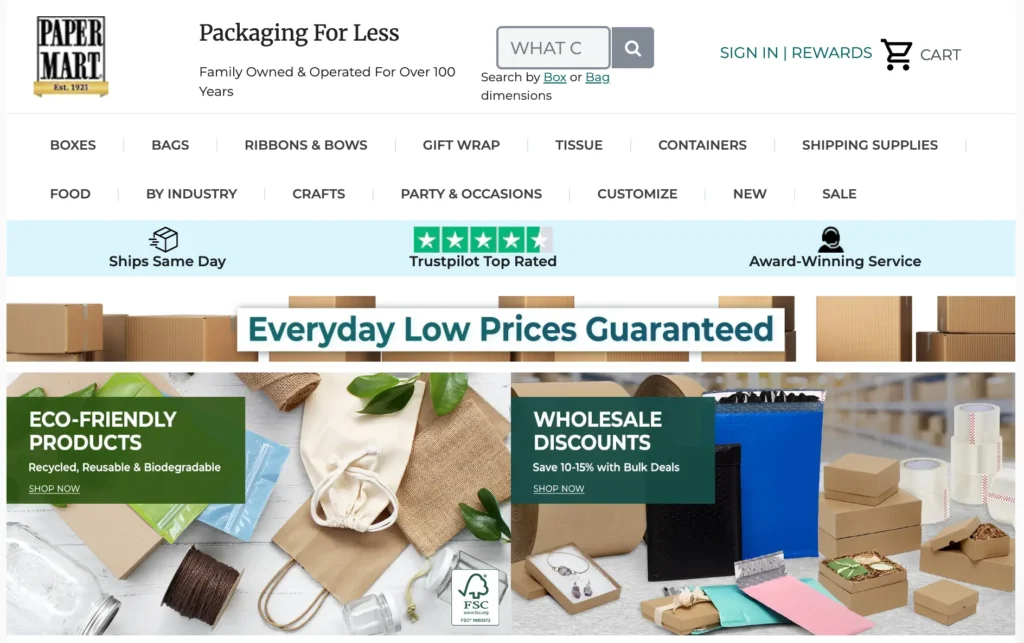
When I review jewelry box manufacturers in the United States, Paper Mart is often one of the first names that appears. Not because they position themselves as a luxury packaging specialist, but because they represent something many brands urgently need: stability, scale, and accessibility.
Founded in 1921, Paper Mart has evolved from a small family operation in Los Angeles into the largest discount packaging supply company in the U.S. With more than a century of operating history, they bring a level of continuity that many newer suppliers simply cannot match.
From my experience, longevity in packaging is not about tradition alone—it reflects supply chain resilience, inventory discipline, and customer trust built over decades.
A One-Stop Packaging Platform Designed for Growing Businesses
One of the most distinctive aspects of Paper Mart is their one-stop-shop model. Instead of focusing narrowly on one packaging category, they offer an extensive catalog that covers nearly every operational packaging need a brand might have.
Their inventory spans:
- Shipping cartons and padded mailers
- Tissue paper, ribbons, and gift accessories
- Eco-friendly packaging materials
- Paper bags, bakery boxes, and specialty containers
- Jewelry boxes in multiple sizes, colors, and styles
With over 20,000 products consistently stocked, Paper Mart allows brands to centralize purchasing. I see this as a major operational advantage, especially for startups that lack a mature procurement system.
Jewelry Box Offerings Focused on Ready-to-Use Solutions
Paper Mart’s jewelry boxes are clearly designed around standardization and availability, rather than full customization.
Their lineup includes:
- Kraft jewelry boxes
- Solid color and embossed designs
- Two-tone jewelry boxes
- Slide-open boxes with satin pulls
- Clear lid boxes with cotton inserts
- Metallic finish jewelry boxes
What stands out to me is the pricing structure. Many of these boxes are available as low as $0.23–$0.48 per unit, making them accessible to brands that need to control costs while still delivering a professional unboxing experience.
This model is especially practical for brands that need packaging immediately, not months later.
Why Startup Brand Owners Commonly Choose Paper Mart
When I look at Paper Mart through the lens of a Startup Brand Owner, the appeal becomes very clear.
Low Commitment Without MOQ Pressure
Most early-stage jewelry brands cannot afford large minimum order quantities. Paper Mart’s inventory-based model allows founders to purchase smaller quantities without long-term commitments. This makes it easier to test products, packaging styles, and sales channels without over-investing.
Predictable Pricing for Cash-Flow Management
For startups, pricing clarity is just as important as pricing level. Paper Mart’s transparent unit pricing and wholesale discounts make it easier for founders to forecast packaging costs accurately, which is critical during the launch and growth phases.
Speed Over Perfection at the Early Stage
In my experience, most startup founders value speed and reliability more than deep customization. Paper Mart supports this mindset with fast fulfillment and consistent stock availability, allowing brands to ship products without packaging delays.
Operational Strength Backed by a Family-Run Culture
Another factor I pay attention to is how a company operates internally. Paper Mart remains a family-owned business, now led by the fourth generation of the founding family.
They employ over 160 team members and emphasize employee recognition through programs such as their Circle of Excellence. From a buyer’s perspective, this signals organizational stability—something that often translates into more consistent service and fewer operational disruptions.
Community Engagement and Long-Term Brand Reputation
Paper Mart positions itself not only as a supplier, but as a community-engaged business. They actively support local nonprofits, collaborate with small businesses, and highlight customer success stories.
While this may seem secondary, I see it as an indicator of how seriously a company takes its long-term reputation. Suppliers that invest in community and relationships tend to think beyond transactional sales.
Where Paper Mart Fits Best in a Brand’s Packaging Journey
Based on my analysis, Paper Mart is best suited for:
- Startup and early-stage jewelry brands
- DTC sellers and small ecommerce operators
- Designers sourcing ready-made packaging
- Brands prioritizing speed, flexibility, and cost control
They are less suited for brands that require fully customized rigid boxes, proprietary structures, or high-end finishing processes.
My Professional Assessment of Paper Mart as a Jewelry Box Supplier
From a sourcing and packaging strategy standpoint, I view Paper Mart as a foundational packaging partner.
They help brands enter the market faster, reduce operational complexity, and learn what packaging formats actually work with real customers. For startup brand owners in particular, working with Paper Mart is often a practical first step before transitioning into fully custom packaging solutions later.
In short, Paper Mart offers reliability, accessibility, and scale—three qualities that matter most at the beginning of a brand’s growth journey.
Allurepack
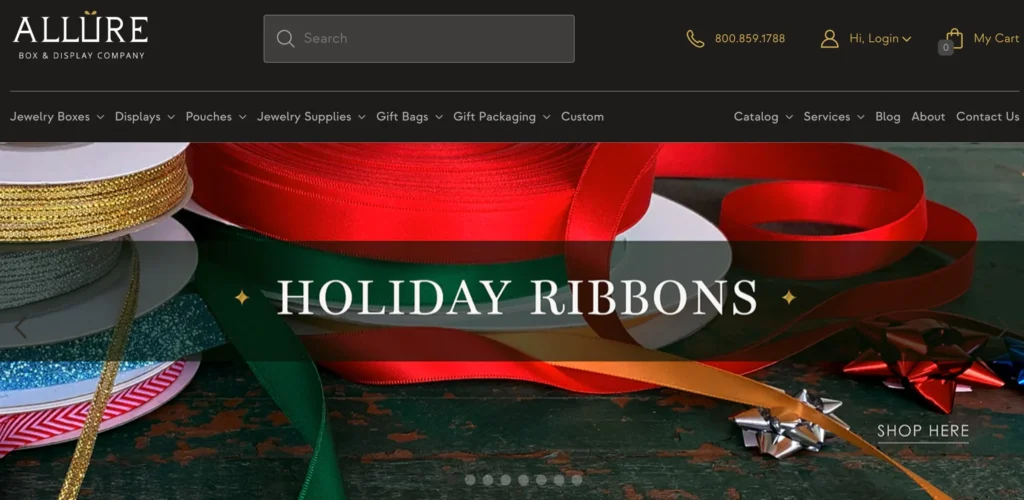
When I research jewelry box manufacturers in the U.S., Allurepack consistently appears as a brand that places presentation at the center of its value proposition. Rather than positioning itself as a general packaging supplier, Allurepack focuses on transforming jewelry packaging into an emotional experience.
Their philosophy is simple but powerful: jewelry deserves more than a basic box—it deserves a moment of reveal. From a branding and retail psychology perspective, this positioning resonates strongly with jewelry brands that rely on emotion, gifting, and perceived value.
A Manufacturer Dedicated Exclusively to the Jewelry Industry
One of the first things I notice about Allurepack is their industry focus. They are not serving cosmetics, food, or general retail packaging. Their ecosystem is designed almost entirely around jewelry and gift presentation.
Their product range includes:
- Jewelry boxes
- Jewelry displays and trays
- Pouches and microfiber envelopes
- Jewelry shipping boxes with inserts
- Gift bags and wrapping accessories
From my professional perspective, this specialization matters. Suppliers who focus on a single industry tend to understand real-world use cases, retail environments, and customer expectations far better than generalists.
Curated Jewelry Box Collections for Different Brand Aesthetics
Allurepack organizes its jewelry boxes into distinct collections, rather than offering a small set of generic SKUs. This is a subtle but important difference.
Their collections include:
- Vogue Collection
- Opulent Collection
- Regal Collection
- Vintage Collection
- LED Ring Box Collection
- Sustainable Jewelry Packaging
Materials range from leatherette, velvet, suede, and soft-touch paper to wood and specialty fabrics. From my experience, this allows brands to align packaging directly with jewelry style, price point, and target demographic.
For startup brands with multiple product lines, this flexibility is extremely valuable.
Why Startup Brand Owners Often Choose Allurepack
When I view Allurepack through the lens of a Startup Brand Owner, the appeal becomes very clear.
Premium Appearance Without Full Custom Development
Startups often want their jewelry to look high-end, but they are not ready for long lead times or custom tooling. Allurepack solves this by offering retail-ready, luxury-feel jewelry boxes that require no product development phase.
This allows founders to launch with a premium visual identity from day one.
Low Minimum Order Quantities Reduce Early Risk
One of the strongest advantages for startups is Allurepack’s very low minimums. In many cases, brands can order as few as 12 boxes per style.
From a cash-flow and inventory management standpoint, this gives startup founders the ability to:
- Test packaging styles
- Match boxes to individual SKUs
- Avoid overstocking during early sales stages
This flexibility often outweighs unit price considerations for new brands.
Fast Processing Supports Speed-to-Market
Speed is critical for early-stage jewelry brands. Allurepack offers same-day processing for non-imprinted jewelry boxes, which helps founders avoid packaging-related delays.
In my experience, suppliers that support speed allow startups to focus on marketing, sales, and customer acquisition, instead of operational bottlenecks.
In-House Custom Printing for Brand Visibility
Another key strength is Allurepack’s in-house custom printing service.
Startup brands can:
- Upload their logo
- Use existing print plates
- Preview branded jewelry boxes
- Even design a logo using Allurepack’s free logo tool
This lowers the barrier for brand personalization, allowing startups to build recognition without the complexity of full custom manufacturing.
Services Designed Around Jewelry Business Operations
Beyond products, Allurepack offers services that align well with how jewelry businesses operate:
- Drop shipping
- Stock and ship programs
- Storage and logistics support
- Easy reordering through saved purchase history
From a sourcing perspective, this tells me they understand jewelry retail workflows, especially for brands selling through ecommerce, boutiques, and pop-up retail.
Their transparent pricing—including import tariffs and taxes upfront—also removes uncertainty during purchasing decisions.
Where Allurepack Fits Best in a Brand’s Growth Stage
Based on my analysis, Allurepack is best suited for:
- Startup and early-growth jewelry brands
- Boutique jewelers and designers
- Brands prioritizing presentation and speed
- Retail-focused jewelry sellers
They are less suited for brands that require:
- Proprietary box structures
- Exclusive molds
- Ultra-high-volume OEM production
As brands scale, many eventually transition to fully custom manufacturers—but Allurepack often plays a critical role in the launch and validation phase.
My Professional Assessment of Allurepack as a Jewelry Box Manufacturer
From a branding and sourcing standpoint, I see Allurepack as an ideal early-stage packaging partner.
They help startup brand owners:
- Deliver a premium unboxing experience
- Launch quickly with minimal risk
- Build emotional value through presentation
- Avoid complex manufacturing decisions too early
In the jewelry business, first impressions often determine whether a customer remembers the brand. Allurepack understands that—and builds their packaging solutions around it.
Packagingblue
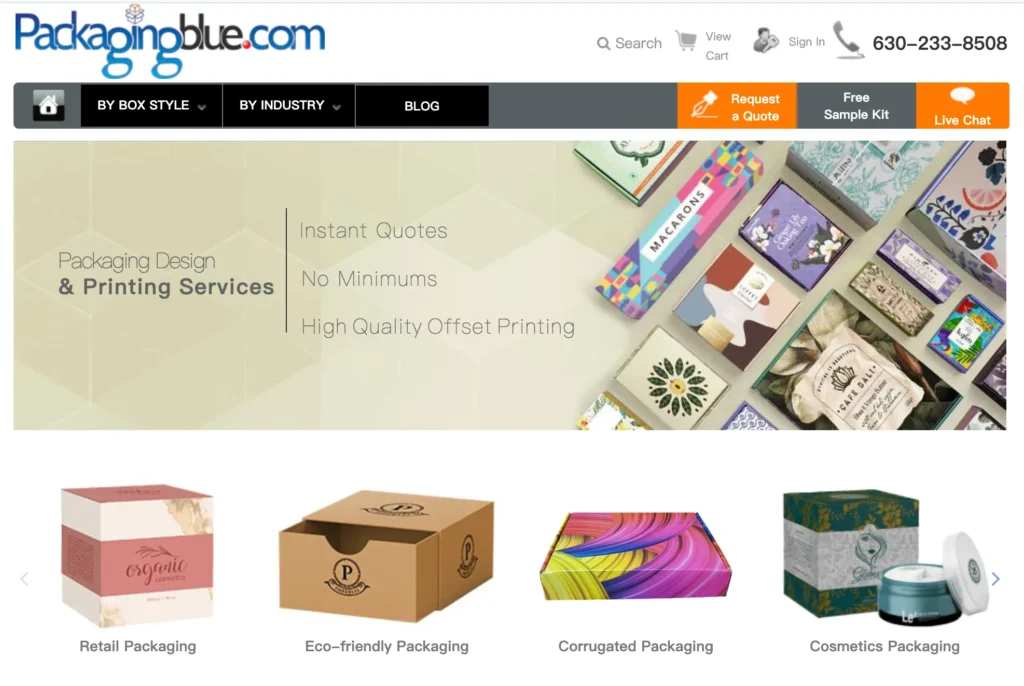
When I look at jewelry box manufacturers that are genuinely accessible to startup brands, Packagingblue stands out as a company built around removing friction from custom packaging. Their positioning is clear: custom-printed jewelry packaging should not be complicated, expensive, or full of hidden barriers. From a sourcing perspective, this is exactly the kind of promise that resonates with founders launching their first or second jewelry line.
Packagingblue presents itself not as a stock-box reseller, but as a custom packaging solution provider that allows brands to shape packaging around their product and identity, even at an early stage.
A Manufacturer Focused on Custom-Made Packaging Rather Than Inventory Stock
One of the first things I notice about Packagingblue is that their business model is centered on made-to-order packaging rather than pre-produced inventory. This means jewelry boxes are manufactured according to the brand’s required dimensions, structure, and printing specifications, instead of forcing products into standard sizes.
For jewelry brands, especially those working with rings, pendants, or uniquely shaped pieces, this approach matters. In my experience, packaging that is designed around the product not only protects it better but also immediately elevates perceived value.
Print Quality and Finishing Options That Support Brand Positioning
From a branding perspective, Packagingblue places strong emphasis on visual execution. Their production capabilities focus heavily on offset printing and premium surface finishes, which allows startup brands to create packaging that feels established and intentional.
What I find especially relevant is that Packagingblue supports advanced finishes such as foil stamping, embossing, spot UV, and precision die cutting. These techniques are often associated with higher-end packaging, yet Packagingblue makes them accessible without requiring large volumes or costly setup fees. For startups, this creates an opportunity to compete visually with more mature brands.
Why Startup Brand Owners Often Choose Packagingblue
When I think about the typical challenges a startup brand owner faces, Packagingblue addresses many of them directly. One of the most important factors is cost transparency. Packagingblue clearly states that there are no setup fees, no die charges, and no plate costs. From a budgeting standpoint, this removes uncertainty and allows founders to plan packaging expenses with confidence.
Another key reason is flexibility in order size. Packagingblue promotes no minimum order quantity, which is especially valuable for brands testing new designs, launching limited collections, or validating demand before scaling. In my experience, this flexibility can significantly reduce early-stage risk.
Free Design Support That Lowers the Entry Barrier
Many startup founders do not have experience preparing print-ready packaging files. Packagingblue recognizes this gap and offers free graphic design support as part of their service. This support helps brands translate ideas into production-ready artwork, adjust layouts for cutting and folding, and avoid common technical mistakes.
From a practical standpoint, this service shortens the learning curve and allows founders to focus on product and marketing instead of struggling with packaging specifications.
Sustainability as a Built-In Part of the Manufacturing Process
Packagingblue also places visible emphasis on environmentally responsible production. They highlight the use of recycled paper stocks, soy-based inks, and eco-friendly manufacturing techniques. For modern jewelry brands that want sustainability to be part of their story, this alignment is increasingly important.
In my view, the value here is not just environmental compliance, but brand consistency. Packaging decisions often reflect brand values, and Packagingblue makes it easier for startups to communicate responsibility without compromising on appearance.
Service Structure Designed for First-Time Buyers
Another aspect that stands out to me is Packagingblue’s service model. They provide dedicated account management alongside live chat and phone support, with customer assistance available around the clock. For startup founders navigating custom packaging for the first time, this level of access can make the process far less intimidating.
From experience, responsive communication often matters more than marginal price differences, especially when custom production is involved.
Jewelry Packaging That Reflects Real-World Use Cases
Packagingblue’s jewelry packaging capabilities go beyond simple boxes. They manufacture a wide range of jewelry packaging formats, including rigid boxes, folding cartons, sleeves, and custom inserts designed to hold rings, earrings, necklaces, and bangles securely.
What this tells me is that Packagingblue understands functional jewelry packaging, not just surface-level aesthetics. Packaging that looks good but fails in protection or usability quickly becomes a liability for brands.
Where Packagingblue Fits Best in a Brand’s Growth Journey
Based on my analysis, Packagingblue is particularly well suited for startup and early-growth jewelry brands that want custom sizing, strong branding, and professional finishes without committing to large volumes. They are ideal for founders who value flexibility, speed, and cost transparency.
As brands scale into very high volumes or pursue ultra-luxury, fully proprietary packaging, they may eventually look toward different manufacturing models. But at the startup stage, Packagingblue often serves as a practical and empowering first step.
My Professional Assessment of Packagingblue as a Jewelry Box Manufacturer
From a sourcing and branding perspective, I see Packagingblue as a low-risk, high-control partner for startup brand owners. They make custom jewelry packaging approachable by eliminating common barriers such as high MOQs, tooling fees, and technical complexity.
For founders who want their jewelry brand to look polished and credible from the beginning—while still maintaining flexibility—Packagingblue offers a balanced combination of customization, service, and sustainability that fits the realities of early-stage growth.
Annaigee
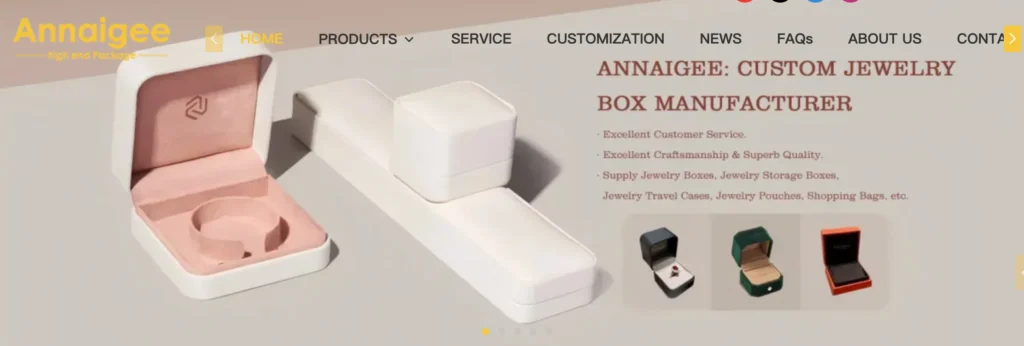
When I look at custom jewelry box manufacturers that combine deep manufacturing capability with luxury brand experience, Annaigee immediately stands out. Unlike suppliers that position themselves purely on price or speed, Annaigee presents itself as a long-term packaging partner that understands how jewelry packaging influences perceived value.
With more than 20 years of experience, Annaigee operates as a China-based custom jewelry packaging manufacturer, supported by a mature supply chain and full in-house production facilities. From my perspective, this level of experience is not just about time in the industry—it reflects repeated exposure to complex projects, demanding clients, and evolving luxury standards.
A Manufacturer Built on Full In-House Production and Quality Control
One of the strongest signals of Annaigee’s professionalism is that they control every critical step of the manufacturing process internally. From carpentry and painting to assembly and quality inspection, production is handled within their own facilities rather than being fragmented across subcontractors.
In my experience, this matters enormously for custom jewelry packaging. When a manufacturer owns the entire process, they can maintain consistent quality, tighter tolerances, and clearer accountability. It also allows Annaigee to offer true factory-direct pricing, which is especially relevant for brands balancing quality expectations with budget constraints.
A Clear Focus on Enhancing the Psychological Value of Jewelry
What I find particularly interesting about Annaigee is how openly they talk about psychological value. They are not just making boxes; they are intentionally designing packaging to enhance how jewelry is perceived at the moment of presentation.
Annaigee’s stated mission centers on customer-first thinking, sincerity, and professionalism. From my reading and analysis, this is reflected in how they approach each project as a complete system—outer box, interior insert, material choice, color, logo placement, and finishing—all working together to elevate the jewelry itself.
This mindset is often what separates commodity packaging from luxury packaging.
Why Startup Brand Owners Choose to Work with Annaigee
When I put myself in the position of a Startup Brand Owner, I can clearly see why Annaigee is an appealing partner—even at an early stage.
Annaigee explicitly supports both small and large order volumes. Whether a brand needs one hundred boxes for a first launch or tens of thousands for scaling, the production system is designed to accommodate both. From a startup perspective, this reduces the fear of “outgrowing” a supplier too quickly.
At the same time, Annaigee balances cost, quality, and service in a way that allows startups to access luxury-level packaging without the pricing structure typically associated with European or boutique manufacturers.
Adequate Customization Without Losing Control
Annaigee’s customization capability is extensive, but what stands out to me is how structured it is. They work closely with clients to align packaging design with jewelry type, branding strategy, and market positioning, rather than offering endless options without guidance.
From my experience, startups benefit most from this kind of guided customization. It allows founders to create packaging that feels intentional and premium, without being overwhelmed by technical decisions or design risks.
Production Quality Backed by International Certifications
Quality assurance is another area where Annaigee clearly invests. Their manufacturing processes follow international standards, supported by multiple quality, environmental, and safety certifications. While certifications alone do not guarantee quality, they do indicate disciplined production systems and documented processes.
For startup brands selling internationally, this adds an extra layer of confidence—especially when packaging needs to align with sustainability expectations or regulatory scrutiny in different markets.
Proven Experience with Global Luxury Jewelry and Watch Brands
Annaigee’s portfolio includes work for some of the world’s most recognized luxury jewelry and watch brands, including names such as Bvlgari, Chaumet, and Dior. From my perspective, this is not just a marketing point—it is proof of their ability to meet extremely high standards of finish, consistency, and confidentiality.
For startup brand owners, partnering with a manufacturer trusted by established luxury brands can be reassuring. It signals that the factory understands what “good enough” is—and more importantly, what is not acceptable.
Materials and Craftsmanship Designed for High-End Jewelry Packaging
Annaigee offers a wide range of materials suitable for luxury jewelry packaging, including velvet, suede, microfiber, textured paper, leatherette, and wood. These materials are combined with precise craftsmanship to create packaging that feels refined, durable, and visually coherent with the brand.
From my experience, the ability to match materials, colors, and interior inserts precisely to the jewelry type is one of the biggest challenges in custom packaging. Annaigee’s long history in this space suggests they have already solved many of these problems internally.
A Structured Customization Process That Reduces Risk
Another reason startup brand owners often feel comfortable working with Annaigee is their clear customization workflow. From initial consultation and quotation to sampling, mass production, shipment, and after-sales support, the process is structured and transparent.
In my view, this structure is especially important for first-time buyers of custom packaging. It reduces uncertainty, keeps expectations aligned, and gives founders visibility into production progress instead of leaving them guessing.
My Professional Assessment of Annaigee as a Jewelry Box Manufacturer
From a sourcing and brand-building perspective, I see Annaigee as a manufacturer that bridges the gap between luxury ambition and manufacturing reality.
They help startup brand owners access:
- Factory-direct pricing with luxury-level execution
- Deep customization without losing production control
- Reliable quality backed by experience and certifications
- A supplier relationship that can scale alongside the brand
For founders who take packaging seriously as part of their brand story—and want a partner that understands both craftsmanship and business—Annaigee represents a strong and credible choice among global jewelry box manufacturers.
TO BE PACKING
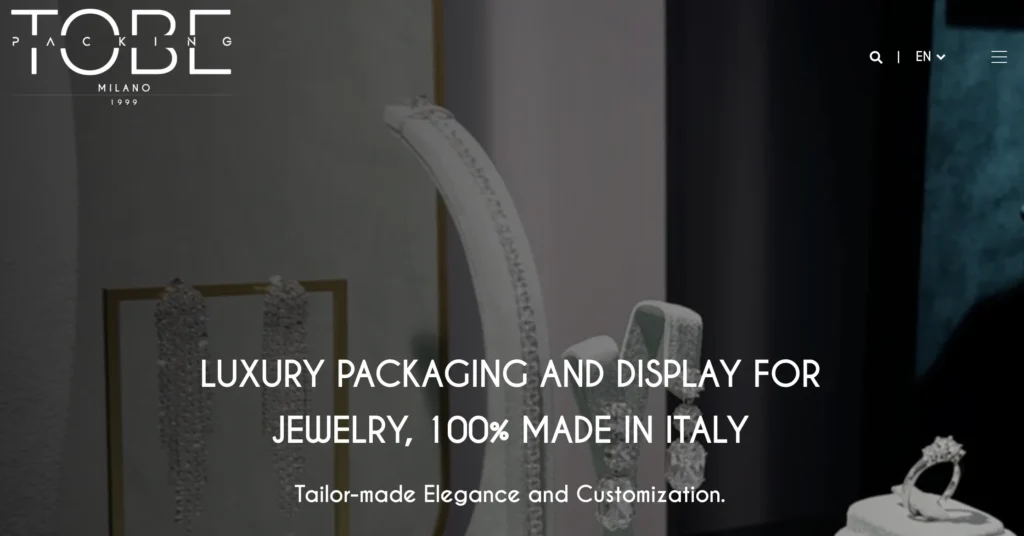
When I look at jewelry box manufacturers that genuinely represent “European luxury” in both design language and execution, TO BE PACKING is one of the most distinctive names I come across. They position themselves as a 100% Made in Italy specialist for luxury jewelry packaging and display, and they back that up with more than 25 years of experience in the international packaging landscape. What I immediately notice is that they don’t present packaging as a single product purchase; they present it as a complete system that supports how a jewelry store sells, displays, and elevates value.
A One-Supplier Model That Covers the Entire Jewelry Store Experience
In my experience, many jewelry businesses suffer from “supplier fragmentation.” They buy boxes from one vendor, displays from another, bags from a third, and then struggle to keep the brand presentation coherent. TO BE PACKING’s core promise is the opposite: they aim to be the single reliable partner that covers “everything a jewelry store needs,” including jewelry boxes, showcases and displays, luxury bags, presentation trays, mirrors, pouches, and even jewelry organization solutions.
From a sourcing perspective, this matters because it simplifies coordination, reduces lead-time surprises, and helps brands maintain a consistent retail identity across every customer touchpoint.
Design and Craftsmanship Built Around Detail, Not Just Packaging
What I personally like about TO BE PACKING’s positioning is how heavily they emphasize detail. They openly invest in a qualified team of creatives and graphic designers whose job is to elevate the aesthetic quality of every project. That tells me they understand a core truth in jewelry retail: customers aren’t only buying the item—they are buying the story, the emotion, and the moment of presentation.
Their philosophy feels very aligned with luxury retail. They even describe their jewelry boxes as “keepers of precious emotions and memories,” which is a strong indicator that they build packaging around emotional value, not only protection.
Production in Italy with Modern Technology and Small-Quantity Customization
TO BE PACKING describes itself as a “one of a kind wholesaler” that produces entirely in Italy, combining craftsmanship with advanced technologies. What catches my attention here is that they specifically mention the ability to produce small quantities with high customization, which is not always easy for high-end European manufacturers.
For brands that want the Made-in-Italy positioning but don’t want to commit to massive quantities, this is a meaningful advantage. It signals that TO BE PACKING is not only for huge luxury houses; they have a pathway for smaller, design-conscious brands as well.
A Manufacturer That Stays Close to the Jewelry Market Through Global Fairs
I always pay attention to whether a supplier stays close to the market, because packaging trends in jewelry can shift quickly. TO BE PACKING participates every year in major international jewelry fairs, using that exposure to analyze trends and strengthen global client relationships. From my point of view, this is how a packaging company avoids becoming stale—by continuously seeing what modern jewelers are doing, what consumers respond to, and how retail expectations evolve.
For a brand buyer, this reduces the risk of ending up with packaging that feels outdated or disconnected from current market aesthetics.
Why Startup Brand Owners Choose TO BE PACKING
When I imagine a Startup Brand Owner searching for a jewelry box manufacturer, TO BE PACKING becomes appealing for a very specific reason: it lets a young brand borrow credibility through Made-in-Italy luxury presentation. Startups often struggle with perceived value. Even if the jewelry itself is high quality, packaging is what makes the customer immediately feel, “This is premium.” TO BE PACKING’s design-first approach gives startups a shortcut into that premium perception.
Another reason is operational simplicity. A startup founder usually cannot manage five packaging suppliers at once. The one-supplier model reduces complexity and makes it easier to launch with a complete, coherent retail presentation.
Customization That Still Feels Curated and Luxury-Appropriate
TO BE PACKING emphasizes full customization across shapes, colors, sizes, prints, and finishes, even at small quantities. From my experience, this is where many startup brands win: they don’t need a hundred packaging options—they need the right option that matches their brand identity and product style.
TO BE PACKING’s catalog includes multiple jewelry box lines with distinct personality, such as elegant, romantic, youthful, or modern aesthetics. This makes it easier for a startup to choose a direction and build brand consistency without getting lost.
Material and Construction Quality Designed for High-End Jewelry Retail
TO BE PACKING highlights premium materials and the evolution beyond traditional velvet and satin into modern options like paper-based solutions, coated wood cases, internal printing, customizable ribbons, and tailored interiors. From my perspective, this indicates a manufacturer that understands both classic luxury cues and modern design preferences.
For jewelry brands, the interior matters just as much as the exterior. Inserts, sponge interiors, and tailored cases are what make the jewelry sit correctly and look “designed for this box,” not simply placed inside it.
My Professional Assessment of TO BE PACKING as a Jewelry Box Manufacturer
From a branding and sourcing point of view, I see TO BE PACKING as a manufacturer that offers something rare: a combination of Italian luxury identity, end-to-end supply coverage, and customization that still respects craftsmanship standards. They are not just selling boxes; they are helping jewelry businesses build a complete presentation ecosystem that feels premium and cohesive.
For startup brand owners who want to launch with a high-end brand impression, reduce supplier management complexity, and anchor their packaging story in “Made in Italy,” TO BE PACKING can be a strong strategic partner—especially when presentation is part of the product’s value.
PWinnerpak
When I analyze jewelry box manufacturers that combine long-term manufacturing depth with modern branding support, PWinnerpak (Winnerpak) stands out as a company that has clearly grown through real operational evolution. Their story starts in 1990 in Jieyang, Guangdong, with a tiny team and a single product focus, and then expands over decades into a multi-workshop packaging manufacturer with large daily output, international trade experience, and a dedicated design presence in Guangzhou. From my perspective, that kind of timeline matters because it usually reflects one thing: the company has survived multiple market cycles, upgraded production capabilities repeatedly, and learned how to deliver packaging at both boutique and retail scale.
A Manufacturer with a Real Multi-Generation Growth Path
What I find unique about Winnerpak is how clearly they frame their growth as a multi-generation journey. The business begins with two siblings, then expands into Zhongshan for production capacity, and later shifts innovation into a new generation through a Guangzhou jewelry packaging design and innovation center. When a manufacturer has a long continuity like this, I typically interpret it as a sign of stable management, accumulated know-how, and a mature supply chain that can support both routine production and custom complexity.
That long journey also matches what they claim today: a packaging partner that can move from concept to mass production, and keep improving through automation, new lines, and better process control.
Production Capacity Designed for Both Boutique Orders and Retail Programs
When I evaluate factories for jewelry packaging, I always ask one practical question: can they handle both “small brand launch” orders and “retail scaling” orders without breaking the system? Winnerpak’s timeline shows clear capacity building, including dust-free workshop upgrades, automatic rigid box lines, paper bag production lines, and the ability to process high daily output. They also describe operating multiple workshops with hundreds of workers and automated lines, which tells me they are structured for stable delivery, not just one-off projects.
For brands that plan to grow, this matters because packaging is not something you want to re-source every time your order volume increases.
A Design-to-Delivery Model That Reduces Friction for Brand Owners
Winnerpak repeatedly emphasizes a “Design to Delivery” workflow. From my experience, this kind of positioning is meaningful for startup founders because packaging projects often fail in the gaps between design, engineering, production, and logistics. When a manufacturer is confident enough to put “D to D” at the center of their promise, it usually means they have internal coordination habits that reduce rework and shorten approval cycles.
I also notice they highlight 3D design effects, Pantone matching discussions, and proof approvals through real-time communication. For founders who are building a brand identity from scratch, these steps are not optional; they’re the difference between packaging that looks premium and packaging that looks generic.
Why Startup Brand Owners Choose to Work with PWinnerpak
When I put myself in the mindset of a Startup Brand Owner, Winnerpak is attractive for three clear reasons: faster responsiveness, lower startup friction, and a pathway to scale.
They position their service team as highly available through WhatsApp, WeChat, and email, with quick replies and proof support. For a startup founder, speed of communication often matters more than small price differences because delays usually happen during approvals, not during manufacturing. If a supplier can keep the conversation moving with photos, videos, and quick confirmation loops, the entire launch timeline becomes more predictable.
They also highlight low startup costs for certain product lines and fast lead times, including rapid shipment for non-branded stock items and a defined window for customized branded orders. In my experience, that predictability helps founders plan marketing drops, pre-orders, and inventory arrival schedules without guessing.
Finally, Winnerpak is not structured only for small orders. They have systems, automation, and workshop capacity designed for large volumes, which gives startups confidence that they won’t need to change suppliers when they scale.
Quality Control That Focuses on What Brands Actually Care About
Many factories claim “QC,” but Winnerpak describes quality control in a way that feels more operational than promotional. They talk about monitoring details across the workflow, including material color consistency, logo position, and packaging design specifics during production. From my perspective, these are exactly the failure points that create expensive problems for brands, because even small deviations in color or logo placement can ruin brand consistency across SKUs.
They also highlight tarnish testing, which is a niche but important point for jewelry packaging. If a packaging manufacturer is actively thinking about tarnish-accelerating chemicals, it signals they understand jewelry realities, not just box production.
Sustainability and FSC Positioning for Brands That Need Responsible Packaging
For modern jewelry startups, sustainability is increasingly part of the brand story. Winnerpak positions itself as an FSC certificated company offering eco packaging options and biodegradable material choices. From my experience, founders don’t always need the most complex sustainability program on day one, but they do need packaging that won’t create trust issues with eco-conscious consumers. Having FSC and an eco-material pathway gives startups a stronger foundation for that narrative.
It also helps brands sell into markets where sustainable packaging expectations are becoming stricter and where retailers increasingly care about sourcing signals.
A Supplier That Understands Both Packaging and Visual Merchandising
What I find especially useful is that Winnerpak isn’t only focused on jewelry boxes. They emphasize broader “visual merchandising” support for the retail trade, including displays, trays, storage cases, pouches, and packaging suites. In my view, this is important because jewelry brands don’t just need a box; they need a consistent presentation system across unboxing, gifting, shipping, and sometimes in-store display.
For startups, this opens a practical advantage. It allows them to start with a core packaging piece and expand into matching accessories later without needing to rebuild the entire look and feel with another supplier.
My Professional Assessment of PWinnerpak as a Jewelry Box Manufacturer
From a sourcing and brand-building perspective, I see PWinnerpak as a manufacturer that offers a strong combination of manufacturing scale, process maturity, and brand-facing service. Their long timeline since 1990, repeated upgrades in automation and production lines, and the creation of design centers suggest a company that actively invests in staying competitive rather than relying on past reputation.
For startup brand owners, Winnerpak’s value is clear: reliable communication, defined lead times, QC attention to brand-critical details, and a production system that can grow with the business. If I were advising a founder who wants packaging that is retail-ready today but scalable tomorrow, Winnerpak would be a credible option to shortlist among global jewelry box manufacturers.
JPB
When I evaluate jewelry box manufacturers and suppliers in the United States that are truly embedded in the day-to-day reality of the jewelry trade, JPB Jewelry Box Company is a name that fits that profile. They’ve been headquartered in Los Angeles since 1978, and their positioning is clear: they aim to be a dependable, high-availability packaging and supply partner for jewelers who need product fast, need options, and don’t want complications.
From what I can see in their materials, JPB is not trying to sell a “luxury story” first. They sell reliability first—large inventory, broad category coverage, and local service inside one of the most active jewelry districts in the U.S
A Supplier with Deep Inventory and a Warehouse-First Operating Model
One detail that immediately signals scale is JPB’s 20,000-square-foot warehouse in Los Angeles and the claim of holding over a million imported items. In my experience, when a supplier runs a warehouse-first model, the practical advantage is consistency: they can fulfill orders quickly because the product is physically on hand, not something they have to source after you place an order.
For jewelry brands, especially new ones, this matters because packaging is often an “unsexy bottleneck.” You can be ready to ship products, but if you run out of boxes, pouches, or bags, your launch pauses. JPB is structured to reduce that risk through inventory depth.
A Downtown LA Showroom That Matches How Jewelers Actually Buy
What makes JPB particularly interesting is their showroom in downtown Los Angeles, located in the heart of the jewelry district. I see this as a very tactical advantage. Many jewelry businesses operate on tight timelines, last-minute restocks, or seasonal rushes. A showroom that supports quick pickup and same-day service means you can solve packaging needs immediately instead of waiting for shipping.
For local buyers, this kind of setup changes the entire sourcing rhythm. It’s not just “order and wait.” It’s “walk in, compare, buy, and move on with business.”
Product Range That Goes Beyond Boxes into a Full Jewelry Business Toolkit
JPB doesn’t present itself as a “boxes-only” company. They position their catalog as a complete supply ecosystem for jewelers and designers, including jewelry boxes, displays, bags, pouches, storage cases, and a wide selection of tools and store supplies.
From my perspective, this is a major convenience factor. Startup owners often underestimate how many small operational items a jewelry business needs to function smoothly, from display forms and trays to tags, wrapping materials, and shipping supplies. Working with a supplier that already bundles these categories into one purchasing relationship saves time, reduces vendor management, and makes reordering far simpler.
Custom Imprinting That Helps Startups Look Established
What I always look for when assessing “startup-friendly” suppliers is whether they provide an entry point into branding. JPB offers custom imprinting for boxes and bags using hot foil printing, which can be a meaningful upgrade for early-stage brands.
In my experience, branding on packaging isn’t just decoration—it’s credibility. A startup jewelry brand can instantly look more established when the packaging carries a clean, consistent logo imprint. For founders who aren’t ready to develop fully custom box structures yet, imprinting is often the best first step toward a branded unboxing experience.
Why Startup Brand Owners Often Choose JPB
If I put myself in the shoes of a Startup Brand Owner, the first reason I might choose JPB is speed. Their operations are designed around quick processing and immediate access to inventory, which is exactly what you need when you’re launching, restocking, or fixing last-minute packaging issues.
The second reason is the breadth of choice. Startups typically experiment—different product sizes, different collection styles, different presentation methods. Having access to many box sizes, materials, and display options gives founders room to test what looks best without committing to a large custom manufacturing run.
The third reason is practicality. JPB serves jewelers who need daily operational support, not just premium packaging storytelling. That makes them a strong fit for brands that value predictable availability and straightforward purchasing.
Where JPB Fits Best in a Startup’s Packaging Journey
In my view, JPB is especially well suited for startups that need an efficient way to scale their packaging operations quickly. If you’re early-stage and prioritizing speed, stability, and variety, JPB functions as a dependable backbone supplier.
As a brand grows, some founders later shift toward fully custom, factory-produced packaging programs for unique structures or ultra-luxury finishes. But even then, many brands keep a supplier like JPB in their ecosystem for restocks, seasonal needs, or quick-turn packaging essentials.
My Professional Assessment of JPB as a Jewelry Box Supplier
From a sourcing and operations standpoint, I see JPB as a high-availability, high-variety, business-support supplier rather than a design-led luxury packaging manufacturer. Their strengths are rooted in long-term presence in Los Angeles, warehouse scale, showroom convenience, and product breadth that covers the practical realities of running a jewelry brand.
For a Startup Brand Owner who wants to launch faster, avoid packaging delays, and build a reliable supply routine—while still having access to branding through hot-foil imprinting—JPB is a credible and practical partner to consider among U.S.-based jewelry box suppliers.
Store Supply Warehouse
When I look at suppliers that truly understand the day-to-day reality of running a retail or jewelry business, Store Supply Warehouse consistently stands out. They are not positioning themselves as a niche luxury packaging manufacturer, but rather as a retail infrastructure partner that has supported small businesses, boutiques, and online sellers for more than 25 years. From my perspective, that longevity matters because it reflects operational stability and a deep understanding of how retail businesses actually function under pressure.
A Company Built Around Retail Efficiency, Not Just Products
What immediately defines Store Supply Warehouse for me is their philosophy: “Take care of the customer every time without hesitation.” This is not just a marketing line. Their entire business model is structured around speed, availability, and cost control—three things that most startup founders underestimate until they are already in business.
They operate as a large-scale retail supply distributor, offering everything from packaging and jewelry boxes to fixtures, racks, mannequins, and store operations equipment. This tells me that they don’t only think about packaging in isolation; they think in terms of how a store actually runs.
Jewelry Boxes Designed for Immediate Retail Use
When I specifically analyze their jewelry box offering, it’s clear that Store Supply Warehouse focuses on ready-to-use, standardized packaging that works immediately at the point of sale. Their cotton-filled jewelry boxes, ring boxes, vu-top boxes, and faux-leather options are classic retail staples. These are not experimental designs—they are proven formats that customers already recognize as “gift-ready.”
From my experience, this is exactly what many startup jewelry brands need in their early stages. Instead of spending months developing custom structures, they can immediately package products in boxes that look professional, protective, and appropriate for gifting.
Inventory Depth That Reduces Business Risk
One thing I always look for when advising startup founders is inventory reliability. Store Supply Warehouse clearly emphasizes being “always open” and having products in stock. When I see that most jewelry boxes are listed as in stock with multiple size and color options, it tells me that they are designed to support repeat ordering without disruption.
For a startup brand owner, this reduces a major risk: running out of packaging right when sales start picking up. The ability to reorder quickly, often with flat-rate or fast shipping, keeps operations moving smoothly.
Why Startup Brand Owners Choose Store Supply Warehouse
If I put myself in the position of a Startup Brand Owner, the first reason I would choose Store Supply Warehouse is simplicity. There is no long onboarding process, no tooling discussion, and no minimum custom development threshold. You can buy exactly what you need, when you need it.
The second reason is price control. They emphasize a lowest-price guarantee and flat-rate shipping, which helps founders manage cash flow. Early-stage brands are often capital-sensitive, and predictable packaging costs make financial planning much easier.
The third reason is speed. Store Supply Warehouse is clearly optimized for fast fulfillment. That matters when launches, pop-ups, or online promotions don’t go exactly as planned and you need packaging immediately.
A Strong Fit for Brands Focused on Operations First
From my professional point of view, Store Supply Warehouse is an excellent fit for brands that are still validating their product, pricing, and market. Their jewelry boxes allow founders to focus on selling and customer experience instead of worrying about supply chain complexity.
Many successful brands I’ve observed start with standardized packaging like this and later transition into fully custom solutions once volume and brand identity are more established. In that sense, Store Supply Warehouse often becomes a foundational supplier during the most fragile stage of a business.
Where Store Supply Warehouse Sits Among Jewelry Box Manufacturers
I don’t see Store Supply Warehouse as a traditional “manufacturer” in the custom-factory sense. Instead, I see them as a retail supply specialist that excels at distribution, inventory management, and accessibility. Their strength is not bespoke design—it is reliability at scale.
For startup jewelry brands that need trustworthy, affordable, and immediately usable jewelry boxes—without committing to long production cycles—this positioning is extremely valuable.
My Professional Assessment of Store Supply Warehouse
From my perspective as someone who evaluates packaging partners strategically, Store Supply Warehouse plays a critical role in the jewelry packaging ecosystem. They offer speed, stability, and cost efficiency, which are often more important than customization during the early stages of a brand.
If a Startup Brand Owner asked me for a supplier that could help them get to market quickly, maintain inventory continuity, and keep packaging costs under control, Store Supply Warehouse would absolutely be on my recommendation list. They help founders build momentum first—before worrying about perfection.
Numaco
When I study long-standing jewelry packaging manufacturers, Numaco immediately stands out as a company built on longevity, structure, and process discipline. With over 70 years in the packaging industry, Numaco is not a newcomer reacting to trends—they are an established manufacturer that has refined how jewelry packaging should be designed, produced, priced, and delivered across decades of global trade.
From my perspective, Numaco’s real strength lies in how they combine factory ownership, U.S.-based service, and international production into one coherent system that reduces risk for brands.
A Rare Advantage: Wholly Owned Factories, Not Outsourced Production
One of the first things I pay attention to when evaluating a jewelry box manufacturer is who actually controls production. Numaco is unusually transparent here. They wholly own their factories in Vietnam and China, which gives them end-to-end control over materials, processes, timelines, and quality standards.
This matters because many packaging suppliers act as middlemen. Numaco does not. When I see that a company owns its factories and has done so since the 1980s, I immediately associate that with predictability, pricing stability, and consistent output quality—all critical factors for jewelry brands.
A Global Footprint That Still Feels Local to Brands
What I find especially well-structured is Numaco’s global layout. They operate with a U.S. headquarters, a European office in Germany, and production facilities in Asia. For brand owners, this translates into something very practical: you can work with a U.S.-based team, in your time zone, while still benefiting from factory-direct pricing and manufacturing scale overseas.
In my experience, this setup dramatically reduces communication friction. It allows design conversations, revisions, and problem-solving to happen quickly, without the delays that usually come from time-zone mismatches.
Jewelry Packaging Designed Around Brand Identity, Not Just Protection
Numaco is very clear about one thing: their jewelry boxes are meant to reflect brand identity, not just hold a product. When I read how they approach custom jewelry packaging—custom dimensions, materials, inserts, finishes, and branding—it’s obvious they understand how packaging functions as a silent salesperson in the jewelry industry.
From my point of view, this is essential for any brand that wants to compete beyond price. Jewelry buyers judge quality before they even touch the piece, and packaging is often the first signal of that quality.
Why Startup Brand Owners Choose to Work with Numaco
If I put myself in the mindset of a Startup Brand Owner, Numaco becomes attractive for a very specific reason: they make complex packaging manageable.
Startups often struggle with three things at once—budget constraints, limited packaging knowledge, and fear of making expensive mistakes. Numaco addresses this by offering structured processes, included design support, and clear minimums, so founders know exactly what to expect before committing.
Their minimum order quantities are designed for wholesale programs, but they also state that exceptions can be made depending on raw material constraints. That flexibility is important for startups that are scaling but not yet ordering at enterprise volumes.
The “Make and Hold” Program That Changes Cash-Flow Dynamics
One of the most compelling features, in my view, is Numaco’s “Make and Hold” program. Instead of forcing brands to take full delivery and pay immediately, Numaco produces the packaging, stores it in their U.S. warehouse, and only bills when the product is released.
For startup brands, this is a huge operational advantage. It means access to factory-direct pricing without the burden of immediate storage costs or upfront cash pressure. In my experience, cash flow—not product quality—is what kills young brands. This program directly addresses that risk.
Sustainability as a Built-In Manufacturing Standard
Numaco doesn’t treat sustainability as an afterthought. They emphasize plastic-free packaging, certified materials, and sustainable manufacturing processes across their wholly owned facilities. From my perspective, this is especially relevant for modern jewelry brands that sell to eco-aware consumers or wholesale partners with sustainability requirements.
What stands out to me is that they offer transparency—brands can request a breakdown of how sustainability is implemented across materials and production. That level of openness is increasingly important in global retail.
Quality Assurance That Reflects Industrial Discipline
Numaco’s ISO9001-certified production facility signals a manufacturing culture built on systems, not improvisation. In my experience, ISO certification is not about marketing—it’s about documentation, repeatability, and accountability.
For jewelry packaging, where tolerances, finishes, and inserts must align perfectly with the product, this kind of quality infrastructure significantly reduces the risk of costly rework or rejected batches.
My Professional Assessment of Numaco as a Jewelry Box Manufacturer
From a strategic sourcing standpoint, I see Numaco as a high-control, factory-direct jewelry packaging partner designed for brands that are serious about long-term positioning. They are particularly strong for startups that want to grow into established brands without changing suppliers mid-journey.
If a Startup Brand Owner asked me for a packaging manufacturer that offers brand-level customization, global production strength, U.S.-based service, and financial flexibility, Numaco would be one of the first names I’d recommend. They don’t just sell jewelry boxes—they provide a packaging system built for scale, stability, and brand credibility.
Agresti
When I look at Agresti, I don’t see a “packaging supplier” in the typical sense—I see a Florence-born luxury house that has spent decades turning the idea of storage into something collectible. Founded in 1949 in Florence, Agresti grew out of Tuscan leather tradition and later specialized in fine-wood chests, strongboxes, and bespoke luxury cases designed to protect jewelry, watches, and valuables with the same respect you’d give the pieces themselves. Their identity is deeply Italian: artistic, detail-driven, and unapologetically premium.
From Leather Tradition to Fine-Wood Jewelry Chests
What makes Agresti’s story compelling to me is the evolution. They didn’t start by chasing trends in jewelry boxes—they started as a leather industry and then refined their craft into handmade chests in precious woods, carefully lined and internally divided to house different categories of valuables. That shift tells me they understand something many manufacturers ignore: for high-value jewelry, the “box” is not an accessory—it’s part of the experience, part of the ritual, and part of the long-term preservation plan.
One Factory, One Standard: Handmade in Florence, Not Mass-Assembled Elsewhere
If I were explaining Agresti to a reader who has never sourced luxury packaging before, I’d emphasize their operating model: they follow the production process step-by-step at the same location. Raw wood is shaped by skilled hands, then finished, lined, assembled, and detailed under direct supervision. That matters because luxury is rarely about one single material—it’s about how materials are handled. Agresti combines woods, metals, leather, crystals, suede, stones, and brass, and positions this craftsmanship within an environmentally friendly mindset. The result is not “a box,” but a handcrafted object built to last, age beautifully, and protect what’s inside.
Safety Meets Aesthetics: Why Agresti Isn’t Only About Beauty
I find Agresti’s positioning very clear: safety, elegance, refinement. They’re not only making jewelry cases; they’re building secure storage solutions that still look like high-end furniture or collectible décor. Their product universe goes beyond classic jewelry boxes into items like chests with drawers, fine furniture, watch winders using Swiss mechanisms, and specialized compartments for watches, pens, documents, and other valuables. For a brand owner, this signals an ability to design around how affluent customers actually live—organized collections, curated interiors, and premium daily rituals.
Customization as the Core Product, Not an Upsell
The biggest reason I think people fall in love with Agresti is simple: customization isn’t treated like a special request—it’s treated like the normal way they work. In my experience, most suppliers say “custom,” but they really mean “pick from three options.” Agresti takes the opposite approach. They build around the idea that a client’s collection, lifestyle, and taste are unique, so the product should be unique too. That means external dimensions can be made to measure, internal layouts can be built to match exact jewelry types, and materials and finishes can be tailored so the final piece feels personal rather than generic.
The Luxury Details That Communicate Value Before the Box Even Opens
When I think about what separates luxury jewelry storage from standard packaging, it always comes back to detail language. Agresti uses fine woods like briarwood, mahogany, maple, and burlwood, and pairs them with ultrasuede linings to reduce scratching and friction over years of use. Their hardware and accents—such as gold-plated brass elements—aren’t there for decoration alone; they communicate “this object belongs in a luxury world.” Even before a customer touches the jewelry, the storage piece has already set expectations.
Recognition in the Luxury Design World: A Brand That Signals Status
If I were a startup founder trying to build trust fast, I’d pay attention to signals that high-end buyers recognize. Agresti notes being awarded among the top luxury residence product brands at the 2024 and 2025 WAD Luxury Residence Design and Construction Summit. Whether a customer knows the award or not, the message is clear: this isn’t a commodity manufacturer—this is a brand that competes in the luxury interior and collectible category, where standards are higher and aesthetics are judged harshly.
Why Startup Brand Owners Choose Agresti as a Jewelry Box Manufacturer
When I put myself in the shoes of a Startup Brand Owner, I see Agresti as a strategic choice for one specific scenario: when you’re not trying to be “affordable,” you’re trying to be credible at the high end. Startups often struggle with perception—customers don’t know you yet, so they judge you by cues. Agresti helps a young brand borrow credibility through craftsmanship, Italian origin, and bespoke design, which can instantly elevate how the jewelry itself is perceived.
The Brand Story Advantage: “Made in Italy” That Actually Means Something
I’ve worked with enough factories to know “Made in Italy” can be used loosely in marketing. What I like here is that Agresti ties “Made in Italy” to a consistent narrative: Florence, artisanship, traditional methods, and controlled production. For a startup, this makes storytelling easier. Instead of inventing a brand myth, you can truthfully connect your product to Italian craftsmanship culture—and in luxury markets, that association can increase perceived value without changing the jewelry itself.
Agresti Is the Right Partner When Packaging Must Become a Luxury Object
If you’re a founder building a volume-driven brand, Agresti may feel too premium. But if you’re building a brand where the box must feel like an heirloom—something your customer keeps, displays, and uses for years—then Agresti makes perfect sense. From what I see, they sit in a rare space between jewelry storage, luxury furniture, and secure craftsmanship, and that’s exactly why the right startup brands choose them: not to buy packaging, but to create a complete luxury experience around the jewelry.
JML
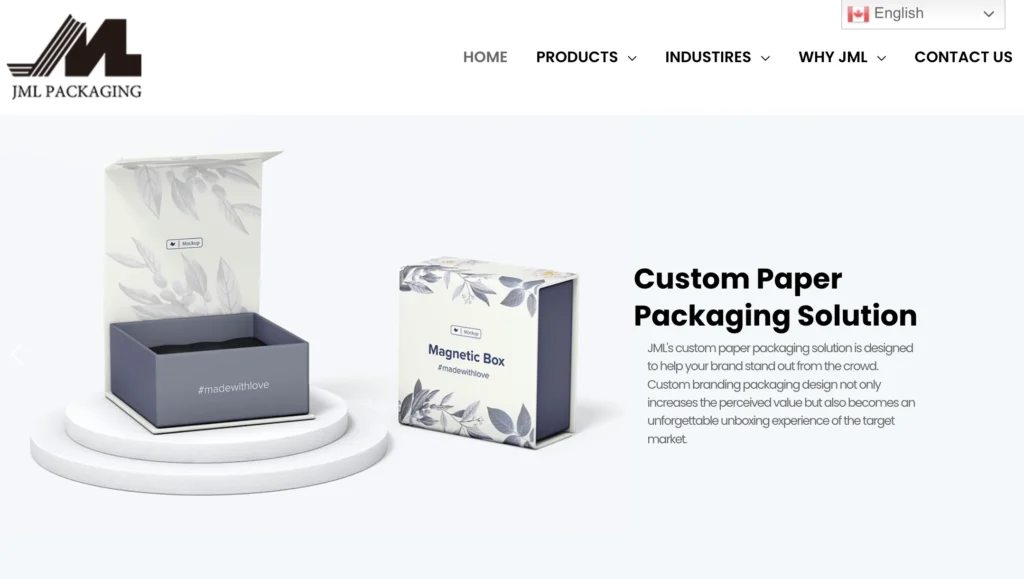
When I look at JML, I don’t see a traditional, old-style packaging factory—I see a modern, systems-driven paper packaging manufacturer in China that is clearly designed to work with brands that are scaling, not just ordering boxes once. JML positions itself as a one-stop custom paper packaging solution, serving industries ranging from jewelry and cosmetics to electronics, apparel, wine, and shipping. For startup brand owners, this matters, because it signals flexibility, speed, and operational maturity rather than rigid factory thinking.
A Paper Packaging Specialist with Broad Industry Experience
What stands out to me immediately is that JML is focused on paper-based packaging, not trying to be everything at once. They work with corrugated boxes, rigid boxes, folding cartons, mailer boxes, display boxes, paper bags, and sustainable packaging—covering nearly every paper structure a jewelry or lifestyle brand would realistically need. Their client base spans multiple industries, which tells me their production systems are already tested under different compliance standards, weight requirements, and visual branding expectations.
Design-First Thinking: Packaging That Sells Before It Protects
From my perspective, JML clearly understands that modern packaging isn’t only about protection—it’s about display effect and unboxing experience. They emphasize structure stability, resistance to deformation, and visual appeal, which is exactly what startup brands need when they are competing online or at retail without brand recognition. A jewelry box from JML isn’t just meant to hold a product; it’s meant to support perceived value, photography, and brand storytelling.
ODM and OEM Capabilities That Reduce Startup Friction
One reason I think startup brand owners gravitate toward JML is their strong ODM and OEMworkflow. Not every founder comes with a finished dieline or a professional packaging designer. JML fills that gap with internal systems covering art design, color separation, sampling, and production management. In practical terms, this means a founder can come with an idea—or even just a reference—and still move forward confidently without hiring multiple external vendors.
Sustainable Materials Without Complicating Logistics
Sustainability is often talked about but poorly executed. What I appreciate here is that JML treats eco-friendly materials as standard options, not premium add-ons. They regularly work with CCNB, greyboard, coated paper, art paper, and recyclable corrugated materials. For startups that want to communicate environmental responsibility without blowing up costs or logistics complexity, this is a realistic and scalable approach.
Certifications That De-Risk International Trade
From a professional sourcing perspective, certifications are not marketing fluff—they’re risk control. JML’s compliance with FSC, ISO9001, ISO14001, BSCI, SEDEX, SGS, and second-party luxury brand inspections tells me they are already aligned with EU and US brand expectations. For a startup brand owner planning cross-border sales, this reduces future friction with retailers, distributors, and compliance audits.
Production Strength Built for Speed and Scale
JML doesn’t position itself as a “small workshop,” and that’s intentional. They highlight advanced production lines, strong output capacity, and a professional R&D team, which is important for founders thinking beyond their first SKU. Their standard production timeline of 10–16 days after sample approval is realistic, competitive, and well-suited for brands that need to restock quickly without sacrificing quality.
Free Samples and Low MOQ: A Startup-Friendly Entry Point
This is where JML becomes especially attractive to early-stage brands. From my experience, free samples (with logistics covered) and low minimum order quantities dramatically lower the psychological and financial barrier to entry. Founders can test materials, finishes, and structures before committing capital, which is critical when product-market fit is still being validated.
Jewelry Packaging as a Core Growth Category
JML doesn’t treat jewelry packaging as an afterthought. Their dedicated focus on custom jewelry boxes—including drawer boxes, velvet-lined boxes, folding boxes, rigid gift boxes, and printed paperboard boxes—shows they understand the unique needs of jewelry: protection, compact structure, premium feel, and visual storytelling. They also cover different jewelry types, from rings and bracelets to watches and necklaces, which makes SKU expansion easier later.
Printing and Finishing Options That Help Brands Look Bigger Than They Are
When I evaluate a packaging supplier for startups, I always look at finishing capabilities. JML offers UV printing, Pantone metallics, offset printing, digital printing, hot foil stamping, embossing, debossing, spot UV, varnish, lamination, and anti-scratch films. This range allows a young brand to create packaging that looks premium—even if production volumes are still modest.
Quality Control Designed for Consistency, Not Luck
JML emphasizes a 20-point inspection system and structured quality control across production stages. That matters more than most founders realize. Consistent color, logo placement, surface finish, and structural strength protect brand credibility. A startup can survive slow growth—but inconsistent packaging damages trust quickly.
Logistics Support That Matches Global Brand Ambitions
Another reason startup brand owners choose JML is logistics clarity. JML supports door-to-door delivery, air and sea shipping, tracking, warehousing coordination, and supply chain administration. For founders without in-house operations teams, this kind of support simplifies international sourcing and reduces costly mistakes.
Why Startup Brand Owners Choose JML as a Jewelry Box Manufacturer
If I summarize it honestly, startups choose JML because JML removes friction. They combine design support, manufacturing, compliance, sampling, finishing, and logistics into one workflow. This allows founders to focus on branding, marketing, and sales—while packaging quietly works in the background, doing its job well.
JML Is Built for Brands That Want to Scale, Not Just Launch
From my perspective, JML is not trying to compete with ultra-luxury heritage box makers—and that’s actually their strength. They are built for modern startup brands that need speed, flexibility, customization, and cost control without sacrificing visual quality. If you’re a startup brand owner who wants packaging that looks professional, scales smoothly, meets international standards, and doesn’t trap you with high MOQs, JML is exactly the kind of jewelry box manufacturer that makes sense at this stage of your journey.
After reviewing and analyzing jewelry box manufacturers across the U.S. landscape for 2026, one conclusion has become very clear to me: choosing a jewelry box manufacturer is no longer a transactional sourcing decision. It is a strategic choice that directly affects brand perception, operational stability, and long-term scalability. A jewelry box today must do far more than protect a product—it must communicate positioning, reinforce trust, and perform consistently across retail, e-commerce, and global distribution channels.
What separates strong manufacturers from average ones is not a single feature or claim, but how well they align craftsmanship, process discipline, responsiveness, and brand understanding into one coherent system. In a market where jewelry brands are under pressure to deliver premium experiences while maintaining supply-chain resilience, packaging partners must be able to think beyond units and prices. They need to understand timelines, visual consistency, material behavior, sustainability expectations, and how small execution errors can ripple into brand damage.
As I’ve written this guide, my intention has been to help decision-makers look past surface-level comparisons and instead focus on what truly matters when selecting a manufacturer: reliability over time, clarity in communication, controlled customization, and the ability to grow alongside a brand without introducing friction. The right manufacturer does not simply fulfill an order—they reduce risk, simplify complexity, and quietly support the brand’s evolution.
This perspective is exactly how I approach packaging at BorhenPack. When brands work with us, my goal is not just to deliver jewelry boxes, but to act as a long-term packaging partner who understands how packaging decisions connect to branding, operations, and growth. I believe that jewelry packaging should feel intentional, controlled, and scalable—whether you are refining an existing line or preparing for your next phase of expansion.
If you are currently evaluating jewelry box manufacturers, planning ahead for 2026, or simply want a clearer conversation around how packaging can support your brand strategy, I invite you to connect with us at BorhenPack. I’m always open to thoughtful discussions about materials, structure, timelines, and how to build packaging systems that work—not just for now, but for what comes next.