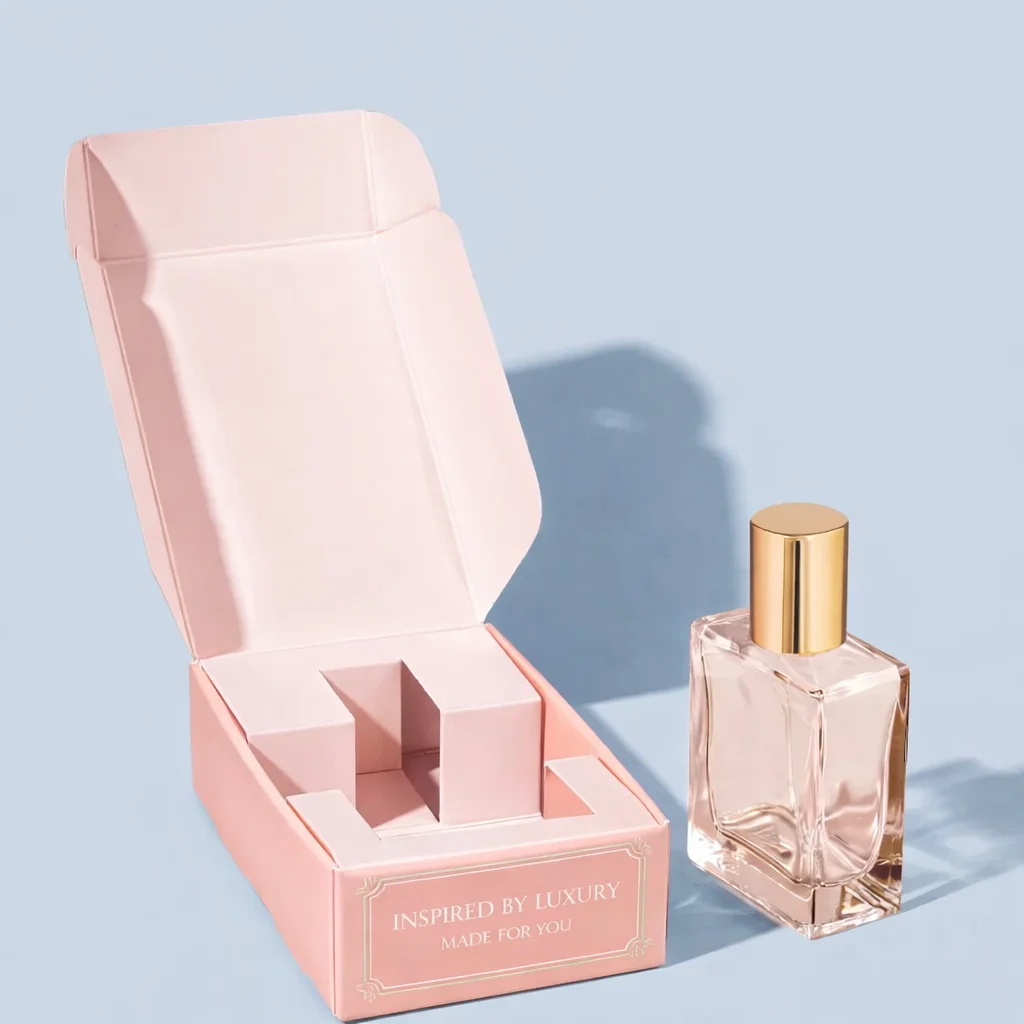

When I first started helping perfume brands source packaging, I assumed the hardest part would be finding a factory that could “make a nice box.” But after working with startup fragrance founders, DTC operators, agencies, and private-label buyers across different markets, I realized the real challenge is not manufacturing—it’s decision-making under pressure. Perfume packaging sits at a strange intersection of branding, engineering, procurement, and logistics. It has to look premium, feel premium, protect a fragile glass bottle, and arrive on time, all while the brand is still testing demand and managing limited cashflow. That combination is exactly why “low MOQ custom perfume boxes” has become such a heavily searched phrase—and also why it’s often misunderstood.
Low MOQ custom perfume boxes usually start at 500 units and scale to 1,000–2,000 and 3,000–5,000+, because MOQ depends on the tightest constraint across structure, materials, printing, finishing, and inserts—so smart brands start small, validate demand, then scale with a stable packaging spec.
In packaging, the term “low MOQ” is rarely as simple as it sounds. Many people assume low MOQ means 100 or 200 units, because that’s common in other categories like stickers, labels, and marketing prints. But perfume boxes are structured products. They require specific paperboard or greyboard, precise dielines, controlled printing, finishing processes like hot stamping or embossing, insert engineering, and assembly. Every one of those steps has its own minimum requirements, setup cost, and production constraints. This is why most realistic low MOQ custom perfume box projects start at 500 units. It’s not because suppliers want to make things difficult—it’s because that is the point where the project becomes manufacturable, stable, and repeatable without pushing your costs into an unreasonable range.
Why Low MOQ Packaging Matters for Startup Perfume Brands
The Biggest Packaging Problem for Startups
When I work with startup perfume brands, I often notice the same pattern: founders spend months perfecting what’s inside the bottle, but the moment they move into packaging, everything suddenly becomes confusing, expensive, and slower than expected. In the fragrance industry, the perfume box is not just a “container.” It’s the first physical handshake between the brand and the customer. It sets expectations before the cap is opened, before the atomizer is pressed, and long before the scent has a chance to speak for itself. That’s why startups feel so much pressure to make the packaging look premium. They know that a beautiful perfume deserves a box that feels deliberate, structured, and “worthy of the shelf.”
The problem is that premium packaging rarely matches startup-level production realities. Most early-stage brands don’t start with tens of thousands of bottles. They start with a small run, a first batch, a test market drop, or a limited release. Maybe they’re launching on Shopify, maybe they’re preparing for a niche boutique, maybe they’re running a preorder campaign. But regardless of the channel, the initial volume is usually small compared to what packaging factories consider “efficient.” And packaging factories run on efficiency. Many suppliers are built for scale, because the process behind custom perfume boxes involves multiple steps that do not shrink just because your order is smaller. Artwork needs to be checked carefully. Dielines need to be confirmed. Colors need to be managed especially for UK and EU compliance. Materials need to be sourced. Machines need to be scheduled. Finishing processes like hot stamping, embossing, soft-touch lamination, spot UV, or textured papers require setups that take real time.
This is where many startup brands hit their first wall. They can’t accept a generic box, because fragrance consumers judge packaging immediately. Yet they can’t meet the high MOQs required by many suppliers, especially local suppliers who may have higher labor costs and less production flexibility. I’ve seen founders in the UK, France, and Germany receive quotes where the MOQ jumps to several thousand units, or where the setup fee becomes so high that it feels like they are being punished for being small. It creates a frustrating message: “Come back when you’re big.” But in the real world, brands become big only after they launch, and they can’t launch properly without packaging.
That’s exactly why low MOQ custom packaging matters. It bridges the gap between brand ambition and business reality. It gives startups a realistic way to enter the market with packaging that still feels premium and intentional. When MOQ starts from 500 units, it offers a scale that a founder can actually manage. You can launch without excessive inventory pressure. You can keep cash flow healthier. And most importantly, you can still present your perfume as a serious brand, not a hobby project wrapped in standard packaging.
Another reason this problem becomes bigger in fragrance than in other industries is the precision required. Perfume bottles are fragile, heavy for their size, and easy to scratch. Inserts must hold the bottle correctly, not just “kind of fit.” If the inner structure is too loose, the bottle can move during shipping and damage the packaging. If it’s too tight, it becomes difficult for customers to remove the product without tearing the insert. These details seem small until you hold the box in your hands. Then you realize packaging is engineering as much as it is design. And startups don’t just need a supplier—they need a supplier that understands this category.
Why “Small Batch” Is Not Just About Budget
I want to be very clear about one thing: small batch packaging is not only a financial compromise. In many cases, it’s a strategic decision that smart founders make on purpose. I’ve met perfume brand owners who could afford larger runs, but still choose low MOQ because they are building their business with a testing mindset. In a market as emotional and trend-sensitive as fragrance, this approach is not just reasonable—it’s often the difference between a brand that grows and a brand that gets stuck with unsold inventory.
In the early stage, the brand is still learning. You might think your audience wants an ultra-luxury rigid box with a magnetic closure, but after launch you discover they care more about sustainability and prefer a minimalist folding carton with clean embossing. Or you might believe customers want glossy finishes because they look premium online, but in reality, buyers prefer matte textures because they feel more “niche” and boutique-like. Without small batch packaging, these lessons become extremely expensive. With low MOQ, you can test packaging the same way you test marketing creatives: you launch, you observe, you improve.
Small batches also support product-market fit in a deeper way. It’s not only about whether people like the scent. It’s also about whether the entire product experience feels coherent. Packaging is part of the product identity. If your perfume tells a story of quiet elegance, the box should communicate that through color, texture, opening style, and structural balance. If your perfume is bold and artistic, maybe you need strong contrast, thicker boards, or a more dramatic structure. Startups often adjust their branding after their first launch because real customers give real feedback. Low MOQ packaging allows founders to refine brand identity without being trapped by packaging inventory that no longer fits the direction.
Limited editions are another major reason. Fragrance works beautifully with scarcity. Brands create “capsules,” seasonal drops, collaboration launches, travel sets, discovery kits, and influencer exclusives. These campaigns build attention and create urgency, but they also require packaging flexibility. High MOQ packaging kills that flexibility. If you must order 5,000 units to get a reasonable price, you stop experimenting. You stop releasing special editions. You become conservative, not because you want to be, but because the supply chain forces you to be. Low MOQ packaging, on the other hand, protects the creative heartbeat of a fragrance brand. It gives you room to launch new concepts quickly without risking the business.
Seasonal gift sets are another underrated opportunity. A lot of founders focus too much on the “core perfume box,” but packaging becomes especially powerful in gifting seasons. People don’t buy perfume only for themselves; they buy it for birthdays, anniversaries, Christmas, Valentine’s Day, Mother’s Day, and other holidays. A simple gift box sleeve, a themed rigid box, or a bundled set box can dramatically increase average order value. But again, a gift set is not an evergreen SKU. It has a window. It must arrive on time, and it must match the season. Low MOQ makes seasonal packaging realistic instead of risky.
New SKU validation also matters more than many brands expect. As a perfume brand grows, it rarely stays with a single bottle size. You introduce 10ml travel sprays, 30ml minis, 50ml best sellers, 100ml hero bottles, discovery sets, bundle kits, and sometimes even candle or body products. Each new SKU brings packaging complexity. Different sizes require different inserts. Some products need stronger structures. Some need more protection. Low MOQ packaging allows you to validate each new product line without overcommitting. In my opinion, startups that scale sustainably are often the ones that keep their packaging system flexible, rather than locking themselves into one structure too early.
The Hidden Cost of Choosing the Wrong Supplier
I’ve seen many startup brands focus heavily on one question: “How much does it cost per box?” That’s a valid question, but it’s not the most important one. In perfume packaging, the wrong supplier can cost you far more than a higher unit price. The real cost is hidden inside delays, mistakes, inconsistency, and the stress of fixing problems under launch pressure. And what makes this painful is that these costs don’t show up on the quote sheet. They show up in missed sales, damaged customer trust, and slow brand growth.
One of the first hidden costs is rework. Rework is not just “changing the design.” It’s redoing everything that touches the packaging process: resizing artwork, correcting dielines, adjusting insert tolerances, rechecking logo placement, reselecting paper textures, and repeating proofing cycles. Every round of rework pushes your launch further away. Many founders underestimate how much time packaging decisions take because they assume it’s like printing a brochure. But a perfume box is a structured product. If the structure is wrong, everything becomes wrong. If the insert does not support the bottle, you need to redesign the insert. If the box depth is slightly off, the bottle may not sit well. If the opening mechanism feels cheap, the unboxing experience fails. A supplier who cannot guide the brand through these structural checks creates repeated delays and wasted budget.
Misprinted branding is another hidden cost that can be devastating. Fragrance packaging is a high-expectation category. Small print errors look big. Slight color differences look dramatic, especially on white backgrounds or pastel brand palettes. Gold foil can look premium or cheap depending on how it is applied. Soft-touch lamination can feel luxurious or sticky depending on quality. Embossing can feel refined or messy depending on pressure control. I’ve watched brands receive boxes where the logo is not centered, or the foil stamping is scratched, or the black ink looks grey because the color profile was not managed well. At that point, the brand has to decide: do we accept flawed packaging and launch anyway, or do we delay and remake everything? Either choice is expensive, emotionally and financially.
The unboxing experience is another invisible cost. Many startups assume that customers only care about the perfume itself. But in the DTC world, the customer journey begins when the package arrives. It’s tactile. It’s visual. It’s emotional. If the box is thin, the corners are crushed, the insert is messy, or the opening feels stiff, customers feel disappointed before they even smell the fragrance. That disappointment leaks into reviews, return rates, and word-of-mouth. And because perfume brands rely on repeat purchases and brand loyalty, one weak first impression can slow down growth significantly. A supplier who does not understand the role of unboxing in DTC fragrance is not just a manufacturing risk—they are a branding risk.
Late delivery is often the biggest business risk of all. Startups operate on momentum. They plan launches around influencer schedules, content calendars, preorder deadlines, and ad campaigns. If packaging arrives late, your inventory sits incomplete. You can’t ship. You can’t fulfill. You may have to refund customers. You may lose trust. You may waste ad spend. And if you miss a gifting season, you can’t “recover” that window until next year. I’ve seen brands miss Valentine’s Day because packaging ran two weeks late. That’s not just an inconvenience; that can be a major revenue loss for a small company.
This is why I always tell founders: don’t choose a supplier only based on price. Choose based on reliability, sampling discipline, quality control processes, and communication. Low MOQ packaging is powerful, but only if it comes with stable execution. A good low MOQ supplier gives startups the ability to launch with confidence, improve fast, and scale smoothly. A bad supplier traps startups in delays and mistakes that feel impossible to escape. In fragrance, where perception is value, packaging is not a small detail—it’s one of the strongest brand assets you have.
What Low MOQ Custom Perfume Boxes Actually Means
Typical Low MOQ Ranges With Realistic Expectations
Whenever a startup perfume founder tells me they are looking for “low MOQ custom perfume boxes,” I always start by clarifying what “low MOQ” means in practice—because in packaging, this phrase is used so loosely that it can easily create unrealistic expectations. I’ve seen founders assume “low MOQ” means 100 units, simply because that’s what they’re used to in other areas like labels, stickers, or marketing materials. But perfume boxes are a very different category. A box is not just printed paper; it’s a structured product with engineering, materials, finishing, inserts, and assembly. That added complexity is why low MOQ in perfume packaging usually starts at a higher threshold.
In most real sourcing scenarios, especially for brands ordering fully custom printed perfume packaging, there are three MOQ levels that I consider “realistic” and strategically useful. The first one is what I call the entry MOQ. This is the earliest point where your packaging begins to look and feel like a true branded product rather than an off-the-shelf solution. For most custom perfume box projects, the entry MOQ starts at 500 units. This number matters because it strikes a balance between feasibility for the supplier and cashflow safety for the brand. Suppliers can justify the setup work, and founders can launch without being overwhelmed by inventory pressure. If you’re a new brand preparing for your first Shopify launch, a boutique partnership, or even a Kickstarter-style campaign, 500 units is often the “sweet spot” where quality, cost, and production workflow can finally align.
The next level is what I call the standard MOQ range. This is where the packaging process becomes smoother, and the supplier can offer more consistent quality across the production run. In my experience, this often sits around 1,000 to 2,000 units. Once you reach this quantity, you gain a lot of sourcing freedom. More paper options become possible because you can purchase materials more efficiently. More finishing choices become affordable because setup cost is spread across more units. You can also begin to tighten quality control standards, because production planning becomes more predictable. For DTC operators and sourcing managers, this range is often the point where packaging stops feeling like a constant emergency and starts feeling like a manageable procurement cycle.
The third level is what I call scale-ready MOQ. This is where a startup begins transitioning into a mature packaging system that supports repeat production without constant changes. The scale-ready range usually begins around 3,000 to 5,000 units, depending on box structure and finishing complexity. At this stage, many of the “hidden inefficiencies” in packaging disappear. Material procurement becomes easier because you can secure stable batches of paper and board. Print consistency becomes better because suppliers can optimize press settings and color control. Inserts become more scalable, and suppliers can potentially allocate stable production slots for reorders. If you are building a hero SKU or a signature scent and you know demand is stable, scale-ready MOQ is where packaging becomes an asset instead of a bottleneck.
What I want founders to understand is that low MOQ is not just a number you negotiate. It’s a growth-friendly sourcing path. The smartest brands don’t try to jump directly into large orders. They start at 500 units, learn what works, improve the packaging specification, then scale in controlled steps. That’s how you protect both your budget and your brand identity at the same time.
MOQ Is Not One Number and Here’s What Actually Affects It
One of the most common mistakes I see in early-stage perfume brands is treating MOQ like a single promise. A supplier says “MOQ is 500,” and the buyer assumes that everything in the packaging project will magically work at 500 units. But in reality, MOQ is not one number because packaging is not one component. It’s a combination of multiple mini supply chains layered together. Your box structure has its own MOQ logic. Your paper choice has its own MOQ logic. Printing has its own MOQ logic. Finishing has its own MOQ logic. Inserts and accessories have their own MOQ logic. And the final MOQ you experience is determined by the strictest constraint among them.
Let’s start with box structure, because structure is the foundation of everything. Folding cartons are usually the most flexible for low MOQ because they are produced on high-speed machines and use paperboard that is widely available. They are also easier to store and ship. Rigid boxes are more complex. They require greyboard plus wrapping paper, and assembly tends to involve more manual steps. Drawer-style boxes add another layer because the tray and sleeve must fit precisely. Magnetic boxes add component complexity because magnets must be installed and aligned. These structures are beautiful and premium, but they often require more production planning and higher labor involvement, which can influence both MOQ and price.
Material choice is the next major driver, and it’s where many startup brands unknowingly create MOQ pressure. Founders often fall in love with a specific specialty paper because it feels luxurious in the hand. Maybe it’s a textured paper that resembles fabric. Maybe it’s a soft matte paper with a subtle sheen. Maybe it’s a deep black paper that looks premium without printing. These are excellent branding decisions—but materials have upstream minimums. Many specialty papers are not stocked in small quantities. They may need to be ordered in full sheets or large batches. Sometimes the packaging factory is not the one setting the minimum; the paper mill is. This is why a project can be “MOQ 500 boxes” but still require material purchase equivalent to 800 or 1,000 boxes. The extra paper is not always wasted—it can be used for reorders—but the buyer needs to understand the cashflow impact.
Printing method is another factor that changes MOQ logic. Digital printing can support low quantities and quick changes, which is helpful for startups. It also allows you to test designs without committing to offset printing plates. But digital printing typically costs more per unit and may have limitations in color consistency for certain brand palettes. Offset printing is the standard for high-end perfume packaging because it produces sharper print results and better consistency at scale. But offset requires printing plates and press setup. That setup time is the same whether you print 500 units or 5,000 units, which is why offset becomes more economical as quantity increases. This is also why some suppliers say “MOQ 500,” but the quote at 500 feels expensive—because the setup is being spread across fewer boxes.
Finishing processes also affect MOQ in ways that buyers don’t realize until late in the project. Finishing is what gives perfume packaging that premium feel: hot foil stamping, embossing, debossing, spot UV, soft-touch lamination, anti-scratch lamination, metallic effects, and textured coatings. Many of these require extra tooling or setup. Embossing and debossing require custom molds. Foil stamping requires stamping dies and careful registration alignment. If your design has multiple foil colors, multiple stamping positions, or large foil coverage, the finishing process becomes more sensitive and more time-consuming. For low MOQ, finishing is still possible, but it becomes more expensive per unit. The supplier may not raise MOQ, but the cost increases because finishing efficiency decreases.
Inserts and accessories are the final piece of the MOQ puzzle, and they often surprise buyers the most. A perfume box is not complete without an insert. Inserts protect the bottle, stabilize it during shipping, and create a clean presentation when the box is opened. Paper inserts are usually the most low-MOQ-friendly because they can be die-cut and folded efficiently. EVA foam inserts may look luxurious, but they require foam cutting and sometimes molds or specialized tools. Molded pulp inserts are great for sustainability branding, but they may require higher minimums depending on the supplier. Accessories such as ribbons, pull tabs, custom stickers, magnets, inner tissue paper, or special protective films all have their own sourcing constraints. The more components you add, the more likely you are to face multiple MOQs within one project. This is why I always encourage startups to treat packaging as a system: choose structure, material, finishing, and inserts in a way that supports both low MOQ today and scale tomorrow.
Common MOQ Traps Buyers Should Know Before They Start Sourcing
In my experience, low MOQ packaging sourcing is one of the easiest areas for startups to make expensive mistakes—not because they are careless, but because packaging is unfamiliar, and the quote structure is not always transparent. The good news is that once you know the common traps, you can avoid them by asking the right questions early. I often tell founders that supplier selection is not only about finding a factory that says “yes.” It’s about finding a factory that can execute with clarity, stability, and honesty.
The first trap is what I call “low MOQ, high pain.” A supplier may advertise low MOQ, but the unit cost can be extremely high. This is not necessarily unethical—it’s simply how production economics work. Setup costs must be covered. If you want premium finishing and custom inserts, and you only order 500 units, the cost per unit can rise quickly. Some suppliers also build pricing in a way that makes 500 units technically possible but financially unattractive. The buyer thinks they found a low MOQ supplier, but later realizes the packaging cost destroys their margin. This is especially critical in DTC fragrance because packaging cost impacts not only product margin but also shipping cost and customer acquisition economics. If your packaging is too expensive, your brand becomes harder to scale.
The second trap is hidden mold and tooling costs. In perfume packaging, “custom” often means tooling. Embossing dies, debossing molds, foil stamping dies, insert cutting molds, and sometimes even special rigid box tooling can add one-time fees. Startups often misinterpret quotes because they focus on unit price and ignore tooling. Then a supplier sends the invoice for dies and molds, and suddenly the project budget increases by hundreds or thousands of dollars. Tooling is not a bad thing—it often improves quality—but it must be clearly understood. A professional supplier should explain which costs are one-time, which are reusable for future reorders, and which may require replacement after repeated use.
The third trap is misunderstanding how material MOQ, printing MOQ, and insert MOQ overlap. This is the most important concept to understand if you want to source efficiently. You might be able to order 500 boxes, but your specialty paper supplier may only sell paper in large batches. You might be able to print 500 boxes, but the printing house may charge a setup fee that makes 500 costly. You might be able to produce the box at 500, but the insert supplier might require more material purchase. When these layers don’t align, founders feel misled. But the reality is that packaging is not one product—it’s an assembled system. The key is to manage mismatch intelligently. Sometimes the best move is to choose a more available paper stock, simplify the insert design, or adjust finishing complexity so that the entire system supports the intended MOQ. This is exactly why guide-based sourcing is valuable. Low MOQ packaging is not about pushing the supplier down to a smaller number—it’s about designing a packaging solution that is naturally compatible with small-batch production.
Ultimately, the point of understanding these traps is simple: low MOQ custom perfume boxes are absolutely achievable for startup brands, but only when you source with clarity. When you treat MOQ as an ecosystem rather than a single number, you gain control over cost, timeline, and quality. And once you have that control, you can launch faster, test smarter, and scale with confidence—without putting your brand at risk during its most important early stage.
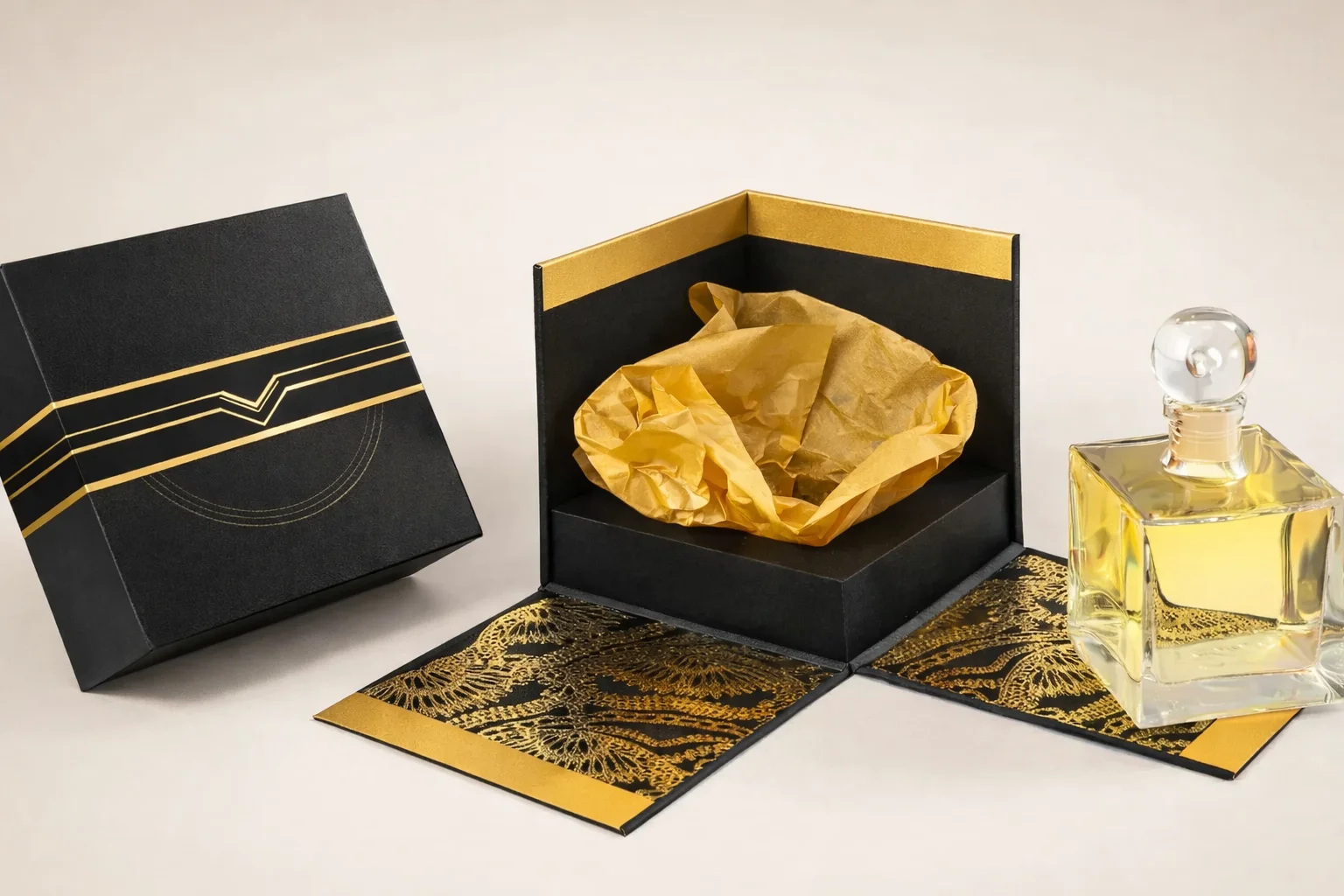
The 4 Buyer Types and What Each One Should Focus On
For Brand Founders
When I speak with perfume brand founders, I can usually tell within the first five minutes what kind of pressure they are under. Founders are trying to turn an idea into something real, and packaging is one of the first moments where the brand becomes physical. It is not just about protecting a product. It is about proving credibility. In fragrance, the box is often the first thing people see in photos, the first thing they touch at delivery, and the first thing that shapes their expectations of the scent inside. That’s why founders feel a unique kind of urgency: they need packaging that looks and feels premium, but they also need it to happen fast, without causing financial stress or operational chaos.
For founders, what matters most is speed, fit, and simplicity, because those three factors decide whether the brand can launch smoothly or get trapped in delays. Speed matters because early-stage perfume brands operate around momentum. You might have a launch date planned, influencer collaborations scheduled, preorders collected, or boutique buyers waiting. If your packaging schedule slips by two or three weeks, it’s not a small problem. It can damage trust and weaken your marketing campaign. I’ve seen startups miss key seasonal windows simply because they assumed packaging would be “quick,” only to find out that sampling, proofing, finishing setup, and export shipping require more planning than expected. When you’re in the early stage, every delay feels amplified because your cashflow is limited and your team is small.
Fit matters because perfume packaging is unforgiving. Perfume bottles are heavy relative to their size, often glass, and sometimes have unusual shapes or caps that make the height and tolerance critical. A packaging design can look stunning on a screen, but if the insert does not hold the bottle securely, you have a real-world disaster. The bottle may rattle during transport. The glass may scratch. The box corners may collapse because internal support is weak. The cap may press against the lid and create visible pressure marks. In premium packaging, these issues don’t just create damage—they create disappointment. And disappointment translates into bad reviews, high returns, and weaker repeat purchase behavior, especially for DTC.
Simplicity matters because the early stage is not the time to gamble with overly complex packaging. Many founders want everything: magnetic closures, drawer slides, thick boards, double-layer inserts, multiple foil colors, multi-position embossing, and textured specialty papers. I love premium packaging as much as anyone, but complexity increases risk. It increases the number of components that can be delayed. It increases the number of production steps where errors can happen. It increases the chance of inconsistency, especially at low MOQ. And most importantly, complexity increases the decision burden for founders. If you’re already managing formulation, bottle procurement, compliance, branding, marketing, and logistics, the last thing you need is a packaging process that creates 20 additional decisions.
That’s why the best approach for founders is what I call minimum viable premium packaging. I’m not saying you should choose cheap packaging. I’m saying you should choose packaging that delivers premium perception with controlled risk. That typically means starting with a structure that is proven and manufacturable at low MOQ, like a well-designed folding carton with premium finishing, or a simple rigid box that avoids complicated mechanisms. It means selecting one or two high-impact finishes that elevate the brand without making production fragile, like a clean foil-stamped logo combined with soft-touch lamination, rather than multiple decorative techniques layered together. It also means designing your packaging as a version 1.0 system—one that can evolve. Founders often forget that packaging can be upgraded in later batches. Your first launch packaging should be good enough to represent the brand proudly, and stable enough to deliver on time. The perfect packaging can come later, when demand is proven and reorders become predictable.
For DTC Operators and Sourcing Teams
When I work with DTC operators and sourcing managers, the focus shifts immediately from “How will it look?” to “Can we run this repeatedly without problems?” Operators are not just launching a product; they are building a machine that must work every single week. If you’re running paid ads, managing fulfillment, negotiating inventory levels, and trying to improve conversion rate, packaging becomes both a brand tool and an operational variable. In DTC fragrance, packaging doesn’t just influence customer experience—it influences shipping cost, damage rate, warehouse efficiency, and reorder planning. This is why operators often approach low MOQ packaging differently from founders. They are thinking in systems, not just outcomes.
For DTC operators, what matters most is repeatability and stable supply, because a DTC brand survives on consistency. Repeatability means the packaging you receive today must look and feel like the packaging you receive next month. Customers notice changes. If the color tone shifts slightly, if the foil looks different, if the insert fit changes, or if the opening feel becomes looser, your brand experience becomes inconsistent. Even if customers cannot explain it clearly, they sense it. In fragrance, that sensory impression is everything. Consistency builds trust, and trust builds repeat purchases. I’ve seen brands lose loyal customers because the packaging quality dropped quietly over time due to suppliers changing materials or production methods without proper control.
Stable supply is equally critical because DTC is sensitive to inventory gaps. Many perfume brands launch successfully, sell out, and then struggle because packaging reorders take longer than expected. Bottles may be ready, fragrance may be ready, but boxes become the bottleneck. The result is painful: you can’t ship orders, your customer service team faces complaints, your cashflow slows, and your ad campaigns lose efficiency. This is why operators should treat packaging like a supply-chain pillar. If you cannot reorder packaging reliably, you cannot scale.
That’s why my recommended approach for operators is to build a scalable packaging spec. A scalable packaging specification is not just an artwork file. It is a repeatable technical document that locks in the packaging system and reduces interpretation. It includes measurable dimensions, board thickness, paper type, insert type, printing method, finishing requirements, and quality control checkpoints. It defines acceptable tolerances, like how much color variation is allowed, what level of foil scratch is unacceptable, and how alignment should be checked. It also defines packaging durability expectations, because DTC packaging must survive shipping. If the surface scratches easily, if the corners crush, or if the lamination peels, you will pay for it in returns and reputation damage.
In my experience, DTC operators should also think about packaging in terms of operational efficiency. How fast can your warehouse team pack the product? Does the box open smoothly without forcing? Does the insert allow quick placement of the bottle? Does the packaging require delicate handling that slows fulfillment? These details matter because DTC businesses scale through throughput. If packaging slows fulfillment, it increases labor cost. If packaging increases shipping volume, it increases freight cost. Low MOQ is useful, but it should never come at the cost of operational instability. Your goal is a packaging system that can start small and scale smoothly, without changing the fundamentals every time.
For Agencies and Designers (Agency / Design Studio)
When I work with agencies and designers, I often see a tension that most people don’t recognize. Designers are expected to deliver packaging that looks exceptional, feels premium, and expresses the brand story. At the same time, they are expected to deliver packaging that is manufacturable at low MOQ, under tight timelines, and within a budget that usually looks smaller than the creative ambition. Agencies also carry reputation risk. If a box comes out poorly, the client may blame the agency even if the supplier is responsible. That’s why designers who work in luxury packaging are not only artists—they are also translators between brand vision and production reality.
For agencies, what matters most is structure feasibility and finish accuracy, because these two areas are where concept often fails in real manufacturing. Structure feasibility means the packaging design must work physically. It must open properly. It must hold the bottle safely. It must not collapse under shipping pressure. It must be producible with stable quality at low MOQ. I’ve seen designs that look incredible in 3D mockups but fail during production because the structure requires extremely tight tolerances that are difficult to maintain in small runs. Or the insert design requires complex cutting that creates high rejection rates. Or the sleeve is too tight and causes scratches. These issues are not design failures—they are feasibility gaps. Designers who understand structure feasibility early save their clients a lot of money and time.
Finish accuracy is equally important because fragrance packaging lives and dies in the surface details. A perfume box is often a close-up product. Customers hold it in their hands. They run their fingers along the logo. They judge the quality of the foil. They notice whether embossing is crisp. They notice whether the matte finish feels smooth or sticky. They see if the edges are clean. In perfume packaging, finishing is not decoration; it’s perceived value. One small error, like misaligned foil or inconsistent emboss depth, can make a premium brand feel amateur.
That’s why my recommended approach for agencies is to create a supplier collaboration workflow. In my view, the best agencies do not treat suppliers as “vendors.” They treat them as production partners. The workflow starts early, before the design is finalized. The agency shares concept direction and asks the supplier what finishing techniques are most stable at low MOQ. They confirm the dieline before locking layout. They ask for real material references, because a digital render can never fully represent paper texture or foil reflection. They build sampling into the design timeline as a normal step, not as an afterthought. They also separate the sampling process into stages: first confirm structure, then confirm print, then confirm finishing, then confirm assembly.
I also encourage agencies to build a “finish priority hierarchy” with clients. Not every finish is equally important. Some finishes are essential to brand identity, like a gold foil logo that signals luxury. Some are optional, like spot UV patterns that add decoration. When you identify what is essential, you can protect the core brand feel even if cost or timeline becomes tight. This approach helps agencies deliver packaging that feels high-end and is manufacturable at scale. It also helps them protect their own reputation, because a clear workflow reduces production surprises.
For Private Label Buyers and Distributors
Private label buyers and distributors come into perfume packaging with a very different mindset. They are not necessarily trying to build a single artistic brand story from day one. They are building a commercial system. They may handle multiple brands, multiple product lines, multiple scent variations, and multiple markets. Their biggest risk is not whether the packaging looks unique—it’s whether the packaging system remains profitable and operationally stable. In private label, packaging must be efficient. It must be repeatable. It must be cost-controlled. And it must support fast replenishment, because demand can shift quickly depending on market response, promotions, or distributor requests.
For private label and distributors, what matters most is cost control and fast replenishment. Cost control is not only about getting the lowest unit price. It’s about minimizing unnecessary complexity that increases total cost over time. A packaging system that uses too many different materials, too many custom insert types, or too many finishing steps can cause supply-chain fragility. It increases lead time. It increases the chance of component shortages. It increases the risk of variation across batches. And variation hurts distributors because they want consistency across shipments.
Fast replenishment matters because private label businesses win through availability. If you sell well, you need to restock quickly. If a distributor partner requests a large reorder, you need packaging that can be produced without redesign and without sourcing exotic materials. This is why I often advise private label buyers to avoid overcustomization early. The goal is not to create the most complex box. The goal is to create a packaging platform that can support multiple SKUs with minimal adjustment.
That’s why my recommended approach is to standardize structure and keep branding flexible. Standardizing structure means choosing one or two box styles that can work across most product variations. It means designing inserts that can be adapted with small size changes rather than full redesign. It means selecting materials that are easy to source repeatedly, not materials that require special ordering every time. Once structure is standardized, branding becomes modular. You can change print artwork, color themes, finishing accents, or outer sleeves without changing the physical packaging foundation. This keeps the supply chain stable while still allowing market variation.
In private label, this strategy is powerful because it turns packaging from a cost risk into a scaling asset. You can launch multiple SKUs quickly, replenish without delays, and maintain quality without constant rework. And when you eventually decide to upgrade to more premium packaging—like rigid boxes for hero products—you can do it selectively, rather than forcing every product into a high-cost structure. That kind of discipline is what makes private label operations scalable and profitable.
Packaging Options That Work Best for Low MOQ Perfume Boxes
Best Box Structures for Low MOQ
When startup brands ask me which perfume box structure is “best” for low MOQ, I always answer with a question first: what does “best” mean for your stage? In packaging, structure is not only about aesthetics—it is about how your supply chain behaves. A structure determines how stable production will be at 500 units, how quickly samples can be made, how reliable the finishing will be, how efficiently boxes can be stored, and how safely the perfume bottle will travel through international shipping. I’ve seen founders choose a structure simply because it looks luxurious in competitor photos, and then struggle for weeks with fit issues, scratched surfaces, or inconsistent assembly. That’s why I treat structure selection as the most strategic packaging decision a startup can make.
For many startup perfume brands, folding cartons are the most reliable structure for low MOQ orders because they are built for efficiency. Folding cartons are made from paperboard, printed in flat sheets, die-cut, and folded into shape. This workflow is fast, scalable, and less labor-intensive than rigid boxes. More importantly, folding cartons can still look premium if you design them properly. I often tell founders that folding cartons are not “cheap boxes”—they are simply the smartest launch structure. When you choose a thicker paperboard, keep the design clean, and add one strong premium finish like a foil logo or embossing, the result can look extremely boutique. Folding cartons also store flat, which is a hidden advantage for DTC brands. If you run a Shopify store and fulfill from a small warehouse, you will quickly realize how valuable flat storage is. You can store thousands of folding cartons in the space that would barely hold a few hundred rigid boxes. That storage difference translates directly into operational cost.
There are also several folding carton variations that work especially well for perfume. A tuck-end carton is common and cost-efficient, but you can elevate it by using a tight die-cut and clean creasing lines. A reverse tuck or straight tuck carton can be chosen based on how you want the opening experience to feel. A crash-lock bottom adds strength for heavier bottles, which can matter if your perfume bottle is thick glass. A sleeve-style carton can add premium feel because it creates a “layered reveal,” and it also allows design flexibility because the sleeve can be changed for limited editions without changing the inner structure. Some brands also use double-wall folding cartons for extra durability and a thicker hand-feel, which is a great way to increase premium perception without switching to rigid boxes.
Rigid boxes are the structure most people associate with luxury. They are heavier, stronger, and they immediately communicate value. When a customer receives a rigid perfume box, they treat it like a gift. But at low MOQ, rigid boxes require careful planning because they involve more manual work. Rigid box production includes cutting greyboard, assembling the base, wrapping with paper, and finishing with precision. This is why rigid boxes typically cost more and take longer to produce. At 500 units, rigid boxes can still be a strong choice, but only if your supplier has strong craftsmanship and stable QC. In low MOQ rigid box projects, the most common quality issues are corner lifting, glue marks, wrapping wrinkles, and surface scratches. These small imperfections are more visible in luxury packaging, and they can ruin the premium feeling. That’s why if a startup chooses rigid packaging early, I usually recommend keeping the structure simple. A standard lift-off lid rigid box can deliver a luxury feel without introducing complicated production risk. The “simple but perfectly executed” rigid box is often far more premium than an overly complex rigid box that looks inconsistent.
Drawer boxes, sometimes called slide boxes, are one of my personal favorites for boutique perfume brands because the opening experience feels thoughtful and cinematic. When a customer slides the tray out of the sleeve, the product reveal feels intentional. It feels like jewelry packaging. This can be a powerful emotional trigger in fragrance, because fragrance is not only functional—it is sensory and personal. Drawer boxes also create strong branding space. The sleeve becomes your storytelling surface, while the inner tray can stay minimal and elegant. But drawer boxes also require precision. The sleeve cannot be too tight, or the opening becomes frustrating and can scratch the paper. The sleeve cannot be too loose, or the tray slides unintentionally and feels cheap. At low MOQ, drawer boxes can work beautifully if the supplier controls die-cut accuracy and assembly consistency. I often recommend drawer boxes for brands that want a unique unboxing without adding expensive accessories. If you want that luxury ritual, drawer boxes can deliver it with less complexity than magnets.
Magnetic closure boxes are often viewed as the “top luxury option,” and they do feel impressive when done correctly. The soft click of the closure, the stability of the lid, and the smooth opening motion can create an unboxing experience that feels extremely high-end. However, magnets introduce cost and risk. Magnets must be installed at the right position, aligned perfectly, and supported with proper internal reinforcement. If magnet installation is sloppy, the box may not close properly, or the lid may feel uneven. Magnetic boxes also require stronger wrap paper and careful finishing because surface scratches can appear easily during assembly. For startups, I consider magnetic boxes a strategic choice rather than a default luxury upgrade. They make sense for brands with higher price positioning, strong gifting demand, and enough margin to support the extra cost. If your perfume retails at a premium price and unboxing is part of your differentiation, magnetic closure can be worth it. But if your goal is to test the market at low MOQ, a folding carton or simple rigid box is often a better first step.
Whenever I recommend structures, I always think beyond the first order. Your first packaging order is not just packaging—it is a prototype of your supply chain. If you pick a structure that is stable and scalable, your brand will grow faster because your packaging will not become a bottleneck.
Best Materials for Startups
In perfume packaging, material is where luxury truly lives. Many buyers focus only on structure, but in my experience, the material decision is what customers feel most strongly. You can take a basic structure and make it feel premium through material and finish. You can also take a luxury structure and make it feel cheap through poor material selection. This is why I always treat materials as part of brand identity, not just supply chain.
For folding cartons, paperboard is the core material. Paperboard comes in different grades and thicknesses, and thickness matters because it affects both durability and hand-feel. Startup brands often choose a standard paperboard thickness to reduce cost, but the difference between a thin carton and a thicker, well-structured carton is obvious when a customer holds it. If you want folding cartons to feel premium, thicker paperboard combined with clean crease lines is a simple but powerful upgrade. It makes the carton feel more solid, reduces corner crushing during shipping, and improves opening/closing stability.
For rigid boxes, greyboard is essential. Greyboard provides the weight and rigidity that define luxury packaging. It allows clean edges, stable structure, and gift-like presence. But greyboard alone is not what customers see—they see the wrap paper. That wrap paper is where premium finishes come alive. This is where startup brands must be careful. Choosing the wrong wrap paper can cause wrinkles, color inconsistency, or finishing problems. Choosing a wrap paper that is too delicate can cause scratches during assembly. Choosing a wrap paper that is too textured can make foil stamping less sharp. When I help brands choose rigid box materials, I always consider the finish method. Some papers work beautifully with embossing but poorly with foil. Some papers create elegant matte texture but may show fingerprints. In luxury fragrance, these sensory details matter more than many founders expect.
Specialty paper is often where founders get excited because it feels unique. I understand the appeal. Specialty paper can communicate identity instantly. A linen-texture paper can feel classic and refined. A soft matte paper can feel modern and minimalist. A recycled speckled paper can feel eco and artisanal. But there are trade-offs. Specialty paper is not always stocked in small quantities. It may require minimum purchase amounts larger than your MOQ. Specialty paper can also vary between batches, which can affect color consistency across reorders. Some specialty papers absorb ink differently, causing print colors to appear slightly dull or uneven. Some textured papers reduce finishing sharpness. This is why I encourage startups to use specialty paper strategically, not emotionally. If specialty paper is essential to your brand identity, choose it, but confirm availability for future reorders. If it is only a decorative idea, consider using standard coated paper with finishing techniques to achieve premium feel with better supply stability.
FSC paper adds another important layer, especially for European markets. I meet many startup founders who want to claim their packaging is eco-friendly. That’s natural, because sustainability matters and customers care. But I also see huge confusion in the market. Many suppliers use vague phrases like “eco paper,” “green paper,” or “recyclable packaging” without real certification. FSC is different because it is a recognized system with supply chain tracking. If your packaging supplier has FSC chain-of-custody certification, and your paper is FSC-certified, you can make legitimate sustainability claims that hold credibility in markets like the UK, France, and Germany. This matters because European consumers and distributors are increasingly sensitive to greenwashing. In my opinion, FSC is one of the most practical sustainability upgrades for startups. It doesn’t require a dramatic change in structure. It doesn’t require reinventing packaging design. It simply gives you a strong trust signal that is easy to explain and easy for the market to recognize.
Inserts That Don’t Break the Budget
Inserts are one of the most overlooked parts of perfume packaging, yet they often decide whether your packaging feels premium or not. I always tell founders that the insert is the “silent engineer” of your perfume box. Customers might not talk about inserts directly, but they absolutely feel their impact. A good insert makes the bottle sit perfectly, creates a clean reveal, and makes the entire box feel intentional. A poor insert creates movement, damage, or an unprofessional look. For low MOQ sourcing, inserts also need to be cost-controlled because inserts can quickly become more expensive than the box itself.
Paper inserts are usually the best option for startups because they balance cost, flexibility, and sustainability. Paper inserts can be die-cut and folded with precision, and they can hold perfume bottles securely if designed properly. What many startups miss is that paper inserts are not automatically weak. If you design the insert with layered support or reinforced fold structures, it can hold heavy bottles surprisingly well. Paper inserts also offer branding opportunities. You can print instructions, brand messages, or subtle patterns inside. You can create pull tabs that make removal elegant. You can also match insert color to brand theme, creating a complete premium interior without needing expensive foam. For DTC brands, paper inserts also align beautifully with sustainability positioning, especially when combined with FSC paper.
EVA foam inserts and sponge foam inserts are often compared, but they serve different brand needs. EVA foam is more structured and “clean.” It holds shape well and looks premium, especially in rigid boxes. It provides strong protection and makes the bottle feel secure. However, EVA foam can require cutting molds or specialized processing, which raises cost at low MOQ. Sponge foam is softer and often cheaper, but it may look less refined depending on density and cutting quality. Sponge foam can compress unevenly, and the edges may look rougher. Some startups choose sponge foam simply because it is cheaper, but then they feel disappointed when the unboxing looks less luxurious than expected. That’s why I recommend foam inserts only when they match the brand’s positioning. For high-end fragrance, EVA can be a worthwhile investment. For mid-range or test launches, paper inserts usually provide better value without sacrificing brand presentation.
Molded pulp inserts are becoming popular because they support eco-forward branding and feel “natural.” Molded pulp can create a strong sustainability impression because it looks like a real alternative to plastic and foam. In the right brand context, molded pulp is very powerful. For example, a clean minimalist perfume brand with botanical storytelling can use molded pulp inserts to reinforce its identity. However, molded pulp inserts usually require tooling and may have higher minimums depending on the supplier. They can also have a more rustic texture, which may not fit brands aiming for high-gloss luxury. Molded pulp can be the right choice for startups, but only when sustainability is a core value, not just a marketing line. If your brand wants to lead with eco positioning, molded pulp becomes part of the story, not just an insert.
When I advise startups on inserts, I always think about evolution. Start with paper inserts to validate your product, your brand, and your sales. Once you scale, upgrade inserts selectively. You may keep paper inserts for standard SKUs and use EVA inserts for gift sets or premium editions. This way, inserts become a strategic tool instead of a cost burden. Good insert decisions protect your perfume, elevate your brand, and keep your low MOQ project financially healthy.
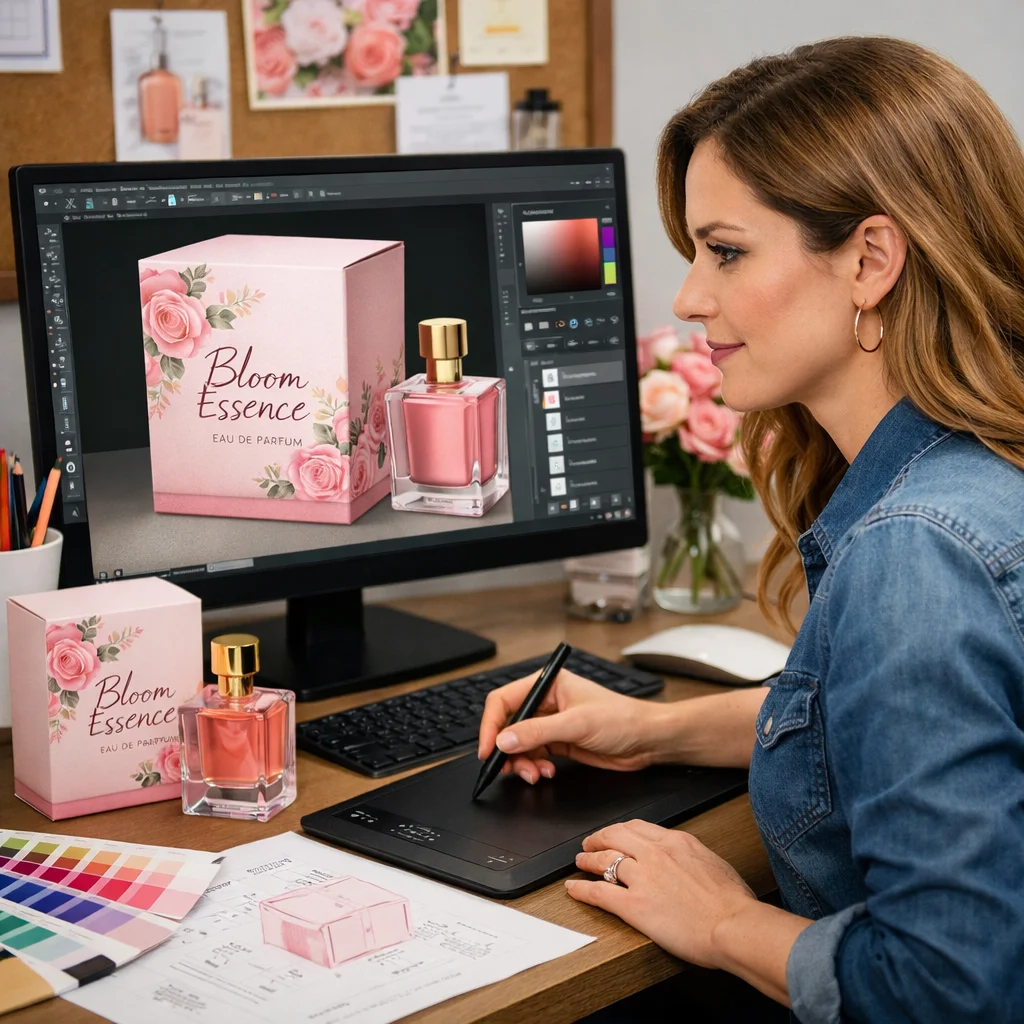
A Step-by-Step Supplier Selection Checklist
Step 1 Confirm the Supplier Can Truly Do Low MOQ
When I help startup perfume brands choose a packaging supplier, I always begin with a mindset that might feel a little “too cautious” at first, but it saves weeks of frustration later. I never assume a supplier can do low MOQ just because they say it on their website. Almost every packaging company online uses the phrase “low MOQ” now, because they know exactly what startup founders search for. The real question is not whether they can technically accept a 500-unit order. The real question is whether they can produce 500 units with stable quality, predictable lead time, and clear communication, without trying to push you into a high MOQ at the last minute.
The first thing I do is confirm MOQ by structure. In perfume packaging, structure changes everything. A supplier who is confident with folding cartons may struggle with rigid boxes. A supplier who can assemble rigid boxes may not have the precision required for drawer boxes. A supplier who offers magnetic closure boxes might only be able to do them efficiently when the quantity is higher, because magnets introduce component sourcing and additional labor steps. This is why I always ask very directly: if I order 500 units, which structures can you deliver without compromising quality? I want the answer to be specific, not vague. I want to hear something like “500 units is feasible for folding cartons and simple rigid boxes; drawer boxes require more time; magnetic boxes are possible but cost higher.” When suppliers can explain structure feasibility clearly, it tells me they understand production reality.
After structure, I confirm MOQ by finish, because finishes are where many low MOQ projects fail. A supplier may claim they can produce 500 boxes, but once you add hot stamping, embossing, debossing, spot UV, or special laminations, the production workflow changes. Hot stamping requires stamping dies and careful alignment. Embossing requires molds. Spot UV requires additional processing steps. Some suppliers can do these at low MOQ, but only if the design is controlled and the finishing area is reasonable. Others can do it but quality becomes inconsistent. This is why I ask: can you do 500 units with this exact finishing combination, and what is the most stable finish setup for low MOQ? I’m not looking for a “yes.” I’m looking for a supplier who can guide me away from unstable choices while still keeping the packaging premium.
There is another detail I always check in this step: whether the supplier’s “low MOQ” is truly customized or just semi-custom. Some suppliers advertise low MOQ but offer only a few fixed box sizes, fixed papers, and fixed structures. That can still work for some startups, but it’s not the same as fully custom packaging. If your bottle has a unique size, if your brand requires a specific opening experience, or if you need a precise insert fit, you must confirm whether the supplier can customize dimensions and inserts at 500 MOQ. A real low MOQ supplier for startup brands should be able to support customization without making the process overly complicated.
This first step is like the foundation of a building. If it’s weak, everything collapses later. If it’s strong, the rest of the project becomes much more predictable.
Step 2 Evaluate Sampling Speed and Capabilities
In my opinion, sampling is where you truly discover whether a supplier is “startup-friendly” or not. Startup brands need speed, but they also need guidance. A supplier who can sample quickly, communicate clearly, and revise efficiently is usually the supplier who can handle a low MOQ project smoothly. A supplier who struggles at sampling stage will almost always struggle more during mass production, because production pressure magnifies every weakness.
I always start by asking for the blank sample timeline, because blank sampling is the fastest way to confirm structure and fit. A blank sample is not meant to impress you visually. It is meant to answer practical questions. Does the bottle fit inside the box without pressure? Does the insert hold it securely? Does the lid close smoothly? Does the opening feel premium or awkward? In perfume packaging, fit issues are extremely common in the first version, especially if the bottle has a wider shoulder, a tall cap, or a spray head that requires extra clearance. If a supplier cannot produce blank samples quickly, it often means they don’t control structure development efficiently, which can create delays later.
Once blank samples are confirmed, I evaluate digital proof versus offset proof, because this decision affects both timeline and risk. Digital proof samples are typically faster and cheaper, which makes them attractive for startups. They are excellent for confirming layout, typography, logo placement, and overall design direction. But digital printing may not reflect final offset printing results perfectly. Some colors shift. Some gradients look different. Some premium details may appear less refined. Offset proof samples are closer to mass production quality, especially for high-end perfume packaging where brand colors must be consistent. Offset proofs take longer because they require plate setup and press calibration, but they reduce risk for brands that need very strict premium results.
When I guide brands through this decision, I always ask them to define the goal of sampling. If the goal is to move fast and validate the concept, digital proof is usually enough for the first run. If the goal is to launch a premium brand with strict color control, or if the packaging will be photographed heavily for luxury marketing, offset proof is often the safer route. Many startup founders don’t realize how much brand perception depends on small print details, especially in fragrance. A gold foil logo that looks perfect is not the same as a gold foil logo that is slightly dull or scratched. Sampling is where you catch this difference before it becomes a disaster.
There are also a few things I always insist on confirming during sampling, because they are the most common “silent failures” of perfume packaging. One is insert tolerance. Many inserts look fine until you test them with real bottles. Another is opening and closing feel, because customers judge quality through friction and sound. Another is surface durability, because some premium laminations scratch easily and become ugly during shipping. Another is finishing alignment, because if the foil is misaligned by even 1–2 millimeters, it becomes visible and feels unprofessional. I also confirm the inside of the box, because startups often focus too much on the outer design but forget the inner experience. A clean inner presentation can make even simple packaging feel premium.
Sampling is not a formality. It is your insurance policy. If you take sampling seriously, you protect your timeline, your budget, and your brand reputation.
Step 3 Check Quality Control Workflow
If sampling is the “first impression” of a supplier, quality control is the supplier’s real character. Many suppliers can create a beautiful sample. The real question is whether they can produce hundreds or thousands of boxes with the same standard. That’s why I always treat QC as a core decision point, not an afterthought.
The first QC area I check is color control. Color is one of the hardest things to reproduce in printing, especially for brands that use delicate tones, pastel palettes, deep blacks, or minimalist neutral shades. In perfume packaging, color consistency is often more important than complexity. I ask suppliers how they manage color matching. Do they use Pantone references? Do they have in-house calibration? Do they control paper batches to reduce color shift? Do they perform press checks during production? Most importantly, I ask how they manage reorders. A startup brand is not ordering once. If the first batch sells well, you will reorder. If the reorder looks different, you create confusion for customers and weaken brand consistency. A strong supplier will talk about reorder control naturally.
The second area is finishing consistency. Premium perfume packaging relies heavily on finishing. Foil stamping, embossing, debossing, spot UV, and special coatings are what make customers feel the box is worth the price. But finishing is also where defects happen most often. Foil can scratch, crack, or misalign. Embossing depth can vary. Spot UV can shift slightly. Lamination can bubble or peel. I ask suppliers what their defect standards are and how they inspect finishing during production. If they only inspect at the end, the risk increases because finishing defects are expensive to fix after a full run. A professional supplier will have checkpoints during finishing, not only at the final stage.
The third area is glue and alignment accuracy. This matters especially for rigid boxes, drawer boxes, and magnetic boxes. I always tell startup brands that luxury packaging is judged by symmetry. If the wrap seam is crooked, customers notice. If the corners are uneven, customers notice. If glue marks are visible, customers notice. These are not small details in fragrance. They are the difference between “luxury” and “cheap imitation.” So I ask suppliers about assembly process control. Is assembly manual or semi-automatic? How do they train workers? How do they control alignment? How do they handle rework? A supplier who takes pride in craftsmanship will explain these steps clearly.
A good QC workflow also means the supplier knows how to communicate defects transparently. I always prefer suppliers who can tell me what can go wrong and how they prevent it, rather than suppliers who claim “everything will be perfect.” In manufacturing, perfection is achieved through process, not promises.
Step 4 Confirm Packaging Durability and Shipping Safety
Perfume packaging must survive real-life conditions. It must survive courier drops, warehouse stacking, international shipping, and customer handling. This is where many startup brands suffer, because they design packaging for the screen, not for logistics. I’ve seen boxes that look stunning in photos arrive with crushed corners, scratched surfaces, and damaged inserts. When that happens, the brand pays twice: once for packaging, and again for returns, refunds, and customer trust loss.
Scratch resistance is one of the first durability topics I focus on. Many luxury perfume brands love matte finishes, deep black packaging, and soft-touch lamination. These choices look premium, but they can scuff easily. Even a small scratch on matte black packaging becomes obvious. That’s why I always test sample boxes under friction. I gently rub the surface. I slide the box against another box. I see how fingerprints appear. If the brand plans to ship DTC, scratch resistance becomes essential because boxes will be handled many times before reaching the customer. I often recommend anti-scratch lamination for brands that choose dark colors or soft-touch finishes, because it can reduce surface damage significantly.
Corner protection is another critical factor, especially for rigid boxes. Rigid boxes can dent at corners during shipping. Folding cartons can crush if the paperboard is too thin or if the structure is not reinforced. Drawer boxes can split at edges if friction is too high. I always examine corner strength during sampling. I check whether the edges feel firm. I check whether the structure has internal support. I ask suppliers how they pack boxes inside the export carton, because packing method is part of durability. A supplier who cares about international buyers will design packing to reduce corner damage, often through layering, spacing, and protective sheets.
Outer carton packaging is the final protective layer. Many startups underestimate how important it is. A strong perfume box is worthless if the outer carton collapses during shipping. I ask suppliers about export carton strength, carton thickness, stacking method, and internal protection materials. I also ask about labeling practices for fragile handling. If the supplier has export experience, they will take outer carton packaging seriously, because they know shipping damage creates disputes and unhappy clients.
For me, durability is not an optional feature. It is part of your brand promise. Customers will judge your brand based on what arrives at their door, not on what your packaging looked like in a 3D mockup.
Step 5 Confirm Documentation and Export Capability
The final step in my supplier checklist is confirming documentation and export capability, because this is where “good factories” and “international-ready suppliers” become very different. Many suppliers can produce boxes. Not all suppliers can support international trade smoothly. For startup brands in the UK, France, Germany, and other markets, export capability is not a nice-to-have. It’s a requirement.
HS codes are a basic but important part of export documentation. Correct HS codes affect customs clearance speed and import duty classification. I ask suppliers if they can provide HS codes for packaging products and whether they have shipped similar items to the target market before. If a supplier has no experience with export documentation, startups can face delays, extra customs checks, and unexpected costs. For early-stage brands, these issues can be extremely stressful because you may not have a logistics team to solve them quickly.
FSC certificates are essential when sustainability claims are part of the brand story. Many startups want FSC-certified packaging because European customers value it and because it provides a credible, internationally recognized signal. But FSC is not just “paper.” It is a chain-of-custody system. I always ask for proof of FSC chain-of-custody certification and ask whether FSC documentation can be provided for the order. Without proper documentation, brands risk making sustainability claims that cannot be verified. This can damage trust and create problems with distributors or retailers.
Compliance requirements vary by market. Some markets have stricter expectations for sustainability labeling. Some retailers have their own packaging standards. Some distributors request documentation for material content or certifications. I always ask suppliers whether they understand market-specific compliance needs, especially for Germany, where standards and documentation expectations are often higher. A supplier who has served European buyers will be familiar with these requirements and will communicate clearly about what they can provide.
When you complete these five steps, supplier selection becomes a professional process instead of a gamble. You are not choosing based on the cheapest quote or the most impressive photos. You are choosing based on feasibility, execution ability, and long-term scalability. And in my experience, those factors decide whether a perfume brand launches smoothly—or spends months fighting packaging problems instead of building sales.
The Real Cost Breakdown for Low MOQ Custom Perfume Boxes
What Your Quote Should Include
When a startup perfume brand sends me a supplier quote and asks, “Is this price reasonable?”, I almost never answer immediately. Not because I want to complicate things, but because perfume packaging quotes are often misleading if you only look at one number. In my experience, the brands that get the best results are not the brands that find the lowest unit price. They are the brands that understand what the quote actually includes, what it quietly excludes, and what costs will appear after the project has already started. A quote is not just a price list. It is a supplier’s way of communicating how they run production, how transparent they are, and how reliable your final budget will be.
The unit price is the first thing everyone checks, and yes, it matters. But I always remind founders that unit price must be tied to a specific configuration. A unit price without clear specifications is meaningless. I want to see details such as box structure, dimensions, board thickness, paper type, printing method, finishing methods, insert type, and whether assembly is included. For example, a supplier may quote a low unit price for a “rigid box,” but later you discover the insert is not included, or the finishing is not the same as your design, or the box is made with thinner board than expected. A good quote makes it impossible for misunderstandings to happen because it clearly describes what the unit price covers. It should also state whether the unit price is based on EXW pricing or includes local shipping to port, because that affects the true landed cost.
Sampling fee is the second element I look for, because sampling is not optional in perfume packaging. Sampling is where you avoid structural failures, insert fit mistakes, and finishing disappointment. Some suppliers offer sampling as “free,” but in many cases, the sampling cost is simply hidden inside a higher unit price. Other suppliers charge sampling fees separately. Neither approach is wrong. What matters is clarity. I want to know whether blank structural samples are included, whether printed proof samples are included, and whether finishing proofs are included. I also ask how many rounds of sampling the supplier supports. For startups, revisions are normal. Your first insert might be too tight. Your second foil alignment might be slightly off. Your third version might fix everything. If the supplier charges per revision without warning, sampling becomes a budget trap. A strong supplier will either include a reasonable sampling workflow or explain clearly what revisions cost and why.
Plate cost is another critical component, especially if offset printing is involved. Many startup brands don’t realize that printing is not just “printing.” Offset printing requires plates, press setup, and calibration. This setup takes time and money no matter how many units you print. That’s why low MOQ packaging can feel expensive. The setup cost is being spread across fewer units. A supplier who explains plate cost clearly is usually a supplier who understands professional printing workflows. I also ask whether plates can be stored for reorders. This matters because for brands planning future batches, plate costs can become a one-time investment that improves future unit pricing. It also impacts consistency because using the same plates helps maintain stable print results across runs.
Tooling cost is where many startups feel shocked, and I understand why. Tooling sounds intimidating, but in luxury packaging, tooling is often what creates premium detail. Tooling includes embossing or debossing molds, foil stamping dies, and sometimes insert cutting molds or special structural dies. Some founders assume tooling is “optional,” but the moment you add tactile finishes, tooling becomes part of the project. I always want tooling costs separated clearly from unit price. I want to know which tooling costs are one-time, which can be reused for future production, and which may need replacement after repeated runs. I also ask who owns the tooling. In most cases, the buyer should own the tooling because it is paid for by the brand. Ownership matters if you ever change suppliers in the future.
Freight estimate is the final item that I insist on seeing early—even if it’s only a rough estimate—because shipping can reshape your entire cost structure. Many startup brands make a critical mistake: they calculate packaging cost based on manufacturing price only, then get surprised when freight adds a major percentage. This is especially true for rigid boxes, magnetic boxes, and drawer boxes, which are bulky and increase volumetric weight. Freight cost depends on carton size, packing method, shipment volume, destination country, and shipping mode. Air shipping is fast but expensive. Sea shipping is cheaper but slower. Rail or combined shipping may be an option for certain markets. I always ask the supplier to estimate carton count, carton dimensions, and weight for my order quantity, because those numbers allow me to forecast freight realistically. Even if your supplier does not arrange freight directly, a good supplier can still provide shipping guidance because they understand the export process.
When a quote includes unit price, sampling fee, plate cost, tooling cost, and freight estimate with clear explanation, it tells me the supplier is professional and the project budget is predictable. For startup brands, predictability is often more valuable than a small difference in unit price.
What Makes the Price Go Up the Most
In low MOQ perfume packaging, price increases are rarely random. They are driven by a small set of decisions that multiply cost through materials, processing time, and production risk. When I explain this to founders, I like to frame it as “luxury cost logic.” Luxury packaging is not expensive because factories want to overcharge. Luxury is expensive because it requires higher-grade inputs, tighter tolerances, and more careful labor. And at low MOQ, these costs become even more visible because there are fewer units to distribute fixed setup expenses.
Specialty paper is one of the largest price drivers because paper is not just a surface—it becomes the main sensory experience. A premium textured wrap paper can transform even a simple rigid box into something boutique. But specialty paper often comes with two hidden costs: material price and procurement constraints. Some specialty papers are significantly more expensive per sheet. Others require upstream minimum purchase quantities. If a paper mill sells specialty paper only in large batches, the supplier may need to purchase more paper than your order requires, and this extra material cost gets passed into your quote. Specialty papers can also increase defect risk. A heavily textured paper may cause printing to look less sharp. Some papers react poorly to foil stamping. Others scratch more easily. When defect risk increases, the supplier’s cost increases because they must spend more time controlling quality.
Hot stamping area is another powerful cost multiplier. Hot foil stamping is one of the most effective luxury signals in perfume packaging because it catches light and feels premium instantly. But foil cost is not based on whether you use foil; it’s based on how much and how complex. A small foil logo on the front is simple. A large foil background across the box surface requires more stamping pressure, more precise alignment, and creates more defect risk. Multiple foil colors require multiple runs. Foil on textured paper requires careful adjustment to avoid broken edges or incomplete stamping. I often explain to founders that foil is like jewelry. A small elegant piece can look luxurious. Covering everything in foil can actually look less premium and cost much more. If you want to control cost, keep foil as an accent, not as a full-surface effect.
Embossing complexity also increases price, and the reason is not only tooling. Embossing requires pressure control and precision. A simple emboss on a logo is stable. Deep embossing across large areas is harder. Fine-detail embossing can create inconsistent results if paper or pressure varies slightly. Multi-level embossing requires more sophisticated tooling. In low MOQ production, embossing can slow down finishing speed because the supplier must monitor quality more carefully. Slow production means higher labor cost. In perfume packaging, embossing can be one of the most refined luxury finishes, but it should be used strategically. A clean embossed logo combined with matte paper can feel extremely premium without excessive complexity.
Insert type is often the biggest “silent budget killer,” especially for startups who focus heavily on outer box design. Inserts influence cost in several ways. A paper insert is usually efficient and MOQ-friendly. EVA foam inserts can look high-end, but they often require cutting molds, and material waste can be high. Sponge foam may be cheaper, but it can look less premium depending on density and cut quality. Molded pulp inserts support sustainability positioning, but tooling is usually required, and MOQ may be higher depending on the mold type. Inserts also increase labor. The more complex the insert, the more careful assembly must be. If the insert fit is tight, packing becomes slower. If the insert requires additional layers or accessories, assembly becomes more complex. This is why inserts can become a major cost factor even if the box itself seems simple.
Once you understand these drivers, you can read quotes like a professional buyer. You stop comparing price blindly, and you start identifying which decisions are shaping cost. That awareness gives you control.
How to Reduce Cost Without Lowering Premium Feel
One of my favorite moments in consulting startup brands is when a founder realizes they don’t need to overspend to achieve luxury. Premium feel is not created by complexity. Premium feel is created by harmony. When structure, material, and finishing work together cleanly, the packaging feels expensive even if the design is simple. In fact, some of the most luxurious perfume packaging I’ve seen uses minimal design, but executes the details perfectly.
The first cost-control strategy is smart structure choices. Many startups assume rigid boxes are the only way to look premium. But folding cartons can feel luxury-grade if you choose higher thickness paperboard and apply finishing carefully. A folding carton with soft-touch lamination and a gold foil logo can look boutique. A sleeve plus inner carton can create a multi-layer reveal experience without the cost of magnets. Even within rigid packaging, you can reduce cost by choosing a standard lift-off lid rather than complex mechanisms. Drawer boxes can sometimes provide premium unboxing with less component cost than magnetic closure boxes. Structure selection is about choosing luxury perception with stable production efficiency.
The second strategy is reducing finish complexity without reducing impact. I often recommend that startups pick one primary luxury signal and execute it perfectly. If your brand identity is minimal and modern, a clean embossed logo on matte paper may be enough. If your brand identity is classic luxury, a small foil logo plus a refined texture may be enough. Multiple finishes can actually make packaging feel busy rather than premium. Simplifying finishes also reduces tooling costs, reduces setup time, and improves consistency. Consistency itself is a luxury signal. Customers trust what feels deliberate and clean.
The third strategy is simplified insert design. Inserts can be engineered in a smarter way. A premium paper insert with reinforced folding can hold a heavy perfume bottle securely. It can also look clean and professional. You can add a pull tab for a more premium removal experience. You can also design inserts to be modular so they can support multiple SKUs, which saves cost when you add new bottle sizes. If you truly want a foam insert, you can sometimes use foam only for the bottle cavity while keeping the rest of the insert paper-based, balancing premium feel and cost. For sustainability-focused brands, molded pulp inserts can be an excellent differentiator, but I usually recommend using them selectively, such as for hero products or gift sets, rather than for every SKU in the beginning.
The most important mindset shift I encourage startups to adopt is this: packaging should scale with the business. Your first order does not need to include every premium feature you dream of. Your first order needs to deliver a strong brand impression, stable quality, and on-time delivery. As your brand grows and reorders become predictable, you can upgrade materials, add more sophisticated finishing, and introduce more premium structures. This staged approach protects cashflow, reduces risk, and allows your packaging to evolve with your brand story.
When startups treat packaging like a growth system rather than a one-time design project, they make better decisions. They spend smarter. They launch faster. And they build a brand experience that customers trust from the very first unboxing.
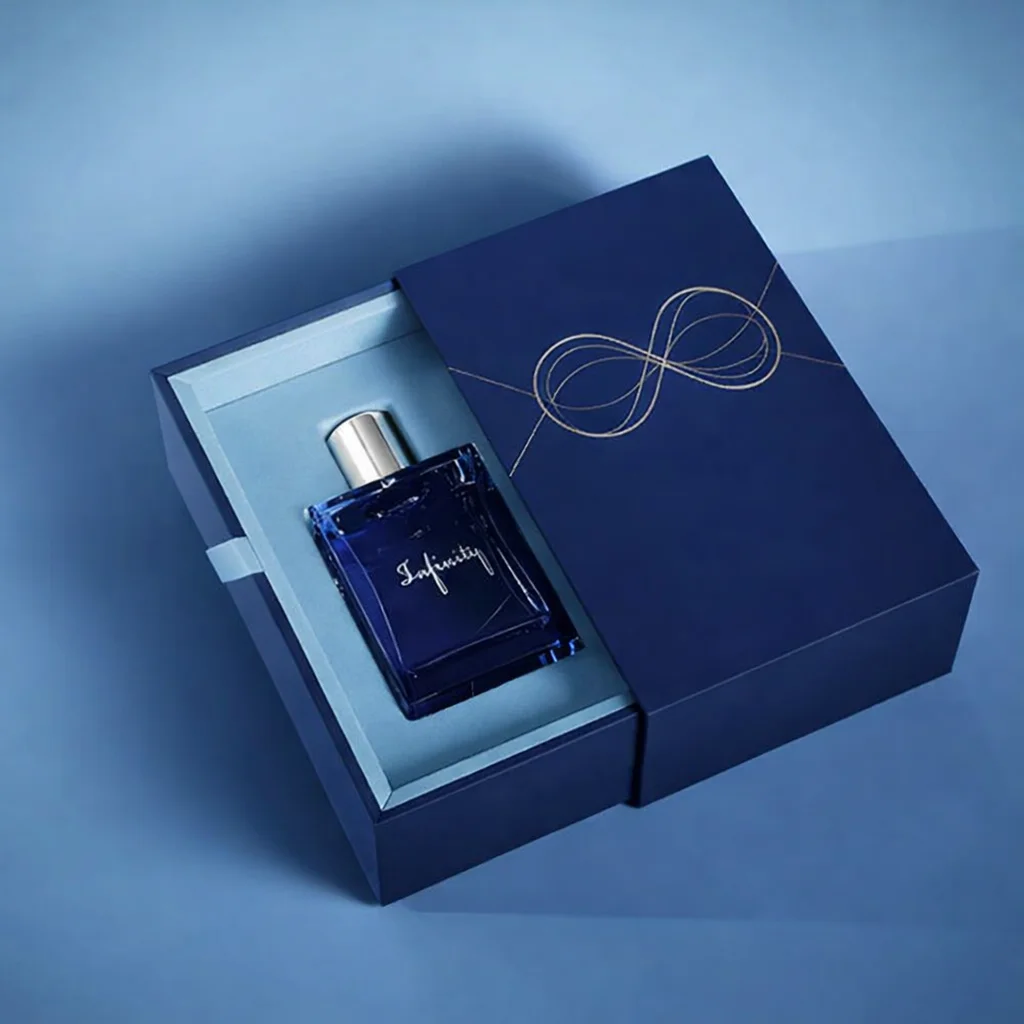
Recommended Workflow for Ordering Low MOQ Boxes
What to Prepare Before Contacting Suppliers
When startup perfume brands ask me how to get low MOQ packaging without wasting time, my answer is almost always the same: the most important work happens before you even contact the supplier. Packaging sourcing becomes stressful when brands treat it like a shopping activity, sending “How much for a box?” messages without solid technical inputs. Suppliers then reply with vague quotes, misunderstandings start immediately, and the project turns into a cycle of revisions and delays. When you prepare properly, the entire process becomes smoother. Quotes become accurate. Samples arrive faster. Production becomes more reliable. And most importantly, you protect your launch schedule.
The first item I always prepare is the box size. But I don’t just mean a random guess like “10 by 10 by 5.” I mean a box size that is engineered around your product. For perfume packaging, the box dimensions should be built from the bottle plus the insert plus necessary clearance. The clearance is important because many brands make boxes too tight, hoping to save space and cost. But tight boxes can create pressure marks, make inserts tear, and frustrate customers during unboxing. I often recommend starting with internal dimensions first, because internal dimensions determine whether the bottle fits safely. Once internal dimensions are correct, external dimensions become straightforward based on board thickness and structure. Another detail founders rarely consider is visual proportion. If the box is too big compared to the bottle, the product feels less valuable. If the box is too small, it may look cheap or feel cramped. Premium fragrance packaging has balanced proportions, and that balance should be planned from the beginning.
The next preparation is perfume bottle dimensions, and this must be more detailed than most buyers expect. I always measure bottle height including the cap, because the cap is frequently the hidden problem. A luxury cap might be heavy wood, thick resin, or decorative metal, and it can add height that changes packaging clearance needs. I also measure the widest body point, which is often the shoulder rather than the base. Many bottles taper or curve, which changes how the insert needs to hold it. If the bottle has a spray head that protrudes slightly or a rounded shoulder, the insert design must be adjusted. I strongly prefer having a real bottle sample in hand before finalizing packaging, because real bottles reveal details that CAD drawings don’t show. If the brand does not have a bottle yet, I request the supplier’s technical drawing with tolerances, because “approximate size” is not enough for insert engineering. This step may sound technical, but it is exactly what prevents expensive insert rework later.
Brand logo files are another step I treat very seriously, especially for premium perfume packaging. A surprising number of founders send suppliers a PNG logo pulled from Instagram, and that almost always leads to problems. Premium packaging finishing requires vector artwork. If you want foil stamping, embossing, or debossing, the supplier needs a clean AI, EPS, or high-quality editable PDF file. If your logo edges are rough or not properly outlined, the foil die will be imperfect and the emboss mold will produce blurry results. I also recommend providing the logo in multiple versions: full logo, icon-only mark, wordmark, and any monogram. This gives you flexibility in design and finishing. If the logo has a specific color requirement, I prepare the Pantone references as well. This matters because perfume brands rely on consistent identity, and inconsistent logo color weakens brand recognition.
The last preparation item I recommend is finish references, and I consider this one of the most powerful communication tools in packaging sourcing. Words like “luxury,” “minimal,” “modern,” or “eco premium” are subjective. Two people can interpret them completely differently. A supplier may think “luxury” means glossy laminate and heavy foil, while your brand might want soft matte paper and subtle embossing. That’s why I always prepare reference photos. I collect images of perfume boxes that represent the exact feel we want, focusing on details such as foil tone, emboss depth, paper texture, lamination finish, and opening style. I also advise brands to include references of what they do not want, because that prevents suppliers from defaulting to common mass-market finishes. If possible, I ask brands to send photos in real lighting, not studio renders, because paper texture and foil reflection behave differently when customers hold the box at home.
When you have box size, bottle dimensions, correct logo files, and finishing references prepared, you become a serious buyer instantly. Suppliers respond faster, quotes become accurate, and the project becomes far more predictable. This preparation is the difference between packaging sourcing feeling chaotic and packaging sourcing feeling professional.
The Best Procurement Timeline for Low MOQ Orders
One of the most common reasons low MOQ packaging projects fail is unrealistic timing. Many startup founders assume packaging can be done quickly because it looks simple. But in reality, perfume packaging production is a multi-stage manufacturing process. There is design engineering, sampling, finishing verification, mass production planning, and international shipping. If you underestimate timeline, you end up rushing decisions, skipping important checks, and accepting avoidable mistakes. For fragrance brands, especially DTC brands, packaging timing is not just logistics. It is revenue. If packaging is late, you cannot ship. If you cannot ship, you lose cashflow.
For low MOQ orders, I often recommend a five-week workflow as a realistic baseline. This doesn’t mean every project takes exactly five weeks, but it gives startup brands a clear structure so they can plan backwards from their launch date. In the first week, I focus on design readiness. This is when we finalize the structure choice, confirm approximate dimensions, prepare artwork files, and align finishing direction. If a brand works with a designer or agency, week one is when design must meet manufacturing reality. I always encourage early structure feasibility checks because it prevents redesign later. Week one is also when I lock the decision on printing method, because digital proof and offset proof require different planning.
In the second week, sampling becomes the priority. I usually recommend starting with blank samples first. Blank samples allow you to test structure, fit, and insert without worrying about print. Many founders want to skip blank samples because they feel impatient, but skipping structure testing often creates delays later. After blank fit is confirmed, printed proof samples can follow. At this stage, the goal is not only visual approval but also tactile confirmation. I check how the box feels in hand. I examine edges, folds, and closure stability. I verify insert fit with real bottles. I also begin checking surface durability because some premium finishes scratch easily, and this must be discovered before mass production.
In the third week, I focus on confirmation and supplier alignment. This is the stage where startups must make decisions quickly. Many brands lose time here because they keep “almost approving” but never finalizing. They want to adjust one more element, try one more finish, or change the paper. Perfection is not the goal at low MOQ. Stability is. In week three, I aim for final approval of dieline, artwork, finishing layers, material choice, and insert design. This final approval becomes the production blueprint. Once this blueprint is confirmed, the supplier can schedule production and purchase materials.
In the fourth week, production runs. Production timing depends heavily on structure. Folding cartons are usually faster because they can be produced with high efficiency. Rigid boxes, drawer boxes, and magnetic closure boxes take longer due to assembly and finishing complexity. During production, I recommend regular progress updates. I also advise brands to confirm that quality control checkpoints are active, especially if there is foil stamping or embossing. In luxury packaging, the finishing stage is where defects can occur most easily, and monitoring during production reduces risk.
In the fifth week, shipping and delivery become the focus. At low MOQ, many brands use air shipping because they want fast market entry. But even air shipping requires preparation. You need carton dimensions, weights, and packing plans early. If you wait until production finishes to plan shipping, you lose valuable days. I always plan shipping during production, not after. If sea shipping is chosen, the timeline must be extended, but the cost savings may be worth it for stable reorders. The key is aligning shipping choice with launch timing and cashflow needs.
A realistic timeline is not restrictive. It is empowering. When startups plan packaging properly, they avoid last-minute panic and can focus on marketing, sales, and customer experience.
A Sample Checklist You Can Reuse
One of the best habits I recommend for startup perfume brands is to turn packaging sourcing into a repeatable workflow instead of a stressful one-time project. When you build a reusable checklist, you avoid forgetting critical steps. You reduce the risk of errors. And you create a system that can scale with the brand. This matters because once your perfume starts selling, you will reorder packaging. And reorders should be easier than the first run, not harder.
The first checklist item I always include is dieline confirmation. Dielines are the structural blueprint for your packaging artwork. Many founders feel overwhelmed by dielines because they look technical, but you don’t need to understand every line. You only need to confirm that the dieline matches your box structure, dimensions, and opening style. I verify that design elements are placed correctly, especially logos, text, and important patterns. I check that nothing critical sits on fold lines where it could distort. I confirm bleed margins so there are no white gaps at edges. I also check barcode or regulatory text placement if needed. A good dieline confirmation prevents the most common printing mistakes.
The second checklist item is print proof confirmation. This is not only about whether the design looks good. It is about whether the design prints well. I check logo sharpness, line clarity, small text readability, and black density. I also compare proof colors under different lighting conditions. Many founders approve proofs under one lighting type, then receive final boxes that look different. Lighting matters. If the brand uses pastel tones or deep blacks, I pay extra attention because those colors are sensitive in printing. If the packaging includes foil stamping or spot UV, I confirm that the finishing layers align perfectly with the printed artwork. Misalignment is one of the most common premium packaging failures.
The third checklist item is insert fit testing. Insert fit testing is mandatory for perfume packaging. I physically test bottle placement, removal ease, and stability. I gently shake the box to simulate shipping vibration. I check whether the bottle rubs against insert edges. I check whether the cap presses against the lid. I check whether the bottle sits centered and elegant, because presentation is part of premium experience. If the insert is paper-based, I check that it does not tear easily. If the insert is foam-based, I check that the cut edges are clean and stable. Insert fit errors are extremely expensive if discovered after production, so this step must be completed before final approval.
The final checklist item is durability testing, including a simple drop test. DTC shipping is not gentle. Boxes are dropped, stacked, and handled by couriers. I simulate this reality by performing controlled drop tests from realistic heights. I check whether corners dent easily, whether lamination scuffs, and whether the internal bottle stays stable. If packaging fails durability testing, I revise it before production rather than accepting shipping damage later. This step protects customer experience and prevents negative reviews.
This checklist is not meant to slow you down. It is meant to keep you safe while moving fast. When startups use this checklist consistently, packaging sourcing becomes more predictable, reorders become easier, and growth becomes less stressful. And that is exactly what startup brands need: a packaging system that supports momentum rather than blocking it.
Common Mistakes Startup Brands Make (And How to Avoid Them)
Choosing a Perfume Box Based on Photos Only
When I look back at the packaging projects that caused the most pain for startup perfume brands, many of them began with one innocent decision: choosing a box based on photos only. I completely understand why founders do this. At the early stage, everything is digital. Your brand lives in mood boards, Instagram references, Shopify mockups, and beautifully edited competitor images. Suppliers also know this, which is why they invest heavily in photography. The problem is that packaging photography is designed to show the “best possible version” of a box, not the daily reality of manufacturing and shipping. Lighting hides surface texture flaws. Camera angles hide crooked seams. Editing makes color look more luxurious than it is. Even the way a box is held in a photo can hide the fact that the board is thin or the corners are soft.
In perfume packaging, the difference between a premium box and a mediocre box is not obvious in photos. It is obvious in the hand. A premium rigid box has weight, firmness, and clean edges. The lid opens with controlled friction. The sleeve slides smoothly without scraping. The paper wrap feels tight, like it was tailored. The foil catches light in a clean way, not in a dull way. The emboss feels crisp under the finger, not soft and shallow. These are sensory cues that create luxury, and no photo can fully communicate them. I’ve seen startups order a box that looked perfect online, only to receive something that felt light, flimsy, and inconsistent—like the box was trying to imitate luxury rather than actually being luxury.
The way to avoid this mistake is to treat packaging like product development, not like online shopping. I always recommend starting with physical samples even before you finalize artwork. This sounds slow, but it actually saves time. When you request a blank structure sample first, you can evaluate how the box opens, how strong the corners are, how stable the lid is, and whether the size feels right for your bottle. You can then move into printed proof sampling only after structure is confirmed. I also recommend comparing multiple suppliers with samples side-by-side. When you hold two boxes from two suppliers at the same time, the difference becomes obvious immediately. One feels sharp and refined. The other feels rough and inconsistent. Sampling is not an “extra cost.” It is the cheapest way to prevent a full production mistake.
Another small habit I encourage is to test packaging under real conditions. I don’t just hold it and admire it. I rub the surface gently to see if it scuffs. I open and close the lid multiple times to see if it loosens. I place the box on a desk and see if it sits flat. These micro-tests reveal quality far more reliably than any photo. If a startup brand wants to build trust with customers, it must choose packaging based on what customers will actually touch—not on what looks good in a supplier gallery.
Ignoring Insert Fit Tolerance
If there is one mistake I could eliminate from startup perfume sourcing forever, it would be ignoring insert fit tolerance. Most founders understand that inserts are important, but many underestimate how technical they are. They treat inserts like a “simple inside support,” when in reality, the insert is the engineering heart of the perfume box. It is what protects the bottle. It is what prevents movement. It is what makes the unboxing feel organized and intentional. When insert tolerance is wrong, everything breaks down—sometimes literally.
Tolerance is the small amount of space you intentionally allow for real-world variation. In theory, your perfume bottle has exact dimensions. In reality, bottles are produced with manufacturing tolerances. Caps vary slightly. Glass thickness differs. Some bottles are perfectly uniform; others have subtle inconsistencies, especially across batches or suppliers. Even the way the bottle sits can change depending on label thickness, cap type, or whether the brand is using a decorative collar. If you design an insert to fit “perfectly” with zero tolerance, the insert will almost certainly fail in real use. The bottle may be too tight, making removal difficult and creating scratches. Customers will struggle and feel frustrated. The insert may tear. The bottle may get stuck. If the insert is too loose, the bottle will shift during transport. That movement creates impact damage, broken bottles, cracked corners, and high return rates.
The most dangerous part is that insert fit issues often do not show up immediately in design stage. They show up during real packing or during shipping. A founder approves packaging because it looks good in a proof, then production begins, then the team starts packing bottles and suddenly realizes the bottle doesn’t fit smoothly. Now you have an emergency. Production is already running. Inserts are already cut. Delays become expensive, and sometimes the brand is forced to accept packaging that is technically flawed.
To avoid this, I always insist on insert fit testing with real bottles before approving mass production. I do not accept “it should fit” as an answer. I physically place the bottle into the insert, remove it repeatedly, and observe whether the cavity holds the bottle securely. I test whether the bottle can be removed in a smooth, elegant way without tearing the insert. I test whether the bottle sits centered. I also test how the insert reacts when the box is shaken gently, because shipping is essentially constant vibration. If the bottle rattles even slightly, I treat it as a warning. For DTC brands, I often add a stronger test: I pack the bottle inside the box, put it inside a shipping carton, and simulate handling. If the insert holds up, the packaging system is safe.
Tolerance planning also means thinking ahead. Startups often reorder bottles from different suppliers later, or upgrade caps, or introduce new bottle variations. If your insert was designed too tightly, it becomes fragile to change. If your insert has smart tolerance engineering, your packaging system becomes more scalable. Inserts are not glamorous, but they are one of the most valuable parts of packaging because they protect both your product and your customer experience.
Over-Designing Finishes
I often meet founders who want to “look luxury from day one,” and I respect that ambition. In fragrance, brand perception matters enormously. But one mistake that consistently increases cost and risk is over-designing finishes. This happens when a startup tries to combine too many premium techniques at once—multiple foil colors, large foil areas, emboss patterns, spot UV layers, textured papers, complex laminations, special inks, inner printing, ribbon pulls, magnetic closures—all in a single packaging project. It sounds exciting, and it looks impressive on a render. But at low MOQ, this approach frequently creates disappointment.
Luxury packaging is not measured by how many finishing techniques you use. It is measured by how cleanly the box is executed. When finishes are excessive, production becomes fragile. Every additional finish adds setup time. Every finish adds a potential misalignment point. Every extra layer increases the chance of defects. Foil can scratch. Spot UV can shift. Embossing depth can vary. Lamination can bubble. When you combine multiple finishes, the chances of something going wrong multiply quickly. And the worst part is that many finish issues are not visible until you hold the final box in hand, under real lighting.
Over-designed finishes can also hurt brand aesthetics. In luxury fragrance, restraint often feels more expensive than decoration. When packaging has too many effects, it can look like it is trying too hard. Premium brands often use simplicity: clean typography, balanced spacing, intentional texture, and one signature detail. That signature detail might be a small gold foil logo. Or it might be a subtle blind emboss. Or it might be the paper texture itself. This controlled elegance is what makes packaging feel boutique and refined.
To avoid this mistake, I guide startups to choose a “hero finish strategy.” I ask them what they want customers to remember about the packaging after opening it. If the answer is “the brand logo feels premium,” then embossing or foil stamping on the logo becomes the hero. If the answer is “the box feels soft and luxurious,” then soft-touch lamination becomes the hero. If the answer is “the brand feels artisanal and sustainable,” then textured FSC paper becomes the hero. Once we choose the hero finish, we simplify everything else. This reduces cost and increases execution quality. It also makes sampling easier, because we focus on perfecting the one premium signal that matters most.
In my experience, the most premium packaging often has fewer finishes, but higher precision. And precision is what customers subconsciously associate with luxury.
Not Confirming Production Color Tolerance
Color mistakes are one of the most underestimated dangers in perfume packaging, especially for startup brands that rely on identity and visual consistency. Many founders approve packaging based on a screen mockup or a digital print proof, assuming the final mass production will match perfectly. Then the production arrives and something feels off. The black is not deep enough. The beige looks too warm. The pastel looks dull. The gold foil looks too yellow or too cold. The brand doesn’t feel like the brand anymore. And in fragrance, this matters more than people think, because packaging color is part of emotional storytelling.
The reason this mistake happens is simple: printing is not absolute. Color changes depending on paper, ink absorption, coating type, lamination finish, and even production conditions. Uncoated paper absorbs ink and softens color. Coated paper reflects ink and makes it look sharper. Matte lamination can reduce brightness. Soft-touch lamination can deepen colors slightly. Specialty papers can shift tone dramatically. This means that the same artwork can look different across materials. And at low MOQ, some suppliers may use digital printing for proof but offset printing for production, or they may switch paper batches between sample and production. Without tolerance discussion, the buyer expects perfection, and the supplier delivers “industry-standard variation,” which feels like failure.
To avoid this, I always confirm production color tolerance early. If color is critical, I recommend using Pantone references and requesting physical print proofs on the real material. I also recommend reviewing proofs under multiple lighting conditions. Packaging that looks perfect in warm indoor lighting may look completely different in daylight. I also ask suppliers how they manage color control in reorders. A startup brand is not printing once. If your first batch sells well, you will reorder. If your reorder looks different, customers notice and your brand feels less stable. That instability hurts long-term trust, especially for DTC brands where customers expect consistent premium experience.
In professional packaging sourcing, we don’t aim for “perfect match forever.” We aim for controlled consistency within an agreed tolerance. When this is communicated clearly, brands are protected from unpleasant surprises and suppliers are held to a realistic standard.
Not Planning for Replenishment Lead Time
The last mistake on this list is one I consider the most dangerous from a business growth perspective: not planning for replenishment lead time. I’ve watched too many startup perfume brands launch successfully, build momentum, start selling well, and then suddenly hit a wall because they run out of packaging. The fragrance is ready. The bottles are ready. Customers are ordering. But boxes are not available, so shipping stops. That gap destroys momentum. It damages customer trust. It causes refund requests. It wastes ad spend. It creates unnecessary stress.
This happens because startups often treat packaging as a one-time task. They focus on the first batch only. But packaging is supply chain. It must be repeatable. Even at low MOQ, packaging requires lead time. Materials must be sourced. Printing must be scheduled. Finishing must be completed. Assembly must be done. Shipping must happen. When the first batch sells faster than expected, brands realize that packaging replenishment is not instant. And when they panic reorder, they often pay higher costs, rush production, or use expensive air shipping to recover.
To avoid this, I advise startups to plan replenishment from the first order. Even when placing your first low MOQ order, ask the supplier about reorder lead time. Ask if printing plates and tooling can be stored for your future batches. Ask whether paper stock is stable and easy to source again. Ask how quickly they can produce a repeat order with the same spec. If the brand expects growth, I also recommend choosing materials and structures that are “reorder-friendly.” Exotic specialty paper might look amazing, but if it takes weeks to source again, it can slow down replenishment. A more stable paper choice may be smarter for scaling.
I also recommend tracking packaging inventory like a critical business resource. Don’t wait until you have only a few boxes left. Plan reorder triggers. For example, reorder when you reach a certain stock level based on weekly sales. This is how mature brands prevent out-of-stock situations. Packaging replenishment planning is not boring operations—it is growth protection.
Startup brands don’t fail because they lack creativity or ambition. They fail because packaging surprises steal time and cashflow. The good news is that these mistakes are predictable and avoidable. When you choose boxes based on real samples, engineer inserts with tolerance, simplify finishes with discipline, confirm color tolerance, and plan replenishment lead time early, low MOQ packaging becomes a powerful advantage. It allows you to launch with confidence, build trust with customers, and scale without supply chain panic.
If there’s one thing I hope this guide has made clear, it’s that “low MOQ custom perfume boxes” is not just a pricing request—it’s a sourcing strategy. It’s the way startup fragrance brands protect cashflow, reduce launch risk, and still deliver a premium unboxing experience that matches the value of the scent inside. In perfume, packaging is never an afterthought. It is part of the product. It shapes perception before the first spray. It influences reviews, repeat purchase behavior, and even how confidently people are willing to gift your fragrance to someone else.
Over the years, I’ve seen how quickly packaging can become the biggest bottleneck for early-stage brands. I’ve seen founders delay launches because the insert fit wasn’t tested properly. I’ve seen DTC teams lose momentum because they ran out of boxes and couldn’t replenish fast enough. I’ve seen agencies produce stunning designs that looked perfect on screen—but became stressful in real production because finishing complexity wasn’t aligned with low MOQ manufacturing. And I’ve also seen private label buyers struggle when packaging looked premium but couldn’t be reproduced consistently across batches. These situations aren’t rare. They are the predictable result of treating packaging like a one-time design job, instead of a repeatable supply chain system.
That’s why the “smart approach” I always recommend is not to fight for the lowest possible MOQ at any cost. Instead, it’s to start with a realistic MOQ—often around 500 units—then build a stable packaging spec that can scale smoothly to 1,000–2,000 units and beyond. When you treat MOQ as an ecosystem (structure, material, printing, finishing, inserts, and assembly), you stop being surprised by quotes and lead times. You begin making confident, measurable decisions. You know where cost comes from. You know what creates risk. And you know what needs to be controlled so your packaging stays premium and consistent as you grow.
Most importantly, you learn something many brands only discover the hard way: premium feel does not require maximum complexity. It requires precision. A simple box executed flawlessly can feel more luxurious than an over-designed box full of finishes that scratch, misalign, or vary between production runs. When your packaging is clean, consistent, and thoughtfully engineered, customers trust your brand. And in fragrance, trust is everything.
If you’re planning a new fragrance launch, preparing for your next restock, or rebuilding your packaging system to support growth, I’d love to help you make this process easier and more predictable. At BorhenPack, we specialize in low MOQ custom paper packaging for brands that need premium results without the high MOQ pressure. We support startup-friendly orders starting from realistic MOQs, and we help you build packaging that can scale—whether you’re using folding cartons, rigid boxes, drawer boxes, or gift set packaging. We also offer FSC-certified packaging options, which is especially valuable if you are selling into markets like the UK, France, Germany, or other regions where sustainability credibility matters.