
Your Trusted Cosmetic Packaging Boxes Manufacturer
We help you launch with confidence, start lean with flexible MOQs, and elevate your brand through fully customized Cosmetic Packaging Boxes—engineered for protection, presentation, and consistent quality as your business scales.
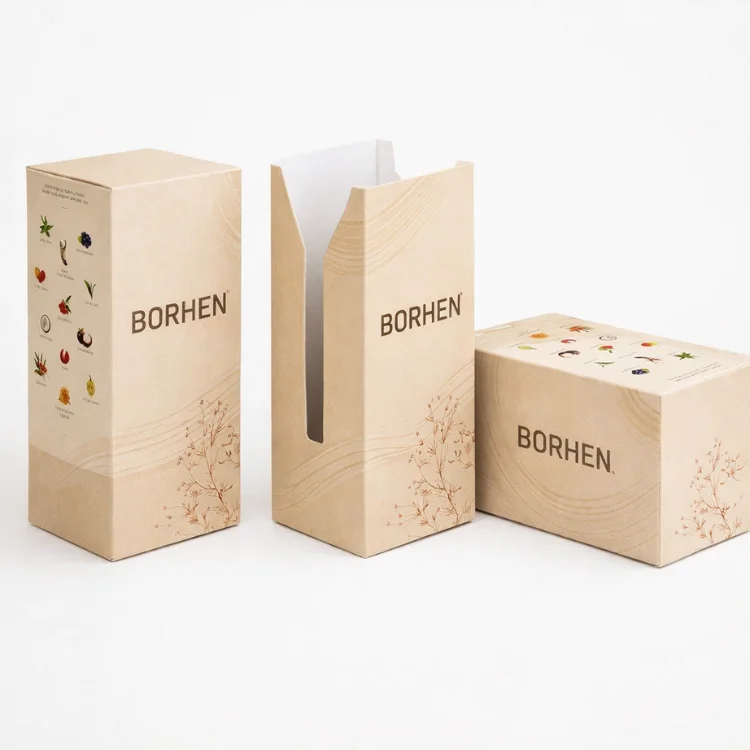
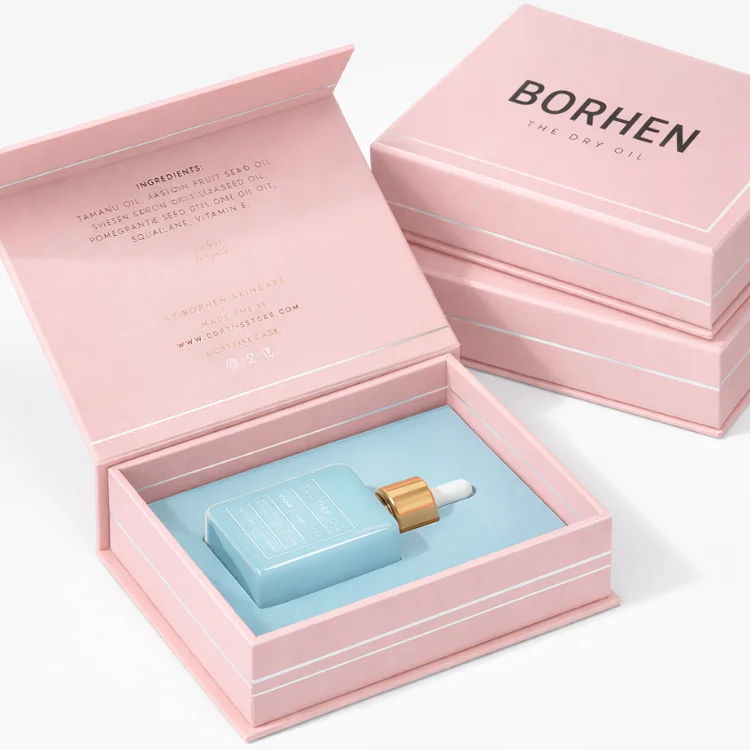
Custom Cosmetic Packaging Boxes
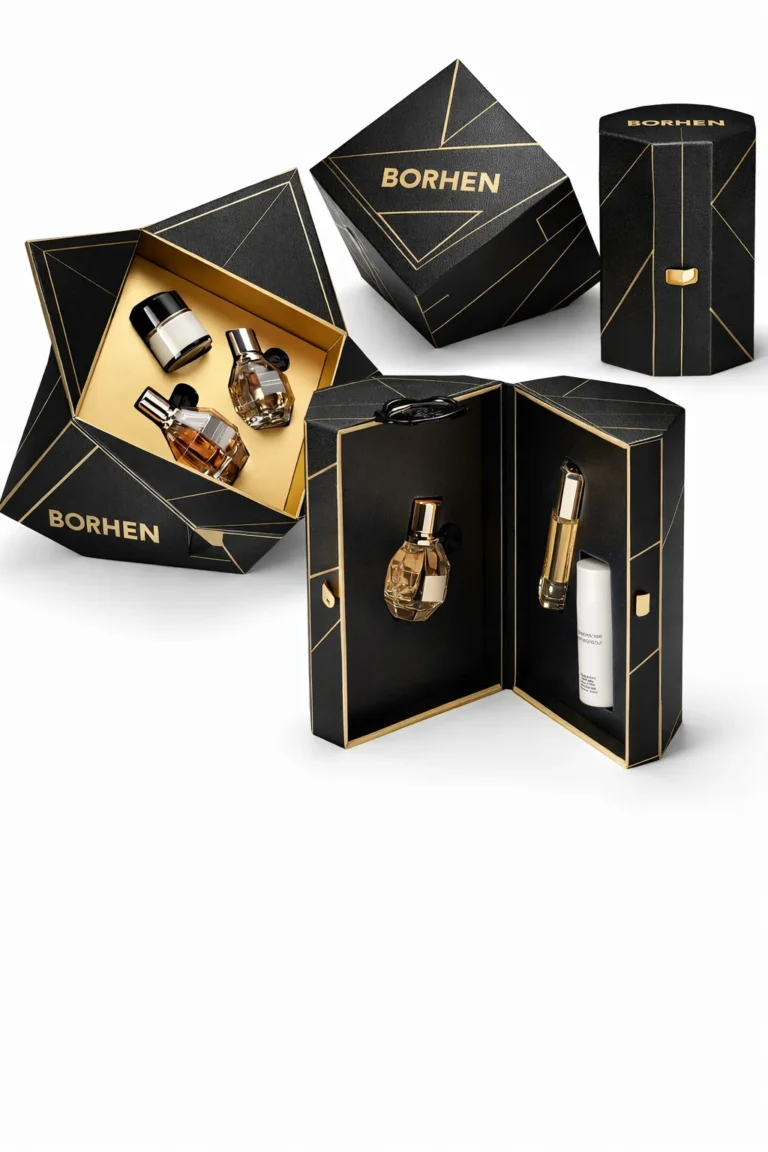
At Borhen Pack, we understand that a great custom cosmetic packaging box is more than just outer protection — it’s part of how your product is judged before it’s ever used. The weight of the paperboard, the accuracy of the colors, the way the insert holds a glass bottle in place, even how the box opens in someone’s hands — all of these details quietly communicate quality, trust, and brand value. That’s why we approach cosmetic packaging boxes from a brand and execution perspective, not just a manufacturing one.
We work with cosmetic startups, DTC beauty brands, design studios, and sourcing teams who need packaging that looks refined, performs reliably, and stays consistent across repeat orders. From folding carton boxes for daily skincare products, to rigid cosmetic boxes with custom inserts, magnetic gift boxes, set packaging, and eco-friendly paper solutions, we design and manufacture packaging that fits how cosmetics are actually sold today — online, in retail stores, through PR kits, and as gift sets. Every structure we produce is based on real product sizes, filling methods, shipping conditions, and market expectations, so the packaging is not only attractive, but practical to scale.
As your manufacturing partner, we don’t just “make boxes.” We help you turn your cosmetic packaging design and brand positioning into a solution that can be produced smoothly, shipped safely, and reordered with confidence. Whether you’re launching your first cosmetic product with a controlled MOQ, or upgrading your packaging to achieve a more premium retail presence, we guide you through materials, inserts, finishes, and production details — so your custom cosmetic packaging boxes protect your products, elevate your brand image, and support long-term growth without surprises.
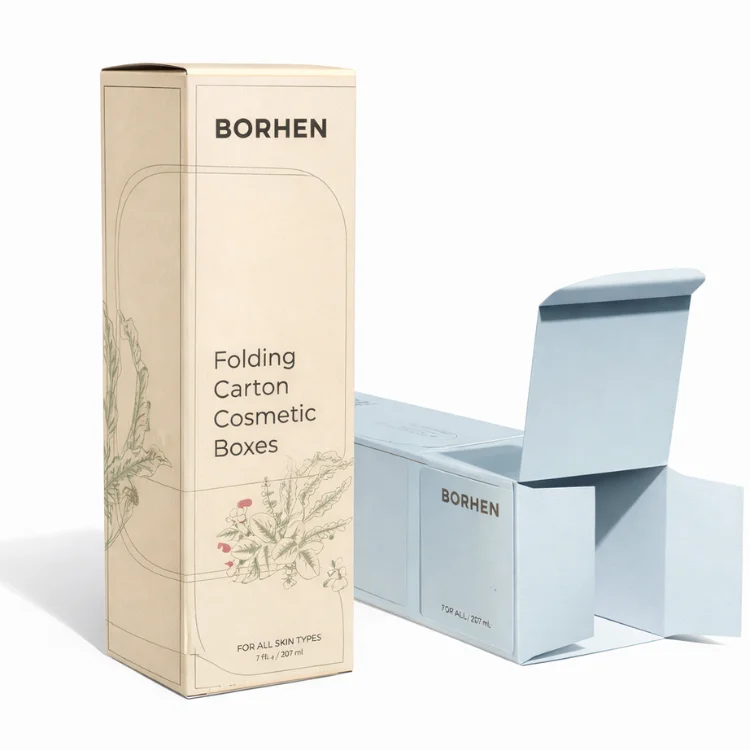
Folding Carton Cosmetic Boxes
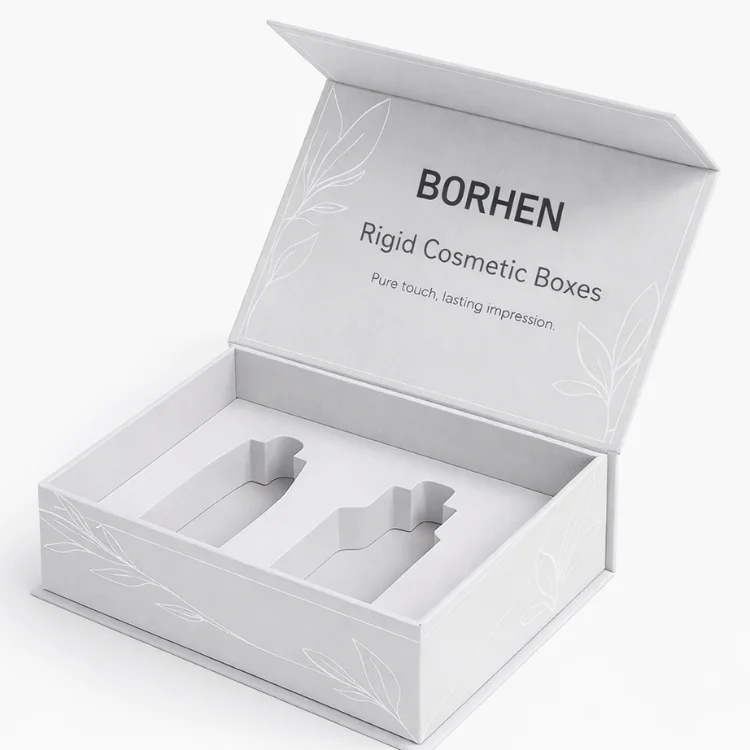
Rigid Cosmetic Boxes (Set-Up Boxes)
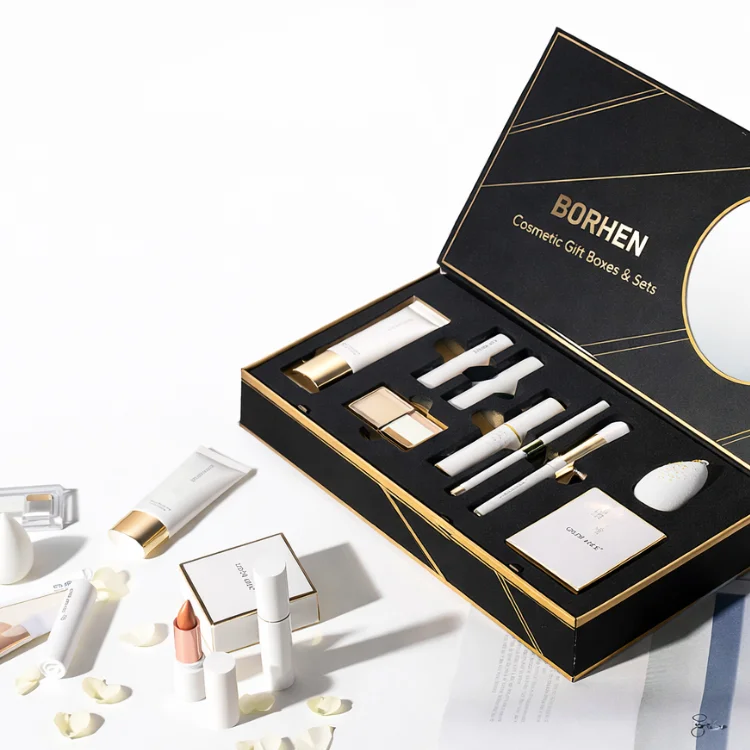
Cosmetic Gift Boxes & Sets
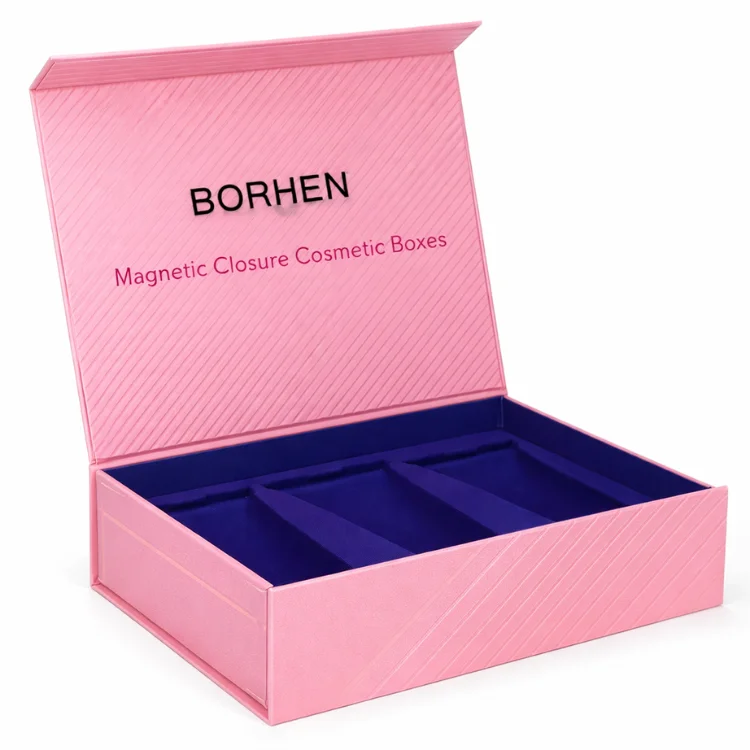
Magnetic Closure Cosmetic Boxes
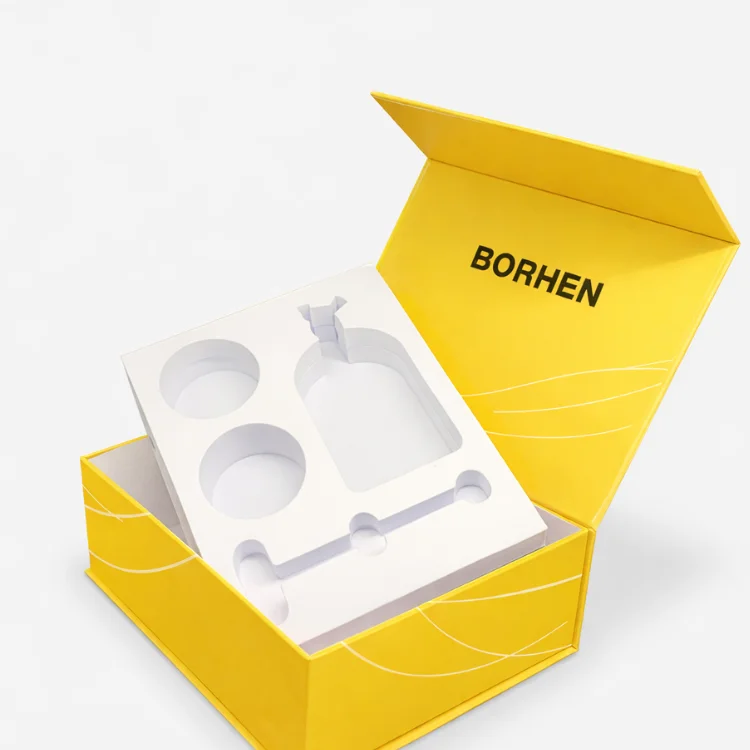
Cosmetic Boxes with Custom Inserts
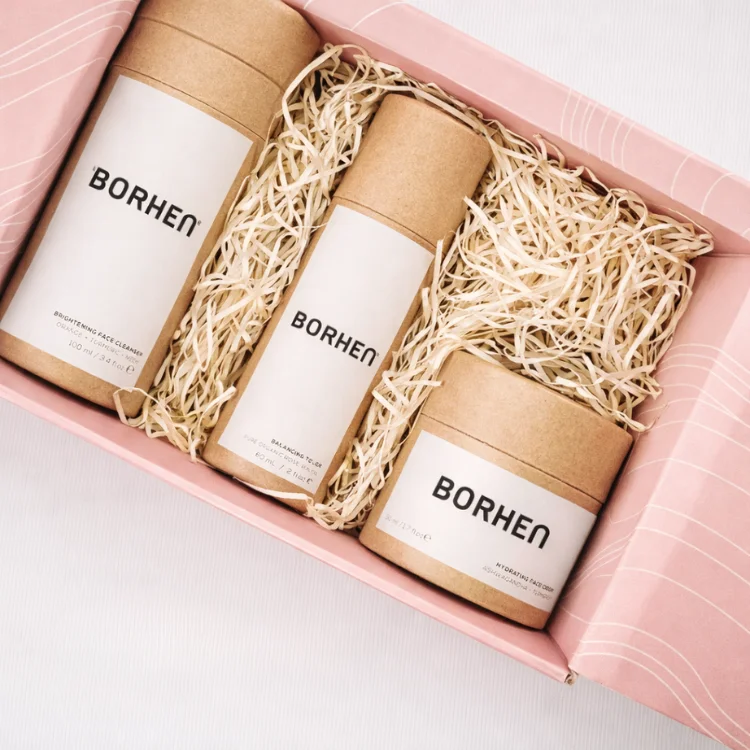
Eco-Friendly Cosmetic Packaging Boxes
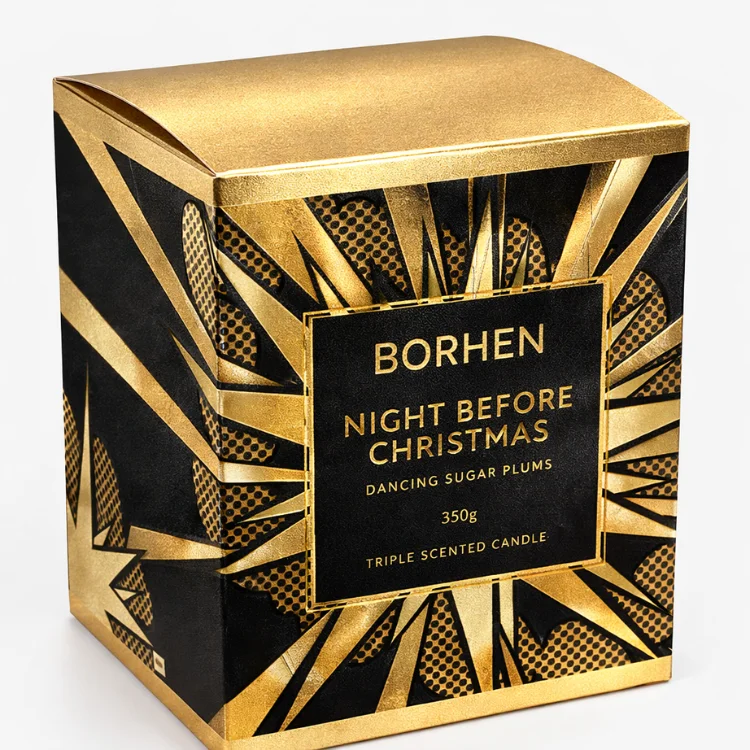
Luxury Finishing Cosmetic Boxes
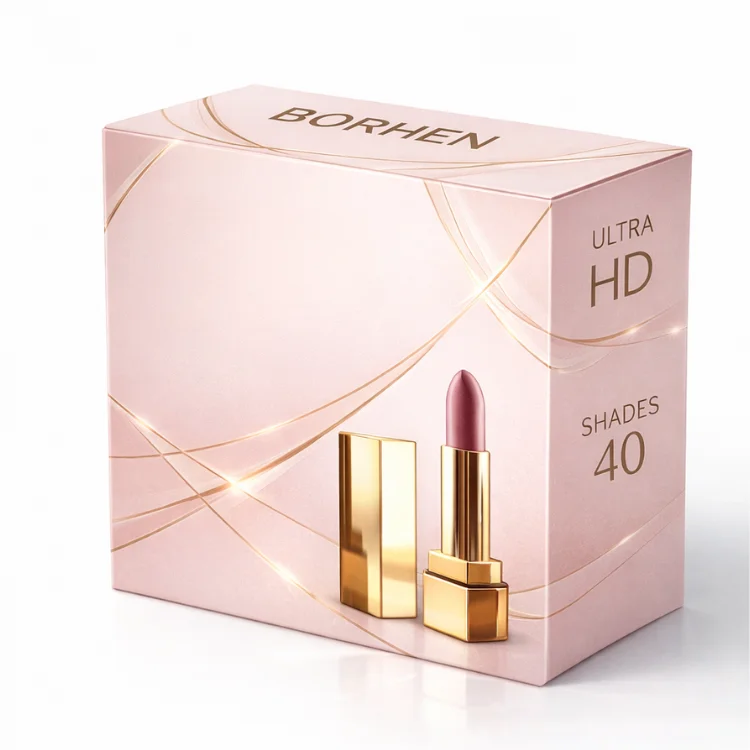
Industry-Specific Cosmetic Packaging Boxes
Build Custom Cosmetic Packaging Boxes That Truly Elevate Your Brand
At Borhen Pack, we understand that a successful custom cosmetic packaging box isn’t just about holding a product — it’s about protecting value, shaping first impressions, and reinforcing your brand the moment the box is opened. In today’s beauty market, customers don’t accept generic packaging. They expect clean structure, premium materials, accurate colors, secure inserts, and an unboxing experience that feels intentional and trustworthy. That’s why every custom cosmetic packaging box we manufacture is built around real brand use cases, proven structures, and practical production logic, not just visual concepts.
Whether you’re launching a new DTC skincare brand, upgrading from stock packaging, or preparing a premium cosmetic gift set, we help you create packaging that looks right, feels right, and works at scale. We work closely with cosmetic brands, design studios, and sourcing teams to translate design ideas into packaging that can actually be produced consistently — without surprises in color accuracy, structural strength, or delivery timelines. Our approach is guided by how cosmetic products are sold, shipped, displayed, and reordered in real markets, not just how they appear in mockups.
We also make sure your custom cosmetic packaging boxes are production-ready and export-friendly. From material selection and insert protection to box strength and shipping efficiency, we help you launch, test, and scale your packaging with confidence — knowing your boxes are stable, repeatable, and suitable for long-term brand growth across retail, ecommerce, and international markets.
💡 Our Most In-Demand Custom Cosmetic Packaging Box Types
1️⃣ Rigid Cosmetic Packaging Boxes – Premium, durable boxes for skincare, makeup, and high-end beauty products.
2️⃣ Drawer-Style Cosmetic Packaging Boxes – Sliding drawer designs for modern brands and elevated unboxing experiences.
3️⃣ Magnetic Closure Cosmetic Packaging Boxes – Gift-ready boxes with clean lines and smooth open-close function.
4️⃣ Foldable / Flat-Pack Cosmetic Packaging Boxes – Cost-efficient structures ideal for startups and overseas shipping.
5️⃣ Cosmetic Packaging Boxes with Custom Inserts – EVA foam, paperboard, or molded inserts to secure bottles, jars, and sets.
6️⃣ Eco-Friendly Cosmetic Packaging Boxes – recyclable materials, and plastic-free insert solutions.
7️⃣ Travel & Compact Cosmetic Packaging Boxes – Small formats for sample kits, influencers, subscriptions, and promotions.
8️⃣ Cosmetic Gift Set Boxes – Multi-SKU boxes for collections, holidays, PR kits, and limited editions.
🎯 MOQ & Customization Options (Built for Real Beauty Brands)
At Borhen Pack, we keep custom cosmetic packaging box projects practical, flexible, and brand-friendly:
Product MOQ Most custom cosmetic packaging boxes start from 500–1,000 pieces, depending on structure and materials.
Fully Customized Printing & Materials Custom colors, logo finishes, and specialty papers typically start from 2,000–3,000 pieces.
Customization Options Available
- Box structures (rigid, drawer, magnetic, foldable)
- Insert materials (EVA foam, paperboard, molded pulp)
- Logo finishes (hot stamping, embossing, debossing, UV)
- Paper, wrapped, or specialty surface materials
Included Support Every project includes structural advice, insert fitting guidance, material recommendations, sampling coordination, and production consistency checks — so your custom cosmetic packaging boxes protect your products, present your brand correctly, and reorder smoothly as your business grows.
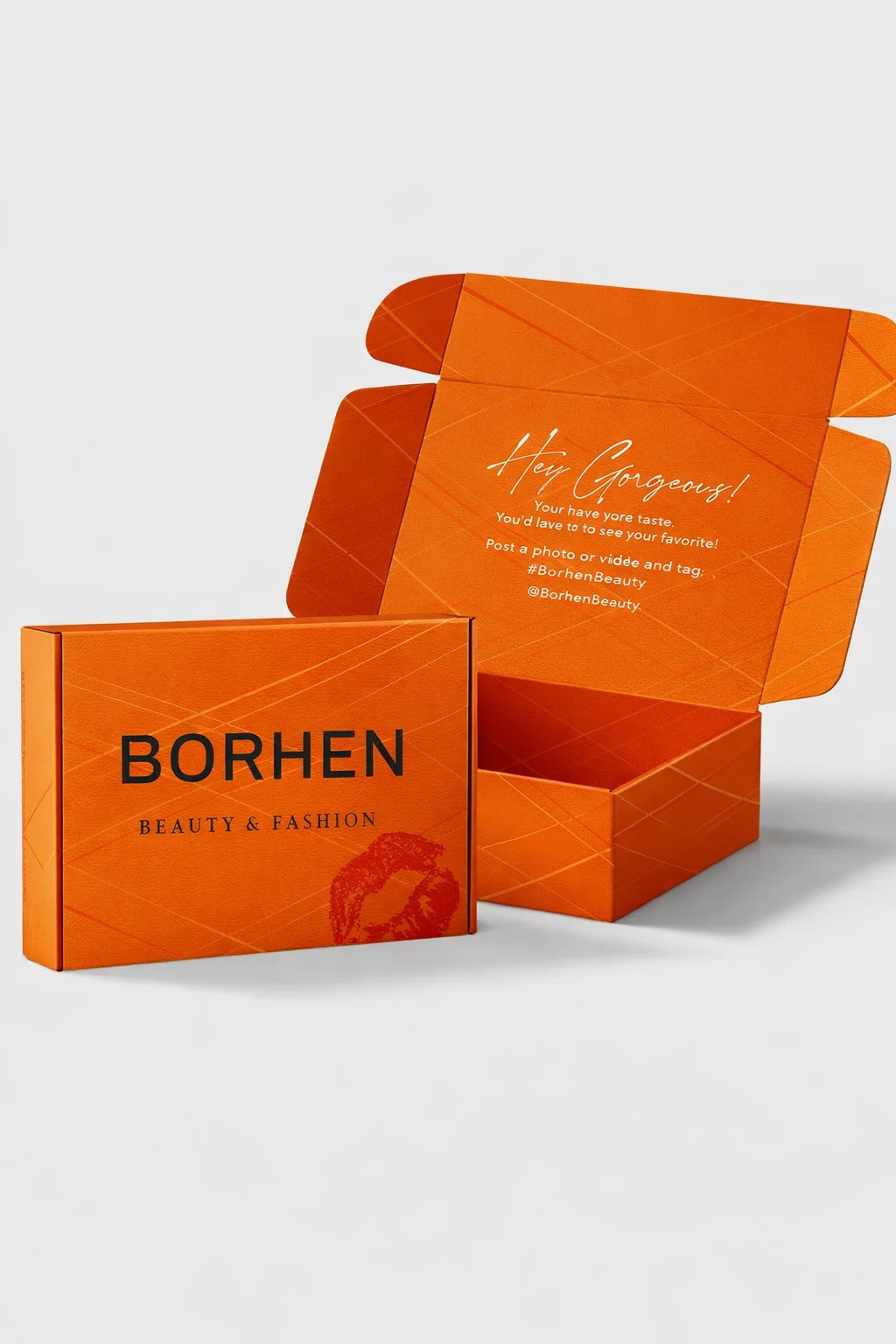
More Than Just a Custom Cosmetic Packaging Boxes Manufacturer
At Borhen Pack, we don’t just manufacture custom cosmetic packaging boxes — we help shape how customers experience your brand from the very first interaction. Every folding carton, rigid box, magnetic box, or custom insert we produce is designed to protect your cosmetic products, elevate perceived quality, and create an unboxing experience that feels intentional, premium, and trustworthy across e-commerce, retail, and gifting scenarios.

✅ Build Packaging That the Market Already Accepts
We design custom cosmetic packaging boxes based on real market usage, not assumptions. By working closely with cosmetic brands, DTC operators, designers, and sourcing teams, we understand what actually works — from box structures that ship efficiently, to inserts that secure glass bottles and jars, to finishes that customers instantly recognize as “high quality.” Whether it’s minimalist skincare packaging, retail-ready makeup boxes, or giftable cosmetic sets, we help you launch packaging that fits how beauty products are bought, sold, and reordered today.

✅ Low MOQ That Makes Brand Growth Practical
We make it easier to start smart and scale smoothly. Many of our custom cosmetic packaging box projects can begin from 500–1,000 pieces, allowing brands to test new products, launch limited collections, or upgrade from stock packaging without heavy inventory pressure. As demand grows, moving to 2,000–3,000+ pieces with fully customized materials, colors, and finishes is straightforward — without changing suppliers, structures, or production logic. The goal is simple: no dead ends as your brand grows.
✅ Quality & Consistency You Can Reorder With Confidence
Cosmetic packaging isn’t a one-time order — it’s a long-term system.
That’s why we focus on production consistency from the very beginning. We control materials, structural tolerances, insert fitting, and finishing details so your packaging looks and feels the same across repeat orders. The result is packaging that protects your products, reduces damage risk, and maintains brand consistency as you scale across SKUs, launches, and sales channels.

✅ Export-Ready Production for Global Brands
We build custom cosmetic packaging boxes with international shipping and distribution in mind. From material durability and box strength to packing methods and volume efficiency, we help ensure your packaging is suitable for overseas transport and global fulfillment. Whether you’re selling in the US, Europe, the Middle East, or through cross-border e-commerce, we help you avoid packaging issues that cause delays, damage, or unexpected costs — so your products arrive exactly as your brand intends.
✨ Build Custom Cosmetic Packaging Boxes That Truly Elevate Your Brand
When you work with Borhen Pack, you’re partnering with a custom cosmetic packaging boxes manufacturer that understands packaging is never an afterthought — it’s part of the product experience. We help turn cosmetic packaging ideas into boxes that are structurally reliable, visually refined, and ready for global shipping. Our focus is simple: protection, presentation, and consistency, so your product feels premium the moment the box is opened.
Whether you’re launching a new DTC skincare brand, upgrading from stock packaging, or preparing a high-end cosmetic gift set, we design every cosmetic packaging box to feel intentional. From folding cartons and rigid boxes to magnetic closures and custom inserts, our solutions are built to hold bottles, jars, and sets securely, open smoothly, and create an unboxing experience customers remember — and trust.
🧱 Custom Structures That Support Real Brand Value
We don’t push one-size-fits-all box designs.
Every custom cosmetic packaging box starts with how your product is used, displayed, and shipped. We work with proven structures and refine them to fit your brand — adjusting box dimensions, opening styles, insert layouts, and materials to properly protect glass bottles, droppers, jars, or multi-piece sets.
Our team guides you through insert options such as EVA foam, paperboard, molded pulp, or plastic-free solutions, balancing protection, cost, and presentation. If there’s a better way to improve fit, reduce movement, strengthen durability, or elevate the unboxing experience, we explain it clearly and help you choose the right direction. This practical, collaborative process helps your packaging stand out from generic boxes and supports long-term brand credibility.
📦 Packaging That Grows With Your Brand
We believe great packaging should be launch-friendly and scalable. You can start with 500–1,000 pieces using flexible materials and standard structures to test the market or support a new product launch. When demand grows, scaling to 2,000–3,000+ pieces with fully customized papers, finishes, colors, and logo techniques is seamless — without redesigning everything from scratch.
Packaging Notes
- Standard custom cosmetic packaging boxes: starting from 500–1,000 pcs
- Fully customized materials, colors, or finishes: typically from 2,000–3,000 pcs
- Insert customization (EVA, paperboard, molded pulp): matched to product type and box structure
We coordinate structures, inserts, logo finishes, and outer cartons so your packaging stays cohesive, retail-ready, and consistent across repeat orders.
⚙️ A Clear, Reliable Production Process
Everything is handled through a clear, coordinated workflow — from structure confirmation and sampling to material approval, mass production, and quality checks. We communicate openly, flag risks early, and keep timelines realistic. Many of our clients see us not just as a supplier, but as an extension of their operations team, helping them avoid costly packaging mistakes and delays.
🌿 Built for Long-Term Growth, Not One-Off Orders
We measure success by how well your packaging performs over time.
That’s why we focus on stable structures, repeatable materials, flexible MOQs, and production consistency that supports reorders as your brand grows. Whether you sell through e-commerce, retail stores, international distributors, or gift channels, we help you build cosmetic packaging that scales smoothly and protects your brand reputation.
With Borhen Pack, your custom cosmetic packaging boxes are designed to launch smoothly, feel premium, and grow confidently with your business — not just for one project, but for the long run.
Who We Work With (And Why They Choose Us)
We work with startup founders, DTC sellers, and small creative brands who want to move fast — without worrying about complex supply chains.

For New Brands & First-Time Founders
You’re launching something new — and every dollar matters.
We make packaging simple, low-risk, and ready to test.
- MOQ from 500 units — ideal for first production runs
- Standard structures + custom branding — save time and design cost
- Free material samples — check quality before committing
💡 Why it works: lower upfront cost, faster approval, and clear next steps.

For DTC & E-Commerce Brands
You already know what sells — you just need packaging that fits your fulfillment flow.
- Fast sampling (7–10 days) for quick product drops
- Custom dieline & structural optimization to reduce shipping costs
- FSC-certified luxury finish options for better unboxing experiences
💡 We help you launch faster and look better online.

For Boutique & Established Teams
When you need precision and reliability for your repeat orders.
- Color-controlled reorders to maintain brand consistency
- QC + AQL reports for compliance and documentation
- Dedicated account manager for ongoing coordination
💡 We make sure every batch looks and feels exactly right.
FAQs Cosmetic Packaging Boxes.
For your convenience, we’ve gathered the most commonly asked questions about our Cosmetic Packaging Boxes.. However, should you have any further queries, please don’t hesitate to reach out to us.
1. What types of custom cosmetic packaging boxes do you manufacture?
At Borhen Pack, we manufacture a full range of custom cosmetic packaging boxes, including folding cartons, rigid boxes, drawer-style boxes, magnetic closure boxes, flat-pack boxes, travel-size packaging, and multi-SKU cosmetic gift set boxes. We also produce custom inserts designed to hold bottles, jars, droppers, tubes, and complete skincare or makeup sets securely. Whether you need simple DTC packaging or a premium retail gift box, we can build it.
2. Can you help us choose the right box structure and insert?
Yes — and this is one of the most important parts of our role.
We don’t expect you to be an expert in box structures or insert materials. We’ll guide you through options like EVA foam, paperboard inserts, molded pulp, or plastic-free solutions, and recommend structures based on product protection, presentation, shipping, and cost. Our goal is to make sure your cosmetic products fit securely and look right the moment the box is opened.
3. What’s your minimum order quantity (MOQ) for custom cosmetic packaging boxes?
Most custom cosmetic packaging box projects start from 500–1,000 pieces, depending on the structure, materials, and level of customization. For fully customized papers, Pantone colors, or special finishes, the MOQ is typically 2,000–3,000 pieces. We always explain these numbers clearly and help you choose a realistic starting point based on your brand stage.
4. Can we start with a small order and scale later?
Absolutely. Many of our clients start with smaller quantities to test a new product launch, limited edition, or packaging upgrade. We design structures and inserts that can scale smoothly — so when you reorder at higher volumes, you don’t need to change suppliers or redesign everything from scratch.
5. How long does it take from design to production?
On average, sampling takes 2–3 weeks, depending on the structure and materials. Mass production usually takes 20–30 days after sample approval. If you’re working toward a launch date, seasonal campaign, or retail deadline, let us know early — we’ll help plan a realistic timeline and flag any risks upfront.
6. Can you match our brand colors and logo finishes accurately?
Yes. We support Pantone color matching and a wide range of logo techniques, including hot stamping, embossing, debossing, spot UV, and specialty finishes. We always confirm materials and finishes during the sampling stage to ensure color accuracy and consistency before moving into mass production.
8. Will the boxes be strong enough for international shipping?
We design cosmetic packaging boxes with shipping in mind from the start.
That includes structural strength, insert stability, outer carton packing methods, and volume efficiency. Whether you’re shipping to the U.S., Europe, the Middle East, or other regions, we help reduce damage risk and avoid packaging-related issues during transit.
9. Do you work with design agencies or clients who already have artwork?
Yes. We work with both design agencies and brand owners. If you already have artwork, we’ll review it for production feasibility. If adjustments are needed for dielines, print setup, or finishing effects, we’ll explain them clearly so your design translates accurately into a finished box.
10. Do you ship globally and support international buyers?
Yes. We work with clients worldwide. We support export-ready packaging, documentation coordination, and international shipping workflows. Whether you’re a brand owner, distributor, or sourcing agent, we’re familiar with global processes and help keep the project smooth, predictable, and easy to manage.
What impressed us most was how clearly Borhen Pack explained every step of the packaging process. From structure selection to insert fitting and production timing, everything was transparent and well managed. The final cosmetic packaging boxes matched our expectations perfectly, and reordering has been smooth and consistent.
Daniel Rodriguez, Product Development Managerfrom United States
We were upgrading from stock packaging and needed something more premium without overcomplicating production. Borhen Pack guided us through materials, finishes, and inserts in a very practical way. The boxes feel solid, refined, and aligned with our brand, and the production quality has stayed consistent across repeat orders.
Emily Thompson, Brand Operations Directorfrom United Kingdom
Reliability was our main concern when working with an overseas manufacturer. Borhen Pack delivered exactly what was approved during sampling, with no surprises in structure or print quality. Communication was clear, timelines were realistic, and the cosmetic packaging boxes arrived well-protected and ready for distribution.
Lucas Meyer, Sourcing & Procurement Managerfrom Germany
As a design-led team, we needed a manufacturer who could accurately execute our artwork and finishes. Borhen Pack reviewed our files carefully, explained production limits clearly, and suggested improvements that actually made the final packaging better. The result was clean, precise, and production-ready.
Sophie Laurent, Creative Project Managerfrom France
What we value most is long-term consistency. Borhen Pack didn’t just help us with a one-time project — they helped us build packaging that we can reorder confidently as our product line grows. The structure, inserts, and overall quality have remained stable across multiple shipments.
Michael O’Connor, Commercial Directorfrom Australia
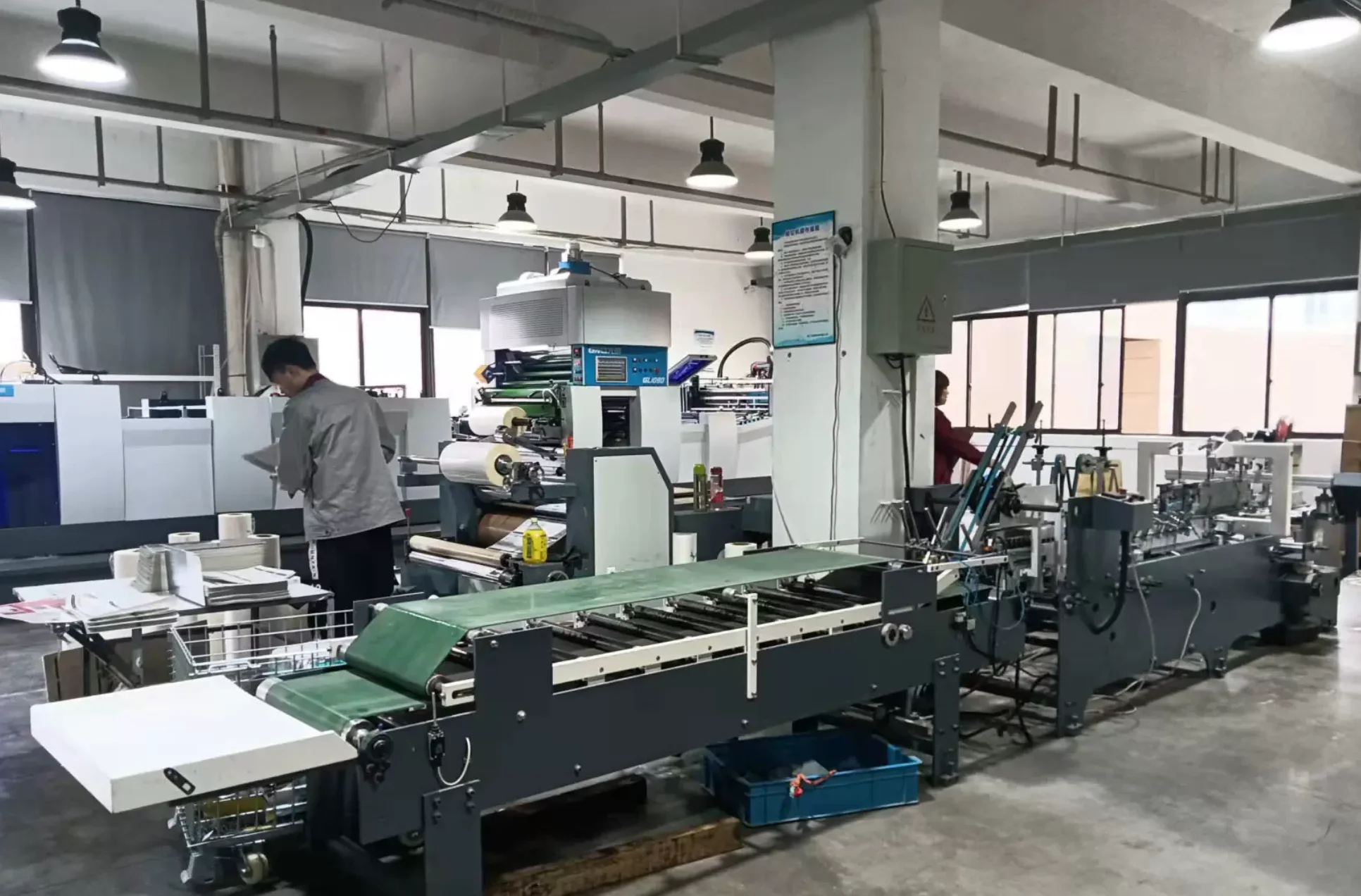
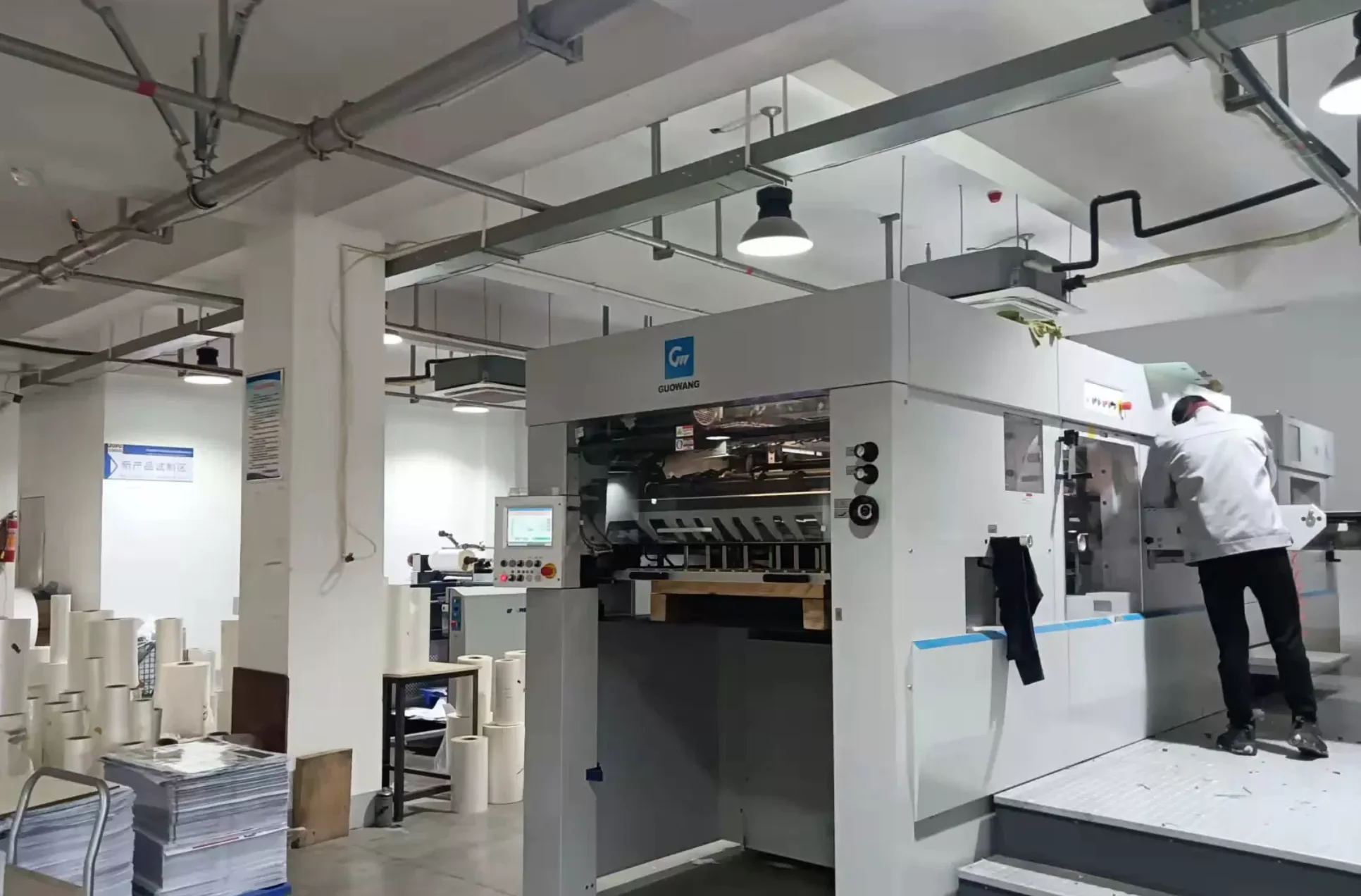
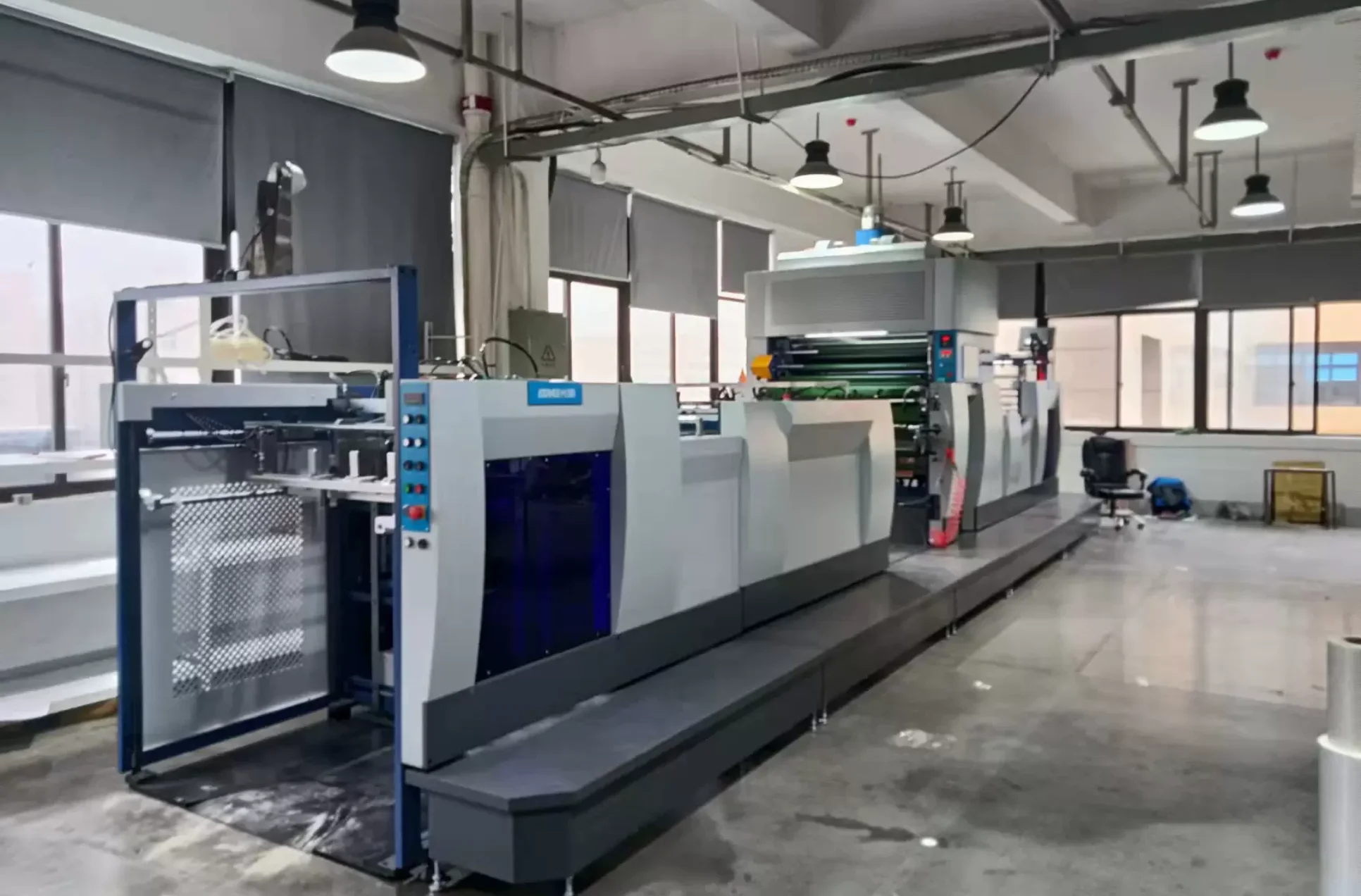
Borhen Pack in Numbers
Happy Clients
0
+
Million-dollar Buyers
0
+
Formulation
0
+
Professional Staffs
0
+
Your Ultimate Guide to Cosmetic Packaging Boxes
If you’re planning to develop custom cosmetic packaging boxes—whether you’re launching your first skincare product, upgrading from stock packaging, or preparing to scale across multiple SKUs—you’re not just choosing a box. You’re making a long-term decision that affects how your brand is perceived, how much customers are willing to pay, and how smoothly your operations can grow. Packaging is one of the few elements customers touch before they ever experience your product, and that first impression matters more than most brands expect.
We’ve seen cosmetic packaging evolve far beyond basic protection. Today, packaging is expected to communicate quality, support pricing, survive global logistics, and remain consistent across reorders. At Borhen Pack, we work with startup founders building their first hero product, DTC and Amazon operators optimizing for reviews and logistics efficiency, design agencies translating brand concepts into real production, and established cosmetic brands managing multi-market distribution. Across all of these projects, one thing is clear: cosmetic packaging succeeds only when design, structure, materials, and manufacturing reality are aligned.
This guide is built from what we’ve learned behind the scenes—where cosmetic packaging projects succeed, where they quietly fail, and why problems often appear only after launch. We’ve seen how the wrong box structure increases shipping damage, how poor insert design leads to leakage and returns, how color inconsistency weakens brand trust over time, and how choosing the wrong packaging manufacturer creates delays that compound as a brand grows. These are not theoretical risks. They are operational realities that shape whether packaging supports growth or slows it down.
Table of Contents
What Problems Do Cosmetic Packaging Boxes Actually Solve?
When I speak with cosmetic brand founders or operators, I often notice that packaging is discussed last, almost as a finishing step. In reality, packaging decisions quietly shape whether a product succeeds or struggles long before marketing or reviews come into play. Cosmetic packaging boxes are not just containers. From a business perspective, they exist to solve fundamental problems related to product-market fit and risk control, and ignoring those problems almost always leads to higher costs later.
In my experience, the real value of cosmetic packaging boxes shows up in three areas that are deeply connected: protecting the product, supporting perceived value, and establishing trust. These are not abstract concepts. They directly affect returns, pricing power, customer feedback, and repeat purchases.
Solving the Risk of Product Damage Before It Becomes a Customer Issue
The first and most obvious problem cosmetic packaging boxes solve is physical protection, but this is often misunderstood as a purely technical concern. Cosmetics frequently involve glass bottles, droppers, pumps, or liquid formulas that react poorly to impact, pressure, or movement. Once a product leaves the warehouse, it enters an unpredictable environment of sorting machines, long-distance transport, and last-mile delivery.
I’ve seen brands assume that a box that looks sturdy is sufficient, only to discover damage rates increasing once orders scale. Protection is not just about thickness. It’s about structure, internal spacing, insert fit, and how force is distributed during transit. A well-designed cosmetic packaging box reduces movement, stabilizes the product, and absorbs shock in a controlled way.
From a risk-control standpoint, packaging that fails here doesn’t just cause broken units. It triggers refunds, replacements, negative reviews, and customer service costs. These issues often surface weeks or months after launch, making them harder to trace back to the original packaging decision.
Supporting Perceived Value at the Exact Moment Customers Judge the Product
Before a customer experiences the texture, scent, or performance of a cosmetic product, they experience the packaging. This moment matters more than many brands realize. I’ve learned that customers subconsciously decide whether a product is “worth it” within seconds of opening the box. Weight, rigidity, surface feel, and opening resistance all send signals.
Cosmetic packaging boxes help solve the problem of value communication. If a product is priced as premium but arrives in packaging that feels light, generic, or poorly finished, customers experience cognitive dissonance. They may not articulate it clearly, but the mismatch lowers perceived value. On the other hand, packaging that feels intentional and well-executed reinforces the price point without needing explanation.
From a product-market fit perspective, packaging acts as a silent salesperson. It aligns customer expectations with brand positioning. When that alignment is missing, brands often compensate with discounts, promotions, or heavier advertising spend, when the real issue lies in packaging design and material choices.
Building Trust Before the Product Is Ever Tested
Trust is one of the most underestimated problems cosmetic packaging boxes solve. Customers have no way to verify a product’s quality at the moment of unboxing, so they rely on signals. Packaging is one of the strongest of those signals. Clean printing, accurate colors, tight tolerances, and a smooth opening experience communicate professionalism and reliability.
I’ve noticed that customers are far more sensitive to packaging flaws than brands expect. Slight dents, loose inserts, inconsistent finishes, or awkward opening mechanisms all introduce doubt. Even if the product works well, that doubt influences how the entire experience is remembered and reviewed.
Cosmetic packaging boxes help remove that doubt. When packaging feels solid and consistent, customers feel reassured that the brand has control over its process. That reassurance happens before the first application, which is why packaging plays such a critical role in long-term trust and repeat purchasing behavior.
Preventing Hidden Costs That Only Appear After Launch
One of the most costly mistakes I see brands make is evaluating packaging purely by unit cost. Cosmetic packaging boxes also solve a financial problem that only becomes visible after launch. Poor packaging decisions lead to hidden costs that accumulate quietly over time, including higher return rates, more customer complaints, replacement shipments, and reduced lifetime value.
From my perspective, packaging should be evaluated as part of a broader risk-management system. A box that costs slightly more but reduces damage, confusion, or dissatisfaction often saves money overall. Brands that ignore this trade-off often find themselves paying more in refunds and reputation damage than they saved upfront.
These costs rarely appear in initial forecasts, which is why packaging mistakes are often repeated. Understanding the protective and perceptual role of packaging early helps prevent these downstream losses.
Enabling Scalability Without Constant Redesign
Another key problem cosmetic packaging boxes solve is scalability. Packaging that works for a small launch does not automatically work for growth. As order volumes increase, sales channels expand, and new SKUs are added, inconsistencies in structure, materials, or sourcing become more visible and more expensive.
I believe good packaging decisions are those that can be repeated reliably. Cosmetic packaging boxes designed with consistency and production reality in mind allow brands to reorder without surprises. That stability supports faster launches, smoother operations, and better supplier relationships over time.
From a product-market fit standpoint, scalability is part of validation. Packaging that cannot scale smoothly becomes a bottleneck, even if the product itself performs well.
Why Packaging Problems Are Really Business Problems
Cosmetic packaging boxes solve more than physical challenges. They solve perception gaps, trust gaps, and operational risks that directly affect how a product performs in the market. When packaging is treated as an afterthought, brands often experience symptoms that seem unrelated, such as pricing resistance, weak reviews, or slow repeat sales.
In my experience, these issues are rarely about the formula alone. They are often the result of packaging decisions made without a full understanding of their business impact. When brands approach cosmetic packaging as a strategic system rather than a decorative layer, they gain more control over outcomes and reduce avoidable risk.
Understanding what problems cosmetic packaging boxes actually solve is the first step toward making smarter decisions that support long-term growth instead of short-term fixes.
What to Consider Before You Start Designing Cosmetic Packaging
In my experience, the most expensive packaging mistakes are not caused by poor design skills. They are caused by designing too early, before the right questions are answered. Cosmetic packaging often looks flawless on screen, but reality has very little respect for mockups. Once a box enters production, shipping, storage, and retail environments, every early assumption is tested. That is why I believe the real work of packaging design begins before the first design file is opened.
When brands skip this preparation phase, redesigns become inevitable. Those redesigns cost time, money, momentum, and sometimes even market trust. Avoiding them requires clarity on a few foundational elements that shape whether packaging works in the real world or collapses under it.
Defining Real Product Dimensions Instead of Ideal Ones
One of the first issues I always look at is product size tolerance. Cosmetic containers rarely come in perfectly uniform dimensions. Glass thickness varies, pumps sit slightly higher or lower, caps change across suppliers, and even small differences can create major fit problems once thousands of units are produced.
I have seen packaging that fit perfectly during sampling fail during mass production simply because real-world tolerance ranges were not considered. Inserts became too tight, bottles leaned, or lids pressed against box walls. These are not design errors; they are planning errors. Understanding the acceptable range of variation before design allows packaging to remain functional across batches, suppliers, and reorders. Without that buffer, every production run becomes a risk.
Understanding How Weight Changes Packaging Behavior
Weight is another factor that designers often underestimate. A lightweight cream jar behaves very differently from a dense glass serum bottle, even if they share similar dimensions. Weight affects how a box responds to pressure, how inserts deform over time, and how cartons perform when stacked during shipping.
I’ve watched brands redesign beautiful packaging because it collapsed or warped during logistics. The design itself was not flawed visually, but it was structurally underprepared for the physical reality of distribution. Considering weight early allows packaging to be engineered with appropriate board thickness, reinforcement, and internal support so it performs consistently beyond the studio environment.
Recognizing Fragility as a System, Not a Single Risk
Fragility is not just about glass breaking. It includes leakage, pump damage, cap loosening, and internal movement that creates wear over time. Cosmetic packaging must account for vibration, drops, and long-distance transport, especially in e-commerce and cross-border shipping.
I’ve learned that fragility should be addressed as a system, not an isolated concern. Box structure, insert design, internal spacing, and even opening direction all interact to protect the product. Designing without understanding this system often leads to packaging that looks secure but fails under real shipping conditions. When fragility is addressed early, packaging becomes preventative rather than reactive.
Designing With Sales Channels as a Primary Constraint
One of the most common redesign triggers I see is channel mismatch. Packaging designed for retail shelves often performs poorly in e-commerce fulfillment. Conversely, packaging optimized for shipping can look underwhelming in physical stores or gifting scenarios.
I always ask where the product will actually be sold before design begins. Online sales demand durability and clean unboxing. Retail demands visual impact and shelf presence. Gift channels demand presentation and emotional engagement. When this is not clarified early, brands end up modifying structures, materials, or finishes later, often at significant cost. Channel clarity upfront allows packaging to serve its purpose without compromise.
Anchoring Design Decisions to a Realistic Price Position
Packaging design must live within the economics of the product. I’ve seen brands design packaging that belongs to a higher price tier than their market will realistically support. The result is either margin erosion or forced downgrades late in the process, neither of which ends well.
Understanding the target price range before design helps guide decisions around structure complexity, material choice, and finishing techniques. Packaging should reinforce value, not quietly consume it. When price positioning is clear early, designers can create packaging that feels intentional and appropriate rather than overbuilt or underwhelming.
Respecting Manufacturing Reality From the Start
Not everything that can be designed can be produced reliably at scale. Certain folds, tolerances, coatings, and layered constructions look impressive in concept but introduce instability in mass production. When manufacturing reality is ignored early, brands often face repeated sampling cycles, inconsistent quality, and production delays.
I’ve learned that the most successful packaging designs are not the most complex, but the most repeatable. Understanding production constraints before design begins ensures the final packaging can be produced not just once, but again and again with the same quality. That repeatability is what turns packaging into a system rather than a one-time achievement.
Planning Beyond the First Order
Perhaps the most overlooked consideration is future growth. Many brands design packaging only for an initial launch, without considering how it will perform when volumes increase, SKUs expand, or markets change. What works for a few hundred units may not work for several thousand.
I always think of cosmetic packaging as infrastructure. If it cannot scale smoothly, it will eventually slow the business down. Planning for reorders, cost optimization, and consistency early prevents the need for disruptive redesigns later. Packaging that supports growth quietly becomes a long-term asset instead of a recurring problem.
Why Early Decisions Shape Long-Term Outcomes
Every redesign I’ve encountered can be traced back to a decision that was delayed or overlooked early on. Size tolerance, weight, fragility, channels, pricing, production, and scalability are not creative limitations. They are the framework that allows design to succeed in the real world.
In my experience, brands that invest time in this early planning phase move faster later. They launch with fewer surprises, control risk more effectively, and maintain consistency as they grow. Cosmetic packaging design is not just about aesthetics. It is about foresight. And foresight always begins before design.
Choosing the Right Box Structure for Different Cosmetic Products
In my experience, box structure is one of the most underestimated decisions in cosmetic packaging. Brands often treat structure as a styling choice, when in reality it is one of the most powerful cost and functionality levers in the entire packaging system. Once a structure is chosen, many things are locked in: material usage, labor complexity, packing speed, shipping efficiency, and even how customers interpret the value of the product.
I’ve seen beautifully branded cosmetic products struggle not because of formulation or marketing, but because the box structure quietly worked against the business. Choosing the right structure is less about what looks impressive and more about what performs reliably in the real world.
Why Box Structure Is a Business Decision Before It Is a Design Decision
Every box structure solves a different combination of problems. Some structures prioritize cost efficiency and speed. Others prioritize protection, presentation, or emotional impact. The mistake I see most often is choosing a structure based on visual reference images without asking what problem that structure is meant to solve.
Structure directly affects unit cost, damage rates, storage volume, and fulfillment efficiency. A structure that looks premium but requires extra manual steps can slow down packing. A structure that feels solid on a desk may collapse when stacked in cartons. That’s why I always evaluate structure through a business lens first, and a design lens second.
Folding Cartons as the Backbone of Scalable Cosmetic Packaging
For the majority of cosmetic products, folding cartons are the most rational starting point. I often recommend folding cartons for lightweight skincare, daily-use products, and SKUs that rely on volume rather than presentation theatrics. When designed correctly, folding cartons can deliver clean branding, strong shelf presence, and excellent shipping efficiency.
What many people underestimate is how much range folding cartons actually offer. Paper weight, structural folds, internal supports, and surface finishes can dramatically change the feel of a carton. I’ve seen folding cartons that feel disposable, and others that feel refined and intentional. The difference usually lies in proportion, rigidity, and how well the structure matches the product inside.
From a cost-control standpoint, folding cartons are hard to beat. They pack flat, ship efficiently, and scale well as volumes increase. For brands selling primarily through e-commerce or large retail channels, folding cartons often provide the best balance between function and margin.
Rigid Boxes and When Their Weight Actually Adds Value
Rigid boxes have a clear role, but that role is often misunderstood. I associate rigid structures with products that need either additional physical protection or a clear premium signal. Heavy glass skincare, high-priced serums, or limited-edition collections often benefit from the compression strength and tactile weight of rigid boxes.
However, rigid boxes come with trade-offs. They require more material, more storage space, and higher shipping costs. I’ve seen brands use rigid boxes for mid-priced products where the added cost did not meaningfully increase perceived value. In those cases, the structure worked against margins rather than supporting them.
Rigid boxes work best when the product price, brand positioning, and customer expectations align with the added cost and bulk. When they are used simply because they “feel premium,” they often create inefficiencies that surface later.
Magnetic Boxes as a Marketing Tool, Not a Default Structure
Magnetic closure boxes are frequently chosen for their unboxing appeal. When used correctly, they can be powerful. I’ve seen them work well for influencer kits, press launches, and curated gift sets where the opening moment is part of the marketing strategy.
That said, magnetic boxes are rarely the most practical choice for everyday SKUs. They increase production complexity and shipping volume, and they are not space-efficient in warehousing. Brands that choose magnetic boxes for regular product lines often run into issues with storage cost, fulfillment speed, and freight pricing.
In my view, magnetic boxes should be treated as campaign tools rather than core packaging infrastructure. They make sense when presentation is the primary objective and volumes are controlled.
Drawer-Style Boxes and the Psychology of Controlled Unboxing
Drawer-style boxes introduce a different kind of interaction. I tend to see them used by brands that want to slow the unboxing experience and create a sense of intentionality. The sliding motion invites curiosity and gives the product a staged reveal.
Functionally, drawer boxes can be very stable, but only when tolerances are managed carefully. Loose drawers feel cheap. Tight drawers frustrate users. I’ve seen drawer-style packaging fail simply because humidity or material variation was not accounted for in the fit.
Drawer boxes work best for sets or curated products where the unboxing experience is part of the brand story and where production consistency can be maintained over time.
Matching Structure to Product Weight and Center of Gravity
One detail that often gets overlooked is how a product’s center of gravity interacts with structure. Tall serum bottles, droppers, and pumps can create top-heavy packaging that tips or shifts if the structure is not designed to counterbalance it.
I’ve seen packaging that looked stable in prototypes but leaned or rattled in real use. These issues usually trace back to structural decisions that didn’t account for weight distribution. Choosing the right structure allows inserts and walls to work together to stabilize the product rather than fight against it.
Designing Structure Around How the Product Is Actually Sold
Structure must reflect the dominant sales channel. Packaging that performs well on a retail shelf may fail in e-commerce fulfillment. Packaging that survives parcel shipping may look underwhelming in-store.
I always ask where the product will spend most of its time. Will it be shipped individually to customers? Displayed in retail trays? Packed into gift sets? Structure should be optimized for the environment that matters most. When that question is not answered early, brands often end up redesigning after launch.
Avoiding Structural Overdesign That Increases Risk
One of the most common structural mistakes I see is overdesign. Extra layers, unnecessary folds, or complex mechanisms often look impressive but introduce risk. Each additional component increases the chance of misalignment, damage, or production inconsistency.
In my experience, the most successful cosmetic packaging structures are restrained. They focus on doing one thing well rather than many things poorly. Simplicity, when paired with good proportions and materials, often outperforms complexity in both cost and reliability.
Thinking About Structure as a Long-Term System
Box structure is not a one-time decision. It becomes part of a brand’s operational system. A structure that is difficult to store, ship, or reorder becomes a bottleneck as the business grows.
I’ve seen brands forced to change packaging mid-growth because their original structure was too expensive or inefficient at higher volumes. Choosing a structure that can evolve with scale allows brands to maintain consistency while improving margins over time.
Why Structure Should Always Match Product Reality
At the end of the day, the right box structure is the one that matches the product’s value, fragility, and usage context. Lightweight products benefit from efficient, well-designed cartons. Premium or fragile products benefit from stronger structures. Gift-oriented products benefit from presentation-driven designs.
I believe structure should quietly support the product rather than draw attention to itself. When structure aligns with reality, packaging becomes an asset. When it doesn’t, it becomes a recurring problem that no amount of design polish can fix.
Choosing the right box structure is not about choosing the most impressive option. It is about choosing the most appropriate one, and that decision shapes cost control, functionality, and brand perception more than most brands realize.
How Packaging Affects Pricing and Brand Positioning
In my experience, pricing discussions often start in the wrong place. Brands usually ask whether their product is too expensive, whether competitors are undercutting them, or whether marketing is failing to communicate value. What is often overlooked is that customers make a pricing judgment long before they read a product description or experience the formula. That judgment is shaped, quietly and powerfully, by packaging.
Packaging is one of the few elements that customers physically interact with before using a cosmetic product. Because of that, it becomes a primary reference point for whether a price feels justified. When packaging and pricing are aligned, customers accept the price naturally. When they are not, brands feel constant pressure to discount, explain, or defend their pricing.
Why Price Is Perceived Before It Is Rationalized
Customers rarely calculate value in a logical sequence. In reality, value perception happens instantly and emotionally. When I observe customer behavior, it’s clear that weight, rigidity, surface texture, and opening experience all contribute to an immediate internal assessment of worth.
If a cosmetic product is priced at a premium but arrives in packaging that feels light, thin, or imprecise, the customer experiences friction. They may not consciously articulate it, but something feels off. Conversely, packaging that feels deliberate and controlled creates a sense of reassurance that makes the price feel reasonable, even before the product is tested.
This is why packaging has such a strong influence on pricing acceptance. It sets the emotional baseline that all rational evaluation builds upon.
How Packaging Investment Can Quietly Redefine Your Brand Tier
One of the most interesting patterns I’ve seen is how packaging decisions slowly reposition a brand, often without intention. Brands that upgrade packaging materials, structure, and finishes often notice that customers begin to compare them with higher-tier competitors. The reverse is also true. Brands that underinvest in packaging are often pulled downward in perception, regardless of product quality.
Packaging acts as a visual and tactile shorthand for brand tier. Thicker materials, controlled tolerances, and clean finishes signal maturity and confidence. Inconsistent printing, loose inserts, or generic structures signal cost pressure or inexperience. Over time, these signals accumulate and redefine where a brand sits in the customer’s mental hierarchy.
Brand positioning is not declared. It is inferred. Packaging is one of the strongest sources of that inference.
The Hidden Margin Risk of Overdesigned Packaging
While packaging can elevate positioning, it can also damage margins when mismanaged. I’ve seen brands invest heavily in complex structures, multiple finishes, and premium materials without fully accounting for how those choices scale. At small volumes, the cost may seem manageable. At larger volumes, it becomes a structural burden.
Every additional packaging feature increases not only unit cost, but also operational complexity. More steps mean more labor, higher defect risk, slower packing, and increased logistics cost. When packaging cost grows faster than perceived value, margins shrink invisibly.
The most dangerous packaging decisions are not the expensive ones, but the ones that add cost without adding proportional perceived value. This is where many brands lose control of their margin strategy.
Why Precision Often Matters More Than Decoration
One of the most overlooked contributors to perceived value is precision. Customers respond strongly to how well a product fits inside its packaging. A bottle that sits firmly, aligns cleanly, and does not move communicates care and engineering. A product that rattles or leans undermines confidence immediately.
I’ve seen brands achieve stronger perceived value by improving structural precision rather than adding decorative finishes. Customers may not consciously notice tighter tolerances, but they feel the difference. Precision suggests intention, and intention supports higher pricing.
In many cases, investing in better structure and fit delivers more pricing power than investing in surface embellishment.
How Packaging Influences Willingness to Repurchase at Full Price
Initial purchase and repeat purchase are driven by different factors. For repeat purchases, packaging plays a subtle but important role. When packaging feels consistent and durable over time, customers develop trust. That trust reduces sensitivity to price changes and promotions.
Brands with well-aligned packaging often find that customers are less resistant to price increases. The product feels established and reliable. Brands with inconsistent or underwhelming packaging often rely more heavily on discounts to maintain volume.
From a margin perspective, packaging that supports repeat confidence is one of the most effective long-term pricing tools.
Designing Packaging That Can Grow With Pricing Strategy
Pricing rarely stays static. As brands grow, costs change, positioning evolves, and new markets are entered. Packaging that is designed only for the current price point can become a limitation when a brand wants to move upward.
I always consider whether a packaging system allows for gradual enhancement. Can materials be upgraded without changing the structure? Can finishes be refined without redesigning the box? Packaging that allows incremental improvement gives brands room to raise prices naturally over time.
This flexibility is often overlooked, but it protects margins by avoiding disruptive redesigns that confuse customers or inflate costs suddenly.
Why Underpackaging Is Just as Risky as Overpackaging
Many discussions focus on overpackaging, but underpackaging carries its own risks. When packaging feels cheaper than expected at a given price, customers feel overcharged. That feeling lingers, even if the product performs well.
Underpackaging forces brands into defensive positions. They explain pricing more, discount more frequently, or rely heavily on marketing to compensate. Over time, this erodes both margin and brand equity.
The goal is not to minimize packaging cost, but to optimize it relative to price and positioning.
Packaging as a Silent Margin Multiplier
When packaging is well aligned with pricing and brand position, it multiplies the effectiveness of every other investment. Marketing works better because expectations are met. Reviews improve because customers feel reassured. Discounts become less necessary because value is clear.
In my experience, packaging rarely creates margin problems on its own. It either amplifies good strategy or exposes weak alignment. Brands that treat packaging as part of their pricing system tend to operate with more confidence and less reactivity.
Why Packaging Carries the Price Before the Product Does
At the end of the day, customers hold the packaging before they experience the product. That moment matters more than many brands realize. Packaging sets the frame through which the product is judged.
I’ve learned that brands who respect this dynamic make calmer pricing decisions. They rely less on constant adjustment and more on alignment. Packaging becomes a quiet but powerful partner in margin strategy.
Packaging does not just protect the product. It protects the price.
Insert Design: Protection, Cost, and Sustainability Trade-Offs
In my experience, insert design is one of the most misunderstood parts of cosmetic packaging. Many brands treat inserts as a secondary detail, something to “fill the space” inside a box once the outer structure is decided. In reality, inserts are where most functional failures either begin or are prevented. They are responsible for stabilizing the product, managing movement, absorbing shock, and protecting the most fragile components of a cosmetic product throughout its entire journey.
When insert decisions are made casually, problems rarely show up in the sample stage. They appear later, after products have been shipped thousands of kilometers, stacked in warehouses, and handled by customers. By that point, the cost of fixing the problem is no longer theoretical. It shows up as returns, replacements, customer complaints, and damaged brand credibility.
Why Inserts Carry More Responsibility Than the Outer Box
The outer box provides structure, but the insert controls behavior. Cosmetic products are rarely static during shipping. Glass bottles shift, droppers vibrate, caps loosen, and internal pressure changes over time. The insert is the component that determines whether these forces are absorbed or amplified.
I’ve learned that even the strongest box cannot compensate for a poorly designed insert. A rigid box with a loose insert still allows internal movement, and that movement compounds with every vibration during transport. Inserts are not decorative elements. They are mechanical systems designed to control motion.
Understanding Micro-Movement and Its Long-Term Effects
One of the most overlooked risks in cosmetic packaging is micro-movement. Even when a product appears secure, small amounts of movement can occur inside the insert. Over the course of shipping, this movement repeats hundreds or thousands of times.
I’ve seen situations where products arrived intact, but internal stress caused gradual loosening of pumps, weakening of seals, or hairline cracks in glass. These failures often occur after the customer receives the product, leading to leakage days later. The brand is blamed, but the root cause lies in insert geometry and material resilience.
Good insert design eliminates not just visible movement, but repeated micro-movement that creates cumulative damage.
EVA Foam Inserts and the Reality of Maximum Shock Absorption
EVA foam is often considered the safest option, and in many cases it is. In my experience, EVA foam inserts perform exceptionally well for heavy glass bottles, tall droppers, and products with uneven weight distribution. The material absorbs shock, grips the product, and maintains shape under pressure.
However, EVA foam introduces trade-offs that are often underestimated. It increases material cost, adds thickness, and complicates recycling. For brands with sustainability goals, EVA foam can conflict with brand messaging. I’ve seen brands choose EVA foam purely out of fear, only to later realize that the level of protection exceeded the actual risk and inflated logistics costs unnecessarily.
EVA foam works best when the risk profile justifies it, not when it is used as a default solution.
Paperboard Inserts and the Importance of Structural Engineering
Paperboard inserts are frequently underestimated because they appear simple. In reality, well-engineered paperboard inserts can provide excellent protection for many cosmetic products, especially when weight and fragility are moderate.
What separates effective paperboard inserts from ineffective ones is design, not material. I’ve seen paperboard inserts fail because they relied on flat surfaces instead of tension, folds, and structural interlock. I’ve also seen paperboard inserts outperform foam when designed with proper geometry that locks the product in place.
Paperboard inserts offer a strong balance between cost efficiency, recyclability, and performance, but only when the design is intentional. Poorly designed paperboard inserts are one of the most common sources of hidden damage.
Molded Pulp Inserts and the Complexity of Sustainable Choices
Molded pulp inserts are often chosen to support sustainability positioning, and they can be very effective in the right context. They offer biodegradability, recyclability, and a natural aesthetic that resonates with eco-conscious consumers.
In my experience, molded pulp works best for products with relatively simple shapes and stable centers of gravity. However, molded pulp has limitations in precision and tolerance. Variations in fiber density and moisture can affect fit, especially in humid environments.
I’ve seen brands adopt molded pulp inserts without sufficient testing, only to face movement issues during international shipping. Sustainable materials do not eliminate the need for engineering. They require more testing, not less.
Plastic-Free Insert Systems and the Cost of Innovation
Plastic-free insert solutions are evolving rapidly, and I’ve been involved in projects where brands wanted to push innovation aggressively. These systems often combine layered paper structures, fiber composites, or hybrid designs to eliminate plastic entirely.
While promising, these solutions demand longer development cycles and more sampling. I’ve seen brands underestimate this timeline and attempt to rush plastic-free inserts into production. The result is often inconsistent fit or unexpected failure during shipping.
Plastic-free inserts can work extremely well, but only when brands are prepared to invest in development and accept that innovation carries risk.
How Insert Design Directly Impacts Logistics Efficiency
Insert design does not only affect protection. It directly influences logistics efficiency. Thick inserts increase box size. Inefficient shapes waste internal space. Poor stacking logic increases carton volume and freight cost.
I’ve seen brands focus on outer box optimization while ignoring insert bulk, resulting in oversized cartons that drive up shipping costs dramatically. As volumes scale, these inefficiencies multiply.
Efficient insert design balances protection with spatial economy. It ensures the product is secure without wasting cubic volume. This balance becomes critical for brands shipping internationally or managing tight margins.
Insert Fit as a Signal of Manufacturing Quality
Customers may not consciously analyze inserts, but they immediately notice how a product sits inside a box. A product that lifts smoothly, stays aligned, and does not shift communicates precision and care. A product that rattles or feels awkward creates doubt.
In my experience, insert fit is one of the strongest contributors to perceived quality during unboxing. Even premium outer packaging cannot compensate for poor internal fit. Insert quality often determines whether a packaging experience feels intentional or improvised.
Why Insert Decisions Are Difficult to Fix After Launch
Once production begins, insert changes become complex and expensive. Tooling, die-lines, material sourcing, and packing workflows are already set. I’ve seen brands forced to choose between scrapping inventory or accepting ongoing damage rates because insert problems were identified too late.
This is why I always emphasize insert design early in the packaging process. Testing inserts under simulated shipping conditions before launch saves far more time and money than it costs.
Balancing Protection, Cost, and Sustainability Without Compromise
There is no universally “best” insert material. Every option represents a trade-off between protection, cost, sustainability, and logistics efficiency. The mistake is assuming that one dimension can be optimized without affecting the others.
In my experience, the most successful brands make insert decisions based on real risk assessment. They understand where protection is critical, where cost must be controlled, and where sustainability claims must be backed by performance. When these factors are aligned, insert design becomes invisible in the best possible way. It simply works.
Why Insert Design Is a Strategic Decision, Not a Technical Detail
Insert design sits at the intersection of engineering, logistics, sustainability, and customer experience. Treating it as a minor technical detail almost always leads to problems later.
When brands approach insert design strategically, damage rates drop, logistics efficiency improves, and customer trust increases. In my experience, the time spent getting inserts right early is one of the highest-return investments a cosmetic brand can make in its packaging system.
Designing Cosmetic Packaging for E-Commerce vs Retail
In my experience, one of the most expensive packaging mistakes brands make is assuming that a single packaging solution can perform equally well everywhere. E-commerce and retail are fundamentally different environments, yet many brands design cosmetic packaging as if the channel does not matter. The result is often packaging that looks great in one context and quietly fails in another.
Packaging is not just a visual asset. It is a functional system that interacts with logistics, handling behavior, customer psychology, and cost structure. When these realities differ between channels, packaging must adapt. Ignoring that difference almost always leads to damage, returns, redesigns, or missed sales opportunities.
Why E-Commerce Packaging Faces More Physical Stress Than Retail
E-commerce packaging lives in a far harsher physical environment than retail packaging. Once an order leaves the warehouse, it enters a chain of conveyor belts, sorting machines, delivery vehicles, and last-mile handling that is largely outside a brand’s control. Each transfer introduces vibration, compression, and unpredictable orientation.
I have seen cosmetic boxes that performed perfectly in retail shipments collapse during parcel delivery simply because they were never designed for repeated handling. In e-commerce, packaging must assume that it will be dropped, stacked, tilted, and squeezed. Structure, inserts, and material resilience matter more here than decorative details.
This is why e-commerce packaging must be engineered first and styled second. When brands reverse this order, damage and returns become a recurring cost rather than a one-time accident.
How Shipping Distance Changes Packaging Requirements
Distance changes everything. A cosmetic product shipped from a local warehouse to a nearby store experiences a very different journey than one shipped cross-country or internationally to an individual customer. Longer distances mean more handling points and more opportunities for failure.
In my experience, brands underestimate how cumulative stress affects packaging. Even small movements inside a box, repeated over long distances, can lead to cracked glass, loosened pumps, or leakage. E-commerce packaging must be designed to manage this cumulative effect, not just survive a single impact.
Retail packaging, by contrast, benefits from bulk shipping. Products are typically packed tightly in master cartons and handled less frequently once they reach stores. This allows retail packaging to prioritize presentation over extreme durability, as long as bulk shipping protection is adequate.
The Unboxing Moment as the Primary Brand Touchpoint Online
In e-commerce, packaging replaces the shelf. Customers do not experience brand blocking, lighting, or merchandising displays before purchase. Their first physical interaction with the brand happens at the moment of unboxing.
I’ve noticed that online customers care less about elaborate exterior graphics and more about how cleanly and securely the product is revealed. A smooth opening, a stable product position, and the absence of damage create trust instantly. When packaging rattles, sticks, or arrives dented, that trust is broken before the product is even tried.
This is why e-commerce packaging often benefits from restraint. Clean structure, controlled reveals, and reliable protection outperform decorative complexity in online environments.
Why Retail Packaging Competes Visually, Not Structurally
Retail packaging plays a different role. On a shelf, packaging must compete for attention in a crowded visual field. Customers scan quickly, comparing colors, shapes, and brand cues from a distance. In this context, shelf visibility and brand blocking become critical.
I’ve seen retail packaging succeed despite being structurally simple because it communicated brand identity clearly and confidently. Consistent proportions, strong color use, and legible logos often matter more than internal engineering in this environment.
That does not mean retail packaging can ignore durability entirely. Boxes must maintain shape over time, resist warping under store lighting, and withstand repeated handling by shoppers. However, the balance shifts toward visual communication rather than extreme protection.
How Customer Behavior Differs Between Channels
Customer behavior shapes packaging effectiveness more than most brands realize. Online customers expect packaging to arrive intact and clean, but they rarely inspect it closely before opening. Retail customers, on the other hand, may pick up the box, examine edges, and judge quality based on tactile cues.
In my experience, retail customers are more sensitive to surface texture, coating quality, and rigidity at first touch. Online customers are more sensitive to movement, damage, and opening experience. Designing without considering these behavioral differences leads to packaging that underperforms silently.
Why One-Size-Fits-All Packaging Creates Hidden Costs
Many brands attempt to design one packaging system that serves both e-commerce and retail equally. On paper, this appears efficient. In practice, it often creates hidden costs.
I’ve seen brands reinforce packaging to survive e-commerce shipping, only to find that retail margins suffer due to increased material cost and reduced visual appeal. I’ve also seen brands design elegant retail packaging that required secondary shipping boxes or additional fillers for online orders, increasing fulfillment complexity and cost.
The issue is not ambition, but compromise. When packaging tries to satisfy incompatible requirements equally, it usually fails both.
Material Performance Across Channels Over Time
Materials behave differently depending on where they are used. Paperboard thickness, coatings, and laminations may perform well on shelves but scuff or crease during shipping. Materials that protect well in transit may dull visual impact under retail lighting.
I’ve observed brands surprised by how packaging ages differently across channels. Retail packaging may sit on shelves for weeks or months, exposed to light and handling. E-commerce packaging may experience intense stress for a short period. Designing without considering time and exposure leads to inconsistent brand presentation.
Understanding material behavior across channels helps prevent these surprises and supports long-term consistency.
Managing Cost Trade-Offs Between Channels
Channel differences create different cost pressures. E-commerce packaging often increases cost through stronger structures, inserts, and shipping volume. Retail packaging may shift cost toward printing, finishes, and display considerations.
In my experience, brands that separate these cost discussions make better decisions. Instead of asking how to minimize packaging cost overall, they ask where packaging cost creates the most value in each channel. That shift in thinking helps protect margins while improving performance.
Designing for Channel Flexibility Without Starting Over
While e-commerce and retail differ, they do not always require completely separate packaging systems. I’ve seen brands succeed by designing a core structure that can be adapted with minor changes, such as different inserts, outer cartons, or surface treatments.
The key is planning for flexibility early. When channel adaptation is considered during initial design, packaging systems can evolve without full redesigns. When it is ignored, brands are forced into reactive changes later.
Why Channel-First Thinking Reduces Long-Term Risk
Most packaging failures I’ve encountered were not caused by poor execution, but by unclear assumptions about where the product would live. Channel-first thinking forces brands to confront reality early.
In my experience, brands that define a primary channel before designing packaging move faster, experience fewer surprises, and maintain more consistent brand presentation. Packaging becomes a tool that supports growth rather than a source of friction.
Packaging as a Channel Strategy, Not a Decorative Layer
Cosmetic packaging does more than protect a product. It translates brand intent into a physical experience, and that experience must match the channel through which the product is sold.
When packaging is designed with channel reality in mind, it stops being a compromise between aesthetics and function. It becomes a strategic asset that supports logistics, sales, and brand trust simultaneously.
In my experience, brands that respect the difference between e-commerce and retail packaging avoid costly redesigns, reduce damage, and create clearer brand experiences. That clarity is what allows packaging to work quietly, effectively, and consistently across every customer touchpoint.
Color Accuracy, Printing, and Why Consistency Matters Long-Term
In my experience, color and printing problems rarely announce themselves loudly. They surface quietly over time, batch by batch, reorder by reorder. The first production run looks perfect. The second looks almost the same. The third is slightly off. By the fourth, customers start noticing that something doesn’t feel consistent anymore. At that point, the issue is no longer technical. It has become a brand problem.
For cosmetic brands planning long-term growth, color accuracy and printing consistency are not cosmetic details. They are operational foundations. Packaging is often the most visible and repeated brand touchpoint, and even small inconsistencies compound into credibility loss when products are reordered, expanded, or displayed side by side.
Why Human Perception Makes Inconsistency More Dangerous Than Defects
One of the reasons color inconsistency is so damaging is that the human eye is far more sensitive to variation than brands expect. Customers may not remember an exact shade, but they remember whether something feels the same as before.
I’ve seen customers compare two boxes from different orders and immediately sense a difference, even when the color shift was within technical tolerance. That moment creates doubt. Customers begin to wonder whether the product formula has changed, whether the brand is cutting corners, or whether quality control is slipping. None of that may be true, but perception does not wait for explanation.
In cosmetics, where trust and reassurance matter deeply, that doubt has real consequences.
Why Color Accuracy Is a System, Not a Single Decision
Many brands believe that choosing a Pantone color solves the color problem. In practice, Pantone selection is only the beginning of a much larger system. Color behaves differently depending on paper type, coating, ink density, printing method, and even environmental conditions during production.
I’ve seen the same Pantone value look warmer on uncoated paper, cooler on coated board, and flatter under matte lamination. Without testing color on the actual material and finish, approval is based on assumption rather than reality.
This is why long-term brands treat color as a system made up of material, finish, and process, not as a single number. When that system is not defined clearly, every reorder becomes a gamble.
Print Processes and How They Introduce Variation Over Time
Different printing methods introduce different types of variation. Offset printing, digital printing, and specialty processes all behave differently across runs. Even within the same process, machine calibration, ink batches, and operator adjustments introduce subtle shifts.
In my experience, problems arise when brands expect identical results without understanding these variables. Without defined references and acceptance ranges, brands either accept inconsistent results unknowingly or reject acceptable production unnecessarily.
Long-term consistency depends on documenting not just what the packaging should look like, but how variation is managed and judged. Without that clarity, consistency becomes accidental rather than intentional.
The Hidden Role of Paper and Material Selection in Color Stability
Paper choice plays a larger role in color consistency than many brands realize. Different paper mills, fiber compositions, and coatings absorb ink differently. Even paper from the same supplier can vary slightly over time.
I’ve seen brands switch paper unintentionally due to availability issues and end up with noticeable color shifts. To customers, this looks like inconsistency. To the brand, it feels like an unavoidable production issue.
The truth is that material stability is as important as color specification. Brands that plan long-term reorders benefit from locking down material sources and understanding how substitutions affect appearance.
How Surface Finishes Quietly Change Brand Perception
Surface finishes influence not only how color looks, but how premium a brand feels. Matte finishes soften and desaturate colors. Gloss finishes intensify contrast and saturation. Soft-touch coatings change how light interacts with the surface entirely.
I’ve seen brands unintentionally change finishes between batches, thinking the difference was minor. To customers, the packaging suddenly felt different in hand. That tactile inconsistency is often more noticeable than color shifts.
When finishes are not controlled tightly, packaging may technically meet specifications while still undermining brand familiarity.
Logo Execution as a Signal of Brand Maturity
Logos are where inconsistency becomes most visible. Small changes in logo sharpness, alignment, or finish are noticed immediately, especially when customers encounter multiple products from the same brand.
In my experience, logo inconsistency sends a powerful signal, even if unintended. It suggests instability, lack of control, or rapid change. For growing brands, this perception can be damaging.
Consistent logo execution across batches and SKUs reinforces the idea that the brand is established and reliable. That perception supports trust, pricing power, and long-term loyalty.
Why Consistency Becomes Harder as Brands Grow
As brands expand into more SKUs, sizes, and markets, consistency becomes harder, not easier. Different box dimensions, structures, and materials all influence how colors and finishes appear.
I’ve seen brands launch new SKUs that technically followed brand guidelines but looked disconnected when displayed together. This fragmentation weakens brand blocking and reduces shelf impact.
Long-term brands plan for this complexity early by designing visual systems that translate across formats. Without that foresight, inconsistency grows with the business.
Reordering as the Ultimate Test of Packaging Decisions
The true test of packaging design is not the first production run. It is the third, fourth, and fifth reorder. Reordering reveals whether decisions were robust or fragile.
I’ve seen brands struggle during reorders because color references were vague, finishes were not documented clearly, or material assumptions were never formalized. Each reorder became a negotiation rather than a routine process.
Brands that invest in detailed specifications and clear benchmarks early experience smoother reorders and fewer surprises. That operational stability becomes a competitive advantage.
How Inconsistency Slowly Erodes Brand Trust
Inconsistency rarely causes immediate backlash. Instead, it creates subtle hesitation. Customers feel less confident recommending the brand. They pause before repurchasing. Over time, that hesitation shows up as slower growth and weaker loyalty.
I’ve learned that customers trust brands that feel familiar. Familiarity comes from repetition without variation. When packaging looks the same every time, customers feel reassured, even subconsciously.
Consistency builds emotional safety, and emotional safety supports long-term brand relationships.
Designing Packaging That Remains Consistent Over Years, Not Just Launches
One of the most valuable lessons I’ve learned is that the best packaging designs are not the most dramatic ones. They are the ones that remain stable over time.
Designs that rely on subtle tones, controlled contrast, and restrained finishes are more forgiving of minor variation. They age better across reorders and expansions. Designs that push extremes often struggle to remain consistent at scale.
Long-term consistency is rarely accidental. It is designed deliberately.
Why Consistency Is an Investment, Not a Constraint
Some brands worry that prioritizing consistency will limit creativity. In my experience, the opposite is true. Consistency frees brands to grow confidently without constantly revisiting foundational decisions.
When packaging systems are stable, brands move faster, spend less time troubleshooting, and maintain stronger market presence. That stability supports pricing, expansion, and trust.
In the long run, customers do not reward constant novelty. They reward reliability. Packaging that looks the same year after year becomes part of a brand’s identity, and that identity is what sustains growth.
Consistency is not about perfection. It is about control. And control is what allows a brand to scale without losing itself.
Eco-Friendly Cosmetic Packaging: What Actually Works in Practice
In my experience, eco-friendly cosmetic packaging is one of the areas where intention and reality most often drift apart. Many brands enter sustainability discussions with strong values, but without a clear understanding of how packaging behaves once it leaves the factory. As a result, they make choices that look responsible on paper but create unexpected problems during shipping, storage, compliance checks, or reordering.
True sustainability in cosmetic packaging is not about finding a perfect material. It is about building a system that balances environmental responsibility with durability, consistency, and real-world performance. Anything less may feel virtuous at launch, but it rarely survives scale.
Why Sustainable Packaging Must Survive the Entire Product Lifecycle
The first rule I’ve learned is simple: packaging that fails early is not sustainable, no matter how green the material sounds. If a box collapses in transit, if an insert deforms under humidity, or if products arrive damaged and must be replaced, the environmental impact increases rather than decreases.
Sustainable packaging must protect the product from the moment it is packed until the moment it is disposed of. That includes manufacturing handling, long-distance transportation, warehousing, retail storage, and customer use. When durability is underestimated, brands often create more waste through returns and re-shipments than they would have with a slightly less “pure” material choice.
The Gap Between Theoretical Recyclability and Real-World Disposal
One of the most common misunderstandings I see is around recyclability. Many materials are technically recyclable, but that does not mean they are actually recycled. Real-world recycling depends on how easy materials are to identify, separate, and process within local waste systems.
I’ve seen packaging designed with mixed layers, coatings, or bonded materials that were labeled recyclable but were practically impossible to separate. In these cases, the packaging almost always ends up in landfill. Sustainable design requires understanding not just material science, but consumer behavior and infrastructure reality in target markets.
Packaging that is easy to recycle imperfectly often performs better environmentally than packaging that is theoretically ideal but practically unusable.
FSC Paper as a Foundation, Not a Complete Solution
FSC-certified paper has become a baseline expectation in many cosmetic markets, especially in Europe, North America, and Australia. In my experience, FSC certification provides credibility and regulatory reassurance, but it does not automatically guarantee good packaging performance.
Paper thickness, fiber composition, and surface treatment still determine strength and longevity. I’ve seen FSC paper used at weights that were too light for the application, leading to crushed boxes and increased waste. Sustainability sourcing must be paired with correct engineering, otherwise certification becomes a marketing label rather than a functional choice.
The Reality of Plastic Reduction Versus Plastic Elimination
Plastic is often framed as the enemy of sustainable packaging, but the reality is more nuanced. Certain plastic components exist because they solve real problems related to moisture resistance, product safety, and durability. Eliminating them without understanding their function often leads to worse outcomes.
I’ve seen brands remove thin protective films or liners in the name of sustainability, only to experience staining, warping, or leakage during storage and shipping. In those cases, limited and intentional plastic use would have reduced waste overall.
In practice, reducing plastic where it adds little value is often more sustainable than eliminating it everywhere. Sustainability should be measured by lifecycle impact, not symbolic purity.
Molded Pulp and Fiber Materials Under Real Shipping Conditions
Molded pulp and fiber-based packaging have become popular for their biodegradable appeal, and I’ve worked on projects where they performed very well. However, they are not universally suitable.
Fiber materials respond to humidity, pressure, and tolerance variation differently than plastics or dense paperboard. I’ve seen molded pulp inserts lose grip during long ocean shipments or deform slightly under stacking pressure, creating movement inside the box.
These materials can be effective, but they require more testing and tighter design control. Sustainable materials are not forgiving. They demand more engineering, not less.
Surface Treatments and the Hidden Sustainability Cost
Surface finishes are often overlooked in sustainability discussions. Laminations, films, and heavy coatings can dramatically reduce recyclability, even when the base material is paper. At the same time, completely untreated paper may scuff, stain, or degrade too quickly.
I’ve learned that practical sustainability often lies in compromise. Minimal coatings, water-based treatments, or selective finishes can protect the packaging while preserving recyclability. The question is not whether to use finishes, but whether each finish is justified by real functional need.
Every added layer should earn its place.
Sustainability Claims and Regulatory Reality
Sustainability is increasingly regulated, not just marketed. Many retailers, distributors, and customs authorities now scrutinize environmental claims closely. Inaccurate or exaggerated claims expose brands to compliance risk and reputational damage.
I’ve seen brands delay market entry because sustainability documentation did not match actual packaging construction. Credible eco-friendly packaging requires conservative language, accurate labeling, and alignment between claim and reality.
Compliance builds trust not only with regulators, but with partners and customers.
Customer Perception and the Risk of Overpromising
Modern consumers are highly sensitive to greenwashing. They notice when packaging claims feel exaggerated or misleading. Overpromising sustainability often damages credibility more than making modest, transparent claims.
I’ve observed that customers respond positively to honesty. Brands that explain why certain materials were chosen, what trade-offs exist, and what improvements are planned tend to earn more trust than brands claiming perfection.
Sustainability communication should educate, not impress.
Cost, Volume, and the Reality of Scaling Sustainable Packaging
Eco-friendly packaging often costs more at low volumes. This reality causes many startups to abandon sustainability efforts prematurely. In my experience, the mistake is treating sustainability as a one-time decision rather than a phased strategy.
Some materials become cost-effective only at scale. Others require process optimization to reduce waste. Brands that plan sustainability alongside growth, rather than against it, are far more likely to succeed long-term.
Sustainable packaging must be economically sustainable as well.
Repeatability as the True Test of Sustainability
The most important question I ask about eco-friendly packaging is whether it can be reordered consistently. If materials fluctuate in quality, appearance, or availability, sustainability becomes fragile.
I’ve seen brands forced to redesign packaging because sustainable materials could not be sourced reliably. True sustainability requires supply chain stability, clear specifications, and repeatable results.
Repeatability turns sustainability from a concept into an operational system.
Why Credibility Matters More Than Perfection
In practice, the most successful eco-friendly cosmetic packaging is not the most radical. It is the most credible. Brands that test thoroughly, choose responsibly, communicate honestly, and deliver consistent performance earn trust from customers and regulators alike.
I’ve learned that sustainability is not a destination. It is a discipline. When done correctly, it strengthens brand credibility instead of weakening it.
Eco-friendly packaging that actually works is not defined by idealism. It is defined by responsibility, consistency, and respect for reality.
2026 Cosmetic Packaging Trends: Design, Materials, and Structure
When people ask me what cosmetic packaging will look like in 2026, I usually pause before answering. Trends today move fast, but packaging lives long. A design choice made now will still be in warehouses, on shelves, and in customers’ hands years later. In my experience, the brands that truly benefit from trends are not the ones that chase visual novelty, but the ones that understand why trends are emerging and how to translate them into systems that still function at scale.
Looking toward 2026, cosmetic packaging trends are not about decoration or spectacle. They are about discipline. Design, materials, and structure are increasingly shaped by repeatability, credibility, and long-term operational logic rather than short-term visual impact.
Why Structural Simplification Is a Response to Scale, Not Minimalism
One of the strongest shifts I see heading into 2026 is the move toward simplified packaging structures. This is often described as minimalism, but in practice it is a response to scale. As brands grow, complexity becomes expensive and fragile.
In my experience, complex structures introduce more failure points. More folds mean more tolerance issues. More components mean more assembly risk. More variation means more inconsistency across reorders. Simplified structures reduce these risks while improving speed, yield, and cost control.
What’s important is that simplification does not mean reducing perceived value. Well-proportioned rigid boxes, efficient folding cartons, and intelligently designed inserts can feel premium without being complicated. The brands moving fastest in 2026 are the ones simplifying structure to protect consistency as volumes increase.
Tactile Materials Replacing Visual Loudness
As digital environments become more visually saturated, physical packaging is shifting toward tactile differentiation. In my experience, customers are increasingly sensitive to how packaging feels, not just how it looks.
For 2026, I see brands investing more in paper texture, fiber density, subtle grain, and surface softness rather than high-contrast graphics. Tactile materials communicate confidence. They suggest that a brand does not need to shout to be noticed.
This shift also supports longevity. While bold graphics can date quickly, material feel remains relevant longer. Brands choosing tactile refinement over visual noise are building packaging that ages gracefully across multiple years and reorders.
Muted Color Palettes as a Tool for Long-Term Consistency
Color trends for 2026 are moving decisively toward muted, desaturated, and natural tones. This is not just an aesthetic preference. It is a strategic response to consistency challenges.
Highly saturated colors are difficult to reproduce perfectly across different materials, finishes, and production runs. Over time, even small shifts become noticeable. In contrast, muted palettes are more forgiving. They absorb variation rather than amplify it.
I’ve seen brands dramatically reduce color-related disputes and redesigns simply by softening their palette. In 2026, color is being used less as a statement and more as a stabilizer that supports expansion across SKUs and markets.
Reduced Plastic Usage Driven by Audit Pressure and Consumer Literacy
By 2026, reducing plastic is no longer a differentiator. It is becoming a baseline expectation. What’s changing is how brands approach it.
In my experience, early sustainability efforts were often symbolic. Brands removed plastic visibly while ignoring hidden layers. Today, sustainability scrutiny is deeper. Retailers, regulators, and consumers are more informed and less forgiving.
As a result, brands are reducing plastic where it does not add functional value, while retaining it where it protects product integrity. This pragmatic approach is replacing all-or-nothing thinking. Reduced plastic usage in 2026 is about credibility under inspection, not marketing language.
Modular Packaging Systems Supporting Product Line Expansion
One of the most important structural trends I see for 2026 is modularity. Brands are designing packaging systems rather than individual boxes.
In my experience, modular packaging allows brands to scale faster with less risk. Shared box sizes, standardized insert logic, and consistent visual frameworks allow new products to launch without reinventing packaging each time. This reduces development cost, shortens timelines, and improves brand cohesion.
Modularity also supports sustainability goals by reducing tooling waste and enabling higher volume efficiency. In 2026, brands thinking in systems are outperforming brands thinking in SKUs.
Repeatability Becoming the Primary Design Metric
In earlier years, novelty drove packaging decisions. In 2026, repeatability is becoming the dominant metric. Brands are asking not whether packaging looks impressive, but whether it can be reproduced reliably for years.
I’ve seen too many trend-driven designs fail because they relied on fragile finishes, extreme tolerances, or materials that were difficult to source consistently. In contrast, packaging designed for repeatability builds trust with suppliers, reduces friction in reorders, and stabilizes cost over time.
Repeatability is not boring. It is strategic. And in 2026, it is one of the strongest competitive advantages a brand can have.
E-Commerce Reality Driving Structural Decisions First
Another defining trend for 2026 is the dominance of e-commerce logic in packaging design. Even brands with retail presence are designing packaging as if every unit will be shipped individually.
In my experience, this shift leads to more compact boxes, smarter inserts, and stronger material choices. Packaging is designed to survive vibration, compression, and long shipping journeys while still delivering a clean unboxing experience.
Retail adaptation becomes secondary. The core structure is optimized for logistics first, then refined visually for shelf presence. This reflects how products are actually sold today, not how brands wish they were sold.
Sustainability Integrated Into Design From the Beginning
One of the most encouraging trends I see is the integration of sustainability into early design decisions rather than adding it later. In 2026, brands are considering material efficiency, recyclability, and waste reduction at the concept stage.
In my experience, this leads to better outcomes. When sustainability is part of the design logic, packaging becomes lighter, simpler, and more coherent. When it is added afterward, it often feels forced and compromises performance.
Sustainable packaging that works is rarely radical. It is thoughtful, engineered, and repeatable.
Why Production Reality Filters Which Trends Actually Survive
Not every trend will survive contact with production reality. In my experience, trends that depend on extreme craftsmanship, unstable materials, or unrealistic tolerances tend to collapse at scale.
The trends that endure are the ones that align with existing manufacturing capabilities while gradually pushing them forward. Incremental innovation outperforms dramatic experimentation in packaging.
For 2026, successful trends are grounded trends. They respect lead times, quality control, and supply chain stability.
Designing for 2026 Without Locking Yourself Into 2026
The biggest mistake brands make with trends is designing packaging that only works in a single moment. In my experience, the strongest packaging designs feel current without being time-stamped.
This is achieved through restraint, modularity, and material intelligence rather than aggressive styling. Packaging that can evolve subtly over time allows brands to refresh without rebuilding from scratch.
Why Future-Proofing Is About Systems, Not Aesthetics
When I step back and look at the packaging trends shaping 2026, one theme dominates. The future belongs to systems, not styles.
Brands that design packaging as a system can reorder smoothly, expand confidently, comply easily, and adapt quietly. Brands that design packaging as a visual statement often struggle once growth introduces complexity.
In my experience, future-proof cosmetic packaging is not about predicting trends perfectly. It is about building structures, material choices, and design logic that remain valid as trends change.
Packaging that respects reality does not chase the future. It is ready for it.
How to Evaluate and Select a Cosmetic Packaging Manufacturer
In my experience, choosing a cosmetic packaging manufacturer is not a sourcing task. It is a structural decision that quietly determines how much risk a brand carries as it grows. Many brands approach this choice with urgency, driven by launch deadlines or cost pressure, and only later realize that the supplier they selected is shaping timelines, quality consistency, internal stress levels, and even customer trust.
What makes this decision difficult is that most problems do not appear immediately. The first order may go smoothly. The real test begins with reorders, scaling volumes, SKU expansion, and international distribution. By the time issues become visible, switching suppliers is no longer simple. That is why evaluating a packaging manufacturer requires looking past surface impressions and understanding how they actually operate over time.
Why Supplier Choice Determines Long-Term Operational Risk
The first thing I always remind brands is that packaging suppliers become part of their operational system. Once tooling is created, materials are specified, and processes are established, the supplier’s capabilities and limitations are effectively locked into the brand’s workflow.
In my experience, brands that treat supplier selection as a short-term purchase often inherit long-term friction. Delays compound, inconsistencies multiply, and internal teams spend increasing amounts of time firefighting instead of building the business. Evaluating a manufacturer properly is about identifying whether they reduce risk or quietly accumulate it.
Communication Clarity as an Early Indicator of Reliability
One of the strongest predictors of supplier quality is communication clarity. I pay close attention not just to response speed, but to how information is communicated. Are explanations specific or vague. Are risks acknowledged or ignored. Are assumptions challenged or simply accepted.
In my experience, manufacturers who communicate clearly early on tend to manage complexity better later. They explain why something may not work, what trade-offs exist, and what alternatives are realistic. Suppliers who promise everything without explanation often create confusion and disappointment once production begins.
Clear communication is not about optimism. It is about accuracy.
How Sampling Behavior Reveals Process Discipline
Sampling is where a manufacturer shows how seriously they take control. I never evaluate samples only on appearance. I look at how close they are to specifications, how deviations are explained, and how revisions are handled.
In my experience, sampling accuracy reveals whether a manufacturer understands tolerances, materials, and repeatability. A supplier who treats samples as disposable visuals often struggles with mass production consistency. A supplier who documents changes, explains root causes, and improves systematically usually has stronger internal processes.
Sampling is not a preview of the product. It is a preview of the process.
Production Consistency as the True Measure of Capability
Many brands focus on whether a supplier can produce a good-looking box once. I focus on whether they can reproduce it reliably over time. Consistency matters more than perfection.
In my experience, brands suffer more from variation than from minor imperfections. Color shifts, structural drift, and finish inconsistencies erode brand trust gradually but relentlessly. A manufacturer who cannot explain how they maintain consistency across reorders introduces hidden instability into the brand.
Consistency is a system, not a result. Good suppliers understand this.
MOQ Flexibility and What It Says About Partnership Mindset
MOQ discussions often revolve around cost, but I see them as indicators of mindset. Brands grow in stages. Early volumes are uncertain. New SKUs require testing. Market response fluctuates.
In my experience, manufacturers who offer practical MOQ flexibility understand brand growth dynamics. They help brands test, learn, and scale without forcing overcommitment. Rigid MOQ policies may be efficient for the factory, but they often transfer risk directly onto the brand.
MOQ flexibility reflects whether a supplier sees the relationship as transactional or developmental.
Export Experience and Its Impact on Hidden Delays
Export experience is one of the most underestimated evaluation factors. Cosmetic packaging often crosses borders before it ever reaches customers. That journey involves documentation, material compliance, packing standards, and customs inspection.
I’ve seen brands miss launch windows because packaging was held due to incorrect declarations, non-compliant materials, or poorly prepared export cartons. These issues rarely show up during sampling or domestic production. They surface when time pressure is highest.
Manufacturers with export experience understand these risks and design processes to avoid them. That experience saves time long after production is complete.
How Manufacturers Handle Problems Predicts Future Stability
Every project encounters issues. What matters is how the manufacturer responds. I observe whether problems are acknowledged quickly, analyzed honestly, and resolved systematically.
In my experience, suppliers who take ownership and explain corrective actions build trust and stability. Suppliers who deflect responsibility or minimize issues often repeat them. Small problems early often forecast larger ones later.
Problem-solving behavior is more important than problem frequency.
Transparency Around Limitations as a Sign of Maturity
No manufacturer excels at everything. The best partners are those who understand their limitations and communicate them clearly. I trust suppliers who explain what they do well and what they do not.
In my experience, manufacturers who hide limitations create unrealistic expectations that collapse under scale. Transparent suppliers help brands make informed decisions and design packaging that fits real capabilities.
Honesty reduces friction. Silence creates it.
Long-Term Thinking Versus Short-Term Execution
Some manufacturers focus narrowly on the current order. Others ask about future plans, expansion, and systemization. I’ve learned to value the latter.
Suppliers who think long-term design packaging systems rather than one-off solutions. They consider how structures, inserts, and materials will behave across multiple SKUs and volumes. This foresight reduces redesigns and protects brand continuity.
Long-term thinking at the supplier level translates directly into operational resilience at the brand level.
Why Changing Manufacturers Becomes Riskier Over Time
One of the most painful realities I’ve seen is how difficult it becomes to change suppliers once a brand grows. Tooling investment, material dependencies, and consistency requirements make switching costly and disruptive.
Brands often tolerate ongoing issues because the perceived risk of change feels greater than the pain of staying. This is why early evaluation is so critical. The wrong decision compounds over time.
Choosing carefully early preserves flexibility later.
Evaluating Cultural Fit and Working Style
Beyond technical capability, working style matters. Some manufacturers prefer rigid processes. Others are more collaborative. Some are proactive. Others are reactive.
In my experience, misalignment in working style creates constant friction even when technical quality is acceptable. Brands should evaluate whether a manufacturer’s pace, communication style, and decision-making approach align with their own.
Operational harmony reduces invisible stress.
Supplier Selection as a Strategic Foundation
At the end of the day, a cosmetic packaging manufacturer is not just a supplier. They become part of the brand’s execution layer. Their strengths and weaknesses shape outcomes long after contracts are signed.
In my experience, brands that invest time in evaluating suppliers deeply move faster, scale more smoothly, and spend less time solving preventable problems. Supplier selection is one of the most leveraged decisions a brand can make.
Packaging manufacturers do not just produce boxes. They influence whether a brand grows calmly or constantly under pressure. Choosing wisely is not about finding the lowest price. It is about building a stable foundation for long-term growth.
Why Partner with Borhen Pack for Your Custom Cosmetic Packaging Boxes Program?
Entering a High-Impact, High-Expectation Packaging Category
If you’re planning to develop custom cosmetic packaging boxes—whether for a new brand launch, a packaging upgrade, or a more scalable supply setup—you’re entering one of the most detail-sensitive areas of product presentation. Cosmetic packaging boxes are not just containers. They shape first impressions, influence perceived value, and quietly signal quality before a customer ever touches the product inside. In cosmetics, packaging is emotional. Customers expect protection, refinement, and intention, and they quickly notice when something feels inconsistent or poorly executed.
Real-World Experience Across Brands, Channels, and Markets
Over the years, we’ve worked with startup founders launching their first cosmetic SKUs, DTC and Amazon operators balancing cost with presentation, design studios translating creative concepts into production-ready boxes, and established brands rethinking structure and materials for scale. Across all of these projects, one thing is consistent: cosmetic packaging boxes often look simple on the surface, but success depends on dozens of interconnected decisions involving structure, inserts, materials, printing accuracy, logistics, and repeatability.
Built from What We See Behind the Scenes
Our approach is shaped by what we see every day inside real production workflows, not by theory or trend decks. We focus on what actually works in custom cosmetic packaging box manufacturing, where problems usually appear, and why many issues only surface after launch. From box structures that ship reliably, to insert designs that protect glass bottles and jars, to material choices that stay consistent across repeat orders, our goal is to help brands make informed decisions before mistakes become costly.
Developing Packaging Customers Instantly Trust
We don’t rely on assumptions when developing packaging. Our work is grounded in how cosmetic products are actually sold, shipped, stored, and unboxed across e-commerce, retail, gifting, and international distribution. By understanding how customers interact with packaging—and how fulfillment systems treat it—we focus on cosmetic packaging boxes that perform reliably, look intentional, and reinforce brand credibility rather than undermine it.
Custom Box Solutions That Reflect Brand Positioning
There is no single “best” cosmetic packaging box. Every brand has a different audience, price point, and aesthetic direction. That’s why we tailor structure, insert layout, materials, surface finishes, and printing details to match brand positioning. Whether the goal is minimalist clarity, premium weight and texture, or scalable efficiency, every box is developed with long-term production consistency in mind, not just first-order appearance.
Production Control That Protects Quality and Timelines
Custom cosmetic packaging boxes involve more variables than most brands expect. Small changes in material, structure, or finish can create meaningful differences in outcome. We manage these variables through clear specifications, controlled sampling, and realistic production planning. This reduces surprises during mass production and helps brands avoid last-minute changes that cause delays or cost increases.
Packaging Designed for Shipping, Storage, and Fulfillment
A cosmetic packaging box that looks good but ships poorly creates long-term operational problems. We design packaging with real logistics in mind, including insert fit, outer carton packing, stacking behavior, and volume efficiency. By addressing these factors early, we help brands reduce damage rates, control fulfillment costs, and maintain consistent presentation from factory to customer.
Flexible MOQs That Support Real Growth Paths
Most brands don’t start with large volumes. They begin with one or two SKUs and grow from there. We support that reality with flexible MOQs that allow market testing without locking brands into unnecessary inventory. As volumes increase, we focus on maintaining structural consistency, material continuity, and production stability so scaling does not introduce quality risk.
A Long-Term Custom Cosmetic Packaging Boxes Manufacturing Partner
Working with Borhen Pack means partnering with a team that understands packaging as a system, not just a product. We combine structural engineering, material knowledge, printing accuracy, logistics awareness, and production control to help brands build cosmetic packaging boxes that perform in the real world. Many of our clients start with a single box project and continue working with us as their product lines, channels, and markets expand.
At Borhen Pack, we don’t just manufacture custom cosmetic packaging boxes. We help brands create packaging that protects products, elevates perceived value, ships reliably, and scales smoothly over time—so packaging supports growth instead of becoming a bottleneck.
Ready to Start Your Custom Packaging Project?
🔒 Borhen Pack takes your privacy seriously. All information is strictly confidential and used only for technical and commercial communication.