
| Rank | Name | Country |
| 1 | BorhenPack | 🇨🇳 China |
| 2 | Aplasticbag | 🇺🇸 United States |
| 3 | Packola | 🇺🇸 United States |
| 4 | Tycoon Packaging | 🇺🇸 United States |
| 5 | Packlane | 🇺🇸 United States |
| 6 | Arka | 🇺🇸 United States |
| 7 | Pakfactory | 🇨🇦 Canada |
| 8 | Boxlark | 🇺🇸 United States |
| 9 | OXO Packaging | 🇺🇸 United States |
| 10 | EMENAC Packaging | 🇺🇸 United States |
| 11 | CustomBoxline | 🇺🇸 United States |
| 12 | Customboxesmarket | 🇺🇸 United States |
When I research custom apparel box manufacturers around the world, I always remind myself that apparel packaging is no longer just a protective container. In today’s fashion and ecommerce environment, the box itself has become part of the product experience. The moment a garment arrives, the packaging communicates brand identity, product quality, and operational professionalism. Because of that, choosing the right apparel packaging manufacturer has become an important strategic decision for many clothing brands and distributors.
In my experience, a reliable custom apparel boxes manufacturer must deliver more than attractive printing. Structural engineering, board quality, dimensional precision, and repeat production consistency all determine whether packaging performs successfully in real shipping conditions. Apparel products require packaging that protects garments from compression and wrinkles while also presenting them in a way that reinforces brand value. When these factors are handled correctly, packaging becomes a quiet but powerful tool for strengthening brand perception and improving logistics stability.
Global Market Trends in Apparel Packaging
Before I begin evaluating specific manufacturers, I always find it important to step back and look at the larger forces shaping the apparel packaging industry. Packaging demand does not grow randomly; it follows shifts in how brands sell products, how consumers perceive sustainability, and how businesses build their identities in an increasingly competitive fashion market. Over the past decade, I have observed several powerful trends that are redefining how apparel brands approach packaging. These changes explain why custom apparel boxes are no longer considered optional extras but essential components of a brand’s business strategy. By understanding these broader market movements, it becomes much easier to understand why certain packaging manufacturers are gaining global attention and why brands are searching for partners who can deliver not just boxes, but complete packaging solutions.
The Growth of Custom Apparel Packaging in E-Commerce
One of the most significant trends I have seen in recent years is the dramatic expansion of e-commerce within the apparel industry. Clothing brands today are increasingly selling through their own websites, online marketplaces, and social media platforms rather than relying entirely on traditional retail stores. This shift has completely changed the role of packaging. When a customer purchases clothing in a physical store, the shopping environment itself contributes to the brand experience. However, in the e-commerce world, packaging becomes the moment where the brand finally meets the customer in the real world. I often remind brands that the box arriving at the customer’s doorstep is not just a shipping container; it is a physical extension of the brand’s identity. Because of this, many apparel companies now invest in custom printed boxes that display their logo, color palette, and design language in a way that reinforces brand recognition. In my experience, brands that treat packaging as part of their marketing strategy tend to build stronger customer loyalty and higher perceived product value. As more fashion businesses shift toward direct-to-consumer sales models, the global demand for custom apparel packaging manufacturers continues to grow rapidly.
Rising Demand for Sustainable Packaging Materials
Another powerful trend that I consistently observe is the rising demand for environmentally responsible packaging materials. Sustainability has become one of the most influential factors shaping purchasing decisions in the fashion industry, and packaging is now an important part of that conversation. When I speak with brand owners or sourcing managers, sustainability often appears near the top of their packaging requirements. Consumers today are increasingly aware of waste generated by shipping materials, and many brands want to demonstrate that they are actively reducing their environmental footprint. As a result, I frequently see companies requesting FSC-certified paperboard, recycled corrugated materials, and packaging structures that can be easily recycled after use. In some markets, particularly in Europe, regulatory pressure is also encouraging brands to adopt more sustainable packaging practices. From my perspective, this shift has pushed packaging manufacturers to rethink not only their material sourcing but also their production methods and design strategies. Sustainable packaging is no longer just a marketing claim; it is becoming a standard expectation for apparel brands that want to remain competitive in environmentally conscious markets.
The Shift Toward Branded Unboxing Experiences
In addition to sustainability and e-commerce growth, I have also seen the concept of the unboxing experience become a major focus for many apparel brands. Today’s consumers often share their purchases online, and the moment of opening a package has become an opportunity for brands to create a memorable impression. Over the years, I have watched packaging evolve from a purely functional element into a storytelling tool that reflects a brand’s personality and aesthetic. Apparel companies now invest considerable effort into designing boxes that feel visually appealing and emotionally engaging when customers open them. Elements such as custom interior printing, carefully selected materials, and thoughtfully designed box structures can transform a simple shipping container into a meaningful brand interaction. I have seen how a well-designed apparel box can encourage customers to photograph and share their purchases on social media, which in turn amplifies brand visibility. This shift has encouraged manufacturers to expand their capabilities in areas such as structural design, premium printing techniques, and high-quality finishing processes, allowing brands to deliver packaging that feels both distinctive and memorable.
Increasing Demand for Low MOQ Packaging for Startup Brands
At the same time, another trend that I find particularly interesting is the rapid growth of startup apparel brands entering the market. The barriers to launching a clothing brand have become significantly lower thanks to digital platforms, print-on-demand manufacturing, and direct-to-consumer business models. I regularly encounter entrepreneurs who are launching new fashion labels with small initial product runs and limited inventory. While these brands may have strong creative visions, they often face difficulties when sourcing packaging because many traditional manufacturers require very large minimum order quantities. This situation has created increasing demand for packaging suppliers who can offer flexible production options. From my experience, startup brands are actively looking for manufacturers that allow smaller order volumes while still providing professional-quality custom apparel boxes. They want packaging that reflects their brand identity from the very beginning, but they also need the flexibility to scale their orders as the business grows. This trend has encouraged many packaging manufacturers to adapt their production models, offering lower MOQs, faster sampling processes, and more responsive customer service to support emerging brands in the early stages of development.
Types of Custom Apparel Boxes Brands Commonly Use
Before I begin comparing different manufacturers, I always believe it is important to understand the packaging structures that dominate the apparel industry. In many conversations I have had with clothing brands, I notice that people often focus heavily on design elements such as logos, colors, and graphics. However, the structural type of the box often plays an even more critical role in determining whether the packaging will truly work for the brand’s business model. Apparel products move through very different sales channels, including e-commerce stores, retail boutiques, wholesale distribution networks, and luxury brand environments. Because of this, packaging must be designed not only to look appealing but also to function effectively within the logistics and presentation requirements of each channel. Over time, I have observed that most apparel brands rely on several core box structures that have proven reliable, versatile, and scalable across global markets. Understanding these packaging formats helps brands make more informed decisions when selecting suppliers and designing their packaging systems.
Mailer Boxes for E-Commerce Clothing Shipments
When I look closely at packaging used by modern apparel brands, especially those selling directly through online stores, mailer boxes are easily one of the most common packaging solutions I encounter. These boxes are usually constructed from corrugated cardboard, which gives them the strength needed to protect garments during transportation while still allowing for clean and professional printing surfaces. From my experience working with e-commerce clothing brands, mailer boxes serve a dual purpose. They function as protective shipping containers, but they also act as a branding medium that introduces the brand to the customer in a physical form. When a package arrives at a customer’s doorstep, the design of the box immediately communicates something about the company behind it. I often see apparel brands printing their logos, brand colors, or signature patterns on both the exterior and interior of mailer boxes, turning a simple delivery into a memorable brand interaction. What makes mailer boxes particularly valuable is their ability to balance structural strength, cost efficiency, and visual presentation. For brands operating in highly competitive e-commerce markets, this combination makes mailer boxes one of the most effective packaging formats available.
Folding Cartons for Retail Packaging
In retail environments, I frequently see apparel brands using folding cartons as a packaging solution that combines presentation with practicality. Folding cartons are typically made from paperboard and are designed to hold products in a compact, lightweight format that works well for store displays. When I analyze packaging strategies used by fashion brands in retail stores, folding cartons often appear in situations where garments are folded and presented as packaged items rather than hanging displays. These cartons offer brands a large printable surface area, which allows them to incorporate design elements such as typography, imagery, and color palettes that reinforce their brand identity. One reason I find folding cartons particularly interesting is their ability to deliver visual impact while remaining relatively cost-effective compared to more rigid packaging structures. Because they can be produced in large quantities and shipped flat before assembly, folding cartons are also highly efficient for large retail distribution networks. For apparel companies seeking packaging that combines attractive branding with logistical efficiency, folding cartons continue to be a widely adopted solution.
Rigid Magnetic Gift Boxes for Luxury Apparel
Whenever I study packaging strategies used by premium fashion brands, rigid magnetic gift boxes almost always appear as a key component of their packaging experience. These boxes are constructed using thick paperboard wrapped with decorative printed paper or specialty materials, creating a structure that feels sturdy, refined, and visually impressive. What immediately stands out to me about rigid magnetic boxes is the sense of ceremony they create when opened. Unlike standard boxes that rely on simple tuck flaps or lids, magnetic closure boxes open smoothly and deliberately, which enhances the perception of luxury. In my experience, luxury apparel brands often use this packaging style when they want the packaging itself to communicate exclusivity and craftsmanship. High-end clothing collections, designer garments, and limited-edition releases frequently arrive in rigid gift boxes that resemble premium presentation cases. This type of packaging transforms the act of opening a box into a memorable experience that strengthens the emotional connection between the customer and the brand. Although these boxes require higher production costs, I have repeatedly seen how they elevate the perceived value of the product inside.
Corrugated Shipping Cartons for Bulk Distribution
Behind the scenes of the apparel industry, I often notice that corrugated shipping cartons play a vital but less visible role in global clothing supply chains. While consumers may focus more on the packaging they receive directly, manufacturers, distributors, and retailers rely heavily on corrugated cartons to move large volumes of garments safely through warehouses and logistics networks. These cartons are engineered using multi-layer corrugated cardboard that provides strength and shock resistance during transportation. In many apparel supply chains I have analyzed, garments travel thousands of kilometers from production facilities to distribution centers before they reach retail stores or online fulfillment warehouses. Corrugated shipping cartons are designed to handle stacking pressure, handling equipment, and long-distance transport without compromising the quality of the clothing inside. Although these cartons may not always carry elaborate branding designs, they are essential for ensuring that apparel products remain protected and organized during the entire logistics process.
Kraft Eco-Friendly Apparel Packaging Boxes
In recent years, I have seen a noticeable increase in apparel brands choosing kraft packaging boxes as part of their sustainability initiatives. Kraft packaging is typically made from natural brown paperboard or recycled fibers, which gives it a distinctive organic appearance that many brands associate with environmental responsibility. Whenever I work with fashion companies that emphasize sustainability in their brand identity, kraft packaging often becomes an appealing option because it visually communicates authenticity and simplicity. Instead of relying on heavy printing or decorative finishes, many brands allow the natural texture and color of kraft material to become part of the packaging design itself. I have also observed that kraft apparel boxes pair well with minimalist branding styles, where simple black printing or subtle logos are used to maintain a clean aesthetic. Beyond its visual qualities, kraft packaging also aligns with broader industry trends toward recyclable materials and reduced environmental impact. As sustainability continues to shape consumer expectations, I believe kraft apparel packaging will remain an important choice for brands that want their packaging to reflect environmentally responsible values.
How to Choose the Right Custom Apparel Box Manufacturer
Before I begin reviewing specific apparel packaging suppliers, I always believe it is important to step back and think carefully about what truly defines a reliable packaging manufacturer. In my experience working with fashion brands, sourcing packaging is rarely just a transactional decision. The manufacturer a brand chooses will often influence product presentation, production timelines, logistics efficiency, and even the brand’s reputation in the eyes of its customers. I have seen companies rush into packaging partnerships based only on price or convenience, only to encounter problems later with inconsistent quality, delayed production, or communication issues. Over time, I have developed a habit of evaluating packaging manufacturers through several key lenses that reveal whether a supplier can support a brand not only today, but also as it grows and scales. When I analyze a potential packaging partner, I look closely at their production capabilities, material sourcing practices, order flexibility, printing technology, prototyping processes, logistics reliability, and communication culture. These elements together form the foundation of a successful long-term packaging partnership.
Production Capability and Manufacturing Scale
One of the first questions I ask myself when assessing a packaging manufacturer is whether their production capacity truly matches the long-term needs of the brand. In the apparel industry, demand can increase quickly when a product becomes popular, especially when brands operate in e-commerce environments where viral marketing or social media exposure can drive sudden spikes in orders. I have seen situations where brands initially worked with small suppliers that were capable of producing limited packaging quantities, only to discover that those suppliers struggled to scale when demand increased. When I evaluate production capability, I usually try to understand the manufacturer’s factory size, the number of production lines they operate, and the type of equipment they use to produce custom apparel boxes. Modern packaging factories often use automated die-cutting machines, high-speed printing systems, and integrated quality control processes that allow them to maintain consistency across large production volumes. From my perspective, a manufacturer with strong production infrastructure not only provides reliability but also reduces the risk of supply chain disruptions as a brand grows.
Packaging Materials and Sustainability Certifications
Another aspect I always investigate carefully is the type of materials a packaging manufacturer uses and whether those materials meet sustainability expectations that many apparel brands now consider essential. In recent years, sustainability has evolved from a niche marketing concept into a central pillar of brand strategy in the fashion industry. When I speak with brand founders or procurement managers, discussions about packaging often include questions about recyclable materials, environmentally responsible sourcing, and regulatory compliance. Many apparel brands want their packaging to reflect the same sustainability values that influence their product design and manufacturing practices. I frequently see brands requesting FSC-certified paperboard, recycled corrugated materials, or natural kraft packaging as part of their packaging specifications. Certifications such as FSC are important because they provide assurance that the paper materials used in packaging originate from responsibly managed forests. In my experience, manufacturers who are transparent about their material sourcing and environmental certifications tend to build stronger trust with their clients, especially among brands that place high value on sustainability.
Minimum Order Quantity Requirements
Minimum order quantity is another factor that I always analyze carefully when comparing packaging suppliers. In the packaging industry, production processes are often optimized for efficiency at certain order volumes, which means manufacturers may require a minimum number of units before production becomes economically viable. While this structure works well for large apparel companies that order packaging in significant quantities, it can present challenges for emerging brands that are still testing new products or operating with limited inventory. I often encounter startup fashion brands that want custom packaging but cannot justify extremely large packaging orders during their early stages. In these situations, the flexibility of the manufacturer becomes extremely important. Some suppliers offer scalable production options that allow brands to begin with smaller orders and gradually increase volume as their business grows. I believe manufacturers who provide flexible order structures are often better partners for emerging apparel brands because they support growth without creating unnecessary financial pressure.
Printing Technologies and Finishing Options
When evaluating packaging suppliers, I also spend considerable time examining the printing technologies and finishing techniques they offer. Apparel packaging often functions as a visual extension of a brand’s identity, so the printing quality must accurately represent the brand’s design standards. Different printing methods produce different levels of color accuracy, graphic sharpness, and production efficiency. Offset printing, for example, is often preferred for high-quality graphics and detailed color reproduction, while flexographic printing is commonly used for large production runs due to its efficiency and speed. In addition to printing methods, finishing techniques play a major role in enhancing the visual and tactile qualities of packaging. Techniques such as embossing, foil stamping, soft-touch lamination, and spot UV coating can significantly elevate the appearance of a box. I have seen how carefully chosen finishing elements transform ordinary packaging into something that feels premium and distinctive. When a manufacturer offers a broad range of printing and finishing options, it allows apparel brands greater creative freedom in designing packaging that aligns with their brand identity.
Sampling and Prototyping Process
Before committing to a large packaging order, I always encourage brands to pay close attention to the manufacturer’s sampling and prototyping process. Digital mockups and design files can provide a useful preview of packaging concepts, but they rarely capture the full experience of holding and opening a physical box. The prototyping stage allows brands to evaluate structural strength, printing accuracy, material texture, and overall functionality before mass production begins. In my experience, the sampling process often reveals small details that might otherwise go unnoticed, such as alignment issues in printed graphics or structural adjustments needed for certain garment types. Reliable manufacturers usually offer structured sampling programs that allow brands to review and approve prototypes before production begins. This step serves as an important quality control checkpoint that helps prevent costly production mistakes. I believe suppliers who take the prototyping process seriously demonstrate a commitment to craftsmanship and collaboration that benefits both the manufacturer and the brand.
Production Lead Times and Logistics Support
Another practical factor I always consider when choosing a packaging manufacturer is their ability to meet realistic production timelines and support the logistical requirements of apparel brands. Fashion businesses often operate within strict product release cycles, especially when launching seasonal collections or promotional campaigns. Delays in packaging production can disrupt these schedules and create cascading challenges throughout the supply chain. When I discuss potential collaborations with packaging manufacturers, I typically ask about their average production lead times, as well as their ability to manage large or urgent orders. Some manufacturers also provide support with freight coordination, helping brands ship packaging materials from the factory to warehouses or fulfillment centers around the world. From my perspective, suppliers who offer reliable production schedules and clear logistics coordination are much easier to integrate into an apparel brand’s operational workflow.
Communication and Customer Service Quality
Finally, one of the most important aspects I evaluate when selecting a packaging manufacturer is the quality of communication and customer support. Packaging production often involves ongoing collaboration between designers, procurement teams, and manufacturing specialists. Miscommunication during any stage of the process can lead to errors in design execution, delays in production, or misunderstandings regarding specifications. I have learned through experience that the most reliable manufacturers tend to prioritize transparent communication and structured customer support systems. Many strong suppliers assign dedicated project managers who guide clients through each stage of the packaging process, from design consultation to final delivery. Clear communication channels allow brands to resolve issues quickly and maintain confidence throughout the production cycle. In my experience, manufacturers who value strong client relationships often become trusted long-term partners, helping apparel brands maintain consistent packaging quality while adapting to evolving business needs.
Top 12 Custom Folding Carton Boxes Manufacturers in the World (2026 Edition)
When I began compiling this list of custom apparel boxes manufacturers for 2026, I approached the process with a very practical mindset. In my experience, the best packaging manufacturers are not simply companies that print attractive boxes. They are partners that understand how apparel products move through supply chains, how packaging influences brand perception, and how production stability affects long-term operations. Because of that, I evaluated manufacturers through several key lenses that consistently matter in real packaging programs.
Borhen Pack
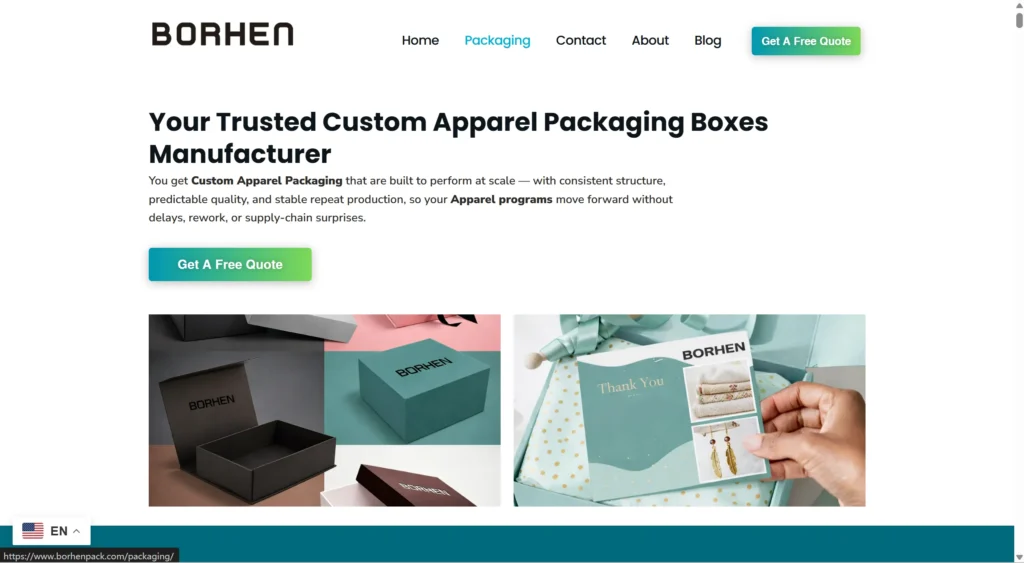
When I introduce BorhenPack as an apparel boxes manufacturer, I prefer to begin with a simple belief that guides how I think about packaging. In my view, packaging is never just about putting a product into a box. It is about how a brand is experienced the moment a customer receives the product, opens the package, and decides whether that brand feels trustworthy, memorable, and worth buying again. That perspective shapes how I see BorhenPack. I see us as a manufacturer that helps apparel brands transform packaging from a simple protective layer into a strategic business tool. Instead of focusing only on production, I focus on how packaging performs across the entire journey, from concept development and structural design to sampling, production stability, and repeat ordering.
I See BorhenPack as a Manufacturing Partner Designed to Support Real Apparel Brands
When I think about the apparel industry, I know that packaging must support far more than presentation. Clothing brands operate in fast-moving environments where ecommerce orders must ship quickly, retail packaging must look polished on shelves, and global distribution must remain stable across seasons and collections. Because of that, I see BorhenPack not as a simple box supplier but as a manufacturing partner that helps brands manage packaging as part of their broader operations.
What I believe makes our approach valuable is that we focus on how packaging actually functions in the real world. Apparel packaging must protect garments from dust, compression, and transport damage, but it must also reinforce brand identity through materials, printing quality, and structural design. I always remind myself that when a customer opens an apparel box, they are not evaluating the box separately from the clothing inside it. They are experiencing the brand as a whole. That is why I see BorhenPack’s role as translating brand vision into packaging structures that work consistently in production and shipping.
I Believe Our Value Comes From Combining Design Thinking With Manufacturing Discipline
When I observe successful packaging manufacturers across the industry, I notice a pattern. The strongest companies are not simply factories with printing machines. They are teams that combine design awareness, structural engineering, and manufacturing control into one integrated workflow. This is exactly how I think about BorhenPack.
Whenever a brand approaches us for apparel boxes, I begin by understanding the purpose of the packaging rather than immediately suggesting a material or structure. I want to understand whether the brand sells primarily through ecommerce, whether garments are shipped individually or in sets, and whether the packaging must function as a retail display or a shipping container. I believe these details are essential because packaging that looks impressive in a concept image can fail quickly if it does not align with operational realities.
By connecting brand objectives with structural development, I see BorhenPack as helping apparel companies avoid the common mistakes that occur when packaging design and production are disconnected. The goal is not only to produce a box that looks good but also to create packaging that performs reliably across shipping, storage, and repeat manufacturing.
I Think Apparel Packaging Requires Structural Thinking, Not Just Graphic Design
One of the lessons I have learned from studying packaging manufacturers across the market is that structure often determines long-term success. Many buyers initially focus on colors, logos, and surface finishes, which are important for brand recognition. However, I believe the structure of the box is equally critical.
When I think about apparel packaging, I consider how the garment will sit inside the box, how the box will stack in cartons, and how it will behave during transportation. If the structure is weak, the packaging may collapse or deform during shipping. If the dimensions are poorly planned, the garment may wrinkle or shift inside the box. These details might seem small at first, but they quickly affect the overall perception of quality.
That is why I see BorhenPack as an apparel boxes manufacturer that prioritizes structural reliability. By carefully planning dimensions, board strength, folding structures, and closures, I believe we can create packaging that protects garments while maintaining the brand’s intended presentation.
I Understand That Packaging Must Be Practical for Both New Brands and Growing Companies
Another important observation I have made while studying the packaging industry is that many manufacturers focus primarily on very large orders. While large production volumes are important, I believe the modern apparel market includes many emerging brands, ecommerce startups, and niche fashion labels that require flexible packaging solutions.
Because of this, I see BorhenPack as a manufacturer that aims to support brands at different stages of growth. Some companies may begin with smaller production runs as they test new product lines or launch their first collection. Over time, successful brands scale their packaging requirements significantly. I believe a reliable packaging partner should be able to support both phases without forcing brands to change suppliers.
When I think about this flexibility, I see it as an important reason why procurement teams consider long-term relationships with packaging manufacturers. Stability in packaging supply reduces operational complexity and helps brands focus on product development and marketing rather than constantly re-evaluating suppliers.
Why Brand Procurement Leaders Choose BorhenPack as Their Apparel Boxes Manufacturer
When I shift my perspective and think like a procurement leader responsible for sourcing packaging for an apparel brand, I realize that the decision to choose a manufacturer is rarely based on one single factor. Procurement teams evaluate suppliers based on reliability, communication, production consistency, and the ability to support long-term growth. After analyzing what brands typically expect from packaging partners, I can clearly see why BorhenPack would be an attractive choice for apparel packaging programs.
I Believe Procurement Leaders Value Suppliers Who Simplify the Packaging Process
From my perspective, one of the biggest challenges in packaging sourcing is the complexity of the process. Many brands must coordinate packaging decisions between marketing teams, product designers, logistics managers, and financial planners. If the packaging supplier cannot provide clear guidance, the decision-making process becomes slow and confusing.
This is where I believe BorhenPack can provide meaningful value. By guiding brands through structural options, material choices, printing techniques, and production planning, we help reduce the uncertainty that often surrounds custom packaging development. Procurement leaders appreciate this clarity because it allows them to make informed decisions more quickly and confidently.
I Think Procurement Teams Prioritize Consistency in Repeat Orders
Another factor that I know procurement leaders consider carefully is production consistency. The first packaging order may receive special attention, but long-term success depends on whether future production runs match the original specifications.
In the apparel industry, even small variations in printing color, board texture, or structural fit can affect how packaging is perceived by customers. When I think about BorhenPack’s potential role as an apparel boxes manufacturer, I see consistency as one of the most important responsibilities we have toward our clients.
Maintaining stable materials, controlled printing processes, and clear production specifications ensures that repeat orders remain aligned with the brand’s standards. For procurement leaders, this reliability reduces operational risk and simplifies long-term supply planning.
I Recognize That Apparel Packaging Must Balance Brand Image and Operational Efficiency
One of the realities I observe in apparel packaging is that companies must balance two competing priorities. On one hand, the packaging must represent the brand’s image and create a memorable experience for customers. On the other hand, the packaging must remain practical for fulfillment operations, shipping costs, and storage efficiency.
When I think about BorhenPack’s role in this balance, I see us working closely with brands to align packaging design with operational requirements. A beautifully designed box should still assemble quickly during packing, stack efficiently in cartons, and withstand the handling conditions of international logistics.
By approaching packaging as both a branding tool and an operational asset, I believe we can help apparel companies achieve better results across the entire supply chain.
I Believe Procurement Leaders Appreciate Suppliers Who Think Long-Term
One insight I consistently observe when studying supplier relationships is that procurement teams prefer manufacturers who think beyond the first order. A successful packaging partnership involves continuous improvement, communication, and adaptation as the brand evolves.
From my perspective, BorhenPack should be seen as a manufacturer that focuses on long-term collaboration. As apparel brands introduce new collections, expand into new markets, or refine their packaging strategies, the packaging manufacturer must adapt accordingly.
By maintaining open communication, refining structures when necessary, and supporting new packaging developments, I believe BorhenPack can help brands build packaging systems that grow alongside their business.
My Perspective on the Future Role of BorhenPack in Apparel Packaging
When I step back and look at the broader packaging industry, I see apparel packaging becoming increasingly strategic. Ecommerce growth, global distribution, and social media influence have all increased the importance of how products are packaged and delivered. Customers today notice details that might have been overlooked in the past, including the feel of the box, the precision of the print, and the overall unboxing experience.
Because of this shift, I believe the role of an apparel boxes manufacturer is evolving. Instead of simply producing packaging, manufacturers must help brands manage the entire lifecycle of packaging development and production.
When I think about BorhenPack’s place in this environment, I see a manufacturer that aims to combine structural expertise, manufacturing reliability, and brand awareness into a single packaging partnership. By helping apparel brands create packaging that protects garments, communicates brand identity, and remains consistent across production runs, we contribute to the overall success of the product experience.
Ultimately, the reason I believe procurement leaders choose BorhenPack as an apparel boxes manufacturer comes down to trust. Brands need packaging partners who understand both the creative and operational sides of packaging. When a manufacturer can support design, production, and long-term reliability with equal attention, the relationship becomes more than a transaction. It becomes a partnership that helps the brand grow.
Aplasticbag
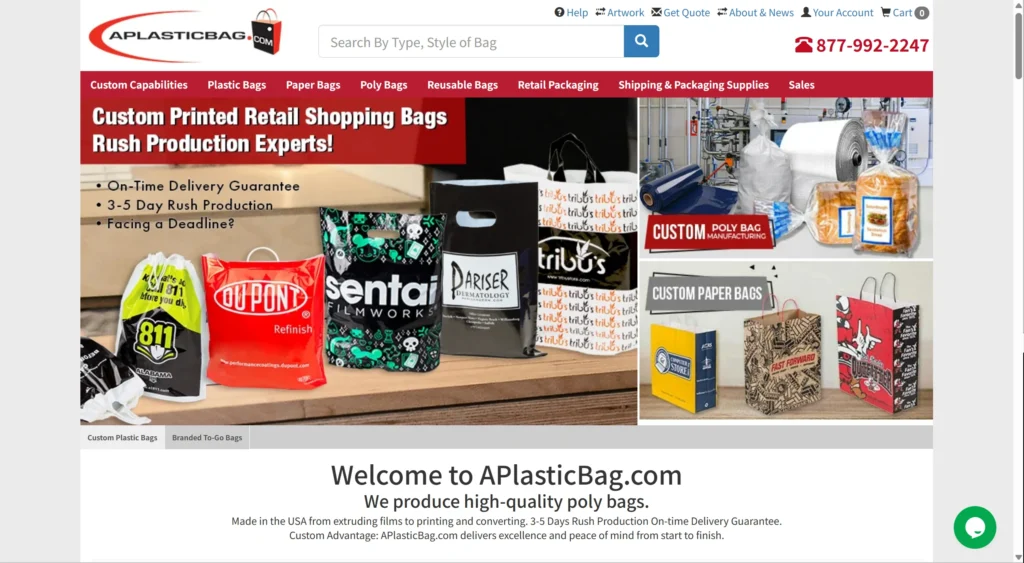
When I research companies serving the retail packaging sector, I often encounter suppliers that focus on large-scale industrial production. However, when I look at Aplasticbag.com, I see a company that has taken a slightly different path. Instead of positioning itself primarily as a massive paperboard producer or global packaging conglomerate, it has focused on solving very practical problems faced by retailers, boutique brands, and emerging apparel companies. From the way I study their development, Aplasticbag was built to make custom packaging easier to access, easier to design, and significantly faster to produce than many traditional packaging suppliers.
The company traces its origins back to the year 2000, when a group of entrepreneurs saw an opportunity to modernize how businesses ordered custom packaging. At that time, packaging procurement often required long consultations, complicated quoting processes, and very high minimum order volumes. I find it interesting that Aplasticbag approached the industry with a digital mindset, building an online platform where businesses could explore packaging options, customize products, and place orders more efficiently. Over the years, that approach allowed the company to expand from a small startup operation into a well-established packaging supplier with its central office in Riverside, California.
What stands out to me most when analyzing Aplasticbag’s operations is the breadth of its retail packaging ecosystem. The company offers an extensive range of products including poly bags, paper bags, reusable shopping bags, tote bags, retail display packaging, shipping supplies, and gift packaging materials. Within this ecosystem, custom apparel boxes represent an important category because fashion retailers rely heavily on packaging as part of the brand experience. When a customer purchases clothing from a boutique or fashion brand, the box that carries that product becomes part of the overall brand story, and I see Aplasticbag positioning its apparel boxes precisely in that role.
Another characteristic that I find noteworthy is the company’s emphasis on domestic manufacturing and printing capabilities. Many packaging suppliers rely heavily on overseas production, which can introduce longer lead times and supply chain uncertainty. Aplasticbag highlights its U.S.-based production and printing infrastructure, which enables the company to manage quality control and production scheduling more directly. In my experience studying retail supply chains, this local manufacturing capability becomes particularly valuable for businesses that operate under tight product launch schedules or seasonal merchandising timelines.
When I examine the company’s internal philosophy, I also notice that customer support plays a central role in its identity. Ordering custom packaging can be confusing for businesses that do not regularly work with printing specifications, dielines, or packaging materials. Aplasticbag addresses this challenge by offering a dedicated graphics team that helps clients prepare and optimize their artwork for production. I see this as an important part of their service model because it ensures that logos, typography, and branding elements appear correctly on the final packaging product.
In many ways, I view Aplasticbag as a company that has carefully designed its operations around the real needs of retail businesses. Rather than focusing exclusively on manufacturing scale, it emphasizes speed, customization, and practical support. From my perspective, this positioning allows the company to serve a wide range of clients, from small startup apparel brands to larger retail organizations that need dependable packaging partners capable of delivering consistent results.
Why Brand Procurement Leaders Choose Aplasticbag for Custom Apparel Boxes
When I place myself in the position of a brand procurement leader responsible for sourcing custom apparel boxes, I realize that packaging decisions are rarely made based on a single factor. In most cases, the choice of a packaging supplier reflects a combination of operational priorities including cost control, production speed, design flexibility, and supply reliability. As I analyze Aplasticbag’s value proposition through this procurement lens, I can clearly understand why many brands choose to work with them.
One of the first reasons I see procurement teams selecting Aplasticbag is the company’s ability to respond quickly to demanding timelines. Apparel brands operate within a dynamic retail environment where product collections change seasonally and marketing campaigns evolve rapidly. Packaging must be ready at the same time that new products reach stores or distribution centers. Aplasticbag emphasizes rapid production cycles and rush manufacturing options, allowing certain custom packaging orders to be completed in just a few days once artwork has been approved. From my perspective, this level of responsiveness reduces operational stress for procurement managers who must coordinate packaging supply with product launches.
Another advantage I notice is the company’s flexibility in minimum order quantities. Large packaging manufacturers frequently require very high production volumes because their facilities are optimized for large industrial runs. For boutique apparel brands or early-stage fashion companies, these requirements can create financial pressure and excess inventory. Aplasticbag offers relatively low minimum order quantities for many customized products, which allows brands to experiment with packaging designs without committing to extremely large orders. I believe this flexibility is one of the reasons the company attracts startups and independent retailers alongside larger organizations.
Cost management also plays a crucial role in packaging procurement decisions. Packaging must look attractive and support brand perception, but it must also remain economically viable within the overall product pricing structure. Aplasticbag promotes competitive wholesale pricing, which helps businesses maintain high-quality packaging while controlling operational costs. In my experience analyzing procurement strategies, suppliers who combine customization with cost transparency tend to earn the long-term trust of purchasing teams.
Customization is another factor that I believe strongly influences apparel packaging decisions. In the fashion industry, packaging often functions as an extension of the brand identity. Apparel boxes can feature distinctive colors, branded typography, logos, and design finishes that reinforce a company’s visual presence. Aplasticbag allows businesses to customize these elements in detail, enabling retailers to create packaging that reflects their brand personality and retail positioning. I see this capability as particularly important for fashion brands that want their packaging to contribute to the customer experience.
Customer service and technical guidance represent additional strengths that procurement teams often value. Packaging production involves multiple technical considerations including artwork alignment, printing processes, and material specifications. Aplasticbag assigns dedicated account representatives and printing specialists who guide clients through these steps. From my perspective, this structured support reduces the likelihood of production errors and helps ensure that the finished packaging matches the approved design.
Reliability in delivery is another reason procurement leaders develop long-term partnerships with suppliers. Packaging delays can disrupt retail operations, postpone product launches, and create logistical challenges across the supply chain. Aplasticbag emphasizes its on-time delivery guarantees and satisfaction commitments for custom packaging orders. When I consider the responsibilities of procurement managers who must maintain uninterrupted packaging supply, I understand why these guarantees carry significant weight in supplier evaluations.
Finally, I believe one of the most practical advantages offered by Aplasticbag is the breadth of its packaging ecosystem. Apparel brands rarely purchase only one type of packaging. In addition to apparel boxes, they often require shopping bags, tissue paper, gift wrap, and shipping supplies that maintain consistent branding. By providing a wide selection of retail packaging products within a single platform, Aplasticbag allows procurement teams to consolidate suppliers and streamline purchasing operations.
When I reflect on the overall role of Aplasticbag within the packaging industry, I see a company that has succeeded by focusing on practical solutions rather than simply pursuing manufacturing scale. Its emphasis on fast production, accessible customization, responsive customer support, and competitive pricing creates a packaging model that aligns closely with the needs of modern retail businesses. For procurement leaders responsible for managing apparel packaging programs, these qualities make Aplasticbag a reliable and strategically useful partner in the evolving retail packaging landscape.
Packola
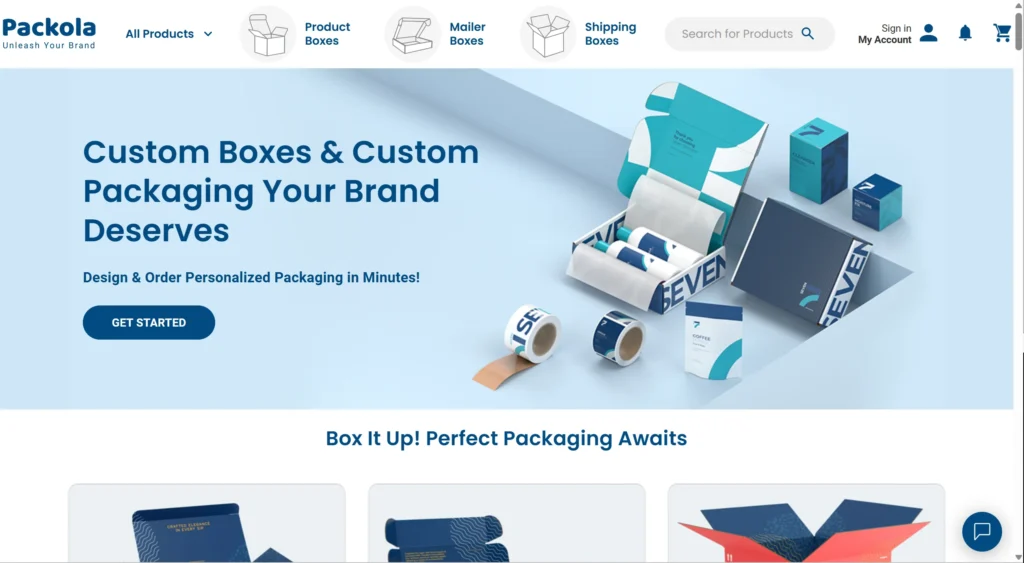
When I study the evolution of packaging manufacturers serving modern retail and e-commerce brands, I often notice that the companies gaining the most attention are not necessarily the oldest or the largest, but the ones that rethink how packaging should be designed and purchased. One company that consistently stands out to me in this category is Packola. What I find particularly compelling about Packola is the way it blends traditional packaging manufacturing with digital tools that simplify the entire packaging development process for businesses.
From the moment I examine Packola’s platform, I immediately see that the company was designed with entrepreneurs and growing brands in mind. Instead of forcing customers to navigate complicated quoting systems or long email exchanges with packaging engineers, Packola allows brands to configure and design their packaging directly online. I personally see this as a significant shift in how packaging procurement works. Historically, ordering custom boxes could take several days or even weeks before a final quotation and design preview were ready. With Packola’s real-time pricing engine and design interface, brands can experiment with sizes, materials, and graphics in minutes while instantly seeing how those decisions affect both appearance and cost.
Another element that attracts my attention when analyzing Packola is the breadth of packaging solutions the company provides. It does not simply manufacture one type of box. Instead, it supports a wide range of packaging categories including product boxes for retail display, mailer boxes used by subscription services and e-commerce brands, and shipping boxes designed for logistics protection. Beyond boxes, Packola also produces supporting packaging components such as stickers, custom labels, tissue paper, hang tags, and packaging tape. When I analyze brand packaging strategies, I consistently see that companies want visual consistency across every customer touchpoint, and suppliers capable of delivering a complete packaging ecosystem become extremely valuable partners.
I also pay close attention to where packaging is produced, because manufacturing location often influences delivery speed, quality control, and environmental impact. Packola manufactures its products in the United States, selecting production facilities based on the order specifications and the shipping destination. From my experience observing packaging supply chains, this approach allows the company to reduce transportation distance and shorten production logistics. It also helps brands maintain more predictable delivery timelines, which becomes particularly important when packaging must arrive in sync with product launches, marketing campaigns, or seasonal fashion collections.
Sustainability is another dimension that increasingly shapes packaging decisions, and this is something I notice Packola actively emphasizes. The company uses sustainably sourced paper materials and environmentally responsible inks in its packaging production. These materials are recyclable, which means brands can align their packaging programs with broader environmental commitments without sacrificing design quality or structural performance. As I observe the growing expectations placed on brands to adopt responsible packaging practices, I believe this commitment to sustainable materials strengthens Packola’s relevance in the market.
When I step back and look at Packola as a whole, I see a manufacturer that has carefully designed its business model around accessibility, speed, and creative flexibility. Instead of treating packaging purely as an industrial commodity, Packola frames it as a branding tool and a strategic component of customer experience. In a retail environment where presentation and unboxing moments increasingly influence customer perception, I believe this positioning makes the company particularly attractive to brands that want packaging to do more than simply protect products during shipping.
Why Brand Procurement Leaders Choose Packola for Custom Apparel Boxes
When I put myself in the role of a brand procurement leader responsible for sourcing custom apparel boxes, I know that packaging decisions must balance several priorities at once. The packaging must protect garments, reinforce brand identity, remain cost-efficient across production runs, and arrive on schedule for product launches. As I evaluate Packola’s capabilities from this procurement perspective, I can clearly see why many apparel brands choose to partner with the company.
One of the first advantages that stands out to me is Packola’s online 3D design environment. I have observed many packaging development projects where the most time-consuming part of the process is simply visualizing how a box will look once printed and assembled. Packola solves this problem by offering an interactive design studio where I can upload artwork, apply colors, position logos, and instantly preview the finished packaging in three dimensions. This real-time visualization significantly shortens the design cycle because teams can review concepts immediately rather than waiting for manual mockups from packaging engineers.
Another factor that I believe procurement teams appreciate is the transparency of Packola’s pricing structure. In traditional packaging sourcing, pricing often involves several rounds of quotation requests and revisions before a final cost is confirmed. Packola removes much of that uncertainty by calculating prices instantly as packaging dimensions, materials, and quantities change. When I evaluate procurement efficiency, I see how valuable this transparency becomes. It allows procurement teams to compare multiple packaging configurations quickly while maintaining clear visibility over budget impact.
Customization flexibility is also essential when developing apparel packaging, and this is an area where Packola provides significant creative freedom. Clothing brands often view packaging as an extension of their brand story. The colors, textures, finishes, and structural design of a box can influence how customers perceive the brand before they even touch the garment itself. Packola allows brands to customize box sizes, printing layouts, materials, and decorative finishes such as matte coatings, gloss lamination, foil stamping, embossing, and spot UV effects. From my perspective, this level of design control enables brands to create packaging that reflects their identity and stands out in competitive retail environments.
Material selection is another key consideration when designing apparel boxes, especially for brands that sell through both retail stores and online channels. Packola provides options such as cardstock and corrugated cardboard that serve different purposes depending on how the packaging will be used. Cardstock creates a refined, lightweight box suitable for boutique retail environments or gift packaging, while corrugated cardboard provides additional strength for e-commerce shipping. In my experience studying packaging durability, matching material strength to the distribution environment is one of the most important factors in preventing product damage and ensuring consistent customer experiences.
I also consider the importance of structural variety when evaluating apparel packaging suppliers. Packola offers several structural formats including lid-and-tray boxes, roll-end tuck-front mailer boxes, die-cut custom shapes, and smaller retail product boxes designed for clothing accessories. Each structure serves a different purpose within a brand’s packaging strategy. Lid-and-tray boxes are often used for premium garments or luxury presentation, while roll-end tuck-front mailers provide the strength needed for e-commerce shipments. When I analyze packaging programs for apparel brands, I see that having access to multiple structural formats allows companies to tailor packaging to different product categories and distribution channels.
Another factor that makes Packola appealing to procurement leaders is the company’s approach to sampling and proofing. Before committing to large production runs, brands can order a single sample box to verify dimensions, materials, and print quality. In addition, Packola provides digital proofs for artwork approval before production begins. In my experience analyzing packaging procurement strategies, this step significantly reduces risk because teams can confirm design accuracy before investing in full manufacturing runs.
Production timelines also influence supplier decisions, particularly in the fashion industry where collections are released on seasonal schedules. Packola typically completes production within approximately ten to twelve business days for standard orders, while sample orders are produced faster. When I evaluate packaging suppliers from a logistical perspective, predictable production timelines allow procurement teams to align packaging delivery with garment manufacturing and distribution schedules.
Customer support is another dimension that often determines whether a supplier becomes a long-term partner. Packaging design can involve technical considerations such as artwork resolution, dieline alignment, and printing accuracy. Packola’s support team assists clients with reviewing artwork files, correcting technical issues, and ensuring that designs are optimized for printing. From my perspective, this collaborative support is extremely valuable because it prevents production errors and ensures that the final packaging matches the brand’s expectations.
When I reflect on Packola’s overall role in the custom apparel packaging market, I see a manufacturer that combines digital innovation with practical manufacturing expertise. Its online design tools, transparent pricing model, customization flexibility, and environmentally responsible materials create a packaging platform that aligns closely with the needs of modern apparel brands. For procurement leaders seeking reliable custom apparel box manufacturers, Packola offers a partnership that balances creative freedom, operational efficiency, and dependable production performance in an increasingly competitive retail landscape.
Tycoon Packaging
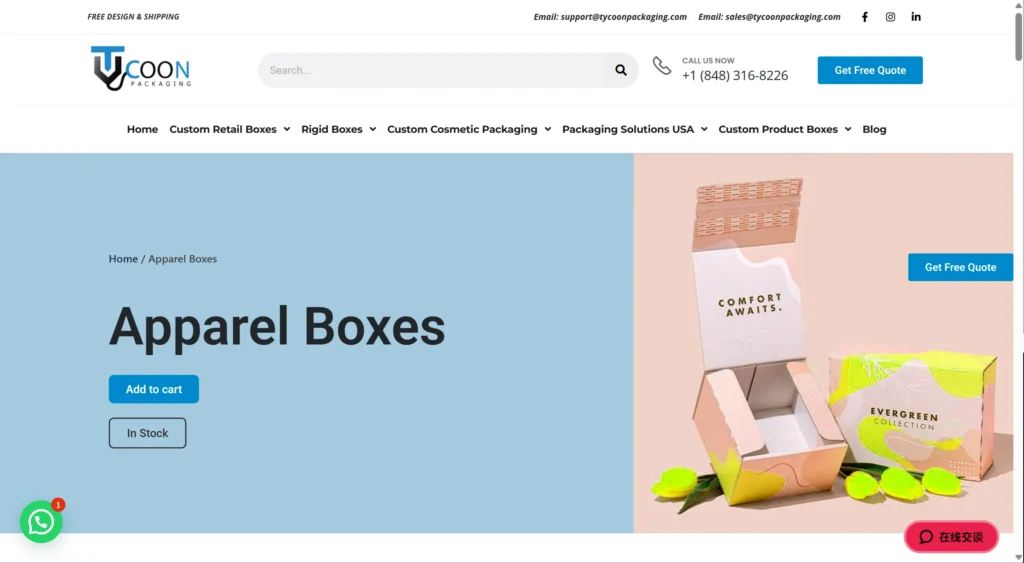
When I evaluate packaging manufacturers that support modern retail brands and e-commerce businesses, I always try to understand how the company approaches packaging as part of the brand experience rather than simply as a manufacturing task. One company that I find particularly interesting in this space is Tycoon Packaging. From what I have studied about their platform, services, and product offerings, I see a packaging manufacturer that aims to combine technical packaging expertise with a strong commitment to helping brands create packaging that reflects their identity and strengthens their market presence.
From the moment I explore the company’s positioning, I notice that Tycoon Packaging emphasizes reliability and transparency as the foundation of its operations. In the packaging industry, trust plays a critical role because businesses often rely on packaging suppliers to deliver large quantities of customized products within strict timelines. I personally see Tycoon Packaging positioning itself as a dependable partner that brands can rely on for consistent quality and timely delivery. The company highlights its mission to provide trustworthy packaging solutions, which suggests that it aims to build long-term relationships with clients rather than focusing solely on short-term production orders.
Another aspect that stands out to me when examining Tycoon Packaging is the level of expertise behind its team. The company emphasizes decades of experience in packaging development, printing technologies, and structural design. From my perspective, this experience becomes extremely valuable when brands are trying to develop custom packaging that balances visual impact with structural performance. Packaging involves far more than printing artwork on cardboard. It requires careful consideration of materials, folding structures, load strength, and printing techniques that ensure the final product looks impressive while remaining functional during shipping and handling.
I also pay close attention to the diversity of packaging products offered by a manufacturer because this often reflects the company’s ability to support different brand strategies. Tycoon Packaging offers a wide portfolio of packaging solutions that includes product boxes, retail boxes, rigid boxes, gift boxes, mailer boxes, and apparel boxes. What I personally appreciate about this range is that it allows brands to develop a unified packaging system across multiple product categories. Instead of sourcing different packaging types from multiple suppliers, businesses can consolidate their packaging development with a single manufacturer that understands their brand requirements.
Another detail that I find particularly valuable is Tycoon Packaging’s emphasis on guiding customers through the packaging design process. Many brands, especially emerging companies or e-commerce startups, may not have internal packaging specialists who understand dielines, material thickness, or printing techniques. Tycoon Packaging appears to address this challenge by providing expert guidance throughout the packaging development journey. From concept creation to design approval and final production, the company’s team helps clients refine their packaging ideas and translate them into practical manufacturing solutions.
The company also highlights its ability to combine modern printing technology with traditional packaging craftsmanship. When I analyze packaging manufacturers, I often look for this balance because it allows brands to achieve both precision and creativity. Modern digital and offset printing methods enable vibrant graphics and sharp branding elements, while experienced production techniques ensure structural durability and consistent manufacturing quality.
Customer support is another factor that I consider extremely important when evaluating packaging suppliers. Tycoon Packaging maintains an accessible support team that assists clients with questions, design revisions, and order management. I personally see this responsiveness as a strong indicator of the company’s customer-focused culture. Packaging projects often require adjustments during development, and having a supplier that remains available and collaborative can significantly improve the overall experience for brands.
When I step back and consider the overall profile of Tycoon Packaging, I see a manufacturer that approaches packaging not just as a production service but as a strategic branding tool. By combining experience, customization flexibility, and supportive client relationships, the company positions itself as a partner that helps brands create packaging capable of protecting products while simultaneously communicating brand identity and quality.
Why Brand Procurement Leaders Choose Tycoon Packaging for Custom Apparel Boxes
When I put myself in the role of a brand procurement leader responsible for sourcing custom apparel boxes, I know that selecting the right packaging manufacturer involves several layers of evaluation. Apparel packaging must protect garments, support branding, and remain cost-effective while being scalable for future production. As I analyze Tycoon Packaging’s capabilities from this procurement perspective, I can clearly understand why many brands choose to work with them when developing custom apparel packaging.
One of the first advantages that I notice is the company’s strong commitment to customization. Apparel brands often treat packaging as an extension of their product design because clothing purchases are closely connected to brand perception and customer experience. Tycoon Packaging allows brands to customize apparel boxes in terms of dimensions, materials, printing layouts, and structural styles. From my perspective, this level of customization gives brands the creative freedom to design packaging that aligns perfectly with their visual identity rather than relying on generic packaging templates.
Another reason procurement leaders often collaborate with Tycoon Packaging is the wide variety of apparel box styles that the company can produce. Clothing items come in many different forms, including folded garments, accessories, luxury pieces, and promotional apparel. Each of these product types may require a different packaging structure. Tycoon Packaging offers multiple apparel packaging formats such as sleeve boxes, window display boxes, tuck-style packaging, and fully customized structural designs. When I study apparel packaging strategies, I see that structural diversity allows brands to tailor packaging to the specific presentation needs of their garments.
Material quality is another factor that I personally consider essential when evaluating apparel packaging manufacturers. Clothing items require packaging that maintains both durability and elegance. Tycoon Packaging provides materials such as premium cardstock and corrugated board that allow brands to balance strength with visual appeal. In retail environments, cardstock packaging creates a refined and elegant presentation suitable for boutique displays or premium garments. For e-commerce businesses shipping clothing directly to customers, corrugated materials provide additional structural protection during transportation.
Finishing options also play an important role in how apparel packaging is perceived by customers. When a customer receives clothing in a beautifully designed box, the packaging itself contributes to the emotional experience of opening the product. Tycoon Packaging offers finishing enhancements such as embossing, foil stamping, gloss lamination, matte coatings, and UV printing. I personally believe these finishing details can significantly elevate the perceived value of the product inside the box. When packaging looks and feels premium, customers often associate the same level of quality with the brand itself.
Another element that I see procurement professionals appreciating is the company’s flexibility in box dimensions and structural engineering. Apparel packaging rarely fits into standard box sizes because garments vary widely in shape and folding requirements. Tycoon Packaging allows brands to specify exact measurements so that the packaging fits the product perfectly. In my experience studying packaging logistics, precise sizing not only improves presentation but also reduces unnecessary shipping space, which can lower transportation costs and improve warehouse efficiency.
I also recognize the importance of design proofing and prototyping when developing custom packaging. Tycoon Packaging provides design previews and prototype samples that allow brands to review their apparel boxes before full production begins. From my perspective, this step is extremely valuable because it ensures that colors, structural folds, and printing elements appear exactly as intended. Procurement teams can verify the packaging quality and make adjustments before committing to large production volumes.
Reliable production timelines represent another major advantage for brands working with Tycoon Packaging. Apparel businesses operate on seasonal schedules, and packaging delays can disrupt product launches or retail campaigns. The company emphasizes timely manufacturing and delivery, which helps procurement teams coordinate packaging supply with garment production and distribution planning.
Perhaps the most significant reason I see procurement leaders choosing Tycoon Packaging is the company’s collaborative approach to packaging development. Rather than simply manufacturing boxes according to specifications, the company appears to work closely with brands to refine packaging concepts and solve design challenges. This partnership-driven approach encourages long-term relationships and helps brands continuously improve their packaging programs as their businesses grow.
When I reflect on Tycoon Packaging’s position within the custom apparel packaging market, I see a manufacturer that successfully combines technical expertise with strong customer collaboration. Through customizable structures, high-quality materials, premium finishing options, and responsive support, the company enables brands to develop apparel packaging that protects their products while reinforcing brand identity. For procurement leaders responsible for building reliable packaging supply chains, Tycoon Packaging offers a balance of flexibility, creativity, and operational dependability that makes it an appealing partner in the competitive apparel industry.
Packlane
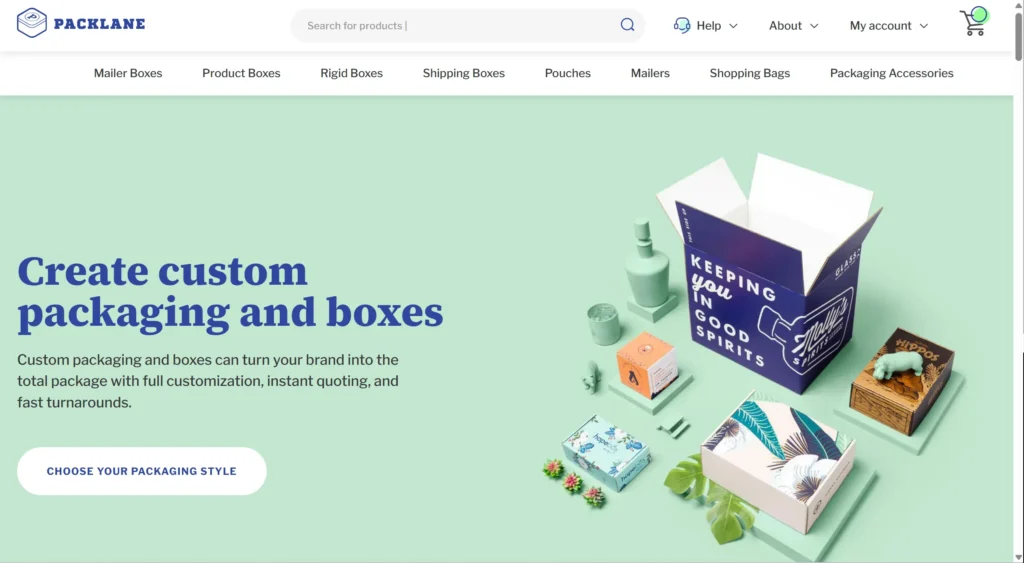
When I analyze packaging manufacturers that have successfully adapted to the fast-moving needs of modern brands, one company that repeatedly captures my attention is Packlane. What immediately stands out to me is that Packlane does not treat packaging as a slow industrial procurement task. Instead, the company approaches packaging as a creative, interactive, and technology-driven experience that brands can control directly. In my experience researching packaging suppliers, this shift from traditional quoting systems to digital design platforms represents one of the most important evolutions in the packaging industry.
When I explore Packlane’s platform and capabilities, I quickly realize that the company was built around the idea that brands should be able to design packaging with the same flexibility that they design their products or marketing materials. Rather than submitting specifications to a packaging supplier and waiting several days for technical drawings or cost estimates, I can configure a custom box almost instantly. I can choose the box style, define dimensions, select materials, upload artwork, and preview the result within a 3D design environment. As I adjust colors, images, or text, I see a live rendering of the box alongside a real-time pricing calculation. For me, this level of transparency removes much of the friction that traditionally slows packaging development.
Another element that I find particularly revealing when studying Packlane is the scale of brands that trust the platform. The company reports that more than twenty-five thousand brands have used its custom packaging solutions, including globally recognized companies across industries such as technology, beauty, media, and consumer goods. When I reflect on what that means operationally, I see a packaging system that is capable of supporting extremely different types of businesses. Early-stage startups can design small packaging runs for limited product launches, while larger brands can scale production for nationwide distribution. From my perspective, the ability to support such diverse customers suggests that Packlane has developed a highly adaptable production and design ecosystem.
I also pay close attention to the structural formats offered by packaging manufacturers, because packaging structure ultimately determines how products are protected, displayed, and shipped. Packlane focuses on several core box categories including mailer boxes, product cartons, shipping boxes, and specialized shipping formats designed for logistics efficiency. In my view, these structures correspond directly with the most common packaging scenarios faced by modern brands. Product boxes serve as retail packaging that attracts attention on store shelves. Mailer boxes are widely used by e-commerce brands that want packaging capable of delivering both protection and a premium unboxing experience. Shipping boxes focus on structural durability to protect products during transportation.
What makes Packlane especially interesting to me is how it merges structural packaging expertise with digital design accessibility. In the past, packaging development required collaboration between structural engineers, packaging designers, and brand teams. Packlane simplifies this process by giving brands access to a design lab where packaging concepts can be created visually before production begins. I personally find this empowering because it allows brands to experiment with color schemes, logo placement, interior printing, and panel graphics in a way that feels intuitive rather than technical.
Sustainability is another dimension that increasingly shapes packaging decisions, and I notice that Packlane integrates responsible material sourcing into its packaging options. Many of the cardboard materials available through the platform incorporate recycled content and meet industry standards for sustainable paper production. From my perspective, this focus allows brands to design visually compelling packaging while still aligning with environmental commitments that consumers increasingly expect.
When I step back and evaluate Packlane’s role within the packaging industry, I see a manufacturer that combines digital design technology with scalable production capabilities. Through instant quoting, real-time 3D visualization, flexible order volumes, and environmentally responsible materials, Packlane provides brands with a system that transforms packaging from a logistical necessity into a strategic marketing asset. In a market where packaging often shapes the customer’s first impression of a product, this approach makes Packlane particularly relevant for brands that want packaging to reinforce their identity and deliver memorable experiences.
Why Brand Procurement Leaders Choose Packlane for Custom Apparel Boxes
When I imagine myself responsible for sourcing packaging as a brand procurement leader, I know that the decision involves balancing creativity, operational efficiency, and supply chain reliability. Apparel packaging must protect garments, support brand storytelling, and scale easily as a company grows. After studying Packlane’s packaging system in detail, I can clearly understand why many procurement professionals choose the company when developing custom apparel boxes.
One of the first reasons I see brands choosing Packlane is the control the platform gives them over the design process. Through the company’s 3D packaging designer, I can upload logos, experiment with typography, adjust colors across different panels, and preview the finished apparel box in real time. Instead of imagining how a design might translate into a printed box, I can immediately see how each design decision affects the final appearance. From my perspective, this dramatically improves collaboration between marketing teams, product designers, and procurement managers because everyone can evaluate packaging concepts visually before committing to production.
Another advantage that I believe procurement leaders appreciate is the company’s instant pricing system. In traditional packaging sourcing, pricing is often calculated through multiple back-and-forth conversations with suppliers. Packlane removes that uncertainty by dynamically updating the unit price as dimensions, materials, printing coverage, and order quantities change. When I analyze procurement workflows, I see how valuable this transparency becomes. Procurement teams can evaluate different packaging strategies quickly while maintaining full visibility into project costs.
Flexibility in production volume is another factor that makes Packlane particularly attractive to apparel brands. Fashion companies often launch limited capsule collections, seasonal campaigns, or experimental product lines that require smaller packaging quantities. At the same time, successful collections may need large-scale packaging production for retail distribution. Packlane accommodates both scenarios by offering extremely low minimum order quantities while also supporting bulk orders that can reach thousands or even tens of thousands of boxes. I personally see this scalability as a major advantage because it allows brands to test packaging ideas with minimal risk and expand production as demand increases.
Customization capability also plays a central role in why procurement teams rely on Packlane for apparel packaging. Clothing brands depend heavily on visual identity, and packaging is often the first physical interaction customers have with the brand. Packlane allows apparel boxes to be customized in terms of structure, size, materials, printing coverage, and interior design elements. I particularly appreciate the ability to print inside certain box styles because interior printing can transform the moment a customer opens the box into a powerful branding opportunity.
Material selection is another aspect that I carefully evaluate when studying apparel packaging suppliers. Apparel packaging must combine aesthetic presentation with structural durability because garments must arrive in perfect condition while still looking attractive to customers. Packlane offers a range of paperboard and corrugated cardboard materials that allow brands to choose the right balance between elegance and strength. In retail environments, paperboard cartons create refined product displays, while corrugated mailer boxes provide the structural integrity needed for e-commerce shipments.
I also recognize the importance of technical review when producing custom packaging. Packlane’s in-house prepress team reviews every order to identify potential printing issues such as low resolution artwork, thin lines, incorrect bleeds, or alignment problems. Within approximately twenty-four hours after placing an order, I receive a digital proof that allows me to review the packaging design before production begins. From my perspective, this step reduces risk for procurement teams because it ensures the packaging is technically optimized before manufacturing.
Production speed is another factor that strongly influences packaging supplier decisions in the apparel industry. Fashion brands operate on strict seasonal calendars where packaging must arrive before product launches or promotional campaigns. Packlane typically completes standard production in roughly ten business days, with faster turnaround options available for urgent orders. I see this predictable manufacturing timeline helping procurement teams synchronize packaging delivery with garment production and distribution schedules.
Ultimately, the reason I believe procurement leaders choose Packlane is that the company transforms apparel packaging into a strategic brand asset rather than a simple shipping container. When I design apparel boxes through the Packlane platform, I am not just creating packaging that protects clothing during transit. I am designing a branded experience that customers encounter the moment they receive and open their purchase. Through thoughtful design, vibrant printing, and structural precision, packaging becomes part of the story the brand tells.
When I reflect on Packlane’s position within the custom apparel packaging market, I see a manufacturer that successfully combines technology, creativity, and scalable production. Its digital design platform, transparent pricing model, flexible order volumes, and sustainable materials allow brands to create packaging that protects products while reinforcing brand identity. For procurement leaders responsible for building reliable packaging supply chains, Packlane offers a partnership that balances operational efficiency with creative freedom, making it a powerful choice for apparel packaging programs.
Arka
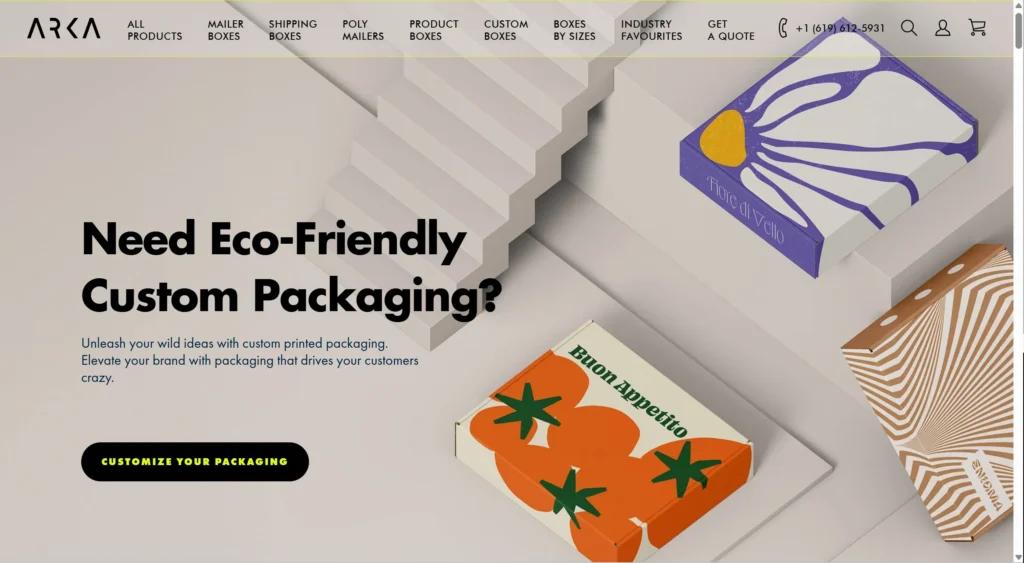
When I research packaging manufacturers that truly understand how modern brands think about packaging, I often find myself paying close attention to companies that combine sustainability, customization, and digital convenience into one cohesive system. One manufacturer that consistently stands out to me is Arka. What immediately catches my attention about Arka is that the company does not treat packaging as a purely industrial process. Instead, it approaches packaging as a strategic brand asset that should be visually compelling, operationally efficient, and environmentally responsible at the same time.
When I examine how Arka presents its capabilities, I see a company that has clearly built its model around the realities of modern e-commerce and brand development. Today’s brands move quickly. Product launches happen frequently, collections change seasonally, and marketing campaigns often revolve around the experience customers have when they receive a product. In that context, packaging can no longer be slow, rigid, or difficult to customize. Arka appears to understand this dynamic very well. The company provides a workflow that allows brands to move from concept to production in a relatively straightforward process: selecting the packaging structure, creating or uploading the design through a 3D design studio, reviewing proofs, and moving into manufacturing once approval is given. From my perspective, this approach removes many of the obstacles that traditionally slow packaging projects.
Another element that stands out to me when I study Arka is its strong commitment to sustainable packaging. Sustainability is not simply a marketing theme within the company’s messaging. Instead, it is integrated into the materials and production processes used for packaging manufacturing. Arka highlights FSC Chain of Custody certified paper, which means the paperboard used in its packaging originates from responsibly managed forests that prioritize environmental, social, and economic sustainability. I find this particularly important because brands today must be able to support their environmental claims with credible supply chain partners. When packaging suppliers offer certified materials, procurement teams can more confidently communicate sustainability initiatives both internally and to customers.
I also notice that Arka emphasizes the idea of making sustainable packaging accessible to businesses of all sizes. In my experience, eco-friendly packaging is often associated with large corporations that can afford long development cycles and higher minimum order quantities. Arka appears to challenge that assumption by offering low minimum order quantities, flexible customization options, and a production system designed to serve startups, independent brands, and established companies alike. This approach makes sustainable packaging far more practical for emerging brands that want to align their packaging with their values from the very beginning.
As I continue evaluating the company’s product ecosystem, I see that Arka supports a broad range of packaging structures including mailer boxes, shipper boxes, folding cartons, custom retail boxes, and industry-specific packaging formats. The breadth of this offering suggests to me that the company understands how packaging programs evolve over time. A brand might begin with one packaging format, such as an apparel box for shipping clothing orders, but later expand into additional packaging elements like inserts, tissue paper, labels, or retail display cartons. A supplier capable of supporting those expansions without forcing brands to find new vendors offers significant long-term value.
Another factor I appreciate about Arka is the emphasis on design accessibility. Through its browser-based design environment, brands can upload artwork, apply colors, adjust text, and visualize the finished packaging before it enters production. I personally see this as an important shift in how packaging development works. In the past, packaging design often required specialized software, packaging engineers, and extended communication between suppliers and designers. Arka’s approach makes the process far more intuitive, allowing marketing teams, founders, and brand managers to directly participate in the packaging design process.
When I summarize Arka as a packaging manufacturer, I see a company that aims to bridge three important priorities: sustainability, design flexibility, and operational efficiency. Its mission to make beautiful and environmentally responsible packaging accessible to businesses of all sizes reflects a broader shift in the packaging industry, where brands increasingly expect suppliers to support both brand storytelling and environmental accountability. In my view, this positioning makes Arka particularly appealing to brands that want packaging to be more than a shipping container. They want packaging that reflects their identity, communicates their values, and enhances the overall customer experience.
Why Brand Procurement Leaders Choose Arka for Custom Apparel Boxes
When I place myself in the role of a brand procurement leader sourcing packaging for a clothing brand, I know that choosing the right packaging supplier involves far more than simply comparing prices. Apparel packaging must protect garments, represent the brand visually, and support efficient logistics across warehouses, retail stores, and direct-to-consumer shipping channels. After studying Arka’s custom apparel box program in detail, I can clearly understand why many procurement professionals would consider the company a strong partner for clothing packaging.
One of the first advantages I notice is the level of customization available for apparel boxes. Clothing brands often have very specific packaging needs depending on the types of garments they sell. Lightweight items like T-shirts and socks require different box structures than bulkier products such as jackets or knitwear. Arka allows brands to select from standard sizes or request custom dimensions so that packaging fits garments precisely. I believe this level of customization is especially valuable because it helps brands optimize both presentation and shipping efficiency. Boxes that are correctly sized not only protect the product better but also reduce wasted space during shipping, which can lower logistics costs over time.
Another reason I see procurement teams choosing Arka is the company’s ability to balance design creativity with manufacturing reliability. Apparel brands often want packaging that reflects their visual identity through logos, colors, typography, and graphics. Arka supports full digital CMYK printing, which means brands can use multiple colors across their packaging without worrying about additional printing charges for each color layer. From my perspective, this opens the door for far more expressive packaging design. Brands can create apparel boxes that feel vibrant, distinctive, and visually aligned with their marketing campaigns.
Durability is another factor I pay close attention to when evaluating apparel packaging suppliers. Clothing may seem lightweight, but packaging must still withstand stacking pressure, transportation handling, and warehouse processing. Arka emphasizes strong corrugated construction and structural features such as roll end front tuck boxes with locking flaps designed to secure products safely inside the box. I find this important because procurement teams are responsible not only for aesthetics but also for ensuring that packaging performs reliably throughout the fulfillment process.
Sustainability is also a major reason I believe procurement leaders choose Arka for apparel packaging. Fashion brands are increasingly expected to align with environmental values, and packaging is one of the most visible areas where sustainability can be demonstrated. Arka’s FSC-certified materials, recyclable packaging structures, and environmentally conscious production practices help brands strengthen their sustainability messaging. From my perspective, having a packaging supplier that already incorporates these standards into its manufacturing process makes it easier for brands to communicate environmental responsibility without needing to redesign their packaging systems later.
Another feature that stands out to me is Arka’s flexible order quantities. Apparel brands rarely operate with identical packaging needs year-round. Some collections may require small production runs, while others may demand large-scale packaging orders for seasonal launches or major promotions. Arka accommodates this variability by offering very low minimum quantities while still supporting large-volume orders. I see this flexibility as extremely valuable for procurement leaders because it allows them to test packaging designs, launch new products, and scale production without constantly changing suppliers.
The proofing process is another area where I believe Arka provides strong support for procurement teams. After submitting a packaging design, brands receive a digital proof from the design team within a short period of time. Production only begins once the brand approves the proof, ensuring that the final packaging matches expectations. I personally see this step as essential for maintaining quality control because it allows procurement managers and design teams to verify details before committing to manufacturing.
Arka also offers sample programs that allow brands to physically evaluate packaging before placing larger orders. In my experience, procurement teams rely heavily on samples to assess structural quality, printing accuracy, and overall presentation. By providing sample boxes and reimbursing the sample cost when a larger order is placed, Arka reduces the financial risk associated with testing new packaging suppliers. This approach encourages brands to experiment with packaging design while maintaining confidence in the final production outcome.
Another aspect that I find appealing from a procurement perspective is the company’s domestic manufacturing model. With packaging produced in the United States, brands may benefit from shorter transportation distances, more predictable shipping timelines, and easier communication during the production process. For brands selling primarily within the U.S. market, this localized manufacturing approach can simplify logistics and reduce supply chain uncertainty.
When I step back and evaluate Arka’s custom apparel box program as a whole, I see a supplier that understands how apparel brands actually operate. Packaging must be visually compelling, structurally reliable, environmentally responsible, and easy to order at different volumes. Arka’s combination of customizable designs, sustainable materials, digital proofing, flexible order quantities, and durable construction creates a packaging solution that meets all of these needs simultaneously.
Ultimately, I believe procurement leaders choose Arka because the company makes it easier to develop packaging that strengthens both the brand image and the operational workflow. Custom apparel boxes from Arka do more than simply hold clothing products. They become part of the brand experience, helping clothing companies deliver garments in packaging that protects the product, communicates the brand’s identity, and creates a memorable unboxing moment for customers.
Pakfactory
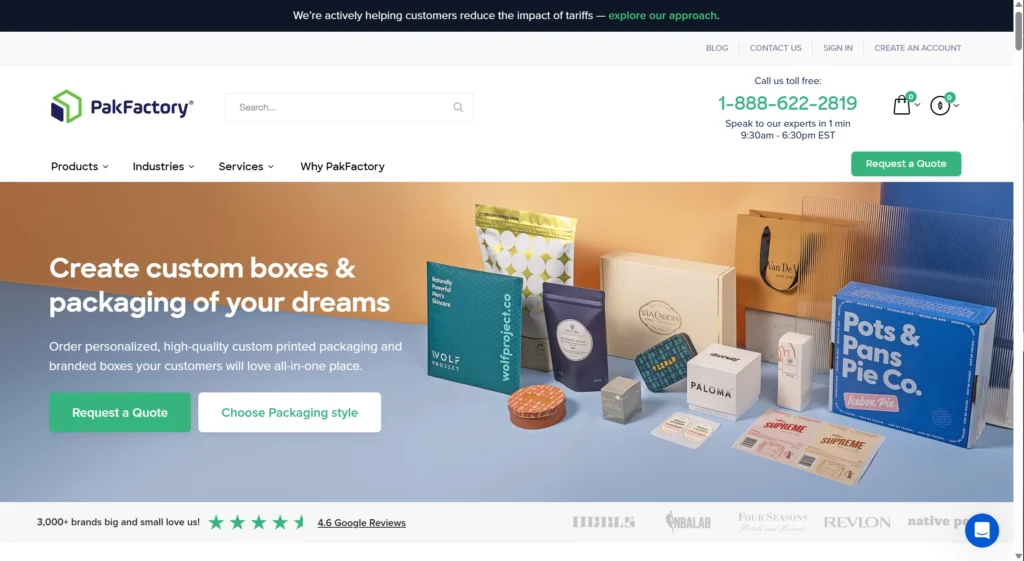
When I study the landscape of modern custom packaging manufacturers, I often notice a clear divide between traditional factories and companies that are trying to redesign how packaging is sourced and developed. One company that consistently stands out to me in this regard is PakFactory. From my perspective, PakFactory is not simply a printing house or a carton supplier. Instead, it positions itself as a comprehensive packaging platform designed to simplify and elevate the entire packaging process for brands that want to move beyond generic packaging solutions.
What I immediately notice when I explore PakFactory’s structure is how deliberately the company has built an integrated system around packaging development. In many traditional packaging supply chains, brands must coordinate with multiple vendors in order to assemble a complete packaging program. A brand might rely on one manufacturer for folding cartons, another supplier for rigid gift boxes, another source for shipping cartons, and yet another company for packaging accessories such as inserts, labels, or tissue paper. When I look at PakFactory’s offering, I see a company trying to remove that fragmentation by bringing all these components into a single ecosystem. Folding cartons, corrugated shipping boxes, rigid packaging, box inserts, paper shopping bags, reusable bags, labels, POP displays, tissue paper, packaging tape, and other accessories are all supported within the same platform. In my experience analyzing packaging operations, this kind of consolidation can dramatically simplify procurement processes and improve consistency across a brand’s packaging system.
Another aspect that captures my attention is PakFactory’s global manufacturing infrastructure. The company highlights access to more than fifty certified facilities worldwide, which tells me that it operates with a diversified and scalable production network. When I think about how procurement leaders manage packaging supply chains, I know that flexibility and reliability are essential. Brands often need to balance cost efficiency with manufacturing capacity, shipping timelines, and regional distribution requirements. A global network of certified facilities gives PakFactory the ability to adapt production strategies to meet these changing needs. From my perspective, this type of infrastructure makes it easier for brands to scale their packaging programs as their business expands into new markets.
I also find the company’s “360° PakFactory approach” particularly interesting because it reflects a deeper understanding of how packaging development actually works inside growing brands. PakFactory does not focus solely on manufacturing boxes. Instead, it frames its services around the full lifecycle of packaging creation. When I examine the structure of this approach, I see consultation, design guidance, prototyping, production management, logistics coordination, and optimization services all integrated into one process. For brands that lack in-house packaging engineering teams, this type of support can be incredibly valuable. Packaging is rarely a one-time decision. It evolves constantly as companies refine shipping efficiency, adjust branding strategies, and respond to sustainability goals.
Sustainability is another dimension that PakFactory incorporates into its packaging philosophy. I notice that the company actively promotes recyclable paper-based packaging solutions and encourages brands to explore eco-friendly alternatives that reduce environmental impact. I also see that PakFactory participates in tree-planting initiatives that contribute to environmental restoration. From my perspective, sustainability initiatives like these help brands align their packaging choices with the expectations of modern consumers who increasingly prioritize environmental responsibility when choosing which companies to support.
What ultimately stands out to me about PakFactory is the company’s ambition to transform packaging into a digital platform experience. Its vision describes a future where brands can access global packaging expertise, explore design options, and manage production through a centralized system that connects customers with manufacturing partners. In my view, this platform-based strategy reflects the broader digital transformation occurring across supply chains. By digitizing parts of the packaging sourcing process and combining it with global production capabilities, PakFactory positions itself as a bridge between creative brand design and large-scale manufacturing.
When I step back and look at the company as a whole, I see a manufacturer that aims to simplify the complexity of custom packaging while still delivering high levels of customization, quality assurance, and logistical flexibility. For brands that want packaging that reflects both operational efficiency and strong brand identity, PakFactory offers a model that aligns well with the evolving expectations of modern product companies.
Why Brand Procurement Leaders Choose PakFactory for Custom Apparel Boxes
When I imagine myself working as a procurement leader responsible for sourcing packaging for a clothing brand, I immediately recognize how important apparel packaging has become. Packaging for garments is no longer just a protective container. It has become an extension of the brand’s identity and an essential component of the customer experience. After studying PakFactory’s custom apparel packaging capabilities in detail, I can clearly understand why many procurement teams choose the company when developing custom apparel boxes.
One of the first reasons I see procurement leaders turning to PakFactory is the extraordinary level of structural flexibility offered for apparel packaging. Clothing products vary widely in both shape and presentation requirements. A folded T-shirt, a luxury dress shirt, a pair of sneakers, or a premium accessory each demands a different packaging structure. PakFactory provides a wide library of structural box styles that can be adapted for apparel products, including reverse tuck end cartons, straight tuck end cartons, tuck top mailer boxes, sleeve packaging, pillow boxes, snap lock bottom cartons, and roll end tuck top boxes with dust flaps. When I analyze these structures, I see a packaging supplier that understands how clothing brands require packaging formats that balance visual elegance with practical usability.
Another factor that stands out to me is PakFactory’s ability to support apparel brands across multiple distribution channels. Modern fashion brands rarely sell through a single channel. They may operate retail stores, sell through e-commerce platforms, partner with subscription box programs, and distribute products through wholesale retail networks. PakFactory offers packaging structures suited for all of these environments. Folding cartons work well for retail shelf display. Rigid boxes create premium gift packaging experiences. Corrugated mailer boxes provide durable protection for direct-to-consumer shipping. By supporting these different formats within one packaging system, PakFactory allows brands to maintain visual consistency while optimizing packaging performance for each sales channel.
Material versatility also plays an important role in why procurement leaders choose PakFactory for apparel packaging. Fashion brands rely heavily on the perception of quality, and packaging materials can strongly influence how customers interpret the value of a product. PakFactory offers materials ranging from lightweight paperboard for cost-efficient folding cartons to corrugated cardboard for durable shipping packaging and rigid chipboard for luxury presentation boxes. When I think about the positioning strategies used by fashion brands, I see how these material choices allow companies to tailor packaging to different product tiers, from everyday apparel to premium collections.
The finishing techniques offered by PakFactory add another layer of design flexibility that I find particularly compelling. Apparel brands often want packaging that feels tactile and distinctive in order to create a memorable unboxing experience. PakFactory supports a wide variety of finishing options including aqueous coating, UV coating, spot gloss UV, varnish finishes, soft-touch coatings, lamination, anti-scratch lamination, and silk laminations. When I imagine opening a box with a velvety soft-touch finish or a glossy spot UV logo catching the light, I can immediately see how these details elevate the perceived value of the packaging. In the apparel industry, where presentation is closely tied to brand identity, these design details become extremely powerful.
Another reason I believe procurement teams choose PakFactory is the company’s consultative approach to packaging development. Packaging decisions often involve complex trade-offs between cost, durability, visual design, and production efficiency. PakFactory provides product specialists who help brands evaluate these variables and recommend appropriate production methods. For example, the company frequently recommends offset printing for large apparel packaging runs because it delivers exceptional color accuracy and becomes more cost-efficient as production volumes increase. From my perspective, having access to this level of expertise helps procurement leaders make confident packaging decisions while avoiding costly design mistakes.
Cost management is also a major factor influencing packaging supplier selection, and this is another area where PakFactory appears to offer meaningful advantages. Through its global manufacturing network and data-driven production systems, the company can optimize packaging costs by recommending alternative materials, adjusting structural designs, and improving supply chain efficiency. I understand that procurement teams must constantly balance quality and cost control. A supplier capable of delivering cost optimization strategies while maintaining packaging quality becomes extremely valuable in long-term supplier relationships.
The global supply chain capabilities provided by PakFactory further strengthen its appeal as a packaging partner. Apparel brands frequently operate international distribution networks, which means packaging must be produced, transported, and delivered across multiple regions. PakFactory’s global manufacturing network allows brands to benefit from flexible production capacity and optimized logistics strategies. From my perspective, this infrastructure reduces the risk of supply chain disruptions and helps ensure that packaging arrives on time when new collections launch.
Sustainability is another factor that increasingly influences procurement decisions in the apparel industry. Many clothing brands now promote environmentally responsible manufacturing and want packaging solutions that align with those values. PakFactory supports this objective by offering recyclable paper-based packaging options and encouraging brands to explore eco-friendly materials and coatings. In addition, the company’s environmental initiatives such as tree-planting programs help reinforce the sustainability narrative that many fashion brands want to communicate to customers.
When I step back and evaluate PakFactory’s custom apparel packaging program as a whole, I see a supplier that understands the complex relationship between packaging design, brand identity, logistics, and customer experience. PakFactory combines structural flexibility, material diversity, premium finishing techniques, global manufacturing capacity, and expert consultation into a unified packaging platform.
Ultimately, I believe procurement leaders choose PakFactory because the company provides far more than custom boxes. It offers a comprehensive packaging ecosystem that helps apparel brands design packaging that protects garments, reflects their visual identity, and creates a memorable unboxing experience for customers. In a competitive fashion market where packaging often shapes the first impression of a product, this combination of reliability, customization, and strategic support makes PakFactory a compelling partner for apparel brands looking to elevate their packaging programs.
Boxlark
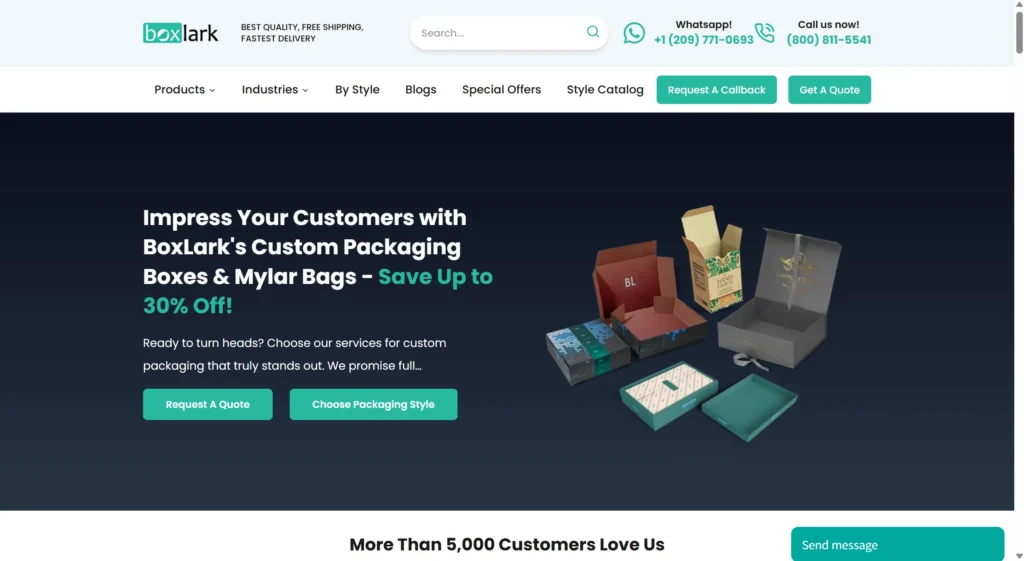
When I first studied the positioning and service structure of BoxLark, I quickly realized that the company is trying to do more than simply manufacture packaging boxes. From my perspective, BoxLark presents itself as a packaging partner that helps brands translate their identity, product value, and market ambition into physical packaging that customers can see and experience immediately. In modern retail and e-commerce environments, packaging has become one of the most visible expressions of a brand’s professionalism. Because of that, I always pay attention to suppliers that understand packaging not just as a protective layer, but as a branding instrument. What I see in BoxLark’s messaging and services is a company built around that exact idea.
One of the first things that stands out to me is the company’s emphasis on complete customization combined with accessible entry points for businesses of different sizes. BoxLark highlights that brands can order packaging in quantities starting as low as one hundred boxes while still accessing the same customization options that larger clients receive. From my experience analyzing packaging procurement strategies, this is extremely important for emerging brands. Many small and mid-sized companies want packaging that reflects their brand identity but hesitate because traditional packaging suppliers often impose high minimum order quantities. BoxLark’s lower entry threshold signals a manufacturer that understands the needs of startups, boutique retailers, and fast-growing e-commerce brands that may not yet require tens of thousands of units but still want professional packaging.
Another aspect that catches my attention is how the company structures its service ecosystem around speed and convenience. BoxLark emphasizes instant quotes, free design assistance, fast turnaround times, and free shipping in the United States. When I look at this combination of services, I see a supplier trying to remove the friction that typically slows down packaging projects. In the past, brands often had to navigate lengthy quoting processes, negotiate design support separately, and manage shipping logistics independently. BoxLark’s integrated approach suggests that it wants to simplify the entire process so that businesses can move from concept to finished packaging much more quickly. From a procurement standpoint, this efficiency can significantly reduce project timelines.
Material diversity is another factor that reinforces my impression of BoxLark as a flexible packaging manufacturer. The company offers multiple packaging materials such as art paper, kraft paper, kraft corrugated board, metallized paperboard, rigid stock, textured paperboard, white card, and white corrugated board. When I evaluate packaging suppliers, I always look at how well they accommodate different brand aesthetics and functional needs. Some brands prioritize sustainability and natural textures, which makes kraft materials attractive. Others aim for luxury presentation and may prefer rigid stock or metallized paperboard for a more premium look. The availability of these materials suggests that BoxLark understands that packaging must align with both the product category and the brand’s visual language.
Equally important to me is the company’s attention to printing technology and finishing quality. BoxLark highlights the use of advanced printing machines, color matching systems, proofing procedures, and high-quality inks, including water-based inks that support environmentally responsible production. In packaging, print precision can make an enormous difference in how a brand is perceived. Slight variations in color or blurred graphics can weaken a product’s visual impact on retail shelves. By emphasizing proofing and color accuracy, BoxLark signals that it prioritizes consistency and visual clarity, which are critical factors for brands that depend on strong shelf presence.
Another feature that reinforces BoxLark’s credibility is its focus on quality control and structural accuracy. The company stresses careful measurement, precise sizing, and durable materials designed to protect products during transportation and handling. From my perspective, these operational details are just as important as visual design. Packaging must not only look attractive but also perform reliably throughout the supply chain. If packaging fails during shipping or handling, the brand risks product damage and customer dissatisfaction. BoxLark’s attention to structural strength suggests that it aims to balance aesthetics with functional durability.
What I also appreciate about BoxLark is the company’s understanding of packaging as a strategic branding tool. Throughout its messaging, the company repeatedly explains that packaging boxes are not merely containers for products but powerful marketing assets that communicate a brand’s identity and values. I agree strongly with this perspective. When customers receive a product in thoughtfully designed packaging, their perception of the brand immediately improves. The packaging becomes part of the storytelling process, reinforcing the brand’s professionalism and attention to detail.
The company’s internal structure also supports this branding-focused philosophy. BoxLark highlights its dedicated research and development department, award-winning design team, experienced packaging specialists, and customer support staff. These elements suggest a collaborative working environment where packaging ideas are refined through both creative and technical expertise. From my viewpoint, this collaborative approach is essential because packaging development rarely succeeds when treated as a purely mechanical process. It requires a combination of design insight, material knowledge, and production experience.
Looking at the company’s history, I also notice that BoxLark has spent more than a decade building its reputation in the packaging industry. During this time, it has expanded from serving local businesses to supporting multinational companies and international clients. This growth trajectory indicates that the company has developed operational systems capable of handling diverse project requirements and global market demands. For procurement leaders, that kind of experience can increase confidence in the supplier’s ability to deliver consistent results.
Overall, when I evaluate BoxLark as a packaging manufacturer, I see a company that aims to combine customization flexibility, design expertise, operational efficiency, and cost accessibility. Rather than focusing solely on large-scale industrial production, BoxLark positions itself as a responsive partner for brands that want packaging solutions tailored to their identity and market goals. In today’s competitive retail environment, where packaging often shapes the first impression customers have of a product, a manufacturer with this type of strategic focus can become an invaluable partner.
Why Brand Procurement Leaders Choose BoxLark for Custom Apparel Boxes
When I consider the decision-making process of brand procurement leaders in the apparel industry, I recognize that packaging plays a much larger role than many people assume. Clothing brands rely heavily on presentation, emotional appeal, and customer experience, and packaging becomes one of the earliest touchpoints where those qualities are communicated. Because of this, procurement leaders are extremely selective when choosing suppliers for custom apparel boxes. After analyzing BoxLark’s apparel packaging capabilities, I can clearly understand why many decision-makers would choose to collaborate with this manufacturer.
One of the primary reasons lies in BoxLark’s specialization in apparel-related packaging formats. The company offers a wide selection of packaging solutions designed specifically for clothing and fashion accessories, including garment boxes, boutique boxes, lingerie packaging, bikini boxes, scarf boxes, tie boxes, shirt boxes, socks boxes, and shoe boxes. From my perspective, this specialization demonstrates a deep understanding of how different apparel items require different packaging structures. Clothing products vary widely in size, shape, and presentation requirements, so a one-size-fits-all packaging solution rarely works effectively. BoxLark’s diverse product range suggests that the company has developed packaging designs tailored to these specific needs.
Another reason procurement leaders are drawn to BoxLark is the company’s ability to integrate branding elements directly into apparel packaging. BoxLark allows brands to print logos, brand messages, product details, and visual graphics directly onto the boxes. In addition, designers can incorporate structural features such as die-cut windows, decorative compartments, ribbons, or specialty finishes that enhance the visual impact of the packaging. I find this particularly important in the fashion industry because packaging often contributes to the emotional moment when customers first open a product. When the packaging reflects the brand’s identity and aesthetic style, it reinforces the perception of quality and exclusivity.
The durability of BoxLark’s apparel packaging solutions is another factor that I believe procurement leaders consider carefully. Clothing products often travel through multiple stages of handling before reaching the final customer, including warehouse storage, transportation, and retail display. If the packaging is not strong enough, garments may arrive wrinkled or damaged, which negatively affects the customer experience. BoxLark emphasizes that its apparel boxes are constructed from durable materials such as rigid board, cardboard, and reinforced paperboard that can withstand repeated handling and shipping conditions. From my perspective, this structural reliability is essential for maintaining product quality.
Precision sizing is also a major advantage when working with BoxLark. Apparel products differ significantly in their dimensions and packaging requirements. A box designed for a shirt may not be suitable for accessories like scarves or ties, and swimwear packaging may require entirely different proportions. BoxLark addresses this challenge by offering fully customized dimensions and structural designs that match each product’s unique shape. I believe this attention to precise sizing helps ensure that garments remain properly positioned inside the packaging while also enhancing the visual presentation.
The company’s finishing options also contribute significantly to its appeal for apparel brands. BoxLark offers premium coating techniques such as matte finish, gloss finish, aqueous coating, and spot UV treatment. These finishes not only protect printed graphics but also create a more luxurious tactile experience when customers handle the box. In fashion retail, where the perception of luxury can influence purchasing decisions, subtle details such as surface texture and reflective finishes can elevate a brand’s image. From my viewpoint, these finishing techniques help apparel brands create packaging that feels both sophisticated and memorable.
Design collaboration is another element that strengthens BoxLark’s value proposition. Many apparel brands possess strong creative visions but may lack the technical knowledge required to translate those ideas into manufacturable packaging structures. BoxLark offers free design assistance from experienced professionals who help brands refine their concepts and ensure that the final packaging aligns with both aesthetic goals and production requirements. I see this collaborative design process as particularly beneficial for emerging brands that want high-quality packaging without investing heavily in internal packaging development teams.
Cost efficiency also plays a significant role in procurement decisions, especially in the apparel industry where margins can fluctuate based on seasonal trends and production costs. BoxLark addresses this concern by offering competitive wholesale pricing, bulk discounts, and low minimum order quantities. This flexibility allows brands to test new packaging designs without committing to extremely large production runs. In my experience, procurement leaders appreciate suppliers who provide this level of financial flexibility because it reduces risk while still enabling innovation.
Speed and reliability are additional reasons why brands choose BoxLark. Fashion collections often launch according to strict seasonal schedules, and delays in packaging production can disrupt product releases or marketing campaigns. BoxLark’s commitment to fast turnaround times and rush packaging services helps ensure that apparel brands receive their packaging on schedule. For procurement leaders responsible for coordinating product launches, this reliability can make a significant difference in operational planning.
Sustainability considerations are also increasingly important in the apparel industry, and BoxLark supports this trend by offering eco-friendly materials such as recycled paperboard and water-based inks. Many fashion brands are actively working to reduce their environmental impact, and packaging suppliers that align with these sustainability goals are often preferred partners. By providing environmentally responsible material options, BoxLark allows brands to maintain consistency between their packaging practices and their broader sustainability commitments.
When I evaluate all of these factors together, I see BoxLark as a packaging manufacturer that offers a compelling combination of design flexibility, structural durability, operational efficiency, and branding expertise. For procurement leaders responsible for sourcing custom apparel boxes, these qualities create a strong foundation for long-term collaboration. The company’s ability to transform clothing packaging into a visually appealing, protective, and brand-reinforcing asset explains why so many apparel brands choose to work with BoxLark as their packaging partner.
OXO Packaging
When I evaluate packaging manufacturers in the custom boxes industry, I try to look beyond the marketing language and understand what the company is actually trying to solve for its customers. In the case of OXO Packaging, what stands out to me is the company’s clear intention to simplify the custom packaging process while still offering the kind of visual and structural sophistication that modern brands expect. From my perspective, OXO Packaging positions itself as a practical packaging partner for businesses that want their products to stand out in the market without facing the usual complexity, cost barriers, and long development timelines that often come with custom packaging.
One of the first things I notice when analyzing OXO Packaging is how strongly the company emphasizes customization flexibility. Many packaging suppliers claim to offer custom boxes, but in practice they limit businesses to predefined sizes, materials, or design templates. OXO Packaging appears to take a different approach. The company repeatedly highlights that brands can customize the size, shape, material, printing, and finishing of their packaging according to their product’s exact requirements. For me, that signals a manufacturer that understands packaging as a tailored solution rather than a standardized commodity. Every product has its own dimensions, weight, fragility level, and branding personality, and a packaging partner that respects those variables tends to create much stronger results for the brand.
Another aspect that attracts my attention is how OXO Packaging integrates design support directly into its service model. The company offers free graphic design assistance and consultation, which suggests that it does not expect every brand to arrive with a perfectly prepared packaging concept. From my experience, many businesses—especially emerging brands—have strong ideas about how they want their packaging to look, but they may not have the technical expertise required to translate those ideas into production-ready dielines and structural designs. OXO Packaging’s design support appears to bridge that gap, allowing brands to transform creative concepts into functional packaging solutions that can actually be manufactured efficiently.
Material diversity is another key factor that reinforces my impression of OXO Packaging as a versatile manufacturer. The company works with materials such as kraft paper, cardboard, corrugated board, and rigid stock, each serving a different purpose in the packaging ecosystem. When I think about packaging strategically, I see material selection as one of the most critical decisions in the entire design process. Kraft packaging offers a natural, eco-friendly aesthetic that resonates strongly with sustainability-focused brands. Cardboard provides a smooth surface ideal for high-quality printing and vibrant graphics. Corrugated materials add structural strength for shipping and protection. Rigid stock elevates packaging into the luxury category, making it ideal for premium products. The ability to offer all of these materials under one supplier gives brands the flexibility to align packaging with both their functional and visual goals.
The printing technologies used by OXO Packaging also tell me a great deal about its production capabilities. The company highlights digital printing, offset printing, screen printing, and other advanced techniques that allow brands to produce highly detailed graphics, vibrant color combinations, and complex design elements. I find this particularly important because packaging printing is not simply about placing a logo on a box. High-quality printing ensures color accuracy, brand consistency, and visual clarity across thousands of units. When packaging is displayed in retail stores or shared on social media through unboxing experiences, the print quality becomes part of the brand’s identity. OXO Packaging’s commitment to advanced printing methods indicates that the company understands how critical this element is for modern businesses.
Finishing techniques represent another area where OXO Packaging demonstrates strong capabilities. The company offers a wide range of premium finishing options including embossing, debossing, spot UV coating, holographic foiling, gold and silver foiling, matte lamination, gloss lamination, and various decorative add-ons. When I analyze successful packaging projects, I often notice that the difference between an ordinary box and a memorable one lies in these subtle finishing details. Embossing can give a logo a tactile dimension that customers immediately notice. Foiling can add elegance and reflect light in a way that draws attention on retail shelves. Matte and gloss laminations influence how the box feels in the customer’s hands. By offering these finishing options, OXO Packaging enables brands to transform simple packaging structures into powerful visual storytelling tools.
Operational efficiency is another strength that I associate with OXO Packaging. The company highlights quick turnaround times, free shipping within the United States, and relatively low starting order quantities. From a procurement perspective, these factors can make a major difference in supplier selection. Brands often operate under tight launch timelines, particularly in industries like fashion, cosmetics, and consumer goods where seasonal campaigns and marketing initiatives drive product releases. A packaging partner that can deliver high-quality custom boxes within predictable timeframes helps ensure that the packaging development process does not delay the product launch itself.
The company also places strong emphasis on customer support and long-term collaboration. OXO Packaging mentions 24/7 customer service availability and a customer-first philosophy that prioritizes solving client challenges through thoughtful consultation and problem-solving. I see this as an important indicator of how the company approaches business relationships. Packaging projects frequently involve revisions, adjustments, and evolving design requirements. A supplier that remains responsive and accessible throughout the process becomes much easier to work with over time.
Sustainability is another dimension that contributes to OXO Packaging’s appeal. The company emphasizes eco-friendly packaging materials, biodegradable kraft options, and recyclable cardboard solutions that help brands reduce their environmental footprint. As sustainability continues to shape consumer expectations, many businesses are looking for packaging suppliers that can align with environmentally responsible practices. OXO Packaging’s commitment to sustainable materials allows brands to communicate their environmental values without sacrificing packaging quality or visual appeal.
Overall, when I step back and evaluate OXO Packaging as a manufacturer, I see a company that aims to combine customization flexibility, strong design support, advanced printing technology, premium finishing capabilities, and customer-centered service. Rather than focusing solely on high-volume industrial production, OXO Packaging appears to prioritize accessibility and collaboration, enabling brands of different sizes to develop packaging solutions that truly reflect their identity and market positioning.
Why Brand Procurement Leaders Choose OXO Packaging for Custom Apparel Boxes
When I shift my perspective to that of a procurement leader responsible for sourcing packaging for apparel products, the criteria for selecting a supplier become much more detailed. Apparel packaging must achieve several goals simultaneously. It needs to protect delicate garments, maintain the presentation quality of the product, reflect the brand’s identity, and deliver an impressive unboxing experience for customers. After reviewing OXO Packaging’s capabilities in apparel packaging, I can clearly understand why many brand procurement leaders choose to collaborate with this company for custom apparel boxes.
One of the most compelling reasons is the breadth of apparel-specific packaging formats that OXO Packaging provides. The company offers packaging solutions tailored to a wide variety of clothing and fashion accessories, including shirt boxes, tie boxes, lingerie packaging, scarf boxes, hat boxes, socks boxes, garment boxes, swimwear packaging, boutique boxes, and wedding dress storage boxes. From my perspective, this diversity demonstrates a deep understanding of the apparel industry. Different clothing items require different packaging structures and dimensions. A packaging design suitable for a folded shirt may not work for delicate lingerie or bulky outerwear. OXO Packaging’s ability to develop customized structures for each product category helps ensure that the packaging fits the garment perfectly while preserving its presentation quality.
Material strength is another critical factor that influences procurement decisions, particularly for apparel products that must remain wrinkle-free and undamaged throughout shipping and handling. OXO Packaging offers durable materials such as corrugated cardboard and rigid stock that provide strong structural protection during transportation. Corrugated apparel boxes are especially valuable for e-commerce shipments because they can withstand pressure, moisture, and environmental stress during logistics operations. Rigid boxes, on the other hand, are often chosen for premium apparel packaging because they enhance the perceived value of the garment while providing a sturdy protective structure.
Sustainability considerations also play an increasingly important role in apparel packaging decisions. Many fashion brands today aim to reduce their environmental impact by choosing recyclable and biodegradable packaging materials. OXO Packaging supports this goal by offering kraft apparel boxes made from biodegradable wood pulp materials. These kraft boxes combine sustainability with aesthetic appeal, creating a natural, rustic appearance that resonates strongly with modern eco-conscious fashion brands. From my viewpoint, the availability of sustainable materials allows procurement leaders to align their packaging choices with broader environmental commitments and corporate sustainability initiatives.
Design customization represents another major advantage that attracts apparel brands to OXO Packaging. The company allows businesses to personalize their apparel boxes with logos, brand colors, artwork, and product information using high-quality printing techniques. In the fashion industry, visual branding is extremely important. The packaging must communicate the brand’s identity before the customer even sees the garment itself. Through custom printing, apparel companies can transform their packaging into a powerful branding tool that reinforces brand recognition and leaves a lasting impression on customers.
Finishing enhancements further strengthen the appeal of OXO Packaging’s apparel boxes. The company offers luxurious finishing options such as embossing, debossing, gold foiling, holographic foiling, spot UV coating, and lamination treatments that elevate the overall appearance of the packaging. These finishing elements can dramatically influence how customers perceive the product inside the box. A garment presented in a beautifully finished box immediately feels more valuable and exclusive. For premium fashion brands, these subtle visual cues help reinforce the luxury image they want to communicate.
Another reason procurement leaders choose OXO Packaging is the company’s ability to produce custom apparel boxes with precise dimensions. Apparel products vary significantly in size, from compact accessories like scarves to larger items such as coats or dresses. OXO Packaging allows brands to specify the exact length, width, and depth of their packaging boxes so that each garment fits perfectly inside. This precision reduces unnecessary empty space, improves product protection, and enhances the visual presentation when customers open the package.
The company’s printing capabilities also support apparel brands that require vibrant and detailed graphics on their packaging. Digital printing technology enables the production of high-resolution images, complex patterns, and intricate design elements that align with fashion branding strategies. Offset printing, on the other hand, offers excellent color consistency and cost efficiency for large production runs. By providing both printing options, OXO Packaging allows brands to choose the method that best suits their production scale and design complexity.
Operational reliability also influences procurement decisions, and OXO Packaging demonstrates strong performance in this area through its fast production timelines and dependable delivery schedules. The company typically delivers custom apparel boxes within approximately ten to twelve working days after final design approval. For fashion brands that operate on tight seasonal schedules, this speed can be extremely valuable. Packaging delays can disrupt product launches and marketing campaigns, so working with a supplier that prioritizes quick turnaround times helps ensure smooth product distribution.
Customer service support is another factor that strengthens OXO Packaging’s reputation among procurement professionals. The company provides round-the-clock customer assistance, ensuring that brands can receive guidance on packaging specifications, design adjustments, and production updates whenever necessary. From my experience, responsive customer support significantly improves the overall supplier relationship because it reduces uncertainty and helps resolve issues quickly during the packaging development process.
When I consider all of these elements together, it becomes clear why many procurement leaders view OXO Packaging as a reliable partner for custom apparel boxes. The company combines apparel-specific packaging expertise, durable material options, advanced printing capabilities, premium finishing techniques, sustainable materials, and responsive customer support. By integrating these capabilities into a streamlined service model, OXO Packaging enables apparel brands to create packaging that protects their garments, enhances brand perception, and delivers an exceptional customer experience from the moment the box is opened.
EMENAC Packaging
When I evaluate custom packaging manufacturers, I always try to understand whether a company sees packaging merely as a protective shell or as a strategic part of the product experience. In my view, the most capable packaging partners are the ones that treat every box as an opportunity to reinforce brand identity, protect product integrity, and shape the customer’s emotional reaction to the purchase. As I studied the structure, capabilities, and philosophy behind Emenac Packaging, I began to see a manufacturer that clearly belongs to the second category. The company consistently describes packaging as something that must enhance, protect, and elevate the product inside rather than simply contain it. That mindset alone tells me a lot about how the company approaches its work.
What impresses me first is the way Emenac Packaging frames customization. Instead of offering a limited catalog of standard box templates, the company approaches packaging as a fully adaptable design process where materials, structures, shapes, printing techniques, and finishes are all tailored to the product and brand identity. When I think about the modern packaging landscape, this level of flexibility is extremely important. Every product has its own physical characteristics and marketing goals. Some products need rugged protection during shipping, while others require elegant presentation for luxury retail. Emenac Packaging appears to understand that distinction well, which is why it emphasizes designing custom boxes that align with the shape, style, and market expectations of each product category.
Another aspect that immediately stands out to me is the company’s focus on material excellence. Packaging begins with material selection, and Emenac Packaging clearly treats this decision as the foundation of every project. The company offers eco-friendly kraft paper, sturdy cardboard, corrugated board for enhanced protection, and rigid stock for premium packaging solutions. From my perspective, these material options provide the versatility that brands need to align packaging with both functional and visual goals. Kraft materials create a natural and environmentally responsible appearance that resonates strongly with modern sustainability trends. Cardboard offers excellent printability and structural reliability for retail packaging. Corrugated materials ensure durability during transportation. Rigid boxes elevate the perceived value of luxury products by delivering a heavier, more refined tactile experience.
What I find particularly compelling is how Emenac Packaging integrates structural design into the customization process. The company repeatedly emphasizes that custom boxes should not only look attractive but also function smoothly for the user. Structural styles such as tuck-end closures, sleeve boxes, two-piece boxes, drawer-style configurations, magnetic closures, and collapsible rigid boxes demonstrate how packaging can enhance usability while maintaining aesthetic appeal. From my perspective, this approach shows that the company understands the full lifecycle of a package—from manufacturing and shipping to retail display and customer interaction. A box that opens elegantly and securely holds the product inside contributes significantly to the overall perception of quality.
The printing capabilities of Emenac Packaging further reinforce my impression that the company takes branding seriously. High-definition printing methods such as CMYK and PMS allow for precise color matching and vivid graphics, ensuring that brand logos, artwork, and messaging appear exactly as intended. I find this especially important because packaging often serves as the first visual interaction between the product and the customer. If the printing lacks clarity or color accuracy, the entire brand experience can feel less professional. Emenac Packaging’s commitment to advanced printing technologies indicates that it prioritizes consistency and visual precision across large production runs.
Finishing techniques represent another area where Emenac Packaging demonstrates a deep understanding of premium packaging design. The company offers sophisticated finishing options such as gold and silver foiling, embossing, debossing, holographic effects, soft-touch laminations, matte coatings, gloss laminations, and UV protective layers. In my experience, these finishing elements can dramatically transform the appearance and feel of a box. A soft-touch laminated surface adds a luxurious tactile sensation, while foil stamping introduces an element of visual prestige that immediately catches the customer’s eye. These details may seem subtle at first glance, but they play a powerful role in shaping the perceived value of the product.
I also appreciate the company’s attention to internal packaging features such as custom inserts and die-cut elements. Foam inserts, punch partitions, pillow inserts, and precision die-cut compartments ensure that products remain securely positioned within the box during transportation and handling. At the same time, window cutouts and PVC display panels allow customers to preview the product without opening the packaging. To me, this combination of protection and presentation reflects a thoughtful packaging philosophy that prioritizes both product safety and customer engagement.
Another reason I see Emenac Packaging as a strong manufacturing partner is its commitment to industry-specific packaging solutions. The company designs packaging not only for apparel and retail but also for cosmetics, jewelry, food products, pharmaceuticals, hospitality items, and promotional merchandise. This broad industry experience suggests that the company understands the unique regulatory requirements, safety standards, and branding expectations associated with different sectors. In my opinion, suppliers that specialize in multiple industries often develop more refined problem-solving capabilities because they encounter a wider range of packaging challenges.
Operational efficiency is also an important part of Emenac Packaging’s value proposition. The company highlights fast production cycles, quick turnaround times of approximately seven to nine days, free shipping, and low minimum order quantities. From a procurement perspective, these operational advantages can significantly simplify the packaging sourcing process. Brands often operate under tight deadlines, especially during product launches or seasonal campaigns. A packaging partner that can deliver custom solutions quickly without sacrificing quality becomes an essential part of the supply chain.
Finally, I am impressed by Emenac Packaging’s emphasis on customer support and collaborative design assistance. The company provides free design services, digital proofs, prototype samples, and professional guidance throughout the packaging development process. This level of support indicates that the company values long-term partnerships rather than one-time transactions. When brands have access to expert design consultation, they can refine their packaging concepts more effectively and avoid costly mistakes before production begins.
When I bring all these elements together—material versatility, structural innovation, high-quality printing, luxury finishes, protective inserts, industry specialization, and customer-focused service—I see a manufacturer that is deeply invested in helping brands build stronger product experiences through packaging. Emenac Packaging is not simply producing boxes; it is creating customized packaging systems that combine protection, branding, and functionality into a single cohesive solution.
Why Brand Procurement Leaders Choose Emenac Packaging for Custom Apparel Boxes
When I think about the perspective of a procurement leader responsible for sourcing custom apparel packaging, the selection process becomes far more strategic than it might appear from the outside. Apparel packaging has to accomplish several goals simultaneously. It must preserve the condition of delicate garments, reflect the brand’s aesthetic identity, support retail presentation, and deliver a memorable unboxing experience for customers. After examining Emenac Packaging’s apparel packaging capabilities, I can clearly understand why many procurement professionals choose to collaborate with this manufacturer.
One of the primary reasons is the company’s deep understanding of the apparel industry’s presentation standards. Clothing is often purchased not only for its practical function but also for its emotional and stylistic appeal. The packaging that accompanies a garment becomes part of that emotional experience. Emenac Packaging recognizes this dynamic and designs custom apparel boxes that enhance the excitement of receiving a new outfit or accessory. The company focuses on creating packaging that feels elegant, stylish, and visually engaging so that customers immediately associate the brand with quality and attention to detail.
Another factor that attracts procurement leaders is the wide variety of apparel packaging styles offered by Emenac Packaging. The company produces packaging solutions for shirts, dress pants, scarves, gowns, belts, ties, hats, and numerous other fashion accessories. Each product category requires different structural considerations. A neatly folded shirt box must maintain crisp edges and prevent wrinkling, while packaging for accessories such as ties or belts may require compact compartments that highlight the item’s design. By offering customized structures for each apparel type, Emenac Packaging ensures that every product is presented in the most suitable format.
Material durability also plays a significant role in procurement decisions for apparel packaging. Garments must arrive at retail locations or customer homes in pristine condition without creases, dust exposure, or damage. Emenac Packaging addresses this requirement by using high-quality cardboard, paperboard, and rigid materials that provide reliable structural support during transportation. Corrugated board options offer additional resistance against pressure and environmental stress, while rigid boxes create a premium presentation that is particularly appealing for luxury clothing brands.
I also believe procurement leaders value Emenac Packaging’s commitment to custom sizing. Apparel products vary widely in dimensions, from small accessories like scarves and pocket squares to larger items such as dresses or coats. Packaging that is too large can cause garments to shift during shipping, while boxes that are too small may compress the fabric and compromise the presentation. Emenac Packaging allows brands to specify precise box dimensions so that each garment fits perfectly within its packaging, preserving both protection and visual balance.
Printing customization is another reason why apparel brands choose to work with Emenac Packaging. Fashion companies rely heavily on strong visual identity, and packaging provides a powerful surface for communicating that identity. Through high-definition printing, brands can display logos, taglines, product descriptions, and graphic elements directly on their apparel boxes. These printed details reinforce brand recognition and ensure that customers immediately associate the packaging with a specific fashion label.
Finishing enhancements further elevate the appeal of Emenac Packaging’s apparel boxes. Embossed logos, metallic foils, matte laminations, and spot UV coatings create subtle visual contrasts that make the packaging feel more luxurious. When customers receive a garment in a carefully finished box, the entire unboxing process becomes more memorable. In competitive apparel markets, these small visual and tactile details can significantly influence how customers perceive the brand.
Another advantage that procurement leaders appreciate is the company’s ability to incorporate functional features into apparel packaging. Window cutouts allow customers to preview the color or texture of the garment before opening the box, while custom inserts keep folded clothing securely positioned inside the packaging. Compartments and partitions can organize accessories neatly alongside the main product, improving both presentation and practicality.
Operational reliability also contributes to Emenac Packaging’s reputation among procurement professionals. The company’s fast production timelines and streamlined ordering process make it easier for brands to launch new collections on schedule. Seasonal fashion lines often operate under strict deadlines, and delays in packaging production can disrupt product availability. Emenac Packaging’s efficient manufacturing process helps reduce that risk.
Customer service is another aspect that procurement leaders consider when selecting a packaging partner. Emenac Packaging offers continuous support through experienced representatives who assist with packaging design, technical specifications, and order management. This level of guidance helps brands navigate the packaging development process more smoothly, especially when creating new product lines.
Sustainability considerations are increasingly influencing procurement decisions in the apparel industry as well. Many fashion brands are now seeking environmentally responsible packaging options that align with their sustainability commitments. Emenac Packaging supports these goals by offering recyclable materials and eco-friendly printing methods that reduce environmental impact without sacrificing packaging quality.
When I look at the full picture, I see several clear reasons why procurement leaders choose Emenac Packaging for custom apparel boxes. The company combines apparel-specific design expertise, durable materials, precise sizing, high-quality printing, premium finishing options, and reliable customer support. These capabilities allow apparel brands to create packaging that protects garments, strengthens brand identity, and enhances the customer experience from the moment the box is opened.
Custom Boxline
When I evaluate a packaging manufacturer like CustomBoxline, I always try to understand not only what they produce, but how they think about packaging as part of a brand’s operational ecosystem. Many suppliers focus purely on manufacturing capacity or printing capability, yet what often matters more to brand teams is whether the manufacturer understands the real role packaging plays in product presentation, logistics, customer perception, and long-term brand development. As I analyze CustomBoxline’s offering, I see a company that clearly positions packaging as a strategic component of a brand’s identity rather than a simple container. That philosophy becomes visible in the way the company discusses customization, materials, printing, design tools, and customer support.
One of the first things I notice about CustomBoxline is its emphasis on accessibility without sacrificing premium presentation. In the packaging industry, there is often a gap between highly customized luxury packaging and practical commercial packaging that brands can actually afford to scale. What I find interesting about CustomBoxline is how it attempts to bridge that gap. The company presents itself as capable of producing elegant luxury boxes with refined finishes while still maintaining competitive pricing, low minimum order quantities, and bulk discounts. From my perspective, that balance is extremely important because many brands want sophisticated packaging but cannot afford manufacturing structures that only work for extremely large production volumes.
Another aspect that captures my attention is the breadth of packaging styles and formats the company offers. CustomBoxline does not focus on a single category of boxes. Instead, it provides folding cartons, tray and sleeve boxes, two-piece boxes, display boxes, pillow boxes, gable boxes, dispenser boxes, drink carriers, and several other structural designs. As I reflect on this variety, I realize that it speaks directly to how brands evolve over time. A business may initially require only a single product box, but as it grows it may begin to explore retail displays, promotional kits, subscription packaging, and shipping solutions. A manufacturer that already supports these multiple formats becomes a valuable long-term partner because it can grow alongside the brand’s packaging needs without forcing the company to constantly search for new suppliers.
Material selection is another area where I believe CustomBoxline demonstrates a practical understanding of packaging design. The company highlights strong, sustainable, and visually appealing card stock materials, including cardboard, kraft paper, corrugated board, and other premium substrates. From my perspective, material choice is often the most overlooked factor in packaging success. A design may appear impressive in digital form, but if the physical material feels weak or inconsistent, the customer’s perception of the product can change immediately. When I see a manufacturer emphasizing durability, eco-friendliness, and structural integrity at the material level, it signals to me that they understand packaging as a tactile and physical experience rather than simply a printed surface.
Printing and embellishment capabilities also play an essential role in CustomBoxline’s positioning. The company offers finishing techniques such as raised ink printing, foil stamping, metalized printing, and spot UV coating. These techniques allow brands to create visual depth and contrast without relying on overly complicated box structures. In my experience, small finishing details can dramatically influence how customers perceive a product’s value. A subtle foil logo or a glossy spot UV highlight can elevate a box from ordinary to premium without increasing manufacturing complexity significantly. I believe CustomBoxline understands that brands often want exactly this kind of visual enhancement because it provides a cost-efficient way to strengthen brand identity.
Another feature that I find particularly compelling is the company’s online 3D box design platform. In the traditional packaging development process, buyers often struggle to visualize the final product before production begins. They must interpret flat dielines or static design files and imagine how those elements will translate into a finished box. CustomBoxline’s browser-based design tool appears to address this challenge by allowing users to create and preview packaging in real time. When I think about the decision-making process within most companies, I realize how useful this capability can be. Marketing teams, product managers, and procurement leaders often need to review packaging concepts together, and a 3D visualization can make those discussions far more productive and efficient.
Customer support also appears to be a central element of CustomBoxline’s service philosophy. The company repeatedly emphasizes expert assistance, design guidance, and responsive communication throughout the packaging development process. I find this reassuring because custom packaging projects rarely proceed without questions, adjustments, or technical considerations. When brands work with suppliers who are willing to collaborate and provide guidance, the final result tends to be more aligned with the brand’s expectations. In my view, this collaborative approach often distinguishes reliable packaging partners from purely transactional suppliers.
Operational efficiency is another characteristic that stands out to me. CustomBoxline promotes fast turnaround times, worldwide delivery, and simplified ordering workflows that guide customers from quotation to design approval to final production. This streamlined process reflects an understanding of how modern businesses operate. Product launches, promotional campaigns, and seasonal releases often run on strict timelines. A packaging manufacturer that can respond quickly while maintaining consistent quality becomes a valuable part of the supply chain rather than simply a vendor.
As I bring these observations together, I see CustomBoxline as a manufacturer that focuses on making custom packaging both powerful and practical. The company appears to combine structural variety, material reliability, visual enhancement options, accessible design tools, and supportive customer service into a single integrated offering. From my perspective, that approach allows brands of different sizes to develop packaging that looks professional, protects their products effectively, and strengthens their identity in the marketplace.
Why Brand Procurement Leaders Choose CustomBoxline for Custom Apparel Boxes
When I consider the decision-making process of a brand procurement leader sourcing custom apparel boxes, I immediately think about the multiple objectives that packaging must achieve simultaneously. Apparel packaging is expected to protect garments from environmental damage, maintain a polished presentation, reinforce brand identity, and deliver a memorable unboxing experience for customers. In my analysis of CustomBoxline’s apparel packaging solutions, I can clearly see why procurement professionals would choose to work with the company. Its approach aligns closely with the operational and branding priorities that apparel businesses typically face.
One of the most compelling reasons is the company’s understanding of apparel packaging as an extension of fashion branding. Clothing is deeply connected to personal expression and aesthetic identity, and packaging plays a critical role in communicating that identity before the customer even touches the product. When I review CustomBoxline’s apparel packaging philosophy, I notice how strongly it emphasizes presentation, visual impact, and brand storytelling. Custom apparel boxes printed with logos, brand colors, and distinctive graphics transform packaging into a marketing channel that reinforces the brand’s personality and style.
Another factor that makes CustomBoxline attractive to procurement leaders is its wide selection of apparel-specific box formats. The company produces clothing sleeves, pillow boxes, rigid apparel boxes, corrugated mailer boxes, personalized clothing packaging, hat boxes, and several other structural variations. Each of these formats serves a different function depending on the type of apparel product being packaged. For instance, a rigid box may be ideal for premium garments or luxury fashion items that require a sophisticated presentation. Corrugated mailer boxes may be better suited for direct-to-consumer shipping operations where durability during transit is a priority. Pillow boxes and sleeves can offer lightweight yet visually distinctive packaging for accessories or smaller apparel products.
Material durability also plays a central role in procurement decisions within the apparel sector. Garments must arrive in perfect condition, free from wrinkles, dust, or moisture damage. CustomBoxline’s emphasis on high-quality materials ensures that clothing products remain protected during storage and transportation. Corrugated board provides additional structural reinforcement for shipping environments, while cardboard and premium card stock offer smooth surfaces that enhance printing clarity and overall presentation.
Printing customization is another reason procurement teams value CustomBoxline as a packaging partner. Apparel brands rely heavily on visual identity to differentiate themselves in competitive retail environments. By using full-color printing techniques and advanced surface finishing options, CustomBoxline enables brands to translate their design language directly onto packaging. Logos, typography, patterns, and brand messaging can be printed with precision, ensuring that the box becomes a cohesive extension of the overall brand aesthetic.
Finishing techniques further enhance the appeal of CustomBoxline’s apparel boxes. Options such as embossing, debossing, foil stamping, spot UV, and raised ink allow brands to create distinctive visual textures that capture attention and reinforce premium positioning. When I imagine a customer receiving a fashion item packaged in a beautifully finished box, I immediately understand how these details can transform a simple purchase into a memorable experience.
Procurement leaders also appreciate the operational flexibility that CustomBoxline provides. Low minimum order quantities allow emerging brands to experiment with custom packaging without committing to large production volumes. At the same time, bulk discounts and scalable manufacturing capacity make it possible for established apparel companies to expand their packaging programs efficiently as sales grow. This combination of flexibility and scalability is particularly valuable in the fashion industry, where product lines and seasonal collections change frequently.
Another important consideration is sustainability. Many apparel brands today are actively pursuing environmentally responsible practices in their supply chains. CustomBoxline addresses this need by offering recyclable and eco-friendly packaging materials that help brands align packaging decisions with broader sustainability goals. From my perspective, this capability strengthens the company’s appeal to procurement leaders who must balance environmental responsibility with performance and cost considerations.
Design assistance and visualization tools also play a meaningful role in the procurement process. CustomBoxline’s design platform and professional support services enable brands to refine packaging concepts before production begins. When procurement teams can review digital prototypes and collaborate with designers during the development stage, they gain greater confidence that the final product will meet both aesthetic and functional expectations.
Finally, I believe procurement leaders choose CustomBoxline because of its commitment to reliability and customer partnership. The company’s streamlined ordering workflow, responsive support team, and consistent manufacturing standards help brands manage packaging projects with greater predictability. In a fast-moving industry like fashion retail, dependable packaging suppliers are essential to maintaining smooth operations.
When I step back and consider the full picture, it becomes clear why CustomBoxline attracts apparel brands seeking custom packaging solutions. The company combines strong material quality, flexible box structures, advanced printing capabilities, premium finishing techniques, sustainable materials, and supportive customer service into a cohesive manufacturing model. From my perspective, these elements make CustomBoxline not just a packaging supplier but a strategic partner that helps apparel brands protect their products, elevate their presentation, and strengthen their identity in a competitive marketplace.
Custom Boxes Market
When I evaluate a packaging manufacturer like Custom Boxes Market, I try to understand not only what types of boxes they produce but also how they approach packaging as part of a brand’s growth strategy. From the way the company presents its services, it is clear to me that Custom Boxes Market positions itself as more than just a printing vendor. I see a manufacturer that tries to make custom packaging accessible, flexible, and commercially realistic for businesses that want their products to stand out without facing complicated production barriers. What immediately catches my attention is the combination of design support, digital visualization tools, and simplified ordering workflows that help clients move from an idea to a finished box with much less uncertainty.
As I look deeper into their offering, I notice how strongly the company emphasizes collaboration. Instead of expecting clients to arrive with perfectly prepared packaging specifications, Custom Boxes Market encourages them to share ideas, artwork, or even rough concepts. From there, the company’s design team develops digital prototypes and 3D visualizations so buyers can see exactly how the final box will look before production begins. From my perspective, this approach reduces one of the biggest anxieties in custom packaging procurement. When brands can visualize their packaging in advance, they gain confidence that the finished product will match their expectations and reinforce the brand identity they are trying to build.
Another aspect that stands out to me is the company’s wide selection of packaging structures and materials. Custom Boxes Market offers cardboard boxes, kraft boxes, corrugated boxes, rigid boxes, die-cut designs, and window boxes, along with many customization options such as embossing, lamination, UV coatings, perforations, glossy finishes, and matte finishes. To me, this range suggests a manufacturer that understands packaging as both a structural and visual experience. The right box must protect the product during storage and shipping while simultaneously presenting it in a way that attracts attention and communicates quality.
I also appreciate the company’s attention to operational practicality. Custom Boxes Market highlights a minimum order quantity starting at one hundred boxes, free shipping, no die or plate charges, competitive pricing, and turnaround times designed to meet commercial schedules. When I think about how brands actually manage packaging procurement, these details become extremely important. A supplier may offer impressive design capabilities, but if the order quantities are too large or the costs are too high, the solution becomes impractical. What I see here is a manufacturer trying to align premium packaging potential with real-world business constraints.
The use of digital and offset printing technologies is another element that reinforces my confidence in their manufacturing capabilities. These printing methods allow for high-definition graphics, precise color reproduction, and consistent quality across production runs. In my experience, print clarity plays a major role in how customers perceive product packaging. Crisp logos, vibrant color combinations, and sharp design elements immediately communicate professionalism and reliability. Custom Boxes Market’s investment in modern printing equipment suggests that they understand how critical these visual details are to brand presentation.
Customer support also appears to be a defining feature of the company’s service model. Testimonials and client feedback repeatedly mention responsive communication, thoughtful guidance, and a collaborative working relationship throughout the packaging process. I find this particularly significant because packaging development often involves revisions, design adjustments, and structural considerations. A supplier that remains engaged and supportive throughout these stages can dramatically improve the overall experience for the brand team.
Another reason I see value in Custom Boxes Market is its understanding of packaging as a marketing tool. The company consistently describes packaging as something that protects products while simultaneously promoting brands. From my perspective, this reflects a modern view of packaging strategy. A box is no longer just a protective shell. It is often the first branded object a customer interacts with physically. Whether displayed on a retail shelf or delivered through e-commerce, packaging becomes part of the customer experience and influences how the product is remembered.
When I step back and consider all these factors together, I see Custom Boxes Market as a manufacturer that focuses on simplifying the custom packaging journey while still delivering professional-quality results. The company combines design support, structural variety, material flexibility, advanced printing, and responsive service into an integrated solution that helps brands create packaging that looks distinctive and performs reliably.
Why Brand Procurement Leaders Choose Custom Boxes Market for Custom Apparel Boxes
When I place myself in the position of a brand procurement leader responsible for sourcing custom apparel boxes, I immediately recognize that apparel packaging must satisfy several critical objectives at once. It must protect garments from environmental damage, preserve their presentation, reflect the brand’s style, and deliver a memorable unboxing experience for customers. As I analyze Custom Boxes Market’s approach to apparel packaging, I begin to see why many procurement professionals would choose to collaborate with this manufacturer.
One of the first reasons is the company’s clear understanding of the apparel industry’s presentation requirements. Clothing products are strongly connected to visual identity and personal expression, which means packaging must reinforce the brand’s aesthetic rather than simply store the item. Custom Boxes Market offers apparel-specific packaging such as shirt boxes, tights packaging, bikini boxes, shoe boxes, sunglasses packaging, rigid apparel boxes, and accessory packaging formats. When I look at this variety, I see a supplier that recognizes the unique structural needs of different apparel categories.
Another important factor is material durability and product protection. Apparel items are highly sensitive to environmental conditions such as moisture, dust, and pressure during transportation. Custom Boxes Market addresses these concerns by offering kraft, cardboard, corrugated, and rigid materials that provide varying levels of strength and presentation quality. Kraft packaging, for example, appeals to environmentally conscious brands and customers, while rigid boxes provide a more luxurious presentation for premium garments. From my perspective, the availability of multiple material options allows procurement teams to select packaging that aligns with both product requirements and brand positioning.
Brand recognition is another area where Custom Boxes Market provides meaningful value. Custom apparel boxes printed with logos, colors, and design elements help fashion brands establish a consistent identity across retail and online channels. I often think of packaging as a silent brand ambassador. When customers see a box with distinctive graphics and professional printing, they immediately associate it with a specific brand. This recognition strengthens customer loyalty and increases the likelihood that the product will stand out in a competitive marketplace.
The unboxing experience also plays a significant role in modern apparel marketing. Customers today often share their purchases on social media, which means packaging can become part of the storytelling process around a product. Custom Boxes Market offers elegant opening styles, decorative finishes, window features, and ribbon embellishments that enhance the visual impact of apparel packaging. From my perspective, these details transform the simple act of opening a box into an engaging and memorable moment.
Design flexibility is another reason procurement leaders choose to work with Custom Boxes Market. The company allows brands to customize dimensions, structural styles, colors, printing methods, and finishing details according to their specific product lines. For example, brands can select sleeve-style boxes for minimalist packaging or lid-and-base boxes for more traditional retail presentations. This flexibility ensures that packaging can evolve alongside the brand’s product portfolio.
Printing quality also plays a major role in apparel packaging success. Custom Boxes Market uses both offset and digital printing technologies to produce sharp graphics and vibrant colors. In the fashion industry, visual precision matters greatly because even small inconsistencies in color or logo placement can affect how professional a brand appears. By maintaining high printing standards, the company helps brands present their apparel products with confidence.
Procurement leaders also appreciate the operational efficiency that Custom Boxes Market provides. Free shipping, low minimum order quantities, and transparent pricing reduce the financial risk associated with custom packaging development. When brands can order packaging in manageable quantities and receive it quickly, they gain the flexibility to test new designs or respond to seasonal product launches without excessive inventory commitments.
Sustainability considerations further strengthen the company’s appeal. Many apparel brands now prioritize environmentally responsible packaging materials to align with broader corporate sustainability goals. Custom Boxes Market’s kraft and recyclable packaging options allow brands to demonstrate environmental awareness while maintaining professional presentation standards.
Finally, the collaborative design process offered by Custom Boxes Market helps procurement teams feel more confident in their packaging decisions. Through 3D mockups and design consultations, brands can review packaging concepts before production begins. I believe this step is extremely valuable because it reduces the likelihood of costly design errors and ensures that the final packaging aligns perfectly with the brand’s visual identity.
When I consider all these elements together, I understand why Custom Boxes Market has become a preferred partner for many apparel brands seeking custom packaging solutions. The company combines durable materials, flexible box structures, high-quality printing, engaging finishing options, sustainable packaging choices, and responsive customer support into a comprehensive manufacturing approach. From my perspective, these capabilities enable apparel brands to protect their products, strengthen their identity, and deliver a packaging experience that customers will remember long after the purchase.
Custom Apparel Packaging Cost Overview
Whenever I begin discussing custom apparel packaging with brand founders, sourcing managers, or product teams, one topic always appears very early in the conversation: cost. At first glance, a packaging box may seem like a straightforward item with a simple price, but from my experience working with packaging projects, the reality is far more nuanced. The cost of custom apparel boxes is influenced by a combination of design decisions, production techniques, material choices, and logistical considerations. Each of these elements contributes to the final price in ways that are not always immediately obvious to someone sourcing packaging for the first time.
What I have learned over the years is that understanding packaging cost is less about searching for the lowest price and more about understanding how different variables interact. When apparel brands understand the underlying cost structure behind their packaging, they can make decisions that maintain visual quality while also controlling operational expenses. In many cases, small adjustments in structure, materials, printing, or order quantities can significantly influence the overall budget without compromising the brand experience.
How Box Structure Shapes the Foundation of Packaging Cost
The first factor I always examine when estimating the cost of custom apparel packaging is the structural design of the box. Structure is not simply a visual choice; it determines how the packaging is engineered, how it is manufactured, and how efficiently it can be produced at scale. From my perspective, the structure of a box is often the starting point that influences almost every other cost component.
For many apparel brands, folding carton structures provide a practical balance between visual presentation and manufacturing efficiency. These boxes are typically made from paperboard materials that are die-cut, folded, and glued using automated production lines. Because the process is highly standardized, folding cartons can be produced relatively quickly and cost-effectively. This makes them ideal for packaging products such as shirts, accessories, scarves, and lightweight garments.
However, when brands move toward premium packaging structures, the production process becomes more complex. Rigid boxes, drawer-style boxes, magnetic closure boxes, and specialty gift packaging require additional craftsmanship during manufacturing. These structures often involve thicker board materials, manual assembly, and more precise finishing work. I have noticed that while these premium structures significantly enhance the perceived value of a product, they also introduce higher production costs because the manufacturing process becomes more labor-intensive.
From my perspective, choosing the right box structure involves balancing aesthetic goals with operational practicality. A well-designed structure should elevate the product while still allowing efficient manufacturing and shipping.
Why Material Selection Significantly Influences Packaging Cost
Once the box structure is defined, the next factor I carefully evaluate is the material used to manufacture the packaging. Materials affect not only the durability of the box but also the way it looks, feels, and performs during storage and transportation. In my experience, material selection often becomes one of the most influential cost drivers in custom apparel packaging.
Many apparel brands choose kraft paperboard because it offers an environmentally friendly appearance while remaining relatively affordable. Kraft materials communicate sustainability and authenticity, which resonates with many modern fashion brands. The natural texture of kraft paper also provides a unique visual aesthetic that works well with minimalist brand identities.
Cardboard materials, on the other hand, provide a smoother surface that supports higher-quality printing. When a brand wants vivid colors, detailed graphics, or intricate design elements, cardboard often becomes the preferred material. It maintains a strong balance between structural strength and visual clarity, which is why it is widely used for retail apparel packaging.
Corrugated materials introduce additional strength and are frequently used for ecommerce shipping boxes. Apparel brands that rely heavily on online sales often prioritize corrugated packaging because it protects garments during long-distance transportation. The layered construction of corrugated board provides cushioning that helps prevent damage during transit.
For luxury apparel brands, rigid board materials are often selected to create premium packaging experiences. Rigid boxes feel heavier and more substantial, which enhances the perceived value of the product inside. However, rigid materials also increase production cost due to their thickness and the additional assembly steps required to form the final box.
How Printing Techniques Contribute to Packaging Cost
Printing is another major factor that influences the cost of custom apparel packaging. When I think about packaging from a branding perspective, printing is what transforms a simple structural box into a recognizable brand asset. The way a logo is displayed, the accuracy of colors, and the sharpness of graphics all contribute to how customers perceive the brand.
Offset printing is one of the most widely used techniques for large production runs. It provides exceptional color accuracy and consistency across thousands of boxes. This method is particularly beneficial for brands that require precise color matching across multiple packaging batches. However, offset printing involves preparation steps such as creating printing plates and setting up machinery, which introduces initial setup costs.
Digital printing offers a different advantage. Because it does not require printing plates, it allows for faster production setup and greater flexibility for smaller quantities. Apparel brands launching new collections or testing new packaging concepts often benefit from digital printing because it reduces initial setup expenses.
Beyond the printing method itself, finishing techniques also play a significant role in packaging cost. Many apparel brands choose to add finishes such as foil stamping, embossing, debossing, spot UV coating, or lamination. These finishing elements enhance the tactile and visual qualities of the packaging, making it feel more premium and memorable.
From my perspective, these finishing details often create the emotional impact that customers remember during the unboxing experience. However, each finishing process requires additional manufacturing steps, which naturally increases production costs.
Why Order Quantity Dramatically Impacts Unit Pricing
One of the most important lessons I often share with apparel brands is the relationship between order quantity and packaging cost efficiency. Packaging manufacturing involves several preparation steps that must occur before production begins. These steps include machine calibration, die preparation, printing setup, and quality control adjustments.
These setup processes require time and resources regardless of whether the production run includes hundreds or thousands of boxes. When the order quantity is small, those setup costs are distributed across a limited number of units, resulting in a higher price per box.
As the order quantity increases, the same setup costs are spread across a much larger number of units. This reduces the cost of each individual box and makes large-scale production significantly more economical. From my experience, this is why many apparel brands eventually increase their packaging order volumes once they establish stable sales patterns.
Understanding this relationship helps brands make strategic decisions about packaging procurement. In many cases, planning larger production runs can reduce costs while ensuring packaging availability for future product launches.
How Shipping and Logistics Influence the Total Packaging Budget
The final factor I always consider when evaluating custom apparel packaging cost is shipping and logistics. While many buyers focus primarily on manufacturing costs, transportation expenses often represent a substantial portion of the total packaging budget.
Packaging boxes are lightweight but occupy a large amount of physical space. Because of this, shipping costs are frequently calculated based on volume rather than weight. A packaging design that takes up excessive space can significantly increase freight costs during international shipping.
Logistics considerations also include export documentation, customs procedures, and delivery coordination. When packaging is manufactured overseas, these logistical elements become essential for ensuring smooth transportation and timely delivery.
From my perspective, efficient packaging design should always consider shipping optimization. Boxes that are designed to stack efficiently and use space effectively can reduce transportation costs while protecting products during transit.
My Perspective on Balancing Cost Efficiency with Brand Value
After analyzing all these factors over many packaging projects, I have come to view custom apparel packaging cost as a strategic equation rather than a fixed number. Every decision—from structure and materials to printing and logistics—affects the final price and the overall brand experience.
In my view, the goal should not be to minimize packaging cost at all costs. Instead, apparel brands should aim to design packaging that delivers the right balance between visual impact, product protection, and operational efficiency. A thoughtfully designed packaging system can enhance brand perception, improve logistics performance, and create memorable customer experiences.
When brands approach packaging cost with this mindset, the conversation shifts from simply asking “How much does the box cost?” to asking a more meaningful question: “How can packaging support the long-term growth of the brand?”
Sustainable Apparel Packaging Trends
When I speak with apparel brands about packaging today, the conversation almost always expands beyond design and cost. Sustainability has become a central theme in how packaging strategies are planned. From my perspective, this shift is not simply driven by regulations or environmental campaigns. It is largely influenced by consumers themselves. Modern shoppers pay attention to how products are packaged, what materials are used, and whether brands are taking responsibility for environmental impact.
Over the past decade, I have watched the apparel industry move steadily toward more environmentally responsible packaging solutions. Ecommerce growth has dramatically increased the number of boxes shipped around the world, which means packaging waste has also become more visible. Because of this, brands are actively exploring materials, printing methods, and design approaches that reduce environmental impact without sacrificing the quality or presentation of their products. As I analyze the packaging strategies of both established fashion brands and emerging apparel startups, several sustainability-driven trends clearly stand out.
Why FSC Certified Materials Are Becoming a Foundation for Responsible Packaging
One of the most important developments I have seen in sustainable apparel packaging is the increasing reliance on FSC certified materials. Whenever I evaluate a packaging supplier or material source, FSC certification is often one of the first indicators I look for. The Forest Stewardship Council certification signals that the paper or board used in packaging originates from forests that are managed responsibly.
From my experience, this certification carries real significance because it reflects how raw materials are sourced long before they become packaging. FSC-certified forests are managed with strict environmental standards that protect biodiversity, prevent deforestation, and support local communities. When apparel brands choose FSC-certified packaging materials, they are participating in a supply chain that values long-term ecological stability.
What I find particularly interesting is how this certification also plays a role in brand communication. Many apparel brands include the FSC symbol subtly on their packaging or reference it in sustainability messaging. When customers notice these certifications, it reassures them that the brand has taken meaningful steps toward environmental responsibility. In many ways, FSC certification has become one of the most credible signals that packaging materials have been sourced ethically and sustainably.
How Recyclable Paperboard Packaging Supports the Circular Economy
Another major trend I consistently observe is the widespread use of recyclable paperboard packaging. As apparel brands increasingly rely on ecommerce distribution, packaging must travel long distances while protecting garments from damage. At the same time, these boxes eventually enter waste streams once customers unpack their purchases. Because of this lifecycle, recyclability has become a key design priority.
Paperboard packaging offers an important advantage because it integrates well with existing recycling systems across many countries. Unlike plastic-based packaging materials that often require specialized recycling facilities, paperboard can usually be processed through standard municipal recycling programs. This accessibility makes recyclable paperboard one of the most practical materials for brands that want to reduce packaging waste.
From my perspective, recyclable paperboard also allows for a strong balance between environmental responsibility and structural performance. It can be engineered into a wide variety of packaging forms, including folding cartons, ecommerce mailer boxes, rigid gift boxes, and retail display packaging. This versatility enables apparel brands to maintain visually appealing packaging while still supporting circular material flows.
I often remind brands that recyclability alone does not solve every environmental challenge, but when packaging materials are widely recyclable, it significantly improves the likelihood that those materials will reenter the production cycle instead of ending up in landfills.
Why Soy-Based Inks Are Changing the Environmental Footprint of Packaging Printing
Printing technology is another area where sustainability improvements are making a noticeable difference. Apparel packaging almost always requires printing to communicate brand identity through logos, colors, and graphic elements. Traditionally, many printing processes relied on petroleum-based inks, which can contain chemicals that release volatile organic compounds during production.
In recent years, I have seen a growing number of apparel brands adopting soy-based inks as a more environmentally responsible alternative. These inks are derived from renewable soybean oil rather than fossil fuel sources. From my perspective, this shift represents a meaningful improvement because soy-based inks typically produce fewer emissions during printing.
Beyond their environmental advantages, soy-based inks also deliver impressive visual performance. They produce vibrant colors and sharp image detail, which is particularly important in the fashion industry where packaging aesthetics influence brand perception. Many brands initially assume that environmentally friendly printing might compromise visual quality, but in my experience soy-based inks often perform just as well as traditional inks.
Another important advantage is that soy-based inks simplify the recycling process. During paper recycling, inks must be separated from the paper fibers. Because soy-based inks are easier to remove during this stage, they help improve the quality of recycled paper materials. When I consider the entire lifecycle of apparel packaging, printing technology becomes a surprisingly important factor in making packaging more sustainable.
Why Minimalist Packaging Design Reflects the Evolution of Sustainable Thinking
While materials and printing technologies are essential components of sustainable packaging, design philosophy itself is also evolving. One of the most noticeable trends I have observed is the rise of minimalist packaging design across many apparel brands.
Minimalism in packaging goes far beyond visual aesthetics. It represents a shift toward efficiency, intentional design, and reduced material consumption. Instead of creating overly complex packaging structures with multiple inserts and decorative layers, many brands are simplifying their designs to use fewer resources.
From my perspective, this design approach offers several environmental advantages. When packaging uses fewer materials, it requires less energy and fewer resources during manufacturing. Simplified structures also reduce waste generated during production because fewer components need to be cut, assembled, or discarded.
Minimalist packaging can also improve shipping efficiency. Smaller and lighter boxes reduce transportation emissions because more packages can be shipped within the same cargo space. This efficiency becomes particularly important for apparel brands operating in global ecommerce markets.
Interestingly, minimalist design often strengthens brand identity rather than weakening it. Clean layouts, refined typography, and subtle color palettes can communicate a sense of sophistication and modernity. Many fashion brands now use minimalist packaging to signal both aesthetic confidence and environmental awareness.
My Perspective on the Long-Term Direction of Sustainable Apparel Packaging
When I examine these developments together, I see a clear transformation in how apparel brands approach packaging strategy. Sustainability is no longer treated as an optional enhancement added after the packaging design is complete. Instead, it has become a guiding principle that shapes material selection, printing technology, structural design, and overall packaging philosophy.
FSC-certified materials support responsible forestry practices and ethical sourcing. Recyclable paperboard allows packaging materials to remain within the circular economy. Soy-based inks reduce the environmental impact of printing processes while maintaining visual quality. Minimalist design reduces material usage and improves logistical efficiency.
From my perspective, these trends represent the future of apparel packaging. As environmental awareness continues to grow, consumers will increasingly expect brands to demonstrate responsibility in every aspect of product presentation. Packaging will remain one of the most visible ways for apparel brands to communicate their values.
When brands thoughtfully integrate sustainable materials, eco-friendly printing technologies, and efficient design strategies, packaging becomes more than just a container for garments. It becomes a statement about the brand’s long-term vision and its commitment to a more responsible fashion industry.
Editor’s Pick: Recommended Manufacturer for Different Needs
Whenever I evaluate packaging manufacturers for apparel brands, I rarely approach the decision with the assumption that one supplier can serve every situation equally well. The apparel industry is extremely diverse. Some brands are launching their first product line with limited budgets and uncertain demand forecasts, while others are established fashion companies shipping thousands of garments across multiple continents every week. Some brands care most about premium presentation and luxury packaging details, while others prioritize cost efficiency, sustainability, or stable high-volume supply chains.
Because of this, I always prefer to frame my recommendations through the lens of real buyer scenarios. Instead of asking which packaging manufacturer is “the best overall,” I ask which manufacturer is best suited to solve a specific problem that a procurement team or brand founder is facing. From my perspective, the most successful packaging partnerships occur when the capabilities of the manufacturer align closely with the operational reality of the brand. By analyzing different types of apparel businesses and their packaging needs, I can usually identify which manufacturers are most likely to deliver value in each situation.
Best Manufacturer for Startup Clothing Brands
When I think about startup clothing brands, the first thing that comes to my mind is uncertainty. These companies are often testing their first collections, experimenting with brand identity, and learning how their products perform in the market. Because of this, the packaging supplier they choose must provide far more than simple production services. What startups really need is guidance, flexibility, and a partner who understands the challenges of launching a new brand.
From my experience, early-stage clothing brands rarely arrive with perfectly defined packaging specifications. They may have ideas about colors, logos, and brand aesthetics, but they often need support translating those ideas into practical packaging structures. This is why I believe the best manufacturers for startup apparel brands are those that take the time to guide clients through the packaging development process.
When I consider manufacturers capable of doing this effectively, I often think about companies like BorhenPack. What stands out to me is the emphasis on helping brands move from concept to production in a structured and supportive way. Instead of simply asking clients to provide finalized packaging designs, the process begins with understanding the brand’s product type, target market, and distribution channels. This approach allows packaging to be designed around real business conditions rather than purely visual ideas.
Another element that makes a manufacturer suitable for startups is flexibility in production volumes. Most new apparel brands cannot commit to very large packaging orders. A manufacturer willing to accommodate smaller production runs allows startups to test packaging concepts, adjust designs, and scale production gradually as sales grow. In my view, this kind of flexibility creates a much healthier relationship between the brand and the packaging supplier during the early stages of business development.
Best Supplier for Luxury Apparel Packaging
When I shift my attention from startup brands to luxury fashion companies, the criteria for selecting a packaging manufacturer change dramatically. In the luxury segment, packaging is not simply a protective container for garments. It becomes part of the product experience itself. The moment a customer receives the box, touches the material, and opens the packaging, they begin forming an emotional connection with the brand.
Because of this, I always look for manufacturers that demonstrate strong expertise in premium packaging structures when recommending suppliers for luxury apparel brands. Rigid boxes are often the foundation of luxury packaging because they provide a sense of weight, durability, and craftsmanship that folding cartons cannot easily replicate. Magnetic closure boxes, drawer-style boxes, and custom insert systems are also common elements of luxury apparel packaging because they enhance the unboxing experience.
Printing and finishing capabilities are equally important in this segment. Luxury brands frequently incorporate advanced finishing techniques such as foil stamping, embossing, debossing, spot UV coating, or textured specialty papers. These elements create depth, contrast, and tactile sophistication that reinforce the perception of quality. From my perspective, these finishing details are not simply decorative. They are signals that communicate the value and identity of the brand.
When I evaluate luxury packaging manufacturers, I also pay close attention to consistency. High-end brands cannot afford variations in color accuracy, paper texture, or structural alignment across production batches. Even subtle inconsistencies can undermine the brand’s visual identity. The best luxury packaging suppliers therefore combine design sensitivity with rigorous manufacturing discipline to ensure that every packaging unit meets the same high standard.
Best Manufacturer for Large Volume Apparel Packaging Orders
As apparel brands scale their operations and begin producing garments in large quantities, the priorities for packaging suppliers shift once again. At this stage, operational reliability becomes the most critical factor. When a company is shipping thousands of products per week, packaging must be available consistently, produced efficiently, and delivered on time without disruptions.
In my experience, manufacturers capable of handling large packaging volumes typically have strong production infrastructure. High-speed printing presses, automated die-cutting systems, and well-organized assembly lines allow these factories to produce packaging at scale while maintaining consistent quality. These capabilities are essential for brands that depend on predictable supply chains.
Another aspect I always consider in large-volume packaging programs is quality control. When production numbers increase dramatically, even small variations in printing color, material thickness, or structural tolerances can create significant operational problems. Apparel brands need packaging suppliers who maintain strict production standards and monitor each batch carefully.
Supply chain stability is another important factor in this scenario. Large apparel companies often operate across multiple markets and distribution centers. If the packaging supplier cannot maintain stable material sourcing or predictable production timelines, the entire fulfillment process may be affected. For this reason, the best manufacturers for high-volume apparel packaging orders are those with both manufacturing capacity and well-established supply networks.
Best Option for Eco-Friendly Apparel Packaging
In recent years, I have noticed that sustainability has become one of the most influential factors shaping packaging decisions in the apparel industry. Many clothing brands now view environmentally responsible packaging as an extension of their overall brand philosophy. For these companies, packaging must reflect the same environmental values that influence their materials, manufacturing practices, and marketing strategies.
When I evaluate packaging manufacturers for environmentally conscious apparel brands, the first element I examine is material sourcing. Suppliers that provide FSC-certified paperboard demonstrate that their packaging materials originate from responsibly managed forests. This certification helps brands communicate transparency and accountability to their customers.
Recyclable packaging materials are another important consideration. Paperboard packaging that integrates easily into existing recycling systems allows brands to reduce the environmental impact of their packaging without introducing unnecessary complexity for consumers. In my view, this compatibility with established recycling infrastructure makes paperboard one of the most practical solutions for sustainable apparel packaging.
Printing technology also plays a role in environmental responsibility. Manufacturers that use soy-based inks and eco-friendly printing processes reduce the emissions associated with packaging production. These inks often provide excellent color clarity while also improving the recyclability of printed paper materials.
Finally, I often see sustainability reflected in packaging design itself. Many environmentally focused brands are adopting minimalist packaging structures that reduce material usage and eliminate unnecessary components. Manufacturers that understand how to design efficient packaging structures while maintaining durability can help brands achieve both environmental and operational goals.
My Perspective on Matching Manufacturers to Apparel Brand Needs
After analyzing different apparel packaging scenarios, I have come to believe that the concept of a “best manufacturer” is always contextual. The right supplier depends heavily on the specific challenges a brand is facing at a particular moment in its development.
Startup clothing brands benefit most from flexible manufacturers who provide guidance and manageable production volumes. Luxury fashion companies require suppliers with advanced finishing capabilities and expertise in premium packaging structures. Large apparel companies rely on manufacturers with strong production infrastructure and stable supply chains. Environmentally conscious brands seek suppliers who demonstrate genuine commitment to sustainable materials and responsible manufacturing practices.
From my perspective, the most effective packaging partnerships emerge when manufacturers and apparel brands understand each other’s priorities clearly. When the packaging supplier aligns with the brand’s operational needs, aesthetic goals, and long-term growth plans, the relationship evolves beyond a simple transaction. It becomes a strategic collaboration that helps the brand deliver a consistent and memorable product experience to its customers.
Frequently Asked Questions
When I speak with apparel founders, sourcing managers, and brand directors about packaging, I often notice that the most valuable discussions happen when practical questions begin to surface. At first, packaging may appear simple. A garment goes into a box, the box ships, and the customer receives the product. But once a brand begins scaling—shipping hundreds or thousands of orders, expanding internationally, managing returns, and balancing sustainability expectations—the role of packaging becomes much more complex. In my experience, the questions below represent the real operational concerns that apparel brands eventually face. These are not merely technical packaging questions. They are business questions about cost stability, logistics performance, brand perception, and long-term scalability.
What Business Problems Can Apparel Packaging Boxes Actually Solve
When I talk with apparel brands about packaging, I often notice a pattern. Many teams initially see packaging as a finishing touch—something to finalize after product development, sourcing, and marketing are complete. But over time, especially as brands scale, they begin to realize that packaging quietly influences almost every operational layer of the business. In my experience, apparel packaging boxes are not just protective containers. They are cost-control tools, brand perception drivers, logistics stabilizers, and risk management mechanisms. When designed correctly, they solve real commercial problems that most teams only recognize after friction appears.
Preventing Hidden Damage That Erodes Customer Trust
Apparel may not shatter like glass, but it is surprisingly vulnerable during transit. I have inspected shipments where boxes appeared only slightly compressed at the corners, yet the garments inside were creased or distorted. Technically the clothing remained wearable, but the customer experience had already been compromised. What I have learned over time is that perceived damage can be just as damaging as actual product failure. When packaging lacks compression resistance or allows garments to shift during shipping, presentation integrity declines quickly. By designing apparel packaging boxes with precise internal fit and adequate structural strength, I can significantly reduce movement and absorb stacking pressure during transit. These small structural improvements often reduce return rates and strengthen customer trust over time.
Reducing Dimensional Weight and Freight Inflation
Shipping cost in apparel ecommerce is rarely driven by the weight of the garment alone. It is often driven by the size of the box. I have reviewed shipping programs where only a few millimeters of excess height pushed parcels into a higher courier pricing bracket. Initially the difference seemed insignificant, but when multiplied across thousands of shipments, the financial impact became very real. When I design apparel packaging boxes, I carefully align internal dimensions with the actual folded garment size. By reducing unnecessary void space and controlling external measurements, shipping costs become more predictable and manageable. Structural precision quietly protects margin over time without sacrificing product protection.
Increasing Fulfillment Speed and Operational Efficiency
Inside warehouses, packaging design directly influences how quickly orders can be prepared. I have observed fulfillment lines during peak sales seasons where inefficient box structures slowed packing speed significantly. Extra taping, unstable flaps, or awkward folding patterns forced workers to spend additional seconds on each package. Those seconds accumulate quickly when daily order volumes increase. When apparel packaging boxes are designed with intuitive assembly logic and reliable closures, the packing process becomes smoother and more consistent. In my experience, even small improvements in packaging assembly efficiency can dramatically increase warehouse throughput during high-demand periods.
Supporting Consistent Brand Presentation Across Channels
Modern apparel brands rarely sell through a single channel. They operate across direct-to-consumer ecommerce, wholesale distribution, retail pop-ups, and international marketplaces simultaneously. I have seen how inconsistent packaging can weaken perceived professionalism. When print quality shifts between batches or structural strength varies during shipping, the brand experience becomes unstable. Apparel packaging boxes built with controlled tolerances and repeat production consistency help maintain a unified visual identity across every touchpoint. Packaging becomes a reliable brand ambassador rather than an unpredictable variable.
Managing Reverse Logistics and Return Friction
Returns are a natural part of apparel ecommerce. Yet I frequently encounter packaging that was never designed for a second transit cycle. Some mailer boxes tear during opening, making resealing impossible without extra tape. Others collapse after being opened once. This creates inconvenience for customers and increases the risk of damage during return shipping. By designing apparel packaging boxes with reinforced flaps or secondary adhesive strips, I can support the full lifecycle of the shipment, including returns. Supporting reverse logistics reduces operational friction and improves overall customer satisfaction.
Improving Container Utilization and Bulk Freight Efficiency
For wholesalers and global distributors, packaging also influences freight economics at scale. I have worked on projects where minor adjustments to packaging dimensions improved pallet stacking alignment and container density. When master cartons fit together more efficiently, more units can be shipped per container. That reduces transportation cost per garment significantly. Apparel packaging boxes engineered with freight efficiency in mind reduce wasted cubic space and create a more stable shipping structure. In many cases, structural optimization produces greater savings than small material cost reductions.
Supporting Sustainability and Regulatory Stability
Sustainability expectations continue to increase, particularly in EU and global markets. I have seen brands forced to redesign packaging systems because mixed materials or plastic laminations complicated recycling compliance. Apparel packaging boxes constructed from mono-material corrugated board simplify recycling processes and align more easily with environmental regulations. Sustainable structure also strengthens brand credibility with environmentally conscious consumers. In my experience, sustainability works best when it is integrated into packaging engineering rather than applied as a marketing message.
Protecting Long-Term Scalability and Repeat Stability
Packaging systems rarely remain static. As apparel brands grow, production volumes increase and reorder frequency accelerates. I have seen early packaging decisions create instability during scale-up because material specifications were unclear or board sourcing varied between production runs. Apparel packaging boxes designed with repeat production discipline—including stable board grades and clearly documented specifications—support long-term consistency. Scalability is not accidental. It is built into the packaging system from the beginning.
Reducing Operational Uncertainty Across the Supply Chain
Ultimately, I view apparel packaging as a stabilizing force within the broader supply chain. When structure, dimensions, materials, and manufacturing standards are aligned, operational uncertainty decreases. Fewer surprises occur during shipping. Fewer adjustments are required during reorders. Fewer emergency redesigns disrupt the business. In my experience, apparel packaging boxes solve far more than product protection challenges. They address freight inflation, warehouse efficiency, sustainability compliance, return handling, brand consistency, and long-term growth stability. When packaging is approached strategically, it becomes an operational asset that quietly strengthens the entire apparel business system.
When Should You Choose Mailer Boxes Over Poly Mailers or Folding Cartons
In apparel packaging, the format you choose directly affects shipping efficiency, customer perception, sustainability alignment, and operational stability. I have worked with startup ecommerce brands looking to minimize costs, growing DTC businesses shipping thousands of orders daily, and fashion labels focused on premium presentation. In each case, the choice between poly mailers, folding cartons, and corrugated mailer boxes carries strategic consequences. When I evaluate the correct format, I always begin by asking how the packaging will perform across the entire lifecycle of the garment.
When Product Structure and Presentation Matter
I typically recommend mailer boxes when garment structure becomes important. Lightweight T-shirts may travel safely inside flexible packaging, but structured garments such as blazers, knitwear, denim stacks, or bundled sets behave very differently under compression. I have examined shipments where poly mailers allowed garments to shift unevenly during stacking, creating wrinkles and reducing presentation quality. Folding cartons provide slightly more rigidity but may soften under prolonged stacking pressure. Corrugated mailer boxes provide controlled compression resistance and maintain structural shape throughout transit. When presentation quality contributes to brand value, structural protection becomes essential.
When Logistics Complexity Increases
Shipping conditions also influence packaging decisions. Domestic courier shipments may involve limited stacking time, but international logistics often include multiple handling stages, warehouse storage, and container transport. I have seen how vibration, humidity, and prolonged compression affect packaging performance. Poly mailers offer minimal resistance in these situations, while folding cartons often require an additional outer carton for protection. Corrugated mailer boxes consolidate both protection and presentation into a single structure. When shipping routes become longer or more unpredictable, structural reliability becomes the safer long-term choice.
When Dimensional Weight Drives Shipping Cost
Many brands assume poly mailers always reduce shipping cost because they are lighter. In practice, that assumption is not always accurate. Flexible mailers can create inconsistent parcel shapes, particularly with bulkier garments. Folding cartons may need to be oversized to prevent crushing. Corrugated mailer boxes allow more precise control over external dimensions. When I design mailer boxes, I calculate courier dimensional pricing tiers and adjust internal measurements around the exact folded garment size. This approach minimizes void space and keeps parcels within optimal size categories. Over high shipping volumes, dimensional precision often outweighs minor differences in material weight.
When Brand Experience Is Part of the Value Proposition
For direct-to-consumer apparel brands, packaging represents the first physical interaction customers have with the brand. I have seen how customers respond differently when opening a structured mailer box compared to a flexible plastic mailer. The controlled opening motion, the rigidity of the board, and the clean presentation of the garment create a stronger first impression. Folding cartons can look elegant but may lack durability for direct shipping. Corrugated mailer boxes bridge the gap between protection and presentation. When unboxing contributes to perceived brand value, structured packaging becomes an advantage.
When Sustainability Becomes Operational Rather Than Symbolic
Sustainability considerations also influence format selection. Many poly mailers rely on plastic materials that may conflict with environmental positioning in regulated markets. Folding cartons are paper-based but may include coatings that complicate recycling. Corrugated mailer boxes made from recyclable board align more clearly with circular economy expectations. When sustainability is integrated into brand strategy, mono-material corrugated packaging often provides the clearest structural solution.
When Returns and Reverse Logistics Are Predictable
In apparel ecommerce, returns are part of the system rather than exceptions. Poly mailers frequently tear during opening, making reuse difficult. Folding cartons may lose structural integrity once opened. Mailer boxes can be engineered with secondary adhesive strips or reinforced closures to survive a second transit cycle. When return rates are significant, packaging that accommodates re-closure reduces friction and improves customer experience.
When Multi-Channel Scalability Is Required
Brands operating across ecommerce, wholesale, and retail environments often need packaging that works across channels. Poly mailers are optimized for shipping but unsuitable for retail presentation. Folding cartons work well in stores but require additional protection during transit. Corrugated mailer boxes provide a hybrid solution—protective enough for shipping while refined enough for direct customer presentation. When scalability and channel flexibility matter, mailer boxes simplify packaging strategy.
When Long-Term Stability Outweighs Short-Term Savings
Ultimately, I evaluate packaging decisions based on long-term performance. Poly mailers may reduce initial cost, and folding cartons may provide aesthetic benefits, but corrugated mailer boxes typically deliver more consistent structural performance across repeated shipments and production cycles. Stability in stacking behavior, material sourcing, and dimensional control supports long-term operational efficiency. For apparel brands planning to scale, this stability often outweighs short-term savings.