Your Trusted Custom Shoe Boxes Manufacturer

You get custom Custom Shoe Boxes that are built to perform at scale — with consistent structure, predictable quality, and stable repeat production, so your Shoe Boxes programs move forward without delays, rework, or supply-chain surprises.

Custom Shoe Boxes

At Borhen Pack, we know a shoe box isn’t just packaging — it’s part of how customers experience your brand before they even try on the product. The structure, print quality, material feel, and how the box performs during shipping all influence whether your footwear feels premium, reliable, and worth remembering. That’s why we approach custom shoe box manufacturing from a brand, logistics, and long-term usability perspective — not just production.
 
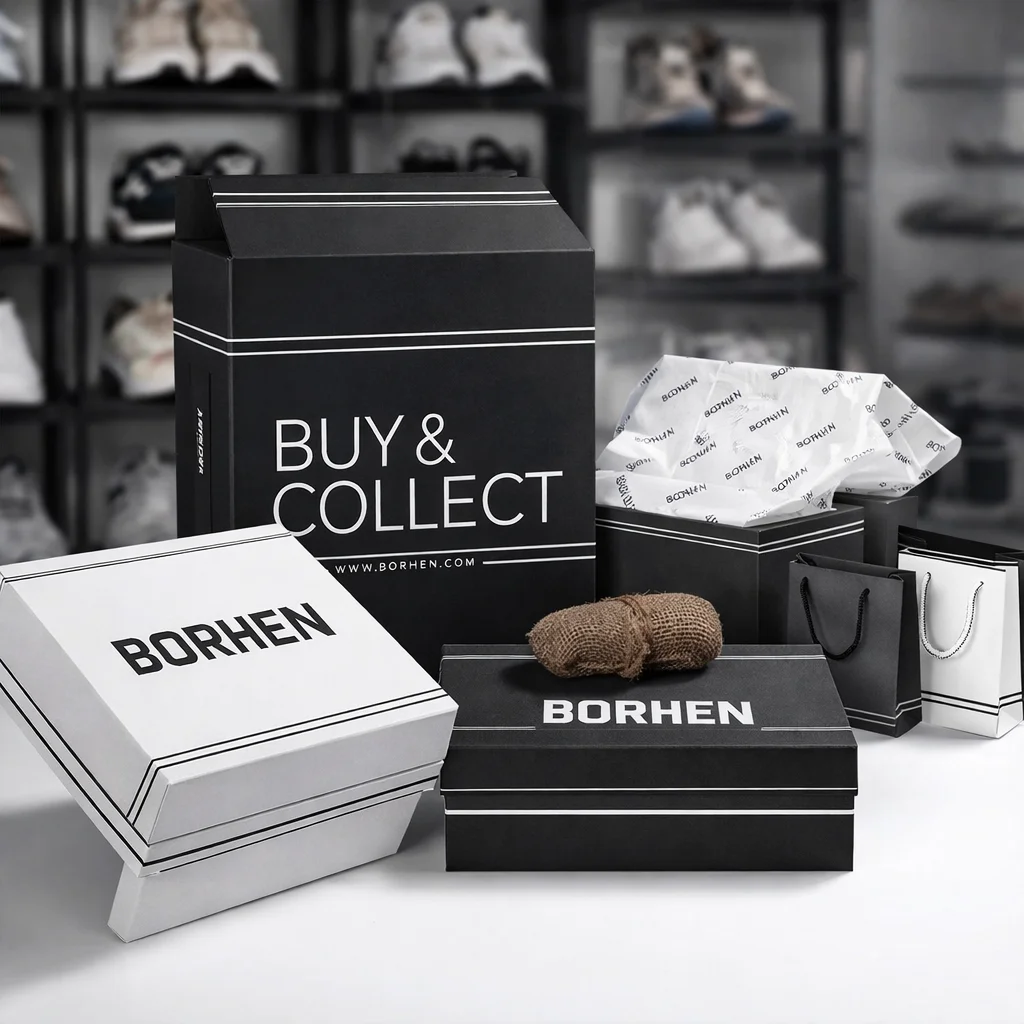
We work with independent footwear brands, DTC sellers, ecommerce operators, and OEM manufacturers who need packaging that looks sharp, protects well, and stays consistent across repeat orders. From branded retail shoe boxes and durable ecommerce shipping cartons to FSC-certified sustainable packaging and bulk corrugated factory solutions, we design boxes that match how modern footwear is sold — online, in retail stores, and through global distribution channels. Our goal is always practical scalability alongside strong brand presentation.
 
As your manufacturing partner, we don’t simply produce shoe boxes. We help turn your packaging concept into something that can actually be manufactured efficiently, shipped globally, and reordered without surprises. Whether you’re launching a new shoe brand, optimizing ecommerce packaging, or upgrading to more sustainable materials, we guide you through structure, materials, printing, and production details — so your packaging supports both your brand image and your business growth.

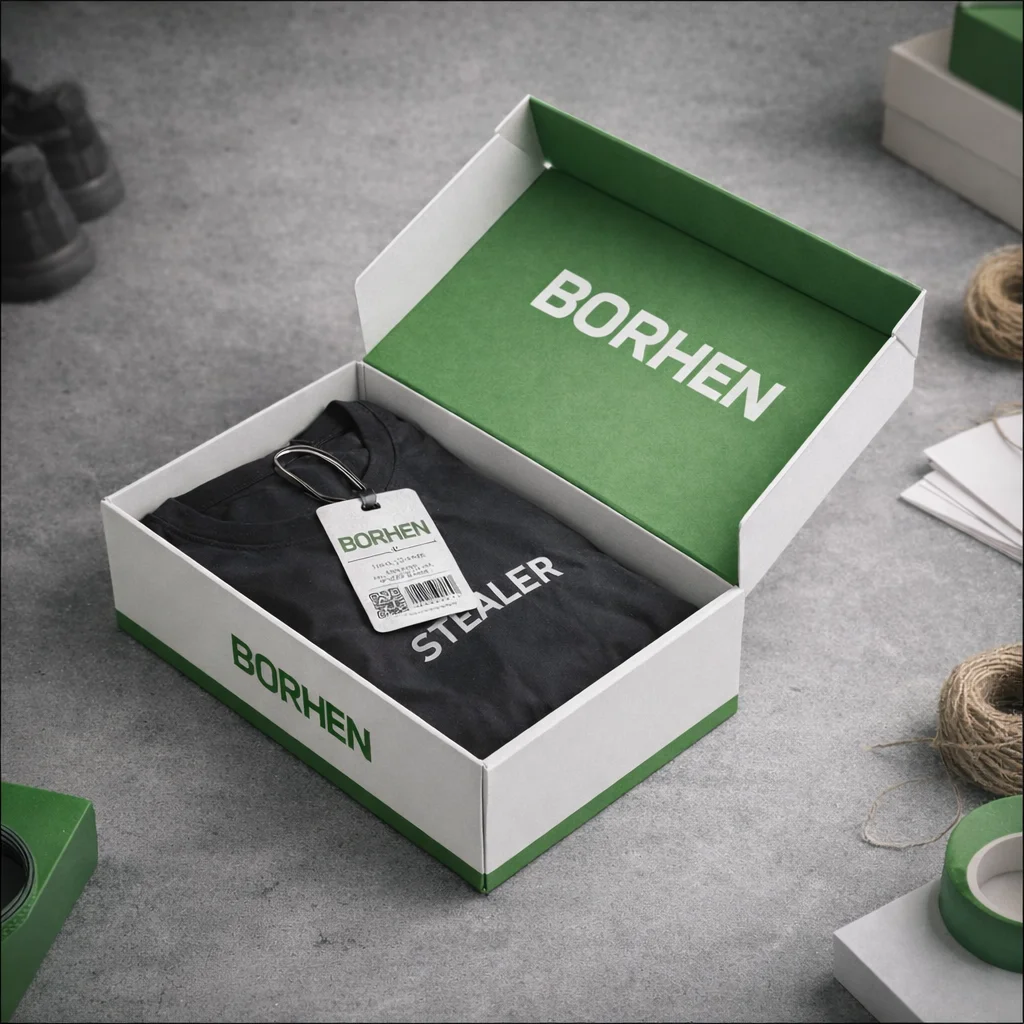
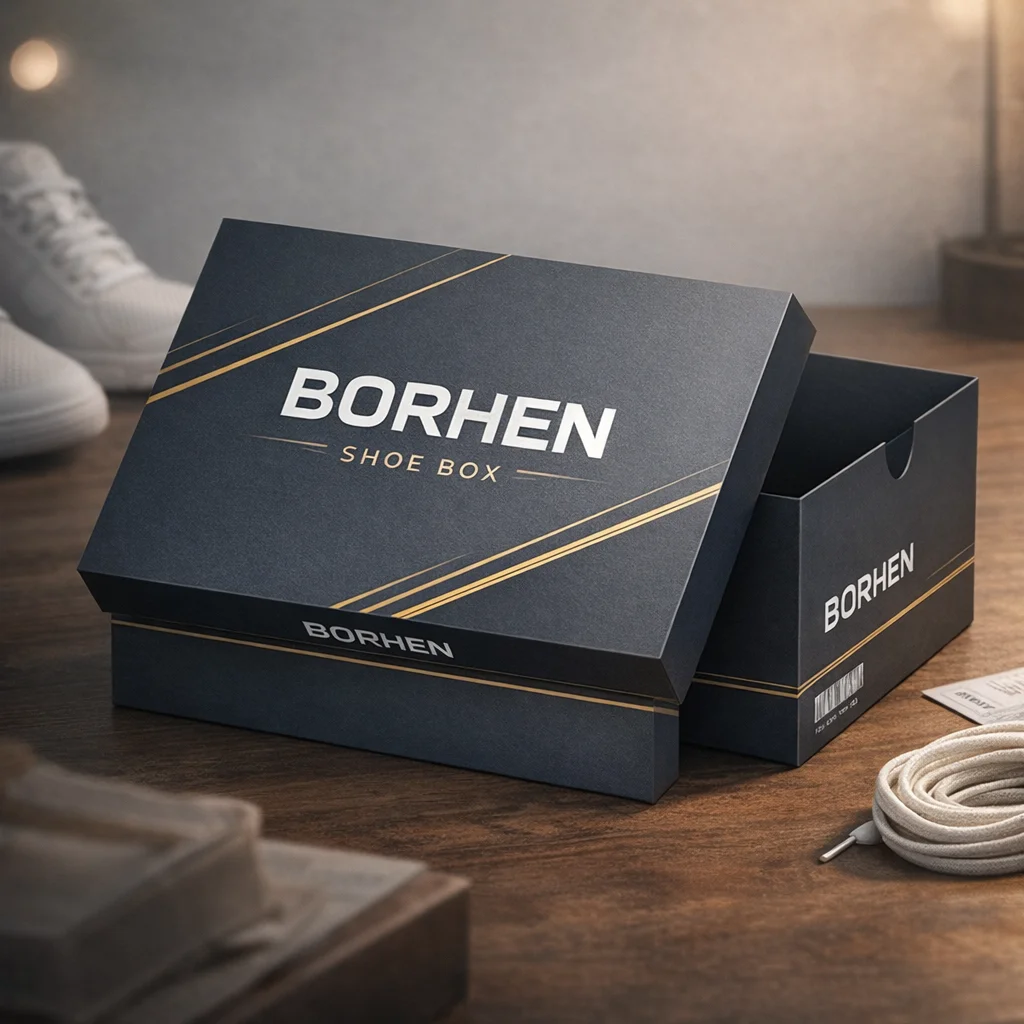
Branded Retail Shoe Boxes

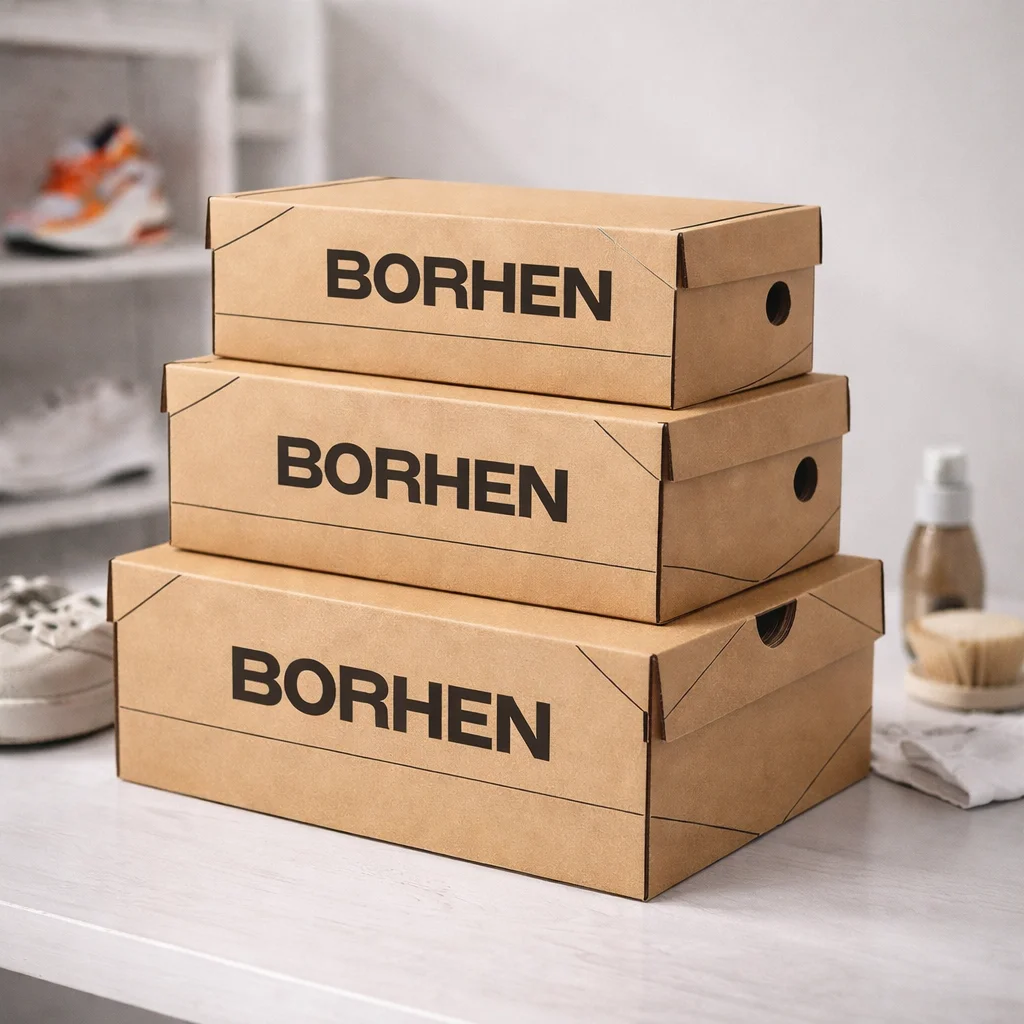
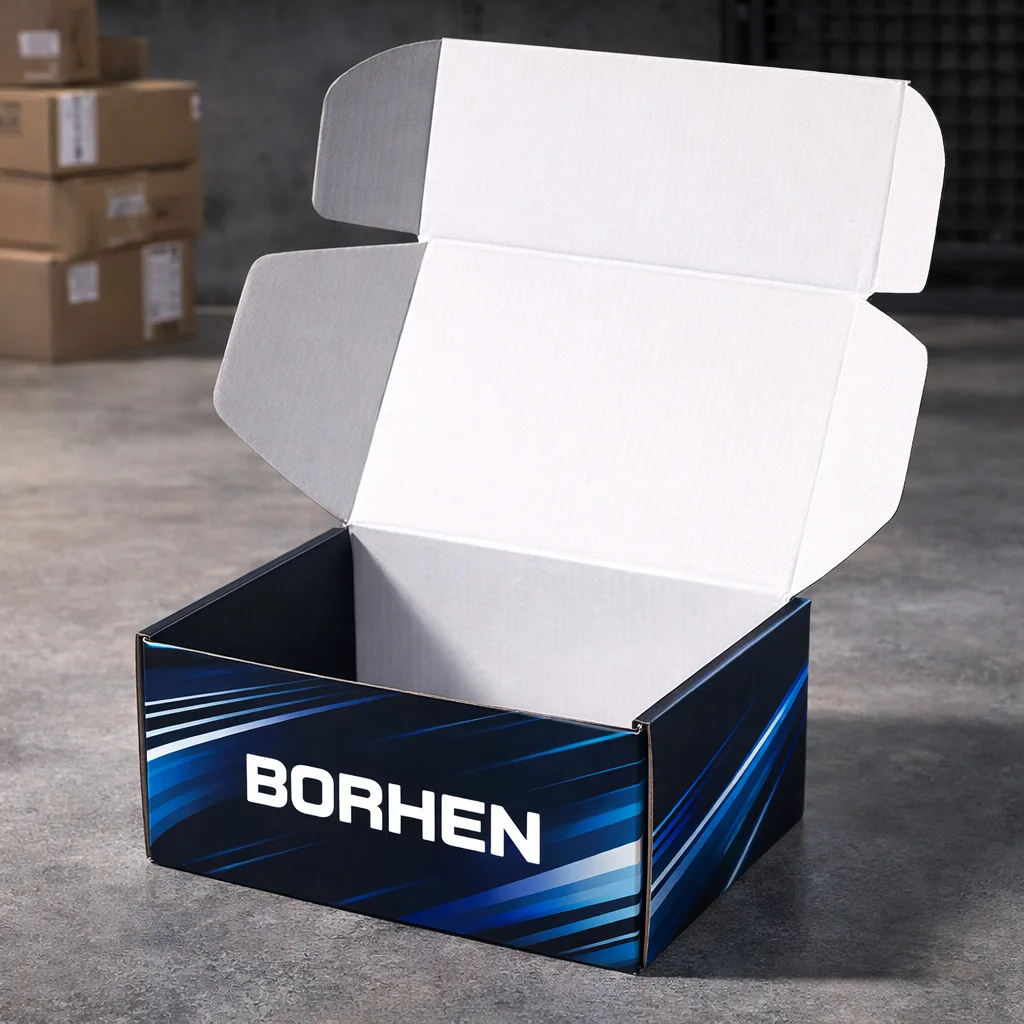
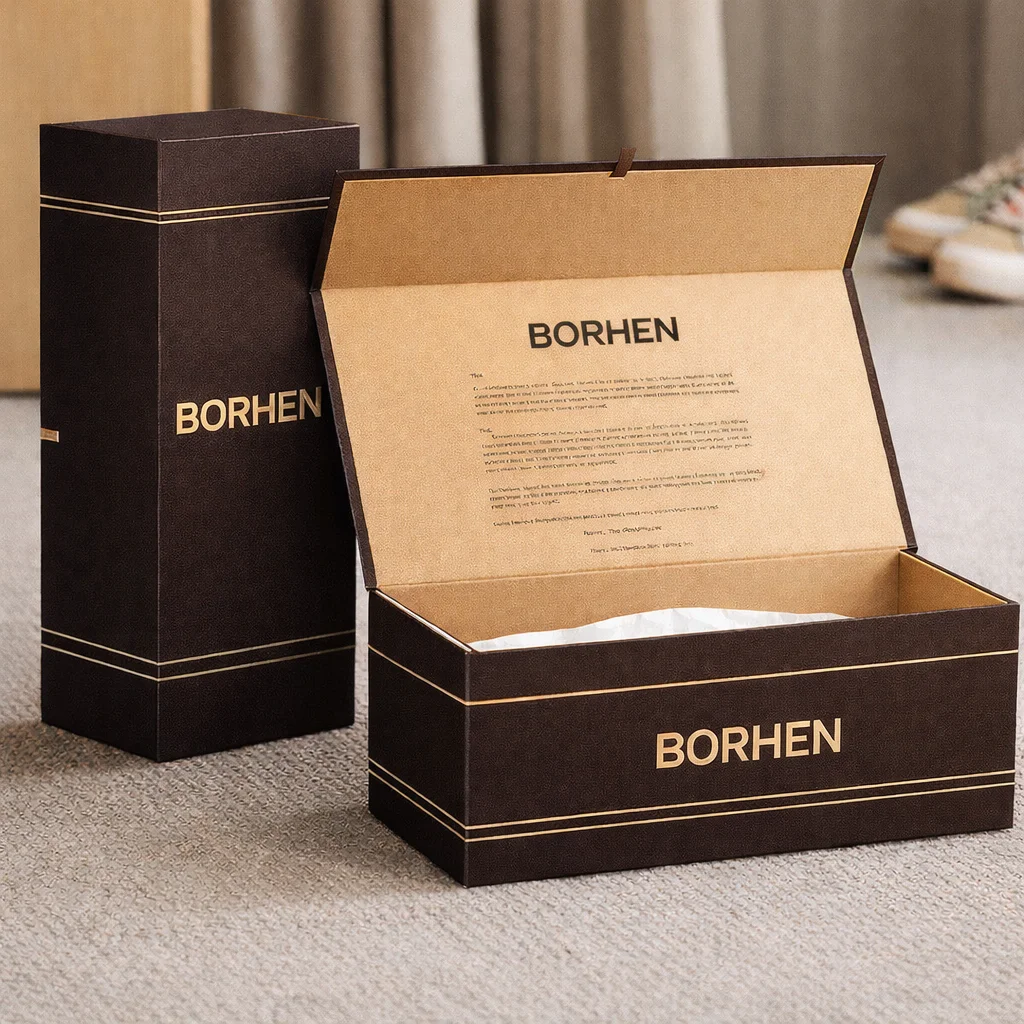
E-commerce Shipping Shoe Boxes

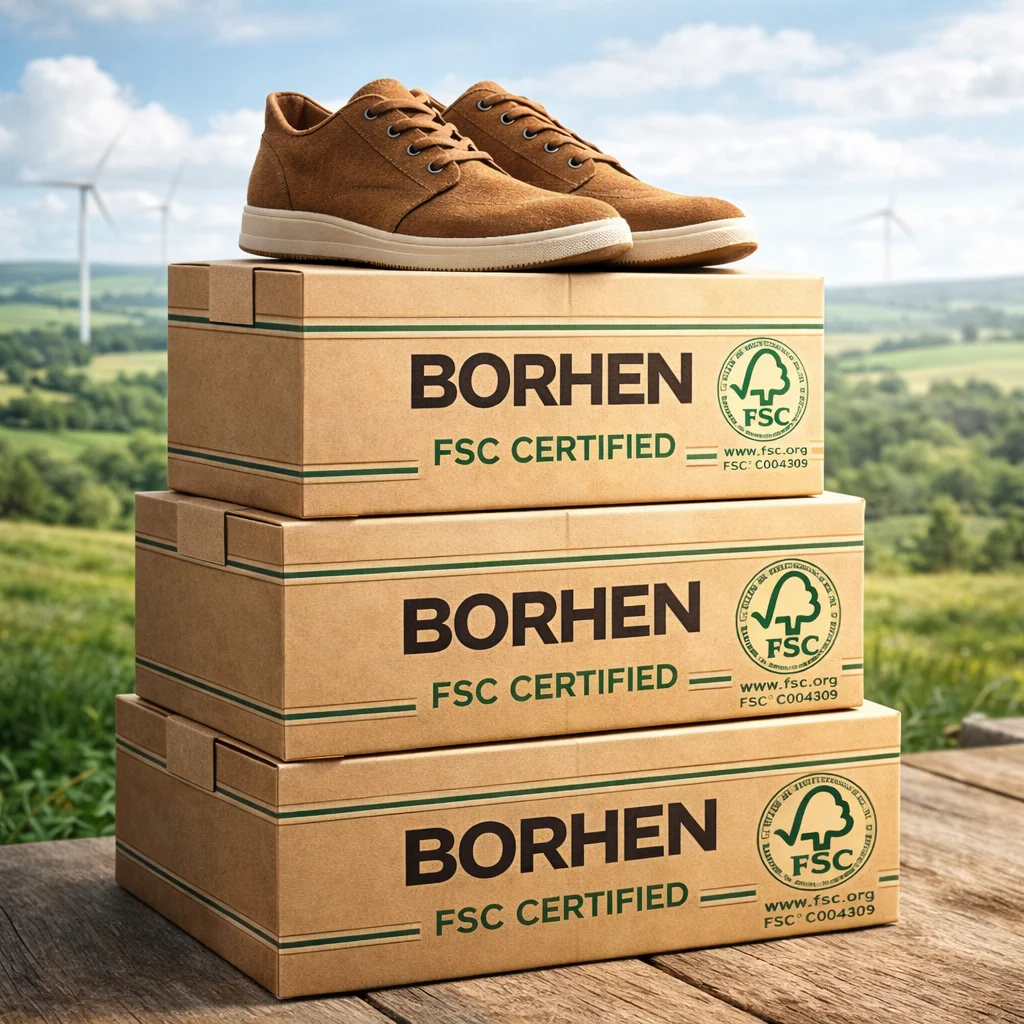
Sustainable FSC-Certified Shoe Boxes

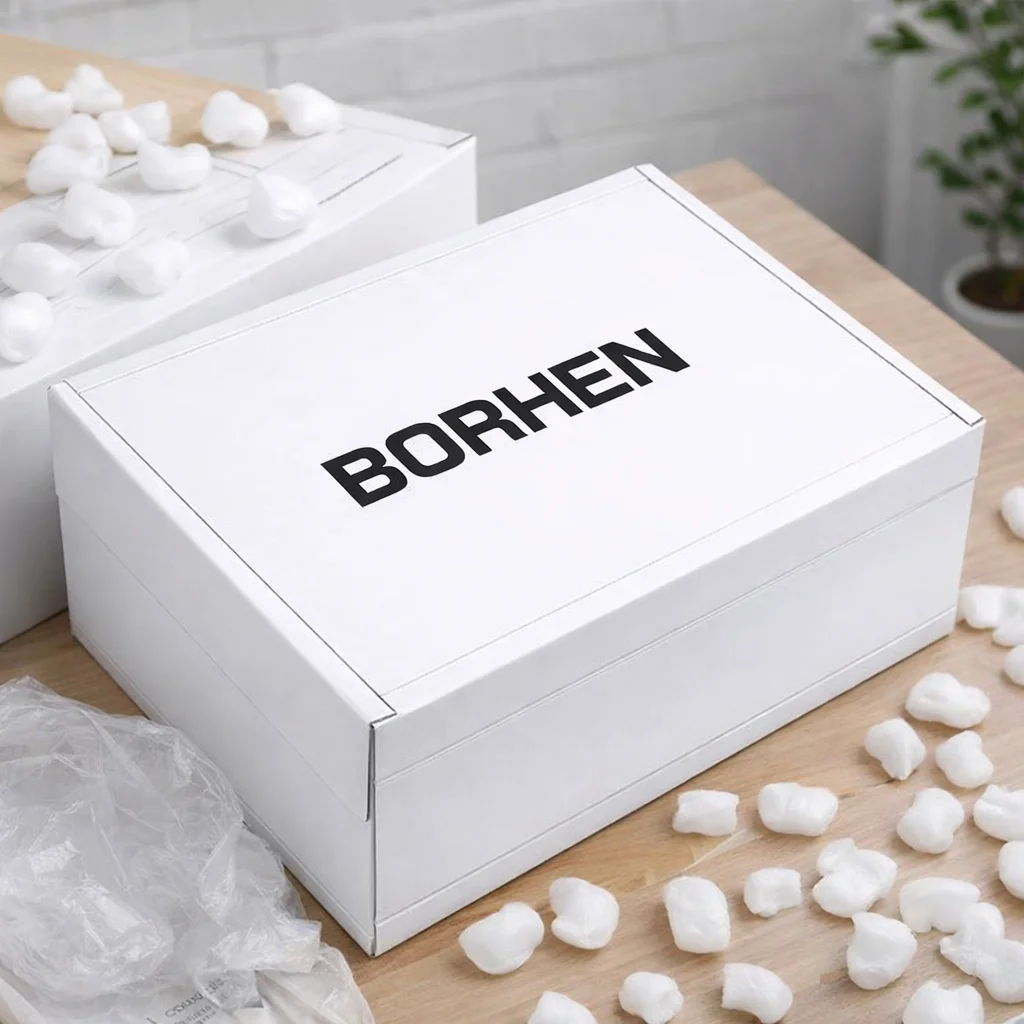
Bulk Corrugated Shoe Boxes for Manufacturing

Build Custom Shoe Boxes That Support Your Brand — Not Just Your Shoes

At Borhen Pack, we see custom shoe boxes as more than packaging. They’re part of how your brand is experienced, how smoothly your logistics run, and how consistently your products arrive. Box strength, print accuracy, structural fit, material stability, and repeat production consistency all affect whether your packaging protects footwear properly, looks professional on arrival, and scales without surprises. That’s why we approach custom shoe box manufacturing as a long-term packaging solution, not just a production job.
 
We manufacture custom shoe boxes designed for real-world footwear businesses — from independent brands launching new collections to ecommerce sellers shipping daily, sustainable brands meeting environmental standards, and OEM factories requiring stable bulk supply. Whether it’s branded retail shoe boxes, durable ecommerce shipping cartons, FSC-certified eco packaging, or high-volume corrugated solutions, we focus on balancing presentation, protection, cost efficiency, and production scalability. Every box is built with practical use in mind: reliable lead times, consistent materials, clear specifications, and production details that prevent issues as you grow.
As your manufacturing partner, we don’t simply produce shoe boxes and move on. We help translate your structure, artwork, sustainability goals, and operational requirements into packaging that can be approved quickly, manufactured consistently, shipped globally, and reordered without disruption. Whether you’re testing a new footwear brand, optimizing ecommerce packaging, strengthening sustainability positioning, or securing long-term OEM supply, we guide materials, structure, printing, and finishing — so your packaging protects your products, strengthens your brand, and supports scalable growth.
 
💡Our Most Requested Custom Shoe Box Types
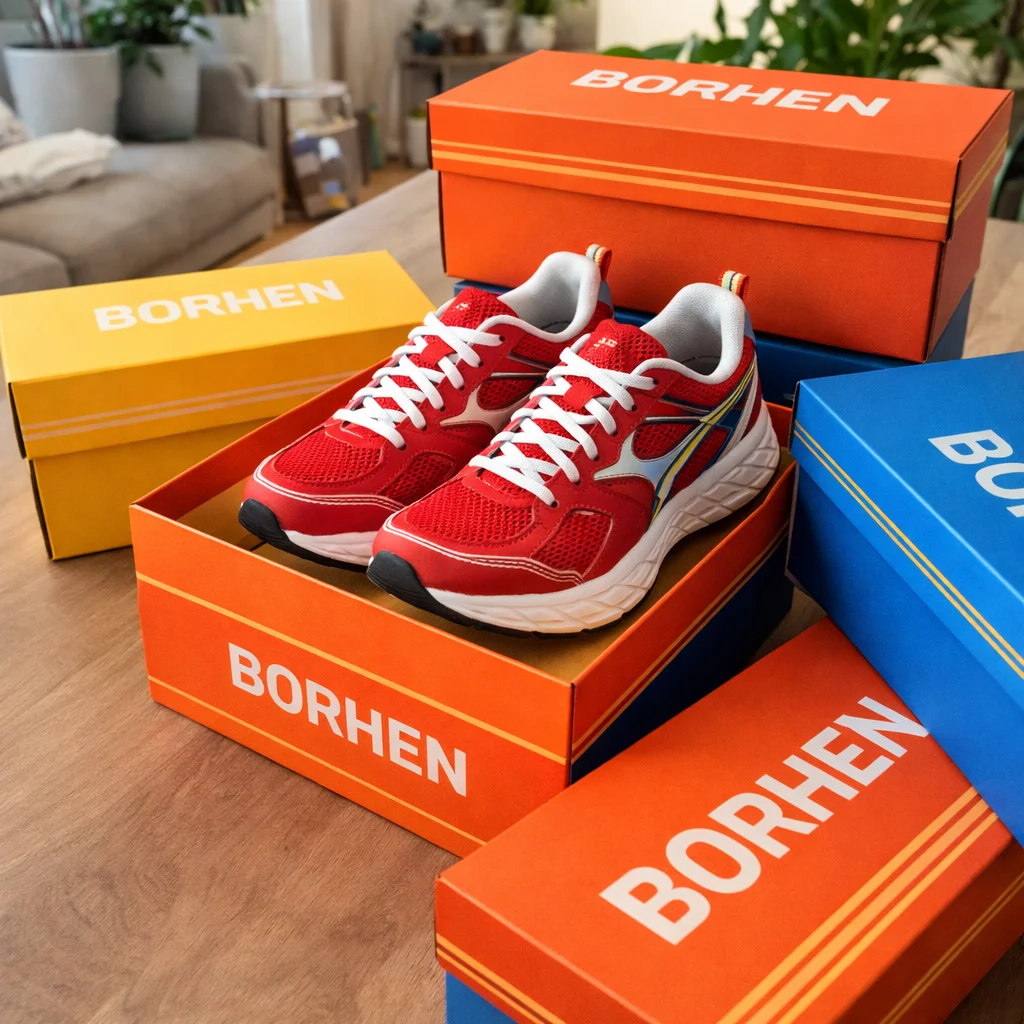
1️⃣ Branded Retail Shoe Boxes Designed for footwear brands that want strong shelf presence, consistent branding, and packaging that enhances perceived product value.
2️⃣ E-commerce Shipping Shoe Boxes Engineered for protection, efficient fulfillment, and reliable performance during transportation and repeat shipping cycles.
3️⃣ Sustainable FSC-Certified Shoe Boxes Developed for brands prioritizing environmental responsibility while maintaining structural integrity and premium presentation.
4️⃣ Bulk Corrugated Shoe Boxes for Manufacturing Built for OEM factories and large-scale footwear production requiring stable supply, cost efficiency, and consistent quality.
 
MOQ & Customization Options Built for Practical Scaling
At Borhen Pack, we make it realistic to start and straightforward to scale. Our typical MOQ begins around 500 pieces for most custom shoe boxes, which works well for new product launches, brand testing, or smaller footwear programs. More complex structures, premium finishes, or specialty materials may require higher volumes to maintain production stability and cost efficiency — and we always explain these factors clearly upfront.
 
Every project includes structural guidance, dieline coordination, material recommendations, finishing options, sampling support, and repeat-order consistency checks. The goal is simple: custom shoe boxes that protect your footwear, strengthen your brand presentation, and grow smoothly alongside your business.

More Than Just a Custom Shoe Boxes Manufacturer

At Borhen Pack, we don’t treat custom shoe boxes as a one-off packaging order. We see them as part of how your footwear packaging program runs over time — from brand launch and ecommerce fulfillment to retail presentation and bulk factory supply. Once packaging moves beyond the first order, things like box strength, structural accuracy, repeat consistency, and reliable lead times become just as important as visual design. That’s why we focus on how shoe boxes actually perform in production, shipping, and reordering — not just how they look in a sample.

✅ Packaging Designed for Real Footwear Operations

We design and manufacture custom shoe boxes based on real footwear business conditions. That includes retail display requirements, ecommerce shipping durability, sustainability compliance, and factory-level volume production. We pay attention to structural stability, material consistency, closure performance, and efficient packing — so what works at the sampling stage continues to work smoothly in mass production without unexpected adjustments later.

✅ MOQs That Support Both Launch and Growth

We keep starting quantities realistic while planning for scale. Many custom shoe box projects begin around 500 pieces, which works well for new footwear brands, ecommerce launches, or pilot packaging programs. For more complex structures, premium finishes, or sustainable materials, higher MOQs may be necessary to maintain production stability and cost control. We explain these factors clearly upfront so your packaging decisions stay practical and predictable.

✅ Reliable Consistency for Repeat Footwear Packaging

Consistency matters, especially for growing footwear brands and OEM production. We control materials, color output, structure tolerances, and finishing details to keep each production run aligned. This reduces packing issues, avoids presentation inconsistencies, and makes reordering straightforward. When it’s time to scale or reorder, the process should feel stable — not like starting over.

✅ Export-Ready Production for Global Footwear Supply

Our custom shoe boxes are manufactured with international logistics in mind from day one. From carton strength and stacking efficiency to protective packing methods and transit durability, we focus on packaging that travels well. This helps minimize shipping risks, protects product presentation, and supports stable cross-border supply for footwear brands, ecommerce sellers, and manufacturers worldwide.

Build Custom Shoe Boxes That Support Scale — Not Just Design

When you work with Borhen Pack, you’re not simply choosing a custom shoe boxes manufacturer. You’re working with a team that understands how packaging performs once it enters real footwear operations — retail display, ecommerce shipping, sustainability compliance, and factory-level production. A shoe box isn’t only about appearance. It affects packing efficiency, product protection, storage space, shipping stability, and how confidently you can reorder. Our focus is simple: build shoe boxes that run smoothly, protect footwear properly, and stay consistent as your business grows.
 
Whether you’re launching a footwear brand, standardizing ecommerce packaging, transitioning to sustainable materials, or managing OEM production supply, we design custom shoe boxes around real execution. From branded retail boxes and FSC-certified eco packaging to durable shipping cartons and bulk factory solutions, we focus on structures that assemble cleanly, maintain strength during transit, and remain consistent across repeat production. Reliability becomes critical once packaging moves beyond the sampling stage — and that’s where we put most of our attention.
🧱Structures Designed for Real Footwear Logistics
We don’t treat shoe packaging as one-size-fits-all. Every project starts with how your shoes are packed, stored, shipped, and presented. We refine dimensions, board strength, closure design, and internal fit based on real usage conditions. If there’s a way to improve protection, reduce shipping risk, or simplify packing workflows, we’ll explain it clearly so you can make practical decisions. The goal is packaging that performs consistently across reorders, not just something that looks good in a prototype.
 
📦Packaging That’s Practical to Launch — and Ready to Scale
We believe custom shoe boxes should be realistic to start and straightforward to grow. Many projects begin around 500 pieces, which supports new product launches, ecommerce testing, sustainability transitions, or pilot programs. As demand increases, scaling production, upgrading materials, or refining finishes becomes smooth. If a design requires more complex structures or specialty materials, we’ll recommend appropriate MOQs early to keep production stable and costs predictable.
 
⚙️A Production Process Focused on Reliability
Our workflow is structured to minimize surprises. From structure confirmation and sampling through material approval, printing, finishing, and quality checks, we keep communication clear and timelines realistic. Potential risks are flagged early so adjustments happen before production — not after delivery. Consistency across batches is essential, especially for growing footwear brands and OEM programs, so we control the details that keep repeat orders stable.
 
🌿Built for Long-Term Packaging Programs
We measure success by how well your shoe boxes perform over time. Stable materials, controlled printing, reliable structures, and packaging that travels well shipment after shipment help your operations stay predictable. Whether your footwear packaging supports retail sales, ecommerce distribution, sustainable brand positioning, or factory export programs, we focus on solutions that scale smoothly and support long-term growth — not just a single order, but every reorder that follows.

Who We Work With (And Why They Choose Us)

We work with scalable buyers who manage multi-SKU programs, multiple markets, or time-sensitive cake launches — and need packaging that stays stable across repeat orders, shipping routes, and changing timelines.

For Regional Distributors & Master Agents

You’re supplying multiple markets and channels — and packaging consistency directly affects your downstream partners.
We help you standardize cake packaging boxes without losing flexibility across SKUs and destinations.

  • Repeatable structures and specs across markets

  • Carton optimization to reduce shipping waste and damage

  • Stable materials and controlled reorders for long-term programs

💡 Why it works: fewer variations, fewer disputes, and smoother multi-country execution.

For Trading Companies & Product Integrators

You coordinate brands, factories, and timelines — often across several SKUs at once.
We make packaging coordination easier by turning requirements into production-ready specs that can scale.

  • Clear dielines, tolerances, and production-friendly artwork checks

  • Insert and structure matching for mixed cake sets and accessories

  • Documentation-ready workflow for export and client approvals

💡 Why it works: less back-and-forth, faster approvals, and fewer “sample vs. mass” surprises.

For Campaign Buyers & License Holders

Your project has a deadline — and packaging delays can kill the whole program.
We focus on proven structures, realistic timelines, and early risk control to protect launch windows.

  • Fast sampling with structured decision checkpoints

  • Controlled materials/finishes to avoid late-stage changes

  • Production planning built for seasonal and promotional timing

💡 Why it works: higher first-time-right execution and fewer last-minute reworks under pressure.

FAQs Custom Shoe Boxes

For your convenience, we’ve gathered the most commonly asked questions about our Shoe Boxes . However, should you have any further queries, please don’t hesitate to reach out to us.
1. What types of custom shoe boxes can you manufacture?
We manufacture a full range of custom shoe boxes, including branded retail boxes, ecommerce shipping cartons, FSC-certified sustainable packaging, rigid presentation boxes, and bulk corrugated factory packaging. Whether you’re launching a footwear brand, selling online, upgrading to eco packaging, or sourcing OEM supply, we build boxes designed for real business use.
Yes — most clients come to us with goals, not technical specs. We’ll recommend structures based on shoe type, protection needs, shipping conditions, sustainability requirements, and brand presentation. The aim is simple: packaging that works operationally, not just visually.
Most projects start around 500 pieces, depending on materials, printing, and structure complexity. For premium finishes, custom papers, or highly specialized designs, higher MOQs may apply. We explain this upfront so you can plan realistically.
Absolutely. Many footwear brands begin with smaller runs for testing or new product launches. We design packaging with scalability in mind so when your volume grows, you can reorder smoothly without redesigning or changing suppliers.
Sampling typically takes about 2–3 weeks depending on structure and materials. Mass production usually follows in 20–30 days after approval. If you have a product launch, seasonal release, or retail deadline, let us know early — we’ll help align timelines.
Yes. We support Pantone color matching and a wide range of finishing techniques such as foil stamping, embossing, debossing, spot UV, and specialty coatings. Samples are always confirmed before mass production to ensure consistency.
Yes. We provide FSC-certified paper, recyclable materials, plastic-free inserts, and eco-conscious structures. If sustainability is part of your brand positioning or regulatory requirements, we’ll help balance environmental goals with durability and cost.
Definitely. We design shoe boxes with logistics in mind — structural strength, protective packing, stacking performance, and transit durability. This helps reduce damage risk whether you ship locally, regionally, or globally.
Yes. We regularly collaborate with brand owners, designers, and agencies. If you already have artwork, we review it for production accuracy. If you need dielines, layout adjustments, or print preparation support, we guide you through it.
Yes, we work with footwear brands, ecommerce sellers, and manufacturers worldwide. We support export packaging, documentation coordination, and logistics planning so your packaging arrives safely and predictably wherever your market is.

Borhen Pack in Numbers

Happy Clients
0 +
Million-dollar Buyers
0 +
Formulation
0 +
Professional Staffs
0 +

Your Ultimate Guide to Custom Shoe Boxes

If you’re planning to upgrade your footwear packaging — whether you’re launching a new shoe collection, improving your e-commerce shipping experience, or building a stronger retail brand presence — choosing the right custom shoe box is more than a packaging decision. It directly affects how your brand is perceived, how efficiently your products ship, and how consistently your packaging program performs as you grow. Shoe boxes today are not just containers; they influence customer experience, operational cost, sustainability positioning, and brand credibility all at once.
 
We’ve watched footwear packaging evolve from simple protective boxes into strategic brand assets. Over the years, we’ve worked with independent footwear startups launching their first signature product line, ecommerce sellers optimizing packaging for fulfillment efficiency and unboxing experience, sustainability-focused brands navigating material choices and regulatory expectations, and OEM manufacturers needing reliable, scalable packaging for global distribution. In nearly every case, custom shoe boxes involve more planning than most teams initially expect, especially when brands begin scaling internationally or expanding across multiple sales channels.
 
This guide is built around what we’ve learned from real packaging programs — what actually improves shipping performance, how structural choices affect cost and durability, how sustainability expectations differ by market, and how packaging consistency supports long-term brand growth. We’ll also explore how design decisions, material selection, logistics planning, and production scalability all connect, because successful packaging rarely depends on a single factor alone.

Table of Contents

What Problems Mailer Boxes Solve for Footwear Brands

When I look at how footwear products move from factory to customer, I often see packaging underestimated as a critical protective system rather than simply a branded container. Shoes rarely travel directly from production to the end consumer. They pass through warehouses, cross-border logistics hubs, retail storage environments, courier handling, and sometimes multiple climate zones. Each stage introduces compression pressure, vibration, friction, and moisture exposure that can affect both product condition and brand perception. Mailer boxes are specifically engineered to handle these real-world stresses. Proper board thickness, structural reinforcement, closure integrity, and dimensional stability help reduce deformation, scuffing, and product damage. When packaging performs reliably in transit, brands typically experience fewer returns, lower replacement costs, and stronger customer confidence, which ultimately supports business scalability.
 
Improving Fulfillment Efficiency for Ecommerce Operations
From my experience working with ecommerce footwear programs, operational efficiency often becomes just as important as branding once order volumes increase. Packaging that looks good in design mockups does not always perform well in busy fulfillment environments. Mailer boxes designed for efficient assembly can significantly reduce packing time, labor costs, and storage complexity. Clean folding lines, predictable closure mechanisms, and optimized internal dimensions allow fulfillment teams to work faster without compromising presentation. Over time, these operational gains can have a meaningful financial impact, particularly for brands shipping hundreds or thousands of orders daily. Packaging that integrates smoothly into fulfillment workflows helps businesses scale without introducing unnecessary friction.
 
Creating a Memorable First Physical Brand Experience
I’ve consistently observed that the unboxing experience influences customer perception far beyond simple aesthetics. For many direct-to-consumer footwear brands, the packaging moment represents the first tangible interaction a customer has with the brand. Mailer boxes offer a balance between protective shipping performance and branded presentation, which allows companies to maintain a strong visual identity even during transit. Factors such as print consistency, tactile material feel, structural rigidity, and how smoothly the box opens all contribute to perceived product quality. When customers associate packaging reliability with product reliability, brand trust naturally increases, which can support repeat purchases and long-term brand loyalty.
 
Managing Cost Without Sacrificing Brand Impact
One of the most common challenges I see footwear brands facing is balancing cost efficiency with brand presentation. Premium rigid packaging can elevate perception but may become impractical for high-volume ecommerce distribution. On the other hand, purely utilitarian shipping cartons can weaken brand identity and customer experience. Mailer boxes often serve as a strategic middle ground. They allow brands to maintain visual consistency, structural durability, and reasonable production costs simultaneously. Understanding where this balance sits for each business model is essential, especially for brands transitioning from early-stage growth into larger-scale operations where packaging costs become more visible.
 
Supporting Sustainability Commitments in a Practical Way
Sustainability conversations around footwear packaging have evolved significantly in recent years. I frequently encounter brands that want environmentally responsible packaging but are understandably concerned about durability, logistics performance, and cost implications. Mailer boxes made from responsibly sourced paper, recyclable materials, or reduced-plastic designs can align environmental goals with operational practicality when engineered correctly. However, sustainability is not just about material selection. It also involves structural optimization, right-sizing packaging to reduce waste, and ensuring packaging survives shipping without requiring excessive secondary protection. Thoughtful design decisions can help brands communicate environmental responsibility without compromising performance.
 
Maintaining Consistency as Brands Scale Globally
Packaging consistency becomes increasingly important as footwear brands expand into new markets or increase production volume. Early-stage packaging solutions sometimes lack the structural standardization needed for repeat manufacturing. I’ve seen situations where slight variations in board thickness, print color, or structural tolerance create operational inefficiencies or brand inconsistency. Mailer boxes designed with scalability in mind can reduce these risks. Standardized specifications, controlled materials, and predictable manufacturing processes help maintain uniform presentation across shipments, regions, and product cycles. Consistency at scale contributes directly to operational confidence and brand credibility.
 
Adapting Packaging for International Distribution Challenges
Global footwear distribution introduces additional variables that domestic packaging solutions do not always address. Longer shipping durations, container stacking pressure, humidity fluctuations, and varied handling practices can all affect packaging performance. I’ve observed that packaging designed solely for local distribution often requires modification once brands expand internationally. Mailer boxes optimized for export logistics consider stacking strength, outer carton efficiency, transit durability, and protection against environmental exposure. Planning for these factors early can prevent product damage, reduce logistics complications, and help maintain consistent product presentation across markets.
 
Simplifying Packaging Management Across Product Lines
Footwear brands frequently expand their collections over time, introducing new styles, seasonal releases, and varied sizing requirements. Without a flexible packaging strategy, this expansion can lead to unnecessary complexity in inventory management and fulfillment workflows. Mailer box designs that accommodate adaptable sizing or standardized structural formats can help streamline operations while maintaining consistent brand identity. Simplified packaging systems reduce storage challenges, minimize operational errors, and support smoother growth as product portfolios evolve.

Key Considerations Before Designing Mailer Boxes

Whenever I begin discussing mailer box design with footwear brands, I always start by understanding what the packaging is truly expected to accomplish. It may sound obvious, but I often see companies jump straight into visual design without defining the underlying business objective. For some brands, packaging needs to enhance perceived product value and reinforce brand identity. For others, the priority is operational efficiency, shipping durability, or sustainability positioning. Sometimes all of these goals coexist, but their relative importance must be clear before design decisions are made. When the objective remains vague, packaging tends to become either overdesigned, unnecessarily expensive, or insufficiently functional. Establishing the primary purpose early allows every subsequent design decision to align with real commercial priorities rather than assumptions.
 
Understanding How the Packaging Will Move Through the Supply Chain
In my experience, one of the most overlooked aspects of mailer box design is how the packaging behaves once it leaves the production environment. Shoes rarely travel directly from manufacturer to consumer in a single step. They move through distribution centers, cross-border shipping networks, local courier handling, retail storage environments, and sometimes extended warehousing periods. Each stage introduces mechanical stress, compression forces, environmental exposure, and handling variability. I have seen packaging that performed perfectly during sampling struggle once exposed to real logistics conditions simply because these factors were not considered early. Thinking realistically about transit duration, stacking pressure, climate variation, and handling intensity helps ensure that the mailer box remains structurally reliable throughout its entire journey.
 
Achieving Dimensional Accuracy and Product Fit
Dimensional precision plays a much larger role in packaging efficiency than many brands initially realize. When I review packaging designs, I often find either excessive internal space or insufficient tolerance around the product. Oversized boxes increase shipping costs, reduce stacking stability, and create unnecessary material waste. Boxes that are too tight can lead to deformation, scuffing, or compromised presentation. Footwear adds additional complexity because different sizes, styles, and cushioning profiles may require slight dimensional adjustments. Carefully defining product dimensions, including packaging inserts or protective elements if used, helps create a balance between protection, cost efficiency, and presentation quality. Dimensional discipline also becomes essential when brands scale production across multiple markets or product lines.
 
Aligning Packaging With Brand Identity and Customer Perception
Packaging communicates brand values long before customers experience the product itself. I have consistently observed that customers interpret packaging quality as a signal of product quality, even subconsciously. Texture, print clarity, color consistency, structural rigidity, and opening experience all contribute to this perception. A minimalist footwear brand might benefit from clean structural design and restrained finishes, while a premium brand may prioritize tactile richness and refined detailing. What matters most is alignment. When packaging feels disconnected from brand positioning, customers notice the inconsistency immediately. Thoughtful alignment between packaging design and brand identity strengthens customer trust and enhances perceived value without necessarily increasing production cost dramatically.
 
Integrating Sustainability Without Compromising Practical Performance
Sustainability considerations have become central to packaging decisions, particularly for footwear brands selling into environmentally conscious markets. However, I have seen sustainability efforts occasionally focus more on messaging than on functional performance. Packaging must still protect the product effectively, survive transportation conditions, and remain cost viable. Responsible material sourcing, recyclability, reduction of unnecessary layers, and efficient structural design all contribute to environmental impact, but these choices must be evaluated holistically. A packaging solution that reduces material weight but increases product damage may ultimately create more waste rather than less. Sustainable design works best when environmental goals are integrated with durability, logistics efficiency, and long-term usability.
 
Planning for Scalability From the Beginning
Early packaging designs often prioritize speed and flexibility, which makes sense for new footwear brands or pilot product launches. However, I have frequently seen packaging solutions that work well at small volumes become problematic as order quantities increase. Variations in material sourcing, inconsistent print output, or structural tolerances can introduce unpredictability during larger production runs. Designing mailer boxes with scalability in mind means establishing clear specifications, standardized materials, and repeatable production processes early. This foresight helps prevent supply chain disruptions, maintains consistent brand presentation, and simplifies reordering as the business grows.
 
Evaluating Cost in a Broader Operational Context
Packaging cost discussions sometimes focus narrowly on the unit price of each box. From my perspective, the broader operational impact deserves equal attention. Structural strength can influence return rates, dimensional optimization affects shipping costs, and material consistency impacts production reliability. A slightly higher initial packaging cost may lead to lower logistics expenses, fewer damaged products, or smoother fulfillment operations. Evaluating packaging cost holistically often reveals opportunities for long-term savings that are not immediately obvious when focusing only on the manufacturing price.
 
Ensuring Effective Collaboration Between Design, Production, and Logistics
Successful packaging development usually involves collaboration across multiple disciplines. Designers focus on aesthetics and brand communication, production teams concentrate on manufacturability, and logistics stakeholders consider transportation realities. I have found that early alignment among these perspectives prevents costly revisions later. Clear communication about constraints, expectations, and operational realities helps ensure that creative design concepts translate effectively into functional packaging. Collaboration also supports smoother production transitions and reduces the risk of unexpected issues once packaging enters real-world use.

How to Balance Branding, Protection, and Cost

Whenever I work with footwear brands on packaging decisions, one of the first things I emphasize is that achieving perfect balance between branding, protection, and cost is rarely about finding a single ideal solution. Instead, it involves understanding trade-offs and making intentional decisions based on business priorities at a given stage. A startup footwear brand focused on market visibility may lean more heavily toward branding, while an established ecommerce seller shipping large volumes may prioritize protection and operational efficiency. Cost considerations are always present, but they interact with every other factor rather than existing independently. In my experience, brands that approach packaging strategically, rather than purely aesthetically or purely financially, tend to achieve more sustainable long-term results.
 
Strengthening Brand Identity Without Overcomplicating Design
I often see brands assume that stronger branding requires more elaborate packaging, additional finishes, or complex structures. While distinctive packaging can certainly elevate brand perception, complexity does not always create stronger impact. In many cases, clarity, consistency, and thoughtful restraint communicate professionalism more effectively than highly decorated designs. Texture, color discipline, print accuracy, and structural precision often matter more than decorative excess. Customers tend to associate packaging reliability with product reliability, and I have repeatedly observed that clean, consistent packaging builds trust faster than overly complicated solutions that risk inconsistency in production.
 
Evaluating Protection Based on Real Distribution Conditions
Protection requirements vary widely depending on how footwear products are distributed. A brand shipping directly to consumers through ecommerce channels faces very different risks compared to one distributing through controlled retail logistics. I always encourage brands to study actual shipping conditions, including stacking pressure during transport, handling intensity at logistics hubs, and potential environmental exposure. Packaging designed without considering these realities may either fail during transit or become unnecessarily heavy and costly. The most effective protection strategies emerge when brands realistically assess risk levels rather than relying on assumptions or worst-case scenarios.
 
Looking Beyond Unit Cost to Total Operational Cost
One of the most common misconceptions I encounter is evaluating packaging cost purely at the unit price level. While manufacturing cost is important, it rarely tells the full story. Packaging dimensions influence shipping expenses, structural durability affects product damage rates, and material consistency impacts fulfillment efficiency. A slightly higher production cost can sometimes result in lower logistics expenses or fewer product returns. I often suggest viewing packaging as part of a broader operational ecosystem rather than a standalone purchase. This broader perspective frequently reveals cost efficiencies that are not immediately visible during initial supplier quotations.
 
Aligning Packaging With Sales Channels and Customer Expectations
Footwear brands today often operate across multiple sales channels simultaneously, including direct-to-consumer ecommerce, retail distribution, and international export. Each channel introduces distinct packaging requirements. Ecommerce environments emphasize protection and efficient packing workflows, while retail environments often prioritize presentation and shelf appeal. Export logistics introduce considerations around stacking strength, climate resilience, and transportation duration. I have found that packaging strategies become much clearer when brands identify their primary distribution channel first and then design packaging accordingly. Attempting to optimize equally for all channels without clear prioritization can lead to compromises that dilute both brand impact and operational performance.
 
Integrating Sustainability Without Compromising Practical Performance
Sustainability has evolved from a marketing preference into a strategic requirement for many footwear brands, particularly those selling into environmentally conscious markets. However, I have observed that sustainability initiatives sometimes focus too heavily on visible messaging while overlooking functional durability. Environmentally responsible packaging should still protect the product effectively, survive transportation conditions, and maintain brand presentation. Sustainable materials, responsible sourcing, and efficient structural design can align environmental responsibility with operational practicality when evaluated holistically. True sustainability often emerges from efficiency, durability, and thoughtful lifecycle planning rather than simply selecting alternative materials.
 
Designing Packaging That Can Scale With Business Growth
Packaging decisions made during early business stages often need refinement as brands grow. Small production runs may tolerate variability that becomes problematic at larger volumes. Print consistency, material sourcing stability, and structural standardization become increasingly important as order quantities expand. I always recommend considering scalability during initial design discussions, even if immediate volumes are modest. Establishing clear specifications, consistent material standards, and repeatable production processes helps maintain brand consistency and operational predictability as businesses expand into new markets or increase distribution scale.
 
Maintaining Consistency Across Production and Distribution Cycles
Consistency plays a critical role in balancing branding, protection, and cost over time. Slight variations in material quality, print color, or structural tolerances can influence both brand perception and operational efficiency. I have seen how inconsistent packaging complicates fulfillment processes, increases quality disputes, and undermines customer trust. Establishing clear specifications, realistic tolerances, and stable production processes helps ensure packaging remains predictable across reorders. Consistency supports not only brand credibility but also smoother logistics planning and long-term supply chain stability.

Mailer Box Design Trends for 2026

As I observe packaging developments heading into 2026, one of the most noticeable shifts is how minimalism has matured from a stylistic preference into a strategic branding decision. Earlier minimalist packaging sometimes reflected cost constraints or design simplicity, but now it increasingly signals brand confidence and maturity. I am seeing footwear brands use restrained typography, disciplined color palettes, and carefully considered negative space to communicate identity more effectively. This approach reduces visual noise while strengthening brand clarity. Interestingly, minimalism also tends to improve production consistency because fewer complex printing elements reduce variation risks. From my perspective, this evolution demonstrates that strong branding does not necessarily require visual complexity; it often benefits from precision, restraint, and consistency.
 
Sustainability Moving From Messaging to Measurable Impact
Sustainability conversations around packaging are becoming more data-driven and operationally grounded. In previous years, I often saw brands focus primarily on communicating environmental responsibility through visible cues such as recycled textures or eco-focused graphics. Today, I see a growing emphasis on measurable impact. Brands are examining material sourcing transparency, lifecycle analysis, carbon footprint implications, and recyclability infrastructure compatibility. Structural optimization is playing a larger role as well. Reducing unnecessary void space, selecting appropriate board strength, and improving logistics efficiency all contribute to sustainability outcomes. In my experience, when sustainability integrates into structural design rather than remaining a marketing message, it becomes more credible and commercially sustainable.
 
Ecommerce Packaging Becoming the Primary Design Reference Point
Another trend I consistently observe is the dominance of ecommerce considerations in packaging design decisions. Even footwear brands with retail presence increasingly prioritize packaging that performs well in direct shipping environments. Packaging must withstand longer transit times, automated fulfillment systems, varied handling conditions, and international distribution complexities. This has shifted design priorities toward durability, dimensional efficiency, and consistent presentation after transit. I often notice that brands now treat the shipping experience itself as part of brand storytelling. Packaging that arrives intact, clean, and visually consistent contributes significantly to customer satisfaction and perceived product value.
 
Increasing Importance of Authentic Material Experience
Customers today appear more sensitive to material authenticity than in previous years. I frequently see brands moving away from heavily coated or artificially glossy finishes toward materials that feel natural, durable, and credible. Textured paper stocks, subtle finishes, and tactile authenticity are gaining preference. This trend reflects broader consumer interest in transparency and environmental responsibility. From what I have observed, packaging that feels genuine often strengthens trust more effectively than packaging designed primarily for visual impact. Authentic materials also tend to align well with sustainability messaging, creating a coherent brand narrative without requiring excessive design complexity.
 
Digital Printing Technology Reshaping Customization Possibilities
Advancements in digital printing are quietly transforming how footwear brands approach packaging customization. Shorter runs, seasonal updates, regional variations, and collaborative limited editions are becoming more practical. I am noticing brands use packaging as a flexible communication channel rather than a static design asset. This flexibility allows companies to adapt messaging quickly, test design variations, and respond to market trends without committing to large inventory risks. At the same time, maintaining consistency across digital and traditional printing processes remains an important consideration, especially for brands balancing customization with scalability.
 
Logistics Efficiency Influencing Design Earlier Than Ever
In the past, packaging design often prioritized aesthetics first, with logistics considerations introduced later. Increasingly, I see brands integrate logistics efficiency into early design discussions. Factors such as pallet optimization, container utilization, warehouse storage density, and shipping cost modeling are being evaluated before structural decisions are finalized. This shift reflects greater awareness that packaging directly influences operational profitability. When packaging dimensions align with logistics infrastructure, brands can achieve significant long-term cost savings without sacrificing presentation quality. From my experience, this early integration helps prevent costly redesigns once distribution scales.
 
Premium Perception Shifting Toward Precision Rather Than Ornamentation
Luxury packaging aesthetics are also evolving. Instead of relying heavily on embellishment, brands increasingly express premium positioning through precision and material quality. Consistent color reproduction, clean structural lines, controlled finishes, and tactile refinement communicate sophistication effectively without excessive decoration. I find this shift particularly relevant for footwear brands that want premium perception without introducing unnecessary production complexity. Precision-driven premium packaging often proves more scalable and consistent than ornament-heavy alternatives.
 
Multi-Channel Adaptability Becoming Essential
Footwear brands rarely operate within a single sales channel anymore. Ecommerce, retail, wholesale distribution, and international export often coexist within the same business model. As a result, packaging design increasingly prioritizes adaptability. Mailer boxes are being designed to function effectively across multiple distribution environments without requiring separate packaging systems. This adaptability reduces operational complexity, improves brand consistency, and simplifies inventory management. In my observation, brands that design for channel flexibility early tend to scale more smoothly into new markets.
 
Packaging as a Long-Term Operational Asset Rather Than a Marketing Accessory
Perhaps the most significant underlying trend I see is how brands are reframing packaging itself. Rather than viewing packaging primarily as a marketing accessory, companies increasingly treat it as an operational asset. Packaging influences shipping costs, fulfillment speed, customer experience, sustainability positioning, and supply chain reliability simultaneously. When packaging decisions are made strategically, they support both brand growth and operational stability. This mindset shift is likely to shape packaging development well beyond 2026.

Choosing Sustainable Mailer Box Materials Without Compromising Performance

Whenever I discuss sustainable packaging with footwear brands, one pattern I frequently notice is how easy it is to focus on visible environmental cues rather than underlying performance realities. Natural paper textures, earthy color palettes, and eco-friendly messaging can certainly communicate intent, but sustainability is fundamentally about measurable impact rather than appearance. Over time, I have learned that material sourcing transparency, recyclability compatibility, lifecycle carbon impact, and transportation efficiency collectively determine whether packaging is genuinely sustainable. When brands examine these factors together rather than in isolation, they often discover that true sustainability involves thoughtful engineering decisions rather than purely aesthetic ones.
 
Understanding Fiber Sources and Responsible Paper Production
Paperboard selection plays a central role in sustainable mailer box design, and the origin of that fiber matters more than many people initially realize. I often encourage brands to consider forestry management practices, fiber traceability, and certification standards when evaluating materials. Responsibly managed forests ensure long-term resource regeneration while minimizing ecological disruption. At the same time, recycled fiber content can reduce reliance on virgin materials, although it sometimes introduces variability in strength or surface consistency. Balancing these factors requires careful evaluation. From my perspective, sustainable sourcing should never compromise structural reliability, because packaging that fails prematurely ultimately generates additional environmental cost through replacement and waste.
 
Balancing Structural Strength With Material Efficiency
One misconception I regularly encounter is the assumption that using less material automatically equates to better sustainability. In practice, insufficient structural strength can lead to product damage, increased returns, and additional transportation emissions. I have seen situations where attempts to reduce board thickness resulted in higher damage rates, which negated any environmental savings. Sustainable design often involves optimizing structure rather than simply reducing material. Reinforced folding geometry, precise dimensional planning, and efficient load distribution can maintain durability while minimizing excess resource use. This engineering approach supports both environmental responsibility and operational reliability.
 
Considering Coatings, Adhesives, and Surface Treatments Carefully
Surface treatments are sometimes overlooked when evaluating sustainability, yet they can significantly influence both recyclability and performance. Moisture resistance, grease protection, abrasion durability, and print stability often depend on coatings or laminations. However, certain treatments may complicate recycling processes or introduce additional environmental considerations. I have found that balanced decisions usually involve selecting finishes that protect the product adequately while remaining compatible with widely available recycling infrastructure. Advances in water-based coatings and low-impact adhesives are making this balance increasingly achievable, but careful evaluation remains essential.
 
Accounting for Real Logistics Conditions in Sustainable Design
Packaging sustainability cannot be separated from logistics performance. Shoes frequently travel long distances, encounter varied climates, and undergo multiple handling stages before reaching customers. I always emphasize that packaging designed purely for visual sustainability may struggle under these conditions if durability is not considered equally. Damaged packaging not only affects product integrity but also increases environmental impact through replacement shipments and additional packaging materials. Sustainable mailer box design therefore requires realistic assessment of shipping conditions, stacking pressure, humidity exposure, and transit duration. When durability aligns with logistics realities, sustainability outcomes improve naturally.
 
Evaluating Recycling Infrastructure Across Target Markets
Another complexity I often discuss with brands is the variation in recycling infrastructure between regions. A material that is technically recyclable in one country may not be widely processed in another. This discrepancy can undermine sustainability claims if packaging ends up in landfill due to infrastructure limitations rather than material properties. I encourage brands to consider their primary sales markets and align packaging choices with locally available recycling systems. Simpler material compositions frequently improve recyclability because they reduce sorting complexity. Practical recyclability tends to deliver more meaningful environmental impact than theoretical recyclability alone.
 
Integrating Sustainability With Cost Stability and Supply Continuity
Sustainable materials sometimes introduce cost volatility or sourcing variability, particularly when demand increases rapidly. I have seen brands adopt environmentally responsible packaging successfully at smaller scales only to encounter supply constraints as production grows. Planning for scalable sourcing, consistent quality standards, and stable pricing helps prevent sustainability initiatives from becoming operational liabilities. Sustainable packaging should remain economically viable over time, otherwise brands may be forced to revert to less responsible alternatives. Long-term planning therefore becomes an integral part of sustainable material selection.
 
Viewing Packaging Through Its Full Lifecycle Impact
In my experience, the most effective sustainability strategies consider the entire lifecycle of packaging rather than focusing solely on raw materials. Production energy use, transportation emissions, storage efficiency, durability during use, and end-of-life disposal all contribute to overall environmental impact. A well-designed mailer box that optimizes shipping density, reduces secondary packaging needs, and maintains structural integrity throughout its lifecycle often produces greater environmental benefit than superficially eco-labeled alternatives. This lifecycle perspective encourages more nuanced and effective decision-making.
 
Treating Sustainability as an Ongoing Design Process
Perhaps the most important lesson I have learned is that sustainable packaging is not a static achievement. Materials evolve, recycling technologies improve, regulatory expectations shift, and consumer awareness continues growing. I find that brands that treat sustainability as an ongoing process rather than a fixed milestone tend to adapt more successfully. Continuous evaluation, incremental improvements, and openness to innovation help maintain both environmental responsibility and operational performance over time. Sustainable packaging, when approached thoughtfully, becomes a long-term strategic asset rather than a one-time design decision.

How to Evaluate a Packaging Manufacturer Effectively

When I evaluate a packaging manufacturer, I rarely treat it as a simple procurement exercise. Over time, I have come to see packaging suppliers as extensions of a brand’s operational infrastructure rather than external vendors. Packaging influences shipping efficiency, brand presentation, sustainability credibility, and supply chain predictability simultaneously. A manufacturer that performs inconsistently can introduce friction across multiple departments, from logistics to marketing to customer experience. Because of this, I always begin evaluation by considering long-term operational alignment rather than immediate cost advantages. Stability, predictability, and transparency often prove more valuable than short-term pricing incentives.
 
Looking Beyond Unit Pricing to Total Lifecycle Cost
One of the most common mistakes I have observed in packaging procurement is focusing too narrowly on initial quotation figures. Unit price alone rarely captures the true economic impact of packaging decisions. Structural integrity affects damage rates, dimensional efficiency influences shipping expenses, material consistency impacts fulfillment speed, and print accuracy affects brand perception. A slightly higher production cost may reduce logistics complexity, improve customer satisfaction, and lower replacement costs over time. When I assess manufacturers, I try to understand how their production approach influences the entire packaging lifecycle rather than simply the manufacturing invoice.
 
Assessing Technical Depth Rather Than Surface Capability
Technical competence becomes most apparent when discussions move beyond basic specifications into practical constraints. I pay close attention to how manufacturers respond when structural limitations, material performance questions, or printing consistency challenges arise. A manufacturer with genuine technical depth can explain why certain board grades behave differently under compression, how dieline adjustments influence durability, or how environmental conditions affect material performance. These insights often reveal whether the manufacturer is capable of supporting evolving packaging needs rather than simply executing predefined instructions.
 
Evaluating Quality Control as a Continuous Process
Consistency is one of the most critical yet underestimated aspects of packaging production. Slight variations in board thickness, adhesive application, or print color can accumulate into operational inefficiencies and brand inconsistency. I always look for evidence that quality control is embedded throughout the production process rather than confined to final inspection. Manufacturers who monitor material input consistency, printing calibration, structural accuracy, and finishing precision at multiple stages tend to produce more reliable outcomes. Continuous quality management reduces surprises during reorders and supports stable brand presentation across markets.
 
Understanding Communication Style as an Indicator of Operational Maturity
Communication quality often reflects deeper operational characteristics. Manufacturers who communicate clearly about timelines, technical constraints, and potential risks tend to operate with greater organizational discipline. I have learned to pay attention not only to responsiveness but also to clarity of explanation. When manufacturers are willing to discuss limitations openly, provide realistic timelines, and address concerns proactively, collaboration usually proceeds more smoothly. Conversely, vague or overly optimistic communication can signal underlying operational unpredictability.
 
Reviewing Logistics Awareness and Export Experience
Packaging performance cannot be separated from logistics realities, particularly for footwear brands operating internationally. I usually explore whether a manufacturer understands pallet optimization, container utilization, transit durability, and export documentation requirements. Manufacturers with strong logistics awareness often design packaging that travels more reliably and efficiently. This experience becomes particularly valuable when products move across multiple climate zones or undergo extended transportation durations. Packaging that maintains structural integrity throughout these conditions supports both product protection and brand reputation.
 
Examining Material Transparency and Sustainability Credibility
Sustainability has become a central consideration in packaging decisions, yet I have found that not all sustainability claims carry equal substance. I always look for transparency regarding material sourcing, certification standards, recyclability compatibility, and production processes. Manufacturers who can explain their sourcing practices, environmental certifications, and lifecycle considerations in detail tend to demonstrate more authentic commitment to sustainability. Transparency also helps brands maintain credibility with increasingly informed consumers and regulatory environments.
 
Considering Scalability and Production Flexibility
Packaging needs rarely remain static as brands grow. Early production runs may tolerate variability that becomes unacceptable at larger volumes. I evaluate whether a manufacturer has the infrastructure, material sourcing stability, and operational flexibility to scale production without compromising consistency. Scalability involves more than capacity; it includes maintaining print accuracy, structural precision, and material quality across increasing volumes. Manufacturers who demonstrate this capability reduce the risk of disruptive supplier transitions as businesses expand.
 
Observing Problem-Solving Approach During Challenges
Unexpected challenges inevitably arise in packaging projects, whether related to material availability, design adjustments, or logistics considerations. I pay close attention to how manufacturers respond when issues occur. A solution-oriented mindset, willingness to collaborate, and proactive communication often indicate strong operational culture. Manufacturers who approach challenges constructively tend to contribute more effectively to long-term packaging success.
 
Viewing Manufacturer Relationships as Strategic Partnerships
Perhaps the most important insight I have gained is that packaging manufacturing relationships function best when approached as partnerships rather than transactional exchanges. Packaging decisions influence branding, sustainability positioning, operational efficiency, and customer experience simultaneously. Manufacturers who understand this broader context often provide more consistent value. Building relationships based on trust, technical understanding, and shared operational goals usually leads to more stable outcomes than short-term supplier rotation.

Structural Design Factors That Affect Shipping Performance

Whenever I evaluate packaging performance in shipping environments, I try to shift the conversation away from appearance and toward function. Packaging structure is not merely a container; it operates as a protective engineering system that must perform reliably under dynamic conditions. Shoes and other consumer goods rarely travel directly from production to end users without multiple handling stages. Warehousing, cross-border transport, courier sorting systems, retail storage, and last-mile delivery all introduce stress factors. I have learned that when structural design decisions are treated strategically rather than cosmetically, packaging becomes an operational asset rather than a recurring problem. A well-designed structure reduces damage rates, simplifies logistics workflows, and supports consistent brand presentation across markets.
 
Understanding Material Behavior Under Real Shipping Stress
Material selection is often discussed in terms of thickness or weight, yet I have found that fiber composition, flute structure, and material processing quality frequently influence performance more than nominal thickness alone. Corrugated board behaves differently depending on humidity exposure, compression duration, and stacking orientation. I have seen packaging that performs well in dry warehouse conditions weaken significantly during long ocean transit where humidity fluctuates. Evaluating material resilience under realistic environmental conditions provides a more accurate assessment of shipping performance. Durable materials help maintain structural integrity, protect product presentation, and reduce costly replacement shipments.
 
The Role of Structural Geometry in Load Distribution
Structural geometry plays a surprisingly influential role in shipping durability. I have observed that fold placement, corner reinforcement, and panel proportion can significantly affect how load distributes across the packaging surface. Boxes designed with balanced geometry tend to resist deformation more effectively during pallet stacking or container compression. Even small structural adjustments can improve rigidity without increasing material consumption. Thoughtful geometry also supports efficient stacking, which contributes to logistics stability and transportation cost control. When structural design aligns with load distribution realities, packaging performance becomes more predictable.
 
Internal Fit Precision and Product Stability During Transit
One factor I consistently emphasize is dimensional accuracy inside the packaging. When internal fit is poorly calibrated, products can shift during transportation, leading to abrasion, deformation, or localized stress points. Conversely, excessively tight packaging can introduce pressure that compromises structural integrity. I have found that carefully optimized internal dimensions stabilize products naturally, reducing reliance on additional protective inserts or secondary packaging. Precision in internal fit contributes simultaneously to protection, shipping efficiency, and material optimization.
 
Closure Engineering and Structural Continuity
Closure design often appears secondary compared to material strength, yet I have repeatedly seen closure failure become a primary cause of shipping damage. Repeated handling, vibration, and stacking pressure can gradually loosen closures that seemed secure during initial testing. Effective closure engineering involves understanding how flaps interact, how adhesives perform under stress, and how locking mechanisms maintain continuity of the structural shell. Secure closures help preserve internal product positioning and maintain external structural stability throughout transit.
 
Environmental Exposure and Long-Distance Shipping Conditions
Shipping conditions vary widely depending on geography, transportation mode, and storage duration. Temperature fluctuations, humidity variation, and mechanical vibration all influence packaging behavior. I have observed that packaging designed solely for domestic distribution may struggle when exposed to extended international transit conditions. Moisture absorption can reduce board stiffness, while temperature variation can influence adhesive performance. Considering environmental exposure early in structural design helps prevent performance degradation and ensures packaging remains reliable across global distribution networks.
 
Interaction Between Primary Packaging and Secondary Logistics Systems
Mailer boxes rarely function in isolation. They interact continuously with outer cartons, pallets, container stacking configurations, and automated sorting systems. I often evaluate how primary packaging dimensions align with secondary logistics structures. Efficient dimensional compatibility improves load stability, reduces transportation movement, and enhances overall shipping efficiency. When primary packaging integrates well with broader logistics systems, operational reliability improves while transportation costs often decrease.
 
Manufacturing Consistency and Structural Repeatability
Even well-designed structures can underperform if production consistency varies. Slight deviations in board thickness, fold precision, adhesive application, or cutting accuracy can accumulate into noticeable performance differences. I have seen how maintaining tight production tolerances contributes to consistent shipping outcomes across multiple production runs. Structural repeatability supports predictable logistics performance, reduces inspection complexity, and maintains brand presentation stability over time.
 
Viewing Packaging Performance Across the Entire Shipping Lifecycle
Perhaps the most valuable perspective I have developed is viewing packaging performance as a lifecycle rather than a single transit event. Packaging experiences production handling, warehouse storage, transportation, potential re-handling, retail display, and final delivery. Each stage introduces different stresses. Structural design that accounts for this full lifecycle tends to perform more reliably than designs optimized for only one stage. When packaging performs consistently throughout its lifecycle, it supports operational efficiency, customer satisfaction, and long-term brand credibility simultaneously.

Common Packaging Mistakes Footwear Brands Should Avoid

When I look at how footwear brands approach packaging, one of the most consistent issues I notice is timing. Packaging decisions are often postponed until late in the product development cycle, sometimes only weeks before launch. This approach usually forces compromises because structural testing, logistics validation, sustainability evaluation, and cost modeling require time. Packaging influences fulfillment efficiency, brand perception, transportation stability, and customer experience simultaneously. When it is treated as an operational asset rather than a decorative accessory, brands tend to achieve smoother launches, more consistent logistics performance, and fewer unexpected costs. Early integration of packaging planning allows structural decisions to align with broader business objectives instead of reacting to them.
 
Prioritizing Visual Impact Without Fully Understanding Shipping Reality
I have seen many beautifully designed shoe boxes struggle once they enter real distribution environments. Studio lighting, digital mockups, and prototype presentations rarely replicate the stresses of warehouse stacking, courier sorting, container shipping, or long-distance transportation. Packaging that focuses primarily on visual appeal may lack the structural resilience required for repeated handling. When packaging arrives damaged, even if the product inside remains intact, customer perception can still be affected. In my experience, strong packaging design integrates aesthetic considerations with realistic logistics modeling. Visual refinement should enhance performance rather than compete with it.
 
Selecting Materials Based Only on Initial Price Signals
Cost pressure is a constant factor in packaging decisions, yet focusing exclusively on unit material price often leads to unintended consequences. I have observed situations where slightly cheaper board grades increased product damage, complicated fulfillment workflows, or reduced stacking stability. These operational effects frequently generate higher total costs than the initial savings. Material decisions should reflect expected shipping conditions, brand positioning, sustainability goals, and lifecycle efficiency. Evaluating packaging cost holistically usually produces more stable long-term financial outcomes.
 
Overlooking Dimensional Efficiency and Logistics Optimization
Packaging dimensions directly influence shipping cost, warehouse efficiency, and environmental footprint. I frequently encounter packaging designs that include unnecessary internal space simply because dimensional analysis was not performed early. Oversized packaging increases freight expenses, reduces pallet efficiency, and can even introduce product movement during transit. Conversely, overly tight packaging may create structural stress points. Careful dimensional calibration often produces benefits across multiple areas simultaneously, including cost control, sustainability performance, and product protection.
 
Treating Sustainability as Messaging Rather Than Engineering
Sustainability has become an essential element of footwear brand positioning, but I often see it approached primarily through visual signals rather than structural engineering decisions. Environmentally themed graphics, recycled textures, or natural color palettes may communicate intent, yet true sustainability involves material sourcing transparency, recyclability compatibility, logistics efficiency, and durability. Packaging that reduces material weight but increases damage rates can ultimately generate more environmental impact. Sustainable packaging works best when environmental responsibility integrates with operational performance rather than replacing it.
 
Underestimating Production Consistency and Repeatability
Packaging rarely remains a single production run. As footwear brands grow, consistent repeat production becomes essential. I have seen minor variations in board thickness, print color calibration, adhesive application, or structural tolerances accumulate into operational complexity. Fulfillment teams may need to adjust packing workflows, brand presentation may appear inconsistent across markets, and logistics performance may vary unpredictably. Establishing clear production specifications and maintaining consistency across runs supports both operational efficiency and brand credibility.
 
Neglecting Cross-Functional Collaboration During Packaging Development
Packaging design sits at the intersection of branding, logistics, production engineering, sustainability, and customer experience. When these perspectives remain isolated, important considerations can be overlooked. I have observed that packaging projects benefit significantly when designers, operations teams, sourcing specialists, and logistics professionals collaborate early. This cross-functional dialogue helps ensure packaging solutions are visually aligned, structurally sound, operationally efficient, and commercially realistic.
 
Assuming a Single Packaging Solution Can Serve All Distribution Channels
Footwear brands today often operate simultaneously across ecommerce platforms, physical retail environments, wholesale distribution, and international export markets. Each channel imposes distinct packaging requirements. Retail packaging may prioritize shelf presentation, ecommerce packaging emphasizes shipping durability, and export packaging demands stacking strength and climate resilience. Attempting to force a single packaging solution across all channels without careful evaluation often results in compromises that reduce performance in each context. Strategic packaging planning considers channel diversity from the outset.
 
Failing to Anticipate Packaging Evolution as the Brand Scales
Packaging needs rarely remain static. Early-stage footwear brands may prioritize flexibility and rapid iteration, while established brands often require consistency, cost optimization, and supply chain predictability. I have seen brands experience disruptive redesign cycles simply because scalability was not considered initially. Planning for gradual packaging evolution helps maintain continuity while allowing structural refinement as business requirements expand.
 
Viewing Packaging as a One-Time Deliverable Instead of a Continuous Process
Perhaps the most subtle yet impactful mistake I encounter is treating packaging as a completed project rather than an evolving operational component. Materials improve, sustainability expectations evolve, logistics infrastructures change, and consumer perceptions shift. Brands that periodically reassess packaging performance tend to maintain stronger operational stability and market credibility. Continuous evaluation allows incremental improvements that support both business growth and environmental responsibility over time.

Scaling Packaging Programs as Footwear Brands Grow

When footwear brands begin scaling, I often notice that packaging becomes more than a simple functional requirement. At early stages, packaging usually focuses on flexibility, manageable minimum order quantities, and speed to market. However, as brands expand product lines, increase order volumes, and enter new markets, packaging starts influencing operational efficiency, brand consistency, sustainability positioning, and supply chain predictability simultaneously. I have learned that scaling packaging successfully requires shifting perspective from short-term execution toward long-term operational strategy. Brands that recognize packaging as part of their infrastructure rather than a temporary design decision usually experience smoother growth transitions.
 
Maintaining Brand Identity While Expanding Product Diversity
As footwear brands diversify into multiple styles, seasonal collections, or regional product variations, maintaining consistent packaging identity becomes increasingly complex. I have observed that rapid expansion sometimes results in fragmented packaging visuals, inconsistent print quality, or subtle structural variations that dilute brand recognition. Customers rarely analyze these inconsistencies consciously, yet they influence perceived brand professionalism. Establishing standardized specifications for materials, structural dimensions, color reproduction, and finishing processes helps maintain cohesion across expanding product portfolios. Consistency becomes especially important as brands move into international markets where packaging often serves as the first tangible brand interaction.
 
Anticipating Logistics Complexity as Volume Increases
Higher production volumes introduce logistical challenges that smaller operations rarely encounter. Warehouse storage density, pallet optimization, container loading efficiency, and fulfillment workflow design all become more critical. I have seen how packaging dimensions that worked adequately for smaller shipments become inefficient at scale, increasing freight costs and complicating inventory management. Early dimensional optimization, structural durability planning, and compatibility with automated fulfillment systems can significantly improve operational efficiency as brands grow. When packaging integrates seamlessly into logistics infrastructure, scaling becomes more predictable.
 
Managing Cost Efficiency Without Sacrificing Reliability
Cost optimization naturally becomes a priority as packaging volumes increase, yet I have consistently found that aggressive cost reduction without operational context often creates instability. Lower material grades, inconsistent printing processes, or reduced quality control may initially reduce expenses but can introduce damage risk, fulfillment inefficiencies, and brand perception challenges. I generally advise evaluating cost within the broader operational lifecycle rather than focusing solely on unit price. Reliable packaging that supports smooth logistics, consistent branding, and reduced returns frequently delivers better long-term financial performance than short-term savings alone.
 
Strengthening Supplier Coordination and Production Predictability
As packaging programs scale, supplier relationships inevitably become more complex. Production scheduling, material sourcing stability, and lead time predictability begin to influence broader business planning. I have seen brands benefit from clearer communication protocols, realistic forecasting models, and collaborative planning with manufacturing partners. Predictability helps prevent inventory shortages, delayed product launches, and unexpected operational disruptions. Strong supplier coordination also supports consistent quality across multiple production cycles.
 
Integrating Sustainability Goals Into Scalable Packaging Systems
Sustainability expectations often intensify as brands grow, particularly when entering environmentally conscious markets or responding to regulatory requirements. I have found that sustainability initiatives are most effective when embedded within scalable operational systems rather than treated as isolated design adjustments. Responsible sourcing, efficient structural design, optimized shipping density, and recyclable material compatibility all contribute to sustainability performance. When environmental responsibility aligns with operational efficiency, adoption tends to remain stable as production volumes increase.
 
Enhancing Quality Assurance as Production Expands
Packaging quality assurance typically evolves alongside production scale. Early-stage brands may rely primarily on prototype validation, but larger programs often require structured testing protocols, consistent material verification, and standardized inspection procedures. I have observed that compression testing, transit simulation, environmental exposure evaluation, and print consistency checks become increasingly valuable as distribution expands globally. Structured quality assurance helps maintain reliability while supporting brand credibility across markets.
 
Preparing Packaging Systems for International Market Expansion
Global expansion introduces additional packaging considerations such as regulatory compliance, language labeling, recycling infrastructure compatibility, and regional consumer expectations. I have frequently seen domestic packaging solutions require refinement when entering international markets. Adaptable packaging systems that allow localized modifications without complete redesign often provide the greatest operational flexibility. This adaptability helps maintain brand consistency while meeting regional requirements.
 
Viewing Packaging as a Long-Term Business Infrastructure Element
Perhaps the most significant shift I observe as footwear brands grow is how packaging transitions from a tactical necessity into a strategic infrastructure element. Packaging influences logistics cost control, customer perception, sustainability credibility, and operational scalability simultaneously. Brands that invest in thoughtful packaging infrastructure early tend to experience fewer disruptions as they scale. Continuous evaluation, incremental improvement, and proactive planning help ensure packaging remains aligned with evolving business goals.

Planning Packaging for Global Distribution and Export

When footwear brands begin expanding internationally, I often notice an assumption that packaging used successfully in domestic markets will perform equally well abroad. In reality, export packaging operates in a far more complex environment. International distribution introduces longer transit durations, multiple transportation modes, varied handling standards, customs inspections, and climate variability that domestic shipping rarely encounters. I have learned that packaging must be evaluated not only for presentation and cost efficiency but also for resilience across an extended logistics lifecycle. When brands shift their mindset from simple containment toward protection engineering and operational continuity, export packaging decisions become more effective.
 
Understanding the Real Stress Conditions of International Logistics
International footwear shipments typically pass through several stages including factory handling, consolidation warehouses, ocean or air freight transport, destination port storage, customs clearance, regional distribution hubs, and final delivery networks. Each stage introduces mechanical stress, compression loads, vibration exposure, and environmental fluctuations. I have seen packaging that performs well in short domestic transit degrade under extended ocean freight conditions where humidity, stacking pressure, and temperature variation combine. Evaluating packaging performance under realistic stress scenarios helps prevent costly damage, returns, and customer dissatisfaction once products reach overseas markets.
 
Designing Structural Integrity for Long-Distance Transportation
Structural engineering becomes increasingly important as transit complexity grows. Corrugated board strength, folding geometry, closure reliability, and material resilience all influence whether packaging maintains its integrity throughout the shipping journey. I have observed that subtle structural refinements such as reinforced edges, balanced panel proportions, and optimized flute selection often improve durability without increasing material consumption dramatically. Structural stability not only protects the product but also preserves brand presentation, which is particularly important when customers encounter packaging after long-distance shipping.
 
Optimizing Dimensions for Freight Efficiency and Cost Control
Freight economics often depend heavily on dimensional weight rather than actual weight. Oversized packaging may appear harmless during design stages yet significantly increase international shipping costs. I regularly evaluate packaging dimensions in relation to palletization efficiency, container utilization, and warehouse storage density. Efficient dimensional planning reduces freight expense, minimizes environmental impact, and simplifies logistics operations. Dimensional optimization also improves handling stability, reducing the likelihood of packaging deformation during transit.
 
Preparing Packaging for Climate Variation and Environmental Exposure
Global distribution exposes footwear packaging to diverse environmental conditions including humidity variation, temperature extremes, and prolonged storage periods. Paper-based packaging materials are particularly sensitive to moisture, which can reduce rigidity and compromise stacking performance. Adhesives, coatings, and printing finishes may also behave differently under environmental stress. I have found that considering environmental resilience early in the design process helps ensure packaging maintains both structural performance and visual consistency across varied climates.
 
Navigating Regulatory Requirements Across Multiple Regions
Export packaging frequently intersects with regional regulatory frameworks covering labeling, material composition, recyclability, and environmental compliance. These requirements vary significantly between markets and continue evolving. I have observed that proactive awareness of regulatory expectations helps brands avoid shipment delays, redesign costs, and reputational risks. Compliance planning often includes labeling clarity, recycling symbols, language considerations, and material transparency. Addressing these elements early helps maintain operational continuity during international expansion.
 
Aligning Packaging With Diverse Distribution Infrastructure
Infrastructure differences between global markets can influence packaging performance more than many brands anticipate. Automated fulfillment systems, warehouse stacking practices, transportation equipment, and last-mile delivery networks vary widely. I often evaluate whether packaging design accommodates these variations through structural durability, dimensional adaptability, and handling resilience. Packaging that performs consistently across diverse infrastructure environments supports smoother international operations and reduces unexpected logistics challenges.
 
Integrating Sustainability Expectations Across Global Markets
Sustainability expectations increasingly influence packaging decisions, particularly in international markets where regulatory frameworks and consumer awareness may differ. I have found that environmental responsibility must align with operational performance to remain viable. Responsible sourcing, recyclable materials, efficient structural design, and optimized logistics all contribute to sustainable packaging systems. When sustainability integrates naturally with operational efficiency, adoption tends to remain stable even as distribution expands globally.
 
Strengthening Communication Across International Supply Chains
Export packaging programs involve coordination among design teams, manufacturers, logistics providers, distributors, and retailers across multiple regions. Clear specifications, standardized documentation, and consistent communication protocols help prevent misunderstandings that could disrupt packaging performance. I have seen how detailed technical documentation, material specifications, and production standards support smoother collaboration across geographically dispersed teams. Strong communication infrastructure often becomes as important as structural design itself.
 
Viewing Export Packaging as a Long-Term Strategic Infrastructure
Over time, I have come to see export packaging not as an isolated design task but as part of a broader global operational infrastructure. Packaging influences logistics efficiency, brand perception, sustainability credibility, regulatory compliance, and supply chain stability simultaneously. Brands that treat packaging strategically tend to experience fewer operational disruptions, smoother market expansion, and stronger customer trust. Continuous evaluation, incremental refinement, and proactive planning help ensure packaging evolves alongside global business growth rather than becoming a constraint.

Looking for a Reliable Box Manufacturer?

🔒 Borhen Pack takes your privacy seriously. All information is strictly confidential and used only for technical and commercial communication.
Tell us about your product and volume.
We help brands source structured, bulk-ready packaging with clear quotes and timelines.

Looking for a Reliable
Box Manufacturer?

Tell us about your product and volume.
We help brands source structured, bulk-ready packaging with clear quotes and timelines.

🔒 Borhen Pack takes your privacy seriously. All information is strictly confidential and used only for technical and commercial communication.