
| Rank | Name | Country |
| 1 | BorhenPack | 🇨🇳 China |
| 2 | PakFactory | 🇨🇦 Canada |
| 3 | OXO Packaging | 🇺🇸 United States |
| 4 | QinPrinting | 🇨🇳 China |
| 5 | Tycoon packaging | 🇺🇸 United States |
| 6 | Fantastapack | 🇺🇸 United States |
| 7 | IBEX Packaging | 🇺🇸 United States |
| 8 | Brown Packaging | 🇺🇸 United States |
| 9 | Emenac Packaging | 🇺🇸 United States |
| 10 | Zoho Packaging | 🇺🇸 United States |
If there’s one thing I’ve learned after working with packaging projects across different product categories, it’s this: toy packaging is never “just a box.” In 2026 and 2027, toy packaging has become one of the most decisive factors behind whether a toy sells quickly, ships safely, gets reordered smoothly, and feels trustworthy the moment it lands in someone’s hands.
Toy brands are competing in a market where attention is expensive, retail space is ruthless, and e-commerce has trained customers to judge quality in seconds. A toy can be brilliant, but if the box looks cheap, collapses in transit, opens awkwardly, or arrives with damaged corners and scuffed printing, the product instantly feels less reliable. And in toys, that loss of trust is costly—because packaging isn’t only judged by kids, but also by parents, distributors, retail buyers, and compliance-driven procurement teams.
That’s why I’m putting together this list of the Top 10 Toy Packaging Boxes Manufacturers for 2026 & 2027—not as a generic directory, but as a practical guide based on what actually matters when you’re choosing a supplier for toy packaging at scale. I’m focusing on manufacturers who can support real-world production needs, including stable repeat quality, structural accuracy, predictable lead times, export-friendly packing, and strong communication during sampling and reorders. Because when toy packaging fails, it rarely fails in a small way. It shows up as shipping damage, missed launch dates, costly rework, retail rejection, and the kind of supply chain chaos that drains both cash and momentum.
BorhenPack
I built BorhenPack for toy brands and new founders who are tired of packaging that looks good in a sample but becomes unstable the moment production scales. In the toy industry, packaging isn’t just a box that holds a product—it’s a system that affects shelf presentation, shipping loss rate, reordering speed, and whether your brand feels trustworthy the first time a customer touches it. At BorhenPack, I manufacture custom toy packaging boxes with one goal in mind: making sure your packaging performs consistently at volume, with predictable structure, repeatable colors, and stable production that doesn’t create last-minute delays.
Why Toy Packaging Is a Business Decision, Not a Design Detail
I never treat toy packaging as “just printing,” because toys live in the real world of drops, stacking pressure, retail handling, warehouse friction, and international shipping cycles. A toy box has to protect the product while still selling it, and that means structure accuracy, tight insert fit, clean opening experience, and the kind of durability that keeps your packaging from denting, collapsing, or shifting in transit. When packaging fails, it doesn’t fail quietly—it shows up as customer complaints, damaged units, missed delivery windows, and expensive rework that slows down your next launch.
The Type of Toy Clients I Work With Most Often
I work closely with regional distributors, overseas trading companies, and integrated procurement teams managing toy programs at scale, especially when multiple SKUs and fixed timelines are involved. I also support toy brand founders who are moving from small batch experiments into repeat production, where the real challenge becomes consistency rather than creativity. These clients don’t just need a vendor that can “make something once.” They need a manufacturing partner who can reproduce approved samples without drift, keep packaging aligned across SKUs, and support long-term stability as their product line expands.
My Core Manufacturing Focus: Stable Structure and Repeatable Production
I designed BorhenPack around one idea that many toy brands learn the hard way: packaging consistency is more valuable than packaging complexity. I prioritize structural reliability because a toy box that opens smoothly, stacks cleanly, and keeps its shape through shipping has real commercial impact. When a structure is engineered correctly, it reduces damage risk, speeds up packing, improves retail presentation, and makes reorders simple instead of stressful. My job is not to impress you with features—it’s to deliver packaging you can approve once and reproduce confidently again and again.
The Toy Packaging Styles I Manufacture for Real-World Distribution
I manufacture retail-ready toy packaging boxes that are designed for shelf display and stable stacking, because retail success is often decided by how professional and consistent a product looks across an entire shipment. I also produce window toy packaging boxes using PET or PVC windows when brands need visibility without sacrificing protection, and I build peg-ready hanging boxes when packaging needs to work with hooks and retail planograms. For higher perceived value, I support toy gift boxes and set packaging that feel premium and intentional, and for more operational complexity, I manufacture subscription and multi-SKU packaging that makes fulfillment faster and more organized.
Why Inserts and Fit Are the Quiet “Profit Lever” in Toy Packaging
I’ve seen toy brands spend heavily on graphics while ignoring what actually prevents damage and returns: insert precision. Inserts are the difference between a toy arriving securely positioned versus arriving loose, scuffed, and misaligned. I engineer inserts based on the product’s shape, weight, and shipping behavior, using EVA foam, paperboard, or molded pulp depending on the protection level, budget, and sustainability goal. When insert fit is correct, it reduces internal movement, improves unboxing experience, and makes the packaging feel “designed,” not improvised.
How I Help Toy Programs Avoid Shipping Problems Before They Happen
I build toy packaging with export and logistics reality in mind, because many problems don’t show up until boxes are packed into master cartons and stacked under pressure for weeks. I focus on board strength, structure reinforcement, closure stability, and packing efficiency so the packaging travels well and arrives clean. This is especially important when you’re shipping across borders, managing long lead times, or distributing through multiple markets where handling conditions vary. My goal is always to reduce the chances of damage, delays, and unexpected costs that appear after production is already finished.
MOQ and Scalability: I Keep Toy Packaging Practical for Growing Brands
I keep toy packaging projects scalable, because most brands don’t need a massive commitment before the packaging has proven itself in the market. Many projects begin around 1,000 pieces depending on structure and materials, which supports program-level packaging without forcing unnecessary inventory risk. When brands want fully customized finishes, specialty materials, or more detailed production control, scaling to 2,000–3,000 pieces typically creates better cost structure and stronger consistency. I prefer this approach because it supports smart growth: stable first production, then smooth expansion without changing suppliers or rebuilding the packaging system from scratch.
Why Toy Brand Owners Choose BorhenPack When They Want to Look “Established” Faster
Toy brands choose BorhenPack when they want packaging that doesn’t just look good—it makes the product feel reliable, safe, and professionally built. Packaging is one of the fastest ways to communicate trust, especially in toys where parents, retailers, and distributors all notice quality signals immediately. I help brands translate toy packaging concepts into structures that can actually be produced consistently, packed efficiently, shipped safely, and reordered without headaches. That combination matters because it turns packaging into an asset that supports growth instead of a bottleneck that slows everything down.
Why New Founders Work With Me When Speed and Clarity Matter Most
New founders often don’t need “more options”—they need fewer mistakes. I’m used to working with teams that are building their first serious packaging program and don’t want to learn through costly trial-and-error. I guide the process through structure decisions, material selection, insert planning, finishing choices, and sampling validation so each step builds toward production stability. When founders choose me, it’s usually because I communicate clearly, I focus on execution realities, and I help them avoid the classic packaging traps that cause delays and budget waste.
My Process: From Concept to Completion Without Supply-Chain Confusion
I run toy packaging projects like production programs, not like artwork requests. I start by understanding how the toy will be packed, shipped, displayed, and reordered, then I confirm structure and fit before moving into sampling and mass production. I use sampling as a control step, not a formality, because it’s where durability, fit, and consistency are validated before volume begins. Once production starts, I keep the workflow disciplined and quality-controlled so what you approve is what you receive, not just in one order, but across repeat runs.
The Real Value of Working With BorhenPack: Packaging That Stays Stable as You Grow
I don’t measure success by how impressive the first shipment looks—I measure it by how smooth the second and third reorder feel. If your toy program is expanding into more SKUs, more regions, or more retail channels, packaging stability becomes one of your biggest operational advantages. That’s exactly why I built BorhenPack: to help toy brands scale with packaging that is structurally reliable, visually consistent, export-ready, and easy to reorder without surprises. If you want custom toy packaging boxes that support your program—not just your product—I’m ready to help you build something stable enough to grow for the long run.
PakFactory
When I evaluate PakFactory as a toy packaging box manufacturer, the first thing that stands out to me is how clearly they frame themselves as a complete “one destination” solution rather than a factory that only prints boxes. In toy packaging, the real complexity isn’t just choosing a box style—it’s aligning structure, artwork, durability, production repeatability, and delivery timing into one smooth system. PakFactory speaks directly to that reality by positioning their service as a full packaging journey, which is exactly what most toy brand founders need when they don’t yet have an internal packaging team.
Why Toy Brand Founders Trust Them Even If They’re Still Figuring Things Out
What I like about their approach is that they don’t assume the buyer already knows what they want. Many toy startup founders are strong in product vision and marketing, but packaging is often unfamiliar territory until they experience the first round of sampling. PakFactory leans into this by offering expert guidance up front, which reduces the feeling of “guessing your way through” a high-cost decision. For a new toy brand, that support is valuable because the wrong packaging choice doesn’t just look bad—it can break during shipping, increase returns, damage reviews, and slow down the entire launch timeline.
Customer-Centric Support That Feels Like an Extension of Your Team
PakFactory puts a lot of emphasis on customer-centric support and one-on-one collaboration, and I understand why this matters in toy packaging projects. Toys often come with irregular shapes, multiple parts, or accessories that require inserts and protection, and the packaging needs to work for both shelf display and transportation. When a manufacturer offers dedicated packaging experts and ongoing support, it usually means revisions happen faster, mistakes get caught earlier, and founders don’t feel abandoned after sending their first artwork file. If I’m a new brand founder trying to move quickly, I would see this as a practical advantage because packaging becomes easier to manage when someone experienced helps steer decisions.
End-to-End Execution That Reduces Launch Risk for New Toy Brands
Toy packaging is one of those areas where brands lose momentum when execution is fragmented. I’ve seen founders struggle because they’re forced to coordinate designers, sourcing, sampling, production, and logistics as separate pieces, which increases delays and misunderstandings. PakFactory’s end-to-end positioning solves that by turning packaging into a guided process from consultation to delivery, and that matters because packaging timelines often control the entire product timeline. If the box isn’t ready, the toy can’t ship, the photoshoot can’t happen, and the launch date slips. For founders who care about speed, end-to-end execution isn’t just convenient—it’s protective.
“Packaging Without Limits” for Brands That Want to Stand Out in a Crowded Toy Market
In the toy category, packaging is not a background detail—it’s part of the product experience. PakFactory highlights the idea of “packaging without limits,” and I think that resonates because toy brands often want more than a basic folding carton. A premium sleeve, a tray-and-lid structure, a book-style rigid box, or a well-engineered insert can change how customers perceive value instantly. If I’m launching a new toy brand and competing against established names, I’d want a packaging partner that can turn creative concepts into real structures, because differentiation on shelf and in unboxing content is often what wins attention in the first place.
High-Quality Results That Still Respect Cost and Budget Reality
PakFactory also addresses a tension that every toy founder feels: packaging has to look premium, but it still has to fit margin targets. I find their “high-quality guaranteed” messaging effective because they connect quality to smart cost savings rather than luxury pricing. That’s important because toy brands don’t just pay for packaging—they pay for shipping, ads, warehousing, platform fees, and returns, so packaging cost has to be justified by real value. A supplier that talks about affordability without downgrading quality signals that they understand commercial reality, which is usually a sign they’re built to support scaling brands, not just one-off projects.
A Structured Packaging Process That Makes Decisions Easier and Faster
What makes PakFactory feel like a serious manufacturer is the way they outline a proven process instead of relying on vague promises. Their workflow moves from consultation to design, then prototyping, production, logistics, and optimization, and this structure is exactly what new founders need because it turns packaging into manageable steps. I believe this is one of the strongest reasons toy founders choose to work with them, because the biggest fear in custom packaging is getting trapped in confusion and delays. When the process is clear, the project feels predictable, and predictability is often what unlocks confident decision-making.
Consultation and Strategy Support That Helps Founders Avoid Expensive Mistakes
A new toy brand founder rarely benefits from jumping straight into printing. The smarter move is to confirm packaging strategy first, especially when the channel matters. Retail packaging needs shelf visibility and strong structure, e-commerce packaging needs durability and cost efficiency, and gift packaging needs an elevated unboxing feel. PakFactory’s consultation and packaging strategy positioning suggests they can help buyers make those choices early, which reduces rework later. If I’m a founder preparing a first production run, I’d value a supplier who helps me think through the “why” behind the packaging, not only the “how.”
Design and Structural Engineering That Fits Real Toy Packaging Requirements
Toy packaging is structural by nature, and it’s not enough to have good artwork if the box doesn’t protect the product or present it properly. PakFactory highlights structural engineering alongside artwork design, which tells me they understand that packaging performance matters just as much as visual design. That matters because toy packaging often includes inserts, compartments, windows, or layered components that must align perfectly. For founders, working with a supplier who can translate product dimensions and protection needs into a manufacturable structure reduces the chance of packaging that looks nice but fails during fulfillment or customer handling.
Prototyping and Testing That Helps Brands Feel Safe Before Mass Production
Sampling is where toy packaging projects either become stronger or fall apart, and I can see why PakFactory emphasizes prototyping and packaging testing. A prototype isn’t just a “preview,” it’s a risk filter that reveals whether the box feels sturdy, whether the insert holds the toy securely, whether the closing mechanism survives repeated opening, and whether the final finish matches the brand expectation. If I’m a startup founder, the ability to prototype before committing to volume production is a major reason to choose a manufacturer like PakFactory, because packaging mistakes at scale are expensive and often impossible to hide once products reach customers.
Production Management and Quality Control That Supports Scaling Brands
When toy products succeed, brands scale quickly, and packaging suppliers must handle that growth without quality inconsistencies. PakFactory’s production messaging focuses on managed manufacturing and stringent quality control, and I think this is where many new brands feel the most vulnerable. A founder might be willing to accept small imperfections in early testing, but once they scale to thousands of units, consistency becomes non-negotiable. If a supplier can deliver repeatable color, stable structure, clean finishing, and reliable assembly across batches, that becomes a long-term advantage for the brand’s reputation.
Logistics Support That Matches the Reality of E-Commerce and Global Shipping
Toy packaging isn’t just shipped once—it’s handled repeatedly through storage, fulfillment, and last-mile delivery, and it must survive all of it without crushing or scuffing. PakFactory includes logistics thinking such as route optimization and shipment consolidation, and that is relevant because packaging cost is often driven by size and inefficiency. If I’m a founder selling online, I would appreciate a supplier that considers shipping efficiency, because the wrong packaging design can increase dimensional weight costs and silently destroy profitability. Logistics support isn’t a bonus feature—it’s part of making packaging commercially viable.
Broad Toy Packaging Styles That Help Founders Choose Faster
A practical reason founders choose manufacturers like PakFactory is speed to decision. By presenting a wide range of toy packaging styles—like folding cartons, corrugated structures, sleeves, tray-and-lid styles, and more—they reduce the time it takes for a founder to identify a direction. When I’m writing a “Top manufacturers” style article, this matters because readers want to know whether a supplier can handle different toy needs, from small collectible items to larger box sets. The wider the structural library, the easier it is for new brands to launch with confidence rather than experimentation.
Finishing and Material Options That Improve Shelf Impact and Unboxing Experience
Toy packaging lives in a highly visual environment, and the finish can change perceived value instantly. PakFactory highlights a wide selection of coatings, laminations, and special finishing options, and I see why this influences founder decisions. In practice, finishes like soft-touch lamination, spot gloss UV, and anti-scratch lamination do more than look premium—they help packaging survive shipping, reduce scuffs, and improve presentation in photography and video. If I’m building a modern toy brand that depends on social media and product storytelling, these finishing options become a strategic tool rather than a cosmetic upgrade.
Sustainability Options That Appeal to Modern Parents and Retail Standards
Sustainability is increasingly linked to trust in toy categories, especially for brands that sell into Europe or position themselves as parent-friendly. PakFactory includes eco-friendly, recyclable, and responsibly sourced packaging messaging, which aligns with what toy brands need today to satisfy both customer expectations and retail requirements. If I’m a startup founder, I would see sustainability support as a way to strengthen my brand narrative while also preparing for stricter compliance and packaging standards in the future.
Why Toy Brand Founders Choose to Partner with Them for 2026 and Beyond
If I put myself in the mindset of a toy brand founder searching “Top 10 Toy Packaging Boxes Manufacturers 2026 & 2027,” I’m not looking for a supplier that only prints boxes—I’m looking for a partner that reduces uncertainty and increases execution speed. PakFactory attracts that audience because they offer guidance, process clarity, structural engineering, sampling confidence, and supply chain support in one system. For first-time founders, that combination matters because it protects budget, protects timelines, and protects brand perception at the exact moment when packaging has the most influence on whether the product feels professional or forgettable.
OXO Packaging
When I look at OXO Packaging as a toy packaging boxes manufacturer, I see a company that wants to be perceived less like a traditional printer and more like a dynamic packaging hub built to help brands grow. Their messaging is strongly focused on “persuasive packaging,” which tells me they’re not only thinking about protection and structure, but about how packaging influences attention, perceived value, and ultimately sales. They also highlight scale and stability through the claim of substantial recurring revenue and a large client base, and while I always take these numbers as marketing signals rather than hard proof, the intent is clear: they want toy brands to feel they’re working with a supplier that is already operating at commercial volume, not a small shop learning on the job.
A Manufacturer That Frames Packaging as Brand Impact, Not Just a Box
What stands out to me about OXO is how consistently they speak in the language of branding outcomes. They describe packaging as something that showcases a product uniquely, expresses brand essence, and captivates customers, which aligns naturally with toy brands because toys are emotional purchases. Parents and gift buyers don’t just evaluate a toy’s features; they respond to the story and the excitement communicated in the first glance. OXO leans hard into that reality, and if I’m a new toy brand founder competing in a crowded market, I can understand why I’d be attracted to a supplier that talks about packaging the way marketers do, not only the way manufacturers do.
Why Toy Startup Founders Like Their “Quick and Easy” Ordering Flow
New founders are often short on time and overloaded with decisions, and I can see OXO trying to remove friction through a simple quoting workflow and a “get it done” style promise. They emphasize that you can upload artwork, select printing and finishing, order any quantity, and avoid extra charges that typically scare first-time buyers, like die plate fees. For a toy brand launching its first run, that matters because founders are usually trying to keep the project moving without constantly getting stuck at the “what do I need to prepare?” stage. OXO’s positioning gives the feeling that you can get a quote fast, get packaging produced fast, and avoid the hidden cost surprises that often derail early budgets.
Custom Sizing and Shape Freedom That Fits the Reality of Toy Products
Toy packaging is rarely one-size-fits-all, and I like that OXO repeatedly highlights size and shape customization as a core capability. Toys can be awkward in dimension, and sets often include multiple parts that shift during movement, so a packaging partner who speaks openly about custom dimensions is telling founders, “We understand your product won’t fit into a generic template.” For a new toy brand founder, this reduces anxiety because packaging failure often happens when the box is designed around convenience instead of the product’s physical reality. If OXO can genuinely execute custom sizing well, it helps brands reduce internal movement, improve product presentation, and avoid that cheap, oversized look that makes customers question value.
Printing Options That Appeal to Founders Trying to Balance Budget and Shelf Impact
OXO lists multiple printing methods, including digital and offset, and they position these options as a way to achieve an elegant, persuasive look. From a toy founder’s perspective, the key advantage is flexibility: digital printing is often associated with smaller runs and faster changes, while offset printing is usually the choice for higher volumes and consistent color. I notice OXO talks about both, and that’s helpful for startup brands because early stages often involve iteration, seasonal launches, or testing multiple designs. A supplier that can offer multiple printing pathways makes it easier for founders to match production strategy to business stage, rather than forcing everything into one method that doesn’t fit.
Premium Finishes That Help a Toy Brand Look More “Giftable”
Toy purchases are heavily driven by gifting moments—birthdays, holidays, school rewards—and finishes like matte, gloss, holographic, and foil tend to perform well because they create instant visual excitement. OXO clearly understands this psychology and leans into “matchless appearance” language, which aligns with what a founder wants when trying to increase perceived value. When I imagine a new toy brand founder reading their page, I can see the appeal: it’s not just that these finishes exist, it’s that OXO frames them as a shortcut to making the product look more premium, more collectible, and more worth the price tag.
Turnaround Speed as a Strong Reason New Toy Brands Choose Them
One of the most founder-specific selling points I see is their emphasis on quick turnaround, including a stated 4–8 business day window and the option for rush production. Whether or not every project fits that timeline, the promise speaks to a real pain point in toy launches: packaging is often the last bottleneck. A founder might have inventory ready, marketing assets queued, and a sales window approaching, but without packaging, everything pauses. That’s why toy startup founders gravitate to suppliers that communicate speed clearly, because speed equals momentum, and momentum is everything when a brand is small and trying to win attention quickly.
The “No Minimum MOQ” Message and Why It Hooks First-Time Founders
I notice OXO strongly highlights “no minimum MOQ required” and “starting from 50 boxes,” which is exactly the type of phrase that attracts first-time founders. Early-stage toy brands typically want to test demand without risking a warehouse full of packaging that later needs to be redesigned. Low minimums reduce financial pressure and allow founders to validate product-market fit, refine messaging, and improve packaging based on real customer feedback. When a supplier says they can accommodate low quantities while still offering professional printing and finishes, it feels like permission to start small without looking small.
Toy-Specific Thinking: Protection, Visibility, and Kid-Driven Attention
OXO’s toy packaging content repeatedly points to two realities that matter in this category: toys must arrive in good condition, and the packaging must catch a child’s eye while reassuring the parent. Their mention of durable materials like corrugated and their references to visibility solutions like window die-cuts reflect an understanding of how toys are sold. Visibility is especially important for action figures, dolls, and toy cars, because customers often want to see the product before opening. For a new toy brand founder, this kind of toy-specific framing builds confidence because it suggests the supplier has seen enough toy projects to know what sells and what fails.
Sustainability as a “Comfort Signal” for Parent-Focused Brands
OXO also emphasizes eco-friendly options such as recycled and biodegradable materials, and while the depth of sustainability depends on what they can document and certify, the positioning matters. Modern toy brands, especially those selling to parents in the U.S. and Europe, often need at least a credible sustainability story, even if they’re not going fully premium on materials yet. A supplier that offers kraft options, recyclable stocks, and eco-friendly language gives founders the ability to align packaging with modern expectations without rebuilding the entire supply chain at launch.
Why Toy Brand Founders Choose OXO Packaging as Their Early-Stage Manufacturing Partner
If I put myself in the mindset of a toy brand founder searching “Top Toy Packaging Boxes Manufacturers,” I’m usually not looking for the most sophisticated factory in the world—I’m looking for the fastest path to a packaging result that looks professional and helps me sell. OXO’s strongest appeal is that they package the packaging process into something that feels quick, flexible, and founder-friendly: small quantities, customizable sizes, multiple printing methods, premium finishes, and an ordering flow that sounds straightforward. For new founders, this combination reduces the feeling of complexity and lowers the barrier to launching with branded packaging instead of generic boxes, which is often the exact upgrade that helps a toy product feel legitimate in the market.
Where OXO Fits Best in a “Top Manufacturers” List for 2026 and 2027
In a curated list of toy packaging manufacturers, I would present OXO Packaging as a brand-oriented, speed-focused supplier that is especially attractive for toy startups, Amazon sellers, and early-stage DTC brands that want custom packaging without heavy minimums or a long onboarding process. Their content repeatedly emphasizes attention-grabbing design, low-friction customization, and fast turnaround, and that is precisely the mix that helps a new toy brand move from idea to market without getting stuck in the operational mud.
QinPrinting
When I look at QinPrinting as a toy packaging boxes manufacturer, I don’t see a company that “started in packaging” and later added printing. I see the opposite: a deeply printing-driven manufacturer that expanded into packaging with the discipline of professional offset production. Their identity is rooted in more than 25 years of success in offset printing and customer service, and that background matters a lot for toy brands because toy packaging is unusually sensitive to color consistency, fine graphic detail, and repeatability across long runs. QinPrinting positions itself as a premium online printing service with global reach, operating from modern facilities in Shanghai, and the message is clear: they want to deliver the high production standards of a large international printer, while still keeping the experience approachable and guided like a local print shop.
A Founder-Led Story That Signals Process, Not Guesswork
I pay attention to founder stories because they often reveal how a company thinks. QinPrinting’s founder, Susan Han, is described as an engineer who spent decades working across nearly every part of the printing industry, from typesetting and sales management to production management and general management. That breadth is not just a nice biography detail—it signals operational maturity. For toy brand founders, especially first-timers, one of the biggest fears is getting trapped with a supplier who lacks process and makes mistakes late in the project. QinPrinting’s story is essentially a credibility narrative built around systems, transition to modern computerized workflows, and a deliberate mission to combine premium production with personalized support, which is exactly the blend a startup founder wants when they’re buying packaging for the first time.
Why Their Offset Printing DNA Matters for Toy Packaging
Toy packaging is often bright, character-driven, and heavily dependent on color psychology, and that’s where QinPrinting’s offset focus becomes a practical advantage. They emphasize strict color proofing, rigorous quality control, and modern technology, and I think this is where they can feel especially “safe” for brands that care about consistent brand identity. If a toy brand is building recognition, small shifts in color across batches can weaken trust and make products look inconsistent on shelf and in online photos. QinPrinting actively highlights strict color control, including GMG Color Proof software, which tells me they’re aiming to reduce that risk for buyers who can’t afford surprises in mass production.
A Manufacturer That Feels Built for Global Buyers, Not Only Local Clients
What I find compelling about QinPrinting is how intentionally international their model is. They talk about serving clients across more than 50 countries, offering worldwide delivery, and maintaining long-term accounts with brands in markets like the USA, Canada, the UK, Germany, France, and Australia. For a toy startup founder, this matters because overseas manufacturing can feel intimidating when you’re not sure about communication, file standards, shipping options, or accountability. QinPrinting leans into “global printing services” and makes air and sea freight part of the normal conversation, which reduces the psychological barrier for first-time importers and makes international production feel like a standard workflow rather than a risky experiment.
Packaging Plus Play: Why Toy Brands Notice Their Board Game and Card Deck Capabilities
If I’m a toy brand founder browsing manufacturers, I’m not only thinking about a folding carton. I’m also thinking about inserts, cards, instructions, game elements, and the entire product ecosystem that lives inside the box. QinPrinting’s product range is unusually relevant to toy and game brands because they aren’t limited to packaging; they also produce board games, game cards, card decks, manuals, and related printed components. That creates a “bundle advantage” for many toy startups, because it lets them source multiple parts of the product experience from one production partner. Even if a founder doesn’t need all these items today, knowing the supplier can scale into full product kits later makes the relationship feel more future-proof.
Why Toy Startup Founders Like Their Online Tools and “Instant Quote” Structure
New founders usually want clarity before commitment, and QinPrinting’s online price calculator and instant quoting approach is designed for exactly that. I see this as a confidence-building feature, not just a convenience tool. It allows a founder to explore options, test quantities, and understand how choices like lamination, foil, or board thickness affect unit cost. That matters because toy founders often live inside tight unit economics, especially if they sell via Amazon or DTC where fulfillment and ad costs can be unforgiving. When a supplier provides transparent estimation tools, it reduces the fear that pricing will be unpredictable or that the buyer will only learn the true cost after long back-and-forth emails.
Personal, Named Support That Fits First-Time Packaging Projects
I always look for signals that a manufacturer can guide non-experts, and QinPrinting explicitly assigns a personal support consultant with expertise in the buyer’s project. For toy startup founders, this is more valuable than it sounds because early projects are full of “small questions” that can become big mistakes. A founder might be unsure about bleeds, margins, resolution, dielines, or how to prepare files for a window cutout or hang tab. Having one point of contact who can translate printing requirements into actionable steps keeps the project moving and reduces the risk of miscommunication across time zones.
Free File Checks: A Quietly Powerful Advantage for Toy Brand Founders
One of the most practical reasons a first-time toy founder chooses QinPrinting is their free manual file checking. This is not a marketing gimmick—it’s a real risk reducer. Packaging artwork can fail for small reasons: wrong color mode, missing bleed, low resolution images, incorrect dieline alignment, or text placed too close to trim. When QinPrinting says they check page dimensions, bleeds, margins, resolution, and color settings at no extra cost, they are essentially offering insurance against beginner mistakes. For a new brand founder who doesn’t have an in-house packaging designer, this kind of support can save both money and launch time.
Eco Options That Help Toy Brands Meet Modern Expectations Without Losing Visual Energy
Toy packaging sits at the intersection of fun and responsibility, especially when the buyer is a parent. QinPrinting makes sustainability part of their offering through FSC-certified papers, recycled paper options, soy-based inks, and plastic-free packaging choices where possible. I find this important because many toy startups want to communicate “better choices” without compromising the bright, playful look that toys require. QinPrinting’s positioning suggests that sustainable materials can be integrated into the project as a selectable option rather than an all-or-nothing decision, which fits how most new brands actually operate when they’re balancing values with budgets.
Toy Packaging That Feels Designed for Attention, Function, and Unboxing
QinPrinting’s toy packaging page does a good job of framing packaging as part of the toy experience, not just a container. They talk about creating packaging that feels fun, expressive, and matched to the “world” of the toy, which is exactly how founders think when they’re building a brand universe. I also notice their practical focus on structure options like tuck end boxes, hang tab variations, sleeves, trays, and window cutouts, because these are common needs in real toy retail and e-commerce. For a toy founder, it’s reassuring to see a supplier that already anticipates the functional features toy packaging typically requires.
Why Toy Brand Founders Choose QinPrinting for 2026 and 2027 Launches
If I imagine a toy brand founder searching for “Top Toy Packaging Boxes Manufacturers 2026 & 2027,” I believe QinPrinting wins attention for a specific reason: they combine the operational discipline of a high-level offset printer with the buyer experience of an online-first service brand. Founders choose them when they care about color consistency, repeatable quality, and being guided through technical details like dielines and file preparation. They also choose them because QinPrinting can grow with the brand, supporting not only packaging boxes but also the printed components that often come with toy and game products. For a new toy brand trying to move fast without sacrificing professionalism, QinPrinting’s mix of strict production control, free file checks, personal support, and global shipping makes the path from concept to finished packaging feel much more predictable.
Tycoon Packaging
When I review Tycoon Packaging as a toy packaging boxes manufacturer, the first thing I notice is how strongly they lead with a mission of trust. Their brand story is built on the idea that packaging buyers deserve honesty, transparency, and reliable delivery, and they position themselves as the kind of supplier that removes uncertainty from the process. That messaging speaks directly to the reality of toy packaging projects, because toy brands often work under launch pressure, seasonal deadlines, or retail timelines where packaging delays create real financial damage. Tycoon Packaging frames itself as a steady partner that has grown from humble beginnings into a recognized packaging provider, and the narrative is designed to make new customers feel safe choosing them even if they’ve never ordered custom packaging before.
A Customer-First Team That Makes Packaging Feel Less Stressful for Founders
What stands out to me is the way Tycoon Packaging repeatedly describes their team as highly skilled professionals who are committed to maintaining reputation through results. For toy brand founders, the biggest headache is rarely “Can this factory print?”—it’s whether someone will actually guide them through decisions and prevent mistakes before production begins. Tycoon’s tone suggests that their support is not transactional, but relationship-driven, and they present themselves as the kind of packaging company that wants to be part of the customer journey rather than just a supplier that collects an order and disappears.
Why Toy Brand Founders Like Their “Customize Everything” Positioning
Toy packaging is a category where customization is not optional if you want attention. A toy box is often the first point of emotional connection, especially for kids, and Tycoon Packaging leans into that by promising freedom to customize packaging to the buyer’s specifications. From a founder’s perspective, that promise feels valuable because toy packaging often needs to combine multiple goals at once: it has to look exciting, it has to communicate brand personality, it has to protect the product in transit, and it has to remain cost-effective at scale. When a supplier emphasizes flexibility, it signals they are prepared for real-world toy packaging needs instead of pushing customers into limited templates.
Strong Emphasis on Timely Delivery for Launch-Driven Toy Projects
In toy product cycles, timing is everything. Many toy brands are preparing for a sales window, whether it’s a holiday push, a birthday-driven gifting season, or a retail promo calendar. Tycoon Packaging highlights commitment to timely delivery as part of their reputation, and I understand why that message matters to startups. New founders usually don’t have the luxury of missing a launch date, because they’ve already invested in inventory, marketing, and content creation. A packaging partner that constantly repeats reliability and delivery discipline is speaking directly to the founder’s fear of being stuck with stock that can’t be shipped because the box isn’t ready.
A “No Minimum Order” Approach That Fits First-Time Toy Brands
One of the most obvious conversion drivers in Tycoon Packaging’s presentation is the focus on low barriers to entry. They emphasize no minimum order requirements and accessibility for small businesses, and that’s precisely what many new toy brands are searching for when they type in “toy packaging manufacturers” and click through multiple suppliers. In the early stage, founders don’t want to gamble on a massive MOQ before they’ve validated the product. Tycoon’s model feels designed to support trial orders, small launches, and fast iteration cycles, which is why startups and new toy founders naturally find them appealing.
Pricing and Convenience Signals That Reduce Buyer Anxiety
Toy founders often have two fears when choosing a packaging supplier: hidden fees and complex processes. Tycoon Packaging positions itself with messaging like no die and plate charges, quick ordering steps, and money-back guarantees, and those signals are intentionally built to reduce hesitation. Even if a buyer doesn’t fully understand the printing technicalities, these promises create the feeling that the supplier is trying to simplify the experience, not complicate it. For first-time founders, that psychological comfort is often the reason they submit a quote request, because they want packaging to feel like a manageable decision rather than a risky commitment.
Toy-Specific Messaging That Prioritizes Visibility and Child Appeal
When I read Tycoon Packaging’s toy packaging page, I see that they understand toy packaging must capture attention instantly. They talk about imagination, excitement, and the importance of creating packaging that attracts children while still meeting brand goals. That’s a meaningful distinction, because toy packaging doesn’t operate like standard consumer packaging where the buyer might focus only on clean design and premium minimalism. In toys, the packaging often needs to be louder, brighter, more playful, or more visually descriptive. Tycoon’s content speaks in that language, which makes toy founders feel understood and increases trust that the final packaging will fit the market expectations.
Extra Features and Finishes That Help Toy Packaging Look More Premium
Tycoon Packaging highlights packaging upgrades such as coatings, embossing, foiling, and other finish features that enhance shelf impact. For toy brands, these add-ons aren’t simply decoration—they can be part of perceived value, especially for giftable products, collectible toys, or premium sets. When a brand is trying to compete against major players, a stronger finish can create a more premium first impression without changing the toy itself. I see Tycoon’s emphasis on extra features as a practical reason founders work with them, because it gives them tools to improve brand perception and justify a higher price point.
Prototypes and Clear Previews That Support Confident Decision-Making
Tycoon Packaging mentions providing genuine prototypes to help customers visualize the final product, and I believe this matters more in toys than in many other categories. Toy boxes often involve unique structures, inserts, or window visibility elements, and a prototype is the fastest way to identify whether the toy is displayed properly and protected correctly. For a new toy founder, having a prototype step reduces risk and prevents expensive mistakes at mass production. It also helps founders align packaging with marketing, because once they approve the prototype, they can confidently produce product photos and plan the brand launch around a final visual.
Sustainability as a Brand-Friendly Advantage for Modern Toy Buyers
Tycoon Packaging positions itself as sustainable and environmentally responsible, with messaging around recyclable options and eco-friendly materials. Even though toy packaging still needs durability, many toy founders now want a sustainability story because parents increasingly care about what comes into the home. A supplier that offers sustainable options gives toy brands more flexibility in how they market themselves and helps them align with modern retail expectations. For founders aiming at the U.S., UK, and Canada markets, sustainability messaging also serves as a trust signal that the supplier is aligned with current consumer preferences.
24/7 Support and Relationship Language That Builds Founder Confidence
Toy founders often work outside of standard office hours, especially when they are balancing product development, sourcing, and marketing. Tycoon Packaging repeatedly highlights 24/7 customer care and the idea of building lasting relationships based on honesty and authenticity. This kind of support positioning works well for startup buyers because it reduces the feeling of being ignored after submitting questions. Even if the founder is asking “basic” questions about sizes, paper types, or finishing options, they want a supplier that is responsive and patient. Tycoon’s messaging is designed to create that feeling of availability and partnership.
Why Toy Brand Founders Choose Tycoon Packaging as a “Starter-Friendly” Manufacturer
If I imagine a toy brand founder searching “Top Toy Packaging Boxes Manufacturers 2026 & 2027,” I think Tycoon Packaging appeals most to buyers who want simplicity, flexibility, and a low-risk starting point. Their strongest signals are trust, transparency, fast support, and the ability to order without high minimum requirements. For founders testing a new product, launching a small brand, or building early traction through e-commerce, Tycoon Packaging feels like a practical partner because it reduces complexity while still offering customization, premium features, and a professional packaging outcome that helps the toy stand out in a competitive market.
Fantastapack
When I look at Fantastapack as a toy packaging boxes manufacturer, I immediately see a company designed for a very specific type of buyer: a brand that needs beautiful full-color packaging without the traditional friction of printing. Fantastapack positions itself as a platform that empowers businesses of all sizes to design and order custom printed boxes online, in any volume, and with turnaround times that actually fit the speed of modern commerce. Instead of feeling like an old-school packaging vendor, the brand reads like a modern web-to-pack manufacturer that understands how founders think today—fast testing, rapid iteration, and packaging that performs both visually and operationally.
The “Packaging Has Changed” Story That Toy Founders Instantly Relate To
What I find compelling is how Fantastapack explains the problem they were built to solve. They point out that even five to ten years ago, high-quality short-run packaging was slow, hard to order, and typically not accessible online. That is exactly the pain point I see with new toy brands and game startups: they don’t want to wait a month just to test a packaging idea, and they definitely don’t want to commit to a massive order before they’ve validated demand. Fantastapack was created because their parent company, The BoxMaker, recognized that entrepreneurs, subscription startups, and marketers were being underserved, and toy founders belong to that same group of buyers who need flexibility without sacrificing quality.
Backed by The BoxMaker: Manufacturing Credibility Without Feeling “Old Fashioned”
Fantastapack may feel like a modern online platform, but I think their credibility comes from the fact that they’re backed by a manufacturer with a long operational history. The BoxMaker has decades of production experience, and Fantastapack was launched in 2015 as one of the first web-to-pack online retailers of custom packaging. That combination is valuable for toy brand founders, because they want the efficiency of ordering online, but they also want to trust that the boxes will actually arrive correctly produced, color accurate, and consistent. Fantastapack feels like a bridge between the reliability of a real factory and the usability of e-commerce ordering.
Why Toy Startups Choose Fantastapack When Speed Matters More Than Anything
If I’m launching a toy product, I’m usually working backward from a deadline. It might be an Amazon inventory arrival date, a retail pitch meeting, a Kickstarter launch, or a holiday sales window. Fantastapack leans heavily into speed, and they do it in a way that feels operationally realistic rather than promotional. They talk about fast shipping, sample production in a few business days, and even a rush option that can deliver production in about five business days under the right conditions. For founders, that speed isn’t a nice extra—it’s often the difference between launching on time or missing the market window completely.
In-House Manufacturing Control That Reduces “Online Ordering Risk”
One reason I think toy founders feel comfortable ordering from Fantastapack is that they manufacture their orders in-house. In online packaging, the hidden fear many buyers have is that they’re ordering from a website that is simply brokering jobs to unknown subcontractors. Fantastapack’s in-house control is a reassurance that they own the process from start to finish, which directly impacts both speed and quality consistency. If I’m a new brand founder, I would read that as lower risk, fewer handoffs, and fewer surprises when the finished boxes arrive.
Web-to-Pack Automation That Turns Packaging Into a Repeatable Workflow
What makes Fantastapack feel different from a traditional packaging supplier is their web-to-pack automation system. They describe how the moment you place an order and upload artwork, the file enters pre-flight and moves toward production almost immediately. I think this matters a lot for toy founders because most early-stage brands repeat the same packaging workflow over and over: new SKU launches, seasonal bundles, limited editions, and promotional campaigns. A supplier that turns packaging into a repeatable workflow—rather than a new manual project every time—helps founders stay agile as the business grows.
Digital Print Production That Makes Small-Batch Toy Packaging Actually Practical
Fantastapack is powered by digital print, and that’s a major reason toy startups choose them. Traditional analog packaging manufacturers often require large quantities to justify setup costs, which forces founders into high-risk orders before they understand what will sell. Fantastapack’s digital print approach allows exact volume ordering and removes the barrier of setup fees and print plates. For a toy founder, this means packaging becomes “on demand” instead of “all at once,” and that changes how you build a brand. You can test packaging versions, adjust artwork based on feedback, and scale up only when the product proves itself.
Toy and Game Packaging Designed for Both Retail Excitement and Shipping Reality
Toy packaging has to do two jobs at the same time: it must attract attention like retail packaging, but it also has to survive handling like shipping packaging. Fantastapack speaks directly to that dual need by offering toy and game box styles that support unboxing experience and product protection, while also offering functional designs that work well for fulfillment. I like that their positioning is not only about looking good, but also about being practical for real operations, because founders quickly learn that great packaging is useless if it arrives crushed or is too inefficient to pack.
Box Styles That Help Founders Start Fast Without Overthinking Structure
A new toy brand founder usually does not want to reinvent packaging structures from scratch. They want proven box styles that look professional, are easy to assemble, and work well in shipping and storage. Fantastapack highlights multiple packaging styles and promotes an easy customization experience, which makes it simpler for founders to start with a structure that fits their product and then focus their attention on branding and storytelling. That is why founders choose suppliers like Fantastapack: the structural decisions become easier, and the brand-building decisions become the main focus.
Easy-to-Design Tools That Empower Non-Designers to Launch Like Professionals
One of Fantastapack’s most founder-friendly advantages is their design experience. They promote an online art editor and an easy process that lets customers create full-color packaging without needing advanced packaging design knowledge. In toy startups, this matters because many founders are product people, not packaging engineers, and they don’t always have a dedicated designer at the beginning. Fantastapack reduces the skill barrier, which is why they appeal to entrepreneurs who want packaging that looks like a serious brand even in the earliest launch stage.
Sustainability That Fits Parent Expectations and Modern Brand Values
Toys and games often sell to families, and sustainability messaging increasingly influences purchasing decisions. Fantastapack emphasizes curbside recyclable corrugated materials and a supply chain that reduces waste through digital printing compared to analog methods. They also highlight recycled content in their materials and sourcing from certified suppliers, which gives toy founders a credible sustainability story without forcing them to sacrifice design quality. For a modern toy brand, sustainability is not only about being “eco-friendly,” it’s also about building trust, and Fantastapack supports that positioning in a way that feels integrated into their manufacturing model.
Manufactured in the United States: A Strategic Advantage for North American Toy Brands
Fantastapack manufactures in the United States, with production facilities in Seattle and Arkansas, and this becomes a strategic advantage for many toy founders in North America. Faster domestic shipping, fewer import complications, and simpler communication often make US-made packaging attractive, especially for brands doing short runs or frequent launches. If I’m a toy founder planning quick iterations or seasonal promotions, local production can be a huge operational benefit because it compresses lead time and reduces uncertainty.
Why Toy Brand Founders Choose Fantastapack in 2026 and 2027
If I imagine a toy brand founder searching for “Top Toy Packaging Boxes Manufacturers 2026 & 2027,” I think Fantastapack earns a spot on the list because it matches the way modern brands launch. Founders choose them when they want full-color packaging without setup fees, when they need small quantities to test and iterate, and when speed is essential to hitting a market window. Fantastapack feels especially strong for toy and game startups because it combines a digital-first ordering platform, real in-house manufacturing, and practical box structures that work for both retail excitement and e-commerce shipping. For a new founder who wants professional packaging without the slow and expensive traditional process, Fantastapack offers a path that feels fast, controllable, and built for growth.
IBEX Packaging
When I analyze IBEX Packaging as a toy packaging boxes manufacturer, I see a company that deliberately targets smart startups and creative small businesses that need custom packaging without the typical cost barriers. Their positioning is not about luxury or heritage; it’s about helping emerging brands survive and compete in markets dominated by bigger players. IBEX frames itself as a provider of cost-effective packaging plus consultation, and that combination matters because most new toy brand founders don’t just need a factory—they need someone to translate packaging decisions into a clear, workable plan from design through delivery.
A “We’ll Handle Everything” Model That Appeals to First-Time Toy Founders
What stands out to me is how strongly IBEX promises end-to-end coverage. They explicitly say that once a customer decides to work with them, they take care of everything from designing to manufacturing to delivering at the customer’s doorstep. For a toy startup founder, this kind of promise is attractive because packaging is rarely a single task; it’s a chain of technical choices, timelines, approvals, and production steps. When a founder is already busy with product sourcing, marketing, and fulfillment, the idea of outsourcing the entire packaging workflow to a single partner feels like relief.
Why Their “Budget First” Narrative Fits Early Toy Brands Trying to Win Shelf Space
IBEX’s messaging is clearly built around the struggle of emerging brands competing against giants. They even frame their motivation as helping smaller businesses fight head-to-head with bigger companies using minimal resources. Toy founders often live inside this reality: they’re trying to create packaging that looks credible and exciting without spending like a major brand. IBEX leans hard into the idea that custom packaging improves brand recognition and perceived value, which is exactly what early toy brands need when they’re fighting for attention in a crowded category.
Toy Boxes as a Core Offering: Economical Customization With Practical Specs
IBEX specifically highlights toy boxes and positions them as innovative, high-quality, and economical, with a starting price point that signals affordability. They also emphasize complete customization across size, shape, colors, and patterns, and they pair that with manufacturing language like edge-to-edge precision and perfect fitting. That’s important for toy products because toy packaging needs to fit correctly to avoid internal movement, and it needs enough structure to hold shape during shipping. IBEX repeatedly connects customization with strength and finish, which is what toy founders want to hear when they worry that “budget” might mean “cheap-looking.”
Why Toy Brand Founders Like Their Low MOQ Entry Point
A major reason toy brand founders choose IBEX is the ability to start small. IBEX highlights order quantities as low as 100 boxes, and for early-stage founders this is a practical gateway into branded packaging. Toy startups frequently test designs, change product details, or refine branding after early customer feedback, and high MOQs create expensive mistakes. A low minimum allows founders to validate packaging in the market, improve it quickly, and scale only after demand is proven.
Free Design Support as a Substitute for an In-House Packaging Team
Toy founders often don’t have a packaging designer on staff, and IBEX leans into free design support to remove that barrier. What makes this appealing is not the word “free,” but the implication that someone will help turn a concept into a print-ready box without forcing the founder to manage every technical detail alone. When a supplier offers design help, dielines, proofing guidance, and finishing recommendations, it reduces the chance of artwork errors and helps the founder launch with packaging that looks more professional than their budget would normally allow.
Turnaround Speed and Worldwide Shipping That Fit Launch Deadlines
IBEX repeatedly emphasizes speed, with delivery windows typically described in the 7–12 working day range and sometimes framed as a 14-day turnaround promise. For toy brands, speed matters because launches are timed events: influencer content schedules, Amazon inbound shipping windows, Kickstarter fulfillment dates, and holiday promotions all depend on packaging arriving on time. IBEX also highlights free shipping worldwide, which appeals to founders selling in multiple markets or operating internationally and wanting a predictable landed-cost structure.
Price Positioning That Attracts Founders Who Must Protect Unit Economics
IBEX claims they offer significantly better rates than competitors and position themselves as a value-first manufacturer. For toy brand founders, unit economics can be tight, especially for entry-level toys or products sold through ads where customer acquisition costs eat into margins. A packaging partner that pushes low pricing while still promising accurate colors, strong stock, and premium finish is attractive because it helps founders keep costs controlled without giving up the visual impact that sells toys.
Practical Materials and Finishes That Match Real Toy Packaging Needs
IBEX emphasizes a clear materials menu—kraft, cardboard, corrugated, rigid—and connects these choices to durability and brand presentation. Toy packaging often needs to balance two forces: it must look fun and bright, but it must also protect the product from shocks and compression. IBEX also highlights finishing options like lamination, Spot UV, foiling, embossing, and window cutouts, which are practical tools for toy brands that want stronger shelf appeal, better giftability, or visibility features that let the buyer see the toy without opening the box.
Quality Control Language That Reassures Buyers Who Fear “Cheap Results”
Budget-focused suppliers often trigger a fear of inconsistency, but IBEX tries to counter that with quality control narratives: design proofing, stock adjustments and testing, endurance testing, structural proofing of dies, prototyping and validation. When I read this as a toy founder, I see an attempt to reassure me that even though the pricing is aggressive, the process is still controlled. For toys, that’s especially important because packaging defects show up immediately in customer reviews, and weak boxes can cause returns and damage claims.
Why Toy Brand Founders Choose IBEX Packaging in 2026 and 2027
If I imagine a toy brand founder searching “Top Toy Packaging Boxes Manufacturers 2026 & 2027,” I would expect IBEX to attract a specific buyer profile: early-stage brands that need custom toy boxes fast, in low quantities, with strong guidance, and at pricing that won’t break the launch budget. Founders choose IBEX when they want a supplier that can take over the packaging workflow end-to-end, offer flexible MOQ starting points, deliver globally, and still provide customization features that make toy packaging look exciting rather than generic. For a new brand trying to look credible quickly while staying cost disciplined, IBEX is positioned as a practical manufacturing partner that helps them compete sooner than they thought possible.
Brown Packaging
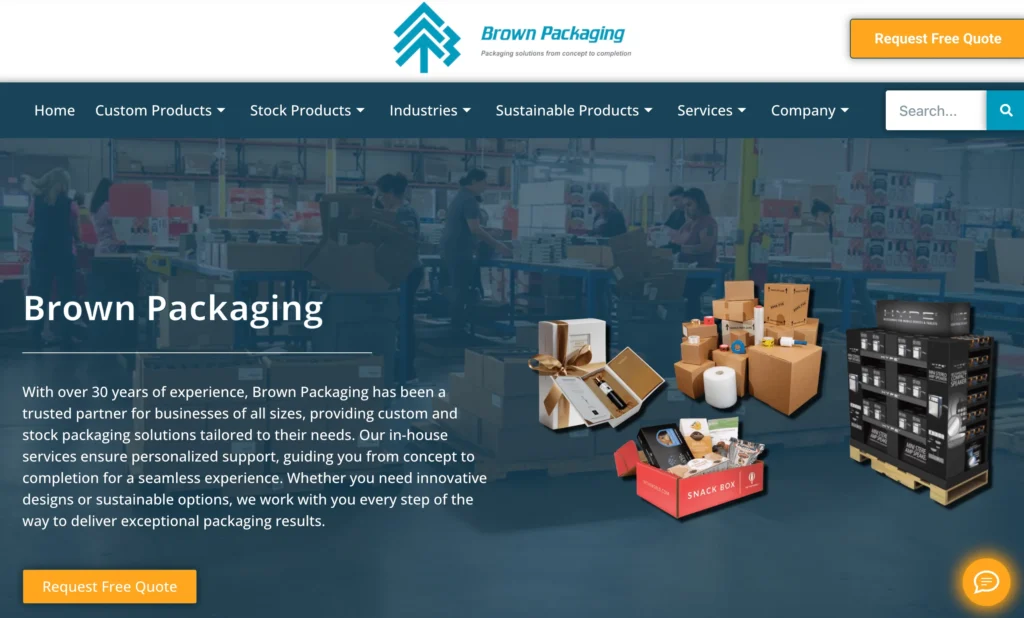
When I read Brown Packaging through the lens of toy packaging boxes manufacturers, I don’t see a typical “printer” or a single-product factory. I see a hybrid packaging supplier that behaves like a consultant-led project team, combining in-house capabilities with a broad partner network to deliver packaging from concept to completion. They position themselves as a one-stop shop for packaging, but what makes that claim believable is the way they describe their operating model: dedicated project management, wide product coverage, global sourcing, cost optimization, compliance readiness, and sustainability options—built on more than 30 years of experience serving businesses in Southern California and across the United States.
The 30-Year Operating Foundation That Toy Brands Read as Stability
If I’m a toy brand founder, my biggest fear is not “Can a vendor make a box?” It’s “Will they deliver what we approved, on the timeline we promised, without creating chaos in my launch plan?” Brown Packaging emphasizes long-term relationships and decades of service, which signals operational maturity. In toy packaging, that stability matters because launches are seasonal and deadline-driven, and supply chain disruptions hit toy brands harder than most categories. A packaging partner that has been around for 30+ years tends to have repeatable processes, reliable vendor relationships, and a calmer approach when projects get complicated.
Big-Supplier Capabilities Without Losing Small-Team Responsiveness
What I find strategically interesting is how Brown Packaging positions itself between two extremes. They claim the capabilities of a large supplier while keeping the flexibility and customer service of a small business. For toy brands, this is a meaningful promise because toy packaging rarely stays simple for long. A founder might start with folding cartons, then add corrugated shippers, then need inserts, then build retail POP displays, then manage inventory and replenishment. Brown Packaging is telling buyers that they can scale with you, but you still get human-level attention through experienced account managers and dedicated project ownership.
Concept to Completion Project Management That Fits Toy Launch Reality
Toy packaging is not just packaging—it’s a project. There is structure engineering, artwork, sampling, cost targets, retailer compliance, shipping durability, and sometimes multiple packaging components in one program. Brown Packaging leans into “concept to completion” with a dedicated project manager, which is exactly what toy brands want when they’re juggling too many moving parts internally. When I see “dedicated project manager,” I read it as fewer handoff mistakes, fewer unclear instructions, and tighter control over approvals, timelines, and revisions.
In-House Capabilities That Reduce the Risk of Vendor Fragmentation
Brown Packaging explicitly describes itself as a hybrid supplier with in-house capabilities, designed to bridge the shortcomings of traditional distributors and direct manufacturers. That matters because toy packaging often fails when responsibilities are fragmented. One vendor makes the cartons, another does the inserts, another handles fulfillment, and suddenly the brand is managing a supply chain instead of building a product line. Brown Packaging highlights digital print, structural design, graphic design, sampling and prototyping, and operational optimization services like JIT and inventory management. For a toy brand founder, that suggests a partner that can keep multiple packaging elements coordinated under one program manager.
Why Toy Brands Choose Brown Packaging for Multi-Format Packaging Programs
Toy brands rarely live inside one packaging format. They need corrugated shipping boxes for e-commerce, folding cartons for retail, POP displays for shelf visibility, protective foam or inserts for fragile components, and sometimes blister packs or clamshells depending on product design. Brown Packaging presents a wide product selection that includes both custom and stock packaging across these formats. That breadth becomes valuable for toy brands because it reduces vendor count, simplifies purchasing, and makes it easier to maintain consistent branding and packaging performance across channels.
Structural Design as a Competitive Advantage in Toy Packaging Performance
Toy packaging must survive real abuse—warehouse stacking, parcel handling, retailer stocking, and consumer unboxing. Brown Packaging puts structural design at the center of their value proposition and connects it directly to durability, material reduction, cost savings, and sustainability. That is not just marketing language; it speaks to the core tradeoff toy brands face: they want packaging that looks great but doesn’t inflate shipping costs or fail in transit. A supplier that actively optimizes structure can reduce dimensional weight, improve compression strength, and minimize damage rates—outcomes that show up immediately in margins and reviews.
Prototyping and Testing That Helps Founders Avoid Expensive Mistakes
New toy brands often learn the hard way that packaging mistakes are expensive. If the fit is off, the product rattles. If the board grade is too light, corners crush. If the print finish is wrong, colors look dull under retail lighting. Brown Packaging emphasizes samples and prototyping, along with product and material testing, which tells me they want to catch problems early. For a founder, that reduces risk because the first production run is rarely forgiving—especially when the product is already committed to a launch date.
Cost Efficiency and Global Sourcing That Protect Toy Brand Unit Economics
Toy brands live under constant margin pressure. Between freight, retailer margins, platform fees, and marketing costs, packaging can’t be treated like a luxury expense. Brown Packaging frames cost efficiency as an engineered outcome rather than a discount promise. They mention optimized solutions, global sourcing, and operational optimization like pallet and truck storage optimization. For toy brands, this matters because packaging impacts total landed cost, not just the unit price. When a supplier thinks in terms of palletization, inventory flow, and transport efficiency, they often save buyers money in places most founders don’t initially calculate.
Compliance-Ready Packaging That Makes Retail and Regulated Programs Easier
In toys, compliance is not optional—especially when products touch children and families. Brown Packaging highlights compliant-ready solutions and speaks about supporting retail access with compliant packaging solutions. This is the type of language that appeals to brands aiming for big-box retail, because retailers often have packaging requirements around labeling, durability, barcodes, and sustainability claims. Brown Packaging also serves regulated verticals like medical and food, and while toys are different, that cross-industry compliance mindset can translate into better documentation habits and more disciplined packaging programs.
Sustainability Options That Toy Brands Need for 2026 Buyer Expectations
Sustainability has become a baseline expectation in many toy segments, especially for brands selling to environmentally conscious parents. Brown Packaging’s sustainability positioning is not vague—they talk about recyclable solutions, compostable and biodegradable options, and a broader commitment to helping clients reduce carbon footprint and waste through smarter design. They even publish content explaining FSC certification and how it impacts buyer expectations, retailer acceptance, and trust. For toy brands, this matters because sustainability is increasingly tied to retailer standards and consumer purchasing decisions, not just brand storytelling.
Toy Industry Credibility Through Toy Association Membership
What gives Brown Packaging extra relevance in the toy category is their stated membership in the Toy Association. When I see that, I interpret it as a signal that they actively participate in the toy ecosystem, understand the pace of toy seasons, and are familiar with the category’s packaging demands—especially around safety expectations, sustainability, and shelf visibility. For toy brand founders comparing manufacturers, industry affiliation can feel like a shortcut to trust, because it suggests the supplier is not guessing at what toy brands need.
Why Toy Brand Founders Choose Brown Packaging in 2026 and 2027
If I’m a toy brand founder searching “Top Toy Packaging Boxes Manufacturers 2026 & 2027,” Brown Packaging stands out to me as the choice for brands that need more than a box—they need a packaging system. Founders choose them when they want a dedicated project manager, multi-format packaging coverage, structural design expertise, prototyping discipline, cost optimization that includes logistics, and compliance-ready solutions that support retail growth. Brown Packaging feels like the kind of partner I would pick when the packaging program is becoming bigger than a single SKU, and I need a team that can coordinate the entire packaging journey without forcing me to manage five separate vendors.
Emenac Packaging
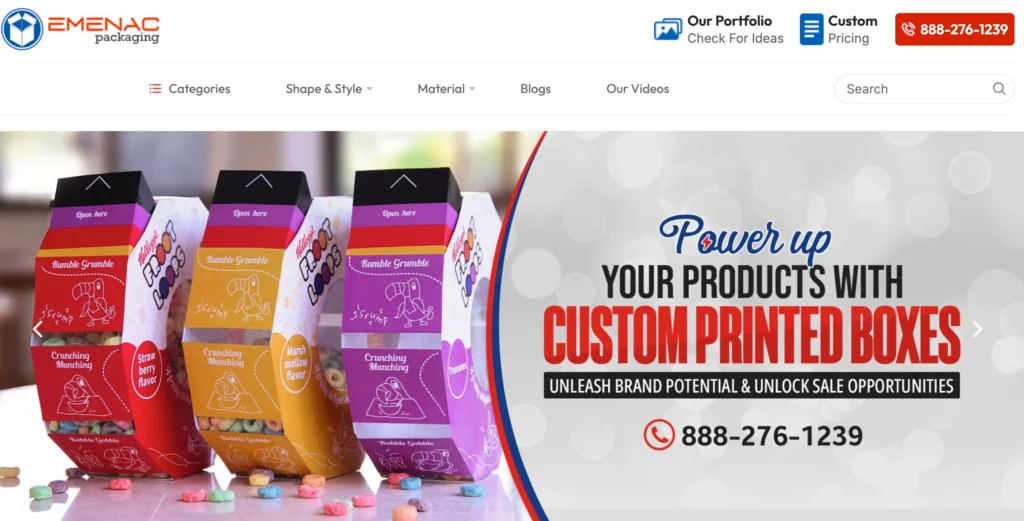
When I analyze Emenac Packaging as a “toy packaging boxes manufacturer” option, I don’t read them like a traditional plant-first factory with a narrow specialization. I read them as a print-and-packaging service brand that wins customers by reducing friction: they emphasize advanced digital and offset presses, free design preparation, fast turnaround, and free shipping, with a product range that covers the mainstream box formats toy brands typically need. Their positioning is simple: make custom packaging feel easy, fast, and affordable, while still offering enough finishing and structural options to look “premium” on a retail shelf.
A Manufacturer Profile Defined by Printing Technology and Turnaround Discipline
If I’m trying to understand what kind of manufacturer Emenac is, I anchor on two things they repeat: technologically advanced presses and minimum time span. They talk about both digital and offset printing, which signals they want to serve both short-run and scale runs depending on the project. For toy packaging, that flexibility matters because new toy launches often start with testing quantities, then quickly shift into reorders once sell-through proves the product. Emenac frames “timely printing and shipment” as core values, and I interpret that as a supplier trying to compete on speed and responsiveness rather than on highly specialized engineering for complex retail programs.
Breadth of Box Types That Maps Well to Toy Packaging Use Cases
Toy packaging is rarely one-size-fits-all. Some SKUs want folding cartons with tuck ends, others need corrugated protection, and many toys benefit from die-cut windows or display features. Emenac specifically calls out cardboard, kraft, corrugated, window boxes, and die-cut boxes, then reinforces their willingness to support multiple industries including toys. For a toy founder, that breadth reduces decision fatigue because it means the supplier can likely handle the typical packaging evolution from “basic product box” to “more visible, more branded, more shelf-friendly” formats without forcing a vendor switch.
Customization and Finishes That Help Toys Sell Before They’re Opened
Toy packaging is marketing. Kids react to color, parents react to clarity and trust, and everyone reacts to what looks exciting on shelf. Emenac leans heavily into “catchy customizations” with options like die cutting, embossing, perforations, laminations, UV, gloss, and matte finishes. I read this as a supplier designed for brands that want to increase shelf impact without needing a deep, complex packaging development process. For many toy products, the difference between a box that blends in and a box that gets picked up is not only the artwork—it’s the tactile and visual finishing that makes the product feel more “real” and more giftable.
Free Design Support That Appeals to First-Time Toy Founders
One of the clearest reasons new brand founders choose Emenac is the promise of free design preparation and design assistance. In practice, toy startups are often strong on product ideas but weaker on packaging execution: dielines, print specs, bleed settings, and production-ready files can slow everything down. Emenac’s message is basically, “don’t let file work block your launch.” If I’m a founder, that means I can move faster even if my internal team is small, and I can avoid paying a separate agency just to make packaging manufacturable.
“Engineering + Aesthetics” as a Practical Promise for Toy Protection and Display
Emenac repeatedly uses the idea of combining engineering with aesthetics, and for toys that’s the right combination. A beautiful box that collapses in shipping is a disaster; a strong box that looks generic loses sales. Their language about protection, bright printing finishes, and optional compartments or collapsible structures shows they want to cover both needs: keep the toy safe during shipping and make the product look exciting in-store. I also notice they talk about tuck ends and auto bottom locks, which tells me they’re thinking about assembly speed and retail readiness—important for brands that need packaging that scales operationally.
Fast Quote, Fast Turnaround, and Low Barriers to Entry
If I’m searching “Top Toy Packaging Boxes Manufacturers 2026 & 2027,” I’m often not casually browsing—I’m trying to shortlist suppliers quickly. Emenac’s ordering experience is positioned around speed: quick quotes, fast turnaround, and easy artwork upload. They also highlight “no minimum quantity order limit” in their toy packaging messaging, and even when other parts mention starting points like 50 units for some custom printed boxes, the overall narrative is the same: they want to be accessible for small runs and prototypes. That’s a big reason toy founders pick them—because it lowers the risk of the first packaging decision and makes iteration possible.
A Dual Production Model That Tries to Balance Price and Delivery
Emenac describes printing in-house in the USA while also utilizing offshore printing facilities in Asia and Africa to cut down customer expenses. From a buyer perspective, I interpret this as a supplier trying to offer multiple routes: a faster domestic lane for urgent runs and a lower-cost lane for volume or price-driven projects. For toy founders, this matters because packaging cost per unit can make or break viability, but timelines can be equally critical during seasonal peaks. A supplier that can offer more than one production pathway becomes easier to fit into different launch scenarios.
Why Toy Brands Choose Emenac When Shelf Impact and Speed Matter Most
If I’m advising a toy brand founder, I would describe Emenac as a supplier that is built for momentum. Brands choose them when they need packaging that looks lively and sells on sight, when they want free design help to avoid file bottlenecks, when they want common toy box structures with optional windows and finishes, and when they care about fast production and delivery more than they care about an ultra-specialized manufacturing story. In a category where packaging is both a protective shell and a sales tool, Emenac positions itself as the partner that helps you get to market faster, look more professional on shelf, and iterate packaging without painful minimums or complicated tooling barriers.
Zoho Packaging
When I look at Zoho Packaging through the lens of toy packaging, I don’t see a traditional factory-first manufacturer narrative. I see a platform-style packaging provider that sells a promise: take packaging into a more digital, faster, and more eco-friendly era, then make it easy for growing brands to participate. Their message is consistently about reducing friction for buyers who want custom packaging without getting trapped in long lead times, complex production steps, or heavy upfront costs. They frame themselves as a partner for eco-conscious businesses, but they pair that with very operational hooks like free shipping across the USA and Canada, fast turnaround, and a broad menu of styles, materials, coatings, and finishes.
A Manufacturer Identity Centered on “Digitalization” Rather Than Old-School Tooling
If I had to describe Zoho Packaging’s manufacturer identity in one idea, it would be “packaging as a digital service.” They keep signaling that packaging should be easier to design, easier to customize, and faster to manufacture through modern production methods. That matters for toy brands because toys rarely launch in one perfect form. You might test a small line, refine artwork, adjust the box structure for better shelf presence, then reorder quickly when sales start moving. Zoho’s positioning fits that rhythm: they want brands to iterate, not wait.
Eco-Friendly Positioning That Fits Modern Toy Brand Expectations
Toy brands face an audience that is unusually sensitive to sustainability messaging, because parents care and retailers increasingly require it. Zoho leans hard into biodegradable and eco-friendly packaging, including language around reducing raw paper use, using efficient manufacturing techniques, and offering reusable and sustainable packaging approaches. In their toy boxes content, they even mention premium materials like bamboo fiber and reference FSC-certified paperboard as part of the sustainability story. The value here is not just “green as a slogan,” but “green as a purchasing filter,” because sustainability is often what gets a new toy brand through a retailer conversation or an ecommerce product page credibility check.
Toy Packaging That’s Designed to Sell, Not Just Contain
For toys, packaging is part of the product experience. Zoho’s toy packaging messaging is clearly built around that reality: vibrant graphics, shelf stand-out, strong first impression, and design elements that influence buying behavior. They talk about retail psychology principles and features like die-cut windows, textured finishes, and playful design language. I read this as a supplier trying to meet toy brands where the actual battle happens—on shelf, on Amazon thumbnails, and in unboxing moments. If a toy box can create excitement before the toy is even touched, that’s real sales leverage.
A Big Catalog That Makes Buyers Feel “There’s a Box for My Exact Toy”
One thing Zoho does that toy founders tend to love is over-index on variety and specificity. They present toy packaging as a category with many sub-types, and they list many toy-related product ideas like action figure blister packaging, shipping boxes, storage boxes, subscription boxes, art toy packaging, and themed designs. Even if a brand doesn’t order those exact “template-like” categories, the effect is psychological and practical: it tells me they’re used to toy packaging scenarios, and it reduces the fear that my project is too niche or too complicated.
Customization Depth That Works for Both Kids’ Toys and Collector Products
Toy packaging is not one market. Kids’ toys often need high-energy visuals and friendly design cues, while collectibles and art toys may need a more premium, minimal, or gallery-like feel. Zoho positions itself as flexible enough to cover both ends: playful designs, premium paperboard strength, high print quality, and logo imprinting, plus coating and finishing options that let a brand decide how “mass” or “premium” the product should feel. They even spell out technical specs like 14pt to 24pt solid paperboard, plus print methods across offset, digital, and hybrid, and finishing effects like Spot UV, foil stamping, and embossing. For a founder, this is useful because it translates creativity into manufacturable choices.
Structural Engineering, Prototyping, and Proofing That Reduce Risk for New Founders
New toy founders don’t just need a supplier—they need guardrails. Zoho highlights structural engineering, consultation, packaging and artwork design, and samples and prototyping with validation and color matching. That combination is exactly what a first-time founder needs when they’re worried about issues like box fit, crush resistance, shelf durability, and whether colors will reproduce consistently. The practical benefit is risk reduction: prototyping catches mistakes before mass production, and proofing protects brand consistency across reorders.
Free Shipping and Fast Turnaround as a Growth Accelerator, Not a “Nice to Have”
In toy launches, timing is often everything. Seasonal sales cycles, influencer drops, crowdfunding fulfillment windows, and retail onboarding schedules all punish slow packaging. Zoho repeatedly uses speed and free shipping as defining advantages, positioning them as a way to save time and cost while still achieving “industrial-level packaging.” Even their ordering forms emphasize minimum quantities like 200 units, which signals they’re aiming at serious small brands—big enough to ship product, but still early enough to care about cash flow and speed-to-market. For toy founders, free shipping and fast turnaround can be the difference between hitting a launch date or missing a sales window.
Why Toy Brands and New Founders Choose Zoho Packaging
If I put myself in the shoes of a toy brand owner searching “Toy Packaging Boxes Manufacturers,” I choose Zoho when I want packaging that feels modern, sustainable, and easy to execute without building a complicated supplier ecosystem. I pick them when I need strong visual impact for ecommerce and retail, when I want flexible customization without feeling buried in technical packaging jargon, and when I value practical services like prototyping, structural support, and print consistency. Most of all, I choose them when I want the packaging process to move at the speed of my business, because their entire positioning is built around removing friction: digitized ordering mindset, eco-friendly material story, broad style library, and logistics promises that make a launch feel possible instead of stressful.
After reviewing the Top 10 Toy Packaging Boxes Manufacturers for 2026 & 2027, one thing becomes very clear to me: in today’s toy industry, packaging is no longer a “supporting detail.” It’s a real part of the product, the brand, and the supply chain.
A strong toy packaging partner doesn’t just print colorful boxes. They help you deliver a toy program that stays stable under pressure—multiple SKUs, tight launch windows, overseas shipping risk, retailer expectations, and repeat reorders that need to match the approved sample without surprises. And the truth is, the most expensive packaging problems rarely happen during sampling. They happen when you scale production, when cartons are stacked in real warehouses, when boxes get handled by logistics teams, when a window panel arrives slightly misaligned, or when the insert fit changes just enough to increase return rates.
That’s why I believe the smartest way to choose a manufacturer in 2026 and 2027 is to look beyond the surface and focus on execution. I always pay attention to whether the supplier can hold consistent structure tolerances, whether they understand toy packaging requirements like insert protection and retail display performance, and whether they can communicate like a real project partner instead of simply quoting a price and disappearing until production is done.
Another thing I want to emphasize is that “best manufacturer” doesn’t always mean “biggest manufacturer.” Some brands need fast short runs and flexible digital printing for new launches. Others need long-term stability, bulk scaling, and controlled repeatability across multiple markets. The right choice depends on what stage your toy program is in—and how much risk you’re willing to accept when you move from the first order to the fifth reorder.
If you’re building a toy brand, running procurement for a toy company, coordinating packaging for an export program, or managing packaging execution as an agency, I hope this guide helped you save time, avoid costly trial-and-error, and shortlist partners that actually match real-world production needs.
Ready to Build Toy Packaging That Holds Up at Scale?
If you want toy packaging boxes that look premium, protect your products during shipping, and stay consistent across repeat orders, I’d love to help.
At BorhenPack, we specialize in custom toy packaging boxes built for real programs—not just one-time projects. I focus on helping clients turn packaging ideas into production-ready solutions with stable structure, reliable color output, precise inserts, and smooth reordering as volumes grow.
If you’re planning a new toy launch, upgrading from generic packaging, or standardizing packaging across multiple SKUs, you can reach out to BorhenPack for a practical quotation and packaging recommendation that fits your timeline, budget, and distribution needs.
Get a quote from BorhenPack today—and let’s build toy packaging that performs like your brand deserves.