
| Rank | Name | Country |
| 1 | BorhenPack | 🇨🇳 China |
| 2 | DS Smith | 🇺🇸 United States |
| 3 | Mondi | 🇦🇹 Austria |
| 4 | Sealed Air | 🇺🇸 United States |
| 5 | WestRock | 🇺🇸 United States |
| 6 | Amcor | 🇨🇭 Switzerland |
| 7 | Index Packaging | 🇺🇸 United States |
| 8 | East Color Printing Packaging Co., Ltd. | 🇨🇳 China |
| 9 | Zenpack | 🇺🇸 United States |
| 10 | Fantastapack | 🇺🇸 United States |
| 11 | Nelson Container | 🇺🇸 United States |
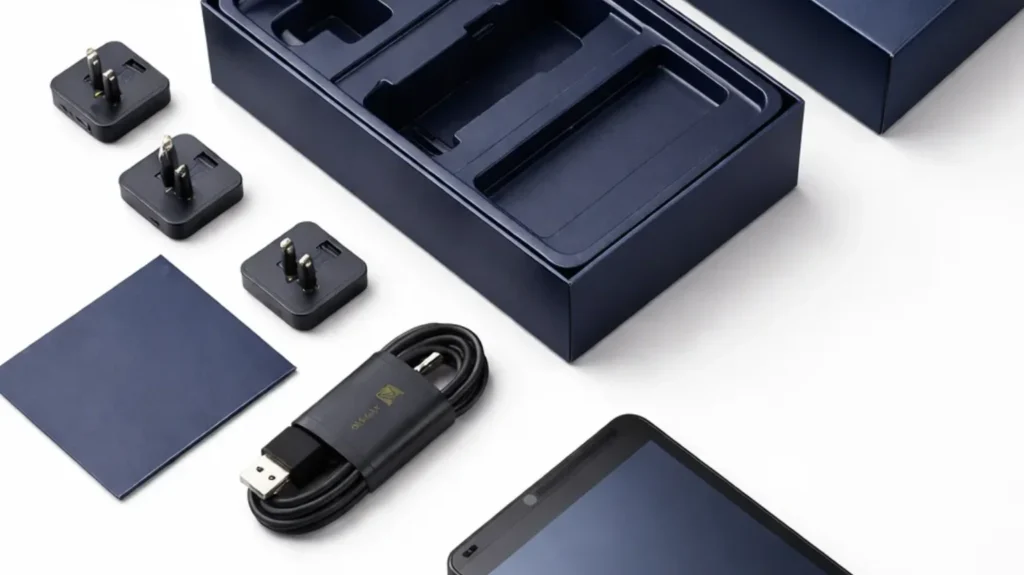
When I see someone search “Top 11 Electronic Packaging Boxes Manufacturers 2026 & 2027,” I don’t read it as curiosity—I read it as urgency. Electronics packaging is one of those categories where the box is never “just a box.” It’s damage control, brand credibility, retail readiness, and supply-chain discipline all wrapped into one physical system. A weak structure, inconsistent color, a sloppy insert fit, or a supplier that misses timelines doesn’t just create inconvenience. It creates returns, negative reviews, retailer friction, missed launches, and internal blame that nobody enjoys cleaning up.
I’ve spent enough time around packaging projects to know that the real problem is not lack of options. The real problem is noise. Almost every manufacturer can claim “high quality,” “fast lead time,” and “custom solutions,” but very few can consistently deliver packaging that performs under real shipping conditions, stays color-accurate across reorders, and remains scalable when a product line expands from one SKU to ten. That’s why a “top manufacturers” list is useful in 2026 and 2027—because decision-making in this space is less about finding a supplier and more about reducing risk before money, time, and reputation are committed.
BorhenPack
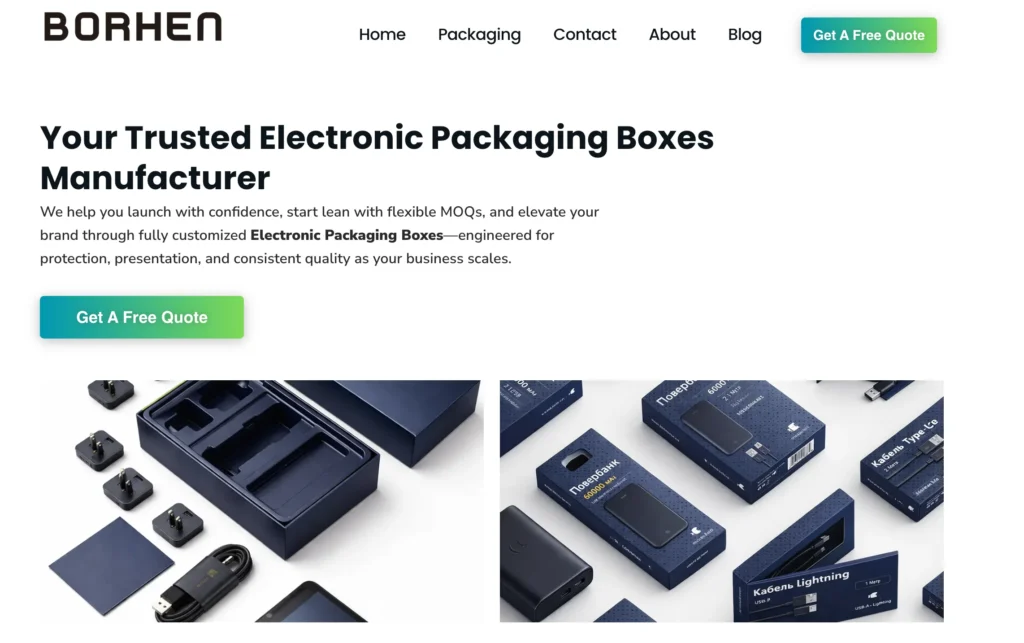
When I talk to B2B product and packaging decision-makers, I hear the same frustration over and over: packaging is supposed to be a support system, but too often it becomes the bottleneck. That is exactly why BorhenPack exists. I run BorhenPack as a full-service premium packaging partner that covers the parts most suppliers split across multiple vendors: structural engineering, design support, certified manufacturing, quality control, and global delivery. For electronics packaging, that full-system approach matters even more, because the box is not just a container. It is protection, brand trust, and operational reliability in one physical object.
What BorhenPack Actually Does, Beyond “Making Boxes”
I position BorhenPack as a complete packaging solution provider, not a single-category factory. I support brands that need premium paper boxes as well as primary components like bottles, jars, pumps, and droppers, because many of my clients sell bundles and gift sets across beauty, fragrance, jewelry, lifestyle, and 3C electronics. For electronics packaging specifically, I focus on structures that protect devices and accessories while still delivering a clean, high-precision unboxing experience. That means I care about dimensional accuracy, insert fit, material strength, print consistency, and the way your packaging performs in real shipping and fulfillment environments.
Why Electronics Packaging Is a Packaging Engineering Project, Not a Print Job
If I am honest, the most common mistake I see is treating electronic packaging as “a nice box with a logo.” Electronics packaging fails for very practical reasons: internal movement, weak corners, compression under stacking, friction damage, poor insert tolerance, and mismatched materials that do not survive long-distance logistics. I approach every project from manufacturing execution logic first, and brand experience second, because that order prevents expensive surprises. Once the structure is stable, the graphics and finishing finally have a foundation that will look the same at scale as it did at sampling.
The Kind of Support B2B Buyers Actually Need When They Are Busy
Most B2B decision-makers do not want to become packaging experts. They want confident recommendations, fast answers, and fewer risks. That is why I built BorhenPack around one-on-one support with real specialists who can speak structure, materials, printing, and branding in the same conversation. When a buyer is unsure what box type fits their product, or how to balance cost versus protection, I do not push a catalog. I guide the project from first idea to final order with clear direction, fast response, and practical tradeoffs that respect timeline and budget.
My Process Is Modular, Because Packaging Problems Are Predictable
I use a staged workflow because it reduces uncertainty for buyers who are accountable for deadlines and results. I start with packaging strategy and project assessment, where I review product fit, recommend materials, and check compatibility across boxes, inserts, and any paired components. Then I move into design and engineering, where dielines are finalized, structural rigidity is engineered, and branding alignment is refined so the packaging looks premium and functions correctly. Next comes prototyping and testing, where sampling happens quickly and I validate color, fit, and stress points before production. After that I manage production and quality control with dedicated QC capability and testing instruments to monitor consistency. Then I coordinate global logistics with export documentation support and route optimization, and finally I run continuous improvement so repeat orders become faster, more consistent, and more cost-effective over time.
Why Decision-Makers Choose Me for Electronic Packaging That Must Reorder Cleanly
The brands that stay with BorhenPack are usually not chasing a one-time “pretty box.” They are building a packaging system that must reorder cleanly, across multiple SKUs, and across multiple quarters. That is why I focus so heavily on batch-to-batch consistency and production readiness. I want what you approved at sampling to be what you receive at scale, because consistency is the real definition of reliability in B2B packaging. When you are scaling, your packaging supplier should not be a variable that introduces risk into your supply chain.
Flexible MOQs Without Making the Buyer Feel “Small”
One reason B2B buyers choose BorhenPack is that I do not treat flexibility like a favor. Many electronics and e-commerce brands need realistic starting volumes for testing and launches, not factory-level minimums that create inventory pressure. I can support lower MOQs for early-stage programs, and I can scale those programs into thousands or tens of thousands when demand becomes stable. What matters to me is that the transition from launch to scale does not require the buyer to change suppliers, rebuild dielines, or restart the packaging learning curve from zero.
Premium Doesn’t Have to Mean Wasteful or Overbuilt
In electronics packaging, overbuilding is a hidden cost. If the structure is heavier than it needs to be, shipping costs rise and packing efficiency suffers. I focus on proactive cost optimization through material selection, structure refinement, and smarter production setups that reduce waste without weakening the box. This is how I help brands achieve a premium feel while staying commercially realistic, especially for DTC and cross-border sellers where every gram and every cubic centimeter impacts landed cost.
Export-Ready Execution for Global Electronics and Cross-Border Brands
Many of my buyers are shipping to the EU, UK, US, and the Middle East, so I plan packaging with export realities in mind. I support documentation needs such as FSC, ISO, and MSDS where relevant, and I help coordinate freight-forwarder workflows or door-to-door delivery depending on the buyer’s model. For electronic packaging, I also consider outer carton strategy, consolidation planning, and shipping protection so the packaging arrives clean and retail-ready, not dented and compromised before it ever reaches the customer.
What It Feels Like to Work With BorhenPack as a B2B Decision-Maker
If I had to describe the partnership experience in one sentence, it is this: I stay close to the project so you do not have to. I keep communication direct, timelines transparent, and risks visible early. I offer structure checks before mass production, provide sampling paths to validate materials and printing, and stay reachable through fast channels like WhatsApp when decisions need to move quickly. The goal is simple: you feel in control, even when your packaging project is complex.
Why BorhenPack Is Chosen as an Electronic Packaging Boxes Manufacturer
When B2B product and packaging decision-makers choose BorhenPack, they are usually choosing stability. They want packaging that protects electronics, presents the product with precision, and holds up across repeat orders and scaling. They want a supplier who can translate specs into manufacturable packaging, handle engineering and production details, and deliver globally without guesswork. That is the role I built BorhenPack to play, and it is why my best clients treat me less like a vendor and more like a long-term operational partner.
DS Smith
When I look at DS Smith as an electronic packaging boxes manufacturer, I see a company that operates far beyond the traditional definition of a packaging supplier. Following its 2025 combination with International Paper, DS Smith became part of a truly global organization focused on fiber-based and sustainable packaging solutions. From my perspective, this combination fundamentally changed how B2B buyers evaluate DS Smith. It is no longer just about boxes or materials, but about long-term supply assurance, global coordination, and strategic alignment with how modern electronics brands operate across multiple regions.
A Global Manufacturing Footprint That Reduces Procurement Risk
What immediately stands out to me is the scale and geographic reach behind DS Smith’s operations. With manufacturing facilities across North America, Europe, the Middle East, and Africa, supported by tens of thousands of employees, the company offers something B2B product and packaging decision-makers value deeply: reduced risk. When electronics brands plan packaging for future product cycles, they are thinking in years, not months. I see DS Smith’s global footprint as a clear signal that it can support regional launches, volume shifts, and cross-market consistency without forcing buyers to rebuild their supplier base every time their business expands.
Packaging Designed Around the Entire Electronics Supply Chain
From a professional standpoint, I believe one of the strongest reasons B2B decision-makers choose DS Smith lies in how its packaging solutions are designed. The company approaches electronic packaging by considering the entire supply chain, not just the final box. I see this reflected in how their design teams think about protection, transportation efficiency, warehouse handling, and retail readiness all at once. For electronic products, where damage, returns, and logistics inefficiencies can quickly erode margins, this systems-level thinking is far more valuable than isolated packaging creativity.
Paper and Corrugated Expertise That Supports Performance and Consistency
When I evaluate DS Smith’s suitability for electronic packaging, I also pay close attention to its control over materials. As one of the world’s leading producers of sustainable corrugated packaging and specialty papers, DS Smith brings a level of material expertise that many packaging suppliers simply cannot match. From my perspective, this vertical strength matters because electronics packaging demands consistent strength, reliable cushioning performance, and stable print quality across repeated production runs. For B2B buyers responsible for maintaining brand and product integrity, this kind of consistency is often a deciding factor.
Sustainability as an Operational Capability, Not a Marketing Layer
In my experience, B2B product and packaging decision-makers are increasingly skeptical of surface-level sustainability claims. What makes DS Smith compelling is that sustainability is embedded into its operations through large-scale recycling services and circular economy practices. As Europe’s largest recycler of cardboard and paper, and now extending that expertise into North America, DS Smith offers electronics brands a way to align packaging decisions with ESG goals in a measurable and defensible way. I see this as especially important for brands operating under regulatory pressure or public sustainability commitments, where packaging choices must stand up to scrutiny.
Why B2B Packaging Decision-Makers Commit to DS Smith Long Term
When I step back and consider why DS Smith is frequently chosen by B2B product and packaging decision-makers, the answer comes down to confidence. Electronics brands do not just need a manufacturer for today’s packaging order; they need a partner capable of supporting future product lines, evolving regulations, and changing sustainability standards. From my point of view, DS Smith’s scale, integration with International Paper, and investment in design, materials, and recycling give buyers the confidence to commit long term. That trust is ultimately what turns a packaging manufacturer into a strategic partner in the electronics industry.
Mondi

When I look at Mondi from the perspective of electronic packaging manufacturing, I see a company that has deliberately positioned itself as a long-term industrial partner rather than a conventional packaging supplier. Mondi operates as a global leader in packaging and paper, with a clear purpose built around innovation and sustainability by design. What stands out to me immediately is that Mondi does not frame packaging as a commodity. Instead, it treats packaging as a strategic tool that protects products, supports supply chains, and aligns with long-term environmental and business objectives. For electronic packaging, where product value is high and tolerance for failure is low, this mindset is especially relevant.
A Global Operating Model Built for Complex B2B Supply Chains
From my analysis, Mondi’s global scale is one of the strongest reasons B2B product and packaging decision-makers feel comfortable working with them. With around 24,000 employees across more than 100 production sites in over 30 countries, Mondi offers geographic resilience that few packaging manufacturers can match. I see this as a major advantage for electronics brands that operate across multiple regions and need consistent packaging standards. Mondi’s presence in Europe, North America, and Africa allows procurement teams to plan packaging programs that are not overly dependent on a single location, which significantly reduces supply-chain risk.
Why Mondi’s Structure Appeals to Electronics Packaging Decision-Makers
When I evaluate Mondi as an electronic packaging boxes manufacturer, I pay close attention to how its business is organized. Mondi operates across two major business units, corrugated packaging and flexible packaging, which gives it the ability to support a wide range of electronic products and distribution models. For electronics brands, this means Mondi can design corrugated solutions for protection and logistics while also offering flexible or hybrid materials when weight reduction or specific performance characteristics are required. I find that B2B decision-makers value this breadth because it allows them to work with one partner across multiple product categories rather than managing fragmented supplier relationships.
Packaging Design Driven by Protection, Transport, and Display
From a professional standpoint, Mondi’s approach to packaging design is particularly attractive to electronics manufacturers. I see their corrugated and containerboard solutions as being engineered not only to protect products during transport, but also to support efficient handling, retail display, and eCommerce fulfillment. Electronic products are vulnerable to shock, compression, and mishandling, and Mondi’s focus on structural performance helps brands reduce damage, returns, and reputational risk. For B2B product managers, this type of design capability directly impacts profitability and customer satisfaction.
Sustainability Embedded Into Long-Term Packaging Strategy
When I consider why B2B packaging decision-makers choose Mondi, sustainability plays a central role, but not in a superficial way. Mondi’s sustainability strategy is formalized through its Mondi Action Plan 2030, which clearly outlines how sustainability is integrated into business operations rather than treated as a marketing layer. From my perspective, this matters greatly to electronics brands that must align packaging decisions with internal ESG targets and external regulatory expectations. Mondi’s commitment to circular solutions and responsible material sourcing gives procurement teams confidence that their packaging choices will remain compliant and credible over the long term.
Why Mondi Is Trusted for Future-Focused Electronics Packaging Programs
When I step back and assess Mondi’s position as an electronic packaging boxes manufacturer, the underlying reason B2B product and packaging decision-makers choose to work with them becomes clear. Mondi offers stability, scale, and a forward-looking strategy that supports multi-year planning. Electronics brands are rarely selecting packaging suppliers for a single product cycle; they are choosing partners who can adapt to changing technologies, distribution models, and sustainability standards. In my view, Mondi’s global footprint, material expertise, and long-term strategic clarity make it a trusted partner for companies planning electronic packaging programs not just for today, but for the years ahead.
Sealed Air
When I look at Sealed Air in the context of electronic packaging boxes manufacturing, I see a company that was never built around packaging as a commodity. From its very beginning, Sealed Air positioned itself as a problem solver, focused on protecting products, improving efficiency, and reducing waste across complex supply chains. That philosophy still defines how the company operates today. For electronics, where products are high value, fragile, and reputation-sensitive, Sealed Air’s purpose-driven approach immediately sets it apart from conventional box manufacturers.
A Manufacturing and Innovation Platform Designed for Global Scale
From my perspective, one of the strongest signals B2B product and packaging decision-makers notice is Sealed Air’s sheer operational reach. With headquarters in North Carolina, more than one hundred manufacturing facilities, operations spanning over one hundred countries, and billions in annual revenue, Sealed Air offers a level of scale that supports global electronics programs without fragmentation. I see this as particularly important for companies shipping electronics internationally, where consistency, availability, and continuity of supply are non-negotiable. Decision-makers are not simply buying packaging; they are buying confidence that their packaging partner can keep up with growth, seasonality, and market volatility.
Why Sealed Air’s Engineering DNA Matters in Electronics Packaging
When I analyze why Sealed Air resonates so strongly with electronics packaging decision-makers, I always come back to its engineering roots. The company’s origin story with BUBBLE WRAP® is not just a branding anecdote, but a reflection of how Sealed Air thinks. From the earliest days, Sealed Air focused on shock, vibration, and material efficiency, supported by in-house laboratories and application centers. Even today, I see this engineering mindset embedded in how Sealed Air designs packaging systems for electronics that must withstand handling, transport stress, and increasingly complex fulfillment environments.
Protection as a System, Not a Single Product
What stands out to me most is that Sealed Air does not approach electronic packaging as a single box or insert. Instead, it designs complete protection systems. From cushioning materials that defend against shock and static, to automated equipment that ensures repeatable packing outcomes, Sealed Air addresses the full packaging equation. For B2B product managers and packaging engineers, this systems-based approach reduces damage rates, lowers returns, and improves customer satisfaction. I believe this is a major reason electronics brands choose Sealed Air when product integrity directly impacts brand trust.
Operational Efficiency That Appeals to Packaging Decision-Makers
From a decision-maker’s standpoint, packaging is no longer evaluated solely on protection. I see Sealed Air winning projects because it also improves operational performance. Their packaging equipment automates labor-intensive processes, reduces bottlenecks, and enables higher throughput with predictable results. For electronics manufacturers and eCommerce operators dealing with labor shortages and rising fulfillment costs, Sealed Air’s ability to combine materials, equipment, and process optimization into one solution is a compelling advantage.
Sustainability Integrated Into Packaging Performance
When I consider sustainability in electronics packaging, I find Sealed Air’s approach particularly credible. Rather than treating sustainability as an external add-on, Sealed Air integrates material reduction, recyclability, and recycled content directly into packaging performance. Their philosophy of using the least amount of material to provide maximum protection aligns well with the realities of electronics shipping, where dimensional weight and damage prevention both influence cost and carbon footprint. For B2B decision-makers under ESG pressure, this balance between protection and sustainability is often decisive.
A Consultative Partnership Model That Builds Long-Term Trust
What ultimately explains why B2B product and packaging decision-makers choose Sealed Air, in my view, is the company’s consultative model. Sealed Air has always positioned itself not as a seller of materials, but as a packaging advisor. Through packaging design services, performance testing, and certified laboratories, Sealed Air works directly with customers to validate packaging solutions before they reach the market. For electronics brands, this reduces uncertainty and internal risk, especially when packaging failures can lead to costly recalls or reputational damage.
Why Sealed Air Remains a Strategic Choice for Electronics Packaging Programs
When I step back and assess Sealed Air’s role as an electronic packaging boxes manufacturer, I see a partner built for complexity. Electronics brands operate in an environment shaped by fragile products, global logistics, sustainability pressure, and rising operational costs. Sealed Air’s combination of material science, automation, global reach, and consultative expertise allows decision-makers to address these challenges holistically. That is why, time and again, Sealed Air is selected not just for packaging supply, but as a long-term strategic partner in protecting and scaling electronics businesses.
WestRock
When I evaluate WestRock in the context of electronic packaging boxes manufacturing, I treat it as part of a much larger story now. Since WestRock merged with Smurfit Kappa in July 2024 to form Smurfit Westrock, I see the company operating with a scale and infrastructure that immediately changes how B2B buyers think about supplier risk, long-term capacity, and global execution. Smurfit Westrock positions itself as a sustainable packaging leader, operating across dozens of countries with hundreds of production facilities and a very large workforce, which signals something important to any serious electronics brand: this is not a vendor built for one project, but a platform built for programs that need stability over multiple product cycles.
A Global Packaging Platform That Makes Procurement Feel Safer
When I put myself in the shoes of a B2B packaging decision-maker, one of the biggest concerns is always continuity. Electronics packaging is not only about protection; it’s about consistency across launches, regions, and fulfillment models. Smurfit Westrock’s global footprint and massive production network reduces the fear of single-site dependency and makes it easier for procurement teams to build supply strategies that can withstand volume spikes, market shifts, and unexpected disruptions. I see this as one of the most practical reasons decision-makers shortlist WestRock-related capabilities early, because the bigger the electronics brand becomes, the more packaging becomes a supply-chain discipline rather than a purchasing task.
Why Their Multidisciplinary Capabilities Matter in Electronics Packaging
What I personally find compelling is how Smurfit Westrock describes its internal talent mix as materials scientists, packaging designers, mechanical engineers, and manufacturing experts. In electronics packaging, this matters because the “box” is never just a box. It’s a system that must protect fragile, high-value products through shock, compression, humidity exposure, and repetitive handling, while still remaining cost-efficient and brand-consistent. When a supplier can connect material performance, structural engineering, print execution, and manufacturability under one roof, I see fewer gaps between what gets designed and what gets delivered at scale.
A Strong Fit for Retail and E-Commerce Electronics Distribution
When I look at where Smurfit Westrock is particularly strong, retail and e-commerce packaging stands out as a major reason B2B decision-makers choose them. Electronics brands increasingly ship through hybrid channels where packaging must perform in pallets, in-store merchandising, and parcel delivery all at once. Smurfit Westrock emphasizes supply-chain efficiency, in-aisle impact, and e-commerce performance, and I interpret that as a supplier who understands modern distribution realities. For electronics, that often translates into packaging that is optimized for dimensional efficiency, damage prevention, and a clean unboxing experience that protects brand perception.
Packaging, Display, and Automation as One Combined Value Proposition
In my experience, the suppliers that win long-term electronics packaging programs are the ones who don’t stop at packaging production. Smurfit Westrock repeatedly connects packaging solutions with display systems, automation, and customization, which is exactly what packaging leaders want when labor constraints and throughput pressure are real operational problems. I see this as a major advantage for electronics operations teams because automation-friendly packaging reduces packing variability, speeds up fulfillment, and makes costs more predictable as order volumes scale. When a packaging partner can speak the language of operational efficiency instead of only print specs, decision-makers tend to trust them more.
Sustainability and Fiber-Based Strategy That Aligns With Corporate Targets
When I assess why decision-makers choose Smurfit Westrock, sustainability is not just a branding layer in the way it’s framed. The company emphasizes evolving how paper is made, used, and reused, and building a fiber-based future, which aligns with the direction many electronics brands are moving toward as they reduce plastic and tighten ESG reporting. I find that large B2B procurement teams increasingly need packaging decisions that can be defended internally, not only on cost and performance, but also on material choices, recyclability narratives, and long-term compliance pressure. A supplier that is already positioned as a sustainability leader reduces internal friction during approvals.
Why B2B Packaging Decision-Makers Choose Them for Complex, Multi-Year Programs
When I summarize why B2B product and packaging decision-makers choose Smurfit Westrock for electronics packaging boxes, I come back to a single theme: program confidence. Electronics packaging decisions are rarely isolated; they sit inside broader conversations about global supply resilience, brand consistency, automation readiness, retail performance, and sustainability targets that must be met year after year. Smurfit Westrock’s scale, multidisciplinary engineering identity, retail and e-commerce focus, and fiber-based sustainability positioning make it easier for decision-makers to justify a long-term partnership. From my viewpoint, that is the real reason they appear on shortlists: they reduce uncertainty, and they make complex packaging programs feel manageable.
Amcor
When I look at Amcor through the lens of electronic packaging boxes manufacturing, I immediately see a company built around scale, discipline, and long-term relevance. Amcor positions itself as a global leader in packaging solutions, with a presence in more than forty countries, hundreds of production locations, and tens of thousands of employees supporting consumer and healthcare brands worldwide. From my perspective, this level of global infrastructure sends a clear signal to B2B decision-makers in electronics: Amcor is not a short-term supplier, but a platform capable of supporting complex, multi-region packaging programs over many years.
A Global Operating Model That Matches Electronics Brands’ Reality
What stands out to me most is how closely Amcor’s operating model mirrors the way modern electronics brands function. Electronics companies rarely sell in one market or through one channel. They operate across regions, balance local compliance with global brand standards, and require packaging partners who can execute consistently at scale. Amcor’s global footprint allows B2B product and packaging decision-makers to centralize strategy while still benefiting from local manufacturing and technical support. I see this as a major reason Amcor is trusted by organizations that cannot afford fragmentation in their packaging supply chain.
Innovation and Material Expertise That Go Beyond the Box
When I assess why Amcor is chosen for electronic packaging applications, I consistently come back to its innovation and material science capabilities. Amcor does not approach packaging as a static container, but as a system that must protect products, optimize performance, and adapt to changing requirements. In electronics packaging, this mindset is critical. Products are sensitive, often high value, and exposed to mechanical stress, moisture, and long transport cycles. I see Amcor’s deep expertise across rigid, flexible, and technical packaging materials as a foundation that allows decision-makers to design packaging solutions that balance protection, efficiency, and sustainability without overengineering.
Why B2B Decision-Makers Value Amcor’s Customer-Centric Approach
From my perspective, one of Amcor’s strongest differentiators is how explicitly it frames its role around customer outcomes. Amcor positions itself as a problem-solving partner rather than a packaging vendor, and that resonates strongly with B2B product and packaging decision-makers. In electronics, packaging decisions often sit at the intersection of engineering, logistics, marketing, and sustainability teams. I see Amcor’s consultative approach as a way to reduce internal friction for its customers, helping them align packaging choices with broader business objectives rather than treating packaging as an isolated cost center.
Sustainability as a Strategic, Long-Term Advantage
When I evaluate why Amcor continues to be selected by large B2B organizations, sustainability plays a significant but very pragmatic role. Amcor emphasizes using the right materials for the right applications, promoting circular economy principles, and reducing carbon footprint through design and operations. For electronics brands facing increasing regulatory pressure and ESG scrutiny, this approach offers something valuable: defensible packaging decisions. I find that decision-makers are far more comfortable working with a supplier whose sustainability strategy is embedded into product development rather than layered on as a marketing message.
Supporting Growth Through Packaging, Not Just Protecting Products
What I personally find compelling is that Amcor consistently frames packaging as a growth enabler. From its innovation platforms to its investment in new technologies and capabilities, Amcor positions packaging as a way to elevate brands, improve consumer experience, and support operational efficiency. In the electronics sector, where packaging influences unboxing experience, damage rates, shipping costs, and sustainability perception, this broader view aligns well with how B2B leaders think. I see this as a key reason Amcor is often chosen when packaging decisions are tied directly to revenue protection and brand equity.
Why B2B Packaging Decision-Makers Commit to Amcor Long Term
When I step back and consider why B2B product and packaging decision-makers choose Amcor for electronic packaging boxes, the answer comes down to confidence and continuity. Amcor offers global scale, technical depth, innovation capability, and a clear sustainability direction that supports long-term planning. Electronics packaging is rarely a one-off decision; it is part of an evolving system that must adapt as products, channels, and regulations change. From my point of view, Amcor’s ability to combine global execution with customer-focused problem solving is what turns it from a packaging supplier into a strategic partner for electronics brands operating at scale.
Index Packaging
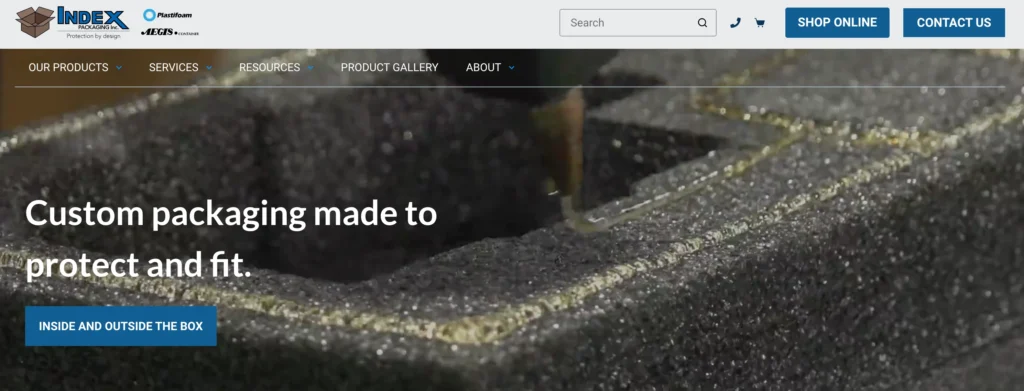
When I look at Index Packaging through the lens of electronic packaging boxes manufacturing, I see a company that has grown deliberately without losing its operational focus. Index Packaging is a midsize, US-based manufacturer with deep roots in protective packaging, operating multiple facilities in New Hampshire with hundreds of thousands of square feet dedicated to design, engineering, production, warehousing, and logistics. What stands out to me immediately is that Index Packaging was not built to chase volume at the expense of control. It was built to solve real-world protection problems, which is exactly what electronics brands care about when product damage translates directly into financial loss.
A Service-Driven Manufacturing Model That Appeals to B2B Decision-Makers
From my perspective, one of the strongest reasons B2B product and packaging decision-makers choose Index Packaging is its service-first operating model. As a closely held corporation, Index Packaging has the freedom to make fast, practical decisions without being slowed down by layers of corporate approval. For electronics companies working under launch deadlines, engineering changes, or urgent replacement needs, this agility matters. I see Index Packaging as the kind of partner that can respond quickly to design revisions, packaging adjustments, or volume changes without disrupting the entire supply chain.
Protection by Design as a Core Philosophy for Electronics Packaging
When I evaluate Index Packaging’s relevance to electronics packaging, their long-standing philosophy of “Protection by Design” is central. Electronics products are fragile, often high value, and sensitive to shock, vibration, and handling conditions. Index Packaging has decades of experience designing custom corrugated boxes, foam inserts, wood crates, and ATA cases specifically engineered around product fragility and transportation risks. From my point of view, this engineering-led mindset gives B2B decision-makers confidence that packaging decisions are grounded in performance data rather than assumptions.
Integrated Capabilities That Simplify Packaging Programs
What I find especially valuable is how Index Packaging brings multiple capabilities under one roof. Design, prototyping, foam fabrication, corrugated manufacturing, wood packaging, warehousing, and distribution are all handled internally. For electronics brands, this integration reduces coordination risk between multiple suppliers and shortens development timelines. I see this as a major advantage for packaging managers who want fewer handoffs, clearer accountability, and faster problem resolution when packaging requirements evolve.
A Strong Track Record in Custom Foam and Electronics Protection
From my analysis, Index Packaging’s strength in foam fabrication is one of the key reasons electronics-focused buyers trust them. With in-house production of polyurethane, polyethylene, and expanded polystyrene foam, Index Packaging can tailor cushioning solutions precisely to product geometry and fragility. For electronics packaging, this level of customization helps reduce overpacking while still delivering consistent protection. I see this as especially important for B2B decision-makers tasked with balancing damage prevention against material usage and shipping costs.
Environmental Responsibility That Supports Corporate Expectations
When I consider sustainability from a B2B buyer’s perspective, Index Packaging’s approach feels practical rather than performative. Their in-house recycling programs for foam, corrugated, and wood materials are designed to reduce waste at the manufacturing level. While Index Packaging may not position itself as a global sustainability brand, I see its operational recycling practices as a strong fit for electronics companies that want responsible packaging partners without compromising performance or lead time.
Why Index Packaging Is Trusted for Regional and High-Value Electronics Programs
When I step back and assess why B2B product and packaging decision-makers choose Index Packaging, the answer comes down to reliability, flexibility, and protection expertise. Index Packaging may not operate at the global scale of multinational packaging groups, but it excels in serving electronics brands that value hands-on engineering support, fast turnaround, and dependable execution. From my point of view, Index Packaging is often selected when the cost of failure is high, timelines are tight, and packaging must perform exactly as designed. That combination is what makes Index Packaging a trusted partner for electronic packaging boxes manufacturing in demanding B2B environments.
East Color Printing Packaging Co., Ltd.
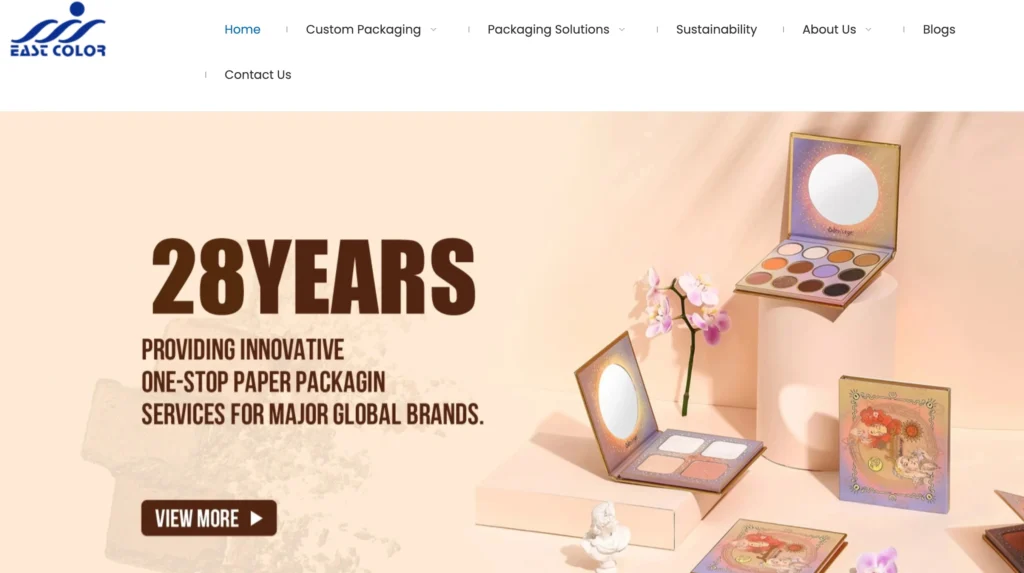
When I look at East Color Printing Packaging Co., Ltd. from the perspective of electronic packaging manufacturing, I see a company that represents a very specific and increasingly important segment of the global packaging supply chain: premium, design-driven paper packaging executed at true industrial scale. Founded in 1997 and headquartered in Dongguan, East Color has grown into a one-stop packaging manufacturer with four major production bases across China, Vietnam, and Indonesia, supported by more than 2,000 employees and over 100,000 square meters of manufacturing capacity. To me, this immediately signals maturity, execution stability, and the ability to support demanding international clients without relying on fragmented outsourcing.
A Global Manufacturing Layout That Aligns With Modern Procurement Strategy
From my perspective, one of the strongest reasons B2B product and packaging decision-makers choose East Color is its global manufacturing footprint. With facilities in South China, inland China, Northern Vietnam, and Indonesia, East Color offers buyers flexibility in cost structure, trade compliance, and risk diversification. For electronics brands operating across Europe, North America, and the Middle East, this matters deeply. I see East Color as a supplier that allows procurement teams to balance quality, lead time, and geopolitical considerations without changing packaging partners every few years.
Why East Color’s Design and R&D Depth Matters in Electronics Packaging
When I analyze East Color’s competitiveness in electronic packaging, I keep coming back to its in-house R&D and engineering capabilities. With more than 80 dedicated R&D engineers covering artwork, structural engineering, CAD sampling, and industrial engineering, East Color is not simply executing customer files. It is actively co-developing packaging solutions. For electronics packaging, where fit, protection, and unboxing experience must coexist, this capability is critical. I see this as a major reason decision-makers trust East Color with complex, high-visibility projects rather than treating them as a commodity box supplier.
Protection, Aesthetics, and Brand Strategy Executed Together
What stands out to me is how East Color frames packaging not just as protection, but as a physical extension of brand strategy. In electronics, packaging must protect sensitive components while also reinforcing innovation, precision, and premium positioning. East Color’s use of anti-static paper, EVA foam inserts, FSC-certified paper, recycled PET felt, and specialty metallic papers reflects a deep understanding of this balance. From my point of view, B2B decision-makers choose East Color because it can simultaneously address ESD protection, shock absorption, sustainability expectations, and high-end visual presentation within a single integrated solution.
Structural Engineering Built for Real-World Electronics Use
When I evaluate East Color’s electronics packaging from a functional standpoint, the structural design philosophy stands out clearly. Magnetic flip-top boxes, precision-cut product slots, detachable foam trays, and tamper-evident sealing systems are not decorative features. They are engineered responses to how electronics are shipped, displayed, unboxed, and sometimes returned. I see East Color’s structural work as particularly appealing to packaging managers who must reduce damage rates while still delivering a premium consumer experience that performs well on retail shelves and social media.
Printing and Finishing Capabilities That Support Premium Electronics Brands
From my perspective, East Color’s advanced printing and finishing technologies are a decisive factor for brand-led electronics companies. Techniques such as high-precision gradient printing, mineral-oil-free inks, Scodix foil effects, spot UV, laser cutting, embossing, and chatoyancy printing allow packaging to visually communicate innovation and quality before the product is even touched. I believe B2B decision-makers choose East Color when packaging must meet the same design expectations as the product itself, especially for flagship launches and high-end accessories.
Sustainability as an Integrated Manufacturing Practice
When I look at sustainability, East Color’s approach feels operational rather than superficial. The company integrates FSC-certified materials, eco-friendly inks, recyclable paper structures, and certified social responsibility practices into its core manufacturing process. With certifications such as FSC, Ecovadis, and BRC, East Color provides procurement teams with documentation and credibility that stand up to internal audits and external scrutiny. From my experience, this is increasingly non-negotiable for electronics brands selling into regulated or sustainability-conscious markets.
Speed, Prototyping, and Execution Under Tight Timelines
One of the most practical reasons I see B2B packaging decision-makers selecting East Color is speed. The ability to deliver qualified samples within 7 to 10 days, supported by in-house CAD, 3D prototyping, color calibration, and digital proofing, reduces development cycles dramatically. In electronics, where product launches are tightly coordinated across marketing, retail, and logistics, this responsiveness can determine whether a supplier is viable or not. East Color’s structured nine-step manufacturing workflow gives buyers confidence that scale-up will be controlled, repeatable, and predictable.
Why B2B Decision-Makers Commit to East Color for Electronics Packaging
When I step back and assess why East Color is chosen by B2B product and packaging decision-makers, the answer becomes very clear. East Color combines premium design sensibility, engineering-led protection, global manufacturing flexibility, and disciplined execution under one roof. It is neither a small boutique supplier nor a rigid mass-production factory. From my point of view, East Color occupies the exact middle ground that modern electronics brands need: sophisticated enough to elevate brand value, and operationally strong enough to deliver at scale, on time, and with confidence.
Zenpack
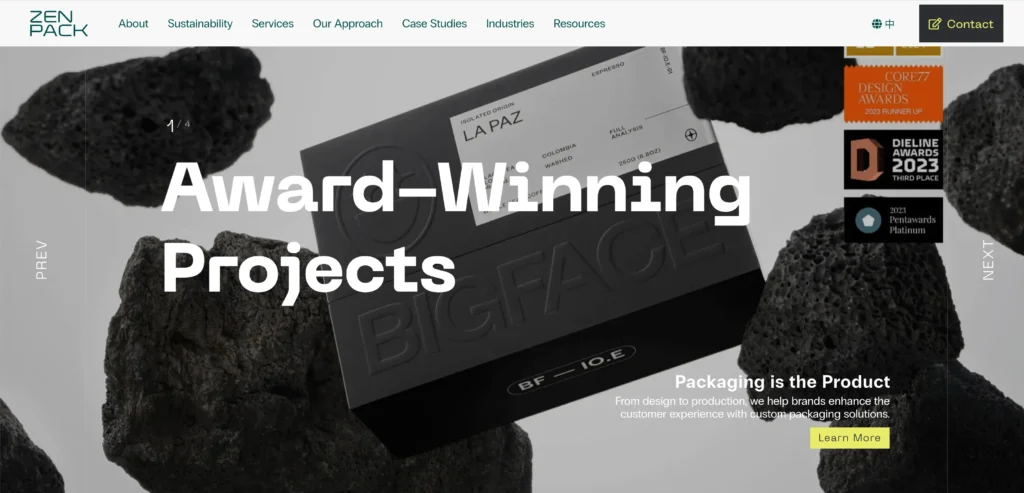
When I look at Zenpack through the lens of electronic packaging boxes manufacturing, I don’t see a traditional “box factory.” I see a full-service packaging solutions company that was built specifically to remove the most common failure point in custom packaging projects: the disconnect between design intent and manufacturing reality. Zenpack’s positioning is clear to me—clients should not need to hire a separate design team, a structural engineer, and a manufacturing network just to ship a product safely and make it look premium. Zenpack exists to unify those pieces into one packaging workflow, which is exactly the kind of operational clarity B2B packaging decision-makers are looking for when timelines, quality, and brand risk all matter at once.
Why Zenpack Feels “Built for Programs,” Not One-Off Orders
When I assess why serious B2B product and packaging decision-makers choose Zenpack, I keep coming back to the way they describe their service model: end-to-end strategy from concept to delivery, with teams spanning the United States and Southeast Asia to maintain continuity across time zones and supply chains. In electronics, packaging is rarely a single project—there are revisions, retailer requirements, SKU expansion, international rollouts, and continuous cost pressure. I see Zenpack appealing to decision-makers because it operates like a program partner that can carry a packaging system forward, not just produce a single run and disappear.
Design That Starts With the Unboxing Moment but Ends With Protection Performance
When I read Zenpack’s approach to design, I notice it’s not design for decoration. It’s design built around customer experience and operational outcomes. Electronics packaging has to do two jobs at once: protect high-value products during shipping and communicate product quality the second the customer touches the box. Zenpack talks about packaging as the first tangible brand connection, which fits electronics perfectly because unboxing is often the first real-world brand moment for e-commerce customers. I find that B2B decision-makers value this because it bridges marketing intent and engineering reality, reducing internal conflict between “make it beautiful” and “make it survive shipping.”
Structural Engineering and Rapid Prototyping That Reduces Launch Risk
When I evaluate Zenpack as an electronic packaging partner, the structural engineering layer is where I see the real value. Zenpack emphasizes that a design is only as good as its implementation, and I agree—electronics packaging fails most often when a concept looks great on screen but collapses under compression, vibration, or handling variability. The fact that Zenpack’s structural engineers evaluate manufacturability and create rapid prototypes tells me they are built to catch problems early, before mass production turns a small oversight into a costly launch delay. For a B2B packaging decision-maker, this is not a nice-to-have; it is insurance against timeline slips and product damage.
A Global Vendor and Factory Network That Expands Options Without Adding Complexity
What I find especially relevant is Zenpack’s ability to leverage relationships with materials vendors and factories across the globe while keeping the client experience centralized. Electronics packaging often requires unusual material choices, specialty papers, custom inserts, molded pulp, thermoform trays, or protective structures that vary by SKU and channel. Zenpack’s model makes sense to me because it gives decision-makers access to a broad manufacturing toolkit without forcing them to manage multiple suppliers, multiple quality standards, and multiple points of failure. The end result is that the buyer gets flexibility, but the project still feels controlled.
Printing Discipline and Color Management That Protects Brand Consistency at Scale
When I look at Zenpack’s printing and process capabilities, I see a strong fit for brands that care about shelf consistency and retail readiness. G7 and GMI certifications, multiple print processes, and strong finishing capabilities all point to one thing: color and detail control. In electronics packaging, small shifts in color and finish can make the product feel cheaper, inconsistent, or off-brand—especially when packaging is photographed, shared online, and compared across batches. I believe decision-makers choose Zenpack because it reduces the risk of “good in sample, inconsistent in production,” which is one of the fastest ways to lose internal confidence in a packaging supplier.
Electronics-Friendly Structures and Components That Support Multi-SKU Reality
When I review Zenpack’s product range—rigid boxes, folding cartons, corrugated shippers, molded pulp, thermoform trays, foam inserts, manuals, and printed collateral—I see a company designed to support how electronics actually ships. Many electronics brands need both retail-facing packaging and shipping-ready protection, and they often need inserts that keep components stable while maintaining a premium look. Zenpack’s breadth matters because it supports a single packaging system across multiple touchpoints, which helps decision-makers standardize the program rather than patching together separate solutions for each channel.
Logistics and Fulfillment Thinking That Speaks to Operations Leaders
In my experience, packaging decision-makers don’t only worry about the box—they worry about throughput, replenishment, and keeping lines supplied. Zenpack’s emphasis on logistics, fulfillment, and tight timeline execution tells me they understand the operational side of packaging, not just the design side. For electronics brands scaling quickly, packaging delays can block shipping windows and create retailer penalties. I see Zenpack’s value here as the ability to manage the “last mile” between a finished package and a functioning supply chain, which is often where projects break down.
Why B2B Product and Packaging Decision-Makers Choose Zenpack for Electronics Packaging Programs
When I step back and summarize why B2B product and packaging decision-makers choose Zenpack as an electronic packaging boxes partner, it comes down to confidence across the entire workflow. Zenpack reduces coordination friction by keeping design, engineering, production, and logistics aligned under one team, and that alignment is what protects timelines, budgets, and brand standards. For electronics, where damage rates, unboxing experience, retail compliance, and scaling pressures all hit at the same time, I see Zenpack being selected because it functions like a packaging operating system—one that helps teams move faster while lowering the risk of expensive surprises.
Fantastapack
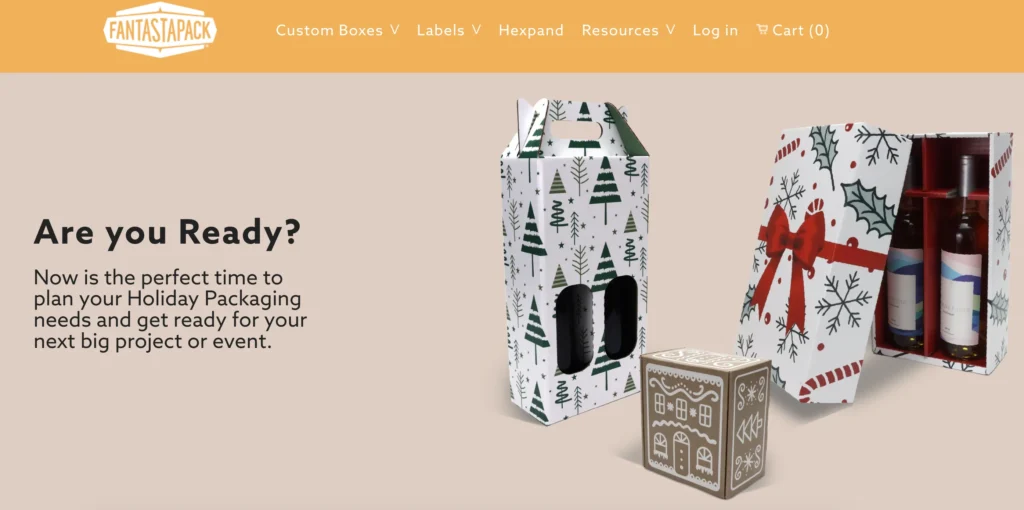
When I look at Fantastapack from the perspective of electronic packaging manufacturing, I see a company that represents a clear shift in how packaging is sourced, ordered, and produced in the modern era. Fantastapack was built to solve a very specific problem that many electronics brands face: the gap between needing high-quality, full-color packaging and being forced into high minimums, long lead times, and offline procurement processes. Backed by its parent company, The BoxMaker, and decades of manufacturing experience, Fantastapack positions itself as a digital-first packaging manufacturer designed for speed, flexibility, and accessibility.
A Manufacturing Model Designed for Speed-Critical Electronics Launches
What immediately stands out to me is Fantastapack’s obsession with speed. In electronics, packaging delays can easily derail product launches, marketing campaigns, or retail onboarding schedules. Fantastapack addresses this directly by manufacturing all orders in-house and controlling the entire production process from file upload to shipment. From my point of view, this end-to-end control is exactly why B2B product and packaging decision-makers feel comfortable relying on Fantastapack when timelines are tight and there is no room for supply chain uncertainty.
Why Digital Print Changes the Economics of Electronics Packaging
When I evaluate Fantastapack as an electronic packaging boxes manufacturer, digital print is the core differentiator. Traditional analog packaging manufacturing forces buyers into large minimums to justify setup costs, which rarely aligns with how electronics brands test products, launch iterations, or manage multiple SKUs. Fantastapack’s digital print model allows packaging to be produced on demand, in exact quantities, and in full color without tooling. I see this as especially attractive to electronics teams running pilots, regional launches, or frequent design updates, where flexibility matters more than unit price optimization at massive scale.
Web-to-Pack Automation That Reduces Operational Friction
From my perspective, one of Fantastapack’s most compelling advantages is its proprietary web-to-pack platform. The ability to design, upload artwork, and place orders online removes layers of back-and-forth that traditionally slow packaging projects down. For electronics packaging decision-makers who are already coordinating between engineering, marketing, and fulfillment teams, reducing communication friction is a major win. I see Fantastapack’s automated preflight and production workflow as a way to turn packaging into a predictable, repeatable process rather than a project that constantly requires manual intervention.
Short-Run and Exact-Volume Ordering That Fits Electronics Reality
When I think about why electronics brands choose Fantastapack, exact-volume ordering is a key factor. Electronics companies rarely want excess packaging inventory sitting in a warehouse, especially when product specs or branding may change. Fantastapack’s ability to produce short runs, samples, and rush orders aligns well with how electronics businesses actually operate. From my point of view, this is particularly valuable for subscription boxes, DTC electronics brands, accessory launches, and promotional campaigns where packaging quantities need to match real demand, not arbitrary minimums.
In-House Production That Protects Quality and Consistency
Fantastapack’s decision to manufacture everything in-house is not just about speed; it’s about consistency. Electronics packaging must arrive clean, structurally sound, and visually accurate, because it directly influences perceived product quality. I see Fantastapack’s in-house control as a major reason decision-makers trust them for branded electronics packaging. When production is centralized, quality control becomes more predictable, and issues can be resolved quickly without blame being passed between vendors.
Sustainability as a Practical, Built-In Consideration
When I consider sustainability, Fantastapack’s approach feels pragmatic rather than performative. The company emphasizes sustainable materials and responsible manufacturing practices while still prioritizing speed and accessibility. For electronics brands that want to reduce waste through right-sized orders and avoid overproduction, Fantastapack’s digital, on-demand model itself becomes a sustainability advantage. From my perspective, this aligns well with modern ESG thinking, where reducing excess and inefficiency is just as important as material choice.
Why B2B Packaging Decision-Makers Choose Fantastapack for Electronics
When I step back and assess why B2B product and packaging decision-makers choose Fantastapack as an electronic packaging boxes manufacturer, the answer comes down to control, speed, and simplicity. Fantastapack removes traditional barriers like tooling costs, long lead times, and offline ordering processes, replacing them with a fast, digital, and transparent system. For electronics brands operating in fast-moving markets, I see Fantastapack as a strategic choice not because it replaces large-scale packaging manufacturers, but because it fills a critical gap where agility, responsiveness, and exact execution matter most.
Nelson Container
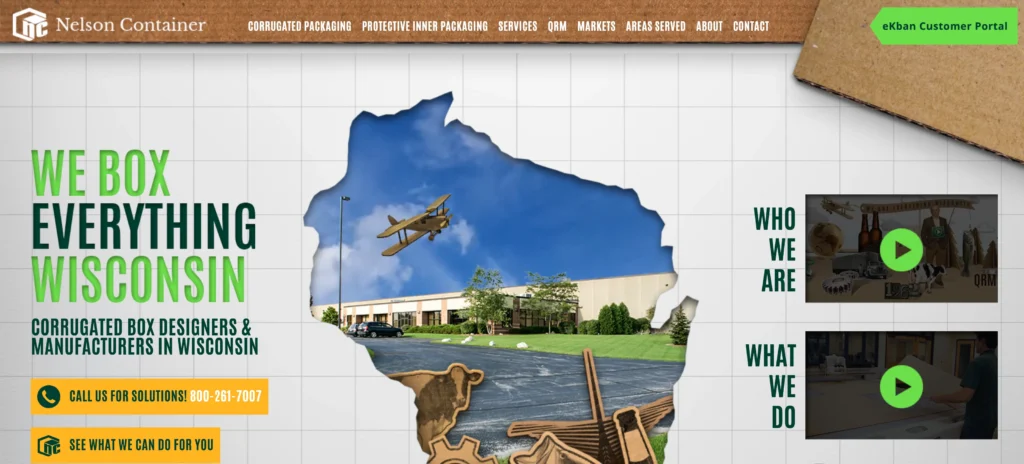
When I examine Nelson Container as an electronic packaging boxes manufacturer, I see a company built on depth rather than noise. Founded in 1962 and still privately held, Nelson Container represents the kind of regional manufacturing partner that electronics brands turn to when failure is not an option. Based in Wisconsin with a large in-house sheet plant, design center, and ISTA-certified testing capabilities, Nelson Container was never designed to chase generic packaging volume. It was built to engineer corrugated packaging systems that protect high-value, often fragile products moving through demanding supply chains.
A Corrugated-First Philosophy That Matters for Electronics
From my perspective, Nelson Container’s insistence on “corrugated, not cardboard” is more than semantics. Electronics packaging lives or dies on structural performance. Nelson Container designs single-wall, double-wall, and triple-wall corrugated packaging based on load, vibration, and impact realities rather than catalog assumptions. For electronics such as monitors, control units, medical electronics, servers, and industrial components, this approach dramatically reduces in-transit movement and product damage. I see this structural discipline as one of the primary reasons electronics-focused B2B decision-makers trust Nelson Container.
Engineering-Led Packaging That Reduces Risk, Not Just Cost
What stands out to me most is Nelson Container’s engineering mindset. Packaging here begins with understanding product geometry, weak points, protruding components, and shipping environments. Nelson’s designers develop custom corrugated structures and protective inner packaging, often combining heavy-duty corrugated with precision-cut foam inserts to stabilize sensitive electronics like PCBs and control assemblies. From my point of view, this is not commodity box making. It is risk mitigation through packaging design, which is exactly what product and operations leaders care about when the cost of failure is high.
In-House ISTA Testing as a Trust Signal for B2B Buyers
When evaluating electronics packaging partners, I always look for real testing capability. Nelson Container’s in-house ISTA-certified test lab is a critical differentiator. Instead of guessing how packaging will perform, Nelson validates designs through drop, vibration, compression, incline impact, and environmental conditioning tests. For B2B decision-makers responsible for compliance, warranty exposure, and customer satisfaction, this testing capability turns packaging from an assumption into a verified system. I see this as a major reason enterprises rely on Nelson for complex electronic packaging programs.
Quick Response Manufacturing That Fits Dynamic Electronics Demand
From my analysis, Nelson Container’s early adoption of Quick Response Manufacturing is central to its appeal. Electronics businesses often face fluctuating demand, low volume per SKU, and frequent design changes. Nelson’s QRM-driven operation allows new designs to ship in as little as 48 hours and repeat orders in under 24 hours when materials are available. I view this as a strategic advantage for electronics manufacturers who cannot afford packaging delays to slow production or shipment schedules.
Heavy-Duty and Oversized Packaging Capabilities for High-Value Electronics
Nelson Container’s ability to produce large-format and jumbo corrugated packaging sets it apart in the electronics space. With equipment designed for oversized and triple-wall corrugated boxes, Nelson can package everything from delicate circuit assemblies to large monitors, industrial electronics, and medical equipment. From my perspective, this capability is essential for B2B buyers shipping high-value electronics where standard box suppliers simply fall short.
A Relationship-Driven Model That Appeals to Serious Buyers
When I step back and consider why B2B product and packaging decision-makers choose Nelson Container, the answer is consistency and accountability. Nelson does not position itself as a transactional box supplier. It positions itself as a long-term packaging partner that understands product cycles, inventory flow, and operational constraints. With services like vendor-managed inventory, direct delivery, package assembly, and online inventory systems, Nelson integrates directly into the customer’s operations. I see this relationship-driven approach as especially attractive to electronics manufacturers burned by unreliable packaging vendors in the past.
Why Nelson Container Is Chosen for Electronic Packaging Programs
In my view, Nelson Container is selected when packaging is mission-critical. Electronics brands choose Nelson not because it is the cheapest option, but because it reduces risk, protects margins, and safeguards customer relationships. With over six decades of corrugated engineering experience, in-house testing, fast-response manufacturing, and a clear focus on high-value, dynamic products, Nelson Container stands out as a trusted electronic packaging boxes manufacturer for B2B decision-makers who prioritize reliability over shortcuts.
After reviewing these manufacturers, one thing becomes very clear to me: in electronics packaging, the real difference is not who can make a box, but who can consistently deliver a packaging system that works in the real world. In 2026 and 2027, electronic packaging decisions are no longer about aesthetics alone. They are about protection under transit stress, repeatable quality across reorders, predictable lead times, and a structure that supports growth instead of limiting it. The manufacturers on this list stand out because, in different ways, they understand that electronics packaging is a long-term operational asset, not a one-time creative exercise.
What I always encourage decision-makers to do is step back and look beyond the sample stage. A beautiful prototype is easy. What matters is whether that same structure, insert fit, color accuracy, and finish can be reproduced month after month as volumes change, SKUs expand, and sales channels evolve. The best electronic packaging manufacturers are the ones that think ahead about manufacturing tolerances, material stability, packing efficiency, and shipping realities before problems show up. That mindset is what protects margins, timelines, and brand reputation over time.
If there’s one takeaway I want to leave you with, it’s this: choose a packaging partner, not just a supplier. The right partner helps you make smarter decisions early—about structure, materials, inserts, and cost tradeoffs—so you don’t pay for those decisions later in the form of damage, delays, or redesigns. In a category as unforgiving as electronics, packaging must be engineered, not improvised.
This is exactly the philosophy behind BorhenPack. I built BorhenPack to support electronics brands, DTC sellers, sourcing teams, and design agencies that need packaging they can actually rely on. We help you start lean with flexible MOQs, engineer structures that protect real products, and scale into stable, repeatable production without changing suppliers or rebuilding your packaging system. From folding cartons and rigid boxes to magnetic closures, custom inserts, and export-ready packaging, we focus on consistency, clarity, and execution—not guesswork.
If you’re planning a new electronics launch, upgrading from generic stock boxes, or rethinking your current packaging supplier because something “almost works but not quite,” I’d be happy to talk. Even a short conversation can clarify whether your current packaging approach will support your next stage of growth or quietly hold it back.
Reach out to BorhenPack to discuss your electronic packaging project. I’ll help you evaluate structure, materials, and production feasibility—before you commit time, budget, and reputation. Packaging should make your job easier, not riskier, and that’s exactly what we aim to deliver.